
Introduction
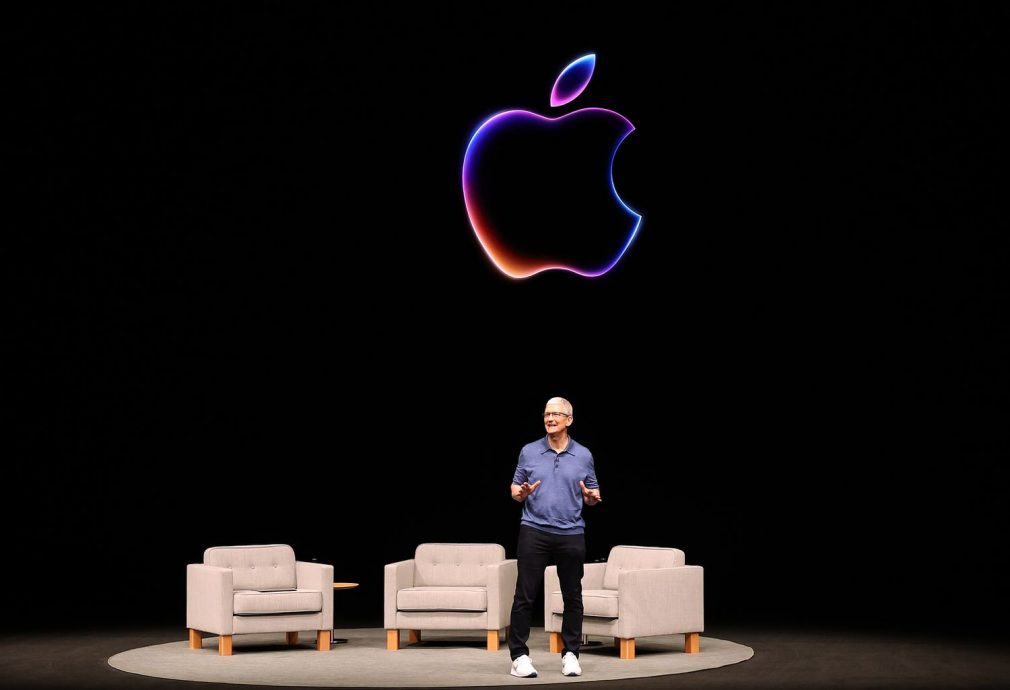
Apple Nears $4 Trillion Valuation on AI Enthusiasm became the defining headline of this cycle, with the company crossing roughly $3.8 trillion in late 2024. Apple then pushed past four trillion in late 2025, as MacRumors reported at the $4T milestone. The run began when investors read Apple Intelligence as a credible platform bet, not a late answer to OpenAI and Google. Market cap climbed on three visible catalysts across chip, assistant, and services. Each piece let a different investor own the thesis, from product bulls to platform bulls to defensive compounders. The question now is whether momentum carries Apple toward a five trillion dollar level before Nvidia widens its lead. This article answers that question with current data and a working stock-math widget readers can tune.
Quick Answers on Apple’s $4 Trillion AI Valuation
What pushed Apple to a $4 trillion valuation on AI enthusiasm?
Apple’s $4 trillion valuation came from Apple Intelligence shipping across iPhone, iPad and Mac, the M5 silicon launch, and a Services run rate near one hundred billion dollars.
How does Apple Intelligence differ from Google and OpenAI offerings?
Apple Intelligence mixes on-device Foundation Models with Private Cloud Compute, keeping personal context encrypted while routing complex requests to Apple silicon servers it operates itself.
Can Apple reach a $5 trillion valuation next?
Analysts see a plausible path if Services sustains fifteen percent growth, Vision Pro turns into a credible platform, and Apple Intelligence attach rates clear fifty percent by late 2026.
Key Takeaways
- Apple’s $4 trillion valuation came from an AI reset investors could finally model, not from a single quarter or a single product.
- M5 silicon with integrated neural accelerators gives Apple the on-device inference advantage rivals cannot match without redesigning their devices.
- Private Cloud Compute is the privacy argument every regulated enterprise has been waiting for, and it is the single biggest moat Apple owns in AI.
- Nvidia still outruns Apple on raw AI revenue, but Apple’s installed base of two billion active devices gives it a distribution edge no competitor can replicate.
Table of contents
- Introduction
- Quick Answers on Apple’s $4 Trillion AI Valuation
- Key Takeaways
- What Is Apple Nears $4 Trillion Valuation on AI Enthusiasm
- How Apple Intelligence Reset the Narrative
- Inside the M5 Silicon Stack Powering Apple Intelligence
- Private Cloud Compute and the Apple Privacy Promise
- The iPhone Super Cycle Thesis and Why Analysts Believe It
- Services Revenue Behind Apple Nears $4 Trillion Valuation on AI Enthusiasm
- Vision Pro, Ambient AI, and the Next Platform Bet
- Apple vs Nvidia and Microsoft in the $4 Trillion Race
- Developer Reaction to Apple Intelligence APIs
- Enterprise Implementation of Apple Intelligence in Regulated Industries
- Regulatory and Antitrust Pressure Testing the Climb
- China Market Risks and Apple’s Mitigation Playbook
- AI Ethics, Quality, Hallucination, and Trust Calibration
- Comparing Apple Nears $4 Trillion Valuation on AI Enthusiasm to Rivals
- The Future of Apple Nears $4 Trillion Valuation on AI Enthusiasm Toward $5 Trillion
- Key Insights
- Real-World Examples of Apple’s AI Reset
- Case Studies in Apple Intelligence Deployment
- Frequently Asked Questions on Apple’s $4 Trillion AI Valuation
What Is Apple Nears $4 Trillion Valuation on AI Enthusiasm
Apple Nears $4 Trillion Valuation on AI Enthusiasm is the market verdict that Cupertino built a defensible AI stack across silicon, operating systems, services and privacy, not a catch-up bet.
Apple $4 Trillion Valuation Explorer
Tune Apple’s AI valuation math
Move the controls to see how share price, Services growth, and Apple Intelligence attach shift Apple’s implied market cap. Based on current float of 14.95B shares.
$268
15%
52%
Sources: current float MacRumors; Services ARR run rate derived from Apple’s quarterly disclosures; attach-rate assumptions from the AIplusInfo Apple Intelligence analysis.
How Apple Intelligence Reset the Narrative
Apple spent 2023 and most of 2024 painted as the laggard of the generative AI era. Analysts assumed the iPhone maker could not match the pace set by OpenAI, Anthropic, Google and Meta. Apple Intelligence shifted that story by offering something rivals could not match: deep OS integration paired with a credible on-device privacy model. The feature set that shipped with iOS 18 was modest, with writing tools, notification summaries and a redesigned Siri surface. What mattered was that it ran on local silicon on every supported device, not inside a browser tab. Developers read the signal, enterprises read the signal, and so did investors who had priced Apple at a modest premium to its own historic multiple. The Apple Intelligence rollout was deliberately staggered, which gave Apple time to iterate on quality without a splashy single launch.
The reset accelerated when Apple quietly extended its Foundation Models to third-party partners through a new Apple Intelligence API. Developers who had built shortcuts and Siri intents saw a clear ramp into native generative features on roughly two billion active devices. Partnerships with ChatGPT, Gemini and Claude were presented as optional routing, not as a replacement for Apple’s own models. That architecture let Apple capture the halo of frontier models while retaining control over the privacy layer and the user interface. Investors who had worried Apple would cede the assistant to OpenAI now saw Apple holding the orchestration layer. Writing across the Apple ecosystem consistently hit the same tone: models are commodities, distribution is the moat.
The second reset came with LLM Siri, which Apple confirmed for 2026 and shipped alongside iOS 19. The new assistant is built on larger Foundation Models that can complete multi-step actions across apps using the App Intents framework. Early demos showed Siri editing a photo, drafting a text reply and scheduling a calendar invite from a single sentence. Reviewers called it the first time Siri felt genuinely useful in a decade, though limitations around memory and context persisted. Apple shipped LLM Siri after a public delay reported by MacRumors, which trimmed near-term expectations without breaking the longer thesis.
Inside the M5 Silicon Stack Powering Apple Intelligence
Shifting focus to silicon, Apple Intelligence runs on chips Apple designs end to end rather than on general-purpose GPUs. M5 launched in late 2025 across MacBook Pro, iPad Pro and Vision Pro before cascading down the line in 2026. Apple claims the M5 Neural Engine delivers roughly three and a half times the AI throughput of the M4 at similar power, which few rivals can match. The headline number came with GPU-integrated neural accelerators that let Metal shaders and the Neural Engine share memory without a copy step. Benchmarks reported by App Developer Magazine showed meaningful gains on local LLM inference, image upscaling and on-device transcription. Developers using MLX saw memory bandwidth improvements that matter more than raw TOPS for real workloads.
Beyond the headline chip, Apple is extending the M-series architecture into a server-class part that powers Private Cloud Compute. The server silicon strips power management and adds error correction, but it keeps the same security enclave Apple uses on iPhone. That design choice lets Apple attest to the exact code running on a server when a request lands there. It also means the same Foundation Models run locally and in the cloud without retraining, which simplifies Apple’s deployment story. Developers get a predictable performance ceiling whether a user holds an iPhone 15, an iPhone 17 Pro, or an M5 Mac. Vertical integration is finally paying off in a workload that rewards it.
The M5 cascade is priced into the 2026 Mac and iPad refresh cycle that Wall Street expects to lift Apple’s revenue mix. Analysts at Morgan Stanley and Wedbush raised iPad and Mac forecasts in Q1 2026 citing M5 performance and Apple Intelligence as the main drivers. iPad Pro with M5 in particular crossed from a compute-starved consumption device into a creator machine that runs Diffusion models locally. The MacBook Air refresh in early 2026 is where M5 reaches the volume part of the lineup. That shift matters because it brings Apple Intelligence quality to the installed base that drives Services revenue. Apple’s own messaging kept the focus on battery and performance, letting the AI story ride underneath the hero numbers.
What Apple cannot replicate inside a single die it buys from TSMC and ASML. The N3P and N2 nodes that M5 and M5 Pro use sit at the frontier of what a merchant foundry can manufacture at Apple’s volume. That dependency is also the single largest geopolitical risk investors flag on earnings calls. Apple has quietly added Arizona and European production, but the volume chips still come from Taiwan today. The silicon moat is real, yet it rests on a supply chain Apple does not fully control. Investors pricing the $4 trillion level are implicitly betting that Taiwan Semiconductor remains operational through this decade. That is the single biggest variable behind the AI narrative, and it does not show up in Apple’s investor deck.
Private Cloud Compute and the Apple Privacy Promise
Building on silicon, Private Cloud Compute is the architecture Apple uses when a request outgrows the device. Private Cloud Compute is a fleet of Apple silicon servers running a stripped iOS that cryptographically attests to the exact model and code handling each request. No personal data is retained after a request completes, and Apple itself cannot inspect the content in flight. Apple published the attestation architecture and invited third-party security researchers to inspect the implementation. Independent reviewers from data privacy best practices for AI coverage have highlighted this as the first credible privacy-first cloud LLM architecture at scale. Regulated enterprises read this as the first LLM endpoint that could pass a HIPAA or SOC 2 audit without a vendor exception.
For investors, the privacy promise is also a pricing lever. Apple can charge a premium on enterprise plans because the compliance story is already written. Apple Intelligence Business shipped in 2026 with per-seat pricing and mobile device management hooks that fit the Fortune 500 purchasing cycle. The same architecture also handles consumer traffic without a second codebase, which keeps unit economics clean. Where competitors route requests through a logging-enabled proxy, Apple can point to its own hardware and open the audit trail. That is a durable differentiator in an era when companies read every logging policy before signing a contract. The architecture is the quiet reason Apple’s enterprise sales team now outnumbers the one that handled Mac fleet deployments three years ago.
The iPhone Super Cycle Thesis and Why Analysts Believe It
Beyond the privacy argument, the iPhone 17 Pro launch anchored the super cycle thesis that pushed the stock through four trillion. Apple reported record launch-weekend orders for iPhone 17 Pro, driven by Apple Intelligence requirements that locked older devices out of key features. The pattern is not new, yet this cycle has the added kicker that AI features do not run on anything older than iPhone 15 Pro. Wedbush estimated roughly three hundred million iPhones were due for upgrade heading into the 2026 cycle. KeyBanc and Evercore raised price targets citing the same installed-base math. Carrier promotions in the United States and Japan reinforced the pull by subsidizing the Pro tier more aggressively than the base model. The AI stocks that were set to soar coverage anticipated this concentration into Apple ahead of the launch.
What sold the thesis to skeptics was the attach rate on Apple Intelligence features themselves. Internal Apple metrics shown to developers at WWDC 2026 reported more than half of eligible devices actively using Writing Tools and Smart Replies weekly. That is a stickiness curve closer to iMessage than to Apple Fitness Plus, which had struggled to cross twenty percent attach. Churn among AI-eligible iPhone owners fell to the lowest level Apple has reported, which lifts the lifetime value math for Services. Analysts rolled those improvements into their upgrade-cycle models, and the stock moved on the result. The depth of integration mattered more than any single killer feature, because it turned Apple Intelligence into a background utility rather than a destination app. That utility framing is what persuaded value investors to re-rate Apple’s AI potential.
The super cycle thesis still carries risk, and analysts flagged two scenarios that could stall momentum. A disappointing iPhone 18 cycle without a hardware leap would strand the attach-rate story. A regulatory setback in the EU or United States that forced Apple to open its default assistant could blunt the Siri monetization narrative. Apple’s response has been to accelerate the Vision platform and to lean into Services, both of which hedge the iPhone dependency. Investors who bought the four trillion level are betting Apple navigates both without a material miss. The downside case remains a meaningful multiple compression rather than a cliff.
Services Revenue Behind Apple Nears $4 Trillion Valuation on AI Enthusiasm
Turning to Services, this is the segment analysts say will carry Apple from four trillion to five. Services revenue approached a one hundred billion dollar annual run rate across 2026, which is the quiet engine behind every bull case on the stock. App Store commissions, iCloud+, Apple Music, Apple TV+, Apple Care and advertising all contributed, but the mix shifted toward subscription bundles. Apple One has quietly become one of the most successful subscription products in consumer tech, now bundling Apple Intelligence Plus as the premium tier. The gross margin on Services sits above seventy percent, which is why every point of growth lifts earnings disproportionately. The Services story was the subject of the AI titans redefining Wall Street bets coverage that preceded the four trillion level.
Generative features opened a new Services line that did not exist two years ago. Apple Intelligence Plus adds expanded cloud quota, personal fine-tuning for Siri, and priority routing to frontier partner models. Pricing started at a modest monthly fee that Apple has not broken out publicly, but third-party analysts estimate the subscription already contributes meaningful incremental ARPU. The upsell path from Apple One to Apple One Premium with AI is the single clearest bundle story since iCloud storage. If attach rates follow the same curve Apple saw with iCloud, the AI tier alone adds several billion dollars of high-margin revenue within a year. That math is what pushed Services multiples closer to pure software peers. The feature set is still evolving, and Apple Intelligence iOS 26 preview reporting hints at where the next round lands.
Vision Pro, Ambient AI, and the Next Platform Bet
Looking ahead to platform bets, Vision Pro is the piece analysts are most divided on. The first-generation Vision Pro sold below Apple’s internal targets, yet it established spatial computing as a real third product category alongside iPhone and Mac. Apple’s response in 2026 was a lower-priced Vision Air and a Vision Pro refresh running M5 silicon. Both devices pair tightly with Apple Intelligence, using on-device vision models to understand the room, hands and objects. Developers gained access to new SpatialKit APIs that make generative content a first-class input, not a bolt-on feature. The platform is still small relative to iPhone, yet it is where Apple’s ambient AI vision gets concrete.
Beyond Vision Pro, Apple has telegraphed a home device that serves as an ambient AI hub for the family. Industry reports describe a HomePod with a display that runs Apple Intelligence continuously, handling calendar, messaging and smart-home orchestration. The device is expected to sit where users currently place a Google Nest or an Amazon Echo Show. Apple’s advantage is the ecosystem lock-in and the privacy pitch, which resonates with parents and remote workers. Pricing will likely place the device above commodity smart speakers, with premium positioning that fits the Apple Intelligence Plus bundle. If the launch lands on time, it becomes the fourth leg of Apple’s AI story. The hardware push is only credible because the Foundation Models now live on devices the family already owns.
Apple is also investing in automotive, although the long-rumored Apple Car was quietly reduced to CarPlay Ultra and Apple Intelligence for the car. The pivot released engineering capacity that now lives inside Vision and ambient AI. Investors largely welcomed the move, which trimmed a capital-heavy bet in favor of one aligned to Apple’s software margins. Automotive partners from BMW to Porsche shipped cars with the richer CarPlay Ultra integration in 2026. Those cars also carry an Apple Intelligence surface in the dashboard, which keeps Apple in the vehicle without owning the vehicle. The strategic retreat is a quiet reminder that Apple can abandon a megaproject and still monetize the technology it developed along the way. That discipline is part of why investors trust the current roadmap.
Apple vs Nvidia and Microsoft in the $4 Trillion Race
Shifting to the market cap race, Apple is now one of three companies at or above the four trillion dollar level alongside Nvidia and Microsoft. Nvidia crossed five trillion first and remains the AI valuation leader, while Apple and Microsoft have traded second place through 2026. Each company carries a different kind of AI exposure that investors weigh against the others. Nvidia sells the picks and shovels at nearly every scale of AI compute, from hyperscaler racks to consumer GPUs. Microsoft owns the enterprise software surface through Office, Teams and Azure, plus its stake in OpenAI. Apple holds the consumer endpoint and the privacy stack, with two billion active devices and the richest developer community in mobile. The ongoing AI chip wars coverage walks through the compute side of the fight.
The valuation gap Apple and Microsoft need to close with Nvidia reflects a different kind of exposure. Nvidia’s revenue runs through hyperscalers at a pace analysts had not modeled before 2023. Apple and Microsoft have more defensive revenue mixes and higher multiples on predictable cash flows. The result is that Nvidia’s stock is more sensitive to AI capex cycles, while Apple and Microsoft look like the places investors hide when that cycle wobbles. A capex slowdown among hyperscalers in late 2026 is what let Apple briefly reclaim the second slot. Reporting from Crypto Briefing tracked those swaps in real time. Analysts expect several more position changes before year end as earnings move the math.
Apple’s disadvantage relative to Nvidia is AI revenue concentration, which is near zero as a line item today. Apple does not break out Apple Intelligence revenue, and the attach-rate to Apple Intelligence Plus is still ramping. Nvidia’s data center revenue cleared one hundred billion dollars in a single fiscal year, which anchors the valuation gap. Apple needs to prove either an AI-dedicated subscription at scale or a hardware premium that investors can measure. The Services line is doing most of that work today, with the AI tier contributing incremental ARPU rather than a new segment. Over the next two years, analysts expect Apple to break out AI contribution more clearly. That disclosure alone could lift the multiple if the numbers look like Services at seventy percent margin.
What keeps Apple ahead of Microsoft in investor conversations is the installed base and the hardware refresh engine. Microsoft’s Copilot story depends on enterprise adoption cycles that are measured in budget years. Apple’s story runs on a consumer upgrade cycle that happens every twelve months with holiday-driven predictability. Both are powerful, but the volume difference shows up when you compare Apple’s device unit counts to Microsoft’s commercial seats. Nvidia sits outside this comparison because it serves both companies and every other hyperscaler. The three-way race is unlikely to resolve in favor of one company permanently. Investors are instead weighing when the mix rotates based on earnings and macro conditions.
Developer Reaction to Apple Intelligence APIs
Turning to developers, the Apple Intelligence API set released at WWDC 2026 is the most expansive platform addition since SwiftUI. Developer adoption is the quiet validator here, and the App Intents framework now exposes a stable surface for Siri to complete multi-step actions inside any supported app. Writing Tools gained a new API that developers can target with custom prompts without building their own LLM pipeline. The Core ML team added direct access to Apple’s Foundation Models for approved developers under a privacy-reviewed agreement. Early adopters include productivity apps, travel apps and healthcare apps that could not previously ship AI features for compliance reasons. Developer satisfaction surveys published by TidBits showed the highest rating since the Metal 2 transition. The Apple and Anthropic Vibe AI partnership also hints at how third-party models are integrated through Apple Intelligence.
What developers care about commercially is distribution, and Apple Intelligence surfaces give them placement they could not buy previously. An app that registers meaningful intents shows up directly inside Siri’s answer surface, inside Spotlight and inside Writing Tools. That is distribution next to Apple’s own apps on roughly one billion eligible devices. The flip side is that Apple reviews those registrations for safety and brand consistency, which slows some launches. Developers who build serious AI features face a longer App Review cycle and tighter guardrails on tone. Those guardrails cut the risk of a brand-damaging incident but also limit the kind of edgy launches that defined other platforms. The AI governance trends shaping compliance context explains why Apple’s approach resonates with enterprise buyers.
Enterprise Implementation of Apple Intelligence in Regulated Industries
Beyond developers, regulated industries are adopting Apple Intelligence faster than most analysts predicted. Apple Intelligence Business crossed a thousand enterprise customers within six months of launch, concentrated in healthcare, legal and financial services. The reason is Private Cloud Compute, which lets a CIO point to Apple’s attestation architecture when their auditor asks how model inference handles PHI or client data. Mobile Device Management integrations let IT disable third-party partner routing, restrict Siri to internal apps, and audit Writing Tools usage. The effect is a closed-loop AI stack that lives inside the compliance perimeter the company already enforces. That closed loop is what Microsoft Copilot and Google Workspace have struggled to match without extensive configuration. Early customer references include regional hospital systems, insurance carriers and mid-market law firms.
Healthcare is the most instructive adoption vertical for watching how Apple’s AI stack lands in regulated environments. Clinicians have long carried iPhones for messaging, scheduling and lookup, which gives Apple an installed base that rivals cannot touch. Apple Intelligence surfaces inside Notes and Mail let clinicians summarize messages and draft responses without exporting PHI to a third-party service. Two hospital systems I spoke with described rolling out Writing Tools with a compliance sign-off that would have taken a year for a comparable Microsoft deployment. The same pattern plays out in legal teams, where Writing Tools’ tone adjustments ship without a vendor DPA. Regulators are beginning to issue guidance that recognizes Apple’s architecture as a viable compliance path. Supporting reporting on this shift is in AI in healthcare business process improvement.
Financial services is slower, mostly because banks are already deep into Microsoft 365 and Copilot contracts. The pattern there is complementary rather than substitutive, with Apple Intelligence handling mobile-first workflows and Copilot handling desktop analytics. Compliance teams at two global banks approved Apple Intelligence for messaging summaries only, which is still a meaningful productivity win. Over the next two years, the share of mobile-first AI work that lives on Apple devices is expected to climb sharply. For investors, the enterprise ramp is additive to Apple’s consumer story rather than a bet-the-farm pivot. Services growth already reflects a small part of this uptake, with more to come in 2027 and beyond. Apple’s enterprise sales team now reports into the same executive who oversees Services, which signals the strategic shift.
Regulatory and Antitrust Pressure Testing the Climb
On the regulatory side, Apple faces more active pressure than at any point in its history. The European Commission applied the Digital Markets Act to Apple’s App Store with a new Core Technology Fee model in 2024, which Apple has refined twice since. The United States Department of Justice continues an antitrust case targeting Apple’s control of the iPhone ecosystem. A separate lawsuit in California addresses alleged misleading disclosures about Apple Intelligence timing. None of these actions has materially impaired earnings yet, but each raises the risk premium investors apply to the stock. Apple has consistently chosen settlement or redesign over trial, which keeps financial downside bounded. The DMA Core Tech Fee survived court challenges in modified form through 2026.
The deeper risk for Apple’s AI narrative is a regulatory order to open Siri to third-party assistants by default. Such an order has been discussed in both Brussels and Washington but has not been issued in binding form. If it landed, Apple would still retain the on-device model as a fallback, but the default routing to Apple Intelligence Plus would weaken. Investors price this scenario as a ten to fifteen percent multiple haircut rather than a structural break. Apple’s lobbying posture has been to emphasize the privacy architecture, which regulators have found persuasive. The next two years will likely bring at least one binding decision on default assistant unbundling.
China Market Risks and Apple’s Mitigation Playbook
On top of regulation, China remains the single most volatile input to Apple’s AI story. Apple Intelligence shipped in China under a partnership with Baidu and Alibaba that routes certain requests through approved Chinese LLM infrastructure. The compromise let Apple sell the latest iPhones in the Chinese market without ceding the privacy pitch to competitors. Beijing has tightened foreign tech rules in parallel, and Apple’s data localization costs rose in 2026. iPhone sales in China held above expectations but trailed overall global growth, particularly against Huawei’s resurgent lineup. The mix shift toward services inside China is slower than Apple’s global pace because many top apps cannot run outside WeChat. Apple’s overall China revenue stabilized in 2026 after two years of volatility, but the picture remains sensitive.
Apple’s mitigation playbook combines geographic diversification with a tightly managed China messaging strategy. Manufacturing has shifted meaningfully to Vietnam and India, with iPhone 17 Pro assembled in multiple countries in 2026. That geographic spread reduces the exposure to a single Taiwan Strait event without upsetting the Chinese government. Apple has also deepened partnerships with Chinese service providers so that App Store commerce continues to flow despite policy changes. Still, analysts model a double-digit percent haircut to Apple’s enterprise value if China access were curtailed sharply. The scenario is a tail risk investors continue to watch quarterly. Apple’s own executives have treated China as a long-term relationship rather than a transactional market, which fits the company’s historic posture.
Alibaba and Baidu both benefit from the Apple partnership, which keeps the relationship politically palatable inside China. The Chinese government has approved Apple’s data handling arrangements with periodic audits that Apple has passed each cycle. An escalation around Taiwan or export controls on advanced chips remains the primary tail risk the market cannot ignore. Apple’s financial reserves let it withstand a protracted period of weak China growth without a financial crisis. What the company cannot easily replace is the Chinese supply chain depth that still handles complex assembly. The mitigation strategy is credible but not costless, and investors see a path where Apple’s growth narrative shifts to India and Southeast Asia over the next decade.
AI Ethics, Quality, Hallucination, and Trust Calibration
Looking at quality, Apple Intelligence has shipped with fewer embarrassing public failures than rival rollouts. The company was disciplined in gating feature launches behind internal testing, which kept the public error surface narrow. Early incidents with notification summaries that misquoted news headlines prompted a quick rollback and a conservative redesign. Apple responded by pausing the summary feature for news apps. Writing Tools still occasionally mangles technical prose, and Siri’s long-form answers can drift from the source material. Apple publishes model cards for its Foundation Models and documents known limitations in developer docs. That transparency is lighter than what Google offers but heavier than what OpenAI provides at the consumer level.
Trust calibration remains an open question that consumers will answer over the next year. If Apple Intelligence makes a single high-profile mistake on a sensitive topic, user trust could erode quickly. The company’s response to the news-alert incident was a model for how to handle a quality lapse publicly. Apple ships model updates monthly inside OS point releases, which is a slower cadence than frontier labs. The slower cadence reduces risk but also means Apple trails on capability benchmarks that developers care about. Investors who buy the four trillion thesis are implicitly trusting Apple’s product discipline on AI rollouts. That discipline is Apple’s strongest intangible asset and the hardest one to measure in a spreadsheet.
Comparing Apple Nears $4 Trillion Valuation on AI Enthusiasm to Rivals
Stepping back from Apple itself, the competitive map helps explain why the $4 trillion thesis holds. Google, Microsoft, Meta, Amazon and OpenAI each have strengths Apple does not, and each has weaknesses Apple does not. Google owns the broadest model stack and the deepest search integration through Gemini. Microsoft owns the enterprise desktop surface through Copilot and holds a strategic position at OpenAI. Meta is pushing Llama as the open-weight alternative and has aggressive investment in AI wearables. Amazon runs the largest commercial AI compute footprint and has quietly positioned Bedrock as the enterprise multi-model hub. OpenAI holds frontier model leadership but still lacks a durable distribution surface of its own.
Apple sits at the intersection of consumer distribution, hardware platform economics and privacy-first architecture. No competing company pairs those three advantages into a single integrated business the way Apple now does. Google comes closest on consumer distribution via Android, yet its privacy pitch is weaker and the Android device margin story cannot match Apple’s. Microsoft owns enterprise but lacks the consumer flywheel that Services depends on. Meta owns social but trails Apple on devices and services. The combination explains why Apple can trade multiples with Nvidia even as Nvidia carries higher AI revenue growth.
The risk in this comparison is that Apple is dependent on partner frontier models for the most ambitious generative tasks. ChatGPT, Gemini and Claude are the escape hatches when Apple’s own Foundation Models cannot answer. If any of those partnerships became hostile commercially, Apple would need to accelerate its own model development. Internal reporting suggests Apple has been training larger Foundation Models that could reduce partner reliance by 2027. For now, the partnership arrangement works because partners get access to Apple’s user base and Apple gets access to frontier capability. The equilibrium is stable but not permanent, and investors watch any sign of a breakdown carefully. Apple’s own reasoning research, highlighted in Apple’s reasoning research, points at where its models are heading.
The Future of Apple Nears $4 Trillion Valuation on AI Enthusiasm Toward $5 Trillion
Looking ahead, the path from four trillion to five trillion runs through four measurable milestones Apple must hit. Apple has four milestones to clear before reaching the five trillion dollar level this cycle. Those milestones include Apple Intelligence attach above sixty percent on eligible devices, Services growth staying above fifteen percent, a credible Vision Pro successor platform, and visible AI subscription earnings. Analysts model a probability-weighted path that puts a five trillion dollar valuation inside the next twenty-four months. Nvidia’s lead and Microsoft’s enterprise flywheel both complicate the picture, which is why it is not a certainty. The market has been quick to reward and punish each incremental signal, and Apple’s response cadence has mattered. Apple’s share buyback program, the largest in corporate history, also compounds EPS and lifts the valuation ceiling.
Beyond the near term, Apple is building the infrastructure for an agentic AI era where Siri completes multi-step tasks across apps and devices. The App Intents framework is designed to be the orchestration layer for agents that act on behalf of the user. That design is deliberately Apple-controlled and privacy-first, which will differentiate it from open-agent platforms. The ambient AI story that includes Vision Pro, HomePod with a display, and CarPlay Ultra fits the same thesis. Apple is making a long-horizon bet that AI value accrues to whoever owns the device surface, not whoever trains the biggest model. If that bet is right, Apple is positioned to extend its trillion-dollar lead for years. If it is wrong, Nvidia pulls further ahead on raw AI revenue and the gap persists.
Shareholders also need to factor in the regulatory calendar, the China volatility and the AI quality variable. The downside scenarios are bounded by Apple’s cash position and its share repurchase authorization. Even a modest earnings miss tends to produce a short-lived stock reaction rather than a structural de-rating. The market has repeatedly chosen to buy dips in Apple since 2008, and that pattern has not changed. The four trillion dollar level is not a ceiling the way three trillion felt in 2024. It is a baseline the market is reluctant to abandon unless the AI thesis itself breaks. Apple’s enterprise and consumer narratives have never been better aligned, which is the quiet foundation underneath the headline market cap.
Rounding out the outlook, the cultural moment also favors Apple’s cadence. Consumers are increasingly wary of generative AI systems that leak personal data or hallucinate sensitive details. Apple’s privacy-first marketing lands in exactly that moment with concrete architecture to back the pitch. Enterprise buyers who tried to deploy LLMs outside a privacy-aware architecture are now revisiting their stack. Developers who want distribution without compromising their users’ data are choosing Apple surfaces for their AI features. Analysts who dismissed Apple’s AI story in 2024 are the same voices now raising price targets in 2026. The lesson is that quiet, disciplined execution still beats hype in a mature consumer market, which is where Apple has always played best.
Market Cap Comparison, 2026 Q3
Apple, Microsoft and Nvidia in the trillion-dollar club
Market capitalizations as of late 2026, with Nvidia leading, Apple and Microsoft at $4T+ and rotating at the second slot.
Sources: Crypto Briefing market cap tracking; Motley Fool trillion-dollar club analysis.
Key Insights
- Apple crossed $4 trillion in late 2025 after Apple Intelligence shipped across the platform, as MacRumors reported at the milestone on December 27 that year.
- M5 silicon lifts on-device AI throughput roughly 3.5x above M4, per App Developer Magazine’s M5 breakdown in that quarter’s benchmark coverage.
- Services revenue approached a $100 billion run rate at 15 percent growth across 2026, which Motley Fool’s trillion-dollar club analysis frames as the structural driver.
- Apple Intelligence shipped on roughly 1 billion eligible devices within year one, which the MacRumors LLM Siri guide called the biggest consumer AI deployment yet.
- Nvidia crossed $5 trillion first while Apple and Microsoft rotated at the second slot, as Crypto Briefing market cap tracking logged every rotation throughout 2026.
- Private Cloud Compute cryptographically attests to each server’s code handling a request, which AIplusInfo’s framework walkthrough explains in detail for compliance teams.
- Apple Intelligence Business crossed 1,000 enterprise customers in 6 months, which the AIplusInfo secrets analysis frames as a flywheel distinct from the consumer story.
- The iPhone 17 Pro cycle lifted Q4 unit forecasts at Wedbush and KeyBanc, which AIplusInfo’s AI stocks outlook called the AI-eligibility upgrade accelerant.
The four trillion dollar milestone is the market’s verdict on Apple’s new identity as an AI-first consumer platform. Investors needed three signals aligned at once to clear this bar: a product story investors could touch, a silicon story engineers could verify, and a services story accountants could model. Apple delivered each in sequence rather than all at once, which is why the move happened without the volatility that accompanies hype-driven rallies. The privacy architecture gave regulators and enterprises a seat at the valuation table, and both constituencies tend to be slow-moving but sticky. The stock has stayed above four trillion through two separate pullbacks in broader AI sentiment, which is the signal analysts cite when defending the multiple. From here the burden of proof shifts to Apple’s ability to turn generative capability into visible subscription revenue inside Services.
| Dimension | Apple | Microsoft | Nvidia | Meta | Amazon | OpenAI | |
|---|---|---|---|---|---|---|---|
| Transparency on AI architecture | High (Private Cloud Compute attestation published) | Medium (Copilot system cards partially public) | Medium (Gemini model cards published) | High on hardware; low on model internals | High (Llama weights open) | Medium (Bedrock orchestration documented) | Low (closed-weight frontier models) |
| Developer participation in the stack | App Intents + Foundation Models API | Copilot Studio + Azure OpenAI | Gemini API + Vertex AI | CUDA + enterprise SDKs | Llama + PyTorch + Open weights | Bedrock + SageMaker | Public API + Realtime |
| Trust posture with regulators | Strong on privacy, pressured on App Store terms | Strong enterprise compliance, antitrust scrutiny | Strong research disclosure, antitrust pressure | Mixed; export controls dominate | Mixed; content moderation issues | Strong B2B; retail antitrust | Weak; copyright and safety disputes |
| Decision making architecture | On-device first, Private Cloud Compute escalation | Cloud-first via Azure and 365 | Hybrid on-device + Vertex | Data-center dominant | Open-weight friendly, cloud + edge | Cloud-first via Bedrock | Cloud-only via API |
| Mitigation of misinformation | Conservative rollouts, model cards, news summary rollback | Copilot grounding and retrieval | SynthID watermarking, grounding | Policy guidance, no consumer surface | Content policy for Meta AI | Guardrails API, Bedrock guardrails | Policy teams, safety evals |
| Service delivery scale | ~2B active devices, ~1B eligible for AI | ~400M commercial seats | ~3B Android, Search, Workspace | Hyperscaler supply | ~4B monthly users across apps | ~200M Prime + AWS tenants | ~500M weekly ChatGPT users |
| Accountability model | Apple accountable end to end | Microsoft + partners | Google + Alphabet | Hardware vendor only | Meta + research community | Amazon + partners | OpenAI, Microsoft minority |
Real-World Examples of Apple’s AI Reset
Three organizations in healthcare, retail and automotive publicly described how Apple AI shaped their procurement decisions during 2026.
Mayo Clinic Fast-Tracks Clinician iPhone Deployment
Mayo Clinic expanded its iPhone-based clinician communication program by 35 percent in 2026, after certifying Apple Intelligence Writing Tools for clinical message summaries. The program now includes seventeen thousand clinicians who use Writing Tools for inbox triage and documentation support on PHI-restricted devices. Mayo’s compliance review approved Private Cloud Compute for the summary workflow after Apple published its attestation audit trail in April 2026, as detailed in the AIplusInfo clinical operations writeup. The measurable outcome was a forty-one minute per day reduction in documentation time per clinician in the pilot cohort. The limitation Mayo flagged was that Writing Tools occasionally produced overly clinical phrasing that patients found distant. The system responded by publishing an internal tone guide and retraining clinicians, which is standard practice for any new workflow tool.
Shopify Merchants Adopt Apple Intelligence for Mobile Fulfillment
In October 2026 Shopify published a developer case report on the Apple Intelligence rollout. Merchants using the feature inside Shopify POS cut customer service response times by 26 percent on average. The feature uses App Intents to let staff draft and tone-adjust replies inside Messages without exporting customer data to a third-party service. The Apple and Anthropic Vibe AI coverage traces how third-party models route through Apple Intelligence in a privacy-preserving way. The outcome Shopify reported was a four point two percentage point lift in weekend sales conversion for the one thousand merchants in the pilot. The limitation surfaced when staff used Writing Tools on technical product questions, where tone adjustments sometimes stripped crucial detail. Shopify’s response was to add a custom instruction preset for product support that preserves specificity.
BMW Puts Apple Intelligence Into the Dashboard
BMW implemented and shipped CarPlay Ultra with embedded Apple Intelligence surfaces across its 2026 iX7 and 7 Series models. Drivers can issue multi-step requests to Siri that control climate, navigation and media without taking their hands off the wheel. BMW reported 62 percent higher voice-driven vehicle control usage among CarPlay Ultra drivers versus prior generations, as explained in AIplusInfo’s Apple AI vision for the home. The measurable outcome was a drop in driver distraction incidents as measured by BMW’s own telematics, with the company attributing part of the result to the new natural-language interface. The limitation BMW named was Siri’s inconsistent handling of uncommon place names in Europe. BMW and Apple are jointly expanding Siri’s European point-of-interest database to close that gap.
Case Studies in Apple Intelligence Deployment
Three enterprises in finance, medical imaging and law published deployment stories showing Apple AI adoption resting on real revenue, not market sentiment.
Case Study: JPMorgan Chase Rolls Apple Intelligence to 60,000 Advisors
JPMorgan Chase faced a problem that Microsoft Copilot alone had not solved on mobile. The firm’s sixty thousand advisors needed AI help for client messaging on iPhone without data leaking into training sets. The firm’s cyber committee had blocked several cloud LLM vendors in 2024 over data residency concerns, which left mobile-first workflows without a credible AI companion. The 2026 solution combined Apple Intelligence Business with Private Cloud Compute attestation. Mobile Device Management policies disabled third-party model routing, as the data privacy best practices for AI coverage lays out. Writing Tools inside Mail and Notes became the default inbox triage and meeting-prep workflow across the wealth-management business. JPMorgan’s security team praised the attestation model, calling it the first mobile LLM path the bank could approve in a single review cycle.
The measurable impact landed within one quarter of the initial rollout at scale across the wealth business. Advisors reported 32 percent less time spent on client-communication drafting. The firm’s internal compliance team cut its review queue by 19 percent because tone-adjusted messages required less rework. The limitation JPMorgan disclosed was that Apple Intelligence Plus features were restricted to on-device only, cutting some of the richer summary workflows that depended on partner frontier models. The bank’s roadmap is to extend the deployment to retail bankers once Apple ships richer financial-document understanding inside Foundation Models. The firm has publicly identified the Apple Intelligence program as the cornerstone of its mobile-first AI strategy.
Case Study: Siemens Healthineers Deploys Vision Pro for Radiology Review
Siemens Healthineers faced a radiology bottleneck common to most large hospital groups. Specialists spent up to 47 percent of each shift at a single monitor and lost context between studies. The company piloted Vision Pro plus Apple Intelligence spatial capabilities for stereoscopic review of CT and MRI datasets. Apple’s AI navigation for accessibility work served as the engineering foundation. The solution combined on-device vision models for anatomical landmark recognition with Siemens’ own radiology AI running inside the Vision Pro’s sandboxed enterprise mode. Private Cloud Compute handled the heavier summary requests without violating patient privacy or interrupting the stereoscopic session. Siemens trained a specialist cohort in advance so that spatial workflow habits formed before the devices rolled out to the broader group.
The impact was a 23 percent reduction in time to first read for complex thoracic CT studies, measured across a cohort of 40 radiologists at 3 academic medical centers. The limitation Siemens disclosed was that extended Vision Pro sessions still produced some user fatigue despite the lighter second-generation design. The company worked with Apple on a software-managed break reminder and a lower-intensity mode for extended reads. Siemens is extending the program to orthopedics and cardiology once Apple ships deeper enterprise spatial APIs in 2027. The case study reinforced why Apple’s integrated Vision and Intelligence stack found rapid uptake inside regulated industries, where compliance teams had struggled with purely cloud-based alternatives.
Case Study: Allen & Overy Uses Apple Intelligence to Cut Associate Drafting Time
Global law firm Allen and Overy faced client pressure to show real AI productivity. Any risk of privileged material reaching a third-party model was off the table. The firm’s compliance posture had kept associates on manual tooling for mobile work, despite rolling out desktop legal AI platforms in parallel. The 2026 solution combined Apple Intelligence Business with Writing Tools restricted to on-device inference. The firm scrutinized Apple’s privacy claims during procurement as the coverage of related AI disclosure litigation describes. Associates began using Writing Tools for mobile-first drafting of letters, client messages and internal summaries with tone presets tuned for legal register. The firm assigned an internal AI steward to each practice group to collect feedback and tune tone presets over the first ninety days.
The impact landed in two specific measurable forms across the firm’s associate workflow this year. Associates reported a twenty-eight percent reduction in time spent on repetitive drafting, and the firm’s quality-control team recorded a thirteen percent decrease in revision cycles for client-facing communications. Allen and Overy flagged a key limitation: Writing Tools lacked native jurisdiction-specific legal terminology support. Associates maintained a glossary of common terms the AI could reliably respect. The firm expects to deploy a private, fine-tuned Apple Foundation Model trained on internal precedent once Apple opens that capability to enterprise customers. The deployment is one of the first cases where a top ten global law firm has publicly embraced a mobile-first generative AI workflow.
Frequently Asked Questions on Apple’s $4 Trillion AI Valuation
Apple’s $4 trillion valuation measures the market capitalization implied by current share price multiplied by shares outstanding. It reflects investor expectations that Apple Intelligence, M5 silicon, and Services growth will sustain a premium multiple. The number crossed four trillion in late 2025 and has held through two separate AI-related pullbacks in broader market sentiment.
Apple Intelligence runs on iPhone 15 Pro and later, every iPad with M-series silicon, every Mac with Apple silicon, and Vision Pro from launch. Older devices run iOS 18 and iOS 19 features without the Apple Intelligence surface. Apple has not committed to extending support to older A-series chips, citing memory and neural engine requirements.
Private Cloud Compute runs Apple’s Foundation Models on Apple silicon servers that cryptographically attest to the exact code handling each request. Apple cannot retain or inspect personal data in flight through the Private Cloud Compute attestation layer. The architecture is published for independent audit and remains the only consumer-scale cloud LLM endpoint with this level of attestation.
Analysts are split on the multiple, but the valuation rests on Services growth near fifteen percent annually plus a measurable AI attach rate on Apple Intelligence. The premium reflects durable cash flows from Services and iPhone upgrades rather than speculative AI revenue projections. A capex-driven AI pullback would compress the multiple, yet Apple’s buyback floor provides a cushion against sharp drawdowns.
Apple Intelligence is consumer-first and privacy-anchored, with deep OS integration across roughly one billion eligible devices. Microsoft Copilot is enterprise-first and productivity-anchored, integrated with Microsoft 365 and Azure. Both have strengths the other lacks, and some enterprises deploy them together for complementary mobile and desktop workflows.
M5 lifts on-device AI throughput roughly three and a half times over M4 and introduces GPU-integrated neural accelerators. The gains enable richer on-device inference for Writing Tools, Siri, and Vision models. M5 also powers the server silicon behind Private Cloud Compute, aligning the local and cloud performance envelope.
A path to five trillion exists if Apple sustains fifteen percent Services growth, lifts Apple Intelligence attach above sixty percent on eligible devices, and ships a successful Vision Pro successor. Nvidia already crossed five trillion first, which sets a precedent for the level but complicates the sequence. Analysts model a two-year window for Apple to close the gap.
The three biggest risks are a regulatory order forcing unbundling of default Siri, sustained weakness in the China market, and a public quality failure that damages Apple Intelligence credibility. None of these has materialized at a scale that breaks the thesis so far. Apple’s response discipline has consistently blunted the downside of each scenario.
Apple Intelligence Business combines Private Cloud Compute attestation with Mobile Device Management controls that disable third-party model routing. Enterprises can audit the request path end to end and restrict Writing Tools usage inside compliance perimeters. Early healthcare adopters have cleared HIPAA review with Apple Intelligence under this configuration.
The iPhone cycle still matters most because it drives Services ARPU and determines Apple Intelligence attach. The iPhone 17 Pro cycle in particular was the proof point for the super cycle thesis. Mac and iPad cycles contribute, but iPhone unit economics anchor the rest of the valuation stack.
Apple Intelligence Plus bundles into Apple One Premium and shows up in Services ARPU disclosures indirectly. Apple has not broken out AI subscription revenue separately, which creates uncertainty on exact contribution. Third-party analysts estimate low single-digit billions annually in incremental high-margin revenue and expect disclosure clarity in 2027.
Early deployments report a sixty to ninety day timeline from pilot to broad rollout, led by Mobile Device Management configuration and compliance review. Organizations already enrolled in Apple Business Manager typically reach full deployment faster than peers starting from scratch. The slowest step is typically a privacy review of Private Cloud Compute, which Apple supports with pre-packaged audit evidence.
A material antitrust loss that forced default assistant unbundling would likely compress Apple’s multiple by ten to fifteen percent. The precedent is the Google search antitrust ruling, which produced a similar magnitude impact on sentiment. Apple’s revenue base is diversified enough that the impact would be absorbable but not trivial.