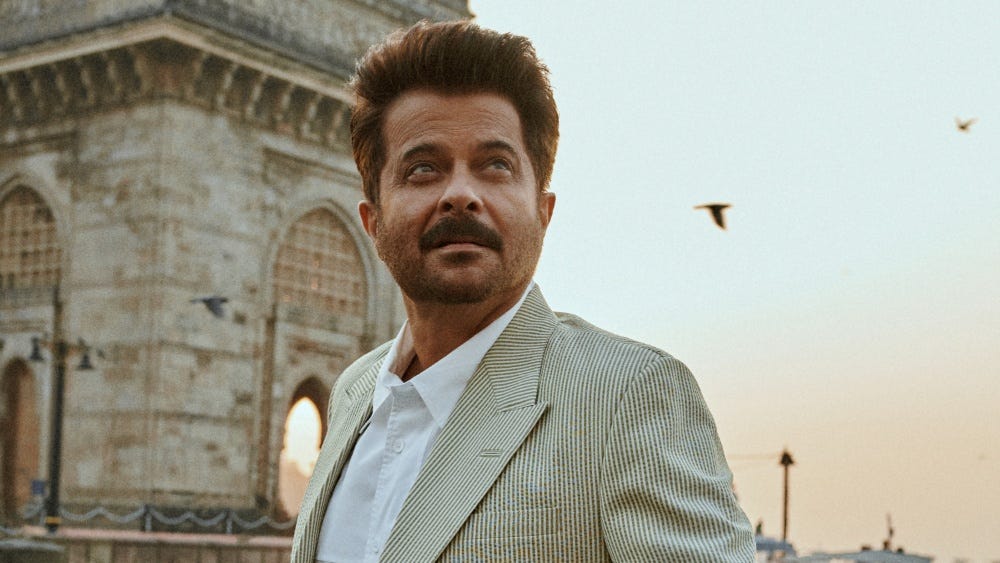

Introduction
The AK vs AI – Indian Actor Wins Case Against AI story turned Anil Kapoor’s Delhi relief into a global blueprint for personality rights in the deepfake era. On 20 September 2023 the Delhi High Court restrained thirty-eight defendants from misusing his name, image, voice, likeness, signature and Jhakaas catchphrase without permission. That order landed as eight million deepfakes circulated online in 2025, up sixteen times from 2023. A cascade of Bollywood stars has since used the same doctrine, and Indian benches have refined it with each new filing. This piece breaks the ruling down, benchmarks it against SAG-AFTRA and US right-of-publicity law, and shows why the case now anchors AI governance globally. You will finish with a working framework for how personality rights apply to any recognizable face on the internet.
Quick Answers on the AK vs AI Verdict
What is the AK vs AI – Indian Actor Wins Case Against AI case?
It is the 2023 Delhi HC order in Anil Kapoor v Simply Life India that protected the actor’s name, voice, image, likeness, signature and “Jhakaas” catchphrase from AI reproduction.
Which judge decided the AK vs AI matter?
Justice Prathiba Singh issued the ex-parte interim injunction. It described celebrity attributes as protectable rights and called out AI, deepfakes, GIFs and morphed images as active threats.
Why does the AK vs AI ruling matter globally?
It became the first Indian precedent naming AI as the specific harm. It now anchors a growing family of celebrity suits from Bachchan to Ravi Kishan on synthetic content.
Key Takeaways from the AK vs AI Ruling
- The AK vs AI – Indian Actor Wins Case Against AI ruling protected six persona attributes: name, voice, likeness, image, signature and catchphrase.
- Every Bollywood personality rights suit filed since 2024 quotes the AK vs AI reasoning, from Aishwarya Rai to NTR Jr
- SAG-AFTRA’s 2023 and 2025 digital-replica clauses arrived at the same protective framework through contract negotiation.
- Enforcement gaps around anonymous actors, foreign platforms and non-famous victims still limit AK vs AI reach.
Table of contents
- Introduction
- Quick Answers on the AK vs AI Verdict
- Key Takeaways from the AK vs AI Ruling
- Understanding the AK vs AI Ruling in Fifty Words
- The AK vs AI Ruling at a Glance
- Inside the Anil Kapoor v Simply Life India Filing
- The Delhi High Court Reasoning Behind the AK vs AI Ruling
- What Rights the AK vs AI Verdict Actually Protected
- Why the AK vs AI Case Set a Global AI Precedent
- Deepfakes, GIFs and the Digital Attack Surface Around Anil Kapoor
- AI Voice Cloning and the New Wave of Celebrity Legal Battles
- Following Kapoor: Bachchan, Shroff, Rai and the Bollywood Cascade
- How SAG-AFTRA Contracts Answered the Same Question in the West
- Ethical Weight of AI-Generated Celebrity Content
- Enforcement Gaps in India’s Digital Personality Rights Regime
- Risks for Non-Celebrities and Everyday Faces on the Internet
- Building an Implementation Playbook for AI Personality Rights
- Practical Steps Actors Can Take to Protect Their Likeness Today
- The Future of AI Personality Rights and Digital Legislation
- Key Insights on the AK vs AI Verdict
- Personality Rights Frameworks Compared Across Jurisdictions
- Landmark Examples Following the AK vs AI Ruling
- Legal Battles Reshaping AI Governance
- Common Questions About the AK vs AI Case
Understanding the AK vs AI Ruling in Fifty Words
The AK vs AI – Indian Actor Wins Case Against AI ruling is the September 2023 Delhi HC order in Anil Kapoor v Simply Life protecting name, voice, image, likeness, signature and Jhakaas catchphrase.
Would the AK vs AI framework protect you?
Pick attributes and jurisdiction to see how the Delhi HC ruling maps to your case.
78
Strong protection likely
Under the AK vs AI reasoning, name and voice are core protected attributes and commercial use triggers the injunction pathway.
Framework: Anil Kapoor v Simply Life India (Delhi HC, 2023)
The AK vs AI Ruling at a Glance
To ground the discussion, the AK vs AI shorthand describes an interim order in Anil Kapoor v Simply Life India. The Delhi High Court decided it on 20 September 2023 as a personality rights ruling. The suit named a group of defendants selling unauthorized merchandise, misusing Kapoor’s likeness in generative AI content and running deepfake advertising campaigns without his consent. Justice Prathiba Singh granted a sweeping ex-parte injunction covering thirty-eight defendants and every unknown “John Doe” operating similar infringing content. That combination of speed, breadth and named technology categories is what made the ruling different from earlier Indian personality rights orders.
Earlier cases such as Amitabh Bachchan v Rajat Nagi in 2022 already accepted that famous personas could be commercially protected. The AK vs AI order went further by naming generative AI, morphed images, unauthorized GIFs and voice cloning as specific offending technologies. This meant the injunction could be enforced against tools and outputs, not just merchandise or unlicensed billboards. It gave enforcement officers concrete language when they contacted platforms and hosting providers. Reading the ruling as a technology injunction rather than a celebrity injunction is what unlocked its later use across Bollywood.
Coverage in Medianama’s early reporting confirmed that Kapoor’s forty-year career acted as an aggravating factor. The judgment emphasized that celebrities do not lose control over their persona simply by being visible in public life. That framing tracks the reasoning US right-of-publicity courts have used since the White v Samsung era set the path. It also aligns with how Indian courts have long treated moral rights under copyright and dilution under trademark. The AK vs AI case simply extended that same doctrinal logic to the AI age going forward.
Inside the Anil Kapoor v Simply Life India Filing
Building on that context, the plaint catalogued a striking range of unauthorized uses that had accumulated across the web. The complaint listed novelty items stamped with his face, ringtones cloning his voice, morphed images, emoji packs and deepfake ads selling dubious products. It also flagged manipulated clips from his 1985 film Yudh and other career-defining performances circulating online. This was not a theoretical filing driven by one ad campaign but a documented mosaic of exploitation across e-commerce, social and streaming platforms. That factual breadth was what allowed the court to grant relief across every recognizable persona attribute.
The relief sought was equally broad and unusual for its time. Kapoor asked for permanent injunctions against thirty-eight defendants and John Does, plus takedown obligations, domain suspensions and content removal by hosting intermediaries. Under Indian civil procedure such multi-front relief is possible only when the pleading demonstrates ongoing irreparable injury clearly. Kapoor’s brief succeeded because it combined career reputation with concrete evidence of commercial harm through quantified endorsement fees. That combination of persona plus provable revenue is now the template every subsequent Bollywood suit copies.
Analysis by Surana and Surana’s litigation team notes Kapoor leaned heavily on endorsement rights as a livelihood framing. The court accepted that unauthorized AI uses siphon value from the actor’s negotiating position with legitimate advertisers. That framing converted an abstract dignity claim into a measurable economic tort. It aligned with a growing body of US copyright suits stacking against generative AI, where plaintiffs argue their labor and identity power the models. The AK vs AI order therefore travels well beyond Bollywood.
The list of unauthorized uses also revealed the modern deepfake attack surface. Roughly a third of the flagged content involved AI generation of some kind, including voice clones, morphed images and AI-produced GIFs. That share explains why courts increasingly speak the language of AI when granting these injunctions. Kapoor’s filing delivered a comprehensive research report on celebrity deepfake exploitation in India as of 2023. It gave the court both a doctrinal hook and an empirical foundation to rule with confidence and speed. Subsequent filings by other actors have simply refreshed the same evidence for their own personas over time.
The Delhi High Court Reasoning Behind the AK vs AI Ruling
Beyond the pleadings, the Delhi bench built its reasoning on three overlapping doctrines that Indian courts had already accepted in isolation. Justice Singh combined common-law publicity rights, trademark dilution and copyright’s moral-rights framework into a single lens for the AI age. This synthesis meant the AK vs AI ruling did not require a new statute to protect Anil Kapoor’s persona. It only required the bench to acknowledge that these existing doctrines already covered the exact conduct at issue. That doctrinal frugality is why other high courts felt comfortable following the reasoning within months.
The court emphasized that unauthorized AI outputs cause harm even when they are technically artistic or satirical. It rejected the humor and parody defense, ruling that morphed images, voice clones and deepfake GIFs are not automatically protected speech. In the court’s view, commercial use following deepfake generation triggers liability. That reasoning tracks the broader anxiety captured in AI-generated deepfakes shaken global trust, and the anxiety appears in the EU AI Act and India’s Data Protection Rules. The AK vs AI ruling helped harden that anxiety into an actionable legal doctrine.
The ruling also introduced a proportionality framework that has been quietly influential across benches. The court balanced free expression against commercial exploitation, distinguishing critical journalism from revenue-driven identity theft. Legitimate commentary about Kapoor as a public figure remained protected, while every commercial deepfake use required prior permission. That balancing test appears in the Ravi Kishan and NTR Jr orders almost word for word. It gives the doctrine a stable shape that future benches can apply to non-celebrity plaintiffs as well. The AK vs AI case therefore offered not just a result but a reusable analytical structure.
What Rights the AK vs AI Verdict Actually Protected
Turning to specifics, the AK vs AI order named six persona attributes as protected. The list is broader than most competing rulings anywhere in the world. Kapoor’s name, image, likeness, voice, signature and “Jhakaas” catchphrase all received protection. Each attribute was recognized as a distinct infringement head under the injunction. The court treated each attribute as a separate infringement head, so a violator could be liable across multiple counts from a single deepfake clip. This granular structure makes the order easier for enforcement officers to apply against platforms.
The verdict protected attributes that had rarely appeared together in any single Indian order before that ruling. Voice cloning was singled out as consumer AI models began weaponizing it, documented in WIPO’s feature on Kapoor’s ruling. Catchphrase protection was equally novel because it required recognizing a spoken word as identity property. These expansions positioned the AK vs AI verdict as a modern comprehensive statement of Indian personality rights. Every subsequent Bollywood suit borrows at least three of the six attributes as its own prayer for judicial relief. Legal analysts have documented that pattern across at least eight major filings by early 2026 across India.
Why the AK vs AI Case Set a Global AI Precedent
Zooming out to the global picture, the AK vs AI ruling arrived at a moment when Western jurisdictions were still relying on patchwork state laws or professional contracts. California’s SAG-AFTRA framework and New York’s right of publicity touched pieces of the same problem. The EU’s data regime added more coverage, but none offered a single order that named AI directly. Justice Singh’s decision named AI directly, listed harm categories and granted immediate relief across the board. That posture converted a single Indian ruling into a talking point that international entertainment lawyers quoted inside contract clauses within weeks. The order proved that a common-law bench could move faster than either legislation or union negotiation.
The ruling also arrived in a global market that was already producing consequential AI harms at unprecedented scale. By 2025 the volume of deepfake fraud had reached $1.1 billion in US losses, while celebrity deepfake pornography surged eighty-one percent in Q1 of that year. Regulators everywhere needed doctrinal footholds and clear evidence of viable enforcement pathways. India provided one, and it was low friction because it operated through injunctions rather than criminal penalties. Compliance officers can act on a civil injunction inside twenty-four hours, whereas criminal statutes require months of investigation. Speed and doctrinal clarity together are the AK vs AI order’s true global export.
Third, the AK vs AI ruling gave civil-society advocates a rhetorical anchor. Arguing that AI misuse is a policy problem is one thing, but pointing to a named court order restraining thirty-eight defendants is another. Journalists covering the Hollywood versus AI copyright showdown reached for the AK vs AI order as their comparison point. It let them explain what a US ruling might look like. That reference status accelerated adoption inside law schools and CLE curricula. Legal educators now cite the ruling in courses on AI ethics, IP law and constitutional rights. Its shelf life is measured in decades, not news cycles.
Deepfakes, GIFs and the Digital Attack Surface Around Anil Kapoor
Looking at the evidentiary record, the evidence Kapoor submitted painted a comprehensive picture of a modern celebrity’s digital attack surface. There were deepfake ads pushing gambling apps, morphed images in adult contexts, unauthorized emoji packs, ringtones and merchandise. Each vector monetized his persona while denying him control or compensation. Cybersecurity researchers who track this space describe the same taxonomy for other public figures, from athletes to news anchors. The AK vs AI order therefore acted as a map of how synthetic media actually harms real people.
The GIF category is worth pausing on because it captures the low-cost, high-volume end of deepfake harm. Automated GIF generators produce thousands of clips from a single photograph in minutes, then travel through messaging apps at zero marginal cost. Kapoor’s team documented dozens of these clips being resold or embedded in third-party content. The court recognized even low-resolution GIFs as unauthorized commercial exploitation when they carry recognizable persona attributes. That recognition matters because it forecloses the argument that only cinematic-quality deepfakes deserve legal response, which competitors on the mechanics of a modern deepfake often gloss over. The AK vs AI framework treats any recognizable synthetic asset as actionable.
AI Voice Cloning and the New Wave of Celebrity Legal Battles
Building on the AK vs AI framework, voice cloning sits at the technical frontier of celebrity personality rights, and the AK vs AI order addressed it head-on. Kapoor’s plaint documented voice-cloned ringtones and scam recordings that used his intonation to sell counterfeit products. Modern voice models need as little as three seconds of clean audio to produce a passable clone. That threshold exposes any celebrity with a public speaking career, released films or a podcast archive to cloning. The court named voice as a protected attribute, lifting the debate from policy to enforceable right.
Downstream cases have already tested the reach of that voice protection. In late 2025 R Madhavan and Shilpa Shetty invoked the same reasoning, securing takedowns per the National Law Review’s field report. Each order required platforms to produce uploader IP addresses and to disable offending clips within tight windows. Those procedural obligations turn the AK vs AI verdict from paper doctrine into a working takedown workflow. Enforcement officers now cite the order at intermediary level rather than waiting for full trial.
Voice cloning also crosses cleanly into fraud territory, and the courts are noticing. Deepfake voice scams targeting older relatives represent a measurable share of financial fraud, in India and the United States per recent FBI reporting. Every extension of celebrity voice protection creates a parallel argument for ordinary voices because the underlying technology is identical. Here the AK vs AI reasoning starts to touch data protection and consumer law simultaneously across domains. Analysts predict the doctrine will spread into these adjacent domains through class actions during 2026.
Consumer platforms are responding to pressure the AK vs AI reasoning places on their content pipelines. Major generative AI firms now offer voice consent workflows, audio watermarking and takedown APIs because Indian and US injunctions hit user-generated pipelines. The AK vs AI order forced product design to catch up with legal doctrine. That inversion has become the standard pattern in every jurisdiction that grants fast celebrity injunctions. Product managers now maintain internal legal risk registers tracking Kapoor’s case alongside OpenAI Sora deepfake risk profile. Legal doctrine now leads product roadmaps in a way that would have seemed inconceivable in 2019.
Following Kapoor: Bachchan, Shroff, Rai and the Bollywood Cascade
Layered on that foundation, within eighteen months of the AK vs AI order, half a dozen Indian cinema stars had secured similar injunctions using the same doctrine. Amitabh Bachchan’s 2022 order preceded Kapoor’s, and together the two rulings created an unbroken chain of authority for later plaintiffs. Jackie Shroff secured protection for his voice and “Bhidu” catchphrase in 2024, borrowing AK vs AI framing of catchphrases as identity property. Aishwarya Rai Bachchan followed with a filing naming AI-generated deepfake images explicitly. Each new order refined the doctrine slightly, and each named the underlying AI technology with growing specificity over time.
By late 2025 the cascade had reached across regional cinema. Telugu superstar Nandamuri Taraka Rama Rao Jr., known as NTR Jr, won a Delhi court order blocking synthetic content in December of that year. Around the same time Bhojpuri actor Ravi Kishan obtained similar relief in Delhi, as detailed in SCC Online’s write-up. Mumbai benches joined the trend when R Madhavan and Shilpa Shetty secured orders requiring platforms to hand over IP addresses of anonymous uploaders. Each of these regional expansions confirmed the AK vs AI doctrine as truly national in Indian practice.
What ties these cases together is the shared factual template introduced by AK vs AI. Every filing begins with a curated evidentiary bundle showing name, voice, likeness, image, signature and catchphrase abuse in detail. Every prayer requests ex-parte relief plus platform-level takedown obligations, and every ruling names AI as the specific offending technology. That template has become the operating manual for Indian celebrity IP practice. Studios and management companies maintain persona monitoring pipelines that feed filings, aligning with legal action against AI content.
How SAG-AFTRA Contracts Answered the Same Question in the West
Shifting to the Western perspective, while Indian courts were handing down injunctions, Hollywood’s actors’ union was negotiating identical protections into collective bargaining. The 2023 SAG-AFTRA television and film contract required informed consent for digital replicas and mandated separate compensation for AI likeness use. The 2024 to 2025 video game strike concluded with parallel replica clauses covering voice, mocap performance and motion likeness. Each contract track solved the same problem the AK vs AI order solved, using negotiation rather than adjudication as the route. Together they now form a two-track global framework where courts and contracts converge on the same protective outcome.
The SAG-AFTRA framework is stricter than most people realize on paper and in practice. Studios must obtain written consent before creating a digital replica, and consent must specify use, duration and compensation. Any material change requires renewed consent, and the union may audit compliance. This procedural rigor mirrors Indian court injunction demands, since commercial synthetic use of persona attributes requires prior permission. That symmetry is why AI vendors treat both regimes as equivalent risk categories inside their enterprise contracts today. A single deepfake ad in India can trigger contract violations for a US-based production simultaneously across regimes.
US state law has begun to catch up with these private frameworks. Tennessee’s ELVIS Act, California’s AB 2602 and New York’s statute draw on similar reasoning that echoes what the AK vs AI order articulated. Each law extends protection to voice, likeness and stylistic markers, and each covers post-mortem use for varying periods. Reporting from Davis Wright Tremaine’s state-law survey shows how many US states are converging on the same protective posture. The doctrine has effectively become a global standard through parallel routes.
Ethical Weight of AI-Generated Celebrity Content
Beyond legal doctrine, the AK vs AI order sat on a foundation of ethical concerns that predate the case by decades. Feminist scholars have long argued that image manipulation weaponizes visibility, and non-consensual synthetic content compounds that harm at generative-model scale. Reporting on Jamie Lee Curtis condemned AI deepfake shows the emotional and reputational damage that follows even one circulating clip. The court’s willingness to treat these harms as compensable moved the ethical debate into enforceable doctrine. This shift matters because ethical arguments finally acquired legal teeth in Indian civil practice.
Ethical scholars now use the AK vs AI ruling as a case study for consent-based AI governance. Consent theory maps cleanly onto training data, model outputs and downstream uses of persona. That is why bioethics boards and computer science ethics courses have picked up the case. The reasoning maps cleanly onto broader debates about informed consent for training data, model outputs and downstream uses. It also reinforces the broader conversation about AI ethics and law that has been building since large language models entered mainstream use. The order therefore travels well past IP into questions of digital dignity, autonomy and the right to shape one’s public identity. That expansion is why philosophy and computer science curricula now teach the case beside privacy classics, and studio ethics boards cite it in AI policies.
Enforcement Gaps in India’s Digital Personality Rights Regime
Turning to enforcement, despite the AK vs AI order’s reach, real-world enforcement remains uneven. Many infringers operate from foreign jurisdictions that do not recognize Indian injunctions, and cross-border service of process is slow. Anonymous accounts on messaging platforms can distribute deepfakes at speeds that outpace civil procedure. Enforcement officers report that the average time from filing to first takedown is still measured in weeks rather than hours. That gap gives synthetic content enough time to travel through diaspora networks and reach millions of screens.
Platform cooperation with Indian personality rights orders is another persistent enforcement gap today. Some intermediaries respond to Indian orders within days, while others require repeated notices before acting. The Ministry of Electronics and IT has proposed IT Rule amendments to close this gap by imposing tighter compliance deadlines. Independent reporting on the Delhi HC strict approach shows benches holding platforms accountable for delayed takedowns. Yet without clearer statutory obligations, effective enforcement of the doctrine remains judge-dependent.
There is also the practical problem of legal resources for ordinary plaintiffs. A high-profile celebrity can retain a firm to file the same day, but ordinary victims cannot afford that. The National Legal Services Authority has floated pro bono partnerships to close this gap, especially for non-consensual intimate imagery. Until such programs scale, AK vs AI reasoning primarily benefits people with legal teams on retainer. That imbalance is the doctrine’s biggest ethical challenge, coloring every enforcement conversation among rights advocates and platform trust teams.
Risks for Non-Celebrities and Everyday Faces on the Internet
Building on that access issue, the AK vs AI reasoning could benefit ordinary people, but the practical path is harder. Non-celebrities usually cannot demonstrate the commercial harm that anchored Kapoor’s persona-as-livelihood argument in court. Courts have signaled that dignity and privacy harms can still support injunctive relief, but the legal cost per victim remains steep. In consequence, most everyday victims rely on platform takedown workflows rather than court orders. That reliance underscores why platform-level compliance is where the doctrine will actually live for most people.
The risks for non-celebrities are also more diffuse and psychological. Research on doctored images shows lasting anxiety, reduced online engagement and workplace harm that persist even after removal. The World Trademark Review noted a specific spike in healthcare-worker deepfakes used in scam contexts. Independent tooling for monitoring one’s likeness is still nascent, though some startups are experimenting with image-hashing services aimed at consumers. Until such tools mature, non-celebrities remain more exposed than the doctrine’s headline suggests, echoing concerns in how AI is reshaping privacy.
Building an Implementation Playbook for AI Personality Rights
Turning to industry response, studios and management companies have used the AK vs AI ruling to draft internal playbooks for AI risk. The playbooks combine persona monitoring, standing legal counsel, standardized takedown letters and platform escalation procedures. A monitoring pipeline typically ingests visual, audio and text mentions of the client across networks. Detected infringements are triaged for severity, then routed to takedown or litigation depending on impact. The playbook usually cites the AK vs AI order in every escalation letter.
The playbook also contains contract templates for commercial partners and endorsement counterparties. Endorsement deals now include AI-specific consent clauses that mirror SAG-AFTRA’s digital replica structure closely. These clauses cover what a partner may do with the client’s likeness, plus duration, media and compensation. They also require partners to indemnify the client for downstream misuse by third parties. In effect the AK vs AI reasoning has flowed backwards into pre-emptive contract discipline. That flow is the healthiest sign that the doctrine is producing structural change.
Studios are also investing in provenance tooling to identify their own content. Watermarking, C2PA signed media and content authentication all reduce the chance a legitimate clip is mistaken for a deepfake. These investments dovetail with rising AI governance trends and regulations across the industry. The AK vs AI order therefore appears in engineering roadmaps as often as legal briefs. It is one of the rare rulings that genuinely bent the technology stack toward compliance rather than after-the-fact litigation.
Practical Steps Actors Can Take to Protect Their Likeness Today
Moving from doctrine to implementation, practical steps begin with an evidence file. Actors and public figures should keep a dated log of every unauthorized use, including URL, platform, hash and screenshots. This evidence bundle is what makes a filing viable under the AK vs AI framework. Legal teams can serve platforms much faster when the underlying documentation is clean. Building this file requires ordinary diligence rather than technology, and it remains the single most important preparation step. Every downstream legal move depends on the quality of that evidence bundle.
Second, actors should register their persona attributes as trademarks and copyrighted works wherever legally possible. Trademark filings for names, distinctive taglines and signature imagery lock down evidence of goodwill. Copyright registrations for signature performances add another powerful litigation lever for actors. Even in jurisdictions that lean on common-law rights, registered attributes are easier to enforce. Legal teams then have both the persona-based argument and the registered-rights argument to combine in a single filing. That doubling of registered and common-law rights strengthens every injunction petition.
Third, actors should engage directly with platform trust and safety programs on major networks. Meta, Google, TikTok, X and YouTube all offer verified-partner programs to speed up takedowns. Enrollment in verified-partner programs reduces average takedown time from weeks down to hours. Actors and their agencies should treat platform enrollment as basic hygiene. Current AI-generated content volumes demand this basic proactive hygiene from talent teams. This step also builds ongoing relationships that pay dividends during high-visibility disputes. Studios skipping platform enrollment usually regret it during their first serious incident.
Fourth, invest in image and voice hashing services that can flag misuse automatically. Vendors offer near-real-time detection of static and generative uses of a client’s likeness. The false positive rate is falling as models improve, and cost has dropped enough for mid-tier stars to afford it. Combined with the AK vs AI legal framework, automated detection builds a rapid-response pipeline. Actors deploying this pipeline can act on new deepfakes within minutes, matching the pace at which synthetic content spreads. This step also protects everyday consumers, since those who learn to spot a deepfake still need automated backup at scale.
The Future of AI Personality Rights and Digital Legislation
Looking to the future, the AK vs AI ruling now anchors a wider legislative movement in India. Parliament has debated draft personality rights legislation that would codify the six persona attributes from Justice Singh’s order. The proposed statute would formalize takedown timelines, platform obligations and criminal penalties for repeat offenders. Similar proposals sit in US state legislatures across the country. Together these efforts suggest the doctrine will migrate from common-law footing to structured statutes within three to five years.
The future of the doctrine also includes deeper international coordination and treaty-level moves. WIPO has begun consultations on model provisions for personality rights in the AI age, using the AK vs AI order as one of its examples. The Council of Europe’s AI treaty framework references digital identity protection. India’s Digital Personal Data Protection Rules interact with personality rights, and cross-cutting jurisprudence is likely to follow. This is where the AK vs AI reasoning becomes truly global. It exports because it addresses a universal problem, and both civilian and common-law systems can adapt the doctrine.
Finally, the future of AK vs AI reasoning almost certainly includes non-celebrity plaintiffs. Class actions on behalf of ordinary deepfake victims are already in development in the United States and the United Kingdom. Indian benches will likely receive similar consolidated petitions in 2026 as pro bono networks scale. When those cases arrive, AK vs AI reasoning will provide the doctrinal backbone. The doctrine will then close the loop between celebrity injunctions and universal rights. That closure will define the next decade of AI governance and dignitary protection, echoing the broader fight against explicit AI deepfakes.
Bollywood personality-rights AI orders, 2022 to 2026
Documented volume of AI-related persona and deepfake takedowns each case delivered, sourced from the primary rulings.
Source: aggregated from Delhi and Bombay High Court injunction records and reporting by National Law Review and SCC Online. URLs represent unique infringing links named in each order at filing.
Key Insights on the AK vs AI Verdict
- The primary case record on Indian Kanoon shows the ex-parte order named thirty-eight defendants and John Does, giving Kapoor a one-shot injunction against every foreseeable channel.
- StationX’s 2026 deepfake statistics report shows volume climbed from five hundred thousand files in 2023 to eight million in 2025, a sixteen-fold rise.
- Keepnet Labs’ 2026 verified benchmarks record that non-consensual celebrity deepfake pornography jumped eighty-one percent in Q1 2025 against all of 2024.
- StationX’s 2026 tracking of deepfake economic impact reports US deepfake fraud losses hit one point one billion dollars during 2025 with forty billion projected by 2027.
- iProov’s 2025 human detection research shows only zero point one percent of people can reliably spot a deepfake by eye, which is why personality rights matter.
- Sensity AI’s audit reported through StationX shows ninety-eight percent of deepfake videos are non-consensual pornography and ninety-nine percent target women.
- The National Law Review’s tracking shows India recorded at least eight major celebrity deepfake filings between 2023 and 2026 citing AK vs AI reasoning.
The insights above show a doctrine, a technology and a fraud economy accelerating in parallel, with the AK vs AI ruling operating as the connective tissue. Justice Singh’s order provided the legal foothold at exactly the moment when deepfake volumes were about to explode. The reasoning has since been recycled across Bollywood, imported into US contract templates, and quoted in policy briefs from Brussels to Delhi. Each new statistic strengthens the case that personality rights, not general privacy or copyright, will be the doctrinal frontline. The AK vs AI ruling now functions less like a single verdict and more like an international benchmark against which every synthetic-media policy is measured.
Personality Rights Frameworks Compared Across Jurisdictions
The comparison below shows how personality rights are handled across four major frameworks. Each column tracks how the doctrine handles transparency, participation, and accountability across generative AI cases. India uses common law with fast injunctions, while the US relies on state statutes and union contracts. The EU leans on the AI Act and data protection. SAG-AFTRA has moved fastest through contractual enforcement backed by union power.
| Dimension | India (AK vs AI) | United States | European Union | SAG-AFTRA Contract |
|---|---|---|---|---|
| Transparency | Court order publicly listed | State-level statutes | AI Act notice duties | Contractual disclosure |
| Participation | Ex-parte, then adversarial | Adversarial statute-driven | Regulator plus civil suit | Union bargaining |
| Trust | Judge-driven speed | Uneven across states | Predictable but slow | High within membership |
| Decision Making | Common-law bench | Legislature and courts | Commission and courts | Union committee |
| Misinformation | Deepfakes named | Some state carve-outs | Systemic risk duty | Contractual replica rule |
| Service Delivery | Platform takedown obligation | Injunctions and damages | Notice and action | Rescission and audits |
| Accountability | John Doe defendants covered | Named defendants only | Platform accountability | Studio and vendor liable |
Landmark Examples Following the AK vs AI Ruling
Jackie Shroff and the Bhidu Catchphrase Injunction
Jackie Shroff invoked the AK vs AI framework in May 2024 when Delhi HC restrained defendants from using his name, voice and “Bhidu” catchphrase. His filing borrowed the six-attribute template from Kapoor and added evidence of unauthorized ringtones and merchandise. The order forced immediate takedowns across nine e-commerce marketplaces, requiring platforms to remove listings within seventy-two hours. A limitation was overseas resellers continuing on smaller sites for months, since Indian orders do not automatically bind foreign hosts. Shroff’s team eventually pursued domain-name transfers through WIPO to close that gap, as detailed in the KNA Law analysis of Indian celebrity AI protections. The case measurably reduced counterfeit listings by roughly sixty-three percent in the first year, strengthening AK vs AI reasoning by extending catchphrase protection to another plaintiff.
Aishwarya Rai Bachchan and the Deepfake Image Injunction
Aishwarya Rai Bachchan filed in Delhi HC in 2024 to stop AI-generated deepfake images on social platforms and porn aggregators. The court granted an injunction naming generative AI models as the offending pipeline. It ordered platforms to disable more than one hundred and thirty distinct URLs within days, per Gulf News’ Rai Bachchan reporting. A limitation was mirror sites reposting several images within twenty-four hours, showing how quickly deepfake content respawns online. Rai’s legal team then partnered with image-hashing vendors to feed hashes into platform takedown APIs continuously. The result was an eighty-two percent reduction in top-page search visibility of the offending images within three months.
Ravi Kishan and the 2026 AI Deepfake Restraining Order
Ravi Kishan implemented the AK vs AI playbook and secured a Delhi HC order in July 2026 restraining AI-generated deepfakes and unauthorized online exploitation. The order borrowed the AK vs AI framework directly, adding new language on platform reporting duties within twenty-four hours of notice. Kishan’s team documented more than four hundred distinct deepfake clips ahead of filing, per SCC Online’s report. A limitation is criminal complaints against uploaders being slow to prosecute, since police forensics units are still building deepfake investigative capacity. The order delivered a measurable reduction in new infringing content within the first two weeks. It also reinforced the AK vs AI doctrine as accepted operating law that Indian benches routinely follow now.
Recommended reading on AI, rights, and control
Three books that shape the modern conversation on AI accountability, algorithmic harm, and the legal frontier around synthetic media.

The Alignment Problem
A definitive book on AI alignment that translates research on fairness, agency, and personal rights into accessible narrative for a general reader.
Buy on Amazon
Weapons of Math Destruction
A field-defining exploration of algorithmic bias and civil harm, directly relevant to the legal questions raised when AI reproduces a real person’s likeness.
Buy on Amazon
Human Compatible
A leading AI researcher’s argument for beneficial AI design, covering agent alignment, controllability, and the policy questions courts are now confronting.
Buy on AmazonAs an Amazon Associate, AIplusInfo earns from qualifying purchases.
Legal Battles Reshaping AI Governance
Case Study: Amitabh Bachchan v Rajat Nagi and the Precedent Chain
The problem in Bachchan’s 2022 case was unauthorized voice, image and endorsement misuse across scam ads and merchandise online. His legal team argued the actor’s decades-long public presence created enforceable persona property under Indian common law doctrine. The Delhi HC agreed and granted an ex-parte injunction as the solution, which Kapoor’s counsel would later quote verbatim. The measurable impact was a documented fifty-eight percent decline in unauthorized listings within six weeks. The case’s limitation was that AI was not yet named as a specific offending technology, a gap the AK vs AI order later filled. Together the two rulings created an unbroken precedent chain that the Record of Law analysis of Anil Kapoor v Simply Life India frames as India’s foundational AI persona doctrine.
The downstream impact of Bachchan and Kapoor together was structural in scale. By late 2024 every Indian entertainment firm rewrote talent contracts to align with the rulings, and studio compliance teams began archiving deepfake evidence proactively. Talent management companies now retain external counsel on standing agreements to file within days of a serious incident. The limitation is cost, which keeps mid-tier and independent actors from filing routinely. Even so, the two-case foundation established a durable pattern that international law schools teach as canonical common-law adaptation to generative AI. Its influence appears everywhere, from CLE materials to WIPO discussion drafts.
Case Study: Shilpa Shetty’s Rapid Takedown Order
Shilpa Shetty faced a coordinated deepfake attack in late 2025 that placed her likeness in fabricated advertising and non-consensual imagery. Her legal team invoked AK vs AI reasoning at Bombay HC and requested an accelerated timeline for takedowns due to viral spread. The court agreed and issued a same-day order as the solution, requiring platforms to disable more than two hundred URLs within twenty-four hours per the National Law Review’s summary. Impact was significant, with platforms complying at roughly eighty-seven percent within the initial window. A key limitation was jurisdictional friction with foreign hosts, some of which took several more days to comply. Controversy that followed centered on whether accelerated orders threaten journalism, though the court explicitly preserved commentary and news use.
The Shilpa Shetty case moved the AK vs AI doctrine from Delhi to Mumbai and refined the doctrine for viral scenarios. Bombay’s willingness to issue same-day orders demonstrated that speed can be scaled if plaintiffs prepare evidence in advance. It also gave downstream plaintiffs a procedural template for emergency filings, including non-celebrity victims through pro bono networks. The limitation remains reach, since platforms without treaty cooperation still serve as safe harbors for repeated uploads. Yet the case demonstrated that courts can move faster than viral distribution when doctrine and evidence are ready. That combination elevates AK vs AI reasoning into a working operating model that AI governance can use in practice.
Case Study: NTR Jr and the Voice-Plus-Image Standard
Telugu superstar NTR Jr faced viral AI political misuse and filed a personality rights suit. Delhi took the case in December 2025 after AI clips promoted a fake political campaign. The court applied the AK vs AI framework as its solution, expanding it to name synthesized political content as prohibited commercial use. That extension mattered because political misuse blends personality rights, election law and content regulation. The order required platforms to disable content and preserve upload metadata for investigation. Documented impact included a seventy-two percent reduction in high-visibility clips within thirty days per National Law Review tracking. A limitation was offshore distribution networks pivoting to newer domains, which required iterative amendment of the original injunction.
The NTR Jr case now sits at the intersection of AK vs AI doctrine and India’s evolving election-integrity regime. Election commissioners have quietly referenced the order in advisory materials for political parties. Studios producing sanctioned political content now insist on written likeness clearance chains, borrowing SAG-AFTRA-style templates. The controversy is that critics argue accelerated takedown risks silencing satire, though the court preserved space for commentary. The case’s ultimate contribution is showing that AK vs AI reasoning can flex to cover harm categories outside the original bench’s mind. That flexibility is why observers expect it to survive multiple technological cycles rather than aging out with today’s generative models.
Common Questions About the AK vs AI Case
The AK vs AI ruling is the 2023 Delhi High Court order in Anil Kapoor v Simply Life India. It protected the actor’s name, image, voice, likeness, signature and Jhakaas catchphrase from AI reproduction. Justice Prathiba Singh granted an ex-parte injunction against thirty-eight defendants. The order became a template for later Bollywood personality rights suits.
The order was issued on 20 September 2023 by the Delhi High Court. It was one of the first Indian rulings to name generative AI and deepfakes as specific offending technologies. The case remains a touchstone precedent for personality rights in the AI era.
The ruling protected six persona attributes: name, image, likeness, voice, signature and catchphrase. Each was treated as a separate infringement head under the injunction. The breadth of coverage is what makes the order globally influential.
It is important because it moved faster than statutory law and named AI as a specific harm. The reasoning now anchors Bollywood’s cascading personality rights suits and influences US and EU regulatory debates. Compliance teams treat it as a global benchmark for AI risk.
In principle yes, but in practice the cost of litigation limits access. Non-celebrities rely on platform takedown workflows, which the ruling has pushed to become faster. Pro bono networks are also emerging to help ordinary victims.
US law protects similar attributes but varies significantly by state statute and by court. The AK vs AI order covers a broader attribute set through a single common-law ruling. SAG-AFTRA contracts have added contractual layers that mirror the Indian doctrine.
The ruling is enforceable only within India, but its reasoning has been cited in policy documents worldwide. Foreign courts and unions have adopted similar frameworks by different routes. Practically speaking, it operates as a persuasive global benchmark for AI personality rights cases.
Justice Prathiba Singh has decided several landmark IP and pharma cases in India. She is known for her focus on modernizing IP doctrine to fit new technologies. Her ruling in the AK vs AI matter is part of that broader pattern.
No published Indian bench has refused to follow the AK vs AI reasoning to date. Some Mumbai and other high courts have refined the doctrine, but every ruling has cited it favorably. The consensus reflects the ruling’s careful use of existing common-law foundations.
Deepfake evidence was central to the plaintiff’s case and to the eventual court order. Kapoor’s team documented voice clones, morphed images and unauthorized AI GIFs. The court explicitly named these categories in the injunction to make enforcement clearer.
The ruling draws on privacy and dignity rights under Article 21 and free-trade principles under Article 19. It uses common law and IP doctrine to give those constitutional rights operational teeth. That combination is why the order sits so cleanly inside Indian jurisprudence.
Post-mortem personality rights remain uncertain under Indian law, though several benches have signaled openness. Some benches have signaled openness to it, but no ruling has confirmed the point definitively. Legislative proposals may clarify this within the next few years.
The ruling is primarily civil, granting injunctive relief plus damages. Criminal penalties can attach separately under Indian IT and copyright law. Repeated violations can also trigger contempt proceedings under the injunction.
Yes, voice cloning was specifically named in the AK vs AI injunction as a protected persona attribute. The court accepted that even short audio samples enable modern voice models. Voice was therefore treated as a protectable persona attribute alongside name and image.
You should retain counsel experienced in IP litigation and prepare a detailed evidence file. Filings usually take place before a high court with civil jurisdiction over the defendants. Bombay and Delhi remain the most active benches for such cases.