
Introduction
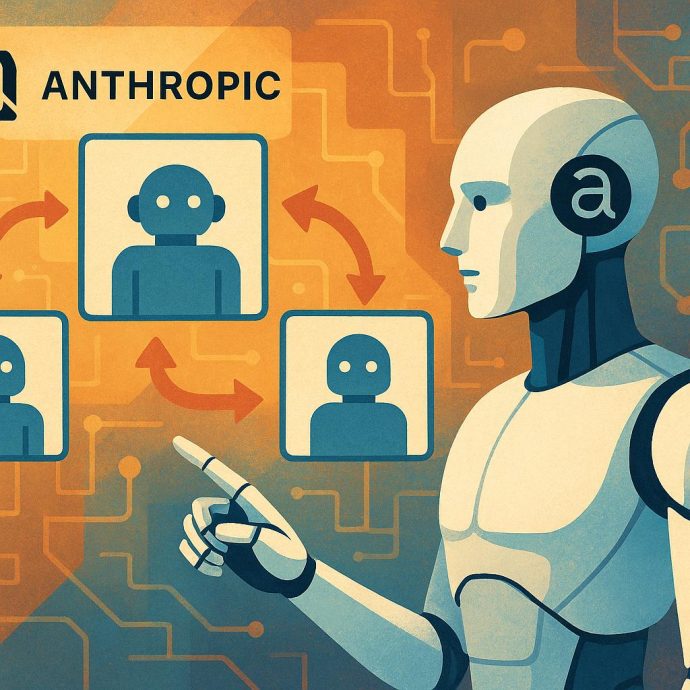
Anthropic unveils autonomous AI agents that represent a significant leap forward in the development of generative AI software tools. These Claude AI agents enable computers to execute software tasks such as document reading, spreadsheet manipulation, and web interaction based entirely on natural-language prompts. Designed with enterprise automation in mind, these tools aim to reshape productivity and redefine the boundaries of what AI autonomy can accomplish in real-world workflows.
Key Takeaways
- Anthropic AI agents take natural language input and autonomously perform multi-step software tasks without human oversight.
- Backed by Claude, Anthropic’s AI platform, these tools compete directly with OpenAI’s AutoGPT and Google’s Gemini initiatives.
- Use cases include document summarization, CRM data updates, spreadsheet analysis, and web captures in enterprise environments.
- Challenges remain, particularly around ethical decision-making, job automation impacts, and trust in uncontrolled autonomous systems.
A New Era of Claude AI Agents
The Claude AI agents introduced by Anthropic signal a strategic shift toward more autonomous AI assistants that act independently in real environments. These agents can perform tasks traditionally requiring human input, such as navigating enterprise systems, executing logic across software, and synthesizing results into reports or actionable outcomes.
By interfacing with tools like web browsers and file systems, they can “read” PDFs or docs, import and clean spreadsheet data, or run queries across CRM platforms. All of this is done from plain English prompts, lowering the barrier to sophisticated automation. These agents represent a key evolution beyond question-answering chatbots into utility-grade AI capable of executing structured software logic.
How Anthropic AI Agents Work
Built on the Claude 3 model family, Anthropic’s AI agents integrate several innovations to allow safe autonomous task execution. The agent architecture includes:
- Task Planning Engine: Breaks natural language into goal-oriented steps.
- Tool Use Manager: Interfaces with plugins, APIs, and applications for direct software interaction.
- Context Awareness Model: Maintains state as tasks progress through steps to completion.
- Guardrails and Intervention Protocols: Allow developers to limit, monitor, or revert actions when necessary.
For example, a user might say: “Summarize this employee handbook, flag compliance sections, and generate a PowerPoint summary.” The Claude agent would analyze the document, identify legal terms, extract content, and auto-generate visual slides using the initial instruction only.
Enterprise Automation: Real-World Examples
Use cases are expanding, particularly in areas where repetitive knowledge work slows efficiency. Here are realistic enterprise workloads that Claude AI agents can streamline:
- Contract Review: An agent scans dense legal documents, flags key clauses, compares terms to templates, and exports summaries to legal dashboards.
- Sales Forecasting: Pulls CRM records, applies sales logic rules, detects anomalies, and generates PowerBI-compatible output for manager review.
- Market Research: Gathers competitor pricing from the web, scrapes data into a spreadsheet, applies conditional formatting, and detects new promotional trends.
- Internal Communication Drafting: Reads HR policies, generates FAQs, updates employee portals, and notifies teams with Slack-ready messages.
When embedded into SaaS platforms, Claude agents function like AI-powered coworkers. They support teams by freeing up human capacity for higher-value planning and strategic initiatives.
How Anthropic Compares to OpenAI and Google
| Feature | Anthropic Claude Agents | OpenAI AutoGPT / GPT-4 Tools | Google Gemini Agents |
|---|---|---|---|
| Model Backend | Claude 3 | GPT-4 Turbo | Gemini 1.5 Pro |
| Task Autonomy Level | Moderate to High | Moderate | Moderate |
| Plugin/Tool Integration | APIs, tooling in progress | Browser, code interpreter, plugins | Workspace tools, third-party APIs |
| Primary Strength | Safety-first architecture and self-correction | Broad plugin ecosystem and interactivity | Cloud-native integration with Google services |
| Enterprise Focus | AI assistants for structured workflows | Code generation and agents in sandbox | Email, documents, and search use cases |
This comparison highlights Anthropic’s balance between task performance and safety. Claude AI agents appeal to organizations that require clear guardrails and trustworthy workflows for enterprise deployment.
Risks, Ethics, and Governance Concerns
Advanced autonomous AI assistants raise serious questions about accountability, control, and oversight. Unlike traditional AI that reacts to single prompts, these agents follow long instructions and may perform follow-up actions independently. Such autonomy introduces risk when decisions influence operations or sensitive data.
Ethicists have outlined several risks such as:
- Unexplained content decisions that affect business logic
- Accidental overwriting or deletion of important digital assets
- Biased language processing during hiring or HR automation
- Use of inaccurate or unverifiable online content as source material
Anthropic’s “constitutional AI” strategy helps enforce ethical standards in these workflows. According to Dario Amodei, this approach encodes behavioral rules directly into Claude’s decision-making model. Still, as these systems scale, thorough governance models will be required.
Impact on Workforce and Enterprise Software
A 2023 McKinsey report predicted that AI automation could reshape as much as 30 percent of white-collar work by 2030. Claude AI agents contribute to this shift by automating digital knowledge work, not physical labor.
These agents lower the burden on human operators through AI-driven compliance, reporting accuracy, and less manual back-end maintenance. Enterprise software platforms may increasingly become self-operating as integrations evolve with tools like Salesforce, ServiceNow, and Workday.
Industry leaders caution that AI agents should support, not replace, workers. Their value rises when used to eliminate repetitive tasks, leaving users free to focus on creativity and strategic responsibilities. Transparency, training, and oversight will be necessary to ensure ethical implementation.
Market Landscape and the Competitive AI Agent Race
The autonomous agent market is becoming highly competitive. Anthropic has drawn attention due to its partnerships, including details from Amazon’s $4 billion investment, which reinforces the strategic significance of Claude and generative AI software development.
Competitors are active as well. OpenAI continues iterating on AutoGPT. Startups like Adept are creating task-focused agents while others explore AI memory tools. The trend reflects a shift from simple chatbot communication toward agents that operate within complex digital environments.
Some of this momentum follows recent milestones such as Amazon and Anthropic’s collaboration on AI infrastructure, which supports the scalability of Claude’s capabilities. Large firms are already testing agents for critical tasks in finance, legal, and IT departments. Most tests occur in sandbox environments until performance and safety evaluations conclude.
Frequently Asked Questions (FAQs)
What are Claude AI agents?
Claude AI agents are autonomous AI tools developed by Anthropic. These tools act on natural language input to complete multi-step digital tasks, such as summarizing documents, processing data, and retrieving online information. They perform these tasks without requiring step-by-step supervision.
How do Anthropic AI agents differ from OpenAI’s GPT-4 tools?
Anthropic’s agents emphasize safety, explainability, and practical workflow automation. AutoGPT focuses more on wide-ranging action and integration flexibility while Claude agents are structured around ethical behavior and focused enterprise use cases.