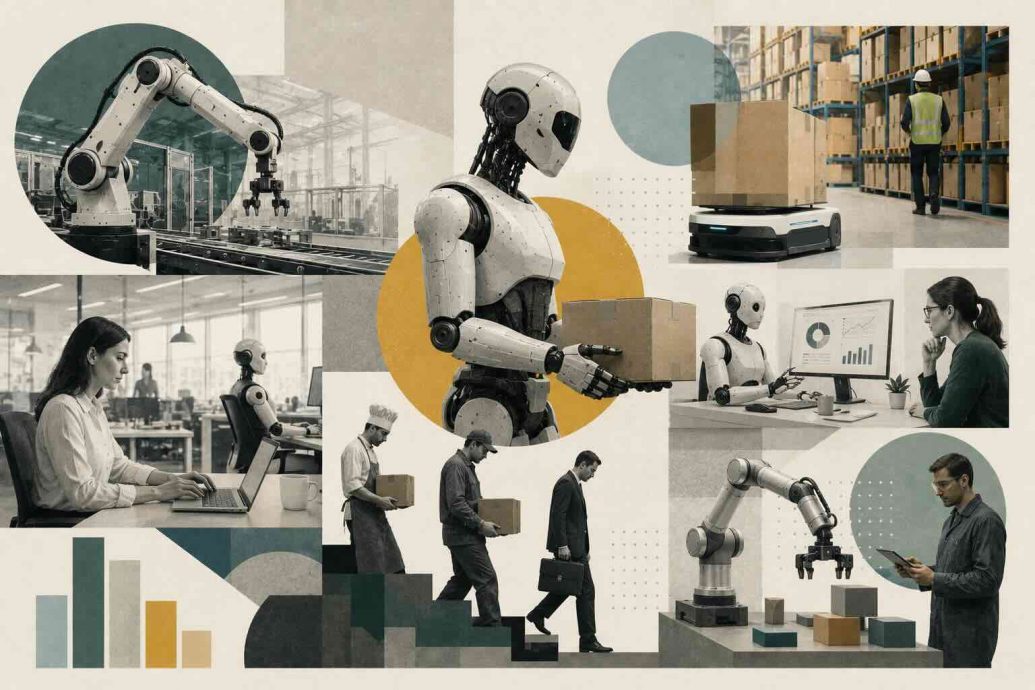

Introduction
Robotics is reshaping the modern workplace at a pace and scale that touches every industry from factory floors to hospital corridors, corporate offices to construction sites, creating a fundamental transformation in how humans perform their jobs. As of 2023, approximately 4.3 million industrial robots operated in factories worldwide, a 10 percent increase from the previous year, with annual installations exceeding 500,000 units for three consecutive years. The cobot market alone was valued at $2.95 billion in 2025 and is projected to grow at a compound annual growth rate of 23.1 percent through 2033, reflecting the accelerating shift toward human-robot collaboration rather than simple human replacement. An ABB survey of 1,500 enterprises across Europe, the United States, and China revealed that 84 percent of businesses plan to introduce or expand robotic automation within the coming decade. Research published through the International Federation of Robotics demonstrates that increased robot exposure reduces work-related injury rates by approximately 1.2 injuries per 100 full-time workers, saving an estimated $1.69 billion per year in injury costs in the United States alone. This article examines how robotics transforms workplace safety, productivity, culture, and career trajectories across sectors, providing practical insight for workers, managers, and policymakers navigating the shift toward human-robot workplaces.
How Robotics Is Changing Work
How are robots affecting the workplace today?
Robots are transforming workplaces by automating hazardous, repetitive, and physically demanding tasks through cobots, industrial arms, and autonomous mobile systems, reducing injuries by up to 50 percent in manufacturing while increasing throughput by 30 to 40 percent across logistics and production environments.
What is a collaborative robot?
A collaborative robot or cobot is a robotic system designed to work safely alongside human workers without protective cages, using force-limiting sensors and AI-powered awareness to stop automatically upon detecting contact, enabling shared workspace operation in manufacturing, healthcare, and food service industries.
Will robots replace all workplace jobs?
The IFR predicts that by 2034, more than half of manufacturing operators will work alongside robots rather than being replaced by them, as automation primarily eliminates dangerous and repetitive tasks while creating new roles in robot programming, maintenance, and human-robot workflow coordination.
Key Takeaways
- 84 percent of businesses surveyed by ABB plan to introduce or expand robotic automation, with the IFR predicting more than half of manufacturing operators will work with robots by 2034, creating demand for new skills in programming, maintenance, and human-robot coordination.
- The global robotics market reached $94.54 billion in 2024, with 4.3 million industrial robots operating worldwide and the cobot segment growing at over 23 percent annually as collaborative human-robot work models replace traditional cage-separated automation.
- Research across the US and EU demonstrates that increased robot density reduces workplace injuries by approximately 1.2 per 100 workers and saves billions in injury costs, though safety benefits concentrate in technologically advanced sectors with strong institutional support.
- Manufacturing operates 2 million cobots performing welds and packaging alongside humans in 2025, reducing workplace injuries by up to 50 percent while cobots can assemble electronics 30 percent faster than manual processes without fatigue degradation.
Table of contents
- Introduction
- How Robotics Is Changing Work
- Key Takeaways
- What Is Workplace Robotics?
- The Current State of Robotics in the Workplace
- Collaborative Robots and the End of Cage Separation
- How Robots Improve Workplace Safety
- Robotics in Manufacturing and Industry 4.0
- Healthcare Robotics and Surgical Precision
- Logistics and Warehouse Automation
- Construction and Hazardous Environment Robotics
- The Mental Health Dimension of Robot Coworkers
- New Career Paths Created by Workplace Robotics
- Robotics in the Service Sector and Retail
- The Small Business Automation Opportunity
- Ethical Considerations in Workplace Automation
- Workplace Safety Regulations for Robotics
- The Role of AI in Making Workplace Robots Smarter
- Preparing the Workforce for Robot Collaboration
- Challenges and Limitations of Workplace Robotics
- The Future of Human-Robot Workplaces
- Lessons for Organizations Adopting Workplace Robotics
- Key Insights on Robotics in the Workplace
- Comparing Robotic Impact Across Workplace Dimensions
- Real-World Examples of Robotics Transforming Workplaces
- Case Studies in Workplace Robotics Implementation
- Frequently Asked Questions About Robotics in the Workplace
What Is Workplace Robotics?
Workplace robotics encompasses the deployment of programmable automated machines, including industrial robots, collaborative robots, autonomous mobile robots, and AI-powered software systems, within professional environments to perform tasks ranging from physical manufacturing and logistics to healthcare assistance, customer service, and administrative processing alongside or in place of human workers.
🤖 Workplace Robotics Impact Dashboard
Select a robot type and adjust deployment parameters to see real-time impact on safety, productivity, costs, and workforce.
The Current State of Robotics in the Workplace
The integration of robots into workplaces has accelerated beyond the automotive assembly lines where industrial automation first gained prominence, spreading into logistics warehouses, hospitals, restaurants, construction sites, and corporate offices where new categories of robotic systems perform tasks that were exclusively human domain just a decade ago. According to IFR statistics, the total operational stock of industrial robots globally approached 4.3 million units in 2023, with more than half of all installations concentrated in China, Japan, the United States, South Korea, and Germany. The global robot density has reached 162 units per 10,000 manufacturing employees, a figure that has doubled over the past seven years, indicating that the average factory worker encounters robotic systems with increasing frequency during their daily work. The global robotics market reached an estimated $94.54 billion in 2024, representing a 14.7 percent increase from the previous year and reflecting the accelerating investment that employers are making in automated systems across every sector. Annual robotic installations exceeded 500,000 units for the third consecutive year in 2024, demonstrating sustained demand even during periods of economic uncertainty that have slowed investment in other technology categories. Traditional industrial robots still account for approximately 52 percent of the global market, but collaborative robots, autonomous mobile robots, and service robots are capturing an increasing share as applications expand beyond manufacturing into healthcare, hospitality, and professional services. Understanding the full breadth of artificial intelligence in robotics reveals how these systems are becoming more capable and adaptable across diverse workplace environments.
The geographic distribution of workplace robotics reflects both economic development patterns and cultural attitudes toward automation that vary significantly across regions. Asia Pacific accounts for approximately 46 percent of global robotics revenue, driven by China’s massive manufacturing sector and Japan’s cultural embrace of robotic technology in both industrial and service applications. Europe maintains strong robotics adoption particularly in Germany’s automotive and engineering sectors, while North America shows growing deployment in logistics, healthcare, and food service alongside traditional manufacturing applications. The medical sector is projected to account for approximately 27 percent of the global robotics market in 2025, highlighting how workplace robotics has expanded far beyond factory settings into environments where precision, sterility, and patient safety create compelling automation use cases. Developing economies are beginning to adopt workplace robotics as costs decline and technology becomes more accessible through cloud-connected systems and robot-as-a-service business models.
Collaborative Robots and the End of Cage Separation
The most significant shift in workplace robotics is the rise of collaborative robots, or cobots, which are designed to work safely alongside human workers without the protective cages and barriers that have traditionally separated people from industrial machines. The cobot market was valued at $2.95 billion in 2025 and is projected to grow at a compound annual growth rate of 23.1 percent between 2026 and 2033, making cobots one of the fastest-growing segments of the broader robotics industry. Companies deployed a record 64,542 collaborative industrial robots worldwide in 2024, representing a 12 percent increase from the previous year as manufacturers increasingly recognize that human-robot collaboration produces better outcomes than either fully manual or fully automated approaches. Modern cobots use force-limiting sensors, computer vision, and AI-powered awareness systems that detect human presence and stop automatically upon contact, enabling shared workspace operation that was impossible with traditional industrial robots designed to operate in isolated cells. This safety architecture allows cobots to be deployed without the expensive infrastructure modifications that traditional robots require, reducing installation costs and making robotic automation accessible to small and medium enterprises that previously could not justify the investment. The no-code and low-code programming interfaces available on modern cobots allow workers without engineering degrees to train robots through physical demonstration, dragging the robot arm through desired movements rather than writing computer code. These developments in collaborative robot technology represent a fundamental democratization of workplace automation.
The business case for cobots extends beyond cost savings to encompass ergonomic benefits, quality improvements, and workforce flexibility that traditional automation cannot provide. Cobots excel at tasks that are physically demanding for humans but do not require the extreme speed and force of traditional industrial robots, including assembly, packaging, machine tending, and quality inspection. Workers who previously performed repetitive motions for eight-hour shifts can transition to supervisory and quality assurance roles that leverage their expertise while the cobot handles the physical strain. An ABB survey found that 84 percent of businesses plan to introduce or expand robotic automation, with cobots representing the preferred entry point for many organizations due to lower costs, easier programming, and reduced installation complexity compared to traditional industrial systems. The cobot model addresses a fundamental workplace challenge: labor shortages in positions that few workers want to fill because the work is physically demanding, repetitive, and potentially hazardous.
Cobot adoption is particularly strong in industries facing acute skills shortages where experienced workers are retiring faster than new workers enter the profession. Half of Britain’s welders are expected to retire by 2027, creating a projected shortage of 35,000 workers in a sector ideally suited to cobotic automation. The United States faces a gap of approximately 400,000 welders, while Europe reported over 200,000 construction sector vacancies, creating labor market conditions where cobots supplement rather than displace an already insufficient workforce. These demographics make cobots a workforce preservation tool rather than a displacement mechanism, enabling companies to maintain production capacity despite shrinking labor pools.
How Robots Improve Workplace Safety
The impact of robotics on workplace safety represents one of the most clearly documented benefits of automation, with peer-reviewed research demonstrating measurable reductions in injuries, fatalities, and occupational health risks across multiple countries and industries. A landmark study using US OSHA data found that a one standard deviation increase in robot exposure, equivalent to 1.34 robots per 1,000 workers, reduces work-related injury rates by approximately 1.2 injuries per 100 full-time workers. The economic significance of this finding is substantial, with back-of-the-envelope calculations suggesting that the increase in robots between 2005 and 2011 saved $1.69 billion per year in injury costs in the United States alone. Manufacturing firms experienced the strongest safety improvements, with injury rates declining by 1.75 per 100 full-time workers when robot density increased, reflecting the sector’s high baseline of physical hazards including heavy lifting, repetitive motion, and exposure to dangerous machinery. Cobots specifically have reduced workplace injuries by up to 50 percent in manufacturing settings by taking over tasks that expose human workers to musculoskeletal disorders, burns, cuts, and crush injuries. The International Federation of Robotics published research in 2025 confirming that robotisation leads to reductions in both workplace injuries and fatalities across European Union member states, though the magnitude of improvement varies significantly by industry and institutional context. These safety outcomes connect directly to the broader impact of technology on workplace risk management.
The safety benefits of workplace robotics are not automatic or universal, requiring deliberate organizational investment in training, workflow redesign, and safety culture to achieve positive outcomes. IFR research emphasizes that integrating robots into production does not guarantee a safer workplace without complementary organizational changes, including clear communication protocols, proper worker-machine interaction training, and systematic workflow redesign. The positive impact of robotics on safety concentrates in technologically advanced sectors like electronics, pharmaceuticals, and machinery manufacturing, where organizations possess the institutional capacity to manage human-robot integration effectively. In sectors with weaker safety cultures, less worker involvement in technology decisions, and limited training infrastructure, automation may bring fewer benefits or even create new risks from unfamiliar human-robot interaction patterns. Worker involvement in decisions about which technologies are introduced, for what purpose, and in which context shapes whether automation becomes a tool for safer production or an instrument for intensifying work without proportionate safety investment.
Robotics in Manufacturing and Industry 4.0
Safety improvements provide the foundation, but robotics is transforming manufacturing more broadly through the Industry 4.0 paradigm that integrates robotic systems with IoT sensors, cloud computing, and AI analytics to create intelligent production environments. Manufacturing accounts for more than two-thirds of the overall robotics market, with automotive, electronics, and metal fabrication remaining the sectors with highest robot density per worker. By 2025, an estimated 2 million cobots were operating in manufacturing facilities worldwide, performing welding, packaging, assembly, and quality inspection tasks alongside human workers in configurations that would have been considered dangerously close just a decade ago. Cobots can assemble electronics 30 percent faster than manual processes without the fatigue degradation that causes human error rates to increase during long shifts, delivering both productivity and quality improvements simultaneously. Autonomous mobile robots in warehouses optimize picking routes and boost throughput by 40 percent compared to traditional manual picking operations, transforming logistics workflows within manufacturing supply chains. The IFR predicts that by 2034, more than half of manufacturing operators will work with robots in some capacity, fundamentally changing what it means to be a factory worker from performing physical tasks to managing, programming, and collaborating with robotic systems. These manufacturing transformations connect to broader discussions about robotics and manufacturing in the modern economy.
Small and medium enterprises are increasingly accessing manufacturing robotics through business model innovations that reduce upfront investment barriers. Robot-as-a-service models allow companies to lease robotic systems on monthly subscription plans rather than making large capital purchases, democratizing access to automation technology that was previously available only to large corporations with substantial equipment budgets. Cloud-connected robot fleets enable remote monitoring, predictive maintenance, and over-the-air software updates that reduce the technical expertise required to operate and maintain robotic systems. These accessibility improvements are particularly important because SMEs employ the majority of manufacturing workers in most economies but have historically been unable to justify the cost, complexity, and specialized staffing requirements of industrial automation.
Healthcare Robotics and Surgical Precision
Manufacturing robotics receives the most attention, but the healthcare sector represents one of the most impactful and rapidly growing applications of workplace robotics, where precision, sterility, and patient safety create uniquely compelling automation use cases. The medical sector is projected to account for approximately 27 percent of the global robotics market in 2025, making it the second largest application category after manufacturing. Surgical robots enable less invasive procedures that reduce patient recovery times, minimize scarring, and improve clinical outcomes through computer-enhanced precision that exceeds the capabilities of even the most skilled human surgeons for specific procedure types. Healthcare robotics extends beyond the operating room to encompass medication dispensing, laboratory sample processing, patient transport, sterilization, and administrative automation that collectively reduce the physical and cognitive burden on healthcare workers facing chronic staffing shortages. Rehabilitation robots assist patients recovering from strokes, spinal injuries, and orthopedic procedures by providing consistent, measured physical therapy that adapts to patient progress through sensor feedback. Elder care facilities in Japan and Northern Europe deploy robots for mobility assistance, health monitoring, and companionship, addressing the growing gap between aging populations and available caregivers. These healthcare applications illustrate how AI is transforming medical treatment through robotic systems that augment rather than replace clinical professionals.
The nursing profession illustrates how robotics changes healthcare workplace dynamics by automating the most physically demanding aspects of patient care while preserving the human connection that defines quality nursing. Autonomous mobile robots transport medications, supplies, and laboratory samples through hospital corridors, eliminating thousands of steps per shift that nurses currently walk and freeing time for direct patient interaction. Automated documentation systems reduce the administrative burden that consumes up to 35 percent of nursing time in many healthcare settings, allowing nurses to spend more time on clinical assessment and patient communication. The integration of robotics into nursing workflows requires careful attention to change management, as healthcare professionals must trust robotic systems with tasks that directly affect patient safety and outcomes.
Logistics and Warehouse Automation
Healthcare robotics saves lives, while logistics robotics reshapes how goods move through the global economy, with warehouse and distribution center automation creating some of the most visible and rapid workplace transformations currently underway. Amazon’s deployment of over one million warehouse robots has created a benchmark for the industry, demonstrating that robotic systems can process inventory 75 percent faster than human-only operations while reducing per-unit fulfillment costs. Autonomous mobile robots navigate warehouse floors using LIDAR, computer vision, and real-time mapping algorithms to transport goods from storage locations to human packing stations, eliminating the walking time that constitutes up to 60 percent of traditional warehouse worker activity. Companies across the logistics sector are deploying robotic palletizing systems, automated sorting machines, and robotic picking arms that collectively transform warehouses from labor-intensive facilities into technology-managed environments where human roles shift from physical handling to system supervision and exception management. The logistics sector’s embrace of robotics is driven by the explosive growth of e-commerce, which creates demand volumes that manual warehouse operations cannot scale to meet without prohibitive labor costs and facility expansion. Autonomous delivery vehicles and drones extend warehouse automation into last-mile logistics, creating end-to-end automated supply chains that require human intervention only for complex exceptions and customer interactions. These logistics transformations reflect broader patterns in how smart warehouse technology is evolving.
The warehouse automation transition creates particular challenges for the approximately 1.5 million warehouse workers in the United States alone who must adapt to workplaces where their roles are fundamentally changing. Workers who previously selected, packed, and shipped orders are transitioning to roles that involve monitoring robotic systems, managing exceptions that robots cannot handle, and maintaining the mechanical and software systems that keep automated warehouses operating. This transition requires training in technologies that most warehouse workers were never exposed to during their previous employment, creating a skills gap that employers, community colleges, and workforce development programs must address proactively.
Construction and Hazardous Environment Robotics
Logistics automation operates in controlled indoor environments, but robotics is increasingly penetrating construction and hazardous environment work where unpredictable conditions and physical dangers create compelling reasons to deploy machines in place of human workers. Construction robots now perform bricklaying, concrete pouring, rebar tying, and structural inspection tasks that expose human workers to fall hazards, heavy lifting injuries, and repetitive motion disorders that make construction one of the most dangerous occupations globally. Demolition robots operate in environments contaminated with asbestos, lead paint, and structural instability that would require extensive protective equipment and safety protocols for human workers. Explosive ordnance disposal robots allow military and law enforcement personnel to investigate and neutralize dangerous devices from safe distances, while inspection robots enter confined spaces, underwater environments, and radioactive zones where human presence would be prohibitively dangerous. Mining companies deploy autonomous haul trucks, drilling systems, and load-haul-dump machines that operate continuously in underground environments where dust, noise, and collapse risks create constant hazards for human operators. Agricultural robotics has expanded from simple harvesting machines to AI-powered systems that perform precision planting, targeted pesticide application, and autonomous field monitoring that reduce farm workers’ exposure to chemicals and extreme weather conditions. These applications demonstrate how AI-powered robotics extends human capabilities into environments that are inherently hostile to biological organisms.
Construction robotics faces unique deployment challenges because construction sites are inherently unstructured, constantly changing, and subject to weather conditions that controlled factory environments avoid entirely. The technology that works reliably in a climate-controlled warehouse may malfunction on a rain-soaked construction site where mud, wind, and temperature fluctuations stress mechanical and electronic components beyond their design specifications. Robotic construction systems must navigate around human workers, accommodate design changes that alter planned movements, and adapt to material variations that would be standardized in manufacturing settings. Despite these challenges, construction robotics adoption is accelerating as the industry faces severe labor shortages, with Europe reporting over 200,000 construction vacancies and an aging workforce that cannot sustain the physical demands of traditional construction methods.
The Mental Health Dimension of Robot Coworkers
Physical safety improvements are well-documented, but emerging research explores how working alongside robots affects the mental health, job satisfaction, and psychological wellbeing of human workers navigating workplaces where machine coworkers are increasingly common. A 2024 study published in Research Policy found that industrial robot adoption has measurable effects on workers’ mental health, though the direction of impact depends heavily on how automation is implemented and whether workers perceive robots as threatening or supportive. Workers who view robots as tools that eliminate dangerous, boring, or physically painful tasks report improved job satisfaction and reduced workplace stress compared to pre-automation conditions. Conversely, workers who perceive robots as competitive threats to their employment security experience increased anxiety, reduced engagement, and diminished sense of professional identity, particularly in workplaces where management fails to communicate clear transition plans. The psychological impact of robotics on workplace culture deserves attention equal to the productivity and safety metrics that dominate corporate automation discussions. Workers who receive training, participate in automation decisions, and understand their evolving role within human-robot teams show significantly more positive mental health outcomes than workers who experience automation as something imposed upon them without consultation. These human dimensions of workplace automation connect to broader questions about human-machine collaboration and how organizations can manage technological change in ways that preserve worker wellbeing.
The institutional context in which robotics is introduced plays a decisive role in determining whether automation improves or degrades worker experience. IFR research found that countries with stronger labor market institutions, including union representation, collective bargaining rights, and worker participation in technology decisions, show more positive safety and wellbeing outcomes from robotisation than countries where automation decisions are made unilaterally by management. This finding suggests that the debate about robots in the workplace should focus less on the technology itself and more on the governance frameworks that determine how technology is deployed, who benefits from productivity gains, and how displaced workers are supported during transitions. When workers are involved in decision-making processes about technology adoption, the outcome is more likely to be labor-friendly, suggesting that democratic workplace governance is a precondition for humane automation.
New Career Paths Created by Workplace Robotics
Mental health outcomes improve when workers see clear career pathways in automated workplaces, and the robotics industry is generating entirely new occupational categories that did not exist when most current workers entered the labor market. Robot programmers, maintenance technicians, integration engineers, and human-robot interaction designers represent fast-growing career categories that combine technical skills with practical understanding of the environments where robots operate. The WEF identifies AI and machine learning specialists, big data analysts, robotics engineers, and automation specialists among the fastest-growing job categories globally, with demand significantly outpacing supply of qualified workers. An estimated 2.1 million manufacturing positions in the United States could go unfilled by 2030 due to a lack of workers with the skills needed to operate, program, and maintain automated production systems, creating career opportunities for workers willing to invest in technical training. Robot-as-a-service companies, cobot distributors, and automation consultancies represent entrepreneurial opportunities for individuals who understand both robotic technology and the specific operational needs of industries adopting automation. Community colleges and technical training programs across the United States, Germany, and Japan are developing robotics-specific curricula that prepare workers for careers that combine hands-on mechanical skills with programming, data analysis, and system integration capabilities. These career developments reflect broader trends explored in analysis of emerging jobs in the AI era.
The transition from traditional workplace roles to robotics-adjacent careers requires training programs that bridge the gap between existing worker skills and the competencies that automated workplaces demand. Welders who learn to program welding cobots leverage their metallurgical expertise while adding technical skills that increase their earning potential and career longevity. Warehouse workers who train in logistics software, robotic system monitoring, and exception management can transition from physically demanding roles to supervisory positions that command higher wages and present fewer injury risks. The most effective retraining programs combine technical instruction with hands-on practice using the actual robotic systems that workers will encounter in their new roles, rather than abstract classroom learning that fails to build the practical confidence needed for workplace adoption.
Robotics in the Service Sector and Retail
Career opportunities created by robotics extend well beyond manufacturing as service sector and retail applications expand the environments where human workers encounter robotic colleagues during their daily work routines. Restaurant chains in Japan and the United States deploy delivery robots, cooking robots, and ordering kiosks that change the composition of service teams from fully human to hybrid human-robot configurations. Retail stores use inventory-scanning robots that navigate aisles autonomously, checking stock levels and identifying misplaced items with accuracy that exceeds manual inventory counts while freeing store employees for customer-facing tasks. Hotel chains deploy robotic concierges, room service delivery robots, and automated housekeeping systems that allow properties to maintain service levels despite the hospitality industry’s chronic difficulty recruiting and retaining workers for physically demanding, irregular-hour positions. Banking has automated many teller functions through ATMs and digital platforms, yet the total number of bank branches and employees initially increased because automation made individual branches cheaper to operate, enabling expansion into locations that were previously uneconomical. Customer service chatbots and virtual assistants handle routine inquiries across industries, changing call center operations from fully human to AI-augmented configurations where human agents focus on complex cases that require empathy, judgment, and creative problem-solving. The service sector’s adoption of robotics demonstrates that automation’s workplace impact extends far beyond the factory settings where industrial robots first proved their value, connecting to broader analysis of how robots are changing employment patterns globally.
Service sector robotics deployment requires different integration strategies than manufacturing automation because service environments involve direct customer interaction where robotic presence affects brand perception, customer satisfaction, and the overall experience that defines service quality. The Japanese cultural affinity for robotic characters creates a market where robot servers and concierges enhance customer engagement, while Western consumers may respond differently to automated service encounters depending on context, demographic, and the perceived quality of the robotic interaction. Successful service sector robotics implementation balances operational efficiency with the human touch that customers expect, deploying robots for behind-the-scenes tasks while preserving human interaction for moments that define the customer relationship.
The Small Business Automation Opportunity
Service sector expansion brings robotics within reach of small businesses that historically viewed automation as a large-enterprise capability requiring millions in capital investment and dedicated engineering teams to implement and maintain. Modern cobots priced between $15,000 and $50,000 can be deployed in small manufacturing shops, bakeries, machine shops, and packaging operations with setup times measured in days rather than months. No-code programming interfaces allow business owners and existing workers to configure cobot tasks through intuitive drag-and-drop applications or physical hand-guiding demonstrations without hiring specialized robotics engineers. Robot-as-a-service subscription models enable small businesses to adopt automation for monthly costs comparable to a single employee’s wages, eliminating the capital expenditure barrier that has historically prevented SMEs from accessing the productivity benefits that robots provide to larger competitors. Cloud-connected monitoring and maintenance services reduce the technical support burden on small businesses by enabling robotic system manufacturers to diagnose issues, push software updates, and optimize performance remotely. The cobot market’s accessibility improvements create competitive opportunities for small businesses that can deploy automation faster and more flexibly than larger competitors burdened by complex procurement processes and legacy infrastructure. These small business automation opportunities connect to broader trends in how AI creates competitive advantages for organizations of every size.
Case studies from small manufacturing operations demonstrate that cobots often pay for themselves within six to eighteen months through a combination of increased output, reduced injury costs, improved quality consistency, and the ability to operate additional shifts without hiring and training new workers. A small plastics manufacturer deploying a cobot for CNC machine tending can increase machine utilization from 65 percent to over 90 percent by eliminating the idle time that occurs when human operators take breaks, change shifts, or attend to other tasks. Small food producers use cobots for packaging, palletizing, and quality inspection tasks that are ergonomically harmful when performed manually for extended periods but straightforward for robots designed to handle repetitive physical motions.
Ethical Considerations in Workplace Automation
Small business opportunities raise broader ethical questions about how the benefits and costs of workplace robotics are distributed among business owners, workers, consumers, and communities that depend on employment for economic vitality. The productivity gains from robotics accrue primarily to employers through reduced labor costs, increased output, and improved quality, while workers may experience job displacement, wage pressure, or role changes that reduce the autonomy and craftsmanship that defined their previous positions. IFR research explicitly challenges the binary framing of robots as either good because they raise productivity or bad because they displace labor, finding instead that outcomes depend on whether automation is implemented with worker welfare as an explicit design objective. When workers are involved in decisions about which technologies are introduced, for what purpose, and in which context, the resulting automation tends to be more labor-friendly, improving safety and working conditions rather than simply intensifying and fragmenting work. The ethical obligation to consider worker impact extends beyond legal compliance to encompass transparent communication about automation plans, meaningful retraining opportunities, and fair distribution of productivity gains through wage increases, reduced working hours, or improved benefits. Corporate social responsibility in the age of workplace robotics requires moving beyond shareholder value maximization to embrace stakeholder capitalism that recognizes workers as partners in technological transition rather than costs to be minimized. These ethical dimensions connect to broader conversations about responsible AI deployment in business contexts.
The ethical debate becomes more complex when considering the potential for automation to reduce job quality even without eliminating positions entirely. Workers whose roles shift from skilled manual tasks to robotic system monitoring may experience deskilling, boredom, and reduced job satisfaction even though their employment continues. The pace and intensity of work in robotic environments may increase as machines set production tempos that human workers must match, creating new forms of workplace stress that replace the physical hazards robots were deployed to eliminate. Thoughtful automation design considers not just whether workers keep their jobs but whether the redesigned roles provide meaningful work, appropriate compensation, and opportunities for professional growth.
Workplace Safety Regulations for Robotics
Ethical principles require regulatory frameworks to ensure that workplace robotics deployment meets safety standards that protect both workers who operate alongside robots and the broader public affected by robotic systems in shared spaces. ISO 10218 and ISO/TS 15066 establish international standards for industrial robot safety and collaborative robot operation respectively, defining force limits, speed restrictions, and protective measures that robot manufacturers and employers must implement. OSHA in the United States regulates workplace robot safety through general duty clause requirements and industry-specific standards that apply to robotic systems as they would to any workplace machinery. The European Union’s Machinery Regulation, which replaced the Machinery Directive in 2023, introduces updated requirements for AI-powered robotic systems that include provisions for cybersecurity, software validation, and human oversight that reflect the increasing sophistication of workplace robots. Robot-related workplace injuries, while relatively rare compared to other occupational hazards, have occurred since the first recorded fatality involving a robotic arm in 1979, requiring ongoing attention to safety protocols as robot density increases and human-robot proximity decreases. The regulatory challenge lies in developing frameworks flexible enough to accommodate rapidly evolving technology while maintaining the protective standards that prevent injuries and fatalities in increasingly automated workplaces. Understanding the regulatory landscape is essential for organizations navigating AI governance and regulatory trends that shape how robotics can be deployed in workplace settings.
Cobots present particular regulatory challenges because their design premise, operating safely alongside humans without barriers, requires different safety approaches than traditional industrial robots that operate in fenced enclosures. Force and pressure limiting, speed reduction in shared workspaces, safety-rated monitoring of human presence, and hand-guiding operation modes each address different risk scenarios that arise when robots and humans share physical workspace. Risk assessment standards require employers to evaluate specific applications rather than relying on general cobot safety certifications, as a cobot that is safe for one task may present hazards when used in a different configuration with different tools or materials.
The Role of AI in Making Workplace Robots Smarter
Regulatory frameworks must evolve alongside the technological capabilities that AI brings to workplace robotics, as artificial intelligence transforms robots from pre-programmed machines executing fixed routines into adaptive systems that learn, reason, and collaborate with human workers in increasingly sophisticated ways. Computer vision enables robots to identify, classify, and manipulate objects they have never encountered before, expanding the range of tasks that can be automated beyond the fixed product configurations that traditional programming supports. Natural language processing allows workers to instruct robots through spoken commands rather than technical interfaces, reducing the training barrier and enabling workers without programming backgrounds to direct robotic operations effectively. Machine learning algorithms enable robots to improve their performance over time by analyzing data from their own operations and from fleet-wide observations, creating continuously improving systems that become more productive and safer with each operational cycle. Reinforcement learning allows robots to discover optimal approaches to tasks through trial and error in simulated environments before transferring learned behaviors to physical systems, reducing the costly and potentially dangerous experimentation that physical robot training would require. The convergence of AI capabilities with robotic hardware creates workplace systems that can adapt to changing production requirements, accommodate product variations, and recover from disruptions with minimal human intervention. These AI-enhanced capabilities reflect the broader trajectory of deep learning technology as it transforms every category of automated system.
Digital twin technology creates virtual replicas of physical robotic workplaces that enable simulation, testing, and optimization without disrupting actual production operations. Engineers can test new robot configurations, workflow changes, and safety scenarios in digital environments that accurately model physics, sensor behavior, and human-robot interaction dynamics. These simulations accelerate the deployment of new robotic applications by identifying potential issues before physical implementation, reducing the risk and cost associated with workplace automation changes. The combination of AI, simulation, and physical robotics creates a development cycle where innovation in digital environments translates rapidly into workplace improvements.
Preparing the Workforce for Robot Collaboration
AI makes robots smarter, but the human side of workplace robotics requires equally deliberate investment in preparing workers to collaborate effectively with robotic systems that are becoming permanent features of their professional environments. Training programs for human-robot collaboration must address both technical competencies and psychological readiness, ensuring workers understand how to operate, troubleshoot, and work safely alongside robots while also feeling confident rather than threatened by the technology. Companies that implement robotics most successfully invest in change management programs that explain the reasons for automation, demonstrate the benefits for individual workers, and provide clear pathways from current roles to future positions within the automated workplace. The most effective training approaches combine classroom instruction with hands-on practice using actual robotic systems in realistic workplace configurations, building the practical confidence that enables workers to collaborate productively with robot coworkers from the first day of deployment. Continuous learning programs that update worker skills as robotic capabilities evolve ensure that the human workforce remains relevant and productive throughout their careers rather than becoming obsolete when technology advances beyond their initial training. Leadership development for managers overseeing human-robot teams requires new competencies in workflow design, performance measurement, and team dynamics that differ significantly from managing fully human workforces. These workforce preparation needs connect to broader analysis of essential skills for the modern economy.
Education systems from primary school through university must also adapt to prepare future workers for careers in which robotic collaboration is a standard professional competency rather than a specialized skill. Curricula that integrate robotics literacy alongside traditional academic subjects create graduates who are comfortable with automated systems as a natural part of their professional environment. Vocational training programs that partner with employers to ensure curriculum alignment with actual workplace robotic systems produce graduates who can contribute immediately upon employment. The Netherlands’ continuous education model and Singapore’s SkillsFuture program provide national-level templates for how governments can systematically prepare their populations for increasingly automated workplaces.
Challenges and Limitations of Workplace Robotics
Workforce preparation addresses the human side, but workplace robotics faces significant technical, economic, and organizational limitations that constrain the pace and scope of automation even in industries where the business case appears compelling. Current robotic systems struggle with tasks requiring fine dexterity, adaptive manipulation of deformable materials, and operation in truly unstructured environments where objects, surfaces, and conditions change unpredictably. The cost of implementing and maintaining robotic systems remains prohibitive for many organizations, particularly when total cost of ownership including integration, training, maintenance, and downtime is calculated alongside initial hardware costs. Cybersecurity vulnerabilities in networked robotic systems create new categories of workplace risk where hackers could potentially manipulate robot behavior, access sensitive production data, or disable automated systems in ways that cause physical harm or operational disruption. Interoperability challenges between robotic systems from different manufacturers create integration complexity that increases costs and limits the flexibility that organizations need to adapt automation configurations as business requirements change. The shortage of qualified robotics engineers, technicians, and integrators constrains deployment capacity even for organizations with the financial resources and strategic commitment to automate, creating bottlenecks in the supply chain for workplace automation expertise. These limitations remind us that while the trajectory toward robotic workplaces is clear, the path is neither smooth nor automatic, reflecting challenges discussed in broader analysis of AI and robotics challenges.
Energy consumption and environmental impact represent additional considerations as robotic deployments scale, with large automated facilities consuming significant electricity for robot operation, sensor systems, computing infrastructure, and climate control that robotic equipment may require. The manufacturing of robotic systems involves mining rare earth minerals, processing specialized metals, and producing electronic components with their own environmental footprints that must be weighed against the operational efficiency gains that robots deliver. Responsible automation planning considers the full lifecycle environmental impact of robotic systems alongside their workplace performance metrics.
The Future of Human-Robot Workplaces
Current limitations will gradually diminish as technology advances, making the long-term trajectory toward deeply integrated human-robot workplaces effectively inevitable regardless of the speed bumps that slow near-term deployment in specific applications. The global robotics market is expected to more than double by 2030, reaching $205.5 billion as industries invest in advanced automation to increase productivity, address labor shortages, and modernize operations. Humanoid robots represent the next frontier of workplace robotics, with Goldman Sachs projecting a $38 billion market by 2035 as robots capable of walking, climbing, and manipulating objects in human-designed environments expand from laboratory demonstrations to commercial deployment. The convergence of affordable hardware, capable AI, and proven safety frameworks points toward a future where the typical worker collaborates with robotic systems as routinely as they currently use computers, with the technology becoming invisible infrastructure rather than a disruptive novelty. Augmented reality interfaces will likely merge human perception with robotic awareness, allowing workers to see what robots see, understand their intentions, and guide their behavior through intuitive visual overlays. The evolution from caged industrial robots through collaborative cobots to fully integrated human-robot teams represents a progression that will continue to redefine what it means to go to work in the decades ahead, connecting to broader analysis of the future of artificial intelligence and its integration into every aspect of professional life.
The ultimate vision of human-robot workplaces is not one where machines replace people but one where the combination of human creativity, judgment, and social intelligence with robotic precision, endurance, and consistency produces outcomes that neither could achieve alone. This collaborative future requires ongoing investment in technology, training, regulation, and ethical frameworks that ensure automation serves human flourishing rather than simply maximizing corporate efficiency at workers’ expense. The organizations, communities, and countries that navigate this transition most effectively will be those that treat workplace robotics as a human challenge requiring human solutions, not merely a technical problem to be solved by better machines.
Lessons for Organizations Adopting Workplace Robotics
The future vision distills into practical lessons for organizations at every stage of their robotics adoption journey, from initial exploration through mature deployment and continuous optimization. Starting with well-defined, high-value automation targets, such as the most dangerous, repetitive, or physically demanding tasks, builds organizational confidence while delivering immediate measurable benefits that justify continued investment. Involving workers in automation planning from the earliest stages, including task selection, workflow design, and role transition planning, produces better outcomes and reduces resistance compared to top-down implementations that treat workers as obstacles rather than partners. Successful robotics adoption follows an iterative pattern of small deployments, careful evaluation, worker feedback integration, and gradual expansion rather than ambitious transformations that attempt to automate entire workflows simultaneously. Investing in worker training before, during, and after robotic deployment ensures that human capabilities evolve alongside robotic capabilities rather than falling behind as technology advances. Measuring success through comprehensive metrics that include safety improvements, worker satisfaction, quality outcomes, and career development alongside productivity and cost reductions provides a balanced assessment of whether automation serves organizational and human goals. Building relationships with robotics vendors, integrators, and training partners creates an ecosystem of support that extends beyond the initial purchase to encompass the ongoing optimization that workplace robotics requires. These implementation lessons connect to the practical guidance offered in analysis of AI and the future of work.
The most enduring lesson from decades of workplace robotics implementation is that technology alone does not determine outcomes. The same robotic system deployed in two different organizations can produce dramatically different results depending on leadership commitment, worker engagement, training investment, and the cultural context within which automation is introduced. Organizations that approach robotics as a tool for empowering their workforce rather than replacing it consistently achieve better long-term outcomes across every metric, from safety and productivity to retention and innovation. The workplace of the future will be defined not by the robots that occupy it but by the humans who decide how those robots are used.
Key Insights on Robotics in the Workplace
- The IFR predicts that by 2034, more than half of manufacturing operators will work alongside robots, reflecting a fundamental shift from human-only to human-robot collaborative work models.
- The global robotics market reached $94.54 billion in 2024 with 4.3 million industrial robots operating worldwide, while the cobot market alone is projected to grow at 23.1 percent annually through 2033.
- A one standard deviation increase in robot exposure reduces workplace injury rates by 1.2 injuries per 100 full-time workers, with the safety benefit concentrated in technologically advanced sectors with strong institutional support.
- Companies deployed a record 64,542 collaborative robots worldwide in 2024, a 12 percent increase reflecting manufacturers’ shift toward human-robot collaboration rather than full automation.
- An ABB survey found 84 percent of businesses plan to adopt or expand robotic automation within the coming decade, with cobots serving as the preferred entry point due to lower costs and easier programming.
- Manufacturing cobots reduce workplace injuries by up to 50 percent while assembling electronics 30 percent faster than manual processes, demonstrating simultaneous productivity and safety gains.
- Half of Britain’s welders are expected to retire by 2027 creating a shortage of 35,000 workers, while the US faces a 400,000 welder gap, making cobots a workforce preservation tool.
Comparing Robotic Impact Across Workplace Dimensions
| Dimension | Traditional Industrial Robots | Collaborative Robots (Cobots) | AI-Powered Autonomous Systems |
|---|---|---|---|
| Workplace Safety | Improve safety by removing humans from hazardous tasks; require cage separation creating new pinch-point risks | Reduce injuries up to 50% through shared workspace; force-limiting sensors prevent contact injuries | Eliminate human exposure to extreme environments; may create new risks from unpredictable AI behavior |
| Worker Participation | Minimal — workers excluded from robot operating zones; limited interaction during maintenance | High — workers and robots share tasks; hand-guiding programming enables direct training | Variable — ranges from full supervisory control to autonomous operation with minimal oversight |
| Accessibility for SMEs | Low — high costs ($100K-$500K+), complex installation, dedicated engineering staff required | High — $15K-$50K price range, no-code programming, minimal infrastructure changes needed | Medium — cloud-based RaaS models reduce upfront costs; technical complexity remains |
| Skill Requirements | Specialized robotics engineers for programming and maintenance; limited worker involvement | Basic training for operators; no-code interfaces enable non-engineers to program tasks | Data science, AI literacy, and systems management skills; higher technical threshold |
| Deployment Flexibility | Low — fixed installations optimized for single tasks; reconfiguration costly and time-consuming | High — easily redeployed between tasks; lightweight, portable, and reconfigurable | Medium — AI enables adaptation but requires retraining and validation for new applications |
| Worker Mental Health Impact | Reduced anxiety from hazard removal; potential alienation from excluded workspace zones | Positive when framed as assistance; anxiety possible if perceived as replacement threat | Complex — reduced monotony but potential surveillance anxiety from AI monitoring |
| Regulatory Framework | Mature — ISO 10218 established standards for fenced industrial installations | Evolving — ISO/TS 15066 defines force limits; application-specific risk assessment required | Emerging — EU AI Act and updated Machinery Regulation beginning to address autonomous systems |
Real-World Examples of Robotics Transforming Workplaces
Cobot Welding Addresses Britain’s Welder Shortage
The United Kingdom’s welding industry faces a demographic crisis with half of all welders expected to retire by 2027, creating a projected shortage of 35,000 skilled workers that threatens manufacturing output across automotive, construction, and infrastructure sectors. Manufacturing firms have responded by deploying collaborative welding robots that combine the precision of automated welding with the flexibility to handle short production runs and variable workpieces that traditional fixed-path welding robots cannot accommodate. Human welders transition from performing welds directly to programming cobot weld paths, inspecting finished joints, and handling the setup and fixturing that requires manual dexterity and judgment. As reported by Engineering and Technology Magazine, the cobot market’s growth is driven specifically by skills shortages that make collaborative automation a preservation strategy rather than a displacement mechanism. The measurable outcome is maintained or increased welding output despite declining numbers of trained welders, with quality improvements from consistent robotic execution. The limitation is that cobots cannot replace the judgment required for complex custom welding where material conditions, access angles, and aesthetic requirements demand experienced human assessment.
Amazon’s 1 Million Robot Warehouse Network
Amazon’s deployment of over one million warehouse robots across its global fulfillment network represents the largest single workplace robotics transformation currently underway, creating facilities where the robot-to-human ratio approaches 1:1. The Sequoia platform processes inventory 75 percent faster than human-only operations, while the Sparrow robotic arm handles approximately 65 percent of products in Amazon’s catalog through computer vision-guided manipulation. Workers describe being repositioned from central warehouse functions to peripheral roles involving exception handling, system monitoring, and customer order management. According to Metaintro reporting, Amazon’s total workforce has declined by over 100,000 from its 2021 peak despite continuing revenue growth, demonstrating that automation is already reducing headcount at the world’s largest e-commerce employer. The measurable outcome is dramatically increased fulfillment speed and accuracy alongside reduced per-unit labor costs. The limitation is that Amazon simultaneously laid off robotics engineers, demonstrating that automation’s workplace impact is not confined to floor-level operational roles.
Surgical Robotics Enhancing Medical Precision
Surgical robot systems including the da Vinci platform have transformed operating room workplaces by enabling minimally invasive procedures that reduce patient recovery times, minimize surgical site infections, and improve clinical outcomes across urology, gynecology, cardiothoracic, and general surgery applications. Surgeons operate the robotic system from a console that translates their hand movements into precise instrument movements inside the patient’s body, with motion scaling and tremor filtering that exceed the precision of direct manual surgery. The workplace impact extends beyond surgeons to include specialized nursing staff, technicians, and support personnel who require specific training to prepare, maintain, and troubleshoot robotic surgical systems. As documented in healthcare robotics industry statistics, the medical sector is projected to account for 27 percent of the global robotics market in 2025. The measurable outcome is reduced patient complications, shorter hospital stays, and improved surgical precision for specific procedure categories. The limitation is the high capital cost of surgical robot systems and the significant training investment required before surgeons achieve proficiency comparable to their traditional technique.
Case Studies in Workplace Robotics Implementation
IFR Cross-Country Analysis of Robots and Workplace Safety
The International Federation of Robotics published the first comprehensive cross-country study examining how industrial robot adoption affects workplace safety across European Union member states, analyzing the relationship between robot density and rates of workplace injuries and fatalities while controlling for differences in sectoral composition, labor market institutions, and regulatory enforcement. The problem addressed was the lack of systematic evidence about whether the commonly cited safety benefits of robotics materialize across diverse economic and institutional contexts or only under specific conditions. The study found that robotisation leads to measurable reductions in both workplace injuries and fatalities, but the magnitude of improvement varies significantly by industry sector and institutional context. The safety benefits concentrate in technologically advanced sectors including electronics, pharmaceuticals, and machinery manufacturing, where organizations possess the capacity to manage human-robot integration effectively, as analyzed in the IFR research publication. The critical finding was that countries with stronger labor market institutions, including worker participation in technology decisions, show more positive safety outcomes than countries where automation is implemented without worker consultation. The limitation is that the study’s focus on industrial robots may not capture the full safety dynamics of newer cobot and autonomous mobile robot deployments that operate under fundamentally different interaction models.
NBER Research on US Robot Exposure and Injury Rates
Researchers published through the National Bureau of Economic Research conducted a landmark analysis using US OSHA establishment-level data covering 2005 to 2011, combined with IFR data on industrial robot deployment, to quantify the causal relationship between robot density and workplace injury rates. The problem was the absence of rigorous quantitative evidence linking robot adoption to workplace safety outcomes at the establishment level, with existing research limited to anecdotal case studies and theoretical arguments. The study found that a one standard deviation increase in robot exposure reduces work-related injury rates by approximately 1.2 injuries per 100 full-time workers, with manufacturing firms showing the strongest effect at 1.75 injuries per 100 workers, as documented in the published research. Economic calculations suggested that robot adoption between 2005 and 2011 saved approximately $1.69 billion per year in injury costs. The study also found evidence of improved mental health and reduced disability rates in German data, using the Socio-Economic Panel to analyze individual-level outcomes over a longer timeframe. The limitation is the study period ending in 2011, before the current wave of cobot deployment and AI-enhanced robotics that may produce different safety dynamics than the traditional caged industrial robots analyzed.
ABB’s Global Survey on Robotic Automation Adoption Plans
ABB, one of the world’s largest robotics manufacturers, conducted a survey of 1,500 enterprises across Europe, the United States, and China to assess current and planned adoption of robotic automation across diverse industries and company sizes. The problem addressed was the gap between technology availability and actual deployment decisions, investigating what factors drive or constrain organizational commitment to workplace robotics. The survey revealed that 84 percent of businesses plan to introduce or expand robotic automation within the coming decade, with workforce challenges including aging populations and reduced interest in factory work identified as primary drivers alongside cost reduction and quality improvement goals. The results, reported by industry analysts, showed that cobots represent the preferred entry point for automation due to their lower cost, easier programming, and reduced installation complexity. The high adoption intention indicates that workplace robotics will become ubiquitous rather than exceptional within the next decade. The limitation is that stated intentions may not translate directly into actual deployment, as economic conditions, technology readiness, and regulatory requirements can delay or modify implementation plans.
Frequently Asked Questions About Robotics in the Workplace
Approximately 4.3 million industrial robots were operating in factories worldwide as of 2023, representing a 10 percent increase from the previous year. Annual robot installations have exceeded 500,000 units for three consecutive years, with the majority concentrated in China, Japan, the United States, South Korea, and Germany. The global robot density has reached 162 units per 10,000 manufacturing employees, having doubled over seven years.
Industrial robots are powerful autonomous machines that operate in fenced enclosures separated from human workers, performing high-speed, high-force tasks like welding and heavy material handling. Cobots are designed to work safely alongside humans without barriers, using force-limiting sensors and AI awareness to stop upon contact. Cobots are typically lighter, less expensive, easier to program through no-code interfaces, and more suitable for small business adoption.
Research demonstrates measurable injury reductions from robot adoption, with NBER data showing a 1.2 injury reduction per 100 full-time workers for each standard deviation increase in robot exposure. Manufacturing cobots specifically reduce injuries by up to 50 percent by taking over tasks involving heavy lifting, repetitive motion, and exposure to hazardous materials. The safety benefits are strongest in organizations that invest in training and worker involvement alongside technology deployment.
Manufacturing accounts for more than two-thirds of the global robotics market, with automotive and electronics leading in robot density per worker. Healthcare represents approximately 27 percent of the market, followed by logistics, food service, construction, and agriculture. Robot deployment is expanding rapidly into service sectors including hospitality, retail, and professional services as cobot costs decline and capabilities expand.
Modern cobots range from approximately $15,000 to $50,000 depending on payload capacity, reach, and features, making them accessible to small and medium enterprises. Robot-as-a-service subscription models further reduce entry barriers by converting capital expenditure into monthly operating costs comparable to a single employee’s wages. Total deployment costs including integration, training, and tooling typically add 50 to 100 percent to the base hardware price.
Workers need a combination of technical skills including basic robot programming, system monitoring, and troubleshooting alongside human skills like adaptability, problem-solving, and collaborative communication. No-code cobot interfaces reduce the programming barrier, but understanding workflow design, quality control, and safety protocols remains essential. Continuous learning is critical as robotic capabilities evolve faster than traditional training program update cycles.
Research shows mixed mental health effects depending on implementation approach, with workers who view robots as helpful tools reporting reduced stress and improved satisfaction while those perceiving robots as replacement threats experience increased anxiety. Organizations that involve workers in automation decisions, provide clear career pathways, and communicate openly about transition plans produce significantly better mental health outcomes. Worker participation in technology decisions is the strongest predictor of positive psychological impact.
Modern cobots priced between $15,000 and $50,000 bring robotic automation within reach of small businesses for the first time, with typical payback periods of six to eighteen months through increased output, reduced injuries, and improved quality. Robot-as-a-service models eliminate upfront capital requirements entirely. Cloud-connected monitoring reduces maintenance complexity, and no-code programming allows existing workers to configure cobot tasks without hiring specialized engineers.
ISO 10218 governs industrial robot safety including fenced installations, while ISO/TS 15066 specifically addresses collaborative robot operation by defining force limits and safety functions. OSHA applies general duty clause requirements and industry-specific standards in the United States. The European Union’s updated Machinery Regulation introduces requirements for AI-powered robotic systems including cybersecurity provisions and human oversight mandates.
No industry is categorically unsuitable for robotics, but deployment decisions should consider whether automation improves or degrades the quality of human interaction, preserves or eliminates meaningful work, and creates or reduces safety risks in specific contexts. Roles requiring deep emotional connection, creative judgment, or physical adaptation in highly unpredictable environments remain better served by human workers. The decision should be guided by comprehensive assessment rather than technological capability alone.
The global robotics market is projected to exceed $205 billion by 2030, with humanoid robots, AI-enhanced cobots, and autonomous mobile systems expanding from manufacturing into healthcare, construction, agriculture, and professional services. More than half of manufacturing operators are expected to work alongside robots by 2034, and augmented reality interfaces will likely merge human and robotic perception. The evolution will be toward deeper collaboration rather than broader replacement.
Industry 4.0 refers to the integration of cyber-physical systems, IoT sensors, cloud computing, and AI analytics into manufacturing environments where robots operate as intelligent nodes in digitally connected production networks. Robots in Industry 4.0 environments share data with other machines, adapt to changing production requirements through AI, and communicate with enterprise systems that optimize production scheduling and quality management. This connectivity transforms robots from isolated tools into integrated components of intelligent manufacturing systems.
Robots change workplace culture by shifting team composition from fully human to hybrid human-robot configurations, altering communication patterns, pace of work, and the nature of collaboration. Organizations that frame robots as team members and tools rather than threats develop more positive workplace cultures around automation. Cultural acceptance varies significantly by country, with Japan demonstrating the highest cultural comfort with robot coworkers while some Western workplaces show greater initial resistance.
Governments influence workplace robotics through funding for R&D and deployment subsidies, regulatory frameworks governing safety and AI, workforce development programs that prepare workers for automated environments, and trade policies affecting robot manufacturing and import. Japan’s national Robot Strategy, Germany’s Industry 4.0 initiative, and Singapore’s SkillsFuture program represent proactive government approaches that accelerate adoption while managing workforce transition. Government policy significantly affects whether robotics adoption proceeds in socially beneficial or disruptive ways.
Approach the transition proactively by volunteering for training programs, expressing interest in understanding the robotic systems being deployed, and identifying how your existing expertise can complement automated processes rather than compete with them. Develop technical literacy in the specific systems your employer is deploying, and build skills in areas where human judgment, creativity, and interpersonal connection remain essential. Engage with management and any union representatives to ensure worker perspectives are included in implementation decisions.