
Introduction
The kitchen has always been the heart of the home, but artificial intelligence is transforming it into the brain as well, creating interconnected cooking environments where appliances think, learn, and collaborate to make meal preparation faster, healthier, and more efficient than ever before. The AI-enabled kitchen appliance market was estimated at $5 billion in 2025 and is projected to grow at a compound annual growth rate of 15 percent through 2033, reaching a value exceeding $15 billion as consumers demand appliances that do more than simply heat and cool. Samsung’s Bespoke AI refrigerators can now recognize over 30 types of groceries and automatically add depleted items to an Instacart shopping list, while the Agari Oven uses 3D scanning and precision algorithms to calculate exactly what your food needs for perfect results every time. Over 60 percent of US consumers already use connected home technology, and the kitchen is rapidly becoming the most intelligent room in the house as manufacturers embed machine learning, computer vision, and natural language processing into everyday appliances. The neural processing unit segment alone is expected to grow at a 21.5 percent CAGR between 2025 and 2034, underscoring the industry’s commitment to making appliances smarter through dedicated on-device AI processing. This article explores how AI is reshaping every aspect of the kitchen experience, from personalized nutrition planning and food waste reduction to predictive maintenance and hands-free cooking, examining both the transformative potential and the practical challenges of building a truly intelligent kitchen.
Your Guide to AI Smart Kitchens
What is an AI enabled smart kitchen?
An AI enabled smart kitchen is a connected cooking environment where appliances use machine learning, computer vision, IoT sensors, and voice control to automate cooking, track food inventory, suggest personalized recipes, optimize energy use, and communicate with each other to create a seamless culinary experience.
How much does a smart kitchen cost?
Entry-level smart kitchen setups start around $2,000 to $5,000 for a smart speaker hub and one or two connected appliances, while premium fully-integrated AI kitchens with smart refrigerator, oven, dishwasher, and hub can cost $15,000 to $30,000 or more depending on brand and features.
Can AI smart kitchens reduce food waste?
Yes, AI-powered refrigerators with internal cameras and inventory tracking can monitor expiration dates, suggest recipes based on ingredients nearing spoilage, and automatically reorder groceries, with studies suggesting smart kitchen technology can reduce household food waste by 20 to 30 percent.
Key Takeaways
- Edge computing through Neural Processing Units embedded in appliances is growing at 21.5 percent CAGR, enabling smart kitchen devices to process AI locally without constant cloud dependency, improving speed, privacy, and reliability.
- The AI-enabled kitchen appliance market is projected to grow from $5 billion in 2025 to over $15 billion by 2033, with the UK smart kitchen market forecast to reach $2.2 billion by 2030, driven by consumer demand for appliances that learn, adapt, and anticipate needs.
- AI ovens from Samsung, LG, Miele, and Agari now use 3D scanning, computer vision, and adaptive algorithms to automatically adjust temperature, timing, and airflow, eliminating guesswork and delivering consistent results across baking, roasting, and broiling.
- Smart refrigerators with AI vision systems can recognize over 30 grocery types, track expiration dates, suggest recipes from available ingredients, and automatically reorder items through integrated grocery delivery services like Instacart.
Table of contents
- Introduction
- Your Guide to AI Smart Kitchens
- Key Takeaways
- What Makes a Kitchen Truly Smart?
- From Connected to Intelligent: The Smart Kitchen Evolution
- AI-Powered Ovens That Cook for You
- Smart Refrigerators as Kitchen Command Centers
- Voice Control and Hands-Free Kitchen Interaction
- Reducing Food Waste Through Intelligent Inventory
- Edge Computing and On-Device Intelligence
- Predictive Maintenance and Self-Diagnosing Appliances
- Personalized Nutrition and AI Meal Planning
- Energy Efficiency and Sustainable Kitchen Operations
- Interoperability and the Matter Standard
- Commercial Kitchen AI and Restaurant Applications
- Safety Features in AI-Enabled Kitchens
- Privacy and Data Security in Smart Kitchens
- Accessibility and Inclusive Kitchen Design
- The Cost of Building a Smart Kitchen
- What Smart Kitchens Will Look Like by 2030
- Challenges Slowing Smart Kitchen Adoption
- How to Start Building Your AI Smart Kitchen
- Key Insights on AI Smart Kitchen Technology
- Real-World Examples of AI Smart Kitchen Innovation
- Case Studies in Smart Kitchen Technology Development
- Frequently Asked Questions About AI Smart Kitchens
What Makes a Kitchen Truly Smart?
An AI enabled smart kitchen is an interconnected culinary environment where appliances powered by artificial intelligence, machine learning, computer vision, and IoT sensors work together autonomously to automate cooking processes, personalize nutrition, manage food inventory, reduce waste, optimize energy consumption, and adapt to household routines through continuous behavioral learning.
🍳 AI Smart Kitchen Planner
Select your smart kitchen appliances and see the estimated cost, annual savings, ROI timeline, and sustainability impact of your AI kitchen setup.
From Connected to Intelligent: The Smart Kitchen Evolution
The smart kitchen has undergone a fundamental transformation over the past decade, evolving from basic connected appliances that offered little more than remote on/off switching to genuinely intelligent systems that perceive their environment, learn from user behavior, and make autonomous decisions about cooking processes. Early smart kitchen products, sometimes described as IoT 1.0, focused on basic remote control capabilities like checking oven temperature from a phone app, receiving notifications when a cycle completed, or starting a dishwasher from the couch. These features were useful but limited, essentially putting a longer reach on the same manual controls that appliances had always offered.
The current generation of AI-enabled kitchen appliances represents a qualitative leap, as devices no longer simply respond to commands but actively analyze food, predict cooking outcomes, optimize energy use, and learn from every meal prepared. Samsung’s SmartThings, LG’s ThinQ, and Bosch’s Home Connect platforms have evolved from simple remote control apps into sophisticated orchestration systems that coordinate multiple appliances into automated routines. The catalyst for this transformation is the convergence of affordable sensors, powerful edge computing chips, and machine learning algorithms that can run on the limited hardware available inside a kitchen appliance. Understanding this evolution provides essential context for how AI and IoT integration is reshaping consumer technology across the home.
The shift from connected to intelligent kitchens is driven by consumer expectations that have risen alongside experience with AI assistants on smartphones and smart speakers. Users who ask Alexa to play music and get personalized recommendations from Netflix now expect their oven to know what they are cooking and adjust accordingly. Industry analysts project the overall smart kitchen market to roughly double from mid-2020s levels by 2026, with accelerating adoption across every appliance category from refrigerators and ovens to dishwashers and coffee makers. The smart home market overall could exceed $600 billion by 2030, with kitchen technology leading the charge as the room where AI delivers the most tangible daily benefits through time savings, reduced waste, and improved meal quality.
AI-Powered Ovens That Cook for You
The oven sits at the center of the smart kitchen revolution, and AI-powered cooking systems are transforming it from a heat box controlled by timers and temperature dials into an intelligent cooking partner that understands what food is inside and how to cook it perfectly. The Agari Oven, unveiled at CES 2025, combines 3D scanning with remote temperature sensing and precision algorithms to analyze the exact dimensions and current temperature of food placed inside, then calculates optimal cooking parameters without any user input beyond pressing start. Samsung, LG, and Signature Kitchen Suite are investing heavily in AI ovens that recognize ingredients, suggest recipes, set temperatures automatically, and provide step-by-step cooking guidance through integrated screens and voice interaction.
Miele’s CookAssist technology represents a leading commercial implementation, using AI to guide users through cooking processes with automatic temperature and timing adjustments that adapt as the dish progresses, learning from each cooking session to improve future recommendations. These AI cooking systems continuously learn from user data to become more accurate over time, building personalized cooking profiles that account for individual preferences, altitude effects, and even the specific thermal characteristics of a particular oven unit. Voice commands eliminate the need to touch control panels with messy hands, while integrated cameras allow users to monitor cooking progress remotely through smartphone applications. The evolution of AI-driven personalization that powers recommendation engines is now being applied to how ovens prepare your meals.
The technology behind AI ovens relies on multiple sensor types working in coordination to build a comprehensive understanding of the cooking environment. Internal cameras capture visual information about food placement, size, and color changes that indicate cooking progress. Temperature probes and infrared sensors monitor food surface and core temperatures simultaneously, enabling precise doneness calculations for meats and baked goods. Humidity sensors detect moisture levels that affect baking outcomes, adjusting fan speeds and venting to maintain optimal conditions. The integration of these sensor streams through on-device machine learning enables ovens to make real-time cooking adjustments that previously required an experienced chef’s judgment and constant attention.
Smart Refrigerators as Kitchen Command Centers
While AI ovens handle the cooking, smart refrigerators are evolving into the command centers of intelligent kitchens, combining food storage with inventory management, meal planning, entertainment, and household coordination through large touchscreen displays and AI-powered vision systems. Samsung’s AI Family Hub+ refrigerator features a 9-inch AI Home Screen and AI Vision food recognition system that detects when groceries are running low inside the fridge and automatically adds those items to an integrated Instacart shopping list. The system can recognize over 30 types of groceries, track storage positions, and monitor freshness indicators to suggest recipes that prioritize ingredients approaching their expiration dates, directly addressing the household food waste challenge. LG’s 36-inch Smart InstaView French Door refrigerator takes the concept further with a fully transparent T-OLED display fixed in the upper right door, allowing users to see fridge contents without opening the door while accessing the ThinQ food management system and built-in AI-powered camera.
These smart refrigerators function as digital kitchen assistants, displaying recipes, streaming video content, managing family calendars, controlling other smart home devices, and even placing phone calls through built-in speakers and microphones. The camera systems inside smart refrigerators feed data to AI image analysis that goes beyond simple inventory tracking to assess food freshness by analyzing color changes, texture degradation, and packaging condition. Exploring how predictive analytics powers retail recommendations reveals parallels with how smart fridges anticipate grocery needs.
The food management capabilities of AI-powered refrigerators extend into personalized nutrition tracking that connects dietary goals with available ingredients and meal history. Smart fridges can sync with fitness applications, health monitoring wearables, and dietary preference profiles to suggest meals that align with specific nutritional targets, food allergies, or medical dietary requirements. A household member tracking macronutrients for fitness goals receives different recipe suggestions than a family member managing diabetes or a child with food allergies, all generated from the same inventory of available ingredients. This personalized nutrition capability answers a growing consumer demand for technology that makes healthy eating easier rather than simply more convenient.
Voice Control and Hands-Free Kitchen Interaction
Smart refrigerator interfaces represent one interaction model, but voice control is rapidly becoming the primary interface for AI-enabled kitchens because cooking inherently involves messy hands, time pressure, and divided attention that make touchscreens impractical during active meal preparation. Voice commands through Alexa, Google Assistant, or proprietary AI systems are becoming standard across smart kitchen appliances, allowing users to control ovens, dishwashers, and refrigerators, set timers, check cooking progress, and even answer phone calls without touching any surface. Kitchen-specific voice capabilities have evolved beyond simple commands to include conversational recipe guidance, where users can ask for ingredient substitutions, cooking technique explanations, and timing coordination across multiple dishes being prepared simultaneously. The integration of generative AI into kitchen voice assistants is creating systems that function as conversational cooking coaches, answering open-ended culinary questions, adapting recipes based on available ingredients, and providing real-time cooking advice that goes far beyond pre-programmed responses. Touchless interaction extends beyond voice to include gesture recognition systems that detect hand waves to start and stop timers, scroll through recipes, or adjust appliance settings without physical contact. The multi-device ecosystem approach means that a single voice command can coordinate actions across the oven, cooktop, ventilation, and lighting simultaneously, creating automated cooking routines that orchestrate the entire kitchen environment. Voice interaction in the kitchen connects to broader trends in generative AI technology that is making human-machine conversation more natural and capable.
Privacy concerns surrounding always-listening kitchen devices represent a significant consumer consideration that manufacturers are addressing through edge computing and local processing capabilities. Rather than streaming all audio to cloud servers for processing, next-generation smart kitchen devices use on-device Neural Processing Units to handle voice recognition locally, sending only confirmed commands to the cloud while keeping ambient conversation private. This architectural shift addresses the primary privacy objection that has slowed smart speaker adoption in some demographics, particularly among households with children whose voice data requires additional protection under regulations like the Children’s Online Privacy Protection Act. The balance between voice convenience and data privacy will continue to shape how consumers adopt and interact with AI-enabled kitchen technology.
Reducing Food Waste Through Intelligent Inventory
Voice interaction improves convenience, but AI-powered inventory management addresses one of the most pressing environmental and economic challenges facing households: the estimated 30 to 40 percent of food purchased that ends up in the trash due to spoilage, overbuying, and poor meal planning. Smart refrigerators with internal cameras and AI vision systems continuously monitor stored food, tracking when items were placed inside, estimating remaining freshness based on visual and environmental analysis, and alerting users before food reaches the point of no return. Recipe suggestion algorithms prioritize ingredients approaching expiration, automatically generating meal plans that use what needs to be consumed first rather than defaulting to whatever sounds most appealing.
Studies suggest that smart kitchen technology incorporating AI inventory management can reduce household food waste by 20 to 30 percent, translating to savings of $1,500 to $2,000 annually for the average American family while significantly reducing the environmental impact of food production and disposal. Automatic grocery reordering systems integrated with delivery services like Instacart prevent both stockouts and overbuying by maintaining optimal inventory levels based on learned consumption patterns and upcoming meal plans. The environmental impact extends beyond individual households, as widespread adoption of food waste reduction technology could meaningfully contribute to reducing the greenhouse gas emissions associated with food production, transportation, and landfill decomposition. These sustainability applications connect to broader conversations about how AI contributes to sustainability goals across industries.
The food waste reduction capability of smart kitchens requires integration across multiple appliances and services to deliver its full potential. A truly intelligent system coordinates refrigerator inventory data with oven recipe suggestions, dishwasher cycle timing, and grocery delivery scheduling to create a seamless food management workflow that minimizes waste at every stage from purchase through preparation to cleanup. Meal planning applications connected to smart refrigerator inventory can generate weekly shopping lists that account for perishable items already on hand, planned meals for the coming days, and household dietary preferences that vary by family member.
Edge Computing and On-Device Intelligence
Food waste reduction systems depend on reliable processing, and the shift toward edge computing represents a foundational technological change that will define how smart kitchens operate over the next decade. Early smart appliances relied entirely on cloud connectivity, sending sensor data to remote servers for AI processing and receiving commands back, a model that introduced latency, privacy concerns, and dependence on internet reliability. The emergence of Neural Processing Units designed specifically for on-device AI inference enables smart kitchen appliances to process visual recognition, voice commands, and cooking optimization algorithms locally without sending data to the cloud. The NPU segment is expected to grow at a 21.5 percent CAGR between 2025 and 2034, reflecting the industry’s recognition that smart kitchens must function reliably even when internet connections are slow, intermittent, or unavailable.
Edge computing improves response times from the seconds required for cloud round-trips to the milliseconds that enable real-time cooking adjustments, making AI-powered features feel instantaneous rather than laggy. Privacy-conscious consumers benefit from edge processing because sensitive data about eating habits, household routines, and family compositions remains on the device rather than being transmitted to corporate servers. The dual benefit of improved performance and enhanced privacy positions edge computing as the enabling technology that will accelerate mainstream adoption of AI kitchen features beyond early adopters. Understanding deep learning technology reveals how neural networks are being miniaturized to run on the processor chips embedded in everyday kitchen appliances.
The hardware architecture of edge-computing kitchen appliances combines specialized AI chips with traditional microcontrollers that manage basic appliance functions like temperature regulation and motor control. This dual-processor design allows AI features to operate independently of core appliance functions, meaning that a software crash in the AI layer cannot affect basic cooking or cooling operations. Manufacturers including Samsung, LG, and Qualcomm are developing purpose-built kitchen AI chips that balance processing power with the thermal and power constraints of appliances that must operate continuously in hot, humid kitchen environments without active cooling fans.
Predictive Maintenance and Self-Diagnosing Appliances
Edge computing enables another transformative smart kitchen capability: predictive maintenance systems that monitor appliance health in real time and alert homeowners to potential issues before they become costly repairs or dangerous failures. AI algorithms embedded in smart appliances continuously track operational metrics including motor vibration patterns, compressor efficiency curves, heating element resistance, and water flow rates, comparing current performance against learned baselines to identify anomalies that indicate developing problems. A smart dishwasher that detects its pump motor operating outside normal parameters can diagnose the issue, estimate remaining useful life, and alert the homeowner to schedule service before a complete failure floods the kitchen. Predictive maintenance extends appliance lifespans by ensuring components are serviced at optimal intervals rather than running to failure, reducing both replacement costs and the environmental impact of manufacturing new appliances prematurely.
Samsung and LG already offer proactive maintenance alerts through their SmartThings and ThinQ platforms, with AI identifying potential issues before service is required based on patterns learned from millions of connected appliances operating worldwide. Self-diagnostic capabilities allow appliances to generate specific error codes and troubleshooting guidance that homeowners or service technicians can use to identify problems accurately, reducing diagnostic time and unnecessary service visits. These predictive capabilities reflect broader trends in AI-powered predictive analysis applied to consumer products.
The economic value of predictive maintenance for consumers extends beyond repair cost savings to include energy efficiency improvements that accumulate over the life of an appliance. A refrigerator compressor operating at declining efficiency consumes progressively more electricity while providing less effective cooling, and AI monitoring can detect this degradation long before it becomes noticeable to the homeowner. Smart ovens that detect calibration drift in temperature sensors can alert users that their oven is running 15 degrees hotter than set, preventing both ruined meals and potential safety hazards from overheating.
Personalized Nutrition and AI Meal Planning
Predictive maintenance keeps the kitchen running, but personalized nutrition represents the application where AI smart kitchens have the most direct impact on human health and wellbeing, moving beyond convenience features to genuinely influence dietary quality and health outcomes. AI meal planning systems integrate data from smart refrigerator inventory, dietary preference profiles, health monitoring wearables, fitness applications, and nutritional databases to generate meal suggestions that balance taste preferences with health objectives. Smart fridges analyze available ingredients and cross-reference them against individual nutritional targets, suggesting meals that fill gaps in daily macro and micronutrient intake identified through connected health tracking. The personalization extends to accommodating multiple household members with different dietary needs, generating family meal plans that satisfy a teenager’s caloric needs, a parent’s low-sodium requirements, and a grandparent’s diabetes-friendly restrictions from the same available ingredients.
AI cooking assistants can suggest ingredient substitutions that maintain nutritional targets when specific items are unavailable, adjusting recipes dynamically rather than requiring users to abandon planned meals when they are missing an ingredient. Integration with grocery delivery services automates the procurement of ingredients needed for upcoming meal plans, completing the loop from nutritional goal-setting through meal planning, ingredient acquisition, recipe guidance, and cooking assistance. These health-oriented kitchen features connect to growing interest in AI’s role in healthcare and preventive wellness.
The accuracy and trustworthiness of AI nutritional guidance remains an active area of development, as recipe databases, nutritional calculations, and dietary recommendations must be validated against established medical and nutritional science rather than relying solely on machine learning patterns. Responsible manufacturers partner with registered dietitians and nutritional scientists to validate their AI meal planning algorithms, ensuring that automated suggestions align with evidence-based dietary guidelines rather than reflecting biases in training data. The distinction between AI-powered convenience features and AI-generated medical nutritional advice has regulatory implications that the smart kitchen industry must navigate carefully as these capabilities become more sophisticated.
Energy Efficiency and Sustainable Kitchen Operations
Nutrition planning optimizes what goes into the body, while energy efficiency features optimize the resources consumed by the kitchen itself, creating environmental benefits that scale across millions of connected households. AI-powered appliances optimize water, energy, and detergent usage through real-time analysis of load characteristics, usage patterns, and utility rate structures that enable intelligent scheduling and resource allocation. Smart dishwashers from Miele with AutoDos technology automatically dispense the precise amount of detergent needed for each load, eliminating the waste from manual overpouring while ensuring dishes are thoroughly cleaned. AI-enabled refrigerators analyze usage patterns and door-opening frequency to optimize cooling cycles, running compressors during off-peak electricity hours and pre-cooling before anticipated heavy usage periods to reduce energy consumption by 10 to 20 percent compared to conventional models. Smart ovens that understand what is being cooked can optimize preheating time, reducing the energy wasted by ovens that preheat for 15 minutes when the dish only requires five minutes of preheating. Water-saving features in smart faucets detect hand proximity and dispense water only when hands are actually being rinsed, reducing kitchen water consumption by up to 30 percent compared to conventional manual faucets. The cumulative environmental impact of these efficiency improvements across millions of connected kitchens represents a meaningful contribution to residential energy and water conservation goals. These sustainability capabilities connect to broader analysis of AI’s role in environmental sustainability.
Utility companies are beginning to offer incentive programs for smart kitchen appliances that can participate in demand response programs, shifting energy-intensive operations like dishwashing and oven preheating to off-peak hours when electricity is cheaper and greener. Smart kitchen systems that coordinate appliance schedules to avoid simultaneous high-power operations reduce peak demand on household electrical systems, preventing circuit overloads while minimizing the household’s contribution to grid peak demand that requires inefficient peaking power plants.
Interoperability and the Matter Standard
Energy optimization depends on appliances working together, making interoperability between devices from different manufacturers one of the most important challenges facing the smart kitchen industry as consumers assemble kitchens from mixed brand portfolios. Historically, Samsung appliances communicated through SmartThings, LG through ThinQ, and Bosch through Home Connect, creating walled gardens where cross-brand coordination was limited or impossible. The Matter smart home standard, developed through collaboration among Apple, Google, Amazon, Samsung, and hundreds of other companies, promises to break down these silos by providing a universal communication protocol that enables any Matter-certified device to work with any other. Bosch is already developing Matter-ready refrigeration and oven products for 2026, while other major manufacturers are committing to Matter certification that will allow consumers to mix brands without sacrificing the inter-appliance communication that makes smart kitchens truly intelligent.
Matter compatibility means that a Samsung refrigerator can trigger a Bosch oven to begin preheating when dinner ingredients are removed from the fridge, or an LG dishwasher can coordinate its cycle timing with a Miele washing machine to avoid overwhelming the household’s hot water supply. The transition from proprietary ecosystems to interoperable standards will be gradual, with full kitchen-wide coordination potentially requiring five to seven years as existing appliances are replaced with Matter-certified successors. Understanding AI and IoT integration standards reveals why interoperability is essential for smart home technology to reach its full potential.
Mixing brands currently results in multiple apps, limited automation, and reduced inter-appliance communication, creating frustration for consumers who expect seamless technology integration. For full kitchen remodels or new builds, a coordinated single-brand suite often delivers the best smart kitchen experience today, though Matter promises to eventually eliminate this constraint. The pragmatic advice for consumers building smart kitchens in 2026 is to prioritize Matter compatibility in new purchases while accepting that full cross-brand orchestration will mature over the coming years.
Commercial Kitchen AI and Restaurant Applications
Consumer smart kitchens attract media attention, but AI-powered commercial kitchen systems are transforming restaurant operations at scale, addressing labor shortages, food safety requirements, and consistency demands that exceed the complexity of home cooking environments. Commercial AI kitchen systems in 2026 function as high-tech manufacturing floors, integrating predictive maintenance, smart ventilation, AI vision-based safety monitoring, and automated cooking systems that maintain consistent quality across thousands of daily servings. AI-enabled vision systems in commercial kitchens detect spills in real time and notify staff through connected devices, proactively resolving slip-and-fall hazards before anyone is injured. Smart ventilation systems dynamically adjust airflow based on cooking activity, temperature monitoring, and occupancy levels, improving both safety and energy efficiency while meeting stricter 2026 OSHA and fire safety standards for commercial food service environments.
Robotic cooking systems from companies like Connected Robotics, Miso Robotics, and Bear Robotics handle repetitive food preparation tasks, allowing human staff to focus on creative cooking, customer interaction, and quality oversight. Commercial smart ovens use adaptive heat profiles, IoT monitoring, and predictive maintenance to reduce food waste and equipment downtime while automatically logging temperature data for health code compliance. These commercial applications connect to broader coverage of food robotics revolution in the restaurant industry.
The economic case for commercial kitchen AI is substantially stronger than for residential applications because restaurants operate on thin margins where labor costs, food waste, and equipment downtime directly impact profitability. A single smart ventilation system that reduces energy costs by 20 percent while extending hood filter life generates savings that can pay for itself within months in a high-volume restaurant kitchen. AI-powered inventory management systems that reduce food waste by even 10 percent in a commercial kitchen can save thousands of dollars monthly while ensuring consistent menu availability.
Safety Features in AI-Enabled Kitchens
Commercial kitchen safety systems lead the way, but residential AI kitchens are integrating safety features that protect households from kitchen hazards that cause thousands of injuries and fires annually. Smart cooktops with object detection can identify when a pot has been left unattended or when a combustible item like a towel has been placed too close to a heat source, automatically reducing or shutting off burners to prevent fires. Gas leak detection integrated with smart ventilation can identify methane concentrations and automatically activate exhaust fans while alerting homeowners and emergency services through connected notification systems.
AI-powered fire suppression systems in advanced commercial kitchens use thermal imaging and predictive algorithms to detect pre-fire conditions and activate suppression before open flames develop, a capability that residential versions are beginning to offer through smart smoke detector integration. Smart ovens with automatic shutoff features use AI to detect when cooking is complete or when conditions indicate potential overcooking, preventing both kitchen fires and ruined meals. Water leak detection under sinks and near dishwashers provides early warning of plumbing failures that could cause significant water damage if undetected during overnight or while-away periods. These safety capabilities reflect the broader application of AI in security and safety systems that protect people and property through intelligent monitoring.
Child safety features in smart kitchens include stove lock controls accessible only through authenticated smart home apps, real-time alerts when children approach active cooking surfaces, and automatic temperature limits that prevent burns from hot water dispensers and oven surfaces. These AI-enabled safety features transform the kitchen from one of the most dangerous rooms in the home for children into a space where technology actively monitors and mitigates hazards that human supervision might miss.
Privacy and Data Security in Smart Kitchens
Safety monitoring introduces cameras, microphones, and sensors into the most intimate domestic space, raising privacy and data security concerns that consumers must weigh against the convenience and safety benefits of AI-enabled kitchen technology. Smart refrigerator cameras that monitor food inventory also capture images of anyone who opens the door, creating visual records of household activity that could be accessed by manufacturers, hackers, or law enforcement through cloud storage systems. Voice-activated kitchen assistants listen continuously for wake words, potentially capturing private conversations, family arguments, and confidential discussions that users never intended to share with technology companies.
The smart kitchen generates a comprehensive data profile of household behavior including eating habits, cooking schedules, grocery spending patterns, and dietary restrictions that represents valuable commercial information for advertisers, insurance companies, and data brokers. Edge computing addresses some privacy concerns by processing data locally, but many smart kitchen features require cloud connectivity for recipe databases, grocery ordering, and software updates that create ongoing data transmission. Manufacturers’ privacy policies vary significantly in how they handle kitchen data, with some companies reserving broad rights to use anonymized cooking and purchasing data for product development, advertising, and third-party partnerships. These privacy implications connect to broader concerns about data privacy and security in connected home environments.
Cybersecurity vulnerabilities in smart kitchen appliances create risks beyond privacy invasion, as compromised devices could be enrolled in botnets, used as entry points for home network attacks, or manipulated to create physical safety hazards. A hacked smart oven could be remotely activated, while a compromised smart lock on a kitchen door could provide physical access to the home. Manufacturers must balance the convenience of always-connected appliances with security architectures that protect against both data theft and physical safety threats, requiring ongoing software updates, strong authentication, and encrypted communication protocols.
Accessibility and Inclusive Kitchen Design
Privacy concerns affect all users, but AI-enabled smart kitchens offer particularly transformative benefits for people with disabilities, mobility limitations, and age-related challenges that make traditional kitchen interaction difficult or impossible. Voice-controlled appliances eliminate the need to reach high-mounted controls, bend to read low-positioned displays, or manipulate small knobs and buttons that users with limited dexterity find challenging. Motion-sensor faucets, automated cabinet opening systems, and touchless lighting create kitchen environments that people with mobility impairments can navigate independently without physical manipulation of hardware.
Adjustable-height countertops, AI-powered ovens that eliminate the need for manual temperature adjustment, and refrigerators that announce their contents through voice interface are helping create kitchens that are safe, functional, and inclusive for users of all abilities and ages. Smart kitchen technology can enable elderly individuals to continue cooking independently by providing step-by-step audio guidance, automatic shutoff safety features, and remote monitoring capabilities that allow family members or caregivers to ensure kitchen safety from a distance. Visual recipe guidance on large touchscreen displays assists users with cognitive challenges who benefit from picture-based instructions rather than text-heavy cookbooks. The accessibility benefits of AI-enabled kitchens position the technology as an important tool for aging-in-place strategies that allow older adults to maintain independence in their homes longer. These inclusive design principles connect to broader discussions about how technology interacts with humans of diverse abilities and needs.
Future smart kitchen designs will likely incorporate adaptive interfaces that automatically adjust display size, contrast, audio volume, and interaction modes based on the user currently operating the appliance, recognizing different household members through voice patterns or facial recognition and adapting the interface to their specific accessibility needs. This personalized accessibility represents a significant opportunity for smart kitchen technology to improve quality of life for the estimated one billion people worldwide living with some form of disability.
The Cost of Building a Smart Kitchen
Accessibility benefits provide social justification, but the practical reality of building an AI-enabled smart kitchen requires understanding the costs involved and the strategies consumers can use to adopt technology incrementally without requiring a complete kitchen renovation. Premium AI-powered refrigerators from Samsung, LG, and Bosch range from $2,500 to $5,000 or more, representing a significant price premium over conventional models that cost $800 to $1,500 for comparable storage capacity. AI-enabled ovens and ranges with computer vision, voice control, and adaptive cooking algorithms add $1,000 to $3,000 to the cost of a comparable conventional cooking appliance. The smart home market’s overall trajectory toward lower prices suggests that AI kitchen features will migrate from premium to mid-range appliances within three to five years, following the pattern established by features like touchscreen refrigerators that were once exclusive to luxury brands but now appear in mainstream product lines.
Consumers can build smart kitchens incrementally by starting with a smart speaker hub and one or two connected appliances, adding capabilities over time as existing appliances reach end of life and are replaced with smart alternatives. Smart plugs, connected thermometers, and aftermarket smart sensors can add limited intelligence to conventional appliances at costs under $100, providing entry-level smart kitchen functionality without replacing existing equipment. Understanding the competitive advantage of AI adoption helps consumers evaluate whether smart kitchen investment delivers sufficient return through convenience, savings, and lifestyle improvement.
The total cost of ownership calculation for smart kitchen appliances should consider energy savings, reduced food waste, extended appliance lifespans through predictive maintenance, and time savings that collectively offset the higher purchase price over the appliance’s operating life. Industry estimates suggest that a fully equipped smart kitchen generates $1,500 to $3,000 in annual savings through reduced food waste, energy optimization, and prevented repair costs, potentially recovering the premium investment within three to five years.
What Smart Kitchens Will Look Like by 2030
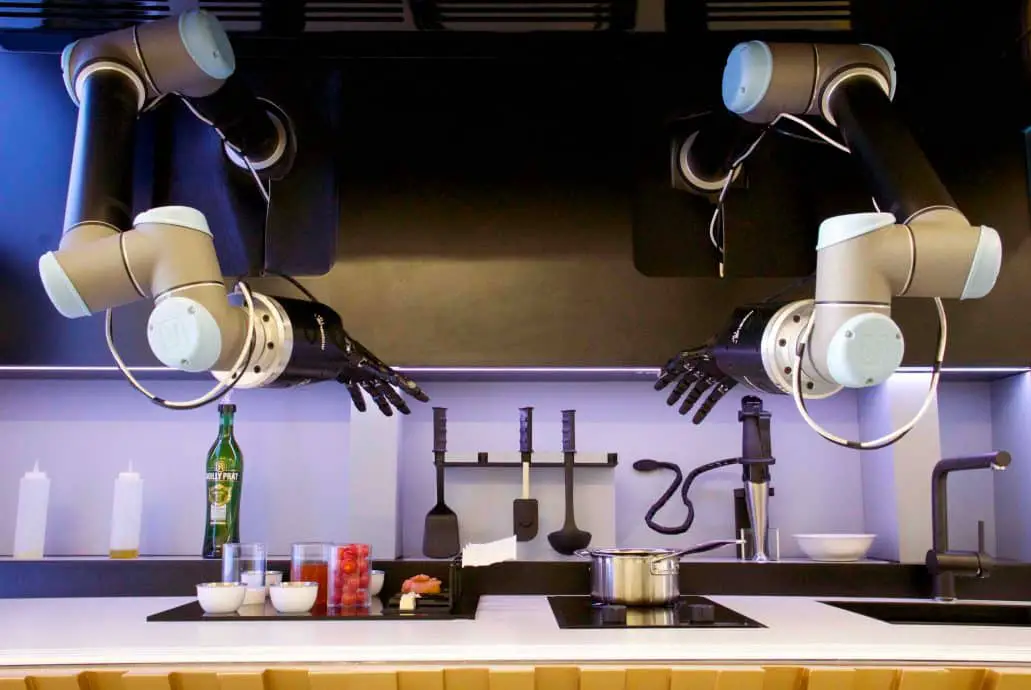
Cost trajectories point downward, and the technological capabilities of smart kitchens by 2030 will far exceed what is available in 2026 as AI algorithms become more capable, sensors grow cheaper, and interoperability standards mature. Fully autonomous cooking systems that can prepare complete meals from refrigerator to plate without human intervention are already in development, with robotic arm systems and automated ingredient dispensing creating kitchens that operate more like vending machines for gourmet meals than traditional cooking spaces. Transparent OLED displays integrated into countertops, backsplashes, and cabinet doors will transform every surface into an interactive interface that shows recipes, cooking progress, video calls, and entertainment without dedicated screen hardware.
AI nutrition coaches embedded in smart kitchens will maintain longitudinal health profiles for each household member, tracking dietary patterns over years and providing evidence-based recommendations that adapt as health conditions, fitness goals, and life stages change. Holographic recipe projection and augmented reality cooking guidance through lightweight smart glasses will overlay step-by-step instructions directly onto the cooking surface, showing exactly where to cut, how much to pour, and when to flip with visual precision that eliminates guesswork. The convergence of robotics, AI, and IoT will create kitchens that anticipate meal preparation needs based on calendar entries, weather forecasts, and health data, beginning dinner preparation autonomously before residents arrive home. These future capabilities connect to broader exploration of the future of artificial intelligence and its integration into every aspect of daily life.
The 2030 kitchen will likely blur the boundary between cooking and food service, as smart kitchen capabilities approach the sophistication of restaurant-grade preparation systems. The democratization of culinary expertise through AI means that home cooks with minimal experience could produce restaurant-quality meals with AI guidance, potentially disrupting the food service industry by making exceptional home cooking as easy as ordering delivery. Whether this vision materializes fully depends on the pace of technology development, consumer adoption, and whether manufacturers prioritize genuine capability improvements over marketing-driven feature additions.
Challenges Slowing Smart Kitchen Adoption
The 2030 vision is compelling, but significant challenges continue to slow smart kitchen adoption rates below the industry’s optimistic projections, and understanding these barriers is essential for both consumers considering investment and manufacturers planning product strategies. Cost remains the primary barrier, with high-end smart appliances often viewed as luxuries rather than necessities, and a luxury smart refrigerator costing $3,000 or more makes AI-powered food management inaccessible to most households regardless of its potential savings. Interoperability fragmentation forces consumers into single-brand ecosystems or accept limited cross-brand functionality, creating purchasing constraints that do not exist with conventional appliances. Privacy concerns about cameras, microphones, and behavioral tracking in the kitchen deter privacy-conscious consumers who are unwilling to trade domestic surveillance for cooking convenience, particularly following high-profile data breaches and privacy scandals involving major technology companies. The learning curve for operating smart kitchen systems frustrates users who expect intuitive experiences but encounter complex setup procedures, unreliable voice recognition, and feature-rich apps that are more confusing than helpful. Appliance longevity mismatch creates problems when smart features that depend on cloud services and software updates become obsolete or unsupported long before the physical appliance reaches end of life, leaving consumers with expensive hardware running outdated and potentially insecure software. Wi-Fi reliability in kitchens, where distance from routers, building materials, and electromagnetic interference from appliances create challenging connectivity conditions, undermines the consistent performance that smart features require. These adoption challenges connect to broader analysis of challenges facing AI and connected technology across consumer markets.
The software support lifecycle for smart appliances represents a particularly contentious issue, as consumers expect refrigerators and ovens to function for 15 to 20 years while software platforms may be abandoned or redesigned within five to seven years. When a manufacturer discontinues support for a smart appliance’s operating system, the AI-powered features that justified the premium price may stop working entirely, leaving consumers with an expensive conventional appliance that lost its smart capabilities. Industry standards for minimum software support periods, similar to the update commitments that smartphone manufacturers now provide, would address this concern and build consumer confidence in smart kitchen investments.
How to Start Building Your AI Smart Kitchen
Adoption challenges are real but manageable, and consumers who want to begin building an AI-enabled smart kitchen can follow a practical strategy that minimizes risk while maximizing the benefits of connected cooking technology. Start with a smart speaker or display that serves as the kitchen’s voice control hub, providing recipe guidance, timers, music, and smart home control through a single inexpensive device that requires no renovation or appliance replacement. Choose a compatible ecosystem early, evaluating whether Google Home, Amazon Alexa, or Apple HomeKit best aligns with your existing devices, preferred voice assistant, and the smart appliance brands you plan to adopt over time. When replacing an appliance that has reached end of life, upgrade to a smart version with Matter certification to ensure compatibility with future devices regardless of brand, building your smart kitchen gradually through the natural replacement cycle rather than a costly simultaneous overhaul.
Invest in smart plugs, connected food thermometers, and Wi-Fi-enabled scales that add intelligence to existing conventional appliances at minimal cost, experiencing the benefits of connected cooking before committing to premium smart appliance purchases. Ensure your kitchen has strong Wi-Fi coverage through mesh network systems or dedicated access points, as unreliable connectivity will undermine every smart kitchen feature regardless of how capable the appliances themselves are. Research manufacturer software support commitments before purchasing, prioritizing brands with documented track records of long-term platform maintenance and demonstrated commitment to interoperability standards. Practical guidance on adopting new technology connects to resources about getting started with AI technology at every level of expertise.
The most successful smart kitchen implementations start small, prove value, and expand gradually rather than attempting to automate everything simultaneously. A single smart oven that consistently produces better cooking results builds confidence and enthusiasm for additional smart appliance investments in a way that a complex, frustration-filled whole-kitchen smart conversion cannot. Patience, incremental adoption, and willingness to learn new interaction patterns will produce a more satisfying smart kitchen experience than any amount of expensive hardware purchased without a thoughtful integration strategy.
Key Insights on AI Smart Kitchen Technology
- The Agari Oven showcased at CES 2025 uses 3D scanning and precision algorithms to analyze food dimensions and temperature, automatically calculating optimal cooking parameters without any user input.
- The AI-enabled kitchen appliance market is estimated at $5 billion in 2025 and projected to reach over $15 billion by 2033 at a 15 percent CAGR, with North America and Western Europe currently dominating due to high disposable incomes and early smart home adoption.
- Samsung’s AI Vision food recognition system can identify over 30 grocery types and automatically add depleted items to Instacart shopping lists, while LG’s ThinQ platform tracks inventory and suggests recipes based on available ingredients and dietary preferences.
- The Neural Processing Unit segment is expected to grow at a 21.5 percent CAGR between 2025 and 2034, reflecting the shift toward on-device AI processing that improves speed, privacy, and offline functionality.
- The UK smart kitchen appliance market alone is forecast to grow from $1.24 billion in 2022 to $2.2 billion by 2030, with 2026 expected to bring AI-powered ovens with recipe-guided cooking and automatic temperature adjustment.
- Over 60 percent of US consumers already use connected home technology, with the overall smart home market projected to exceed $600 billion by 2030 and kitchen tech leading adoption.
- AI-powered appliances from Miele, Samsung, and LG offer proactive maintenance alerts, identifying potential issues before service is required, while technologies like Miele AutoDos optimize detergent and water usage automatically.
Comparing AI Smart Kitchen Capabilities by Appliance Category
| Dimension | AI Refrigerator | AI Oven / Range | AI Dishwasher | Smart Hub / Assistant |
|---|---|---|---|---|
| Core AI Capability | Food recognition, inventory tracking, expiration monitoring, recipe suggestion | Food scanning, adaptive temperature, auto-timing, recipe-guided cooking | Load detection, water/detergent optimization, cycle selection, predictive maintenance | Voice control, recipe guidance, multi-device orchestration, meal planning |
| Personalization | Learns family dietary preferences; syncs with health apps per member | Builds cooking profiles; learns oven-specific thermal characteristics | Adapts cycle intensity and duration to load composition | Recognizes individual voices; customizes recipes by user |
| Energy Impact | 10-20% cooling efficiency gain through AI cycle optimization | Reduces preheating waste; optimizes cooking time per dish | AutoDos reduces detergent waste; smart water heating reduces energy | Coordinates appliance scheduling to avoid peak demand |
| Food Waste Reduction | High — tracks freshness, prioritizes expiring ingredients in recipes | Medium — prevents overcooking that ruins meals | Low — primarily handles post-meal cleanup | Medium — meal planning reduces overbuying |
| Privacy Risk | High — internal cameras capture household activity | Medium — cooking data reveals dietary patterns | Low — minimal personal data beyond usage patterns | High — always-listening microphones capture conversations |
| Accessibility Benefit | Voice inventory queries; visual display of contents without bending | Voice-controlled cooking eliminates manual adjustments | Auto-cycle selection reduces operational complexity | Hands-free kitchen control for mobility-impaired users |
| Current Price Premium | $1,500-$3,500 over conventional equivalent | $1,000-$3,000 over conventional equivalent | $500-$1,500 over conventional equivalent | $50-$300 for smart speaker/display hub |
Real-World Examples of AI Smart Kitchen Innovation
Samsung AI Family Hub+ Refrigerator with Instacart Integration
Samsung’s Bespoke AI Family Hub+ refrigerator, showcased at CES 2025, combines a 9-inch AI Home Screen with AI Vision food recognition that identifies over 30 grocery types and monitors inventory levels in real time. When the system detects that milk, eggs, or other staples are running low, it automatically adds those items to the user’s Instacart grocery delivery list, completing the purchase cycle without requiring manual shopping list management. The AI system suggests recipes based on available ingredients, prioritizing items approaching expiration to reduce food waste while accommodating dietary preferences and restrictions. As reported by HomecruxCES 2025 coverage, the refrigerator also integrates with Samsung’s SmartThings ecosystem to coordinate with other kitchen appliances. The measurable benefit is reduced food waste and eliminated forgotten-item grocery trips, though the premium price of $3,000 or more limits accessibility to high-income households. The limitation is that AI food recognition accuracy varies with packaging types, partial occlusion, and unusual food items not in the training dataset.
Agari AI Oven with 3D Food Scanning
The Agari Oven introduced at CES 2025 represents the most advanced implementation of AI-powered cooking by combining 3D scanning, remote temperature sensing, and precision algorithms to analyze food placed inside and automatically determine optimal cooking parameters. The system measures the exact dimensions and current temperature of food items, then calculates the cooking time, temperature, and heat distribution needed for perfect results based on the identified food type. Users place food in the oven, and the AI handles everything else, eliminating the guesswork that leads to overcooked, undercooked, or unevenly prepared meals. As documented by technology reviewers, the oven targets both novice cooks who lack confidence in cooking parameters and experienced cooks who want consistent results. The measurable benefit is dramatically reduced cooking failures and food waste from improperly prepared meals. The limitation is the system’s dependence on its food recognition database, which may not cover all cuisines or unusual ingredient combinations.
Miele CookAssist and AutoDos Intelligent Kitchen Systems
Miele’s CookAssist technology and AutoDos dishwasher system represent enterprise-grade AI kitchen implementations from a manufacturer known for professional-grade quality and long-term reliability. CookAssist uses sensor-driven AI to guide cooking processes with automatic temperature and timing adjustments that adapt in real time as food progresses through cooking stages, learning from each session to improve future recommendations. AutoDos in Miele dishwashers automatically dispenses precisely the right amount of detergent for each load, eliminating manual measuring and the waste from overpouring that affects both cleaning performance and environmental impact. As noted by AJ Madison analysis, Miele’s AI systems optimize water and energy usage, significantly reducing waste while maintaining cleaning and cooking performance. The measurable benefit is consistent cooking results and reduced resource consumption over the appliance’s lifetime. The limitation is Miele’s premium pricing, which positions these features in the luxury appliance segment rather than the mass market.
Case Studies in Smart Kitchen Technology Development
The Smart Kitchen Market Growth Trajectory
The AI-enabled kitchen appliance market’s growth from an estimated $5 billion in 2025 to a projected $15 billion by 2033 represents one of the fastest-growing segments in consumer electronics, driven by the convergence of declining sensor costs, improving AI algorithms, and rising consumer expectations for connected home technology. The problem addressed is the gap between the smart home technology consumers experience through smartphones and voice assistants and the conventional, disconnected appliances that dominate most kitchens. Key growth drivers include advancements in AI and IoT integration, the proliferation of smart home ecosystems from Samsung, LG, and Google, and increasing consumer demand for features like automated cooking, personalized nutrition, and intelligent inventory management. As documented by industry analysts, North America and Western Europe currently dominate the market, but Asia-Pacific is poised for significant growth fueled by rapid urbanization and government incentives supporting AI integration. The limitation is that market projections depend on technology costs declining as projected, interoperability standards maturing on schedule, and consumer adoption overcoming privacy and complexity concerns that currently constrain demand.
Edge Computing and the NPU Revolution in Kitchen Appliances
The shift toward Neural Processing Units embedded directly in kitchen appliances represents a fundamental architectural change that addresses the latency, privacy, and reliability limitations of cloud-dependent smart kitchen systems. The problem was that early smart appliances required constant internet connectivity to perform AI functions, creating slow response times, privacy vulnerabilities from continuous data transmission, and complete loss of smart features during internet outages. The solution involves embedding dedicated AI processing chips within appliances that handle computer vision, voice recognition, and cooking optimization locally, sending only essential data to cloud services for updates and cross-device coordination. The NPU segment’s projected 21.5 percent CAGR through 2034, as reported by industry analysis, reflects manufacturer recognition that edge computing is essential for mainstream adoption. The measurable impact includes response times measured in milliseconds rather than seconds, reduced data transmission that addresses privacy concerns, and continued smart functionality during internet outages. The limitation is that on-device AI models are constrained by the processing power and memory available on appliance-grade chips, potentially limiting the sophistication of AI features compared to cloud-based alternatives.
Matter Standard Development and Kitchen Interoperability
The development of the Matter smart home standard through industry-wide collaboration represents the most significant effort to solve the interoperability problem that has fragmented the smart kitchen market into incompatible brand ecosystems. The problem was that consumers purchasing appliances from multiple manufacturers could not achieve the seamless inter-device communication that makes smart kitchens genuinely intelligent, as Samsung’s SmartThings could not coordinate with Bosch’s Home Connect or LG’s ThinQ. The solution is Matter, a universal protocol developed jointly by Apple, Google, Amazon, Samsung, and hundreds of manufacturers that enables any certified device to communicate with any other regardless of brand. As noted by industry analysts, Bosch is developing Matter-ready appliances for 2026, with other major manufacturers committing to certification. The measurable impact will be consumer freedom to mix brands without sacrificing smart kitchen functionality, though full implementation will take years as the installed base of pre-Matter appliances is gradually replaced. The limitation is that Matter primarily addresses device communication protocols rather than the deeper AI coordination that requires shared data models, compatible machine learning frameworks, and standardized cooking interfaces across manufacturers.
Frequently Asked Questions About AI Smart Kitchens
AI-enabled smart kitchen appliances available in 2026 include refrigerators with internal cameras and food recognition from Samsung and LG, ovens with 3D food scanning and adaptive cooking from Agari and Miele, dishwashers with automatic detergent dosing and load detection, smart cooktops with object recognition and safety shutoff, and connected coffee makers, faucets, and ventilation systems. Smart speaker hubs from Amazon, Google, and Apple serve as voice control centers coordinating all connected appliances.
Entry-level smart kitchens start at $2,000 to $5,000 for a smart hub and one or two connected appliances, while mid-range setups run $8,000 to $15,000 with a smart refrigerator, oven, and dishwasher. Premium fully-integrated AI kitchens with top-tier appliances, custom automation, and professional installation can exceed $25,000 to $50,000. Consumers can reduce costs by upgrading incrementally through the natural appliance replacement cycle rather than renovating simultaneously.
AI-powered inventory management through smart refrigerator cameras and tracking algorithms can reduce household food waste by an estimated 20 to 30 percent by monitoring expiration dates, suggesting recipes that prioritize ingredients nearing spoilage, and preventing overbuying through automated grocery management. These savings translate to approximately $1,500 to $2,000 annually for the average American household while reducing the environmental impact of food production and disposal.
Smart kitchen appliances command a 50 to 200 percent price premium over conventional equivalents, but the total cost of ownership calculation should include annual savings from reduced food waste, energy optimization, and prevented repair costs that collectively generate $1,500 to $3,000 in annual benefits. For households that cook frequently and currently experience significant food waste, the premium typically pays for itself within three to five years.
Matter is a universal smart home communication protocol developed by Apple, Google, Amazon, Samsung, and hundreds of manufacturers that enables devices from different brands to communicate seamlessly. For kitchens, Matter means a Samsung refrigerator can coordinate with a Bosch oven and an LG dishwasher without requiring all appliances from the same brand. Bosch is developing Matter-ready appliances for 2026, with other manufacturers following.
AI ovens use combinations of internal cameras, 3D scanners, temperature probes, infrared sensors, and humidity sensors to identify food type, measure dimensions, and monitor cooking progress in real time. Machine learning algorithms trained on thousands of cooking scenarios calculate optimal temperature, timing, and heat distribution, adjusting continuously as cooking progresses. Systems like Miele CookAssist learn from each cooking session to improve future recommendations.
Smart refrigerator cameras and voice assistants do create privacy risks by capturing visual and audio data from the kitchen, one of the home’s most private spaces. Edge computing with on-device AI processing reduces this risk by keeping data local rather than transmitting it to cloud servers. Consumers should review manufacturer privacy policies, disable features they are uncomfortable with, and ensure home networks are secured with strong passwords and updated firmware.
Yes, smart plugs, connected food thermometers, Wi-Fi-enabled scales, and smart speaker hubs can add intelligence to conventional kitchens for under $500. Smart plugs enable remote control of any appliance with a power switch, while connected thermometers bring AI-powered cooking guidance to conventional ovens. These affordable additions provide an entry point for experiencing smart kitchen benefits before committing to premium appliance purchases.
When manufacturers discontinue software support for smart appliances, AI-powered features may stop functioning while basic appliance operations like heating and cooling continue normally. This software lifecycle mismatch is a significant concern because appliances last 15 to 20 years while software platforms may be abandoned within five to seven years. Consumers should prioritize brands with documented commitments to long-term software support and platforms based on open standards.
AI-enabled kitchens benefit people with disabilities through voice-controlled appliances that eliminate manual controls, motion-sensor faucets and touchless interfaces, adjustable-height countertops, refrigerators that announce contents via voice, and AI ovens that automate temperature and timing decisions. Remote monitoring allows caregivers to ensure kitchen safety, and step-by-step audio cooking guidance assists users with cognitive challenges.
The choice between Google Home, Amazon Alexa, and Apple HomeKit depends on your existing device ecosystem and appliance brand preferences. Amazon Alexa currently supports the widest range of smart kitchen appliances, while Apple HomeKit offers the strongest privacy protections. Google Home excels at recipe guidance and contextual cooking assistance. As the Matter standard matures, cross-ecosystem compatibility will improve, reducing the importance of this initial choice.
AI will automate routine cooking tasks and eliminate guesswork from technique-dependent processes, but it is unlikely to replace the creative, cultural, and social dimensions of cooking that humans value. The most probable future involves AI handling preparation, monitoring, and optimization while humans focus on menu creativity, ingredient selection, and the social experience of sharing meals. Cooking will become more accessible to beginners while remaining a creative pursuit for enthusiasts.
Commercial AI kitchens focus on high-volume consistency, labor cost reduction, food safety compliance, and predictive maintenance, operating as automated production environments rather than personal cooking spaces. They integrate robotic cooking systems, AI-powered safety monitoring including slip detection and fire prevention, and automated health code compliance logging. The economic case is stronger because restaurant margins make labor savings, waste reduction, and equipment uptime directly impactful on profitability.
5G connectivity provides the low-latency, high-bandwidth connections that enable cloud-dependent smart kitchen features to perform at speeds approaching local processing. For households with unreliable Wi-Fi, 5G-connected appliances could provide more consistent connectivity. The primary benefit is reduced latency for features that require cloud processing, though the trend toward edge computing reduces the dependency on high-speed connectivity for most AI kitchen functions.
AI smart kitchens contribute to sustainability through energy optimization that reduces consumption by 10 to 20 percent, food waste reduction of 20 to 30 percent through inventory management, and water savings through smart faucets and dishwasher optimization. The environmental cost includes manufacturing energy for additional sensors and computing components, electronic waste from shorter technology lifecycles, and continuous power draw from always-on connectivity. Net environmental impact is positive for households that actively use smart features to reduce waste and energy consumption.