
Introduction
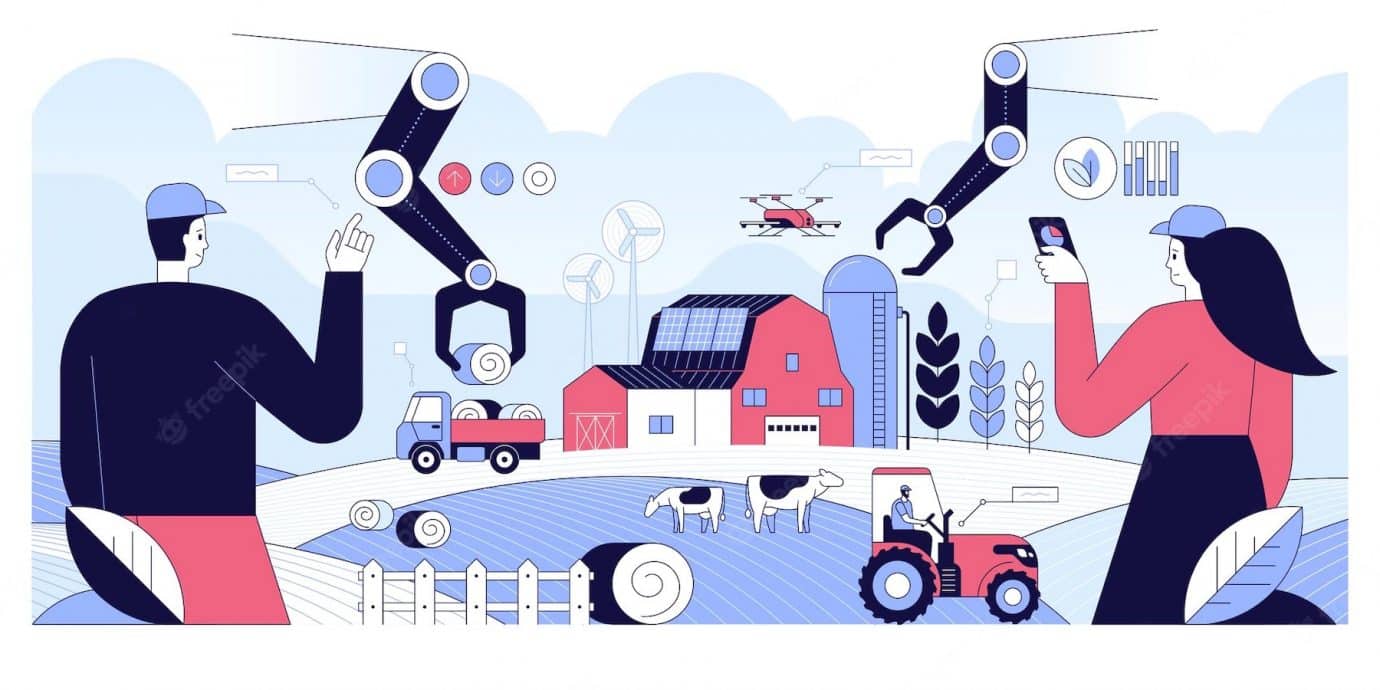
The global population is expected to approach 10 billion by 2050, and agriculture must evolve at a pace that matches the demand for food, fiber, and fuel. According to SNS Insider research, the agricultural robots market was valued at $11.31 billion in 2024 and is projected to reach $43.67 billion by 2032, growing at an annual rate of 18.4%. Automated farming represents the most significant structural shift in agriculture since the mechanization era of the early twentieth century. The convergence of robotics, artificial intelligence, Internet of Things (IoT) sensors, and satellite imaging now allows farmers to operate with a precision and consistency that manual labor simply cannot match. From autonomous tractors plowing fields without human operators to AI-powered drones scouting for crop disease, the entire farming lifecycle is being transformed by intelligent machines. Farms that adopt these systems stand to gain 15 to 25 percent improvements in yield efficiency while reducing operational costs by up to 35 percent. This article explores the full landscape of automated farming, covering the technology, the implementation strategies, the risks, the ethical dimensions, and the future trajectory of this rapidly expanding industry.
Quick Answers on Automated Farming
What is automated farming and why does it matter?
Automated farming uses robotics, AI, and IoT sensors to perform agricultural tasks with minimal human intervention. It addresses labor shortages, improves yields, and reduces resource waste across farming operations worldwide.
How much does it cost to implement automated farming systems?
Costs range from a few thousand dollars for basic smart irrigation controllers to over $500,000 for fully autonomous tractor systems. Subscription models and retrofit kits are making the technology more accessible to smaller operations.
Will automated farming replace human farmworkers?
Automation will displace some manual roles, especially repetitive tasks like weeding and harvesting. It simultaneously creates new positions in data analysis, robotics maintenance, and precision agriculture management.
Key Takeaways
- The agricultural robotics market is projected to grow from $11.31 billion in 2024 to $43.67 billion by 2032, driven by labor shortages and demand for precision.
- Automated systems can reduce manual labor requirements by 30 to 45 percent while increasing operational accuracy by 20 to 25 percent.
- John Deere, AGCO, and CNH Industrial have invested hundreds of millions in autonomous systems, drones, and AI-powered analytics.
- Ethical deployment requires balancing productivity gains with workforce transition programs and data privacy protections.
Table of contents
- Introduction
- Quick Answers on Automated Farming
- Key Takeaways
- Understanding What Automated Farming Really Means
- The Technologies Powering Modern Farm Automation
- Autonomous Tractors and Self-Driving Field Equipment
- Drones and Aerial Intelligence in Precision Agriculture
- Robotic Harvesters and Post-Harvest Automation
- Smart Irrigation and Automated Water Management
- AI-Powered Crop Monitoring and Disease Detection
- Livestock Automation and Animal Welfare Technology
- Data Infrastructure and the Farm of Connected Devices
- How Automated Farming Addresses the Labor Crisis
- The Cost Equation and Return on Investment
- Cybersecurity and the Vulnerability of Connected Farms
- Ethical Dimensions of Displacing Agricultural Labor
- Environmental Sustainability Through Precision Automation
- Blockchain, Traceability, and the Automated Supply Chain
- Vertical Farming and Controlled Environment Automation
- Global Adoption Patterns and Regional Disparities
- Regulatory Frameworks and Safety Standards
- How to Implement Automated Farming on Your Operation
- Key Insights on Automated Farming
- How Farms Are Using Automated Technologies Across Industries
- Lessons From Automated Farming Deployments Worldwide
- Frequently Asked Questions About Automated Farming
Understanding What Automated Farming Really Means
Automated farming is the application of robotics, artificial intelligence, sensors, and data analytics to perform agricultural tasks with minimal or no direct human intervention, spanning planting, monitoring, irrigation, harvesting, and livestock management. It replaces manual, repetitive work with intelligent machines that adapt to real-time field conditions. The core objective is to increase food production efficiency while conserving water, soil, and energy resources at scale.
Automated Farming ROI Calculator
Estimate your savings, payback period, and efficiency gains from adopting farm automation technologies.
The Technologies Powering Modern Farm Automation
Automated farming rests on a stack of interconnected technologies, each playing a distinct role in the overall system. Autonomous tractors equipped with GPS guidance and computer vision navigate fields with sub-centimeter accuracy, performing tillage, planting, and spraying operations without a driver in the cab. Agricultural drones fitted with multispectral cameras capture field imagery that AI-powered agronomy platforms analyze to detect nutrient deficiencies, pest infestations, and irrigation imbalances. IoT sensor networks deployed across fields monitor soil moisture, temperature, pH levels, and micro-climatic conditions in real time, transmitting data to centralized dashboards that trigger automated responses. Robotic harvesters use machine learning algorithms and tactile sensors to pick fruits and vegetables at optimal ripeness, reducing post-harvest waste by as much as 31 percent compared to conventional methods.
The software layer binding these hardware systems together is equally critical to the success of automated farming operations. Cloud computing platforms ingest massive datasets from sensors, drones, and weather services, applying predictive analytics to generate actionable recommendations for planting schedules, fertilizer application rates, and pest control timing. Edge computing devices installed on farm equipment process time-sensitive decisions locally, eliminating the latency that cloud-only architectures introduce during critical field operations. Machine learning models trained on historical yield data, satellite imagery, and soil samples continuously refine their predictions, becoming more accurate with each growing season. Digital twin technology is emerging as a powerful planning tool, allowing farmers to simulate the impact of management decisions on a virtual replica of their farm before committing resources in the physical world.
The integration challenge remains one of the biggest hurdles for farmers considering smart farming technologies. Legacy equipment from different manufacturers often uses proprietary data formats that resist interoperability with newer digital platforms. Industry coalitions like AgGateway and the Open Agriculture Initiative are working to establish data standards that enable seamless communication between machines from different vendors. Farmers who overcome these integration barriers report significant gains in operational coordination, with some operations achieving fully synchronized planting-to-harvest workflows managed from a single software interface.
Autonomous Tractors and Self-Driving Field Equipment
The autonomous tractor has become the flagship symbol of automated farming's potential. John Deere's second-generation autonomy kit, revealed at CES 2025, features 16 individual cameras arranged in pods that provide a 360-degree view of the field, allowing the machine to navigate, detect obstacles, and adjust its path in real time. The company has confirmed plans for a nationwide rollout of its fully autonomous 8R tractor platform, which allows farmers to monitor and control the machine from a smartphone or tablet after initial field setup. AGCO's Fendt and CNH Industrial's Case IH brand have similarly invested in autonomous platforms, signaling that the major equipment manufacturers view driverless machinery as a core competitive capability rather than an experimental add-on.
The retrofit model is proving particularly important for adoption, because it allows farmers to upgrade existing equipment rather than purchasing entirely new machines. Blue River Technology, acquired by John Deere in 2021, developed machine learning algorithms that power the autonomy retrofit kits, and CEO Willy Pell has stated that farmers should not need to buy a new tractor to experience autonomy. These kits include ruggedized NVIDIA processing units and redesigned camera arrays that enable real-time decision-making based on field conditions. The cost of the retrofit approach is significantly lower than purchasing a factory-autonomous tractor, making the technology accessible to mid-scale operations that might otherwise wait years before adopting full autonomy.
Battery electric autonomous tractors are the next frontier, combining zero-emission propulsion with self-driving capability. John Deere showcased a battery electric tractor prototype at CES 2026, designed for a full day of work in orchards and vineyards, with a targeted deployment timeline of 2026. The convergence of electric drivetrains, autonomous perception systems, and centralized fleet management software now sits on the same product roadmap at multiple major manufacturers. This combination addresses both the labor shortage and the carbon footprint challenges that climate-resilient agriculture demands, positioning autonomous electric equipment as a dual solution for productivity and environmental sustainability.
Drones and Aerial Intelligence in Precision Agriculture
Agricultural drones have matured from novelty gadgets into mission-critical tools deployed across more than 70 countries. The global fleet of registered agricultural UAVs now exceeds 160,000 units, supporting crop monitoring, precision spraying, and field mapping operations that once required teams of workers spending days walking rows of crops. DJI, the leading drone manufacturer, reported that agricultural drones generated $515 million in value in the United States alone during 2023, and the value has continued climbing as farmers discover new applications for aerial data collection.
Precision spraying represents one of the most economically impactful applications of agricultural drone technology. Traditional broadcast spraying applies chemicals uniformly across entire fields, wasting inputs on areas that do not need treatment and exposing beneficial organisms to unnecessary chemical exposure. AI-powered drones equipped with computer vision can distinguish weeds from crops at the individual plant level, applying herbicide only where it is needed and reducing chemical usage by up to 50 percent. John Deere's See and Spray system exemplifies this approach, using cameras and machine learning to make plant-level treatment decisions at field speed. The environmental benefits compound over seasons, as reduced chemical application leads to healthier soil biology, lower groundwater contamination, and more resilient crop ecosystems.
Drone-based multispectral imaging reveals crop stress conditions days or even weeks before they become visible to the human eye. Cameras capturing near-infrared and red-edge wavelengths produce vegetation indices that map chlorophyll content, water stress, and nitrogen uptake across every square meter of a field. Agronomists use these maps to create variable rate application prescriptions that direct ground equipment to apply precisely the right amount of fertilizer or irrigation water to each zone. The combination of aerial scouting and ground-based precision application creates a feedback loop that tightens resource use with each cycle, pushing automated farms toward true site-specific management rather than field-average decision-making.
Robotic Harvesters and Post-Harvest Automation
Harvesting has historically been the most labor-intensive stage of crop production, and it is now attracting the largest wave of robotic innovation in the automated farming sector. Robotic harvesting platforms use computer vision to identify ripe produce, mechanical arms equipped with soft grippers to pick without bruising, and onboard sorting algorithms to classify quality in real time. Companies like Muddy Machines, with their Sprout harvesting robot, and Harvest CROO, targeting strawberry picking, are deploying systems that operate continuously through the night, eliminating the constraint of daylight hours that limits human picking crews. The result is faster harvest cycles, reduced spoilage, and lower per-unit labor costs for growers operating in high-cost labor markets.
Post-harvest automation extends the benefits of robotics beyond the field and into packing houses and cold storage facilities. Automated sorting lines use hyperspectral cameras to detect internal defects that visual inspection misses, classifying produce by size, color, and ripeness with a consistency that human sorters cannot sustain over long shifts. Robotic palletizing systems stack cases for shipping with precision that minimizes transport damage and maximizes truck utilization. AI-driven quality control systems integrated into these post-harvest workflows have reduced post-harvest damage by 31 percent compared to conventional manual handling methods. The end-to-end automation of the harvest pipeline, from field picking to packed pallet, represents a complete rethinking of one of agriculture's most persistent bottlenecks.
The transition from manual to robotic harvesting is creating tension in agricultural labor markets where seasonal workers depend on harvest employment for their annual income. Growers adopting robotic systems argue that they are responding to a real shortage of available harvest workers, not displacing willing laborers. Opponents point out that the availability of automation changes the power dynamic in labor negotiations, as employers can threaten replacement to suppress wage demands. Navigating this tension requires workforce transition programs that retrain displaced workers for higher-skilled positions in equipment maintenance, data management, and precision agriculture consulting.
Smart Irrigation and Automated Water Management
Water scarcity is the defining constraint for agriculture in the twenty-first century, and automated irrigation systems are the primary technological response. AI-driven smart irrigation controllers integrate data from soil moisture sensors, weather forecasts, and live crop observation to automate water delivery with a precision that manual scheduling cannot achieve. Trials conducted in California's Central Valley, one of the world's most productive and most water-stressed agricultural regions, documented up to 30 percent reductions in water use without compromising crop productivity when farms deployed these automated systems.
The architecture of a modern automated irrigation system begins with a network of wireless soil moisture sensors buried at multiple depths across the field, providing real-time measurements of water availability in the root zone. These readings feed into an AI model that calculates evapotranspiration rates based on crop type, growth stage, weather conditions, and soil characteristics. The model then sends commands to remotely controlled valves that adjust water flow to individual zones, delivering precise water management at the sub-field level. When the system detects imminent rainfall through weather model integration, it automatically reduces or suspends scheduled irrigation events, preventing the double application that wastes both water and energy.
Variable rate irrigation takes the concept further by modifying application rates across a single pivot or drip system to match the spatial variability of the field. Prescription maps generated from drone imagery, soil surveys, and yield history direct the irrigation controller to apply more water to sandy zones with low water-holding capacity and less to clay areas that retain moisture longer. Farms operating variable rate irrigation systems report water savings of 15 to 30 percent alongside yield improvements of 5 to 12 percent compared to uniform application methods. The economic case for smart irrigation is particularly compelling in regions where water is priced at market rates or allocated through regulated permits, because every unit of water saved translates directly to lower operating costs or the ability to irrigate additional acreage with the same allocation.
AI-Powered Crop Monitoring and Disease Detection
The ability to detect crop stress, pest infestations, and disease outbreaks early is one of the highest-value applications of artificial intelligence in automated farming. Traditional scouting relies on trained agronomists walking fields and inspecting plants by hand, a method that is time-consuming, subjective, and impossible to scale across large operations. AI-powered monitoring systems replace this approach with continuous, objective surveillance using cameras, sensors, and satellite imagery that process data at a speed and resolution that human observation cannot match.
Deep learning models trained on millions of labeled images can now identify specific diseases, pest species, and nutrient deficiency symptoms with accuracy rates exceeding 90 percent in controlled studies. These models run on edge devices mounted on tractors, drones, or fixed-position camera towers, processing images locally and generating alerts within seconds of detection. When the system identifies a disease outbreak in one section of a field, it can immediately generate a targeted spray prescription that confines the treatment to the affected area, preventing both the spread of the pathogen and the unnecessary application of fungicide across healthy plants. Agentic AI systems are now beginning to operate as autonomous crop managers, integrating disease detection, weather forecasting, and treatment scheduling into a single decision loop that operates continuously without human oversight.
Satellite-based crop monitoring adds a macro-level perspective that complements the detail captured by drones and ground sensors. Commercial satellite constellations now provide revisit intervals as short as one to three days, delivering multispectral imagery that tracks vegetation health across entire farm portfolios. Large agricultural enterprises and cooperative groups use these platforms to compare field performance across regions, identify underperforming zones, and allocate resources where they will generate the greatest return. The combination of satellite overview, drone detail, and ground-level sensor precision creates a multi-scale monitoring architecture that leaves virtually no condition undetected, from continental weather patterns down to individual plant health status.
Livestock Automation and Animal Welfare Technology
Automated farming extends well beyond crops into the management of livestock operations, where robotics and sensors are transforming animal husbandry. Automated milking systems, pioneered by Lely Industries with their Astronaut A5 platform, allow dairy cows to enter a milking station voluntarily and be milked by a robotic arm without any human intervention. These systems monitor milk yield, quality, and animal health indicators at every milking session, providing early detection of mastitis and other conditions that would otherwise go unnoticed until a veterinary examination. The milking robots segment dominated the agricultural robotics market with a 29.9 percent revenue share in 2024, reflecting the strong economic case for dairy automation.
Automated feeding systems like the Lely Vector deliver precisely formulated rations to livestock multiple times per day, optimizing nutrition based on production stage, body condition, and metabolic indicators. Wearable sensors attached to animals track movement patterns, rumination behavior, and body temperature, feeding data into AI-powered livestock management platforms that detect illness, estrus, and lameness before visible symptoms appear. Smart poultry house automation controls ventilation, lighting, feeding, and temperature with sensor-driven precision, reducing mortality rates and improving feed conversion ratios in broiler and layer operations.
The animal welfare dimension of livestock automation is significant and often underappreciated in discussions focused purely on productivity. Voluntary milking systems reduce the stress associated with twice-daily herding to a milking parlor, allowing cows to choose when they are milked based on their natural comfort cycle. Automated environmental controls in barns and poultry houses maintain conditions within the narrow comfort range that animals require for health and productivity, responding to temperature swings and air quality changes faster than manual adjustments can achieve. Critics argue that automation risks further industrializing animal agriculture, concentrating more animals in fewer facilities managed by fewer people, but proponents counter that per-animal monitoring creates a level of individualized care that was impossible in the era of manual herd management.
Data Infrastructure and the Farm of Connected Devices
The data generated by automated farming systems is enormous in volume and critical in value, creating an infrastructure challenge that many operations underestimate. A single modern farm equipped with autonomous tractors, drone systems, IoT sensors, and robotic harvesters can generate terabytes of data per season across weather readings, soil measurements, imagery, machine telemetry, and yield maps. Managing this data requires robust connectivity, cloud storage, edge processing capability, and analytics platforms that translate raw numbers into actionable recommendations for the farmer.
Rural connectivity remains a major barrier to the full deployment of automated farming technologies, particularly in developing regions where cellular coverage is sparse and broadband infrastructure does not extend to agricultural areas. Low-power wide-area network (LPWAN) technologies like LoRaWAN and NB-IoT are providing partial solutions, enabling sensor communication over distances of several kilometers without the bandwidth demands of cellular or Wi-Fi connections. Satellite-based internet services from providers like Starlink and OneWeb are beginning to fill the connectivity gaps in remote farming regions, and their continued expansion will be a critical enabler for the adoption of data-intensive automation in areas that have historically lacked the infrastructure to support it.
Data ownership and interoperability are governance questions that the agricultural technology industry has yet to resolve satisfactorily. When a farmer's equipment generates data that flows through a manufacturer's cloud platform, questions arise about who owns that data, who can access it, and whether it can be shared with third-party agronomic advisors or sold to commodity traders. The American Farm Bureau Federation and other agricultural organizations have advocated for farmer-centric data governance principles that give producers control over their operational data. The integration of IoT across farming operations demands clear data policies that balance the need for system-wide intelligence with individual farmers' rights to privacy, competitiveness, and autonomy over their business information.
How Automated Farming Addresses the Labor Crisis
Beyond efficiency and data, the labor shortage in agriculture is the single most powerful force driving automated farming adoption globally. Across North America, Europe, and parts of Asia, the agricultural workforce is aging and shrinking as younger generations choose urban employment over physically demanding farm work. In the United States, the average age of a farm operator exceeds 57 years, and the pool of seasonal harvest workers has declined steadily as immigration patterns shift and alternative employment options expand. Automated systems are filling the gaps that human workers are leaving, not as a preference but as a necessity for farms that cannot find enough hands to complete time-sensitive fieldwork.
The seasonal nature of agriculture intensifies the labor challenge, because farms need maximum workforce capacity during planting and harvest windows that may last only a few weeks. Agricultural robots capable of operating around the clock, through rain and darkness, effectively extend the available work hours per day from the eight to ten hours a human crew can manage to the full twenty-four hour cycle. This capacity is especially valuable for perishable crops where a delay of even a day between optimal ripeness and harvest can mean significant quality degradation and economic loss. Automated systems do not eliminate the need for human workers entirely, but they change the type of work that remains, shifting demand from physical fieldwork toward equipment supervision, data analysis, and technical maintenance roles.
Industry projections estimate that up to 40 percent of global farms will integrate at least one form of autonomous agricultural robot by the end of 2026. The economic logic is straightforward: the cost of automated systems, while high upfront, is predictable and declining, while the cost and availability of human labor is volatile and trending upward. In regions like California, where agricultural minimum wages now exceed $16 per hour and labor availability remains constrained, the return on investment for automated harvesting and weeding systems can be realized within two to four growing seasons. The next generation of agricultural robots is specifically designed with modular architectures that allow smaller operations to adopt automation incrementally rather than requiring the capital outlay of a complete system overhaul.
The Cost Equation and Return on Investment
Understanding the economics of automated farming requires looking beyond equipment purchase prices to the total cost of ownership and the revenue impact of improved productivity. An autonomous tractor system from a major manufacturer like John Deere or AGCO represents a capital investment in the range of $300,000 to $600,000, depending on the size and capability of the platform. Autonomous weeding robots from companies like FarmWise cost significantly less, with prices for their Titan FT-35 system structured around acreage-based service contracts that eliminate the upfront capital burden. The diversity of pricing models, from outright purchase to tractor-as-a-service subscriptions, reflects the industry's recognition that affordability is the primary barrier to wider adoption.
The revenue side of the equation involves multiple streams of value creation that compound over time. Precision application of inputs reduces fertilizer, pesticide, and water costs by 15 to 50 percent depending on the specific technology deployed and the baseline efficiency of the farm. Yield improvements of 15 to 20 percent on precision-managed farms translate directly to additional revenue at harvest. Reduced crop damage during automated harvesting lowers the volume of downgraded or discarded produce, improving the share of premium-grade output. Labor cost reductions of 30 to 45 percent represent the largest single savings category for most operations, especially in high-wage regions where seasonal labor has become both expensive and unreliable.
Return on investment timelines vary significantly based on farm size, crop type, and the specific automation technologies deployed. Large-scale commodity crop operations in the Midwest or Great Plains can achieve payback on autonomous tillage and planting systems within three to five seasons due to the volume of acreage covered. Specialty crop operations growing high-value fruits and vegetables in coastal regions often see faster payback, sometimes within two seasons, because the per-acre labor savings are proportionally much larger. Subscription and service models are accelerating adoption by eliminating the large upfront cost that has historically prevented smaller farms from accessing automation, spreading the investment across monthly or seasonal payments that align with agricultural cash flow cycles.
Cybersecurity and the Vulnerability of Connected Farms
The connectivity that makes automated farming systems powerful also creates a surface area for cyberattacks that the agricultural sector has been slow to address. When autonomous tractors, irrigation controllers, and livestock management systems are all connected to the internet and managed through cloud platforms, a successful intrusion can disrupt critical operations during time-sensitive periods like planting and harvest. A ransomware attack that locks a farmer out of their automated systems during a two-week harvest window could result in the loss of an entire season's production, a devastating financial outcome that attackers could exploit for significant ransom demands.
The cybersecurity posture of most agricultural technology vendors remains immature compared to sectors like finance or healthcare that have faced cyber threats for decades. Many farm IoT devices use default passwords that operators never change, firmware that is rarely updated, and communication protocols that transmit data without encryption. The collaboration between AI and IoT in farming creates vast networks of connected devices, each representing a potential entry point for an attacker seeking to compromise the broader system. Industry groups and government agencies are beginning to publish cybersecurity guidelines for agricultural technology, but adoption of basic security practices remains inconsistent, particularly among smaller operations that lack dedicated IT staff.
The convergence of autonomous machinery and cybersecurity risk also raises physical safety concerns that extend beyond data theft. An autonomous tractor that has been compromised could theoretically be directed to operate in unsafe ways, creating hazards for people, livestock, and property. Equipment manufacturers are building multiple layers of safety mechanisms into their autonomous platforms, including hardware-level kill switches, geofencing restrictions, and anomaly detection algorithms that halt operations when the system detects behavior outside expected parameters. These safeguards are essential, but the industry's rapid push toward full autonomy is outpacing the development of comprehensive cybersecurity frameworks tailored to the unique requirements of agricultural automation.
Ethical Dimensions of Displacing Agricultural Labor
The ethical debate around automated farming centers on the tension between productivity gains for farm owners and livelihood losses for the workers whose jobs are being automated. The FAO has documented that approximately 300 to 500 million waged workers globally depend on farm jobs, with agricultural employment representing the primary source of income for rural communities in developing countries. When automation displaces these workers, the economic impact cascades through local communities, reducing demand for goods and services, decreasing tax revenues for rural municipalities, and accelerating the depopulation of farming regions that are already struggling to retain residents.
The ethical analysis is further complicated by the conditions under which much agricultural labor is performed. Farmwork is among the most physically demanding, lowest-paid, and least-regulated categories of employment in many countries, with workers routinely exposed to heat stress, pesticide exposure, and repetitive motion injuries. Proponents of automation argue that replacing these conditions with machines is an ethical improvement, not a harm, because it eliminates a category of work that degrades human health and dignity. Critics counter that the ethical response should be improving labor conditions and wages rather than eliminating the jobs entirely, and that the threat of automation is already being used as leverage to suppress labor organizing and wage demands in the agricultural sector.
A just transition framework for agricultural automation would include retraining programs, transition income support, and investment in rural economic diversification that creates alternative employment opportunities. Some countries, including the United Kingdom with its $16.5 million investment in farming robotics and automation projects, are coupling technology deployment with workforce development initiatives. The question of who benefits from automation's productivity gains, whether the value flows primarily to equipment manufacturers and large farm operators or is shared more broadly with workers and rural communities, will determine the social license that AI-powered farming practices carry in the decades ahead.
Environmental Sustainability Through Precision Automation
Automated farming's environmental promise rests on the principle that precision reduces waste, and waste reduction reduces environmental impact. Conventional farming practices lose an estimated 30 to 50 percent of applied nitrogen and phosphorus fertilizers through runoff and volatilization, contributing to soil degradation, water contamination, and the creation of marine dead zones where excess nutrients fuel algal blooms. Automated precision application systems that deliver inputs based on real-time soil and crop measurements can reduce these losses significantly, with studies reporting 10 to 25 percent reductions in chemical usage depending on crop type and environmental conditions.
The water conservation impact of automated irrigation is particularly significant in regions facing acute scarcity. Agriculture accounts for approximately 70 percent of global freshwater withdrawals, and even modest efficiency improvements translate to enormous volumes of water saved. Automated drip irrigation systems guided by AI reduce not only the volume of water applied but also the energy consumed by pumping systems, creating a compound sustainability benefit that addresses both water and carbon footprint concerns. Sustainable farming practices powered by automation are attracting interest from carbon credit programs and sustainability-linked financing that reward measurable reductions in resource intensity.
Autonomous robots designed for mechanical weed control offer an alternative to chemical herbicides that has both environmental and economic appeal. Companies like Naio Technologies produce vineyard and row crop robots that use computer vision to identify weeds and remove them physically, eliminating herbicide applications entirely for certain operations. This approach preserves soil microbiology, prevents herbicide resistance development, and eliminates chemical residues from produce, all outcomes that align with growing consumer demand for organically produced food. The environmental case for automated farming is strongest when precision application, resource conservation, and chemical reduction are pursued simultaneously as integrated objectives rather than isolated improvements.
Blockchain, Traceability, and the Automated Supply Chain
Automated farming systems generate the granular data that makes true farm-to-table traceability possible for the first time at commercial scale. Every input application, field condition reading, and harvest parameter recorded by automated equipment creates a digital trail that can be encrypted, timestamped, and stored on a blockchain ledger to provide verifiable traceability throughout the food supply chain. Consumers, retailers, and regulators can then verify claims about pesticide-free production, water usage, carbon footprint, and organic certification with data rather than paperwork, reducing the opportunity for fraud and increasing trust in food labeling.
The operational mechanics of blockchain-backed traceability begin at the field level, where automated sensors and robots record every intervention: the type and quantity of seed planted, the volume and composition of fertilizer applied, the timing and volume of irrigation, and the date and conditions of harvest. These records flow through the supply chain as the product moves from farm to packing house to distribution center to retail shelf, with each handler adding their own verified data points. The result is a complete provenance record that can be retrieved by scanning a QR code on the final product packaging, giving consumers unprecedented visibility into the journey their food has taken from soil to store.
The commercial incentive for traceability extends beyond consumer transparency into regulatory compliance and export market access. International trade in agricultural commodities increasingly requires documentation of production practices, particularly around pesticide maximum residue levels, sustainability certifications, and carbon footprint metrics. Farms that automate their data collection and integrate it with blockchain traceability systems are better positioned to meet these requirements efficiently, avoiding the manual documentation burden that consumes administrative hours and introduces the risk of error. Supply chain optimization in agriculture through automation and blockchain is emerging as a competitive advantage for exporting nations seeking preferential access to premium markets in Europe, Japan, and other destinations with stringent import standards.
Vertical Farming and Controlled Environment Automation
Vertical farming represents the most radical expression of automated agriculture, moving food production indoors into multi-story facilities where every environmental variable is controlled by software. Temperature, humidity, CO2 concentration, light spectrum, light duration, and nutrient solution composition are all managed by automated systems that maintain conditions at the biological optimum for each crop species. LED grow lights tuned to specific wavelength profiles deliver only the photons that plants can use for photosynthesis, eliminating the energy waste inherent in broad-spectrum lighting and enabling year-round production independent of outdoor weather conditions.
The automation intensity of vertical farms far exceeds that of open-field operations, because the controlled environment both demands and enables continuous machine management. Robotic seeding, transplanting, and harvesting systems operate within the structured layouts of vertical racks, where plants are positioned in standardized growing modules that facilitate mechanical handling. Automated nutrient dosing systems adjust the composition of hydroponic or aeroponic solutions based on sensor readings of pH, electrical conductivity, and dissolved oxygen, maintaining the precise chemical environment that maximizes growth rates while minimizing nutrient waste. Some vertical farm operators are approaching fully autonomous operations where human workers enter the growing environment only for maintenance and quality verification, not for routine crop care.
The economic viability of vertical farming remains concentrated in high-value leafy greens, herbs, and microgreens, where the premium pricing justifies the significant capital and energy costs. Attempts to grow commodity crops like wheat, corn, or soybeans in vertical facilities remain economically impractical due to the energy intensity of artificial lighting and the low per-unit value of these crops. The most promising expansion path for vertical farming automation lies in strawberries, tomatoes, and other high-value produce where the combination of year-round supply, proximity to urban markets, and elimination of transport losses creates a compelling value proposition. Companies like AeroFarms, Plenty, and Infarm are scaling these models with significant venture capital backing, though profitability has proven elusive for several high-profile operators.
Global Adoption Patterns and Regional Disparities
Automated farming adoption varies dramatically across regions, driven by differences in labor costs, farm sizes, infrastructure availability, and government policy environments. North America leads global adoption with approximately 36 percent of the agricultural robotics market share, supported by large average farm sizes, high labor costs, favorable government initiatives, and a mature agricultural technology ecosystem. European adoption is strong in dairy automation, particularly in the Netherlands, Germany, and Scandinavia, where automatic milking systems have become standard equipment on modern dairy farms. Asia-Pacific adoption is accelerating rapidly, led by Japan's aging farm population and China's strategic investment in agricultural modernization.
The developing world faces the starkest disparity in access to automated farming technology, despite having the greatest need for productivity improvements. Land fragmentation, where the average farm size may be less than two hectares, makes most existing autonomous equipment economically unviable because the capital cost cannot be spread across sufficient acreage to generate a return. Lack of rural electricity, internet connectivity, and maintained road networks further constrains the adoption of sensor-based monitoring, autonomous machinery, and cloud-connected farm management systems. These structural barriers mean that the benefits of automated farming risk accruing primarily to large, well-capitalized operations in developed countries, widening the productivity gap between industrialized and smallholder agriculture.
India and sub-Saharan Africa are experimenting with leapfrog approaches that bypass the expensive hardware-first model in favor of mobile-phone-based advisory services powered by satellite data and AI. These platforms deliver crop monitoring, weather alerts, and market price information to farmers through basic smartphones, providing some of the informational benefits of automated farming without requiring on-farm robotics or sensor infrastructure. Satellite-based remote sensing for agriculture is particularly well-suited to these contexts because it requires no ground-level equipment and can cover vast areas of fragmented farmland in a single pass. Bridging the adoption gap will require business models specifically designed for smallholder economics, including cooperative equipment sharing, pay-per-use drone services, and government-subsidized sensor deployments.
Regulatory Frameworks and Safety Standards
The regulatory landscape for automated farming is evolving rapidly as governments work to establish safety, liability, and environmental standards for autonomous agricultural equipment. Autonomous vehicles on public roads are subject to extensive regulation in most jurisdictions, but autonomous tractors operating on private farmland often fall into a regulatory gray zone where existing frameworks do not clearly apply. The European Union's Machinery Regulation, updated in 2023, includes provisions for autonomous agricultural machinery that address safety requirements, risk assessment, and human-machine interaction standards.
In the United States, the regulatory approach has been more fragmented, with individual states setting different rules for autonomous vehicle operation and no comprehensive federal framework specifically addressing autonomous farm equipment. The USDA and the National Institute of Standards and Technology (NIST) are collaborating on guidelines for autonomous agricultural systems, but binding regulations remain in the early stages of development. This regulatory uncertainty creates challenges for manufacturers who need clear standards to design compliant products and for farmers who need assurance that their investment in autonomous equipment will not be rendered non-compliant by future regulation.
Insurance and liability questions are among the most complex regulatory challenges facing automated farming adoption. When an autonomous tractor causes damage to a neighbor's property, kills livestock, or injures a bystander, the allocation of liability among the farmer, the equipment manufacturer, the software provider, and the sensor supplier is unclear under existing legal frameworks. Comprehensive insurance products for autonomous farm equipment are beginning to appear in the market, but underwriting these policies requires actuarial data on failure modes and incident rates that the industry does not yet have in sufficient volume. The insurance industry's engagement with automated farming risk will be a critical enabler of broader adoption, because farmers are unlikely to deploy autonomous systems at scale until the liability exposure is clearly defined and insurable.
How to Implement Automated Farming on Your Operation
Step 1: Assess Your Current Operations and Identify Automation Priorities
Begin by conducting a thorough audit of your existing farm operations to identify the tasks that consume the most labor hours, generate the most waste, or produce the most variable results. Map your field operations from planting through harvest, noting where bottlenecks, quality inconsistencies, or labor shortages create the largest economic losses. This assessment provides the data-driven foundation for prioritizing which automation investments will deliver the greatest return on your specific operation, rather than following industry trends that may not match your farm's unique profile.
Pro Tip: Start with one or two high-impact areas rather than attempting a farm-wide automation overhaul, because incremental adoption allows you to build operational familiarity and demonstrate ROI before committing to larger investments.
Step 2: Evaluate Your Connectivity and Data Infrastructure
Test your farm's cellular and internet connectivity across all fields, buildings, and operational areas, noting dead zones and bandwidth limitations that could prevent real-time data transmission from sensors and autonomous equipment. If connectivity gaps exist, research LPWAN solutions like LoRaWAN gateways that can extend sensor communication to remote areas without requiring cellular infrastructure. Establish a central data management platform, whether cloud-based or hybrid, that can ingest and organize data from multiple sources and equipment types.
Step 3: Select Technology Partners and Equipment
Research equipment manufacturers and technology providers whose systems align with your identified automation priorities, paying close attention to interoperability standards, data ownership policies, and after-sale support availability. Request demonstrations and trial periods before committing to full-scale purchases, and ask for references from farms of similar size and crop type that have deployed the same systems. Consider both purchase and subscription pricing models, evaluating which approach better fits your capital availability and cash flow timing.
Step 4: Pilot and Iterate Before Scaling
Deploy your initial automation systems on a limited acreage or single enterprise within your operation, allowing time to learn the technology, troubleshoot integration issues, and measure actual performance against vendor claims. Collect baseline data before deployment so you can make valid comparisons of yield, input usage, labor hours, and cost metrics between automated and conventional management. Use the pilot phase to train your team on equipment operation, data interpretation, and maintenance procedures that will be essential when you scale the technology across the full operation.
Warning: Avoid the common mistake of deploying expensive automation on fields with poor-quality baseline data. Invest in soil sampling, yield mapping, and basic sensor deployment before adding autonomous equipment, because automation amplifies the value of good data and the cost of bad data.
Step 5: Scale Successful Systems and Integrate Across Operations
After the pilot validates performance, develop a multi-season scaling plan that expands automation across additional fields, enterprises, or operational stages while maintaining the data collection discipline established during the pilot. Integrate data flows from multiple automated systems into a unified farm management platform that provides a single dashboard view of the entire operation. Review and update your farm's cybersecurity posture, insurance coverage, and workforce development plans as the scope of automation expands.
Key Insights on Automated Farming
- The agricultural robots market was valued at $11.31 billion in 2024 and is projected to reach $43.67 billion by 2032, reflecting a compound annual growth rate of 18.4 percent.
- Robotic automation can reduce manual labor requirements by 30 to 45 percent while increasing operational accuracy by 20 to 25 percent, according to Global Market Statistics.
- Agricultural drones generated $515 million in value in the United States alone during 2023, with precision spraying reducing pesticide use by up to 50 percent.
- AI-powered precision irrigation trials in California achieved up to 30 percent water savings without yield loss, demonstrating the resource conservation potential of automated water management.
- John Deere is field-testing fully autonomous 8R tractors across 18 states, with a nationwide commercial rollout planned for 2026.
- The UK government invested $16.5 million in farming robotics and automation projects to enhance sustainable farming and food security.
- Nearly 35 percent of large-scale farms globally have begun integrating robotic technologies for field operations, spanning 12 or more major farming tasks.
- Conventional farming loses 30 to 50 percent of applied nitrogen and phosphorus through runoff, while precision automation can achieve 10 to 25 percent reductions in chemical usage through targeted application.
The agricultural automation industry is at an inflection point where falling technology costs, rising labor scarcity, and increasing environmental regulation are converging to make automation not just attractive but essential for competitive farming operations. The market data shows consistent double-digit growth projections across every major research firm, and the pace of technological advancement in computer vision, robotics, and AI ensures that the capability gap between automated and manual farming will continue to widen. Farms that invest in automation infrastructure now are building the operational foundation for a future where data-driven precision is the baseline expectation, not a competitive advantage. The challenge for the industry is ensuring that this transformation benefits not just early adopters and large operations but also the smallholder farmers and rural workers whose livelihoods depend on agriculture's continued role as an inclusive economic engine.
| Dimension | Automated Farming | Traditional Farming |
|---|---|---|
| Transparency | Real-time sensor data, drone imagery, and blockchain traceability provide auditable records of every field operation | Manual record-keeping, paper-based logs, and limited visibility into input application accuracy |
| Participation | Requires technical literacy, capital investment, and connectivity infrastructure that favors larger operations | Accessible to operations of any size with minimal technology requirements |
| Trust | Data-verified production claims build consumer and regulatory confidence in food safety and sustainability | Trust relies on personal relationships, certifications, and periodic third-party audits |
| Decision Making | AI-driven recommendations based on continuous multi-source data analysis and predictive modeling | Experience-based judgment guided by seasonal observation and generalized agronomic advice |
| Misinformation | Sensor-verified data reduces the risk of false claims about organic status, chemical usage, or environmental practices | Manual documentation is vulnerable to inaccurate reporting, intentional or unintentional |
| Service Delivery | Continuous automated monitoring enables 24/7 response to crop stress, irrigation needs, and equipment issues | Service delivery constrained by working hours, weather conditions, and staff availability |
| Accountability | Digital audit trails assign clear responsibility for each input decision and operational action | Accountability diffused across manual processes with limited documentation |
How Farms Are Using Automated Technologies Across Industries
John Deere's Nationwide Autonomous Tractor Rollout
John Deere has been field-testing fully autonomous 8R tractors across 18 states in the United States, with plans for a nationwide commercial rollout confirmed for 2026. The platform allows farmers to transport the tractor to the field, configure the initial job, and then exit the cab to manage the machine entirely from a smartphone, achieving what the company describes as the ability to "swipe to farm." The second-generation autonomy kit features 16 stereo cameras, ruggedized NVIDIA processing units, and Blue River Technology's machine learning algorithms that enable real-time navigation and obstacle avoidance. The retrofit approach has been critical to adoption, with autonomy kits designed to fit existing tractors so that advanced agricultural robotics become accessible without requiring a full fleet replacement. Critics note that the system's reliance on continuous connectivity creates vulnerability during network outages, and the capital cost remains prohibitive for operations with less than 1,000 acres, limiting the technology's reach to larger farms in its current form.
California Central Valley AI-Powered Irrigation
In California's Central Valley, farms have deployed AI-driven smart irrigation systems that integrate soil moisture sensors, weather forecasts, and live crop observation to automate water delivery with precision that manual scheduling cannot match. The systems have documented up to 30 percent reductions in water consumption without compromising crop productivity, a significant achievement in a region where drought, strict water regulations, and competition from urban users constrain agricultural water allocations. The AI controllers automatically adjust irrigation schedules when weather models predict rainfall, preventing the double application that wastes both water and energy in conventional timer-based systems. The limitation is that the initial sensor network deployment requires a capital investment of $10,000 to $50,000 depending on farm size, which can be difficult to justify for annual crops with thin margins in seasons where water is not severely constrained.
FarmWise Autonomous Weeding in Specialty Crops
FarmWise Labs deployed its Titan FT-35 autonomous weeding robot across specialty crop operations in California and Arizona, using computer vision to distinguish crops from weeds at the individual plant level and removing unwanted vegetation mechanically without herbicide application. The system operates on an acreage-based service contract model that eliminates the upfront capital burden of purchasing the robot, making the technology accessible to mid-scale vegetable and leafy green operations that would not otherwise invest in a six-figure piece of equipment. Trials have shown labor savings of up to 90 percent for hand-weeding operations and complete elimination of herbicide costs for treated acreage, with robots operating autonomously across fields in New Jersey and other test regions. The primary limitation is that the system currently works best on flat, well-maintained beds with clearly defined crop rows, struggling with irregular planting patterns and heavy crop residue that obscure the vision system's ability to distinguish plants.
Lessons From Automated Farming Deployments Worldwide
Case Study: Lely Industries Dairy Automation in the Netherlands
The Dutch dairy sector faced a structural challenge when the European Union abolished milk production quotas in 2015, allowing farms to expand herd sizes at a time when rural labor availability was declining due to urbanization and demographic shifts. Lely Industries responded by scaling its Astronaut robotic milking system, which allows cows to enter a milking station voluntarily and be milked without human intervention at any hour. Farms adopting the system reported 10 to 15 percent increases in milk yield per cow, attributed to more frequent milking driven by voluntary cow traffic, alongside a 50 to 60 percent reduction in milking-related labor hours. The system's health monitoring capabilities, which track milk quality, somatic cell counts, and cow activity at every session, enabled early detection of mastitis that reduced veterinary treatment costs by an estimated 20 percent. The limitation acknowledged by Lely and independent researchers is that the capital cost of approximately $200,000 per milking station creates a financial barrier for smaller dairies, and the technology performs best in free-stall barn designs that may require additional infrastructure investment.
Case Study: Monarch Tractor's Electric Autonomous Platform in Napa Valley
Monarch Tractor, a California startup, deployed its MK-V electric smart tractor across vineyards and orchards in Napa Valley, combining battery electric propulsion with autonomous capability and integrated crop analytics. The MK-V operates entirely without diesel fuel, reducing the carbon footprint of field operations while providing autonomous mowing, spraying, and data collection through a sensor array that monitors crop conditions during every pass. Vineyard operators reported diesel cost elimination of approximately $8,000 to $15,000 annually per tractor unit, alongside labor reductions of 30 to 40 percent for routine mowing and spraying tasks that the machine performs autonomously. The tractor's data collection capability generates detailed maps of vine vigor and canopy density that inform precision management decisions throughout the growing season. The controversy around Monarch's approach centers on the limited battery range and charging infrastructure requirements that make it unsuitable for large-acreage row crop operations, restricting its practical application to the smaller field sizes typical of viticulture and specialty tree crops.
Case Study: GALIRUMI Herbicide-Free Weed Control Robots in EU Dairy Farming
The GALIRUMI project, funded under the European Union's 2023 Horizon program, developed herbicide-free weed control robots specifically for dairy pastures, targeting the broad-leaved dock weed that reduces forage quality and displaces productive grasses. The robots use the EU's Galileo satellite positioning system for centimeter-accurate navigation and computer vision technology to identify and mechanically remove dock plants without disturbing surrounding grass. Trial deployments on dairy farms in Ireland and the Netherlands demonstrated that the robots reduced manual weed control labor by over 70 percent while achieving dock population reductions comparable to herbicide treatment. The project exemplifies how targeted automation can address specific agronomic challenges while aligning with the EU's Farm to Fork strategy, which calls for a 50 percent reduction in chemical pesticide use by 2030. The limitation is that the robots are designed for a single weed species in a specific farming context, and scaling the approach to address the broader weed complex in arable cropping would require significantly more sophisticated recognition and removal systems.
Frequently Asked Questions About Automated Farming
What types of farm tasks can be fully automated today?
Milking, irrigation scheduling, soil and crop monitoring, precision spraying, autonomous tillage, and environmental control in livestock and poultry houses can all be fully automated using currently available commercial systems. Harvesting automation is commercially available for selected crops including dairy, grains, and some specialty fruits, with broader crop coverage expanding each year.
How long does it take to see a return on investment from farm automation?
Return on investment timelines typically range from two to five growing seasons depending on farm size, crop value, and the specific technologies deployed. High-value specialty crops in regions with expensive labor often achieve payback fastest, sometimes within two seasons, while commodity grain operations with lower per-acre margins may require four to five seasons to recoup the investment.
Is automated farming only practical for large-scale operations?
Large farms benefit most from current autonomous equipment due to the ability to spread fixed costs across more acreage, but subscription models, cooperative sharing arrangements, and lower-cost robotic platforms are making automation increasingly accessible to mid-scale and smaller operations. Mobile phone-based advisory services powered by satellite data offer informational automation benefits to smallholders without any on-farm hardware investment.
What skills do farmers need to operate automated farming systems?
Farmers transitioning to automated systems need comfort with digital interfaces, basic data literacy to interpret sensor readings and analytics dashboards, and familiarity with equipment calibration and troubleshooting procedures. Most major equipment manufacturers offer training programs, and the skill requirements are generally comparable to operating a modern combine or GPS-guided sprayer.
How reliable are autonomous tractors in real field conditions?
Current autonomous tractor platforms from manufacturers like John Deere achieve reliable performance in structured field operations such as tillage, planting, and spraying, with safety systems designed to detect and respond to obstacles. Reliability decreases in highly variable terrain, dense crop canopies, and severe weather conditions, which is why most manufacturers recommend that an operator remain within communication range to intervene if the system encounters a situation outside its trained parameters.
What happens to farm data collected by automated systems?
Data governance policies vary by equipment manufacturer and software provider, with some companies retaining broad rights to use aggregated farm data and others offering farmer-centric policies that give producers full ownership and control. The American Farm Bureau Federation recommends that farmers review data policies before purchasing equipment and negotiate terms that protect their operational data from unauthorized sharing or commercialization.
Can automated farming reduce pesticide and chemical use?
Precision spraying technologies, particularly AI-powered systems like John Deere's See and Spray, have demonstrated reductions of up to 50 percent in herbicide use by targeting individual weeds rather than broadcasting chemicals across entire fields. Autonomous weeding robots eliminate herbicide use entirely for mechanical weed removal operations, and precision application of fertilizers based on variable rate prescriptions reduces nutrient waste by 15 to 25 percent.
What are the biggest risks of adopting automated farming technology?
The primary risks include high upfront capital costs, technology integration challenges with existing equipment, cybersecurity vulnerabilities in connected systems, uncertain regulatory and liability frameworks, and the potential for technology dependence that leaves operations vulnerable to vendor lock-in or system failures during critical growing periods.
How does automated farming affect food quality and safety?
Automated monitoring and quality control systems generally improve food safety by detecting contamination, disease, and quality defects earlier and more consistently than manual inspection. Blockchain-enabled traceability provides verifiable records of production practices that support food safety certification and regulatory compliance.
Will climate change make automated farming more or less important?
Climate change increases the importance of automated farming by creating more variable growing conditions that require faster, more precise management responses than manual systems can deliver. Automated weather monitoring, adaptive irrigation, and AI-driven crop management help farms adjust to changing temperature and precipitation patterns in real time.
What role do satellites play in automated farming?
Commercial satellite constellations provide multispectral imagery for crop health monitoring, yield estimation, and change detection at field and regional scales. Satellite positioning systems like GPS and Galileo enable centimeter-accurate navigation for autonomous tractors and precision application equipment.
How does reducing food waste with AI connect to automated farming?
Automated harvesting, precision sorting, and AI-driven supply chain optimization reduce food waste at every stage from field to consumer. Better harvest timing based on sensor data reduces spoilage, automated quality grading minimizes rejection of edible produce, and demand forecasting algorithms align production volumes with market absorption capacity.
Are there government incentives for automated farming adoption?
Several countries offer grants, subsidies, and tax incentives for agricultural technology adoption. The UK invested $16.5 million in farming robotics projects, the EU funds automation research through Horizon programs, and the USDA offers conservation program payments that can offset the cost of precision application equipment that reduces environmental impact.
What is the future outlook for fully autonomous farms?
John Deere has stated a long-term goal of creating fully autonomous farming systems by 2030, and industry analysts expect that autonomous equipment will be standard on large-scale farms within the next decade. Full autonomy across all farm types and crop categories is a longer-term prospect, likely requiring another 15 to 20 years of technology maturation, cost reduction, and regulatory development.