
Introduction
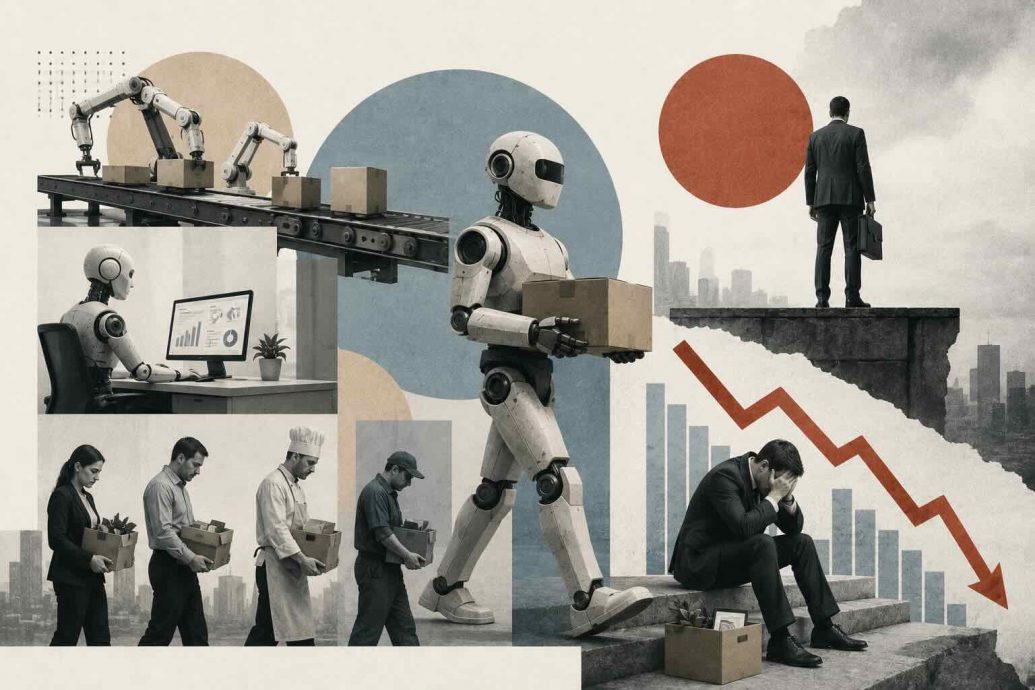
The question of whether robots will take our jobs has shifted from speculative debate to measurable reality as automation reshapes industries from warehouse floors to corporate offices at an unprecedented pace. According to the World Economic Forum’s Future of Jobs Report 2025, 92 million jobs will be displaced globally by 2030, while 170 million new roles will emerge, creating a net increase of 78 million positions but leaving millions of workers scrambling to acquire entirely new skill sets. Amazon crossed one million deployed warehouse robots in mid-2025, pushing human workers to the edges of fulfillment center floors as machines handle the core tasks of stowing, picking, and sorting. Oxford Economics warns that approximately 20 percent of all United States jobs face high vulnerability to robotic replacement within the next two decades. The convergence of affordable robotics hardware, increasingly capable artificial intelligence, and economic pressure to cut labor costs is accelerating a transformation that touches every sector of the global economy. This article examines which jobs face the greatest displacement risk, how industries are adapting, what workers can do to protect their careers, and whether the promise of new job creation will materialize quickly enough to prevent widespread economic disruption.
Robots and Your Career: What the Data Shows
How many jobs will robots replace by 2030?
The WEF projects 92 million jobs will be displaced globally by 2030 through automation and AI, while McKinsey estimates up to 800 million workers worldwide may need to switch occupations entirely due to robotics and intelligent automation.
Which industries face the highest automation risk?
Transportation and logistics face the greatest risk with 60 percent of jobs vulnerable, followed by manufacturing at 51 percent, accommodation and food service at 47 percent, and retail at 40 percent, according to Oxford Economics analysis.
Will automation create more jobs than it destroys?
The WEF forecasts a net gain of 78 million jobs by 2030, with growth concentrated in AI, big data, cybersecurity, renewable energy, and care economy roles, though significant reskilling is required and the transition period may cause widespread temporary unemployment.
Key Takeaways
- Jobs requiring creativity, emotional intelligence, complex physical adaptation, and unpredictable decision-making remain significantly safer from automation than routine, repetitive roles in data processing, assembly, and basic customer service.
- The WEF projects 170 million new jobs created and 92 million displaced by 2030, yielding a net gain of 78 million positions, but the transition requires massive reskilling as 39 percent of core worker skills will change within five years.
- Amazon has deployed over one million robots across its fulfillment network, with leaked internal plans suggesting the company aims to automate 75 percent of warehouse operations and potentially replace 600,000 jobs by 2033.
- Oxford Economics finds 20 percent of US jobs are highly vulnerable to automation, with transportation and logistics, manufacturing, and food service facing the most concentrated displacement risk from commercially available robotic technology.
Table of contents
- Introduction
- Robots and Your Career: What the Data Shows
- Key Takeaways
- What Does Job Automation Mean?
- The Scale of Robotic Job Displacement in 2026
- Manufacturing’s Long Automation Journey
- Warehouse Automation and Amazon’s Robot Army
- Transportation and Logistics Under Threat
- Customer Service and the Rise of AI Chatbots
- Food Service and Hospitality Automation
- White-Collar Work Is Not Immune
- The Jobs That Robots Cannot Easily Replace
- The Skills Gap and Reskilling Challenge
- Economic Inequality and the Automation Divide
- How Different Countries Are Responding
- The Generative AI Accelerator
- New Jobs That Automation Creates
- The Ethical Imperative of Responsible Automation
- How Workers Can Prepare for an Automated Future
- The Role of Education Systems in Preparing Future Workers
- What History Teaches Us About Technological Unemployment
- Navigating the Future of Work in the Robot Age
- Key Insights on Robots and Job Displacement
- Automation Risk by Industry Sector
- Real-World Examples of Robotic Job Displacement
- Case Studies in Workforce Automation
- Frequently Asked Questions About Robots Taking Jobs
What Does Job Automation Mean?
Job automation is the process by which robotic systems, artificial intelligence, and software algorithms replace human workers in performing routine, repetitive, or physically demanding tasks across manufacturing, services, logistics, and knowledge work, driven by advances in machine learning, computer vision, and affordable robotic hardware.
⚡ Job Automation Risk Explorer
Select an industry sector and adjust workforce parameters to see how automation impacts jobs, wages, and reskilling needs.
The Scale of Robotic Job Displacement in 2026
Robotic automation has moved from isolated factory applications to a force reshaping employment patterns across virtually every sector of the global economy at a pace that has surprised even bullish technology forecasters. Robots and autonomous systems displaced an estimated five million jobs by 2025 according to industry tracking data, with the pace of displacement accelerating as costs decline and capabilities expand. The World Economic Forum surveyed more than 1,000 employers representing 14 million workers and found that 86 percent expect AI and information processing technologies to transform their businesses by 2030. Goldman Sachs Research projects the global humanoid robot market will reach $38 billion by 2035, a sixfold increase from earlier estimates, with 50,000 to 100,000 humanoid robot shipments expected in 2026 alone. This growth is driven by unit costs dropping toward the $15,000 to $20,000 range as manufacturing scales, making robots economically competitive with human workers in an expanding range of applications. Robot deployment remains concentrated in five nations including China, Japan, the United States, South Korea, and Germany, which together account for 80 percent of global robot installations. The global robot density has reached 162 units per 10,000 employees, a figure that has doubled over the past seven years, signaling the accelerating pace at which machines are joining and replacing human workers across workplaces worldwide.
The current wave of automation differs from previous industrial revolutions in both speed and breadth, creating displacement pressures that existing economic and educational systems may not absorb quickly enough. Previous automation transitions unfolded over decades, giving workers and institutions time to adapt through gradual skill evolution and intergenerational occupational shifts. Modern robotics combined with AI can transform entire sectors within five to ten years, leaving insufficient time for traditional retraining pathways to prepare displaced workers for new roles. A 2026 Mercer survey found that 40 percent of employees are highly concerned about job loss due to AI, up from 28 percent the previous year, while 99 percent of business leaders expect AI-driven headcount reductions within two years. These statistics paint a picture of a labor market undergoing structural transformation where anxiety about displacement is widespread among workers and automation planning is universal among employers. Understanding the full dimensions of this shift requires examining specific industries, the technology driving displacement, and the economic forces that determine whether automation creates prosperity or deepens inequality.
Manufacturing’s Long Automation Journey
Manufacturing has served as the proving ground for industrial robotics since the 1960s, and the sector’s transformation over six decades provides essential context for understanding how robots displace workers across the broader economy. The United States has lost approximately 5.5 million manufacturing jobs since 2000, driven by a combination of automation, offshoring, and productivity improvements that allow fewer workers to produce more output. An MIT and Boston University report projects that AI will replace as many as two million additional manufacturing workers by 2026, accelerating a trend that has already hollowed out industrial employment in communities across the American Midwest and Southeast. Oxford Economics estimates that 51 percent of manufacturing jobs are vulnerable to partial or complete automation, making the sector second only to transportation and logistics in overall displacement risk. Modern manufacturing robots powered by AI-enhanced computer vision can weld, inspect, and assemble products with precision that human workers cannot match, while operating continuously without breaks, injuries, or quality variation. The automotive industry pioneered robotic assembly lines and remains among the most heavily automated manufacturing sectors globally, with companies like Toyota and Tesla deploying thousands of robots alongside shrinking human workforces. The manufacturing experience demonstrates a pattern that now extends to other sectors: automation initially handles the most dangerous and repetitive tasks, then gradually expands to encompass roles that were previously considered too complex for machines, a dynamic explored in depth in discussions about when AI will replace specific jobs.
The manufacturing sector also illustrates the geographic concentration of automation’s impact, which creates localized economic crises even when national employment statistics appear stable. Communities built around single manufacturing plants or industries face devastating consequences when automation eliminates the jobs that sustain local economies, small businesses, and tax bases. The resulting economic decline creates cascading effects on housing values, school funding, healthcare access, and community cohesion that persist for decades after factory closures. Regional retraining programs have produced mixed results, with many displaced manufacturing workers finding only lower-paying service sector positions that cannot replace the wages and benefits their automated factory jobs provided. The lesson from manufacturing’s automation journey is that job displacement is not merely a labor market adjustment but a community-level crisis requiring proactive economic development strategies rather than reactive retraining programs.
Warehouse Automation and Amazon’s Robot Army
The warehouse sector is experiencing the most visible and rapid robotic transformation currently underway, with Amazon’s operations providing the most dramatic illustration of how automation reshapes an entire industry’s employment landscape. Amazon crossed one million deployed warehouse robots in mid-2025, creating a robot-to-human ratio approaching 1:1 across its global fulfillment network of approximately 1.5 million human workers. The company’s robot fleet includes Sequoia, an integrated automation platform that identifies and stores inventory 75 percent faster than human-only operations, and Sparrow, a robotic arm with computer vision that handles approximately 65 percent of products in Amazon’s catalog. Leaked internal plans suggest Amazon aims to automate 75 percent of warehouse operations and potentially replace 600,000 jobs by 2033, a timeline that would represent the largest single-company workforce reduction in economic history. Workers at Amazon’s Garner, North Carolina fulfillment center describe being pushed to the perimeter of warehouse floors as robots take over core tasks that humans previously performed. Amazon’s total workforce has already dropped by over 100,000 from its 2021 peak of 1.6 million, and the company’s projected $200 billion in capital expenditures for 2026 includes a massive allocation to AI and robotics infrastructure. The warehouse automation trend extends beyond Amazon to competitors like Alibaba, Walmart, and DHL, all of which are deploying robotic systems that reduce dependence on human workers for warehouse operations.
The irony of Amazon’s automation strategy is that it simultaneously displaces human workers and eliminates some of the robotics engineering positions responsible for building the automation systems themselves. Amazon laid off over 100 employees in its robotics division in March 2026 after shelving its Blue Jay robotics prototype due to high manufacturing costs and operational challenges. These cuts came alongside approximately 16,000 corporate job reductions in January 2026, bringing Amazon’s total corporate layoffs since late 2022 to more than 57,000 positions. The pattern demonstrates that automation does not simply threaten routine manual labor but can reshape entire organizational structures, including the teams that design, build, and maintain robotic systems. For warehouse workers facing displacement, the path forward involves training in warehouse technology, logistics software, and robotic systems maintenance, transitioning from performing tasks to supervising and coordinating with the machines that now perform them.
Transportation and Logistics Under Threat
The warehouse transformation connects directly to the broader transportation and logistics sector, which Oxford Economics identifies as the industry with the highest overall vulnerability to automation at approximately 60 percent of jobs facing potential replacement. Self-driving vehicle technology has moved from research laboratories to commercial deployment, with autonomous trucking companies conducting regular freight runs on major highway corridors and ride-sharing services testing driverless vehicles in multiple cities. The United States employs approximately 3.5 million truck drivers whose livelihoods face existential threat from autonomous driving systems being developed by companies including Waymo, Aurora, and TuSimple. Japan’s labor shortage has forced companies including Toyota and Rakuten to develop autonomous delivery solutions, while confectionery manufacturer Lotte has shifted from truck delivery to rail transportation for its popular Koala’s March snacks because overtime regulations have exacerbated an acute shortage of drivers. Delivery drones, autonomous sidewalk robots, and self-driving last-mile delivery vehicles are expanding the automation frontier from highways to residential streets, threatening the delivery driver positions that expanded dramatically during the pandemic era. The logistics sector’s vulnerability to automation stems from the combination of predictable routes, standardized cargo handling, and economic incentive to reduce labor costs in an industry where wages represent the largest single expense category. Understanding the implications for trucking and transportation reveals how deeply automation penetrates into occupations that millions of workers depend upon.
Last-mile delivery, the final leg of a package’s journey from distribution center to doorstep, presents both automation opportunities and challenges that illustrate the complexity of robotic job displacement in unstructured environments. Companies like Amazon, FedEx, and UPS are testing delivery robots that navigate sidewalks and driveways to complete deliveries without human drivers, while drone delivery services have received regulatory approval for limited commercial operations in multiple countries. The transition from human to robotic delivery will likely unfold gradually, beginning with standardized suburban routes and expanding as sensor technology and AI navigation improve. For the millions of delivery drivers who entered the workforce during the e-commerce boom, this automation timeline creates career uncertainty that extends across the next decade, requiring proactive planning for occupational transitions that cannot wait for displacement to occur.
Customer Service and the Rise of AI Chatbots
While physical robots reshape warehouses and logistics, AI-powered chatbots and virtual assistants are displacing human workers from customer service roles that once seemed immune to automation because they required language comprehension and interpersonal skills. Most human customer service interactions now occur through automated systems rather than phone conversations with human agents, as companies deploy AI chatbots capable of handling routine inquiries, processing returns, and resolving common technical issues without human intervention. In February 2026, Block cut nearly half its 10,000-person workforce, with CEO Jack Dorsey stating that AI had made many of those roles unnecessary and predicting that most companies would reach the same conclusion within a year. Over 100,000 tech workers were laid off in 2025 alone, with AI cited as a primary driver in more than half the cases, concentrated in customer support, operations, and middle management positions. Klarna’s AI assistant reportedly handles the work equivalent of 700 full-time customer service agents, demonstrating the productivity gains that motivate companies to accelerate chatbot deployment. Financial services firm JPMorgan has automated 20 percent of its back-office positions, while similar automation is spreading across insurance, telecommunications, and retail customer service operations. The displacement of customer service workers connects to broader concerns about whether AI will eventually replace human workers across an expanding range of cognitive tasks.
The quality of AI customer service remains contested, with many consumers expressing frustration at chatbot interactions that cannot handle complex, nuanced, or emotionally charged situations that human agents navigate through empathy and creative problem-solving. Companies face a tension between the cost savings of automated customer service and the customer satisfaction risks of removing human touchpoints from critical service interactions. The most effective implementations deploy AI to handle routine inquiries while routing complex cases to human agents, creating a hybrid model that reduces but does not eliminate customer service employment. Workers displaced from frontline customer service roles face challenging transitions because the skills that made them effective in those positions, patience, communication, problem-solving, do not automatically translate into the technical roles that automation creates.
Food Service and Hospitality Automation
Customer service displacement extends into the physical world as food service and hospitality industries deploy robots for cooking, serving, cleaning, and guest interaction at an accelerating pace driven by chronic labor shortages and rising minimum wages. Oxford Economics places accommodation and food service at 47 percent vulnerability to automation, making it the third most exposed sector after transportation and manufacturing. Japan’s largest restaurant chain Skylark operates approximately 3,000 cat-eared delivery robots across its locations, while companies like Connected Robotics have deployed AI-powered cooking robots that prepare soba noodles and takoyaki at train station eateries. Fast food restaurants have implemented ordering kiosks, robotic fry cooks, automated drink dispensers, and self-cleaning systems that collectively reduce staffing requirements by 30 to 50 percent compared to fully human-operated locations. McDonald’s experimented with fully robotic restaurants as early as 2003, and the technology has matured dramatically since then with companies like Miso Robotics deploying Flippy burger-flipping robots at White Castle locations nationwide. Young workers aged 16 to 24 face disproportionate exposure to food service automation because they represent 29 percent of all food preparation and service workers despite constituting only 9 percent of the overall workforce. The intersection of food service labor shortages and robotic capabilities is examined in detail in coverage of food robotics evolution.
Hotels are following a similar automation trajectory, with chains like Japan’s Henn na Hotel operating locations staffed primarily by robots that handle check-in, luggage transport, room cleaning, and concierge services. The hospitality sector’s adoption of automation reflects both labor scarcity and customer demand for contactless service options that emerged during the pandemic and have persisted as permanent consumer preferences. Housekeeping robots, automated room service delivery, and AI-powered concierge systems are reducing staffing requirements at properties ranging from budget chains to luxury resorts. Workers in hospitality face the dual challenge of automation reducing available positions while remaining roles increasingly require technology management skills that traditional hospitality training programs have not historically provided.
White-Collar Work Is Not Immune
The displacement of physical and service labor has dominated public discussion, but research increasingly reveals that white-collar knowledge work faces equally significant automation threats from generative AI and intelligent software systems. Researchers from the University of Pennsylvania and OpenAI found that educated white-collar workers earning up to $80,000 per year are among the most likely to be affected by workforce automation, challenging the assumption that education provides reliable protection against displacement. Eloundou and colleagues estimated that roughly 80 percent of US workers hold jobs with tasks susceptible to automation by large language models, meaning the displacement frontier extends far beyond factory floors and warehouses. The 41 percent of companies that plan to reduce their workforce by 2030 due to AI automation are not targeting only manual labor but are eliminating positions in accounting, legal research, content creation, data analysis, and administrative management. Goldman Sachs estimates that generative AI could automate 300 million full-time jobs globally, with legal services, financial analysis, and administrative functions facing particularly concentrated exposure. The rapid advancement of large language models has compressed expected automation timelines for knowledge work from decades to years, catching many professionals off guard who believed their education and expertise would shield them from technological displacement. Understanding how AI-driven job displacement affects white-collar workers is essential for professionals across every industry.
The accounting profession illustrates how AI transforms white-collar work from inside rather than simply eliminating positions outright. AI systems now handle tax preparation, audit analysis, financial reporting, and compliance monitoring that previously required teams of accountants working for weeks or months. Goldman Sachs has invested in AI accounting tools that automate routine financial analysis, while the Big Four accounting firms have all deployed AI systems that handle increasing portions of their traditional service offerings. Rather than eliminating all accounting positions, AI is compressing the profession’s workforce requirements while raising the bar for human practitioners who must now provide strategic insight and judgment that AI cannot replicate. This pattern of augmentation-leading-to-reduction is replaying across legal services, journalism, software development, and healthcare administration, creating a gradual erosion of white-collar employment that may be less visible but equally consequential as factory automation.
The Jobs That Robots Cannot Easily Replace
While the list of vulnerable occupations grows longer, research consistently identifies categories of work that remain resistant to robotic displacement due to inherent requirements for human judgment, physical adaptability, emotional intelligence, and creative thinking. Skilled trades including electricians, plumbers, carpenters, and mechanics require practical know-how combined with the ability to adapt to constantly changing physical environments that robots cannot navigate reliably. Emergency responders and firefighters make split-second decisions under dangerous, unpredictable conditions that draw on training, experience, and instinct that no current AI system can replicate. Creative professionals including writers, designers, strategists, and entrepreneurs generate genuinely original ideas, cultural awareness, and emotional resonance that remain fundamentally beyond the capabilities of even the most advanced AI systems. Healthcare professionals who combine technical expertise with empathy, physical examination skills, and complex clinical judgment, particularly surgeons, nurses, and therapists, maintain strong employment prospects despite AI’s growing role in diagnostics and treatment planning. Social workers, counselors, and educators perform roles where human connection, emotional support, and individualized attention are the core value proposition rather than peripheral aspects of the work. Understanding which careers AI cannot easily replace provides essential guidance for workers making long-term career decisions.
The distinction between automatable and automation-resistant work ultimately comes down to three capabilities where humans retain decisive advantages over machines. Social intelligence including caring, persuasion, negotiation, and emotional perception remains beyond the reach of current AI despite advances in affective computing and social robotics. Creative problem-solving that requires generating genuinely novel solutions rather than optimizing within known parameters depends on human imagination and cultural context that machines cannot independently develop. Physical adaptation in unstructured environments, where a construction site, emergency scene, or residential repair presents unique challenges every time, requires the flexible physical and cognitive responses that robots handle poorly. Workers who can position themselves at the intersection of these capabilities will find the strongest protection against displacement regardless of how rapidly robotic technology advances.
The Skills Gap and Reskilling Challenge
Identifying safe occupations is useful, but the practical challenge of transitioning millions of displaced workers into new roles reveals a skills gap that threatens to become the defining economic crisis of the automation era. The WEF reports that 39 percent of workers’ key skills will change by 2030, while 63 percent of employers identify skills gaps as the primary barrier to business transformation. An estimated 85 percent of employers plan to prioritize workforce upskilling in response to growing skills gaps, with half planning to transition staff from roles exposed to AI disruption into other parts of their business. A TalentLMS survey in 2026 revealed that 42 percent of companies report significant workforce skills gaps, while the pace of technological change continues to outstrip the capacity of traditional education and training systems to produce workers with relevant capabilities. The skills most projected to grow in importance include AI and big data proficiency, networks and cybersecurity, technological literacy, creative thinking, and resilience and adaptability, representing a combination of technical and human competencies that current workforce development programs rarely address together. Technological skills are projected to grow in importance more rapidly than any other category over the next five years, creating urgent demand for training programs that can quickly equip workers with practical capabilities in AI, data analysis, and digital tools. For workers navigating this transition, understanding how to start a career in AI provides a concrete pathway into one of the fastest-growing employment sectors.
Government-led reskilling programs have produced variable results, with some countries demonstrating promising approaches while others lag behind. The Netherlands has incorporated automation-ready training into its education system through continuous professional development courses in coding, robotics, and advanced manufacturing. Community-based training centers in Northern England have partnered with local industries to create customized reskilling programs for workers displaced by manufacturing and warehousing automation. Singapore’s SkillsFuture program provides citizens with education credits that can be used for approved reskilling courses throughout their careers, creating a national infrastructure for lifelong learning. These examples demonstrate that effective reskilling requires collaboration between government, education institutions, and industry to ensure training aligns with actual employer needs rather than generic curricula that fail to lead to employment outcomes.
Economic Inequality and the Automation Divide
Reskilling programs address individual transitions, but the macroeconomic implications of automation extend to fundamental questions about wealth distribution, economic inequality, and the concentration of productivity gains among capital owners rather than workers. The economic benefits of automation, including reduced costs, increased productivity, and higher quality, accrue primarily to company shareholders and consumers through lower prices, while displaced workers bear the costs of unemployment, retraining, and career disruption. McKinsey’s estimate that automation could displace between 400 and 800 million workers worldwide by 2030 implies a potential redistribution of economic value from labor to capital that would significantly widen existing inequality gaps. In advanced economies, nearly 60 percent of jobs are potentially vulnerable to automation, while in developing countries only 26 percent face similar risk, creating the paradox that the nations best equipped to manage transitions face the most severe displacement while less-prepared nations face less immediate disruption. The technology industry’s concentration of automation profits among a small number of companies, including Amazon, Google, and Tesla, that both develop and deploy robotic systems creates winner-take-all dynamics that challenge traditional economic models based on broadly distributed gains from technological progress. Young workers entering the labor market face particularly acute challenges because they are overrepresented in highly automatable occupations like food service while simultaneously carrying education debt that limits their financial flexibility to pursue retraining. These distributional concerns connect to broader debates about AI and economic inequality.
Policy proposals to address automation-driven inequality range from incremental adjustments to existing social safety nets through to fundamental restructuring of how economies distribute the gains from technological progress. Universal basic income experiments in Finland, Kenya, and several US cities are testing whether direct cash transfers can provide a floor of economic security for workers displaced by automation. Robot taxation proposals, advocated by figures including Bill Gates, would impose levies on automated systems that replace human workers, using the revenue to fund retraining programs and social services. Expanded earned income tax credits, portable benefits decoupled from employer relationships, and public investment in infrastructure that creates automation-resistant employment represent additional policy tools under consideration. The political challenge is that these interventions require implementation before displacement reaches crisis levels, while democratic processes tend to respond to problems only after they become acute.
How Different Countries Are Responding
Economic inequality is amplified or mitigated by national policy responses, and the divergent approaches of major economies reveal starkly different visions for managing the automation transition. Japan has embraced robotics as a national survival strategy in response to its aging population and shrinking workforce, deploying robots in restaurants, elder care facilities, and logistics operations with strong government support through programs like the New Robot Strategy and J-Startup acceleration platform. Germany’s Industry 4.0 initiative focuses on keeping manufacturing workers employed alongside robots through collaborative automation that augments rather than replaces human capabilities. China has become the world’s largest market for industrial robots, with government subsidies driving deployment while simultaneously investing in vocational training programs to manage workforce transitions in its enormous manufacturing sector. The United States lacks a coordinated national automation strategy, relying primarily on market forces and fragmented state-level programs to manage displacement, an approach that economists warn may leave millions of workers without support during the transition period. South Korea combines aggressive automation adoption with the world’s highest robot density and strong government investment in reskilling infrastructure, attempting to maintain both technological leadership and workforce stability. The European Union’s approach emphasizes regulatory frameworks including the AI Act that govern how automation technology can be deployed, alongside social protection systems that provide displaced workers with extended benefits and retraining support. Comparing these national strategies reveals how AI governance and regulation shape whether automation’s economic benefits are broadly shared or narrowly concentrated.
The effectiveness of national responses depends not only on policy design but on the cultural context within which automation occurs. Japan’s cultural acceptance of robots as helpful companions rather than threatening replacements facilitates smooth workplace integration that reduces social friction during transitions. Northern European societies with strong social contracts and universal education systems can absorb automation-driven displacement more effectively than countries with limited safety nets and fragmented training infrastructure. The United States’ emphasis on individual responsibility for career development creates both entrepreneurial dynamism and social vulnerability, as workers who fail to reskill independently face consequences that collective systems in other countries would partially absorb.
The Generative AI Accelerator
National responses are being tested by the sudden acceleration of job displacement driven by generative AI, which has compressed expected automation timelines for knowledge work from decades to years and expanded the range of tasks machines can perform into domains previously considered exclusively human. Since OpenAI introduced ChatGPT in November 2022, investment in generative AI has soared to nearly eight times initial levels, driving rapid deployment of AI tools that can write code, produce marketing content, analyze legal documents, generate images, and conduct financial analysis. Generative AI significantly enhances human capabilities and can enable less specialized workers to undertake tasks previously reserved for experts, improving productivity in roles like accounting clerks, nurses, and teaching assistants. The explosion of generative AI has pushed automation potential beyond previous projections, with researchers now estimating that more than 45 percent of all jobs could be partially automated by 2030, compared to earlier estimates of 21 percent. Companies are deploying AI tools not just to automate existing processes but to fundamentally redesign workflows in ways that require fewer human workers for the same output levels. The speed of generative AI adoption means that workers in content creation, programming, data analysis, and administrative support face displacement timelines measured in months rather than years, leaving minimal time for gradual retraining. Understanding the capabilities and limitations of generative AI technology is essential for workers assessing their personal exposure to automation risk.
The generative AI wave intersects with physical robotics through multimodal AI systems that give robots enhanced perception, decision-making, and language capabilities. Robots equipped with large language models can understand natural language instructions, explain their actions to human coworkers, and adapt to novel situations by reasoning about their environment rather than following rigid programming. This convergence of digital and physical AI amplifies the displacement potential beyond what either technology would create independently, as robots gain the cognitive flexibility previously available only to humans while AI systems gain the ability to act in the physical world through robotic embodiments. The combined effect creates what some economists describe as a qualitative shift in automation capability, where displaced workers cannot simply move to adjacent roles because the robots and AI systems can follow them there.
New Jobs That Automation Creates
The displacement narrative, while urgent, presents only half the economic picture because automation simultaneously creates entirely new job categories that did not exist before the technology was deployed. The WEF’s 2025 report identifies the three fastest-growing occupations by percentage growth as big data specialists, fintech engineers, and AI and machine learning specialists, all roles that emerge directly from the automation wave. Renewable energy engineering, data science, cybersecurity analysis, and robotics maintenance represent additional growth areas where demand for workers significantly exceeds current supply. The green transition alone is expected to create millions of jobs in renewable energy installation, electric vehicle manufacturing, sustainable agriculture, and environmental engineering, partially offsetting displacement in fossil fuel-dependent industries. Care economy roles including nurses, healthcare workers, eldercare providers, and educators are projected to grow significantly as aging populations in developed countries create demand that cannot be met through automation alone. Delivery drivers, despite facing long-term autonomous vehicle displacement risk, represent one of the fastest-growing near-term employment categories as e-commerce expansion outpaces delivery automation deployment. The emergence of entirely new job categories suggests that the labor market’s capacity for adaptation has historically been underestimated, though the speed of current transitions may strain this adaptive capacity beyond previous experience, as explored in analysis of emerging jobs in the AI era.
The new jobs created by automation often require fundamentally different skills than the positions they replace, creating a transition gap that cannot be bridged through simple retraining alone. A displaced warehouse worker cannot become a machine learning engineer through a six-week certification program, and the economic conditions of unemployment often prevent workers from pursuing the extended education required for high-skill technology roles. The jobs that automation creates tend to cluster at two extremes of the skill spectrum, either highly technical positions requiring advanced education or lower-wage service and care roles that are not economically viable for workers transitioning from middle-income manufacturing or logistics positions. This hollowing out of middle-skill, middle-income employment has been a defining feature of previous automation waves and appears likely to accelerate in the current transition.
The Ethical Imperative of Responsible Automation
Job creation patterns highlight the ethical responsibilities that corporations, governments, and technology developers bear for ensuring that automation’s economic benefits are distributed in ways that prevent widespread human suffering during the transition period. Companies that deploy automation to eliminate jobs bear a moral obligation to invest in workforce transition programs that provide displaced workers with meaningful pathways to new employment rather than simply reducing headcount and distributing savings to shareholders. The WEF reports that almost half of employers expect to transition staff from AI-exposed roles into other parts of their business, representing a more responsible approach than outright termination but one that requires genuine investment in retraining rather than performative reassignment. The ethical framework for responsible automation must address the temporal gap between displacement and re-employment, during which workers and their families experience financial hardship, psychological distress, and social dislocation that financial settlements and retraining vouchers cannot fully remedy. Technology companies developing AI and robotic systems bear additional ethical responsibility for considering the employment impacts of their products, moving beyond purely technical development to engage with the social consequences of the capabilities they create. The growing field of AI ethics offers frameworks for evaluating automation decisions that balance efficiency gains against human costs, but translating ethical principles into corporate practice requires governance mechanisms that remain largely undeveloped. These considerations align with broader discussions about responsible AI in business that prioritizes human welfare alongside technological advancement.
Workers’ collective bargaining power represents an important but diminishing counterweight to corporate automation decisions, as union membership has declined across most developed economies precisely during the period when automation threatens the most workers. Labor organizations in sectors like automotive manufacturing, warehousing, and transportation are negotiating automation clauses in contracts that require advance notice, transition support, and in some cases limits on the pace of robot deployment. These negotiations produce outcomes that vary dramatically depending on the balance of power between employers and workers in specific industries and jurisdictions. The absence of organized labor representation in many of the sectors most vulnerable to automation, including food service, retail, and logistics, means that millions of workers face displacement without institutional advocates negotiating on their behalf.
How Workers Can Prepare for an Automated Future
Ethical frameworks and policy responses provide necessary structural context, but individual workers facing automation risk need practical strategies they can implement immediately to strengthen their positions in a rapidly changing labor market. Developing technological literacy across AI tools, data analysis platforms, and digital collaboration systems provides foundational capability that enhances employability across virtually every industry regardless of specific occupational focus. Building skills in areas where human judgment remains essential, including creative problem-solving, emotional intelligence, complex negotiation, and ethical reasoning, positions workers for roles that automation enhances rather than eliminates. The WEF identifies the top skills for 2030 as AI and big data proficiency, networks and cybersecurity, technological literacy, creative thinking, resilience and adaptability, leadership and social influence, and analytical thinking, representing a blend of technical and human capabilities. Pursuing certifications in growing fields like data science, cybersecurity, project management, and UX design provides concrete credentials that employers recognize and value during hiring decisions. Maintaining a continuous learning mindset through online courses, professional development programs, and self-directed study ensures that skills remain current as technology continues to evolve beyond any single training program’s shelf life. Workers should also evaluate their current roles honestly, identifying which tasks are most likely to be automated and proactively building expertise in the aspects of their work that require distinctly human capabilities. Resources about essential skills for the modern economy provide specific guidance for workers at every career stage.
Career diversification represents an additional protective strategy, as workers who develop expertise across multiple domains are more resilient to displacement in any single area. Building a professional network that spans industries and functions creates awareness of emerging opportunities that might not appear in traditional job searches. Entrepreneurial skills allow displaced workers to create new businesses that serve markets created by automation itself, including robotic system maintenance, AI training data preparation, and human-AI workflow design. Financial preparation, including emergency savings and reduced debt obligations, provides the economic buffer that enables workers to pursue retraining or career transitions without the pressure of immediate income needs that force premature decisions.
The Role of Education Systems in Preparing Future Workers
Individual preparation strategies are necessary but insufficient without systemic changes in how education systems prepare students for a labor market that will look fundamentally different from the one their parents entered. Current educational curricula in most countries were designed for an industrial economy that valued standardized knowledge, procedural compliance, and specialized expertise within stable occupational categories. The automated economy demands adaptability, cross-disciplinary thinking, technological fluency, and the ability to collaborate with AI systems as cognitive partners rather than simple tools. The WEF’s finding that 39 percent of core skills will change by 2030 implies that education systems must produce graduates who can learn and relearn throughout their careers rather than workers equipped with fixed skill sets that may become obsolete within years of graduation. STEM education expansion addresses part of the need but overemphasizes technical skills at the expense of the creative, social, and ethical competencies that distinguish human workers from automated systems. Liberal arts education, paradoxically, may prove more valuable in an automated economy than in a manual one, because the analytical thinking, communication skills, and cultural understanding it develops are precisely the capabilities that machines cannot replicate. Educational reform that integrates technological literacy with humanistic education, experiential learning, and continuous professional development represents the most promising approach to preparing future workers for a labor market defined by constant change, as explored in discussions about AI’s transformation of education.
Universities and vocational training institutions face their own disruption as AI tutoring systems, online learning platforms, and competency-based credentials challenge traditional educational models and timelines. The four-year bachelor’s degree may prove too slow and inflexible for an economy where skills requirements shift every two to three years, creating demand for modular credentialing systems that allow workers to build qualifications incrementally throughout their careers. Community colleges and bootcamp programs that provide intensive, focused training in high-demand skills like data analysis, web development, and cybersecurity have demonstrated strong employment outcomes at a fraction of the time and cost of traditional degrees. The most effective educational strategies will likely combine foundational broad-based learning with ongoing specialized training that adapts to evolving labor market demands.
What History Teaches Us About Technological Unemployment
Educational reform looks forward, but historical perspective offers essential context for understanding whether current automation anxieties represent genuine structural threats or cyclical fears that previous generations also experienced and ultimately overcame. The Luddite movement of the early nineteenth century saw textile workers destroy mechanical looms that threatened their livelihoods, yet the industrial revolution ultimately created far more employment than it displaced, albeit after decades of hardship for the workers caught in the transition. The introduction of automated telephone switching eliminated hundreds of thousands of telephone operator positions, but the telecommunications industry that emerged employed millions in roles that switchboard operators could not have imagined. Each previous wave of automation has eventually created more jobs than it destroyed, but the transition periods have consistently inflicted severe economic and social costs on the workers and communities directly affected by displacement. The relevant question is not whether new jobs will eventually emerge but whether the speed and scale of current automation will overwhelm adaptive mechanisms that worked during slower historical transitions. Economists who argue that this time is different point to the breadth of capabilities that AI and robotics now possess, which unlike previous single-purpose technologies can follow displaced workers into adjacent occupations rather than leaving human-advantage niches intact. Optimists counter that human creativity and adaptability have consistently confounded predictions of permanent technological unemployment, and that entirely new industries will emerge that no current forecast can anticipate. This historical perspective is explored further in analysis of the age of artificial intelligence and its parallels with previous technological revolutions.
The critical difference between historical and current automation transitions may be one of pace rather than kind, as previous industrial revolutions unfolded over generations while AI-driven automation can transform sectors within a single decade. The agricultural revolution moved workers from farms to factories over roughly a century, providing time for educational systems, urban infrastructure, and social institutions to adapt organically. The current automation wave is compressing equivalent levels of occupational disruption into timeframes that institutional responses cannot match without deliberate, proactive intervention. This temporal compression, rather than the absolute magnitude of displacement, may represent the genuinely novel challenge that distinguishes current automation from its historical precedents.
Navigating the Future of Work in the Robot Age
Historical analysis brings the discussion to its essential conclusion: the question is not whether robots are taking our jobs but how individuals, companies, and societies choose to navigate a transformation that is already well underway and accelerating. The evidence from the WEF, McKinsey, Oxford Economics, MIT, and dozens of other research institutions consistently shows that automation will displace tens of millions of jobs while creating tens of millions of new ones, with the net outcome depending entirely on how effectively the transition is managed. Workers who invest in continuous learning, develop uniquely human capabilities, and maintain career flexibility will find opportunities in the automated economy that may exceed what previous labor markets offered. Companies that treat automation as an opportunity to enhance human potential rather than simply reduce headcount will build more resilient organizations and earn the social license to operate that comes from responsible technology deployment. Governments that invest proactively in education reform, reskilling infrastructure, and social safety nets will protect their citizens from the worst consequences of displacement while positioning their economies to capture the productivity gains that automation enables. The alternative, allowing market forces to manage the transition without deliberate intervention, risks creating levels of economic inequality and social instability that threaten democratic institutions and community cohesion. The future of work in the robot age is not predetermined by technology alone but will be shaped by the choices that humans make about how to deploy, govern, and share the benefits of the most powerful automation tools ever created, a reality that connects to the fundamental question of AI and the future of work.
The conversation about robots taking our jobs ultimately reveals as much about human values and priorities as it does about technological capabilities. Societies that view automation primarily as a threat will react defensively, slowing technological progress while failing to prepare workers for changes that cannot be permanently prevented. Societies that view automation as an opportunity will invest in human development, creating workforces capable of collaborating with intelligent machines to achieve outcomes that neither humans nor robots could accomplish alone. The most resilient path forward combines honest acknowledgment of displacement risks with confident investment in human adaptability, recognizing that the same species that invented these technologies possesses the creativity, empathy, and determination needed to ensure they serve human flourishing rather than diminishing it.
Key Insights on Robots and Job Displacement
- The WEF identifies the fastest-growing skills for 2030 as AI and big data, cybersecurity, technological literacy, creative thinking, and resilience, representing a blend of technical and human capabilities.
- The WEF’s Future of Jobs Report 2025 projects 170 million new jobs and 92 million displaced by 2030, representing a structural labor market churn of 22 percent across 1.2 billion formal jobs studied globally.
- Amazon deployed over one million warehouse robots by mid-2025 with internal plans to automate 75 percent of operations, potentially eliminating 600,000 positions by 2033 while simultaneously cutting robotics division staff.
- Oxford Economics found that 20 percent of US jobs are highly vulnerable to robotic replacement, with transportation and logistics at 60 percent vulnerability followed by manufacturing at 51 percent.
- A 2026 Mercer survey showed 40 percent of employees highly concerned about AI job loss, up from 28 percent the year before, while 99 percent of business leaders expect AI headcount cuts within two years.
- Block cut nearly half its workforce in February 2026, with CEO Jack Dorsey citing AI, while over 100,000 tech workers were laid off in 2025 with AI cited as a primary driver in more than half the cases.
- Goldman Sachs projects the humanoid robot market will reach $38 billion by 2035, with unit costs dropping to the $15,000-$20,000 range as manufacturing scales enable mass deployment.
Automation Risk by Industry Sector
| Sector | Job Vulnerability | Primary Automation Technology | Transition Difficulty | New Roles Created | Policy Response Maturity |
|---|---|---|---|---|---|
| Transportation & Logistics | 60% high risk | Autonomous vehicles, warehouse robots, delivery drones | Very high — physical skills don’t transfer to tech roles | Fleet managers, robotics technicians, route optimization analysts | Low — fragmented state and federal regulations |
| Manufacturing | 51% vulnerable | Industrial robots, AI quality inspection, automated assembly | High — requires technical retraining | Robot operators, maintenance engineers, production programmers | Medium — Industry 4.0 programs in EU and Asia |
| Food Service & Hospitality | 47% vulnerable | Cooking robots, service bots, ordering kiosks, cleaning automation | High — workers often young with limited savings | Food tech managers, culinary innovation, robot-human coordination | Low — minimal industry-specific transition support |
| Retail | 40% vulnerable | Self-checkout, inventory robots, AI recommendation, cashier-less stores | Medium — transferable customer service skills | E-commerce specialists, supply chain analysts, experience designers | Low — market-driven transition with limited intervention |
| Financial Services | 35% vulnerable | Algorithmic trading, robo-advisors, AI underwriting, chatbots | Medium — strong existing education base aids reskilling | AI compliance, fintech engineers, data scientists | Medium — regulatory frameworks evolving |
| Healthcare | 15% vulnerable | Diagnostic AI, surgical robots, administrative automation | Low — core care roles require human presence | AI diagnostics specialists, health informatics, telemedicine coordinators | High — strong professional regulation protects roles |
| Creative & Strategic | 10% vulnerable | Generative AI for content, design tools, strategy assistants | Low — creative skills enhance rather than compete with AI | AI-human creative directors, prompt engineers, ethics officers | Low — emerging regulatory attention |
Real-World Examples of Robotic Job Displacement
Amazon’s Warehouse Automation and Workforce Reduction
Amazon’s deployment of over one million warehouse robots across its global fulfillment network represents the largest single-company robotic workforce transformation currently underway. The Sequoia platform combines mobile robots, gantry systems, and robotic arms to process inventory 75 percent faster than human-only operations, while the Sparrow robotic arm handles approximately 65 percent of products in Amazon’s catalog. Workers at the Garner, North Carolina facility report being pushed to the perimeter of warehouse floors as robots assume core picking, packing, and sorting tasks that humans previously performed. Amazon’s total workforce has already declined by over 100,000 from its 2021 peak, and the company’s $200 billion in projected 2026 capital expenditures includes massive robotics investment as reported by Metaintro. The measurable outcome is a fundamental restructuring of fulfillment center operations that reduces per-unit labor costs while increasing throughput speed and accuracy. The limitation is that Amazon’s automation paradoxically eliminated robotics engineering positions alongside warehouse roles, demonstrating that no job category is permanently protected from organizational restructuring.
Block’s AI-Driven Workforce Reduction
Financial technology company Block, led by CEO Jack Dorsey, cut nearly half its 10,000-person workforce in February 2026, explicitly citing AI as the primary reason positions had become unnecessary. Dorsey predicted that within a year, the majority of companies would reach the same conclusion about AI’s ability to perform tasks previously assigned to human workers. The cuts concentrated in customer support, operations, and middle management, precisely the organizational layers where AI chatbots, process automation, and management analytics tools have advanced most rapidly. The case demonstrates that AI-driven displacement is not limited to manual labor but increasingly targets knowledge work and professional services. As reported in industry analysis by Fortunly, over 100,000 tech workers were laid off in 2025 with AI cited as a driver in more than half the cases. The limitation of Block’s approach is that rapid workforce reduction can damage institutional knowledge, customer relationships, and employee morale in ways that short-term cost savings may not offset.
Japan’s Restaurant Robot Integration
Skylark, Japan’s largest table-service restaurant chain, has deployed approximately 3,000 cat-eared delivery robots across its locations as part of a broader national adoption of food service automation driven by Japan’s severe labor shortage. A 71-year-old Skylark employee estimated that half her job now involves robotic assistance, expressing gratitude for the physical relief rather than resentment about technological displacement. Japan’s service robot market is projected to nearly triple to ¥400 billion by 2030 according to Fuji Keizai, as reported by TechCrunch. The measurable outcome is maintained service levels at restaurants that would otherwise reduce hours or close entirely due to staffing shortfalls. The Japanese model offers a contrasting narrative where robots fill existing labor gaps rather than displacing available workers, though the long-term effect of normalized automation on future employment demand remains debated.
Case Studies in Workforce Automation
The WEF Future of Jobs Report 2025 and Global Labor Market Churn
The World Economic Forum’s Future of Jobs Report 2025 represents the most comprehensive global analysis of automation’s expected impact on employment, surveying over 1,000 employers representing 14 million workers across 22 industry clusters and 55 economies. The problem the report addresses is the lack of reliable, data-driven projections about how technological change, demographic shifts, and the green transition will collectively reshape global employment patterns by 2030. The report’s findings project 170 million new jobs created and 92 million displaced, constituting a structural labor market churn of 22 percent across the dataset, with a net employment increase of 78 million positions as documented on the WEF official report page. The measurable impact includes identification of 39 percent of core skills changing by 2030, 85 percent of employers planning workforce upskilling, and 41 percent planning workforce reductions due to AI automation. The report’s limitation is that its projections rely on employer surveys that may underestimate displacement in sectors where automation technology is advancing faster than business leaders anticipate, and the net positive employment outcome depends on reskilling investments that the report itself identifies as inadequately funded.
Oxford Economics Analysis of US Job Vulnerability
Oxford Economics’ 2026 analysis evaluated more than 800 occupations to determine their vulnerability to automation, drawing on US Labor Department data and assessment of commercially available robotic technologies capable of performing most or all functions associated with each role. The problem addressed was the need for granular, occupation-level automation risk assessment that goes beyond broad economic projections to identify specific jobs and communities most likely to experience displacement. The research found that approximately 20 percent of US jobs are highly vulnerable to automation, with transportation and logistics at 60 percent vulnerability, manufacturing at 51 percent, accommodation and catering at 47 percent, and retail at 40 percent, as reported by Newsweek. Senior economist Nico Palesch emphasized that displacement will be gradual and incremental rather than sudden, beginning in sectors where automation is most obvious and cost-effective before broadening to other industries. The limitation is that the analysis focuses primarily on physical robotics and may underestimate displacement from generative AI affecting white-collar occupations that the report’s framework was not designed to fully capture.
Netherlands Continuous Education Model for Automation Preparedness
The Netherlands has developed one of the most comprehensive national approaches to preparing its workforce for automation through continuous professional development integrated into the education system and supported by employer-university partnerships. The problem the Netherlands faced was ensuring that its highly educated workforce could maintain employability as automation technology transformed industries that traditionally provided stable middle-class employment. The solution involved mandating continuous professional development opportunities, offering courses and workshops on high-demand skills including coding, robotics, and advanced manufacturing, and creating formal partnerships between employers and educational institutions to ensure training content remains aligned with actual labor market needs. The approach has been highlighted by automation researchers at Research.com as a model for other countries seeking to prepare workers for automation-driven career transitions. The measurable impact includes above-average workforce technology adoption rates, lower unemployment during automation transitions compared to peer economies, and strong employer satisfaction with the practical relevance of professional development programs. The limitation is that the Netherlands’ approach benefits from existing strengths including high baseline education levels, strong social safety nets, and a compact geography that may not transfer directly to larger or more economically diverse countries.
Frequently Asked Questions About Robots Taking Jobs
The WEF projects that 92 million jobs will be displaced globally by 2030, representing approximately 22 percent of the 1.2 billion formal jobs in their dataset. Oxford Economics estimates that 20 percent of US jobs face high vulnerability to robotic automation specifically, while McKinsey projects up to 14 percent of the global workforce may need to change occupations entirely. The risk level varies significantly by industry, with transportation and logistics facing 60 percent vulnerability compared to healthcare at approximately 15 percent.
The WEF projects a net gain of 78 million jobs by 2030, with 170 million created and 92 million displaced, suggesting that automation will ultimately create more employment than it eliminates. The challenge lies in the transition period, as the new jobs typically require different skills than the positions they replace, creating a gap that displaced workers must bridge through retraining. Historical precedent supports the net positive outcome, though the speed of current automation may strain adaptive mechanisms that worked during slower previous transitions.
Amazon crossed one million deployed warehouse robots in mid-2025, creating a robot-to-human ratio approaching 1:1 across its fulfillment network of approximately 1.5 million human employees. The fleet includes specialized systems like Sequoia for integrated warehouse automation and Sparrow for individual product handling using computer vision. Internal plans suggest the company aims to automate 75 percent of warehouse operations by 2033, potentially affecting hundreds of thousands of positions.
Jobs with the highest automation risk involve routine, repetitive tasks in predictable environments including data entry clerks, assembly line workers, cashiers, telemarketing representatives, and basic customer service agents. Transport and logistics roles face approximately 60 percent vulnerability as autonomous vehicles and warehouse robots scale commercially. Manufacturing roles at 51 percent vulnerability and food service positions at 47 percent complete the most exposed occupational categories.
Occupations requiring creativity, emotional intelligence, complex physical adaptation, and unpredictable decision-making remain most resistant to automation. Skilled trades like electricians and plumbers, emergency responders, healthcare professionals, creative professionals, educators, and social workers all require capabilities that current and near-future AI systems cannot replicate. These roles combine technical expertise with human judgment and interpersonal connection that machines cannot provide.
Workers should develop technological literacy across AI tools and data platforms, build skills where human judgment remains essential including creative thinking and emotional intelligence, and pursue certifications in growing fields like cybersecurity and data science. Maintaining a continuous learning mindset through online courses and professional development ensures skills remain current as technology evolves. Financial preparation including emergency savings provides the buffer needed to pursue retraining without the pressure of immediate income needs.
The WEF identifies the fastest-growing skills as AI and big data proficiency, networks and cybersecurity, technological literacy, creative thinking, resilience and adaptability, leadership and social influence, and analytical thinking. This combination of technical and human capabilities reflects an economy where the most valuable workers can both use AI tools effectively and contribute the creative judgment, ethical reasoning, and interpersonal skills that machines lack.
Generative AI affects knowledge work and creative tasks that previous automation technologies could not touch, expanding the displacement frontier from manual labor into professional services, content creation, and cognitive analysis. The technology’s breadth of capability means displaced workers cannot simply move to adjacent roles because AI can follow them there. Investment in generative AI has increased nearly eightfold since ChatGPT’s 2022 launch, compressing expected automation timelines from decades to years.
Government responses vary dramatically by country, from Japan’s proactive embrace of robotics to fill labor gaps, to Germany’s Industry 4.0 collaborative automation programs, to the EU’s regulatory approach through the AI Act. The Netherlands emphasizes continuous education and employer partnerships, while Singapore provides citizens with lifelong learning credits. The United States lacks a coordinated national strategy, relying primarily on market forces and fragmented state-level programs.
UBI experiments in Finland, Kenya, and several US cities are testing whether direct cash transfers can provide economic security during automation transitions. Proponents argue UBI provides a floor that enables workers to pursue retraining without financial desperation, while critics contend it may reduce work incentives and is prohibitively expensive at scale. The evidence from existing pilot programs is mixed, showing improvements in wellbeing and entrepreneurship but uncertain long-term fiscal sustainability.
Automation’s economic benefits including reduced costs and increased productivity accrue primarily to company shareholders and consumers, while displaced workers bear costs of unemployment and retraining. In advanced economies nearly 60 percent of jobs face vulnerability compared to 26 percent in developing countries, creating complex global inequality dynamics. The concentration of automation profits among a small number of technology companies amplifies winner-take-all dynamics that challenge traditional models of broadly distributed economic gains.
Education systems must shift from producing graduates with fixed skill sets to developing learners who can continuously adapt throughout careers where 39 percent of core skills change every five years. The most effective approaches integrate technological literacy with humanistic education, experiential learning, and modular credentialing that allows incremental skill building. Community colleges and intensive bootcamp programs have demonstrated strong outcomes for specific technical skills at fractions of the cost and time of traditional degrees.
Complete replacement of all human workers is not projected by any major research organization, as roles requiring creativity, emotional intelligence, physical adaptability in unstructured environments, and complex ethical judgment remain beyond foreseeable AI capabilities. The more likely outcome is a fundamental restructuring of work where humans and machines collaborate, with robots handling routine tasks while humans focus on activities requiring distinctly human capabilities. The proportion of tasks that remain exclusively human will continue to shrink, but the uniquely human domain is unlikely to disappear entirely.
The explosion of generative AI has pushed automation potential beyond previous projections, with researchers now estimating more than 45 percent of jobs could be partially automated by 2030 compared to earlier estimates of 21 percent. Humanoid robot development is advancing faster than most economists predicted, with Goldman Sachs raising its market projection sixfold to $38 billion by 2035. The pace of change suggests that workers and institutions should plan for faster automation timelines than most current forecasts suggest.
Every previous major automation wave has ultimately created more employment than it destroyed, including the Industrial Revolution, agricultural mechanization, the introduction of computers, and the rise of the internet. The textile industry’s mechanization displaced hand weavers but eventually created far more manufacturing and distribution jobs, while ATMs actually led to more bank branches and tellers. The critical caveat is that transition periods caused genuine hardship lasting years or decades for the specific workers and communities displaced.