
Introduction
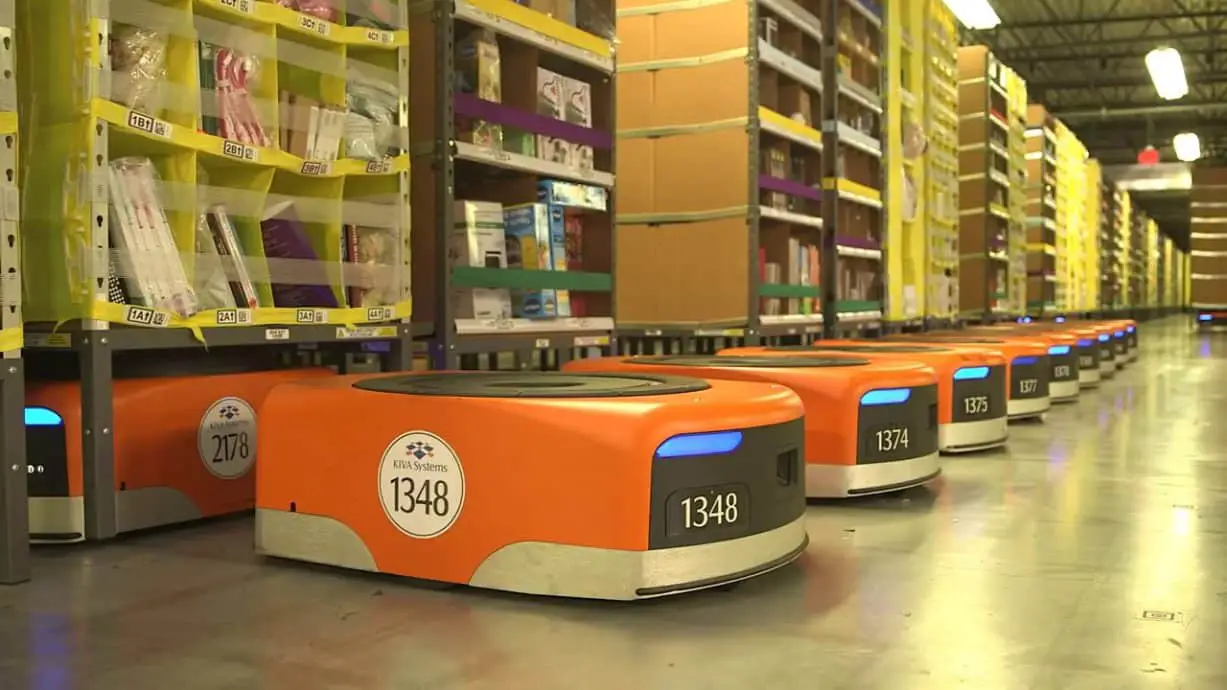
Amazon now operates more than one million robots across a global fulfillment network spanning over 300 facilities, making it the world’s largest manufacturer and operator of mobile industrial robotics. According to Amazon’s official robotics announcement, the company deployed its millionth robot in mid-2025 and simultaneously introduced DeepFleet, a generative AI foundation model that coordinates robot movement across the entire network, improving fleet travel efficiency by 10 percent. The company’s next-generation fulfillment center in Shreveport, Louisiana, spans more than three million square feet across five floors and integrates eight different robotic systems that work in harmony under AI orchestration. This facility represents Amazon’s most automated warehouse in history, with robotics deployed in every key production area for the first time. CEO Andy Jassy has stated that the company plans to replicate the Shreveport design across approximately 40 facilities by the end of 2027, signaling a massive acceleration in warehouse automation. This article takes you inside Amazon’s smart warehouse to explore the robots, AI systems, economic implications, and human workforce dynamics that define the future of fulfillment.
Quick Answers on Amazon’s Smart Warehouse Operations
How many robots does Amazon use in its warehouses?
Amazon has deployed over one million robots across more than 300 fulfillment and sortation centers worldwide, with the fleet including specialized models like Hercules, Sequoia, Sparrow, Proteus, Vulcan, Cardinal, Robin, and Titan.
What is DeepFleet and how does it work?
DeepFleet is Amazon’s generative AI foundation model that functions as an intelligent traffic management system, coordinating the movement of thousands of robots in real time to reduce congestion and improve travel efficiency by an estimated 10 percent.
Does Amazon’s warehouse automation replace human workers?
Amazon positions robotics as complementary to human workers, though the company plans to automate 75 percent of fulfillment operations by the late 2020s, and independent analysts estimate the full rollout could affect hundreds of thousands of positions.
Key Takeaways
- Amazon’s global recordable incident rate has improved 43 percent over six years, though critics argue that robotics have increased the pace of work and created new injury patterns for human workers.
- Amazon’s Sequoia system identifies and stores inventory up to 75 percent faster and reduces order processing time by up to 25 percent compared to previous fulfillment center designs.
- The Shreveport next-generation fulfillment center integrates eight robotic systems across five floors and requires 30 percent more employees in reliability, maintenance, and engineering roles than older facilities.
- DeepFleet, trained on billions of hours of robot navigation data using AWS SageMaker, represents the first foundation model built specifically for multi-robot coordination in industrial logistics.
Table of contents
- Introduction
- Quick Answers on Amazon’s Smart Warehouse Operations
- Key Takeaways
- What a Smart Warehouse Means in the Amazon Context
- The Shreveport Blueprint: Amazon’s Most Advanced Facility
- Meet the Robot Fleet: Every Machine and Its Mission
- Vulcan: The First Robot with a Sense of Touch
- DeepFleet: The AI Brain Coordinating a Million Robots
- Computer Vision and AI-Powered Quality Control
- Inventory Management and Demand Forecasting Intelligence
- The Human Workforce Inside a Robotic Warehouse
- Worker Safety: Progress, Controversy, and the Pace Question
- Energy Efficiency and Sustainability in Automated Fulfillment
- The Economics of Building a Smart Warehouse
- How Competitors Are Responding to Amazon’s Automation Lead
- The Role of AWS in Powering Warehouse Intelligence
- Privacy, Surveillance, and Worker Monitoring
- What the Next Generation of Amazon Warehouses Will Look Like
- Key Insights
- Real-World Examples
- Case Studies
- Frequently Asked Questions About Amazon’s Smart Warehouse Operations
What a Smart Warehouse Means in the Amazon Context
A smart warehouse at Amazon refers to a fulfillment center where AI, robotics, computer vision, and machine learning systems are integrated across every stage of the order fulfillment process, from receiving inventory to picking, packing, sorting, and shipping customer orders. These facilities go beyond traditional automation by using interconnected systems that learn from operational data, adapt in real time, and coordinate millions of decisions per shift without centralized human instruction. The distinction between a fully automated warehouse and Amazon’s approach is important: Amazon’s smart warehouses are designed for human-robot collaboration rather than complete elimination of the human workforce. Amazon’s smart warehouse concept treats the entire facility as a single intelligent system where robots, AI models, and human workers function as interdependent components rather than isolated units.
The evolution from Amazon’s earliest fulfillment centers, where workers walked miles per shift retrieving products from static shelving, to today’s AI-orchestrated environments represents a fundamental redesign of how physical goods move through a supply chain. The acquisition of Kiva Systems in 2012 for $775 million marked the beginning of this transformation, introducing mobile robots that bring shelving units directly to human workers rather than requiring workers to walk to the products. Since that pivotal acquisition, Amazon has developed an entire ecosystem of specialized robots, each designed for a specific task within the fulfillment workflow. Understanding how AI and robotics work together reveals why the combination produces results that neither technology achieves independently.
Amazon Robot Fleet Explorer
Select any robot to explore its role, capabilities, and impact inside Amazon’s next-generation smart warehouses.
1M+
Robots Deployed
300+
Facilities Worldwide
10%
DeepFleet Efficiency Gain
The Shreveport Blueprint: Amazon's Most Advanced Facility
Amazon opened its most advanced robotic fulfillment center in late 2024 in Shreveport, Louisiana, establishing the template for what the company calls its next-generation warehouse design. The facility spans more than three million square feet across five floors, making it one of Amazon's largest sites and the most automated in its entire network. For the first time, Amazon deployed robotics and AI into every key production area within a single building, transforming how employees work at every stage of the order lifecycle. The Sequoia inventory system at Shreveport holds over 30 million items, five times larger than its first deployment, operating in coordination with thousands of mobile robots and robotic arms that process an estimated 1.2 million packages per shift.
The Shreveport design serves as a proof of concept that Amazon intends to scale rapidly across its network. Based on documents reported by the New York Times, the company has set a goal to automate 75 percent of its fulfillment operations and plans to replicate the Shreveport architecture in approximately 40 facilities by the end of 2027. New massive robotics fulfillment centers are already under construction or recently opened in Niagara, New York (3.1 million square feet), Wilmington, North Carolina (3.2 million square feet), and Virginia Beach, Virginia, with a 3.2 million square foot facility in Waterbury, Connecticut expected to begin operations in early 2027. Each facility follows the integrated robotics blueprint established at Shreveport, deploying multiple robotic systems under unified AI coordination.
The Shreveport facility demonstrates that Amazon's warehouse automation strategy is not about deploying individual robots but about designing entire buildings around robotic workflows from the ground up. The facility requires 30 percent more employees in reliability, maintenance, and engineering roles compared to older locations, revealing that automation creates new technical job categories even as it transforms traditional warehouse positions. Scott Dresser, Vice President of Amazon Robotics, has described the center as a showcase for how generative AI works in the real world, emphasizing that the focus is on solving practical operational problems rather than pursuing technology for its own sake. The investments at Shreveport represent hundreds of millions of dollars in robotics infrastructure, with industry estimates placing the Sequoia system alone at approximately $450 million per location.
Meet the Robot Fleet: Every Machine and Its Mission
Amazon's warehouse robot fleet has grown from a single type of mobile drive unit into a diverse ecosystem of specialized machines, each engineered for a specific task within the fulfillment process. Hercules, the direct descendant of the original Kiva robots, moves inventory shelving units weighing up to 1,250 pounds, navigating warehouse floors on predetermined paths to deliver products directly to human workers at picking stations. Titan, a larger and more powerful drive unit, handles bulkier items like household appliances and pallets of food, lifting twice the weight of Hercules and shortening reconciliation times for large items from 37 minutes to approximately 11 minutes. The speed and capability of modern unloading robots continues to advance as AI-driven manipulation systems learn from millions of physical interactions.
Sequoia represents not a single robot but an integrated system that reimagines how Amazon stores and retrieves inventory within its fulfillment centers. The system containerizes inventory into plastic totes, uses mobile robots to transport those totes to a gantry structure (a tall frame with a platform), and positions items at ergonomic workstations situated in the "power zone" between mid-thigh and mid-chest height for human workers. Sequoia enables Amazon to identify and store incoming inventory up to 75 percent faster and reduces the time to process an order through a fulfillment center by up to 25 percent. This speed improvement directly translates into more items eligible for same-day or next-day shipping, which is the operational metric that most directly impacts customer satisfaction and competitive advantage.
The robotic arm family handles the granular work of picking, sorting, and stowing individual items from bins and totes. Sparrow uses computer vision and AI to detect, select, and handle individual products, reportedly capable of managing over 200 million unique items and handling approximately 65 percent of the products in Amazon's catalog. Robin sorts packages by destination using vacuum suction technology, while Cardinal picks up heavier packages weighing up to 50 pounds for loading into delivery carts. The collective capability of these robotic arms represents a fundamental shift in warehouse labor: tasks that once required human hands for every pick, sort, and stow operation are now distributed between machines and people based on which is better suited to each specific item and movement.
Proteus holds a unique position as Amazon's first fully autonomous mobile robot, meaning it navigates freely among human workers without requiring physical barriers or restricted zones. Using 360-degree lidar that creates 50 scans per second, predictive collision avoidance that calculates movement vectors for all objects within a 15-meter radius, and edge computing powered by AWS Inferentia chips with latency reduced to 12 milliseconds, Proteus moves package carts from the outbound dock area to the loading dock autonomously. In the Shreveport facility, 120 Proteus units operate among 2,500 employees, achieving a 98 percent occupancy rate compared to 78 percent in older grid-based robot models. This autonomous navigation capability represents the technical frontier of warehouse robotics, where machines must make real-time safety decisions in dynamic environments shared with people.
Vulcan: The First Robot with a Sense of Touch
Vulcan represents a fundamental breakthrough in Amazon's robotics program as the company's first warehouse robot equipped with tactile sensing, enabling it to feel the pressure it applies to objects and adjust its grip in real time to avoid damaging items. Deployed at fulfillment centers in Spokane, Washington, and Hamburg, Germany, Vulcan uses an "end of arm tooling" combining a ruler-like pushing mechanism with paddle grippers equipped with force feedback sensors and built-in conveyor belts. The pushing component moves existing items within storage compartments to make room for new inventory, while the paddles grasp and insert items, adjusting grip strength based on each object's size, shape, and fragility. Amazon estimates that Vulcan can pick and stow approximately 75 percent of all item types stored in its fulfillment centers, at speeds comparable to human workers.
The development of Vulcan required what Amazon describes as physical AI, a category of artificial intelligence that incorporates real-world touch and force data into its training rather than relying solely on visual information. The robot was trained on thousands of real-world examples, including handling fragile electronics, picking up socks, and manipulating items of vastly different weights and textures, supplemented by computer simulations that expanded the training dataset beyond what physical experiments alone could produce. When Vulcan encounters an item it cannot handle safely, it identifies the limitation and requests human assistance, creating a collaborative workflow where the robot handles routine picks and defers to human judgment for exceptions. Vulcan's tactile intelligence addresses one of the hardest unsolved problems in warehouse robotics: teaching machines to manipulate the nearly infinite variety of objects in Amazon's catalog with the gentle precision that human hands provide instinctively.
The broader significance of Vulcan extends beyond Amazon's warehouses into the future of robotics across industries including grocery, cold-chain logistics, returns processing, and manufacturing. The ability to sense force, predict how objects will respond to manipulation, and adjust in real time represents a capability that was commercially impractical just a few years ago, and Amazon's scale of deployment gives it a training data advantage that accelerates improvement with every interaction. Aaron Parness, Amazon's Director of Applied Science, described Vulcan as not just seeing the world but feeling it, enabling capabilities that were previously impossible for the company's robots. The combination of Vulcan's tactile sensing with how AI is impacting the broader workplace illustrates the accelerating convergence of physical and digital intelligence in industrial environments.
DeepFleet: The AI Brain Coordinating a Million Robots
DeepFleet is Amazon's generative AI foundation model designed specifically to coordinate the movement of its million-robot fleet across more than 300 fulfillment and sortation centers worldwide. Scott Dresser, Vice President of Amazon Robotics, described the system as an intelligent traffic management system for a city filled with cars moving through congested streets, reducing wait times and creating optimal routes for robots navigating complex warehouse environments. The model was developed using Amazon's vast datasets of inventory movement, comprising literally billions of hours of robot navigation data, and built on AWS infrastructure including Amazon SageMaker. DeepFleet improves robot travel efficiency by approximately 10 percent across the network, which translates directly into faster order processing, lower operational costs, and reduced energy consumption.
The technical architecture of DeepFleet comprises four distinct model variants, each with unique approaches to modeling multi-robot dynamics. The Robot-Centric model uses an autoregressive transformer focused on individual robots, predicting next actions based on local neighborhood data including nearby robots, objects, and navigation markers. Additional variants model the warehouse floor as a continuous field, treat the robot fleet as a graph network, and apply grid-based approaches that capture spatial relationships between machines. According to Amazon Science's technical description, one of the key findings is that the foundation model continues to improve as the volume of training data increases, following the same scaling patterns observed in large language models for text and image generation.
DeepFleet's significance extends beyond operational optimization: it represents the first commercially deployed foundation model built for multi-robot coordination in industrial logistics, establishing a paradigm that could transform any industry reliant on fleet management. Amazon has noted that the same modeling approach could potentially be applied to traffic patterns, autonomous vehicles, aviation routing, or maritime logistics, wherever large numbers of moving agents must be coordinated efficiently. The model runs on AWS SageMaker AI, making Amazon's own robotic fleet the primary case study for selling the platform to other enterprises considering AI-powered fleet management. This pattern of internal innovation becoming external product offering is central to understanding how Amazon uses AI across its entire business.
Computer Vision and AI-Powered Quality Control
Computer vision systems operate throughout Amazon's smart warehouses, performing tasks that range from reading barcodes and verifying product identity to inspecting items for damage and ensuring packing quality before shipment. These systems use deep learning models trained on millions of product images to identify items with near-perfect accuracy, even when products are partially obscured, rotated, or visually similar to other items in the catalog. Sparrow's vision system, for example, can recognize and differentiate between hundreds of millions of unique products to select the correct item from a mixed bin containing multiple different items, a task that requires sophisticated object recognition and spatial reasoning capabilities.
Quality control applications extend beyond simple identification to include automated damage detection, packaging verification, and dimensional analysis that ensures items are placed in appropriately sized shipping containers. Machine learning models evaluate images of packed boxes to detect potential issues like insufficient protective packaging, incorrect item placement, or labeling errors before packages leave the facility. Predictive analysis at Amazon uses visual and sensor data to identify equipment maintenance needs before failures occur, shifting quality control from reactive inspection to proactive prevention. The integration of computer vision into every stage of the fulfillment process creates a continuous quality loop where errors are caught and corrected in real time, reducing the rate of customer returns, refunds, and negative reviews that erode both revenue and brand trust.
Amazon's investment in computer vision training data is substantial, with dedicated teams of thousands of AI trainers who curate the datasets used to improve robotic accuracy. Every failed pick, misidentified product, or incorrect sort feeds back into the training pipeline, creating a system that improves continuously through operational experience. The scale of Amazon's operations gives it a training data advantage that smaller competitors cannot replicate: processing billions of items per year generates visual data at a volume and variety that accelerates model improvement faster than any simulation or laboratory environment could achieve.
Inventory Management and Demand Forecasting Intelligence
Amazon's smart warehouse operations begin long before a customer places an order, with AI-driven demand forecasting models predicting which products will sell, when they will sell, and where they need to be stored to enable the fastest possible delivery. These models analyze historical sales data, seasonal trends, regional preferences, promotional schedules, weather patterns, cultural events, and hundreds of additional variables to pre-position inventory across the fulfillment network. The result is that products are stored in facilities closest to anticipated demand before orders are placed, a strategy Amazon calls predictive stocking that reduces delivery times and transportation costs simultaneously. Understanding the difference between automation and AI helps clarify why these forecasting systems represent true intelligence rather than simple rule-following.
Within individual warehouses, AI systems manage real-time inventory positioning with a sophistication that would be impossible for human managers to coordinate manually. Sequoia's nesting algorithms reduce the storage space required per item by an estimated 40 percent by intelligently arranging products within totes based on their dimensions, weight, and predicted pick frequency. Items expected to be ordered soon are positioned closer to picking stations, while slower-moving inventory is stored deeper in the system's containerized storage structure. The AI continuously rebalances inventory placement based on incoming order patterns, time of day, and even real-time changes in demand, creating a warehouse that physically reorganizes itself in response to customer behavior hundreds of times per hour.
The demand forecasting models developed for Amazon's internal operations have been productized and offered externally through AWS services like Amazon Forecast, allowing other retailers and logistics companies to access similar predictive capabilities without building the underlying machine learning infrastructure. This commercialization of internal AI creates an additional revenue stream that partially offsets the enormous capital expenditure of building AI-powered fulfillment centers. It also establishes Amazon's warehouse operations as a real-world laboratory for developing AI products that serve customers across industries far removed from e-commerce.
The Human Workforce Inside a Robotic Warehouse
Amazon employs approximately 1.2 million people in its warehouse operations in the United States alone, and the company maintains that robotics is designed to make these jobs safer, easier, and more productive rather than to replace the human workforce entirely. In facilities using Sequoia, the system positions inventory at ergonomic workstations in the power zone between mid-thigh and mid-chest height, eliminating the need for workers to reach overhead or squat down, which are movements that commonly cause musculoskeletal injuries. Company data shows that recordable incident rates and lost-time incident rates in robotic facilities were 15 and 18 percent lower, respectively, compared to traditional operations as of 2022, and the global recordable incident rate has improved 43 percent over the past six years according to Amazon's 2025 safety data.
The nature of warehouse work is changing fundamentally as automation absorbs repetitive physical tasks and creates new roles requiring technical skills. At the Shreveport facility, the integration of advanced robotics has led to a 30 percent increase in employees working in reliability, maintenance, and engineering positions compared to older sites. Amazon has invested $2.5 billion in workplace safety programs and offers workforce reskilling initiatives including its Career Choice program, which pre-pays tuition for employees pursuing education in high-demand fields. The question of whether robots are taking human jobs requires nuanced analysis that accounts for both the elimination of certain task categories and the creation of new technical roles.
The critical tension in Amazon's workforce story is between the company's public commitment to human-robot collaboration and its stated goal of automating 75 percent of fulfillment operations, a target that independent analysts estimate could affect hundreds of thousands of positions across the network. Labor organizations including the Strategic Operating Center, representing over four million workers, have published analyses showing that Amazon facilities with robots have higher injury rates than those without, arguing that automation increases the pace of work and creates repetitive strain injuries as human workers are expected to match robotic speed. A Washington Post analysis of OSHA data found that Amazon's serious injury rates were nearly double those at warehouses run by other companies, and Amazon's total recorded injury rate stood at 6.0 per 100 workers in 2024. The disparity between Amazon's own safety improvement data and external assessments highlights the complexity of evaluating automation's true impact on worker wellbeing.
Worker Safety: Progress, Controversy, and the Pace Question
Amazon reports consistent year-over-year improvement in its safety metrics, with the global lost-time incident rate improving 70 percent over the past six years and 14 percent year over year in 2025. The company has invested in ergonomic workstation design, collaborative robot safety features, and AI-driven predictive safety systems that identify high-risk patterns before injuries occur. Vulcan's force-sensing technology and Sequoia's ergonomic positioning represent deliberate engineering choices aimed at reducing the physical demands that cause the most common warehouse injuries, particularly those involving reaching, bending, lifting, and repetitive motion.
Critics argue that these improvements, while real, are insufficient and that the fundamental problem lies in productivity quotas that intensify when robots increase the throughput rate of the overall system. A 2023 U.S. Senate inquiry alleged that Amazon ignored internal safety recommendations to preserve high productivity demands, and OSHA along with state regulators has cited Amazon for repeated violations of workplace safety laws. The core criticism is that robots do not simply assist workers; they set the pace that workers must match, and when the robotic pace increases, human injury rates follow. Some investigative reports have documented individual cases where workers processed tens of thousands of items in short periods, developing chronic back injuries, inflammation, and repetitive strain conditions attributed directly to the intensity of robot-assisted workflows.
The safety debate around Amazon's smart warehouses reflects a broader tension in industrial automation: technology can make individual tasks ergonomically better while simultaneously making the overall job more demanding by increasing throughput expectations. Amazon's response has been to invest in safety technology, reduce quotas at some facilities, and introduce programs that rotate workers between tasks to reduce repetitive strain. The company points to its 43 percent improvement in recordable incident rates as evidence that its approach is working, while labor advocates point to absolute injury numbers that remain elevated compared to industry averages. Resolving this tension requires transparency about the relationship between robotic pace-setting and human injury patterns, a level of disclosure that neither Amazon nor its critics have fully provided.
Energy Efficiency and Sustainability in Automated Fulfillment
AI-driven warehouse operations create measurable energy efficiency gains by optimizing robot movement patterns, reducing unnecessary travel, and managing climate control systems based on real-time occupancy and heat generation data. DeepFleet's 10 percent improvement in robot travel efficiency translates directly into reduced electricity consumption across the fleet, because shorter routes mean less battery drain, fewer charging cycles, and more productive operating hours per robot. Amazon's Proteus robots reportedly enable 24/7 operation at 30 percent lower energy consumption compared to older mobile robot designs, partly because their autonomous navigation eliminates the energy overhead of maintaining grid-based guidance systems. The convergence of AI optimization and energy management supports Amazon's broader Climate Pledge commitments to achieve net-zero carbon emissions by 2040.
Automated packaging systems in smart warehouses reduce material waste by using AI to determine the optimal box size and packaging configuration for each order, eliminating the practice of shipping small items in oversized boxes filled with void fill. Computer vision systems verify that packaging is appropriate before shipment, catching cases where excessive or insufficient protective material might lead to returns or damage-related waste. The sustainability benefits of smart warehouse operations create a rare alignment between cost reduction, operational efficiency, and environmental responsibility: every unnecessary meter a robot travels, every oversized box shipped, and every item damaged in transit represents both financial waste and environmental impact that AI systems can measurably reduce.
The Economics of Building a Smart Warehouse
The capital investment required to build and equip an Amazon next-generation fulfillment center runs into hundreds of millions of dollars, with industry estimates placing the Sequoia system alone at approximately $450 million per location. These costs cover robotic hardware, AI software development, facility construction designed around robotic workflows, sensor networks, safety systems, power infrastructure, and the training data pipelines that enable continuous improvement. The scale of investment explains why Amazon plans to roll out the Shreveport design selectively, starting with approximately 40 locations by 2027, rather than converting its entire 300-plus facility network simultaneously.
The economic return on these investments comes from multiple sources: reduced per-unit processing costs, faster throughput enabling more same-day and next-day deliveries, lower injury-related expenses, reduced error rates that cut return and refund costs, and the ability to store more inventory closer to customers without proportionally increasing facility footprint. Amazon has projected annual cost savings of approximately $12 billion from its automation program at full scale, a figure that would represent one of the largest returns on robotics investment in industrial history. Amazon's data-driven approach to evaluating these investments means that each facility generates detailed performance metrics that inform decisions about where and when to build the next automated center.
The competitive moat created by smart warehouse economics extends beyond cost savings: the capital requirements, operational complexity, and data advantages of running AI-optimized fulfillment at Amazon's scale create barriers that smaller competitors find nearly impossible to overcome. A competitor might adopt similar robotic technology from third-party suppliers, but replicating the proprietary AI systems, training datasets, and operational expertise that make Amazon's warehouses function as integrated intelligent systems requires years of operational experience at massive scale. The decision to build smart warehouses is therefore not just a technology choice but a strategic commitment to a competitive advantage that compounds over time.
The labor economics of smart warehouses present a nuanced picture that challenges simple narratives about automation replacing workers. While the absolute number of traditional warehouse positions may decline as automation scales, the Shreveport model shows that advanced facilities create proportionally more technical jobs in robotics maintenance, AI system management, safety engineering, and process optimization. Amazon's investment in workforce training programs suggests an awareness that the transition from manual to automated fulfillment must be managed carefully to avoid both talent shortages in new technical roles and workforce displacement that generates political and reputational backlash.
How Competitors Are Responding to Amazon's Automation Lead
Amazon's aggressive automation strategy has catalyzed investment across the entire warehousing and logistics industry, with competitors deploying robotic systems from third-party providers to close the operational gap. Walmart, the only U.S. retailer with a logistics network comparable in scale to Amazon's, has invested heavily in automated distribution centers using robotics from companies like Symbotic, which deploys AI-powered robots for case-picking and palletizing operations. Shopify has partnered with logistics automation providers to offer fulfillment capabilities to its merchant base, while companies like Ocado have built fully automated grocery fulfillment centers that rival Amazon's Fresh operations in processing speed and accuracy.
The competitive landscape increasingly favors companies that develop proprietary AI systems rather than relying solely on off-the-shelf robotics hardware. Amazon's advantage lies not in any single robot design but in the integration layer of AI software, from DeepFleet's fleet coordination to Sparrow's computer vision to the demand forecasting models that determine what inventory each facility should hold. Third-party robotics providers like Exotec, Locus Robotics, and 6 River Systems (owned by Shopify) offer competitive hardware platforms, but their customers typically lack the training data volumes and AI engineering depth that Amazon has accumulated over more than a decade of warehouse robotics deployment.
The competitive dynamics of warehouse automation are creating a two-tier industry similar to what has emerged in cloud computing: companies that build the platforms capture disproportionate value, while those that consume the platforms as customers compete at thinner margins. Amazon occupies the platform position in warehouse robotics, setting the operational benchmarks that the rest of the industry targets. The concern for competing retailers is that Amazon's automation advantages compound over time, enabling faster delivery speeds and lower operating costs that translate into pricing power and customer loyalty advantages that are difficult to match through incremental efficiency improvements alone.
The Role of AWS in Powering Warehouse Intelligence
Amazon Web Services provides the computational backbone for every AI system operating inside Amazon's smart warehouses, from the machine learning models that power individual robot decisions to the fleet-wide coordination systems that optimize operations across 300-plus facilities simultaneously. DeepFleet was built using Amazon SageMaker, and every AWS sales team that sells SageMaker now uses Amazon's million-robot fleet as its primary case study, demonstrating how the company's internal operations serve as both the proving ground and the marketing vehicle for its cloud AI products. The edge computing systems that enable real-time robot decision-making run on AWS Inferentia chips, the same custom silicon that Amazon sells to enterprise customers for inference workloads, reducing latency to levels that support safety-critical autonomous navigation in shared human-robot environments.
The relationship between Amazon's warehouses and AWS creates a flywheel effect where internal operational challenges drive AI product development that generates external cloud revenue. Demand forecasting capabilities developed for Amazon's inventory management have been productized as Amazon Forecast, computer vision systems refined on warehouse product recognition power Amazon Rekognition, and fleet management algorithms are becoming the foundation for generalized multi-agent coordination services. Amazon's smart warehouses function simultaneously as fulfillment facilities and as the world's largest AI research laboratory, generating proprietary data and operational insights that no competitor can access, while the resulting AI products are offered to external customers who indirectly fund the next generation of warehouse innovation.
Privacy, Surveillance, and Worker Monitoring
Smart warehouse systems generate continuous data streams about every aspect of operations, including the location, speed, productivity, and behavior of human workers alongside robotic systems. Amazon uses AI-driven performance monitoring to track individual worker metrics including items processed per hour, task completion times, and adherence to standard operating procedures. Critics characterize these systems as workplace surveillance that subjects employees to algorithmic management, where AI systems rather than human supervisors determine work pace, break timing, and performance evaluations. The debate around whether robots will take human jobs intersects with questions about the quality of the jobs that remain when AI sets the terms of work.
Amazon maintains that performance data helps identify ergonomic risks, balance workloads, and recognize employees who excel, but labor organizations and employee advocates argue that the systems create a pressurized environment where human workers become appendages to robotic systems rather than autonomous professionals exercising judgment. The psychological impact of being continuously monitored and evaluated by algorithmic systems has been documented in studies showing increased stress, anxiety, and burnout among warehouse workers. The ethical dimension of smart warehouse monitoring extends beyond privacy into questions about human dignity and autonomy in the workplace, raising issues that technological solutions alone cannot resolve and that require governance frameworks balancing operational efficiency with worker wellbeing.
What the Next Generation of Amazon Warehouses Will Look Like
Amazon's roadmap for warehouse automation points toward facilities where robotic capabilities expand from the current 65 to 75 percent of item handling toward near-complete automation of physical product movement, with human roles concentrated in system oversight, exception handling, quality assurance, and continuous improvement engineering. The development of robots like Vulcan, with tactile sensing that approximates human touch sensitivity, and Digit, a bipedal robot designed to navigate spaces built for humans, signals that Amazon is systematically addressing the remaining technical barriers to full-spectrum warehouse automation. Advanced AI models will increasingly enable robots to handle fragile, irregularly shaped, and novel items that current systems cannot manage, closing the gap between robotic and human manipulation capabilities.
DeepFleet's foundation model architecture is expected to evolve continuously, learning from ever-larger volumes of operational data to achieve coordination efficiencies that current systems cannot reach. Amazon has indicated that future versions of the model could enable more localized inventory storage, allowing products to be positioned even closer to end customers by optimizing the relationship between demand prediction, facility placement, and robotic processing speed. The convergence of warehouse robotics with drone delivery technology creates the possibility of facilities where orders are picked by robots, packed by automated systems, and dispatched by drones without any human touching the product from the moment it enters the warehouse to the moment it arrives at the customer's door.
The ultimate vision for Amazon's smart warehouse is a system where the boundaries between warehouse, transportation network, and customer experience dissolve entirely, replaced by an AI-optimized continuum that moves products from manufacturer to customer at the lowest cost and highest speed physically possible. Achieving this vision requires continued breakthroughs in robotic dexterity, AI coordination, sensor technology, and regulatory frameworks that govern autonomous systems operating alongside human populations. The pace of progress over the past decade, from a single type of mobile robot to a million-machine fleet coordinated by foundation AI models, suggests that the next decade will bring changes at least as dramatic.
Key Insights
- An IEEE Spectrum investigation reveals that Amazon's next-generation warehouse robots continuously learn from failure cases, with every unsuccessful interaction feeding back into AI models to improve future performance.
- According to Amazon's official milestone announcement, the company has deployed over one million robots across more than 300 facilities and introduced DeepFleet, a generative AI model improving fleet efficiency by 10 percent.
- Amazon Science's technical blog reports that DeepFleet was trained on billions of hours of robot navigation data and continues to improve as training data volume increases, following scaling patterns similar to large language models.
- Amazon's Sequoia system identifies and stores inventory up to 75 percent faster and reduces order processing time by up to 25 percent, directly increasing the number of products eligible for same-day shipping.
- Vulcan, Amazon's first tactile robot, can pick and stow approximately 75 percent of all item types at speeds comparable to human workers, using force feedback sensors and physical AI to handle fragile and irregularly shaped objects.
- According to Amazon's 2025 safety report, the company has invested $2.5 billion in workplace safety and achieved a 43 percent improvement in global recordable incident rates over six years and a 70 percent improvement in lost-time incident rates.
- Reporting on Amazon's automation plans confirms the company intends to replicate its Shreveport next-generation design across approximately 40 facilities by 2027, with new mega-warehouses already under construction in New York, North Carolina, Virginia, and Connecticut.
- The Robot Report's coverage of Shreveport confirms the facility integrates eight different robotic systems across five floors, with Sparrow handling over 200 million unique products using AI and computer vision.
These insights reveal a company that has moved from deploying individual robots to orchestrating entire intelligent ecosystems where hardware, software, and human capabilities are managed as a unified system. The foundation model approach represented by DeepFleet signals that Amazon views warehouse robotics not as an engineering problem with a fixed solution but as an AI challenge with unlimited scaling potential. The tension between Amazon's safety improvement claims and external analyses of injury rates underscores that automation's impact on human workers remains the most contested dimension of the smart warehouse revolution. Amazon's willingness to invest hundreds of billions of dollars in scaling these systems across its network confirms that the company sees warehouse automation as a strategic imperative rather than an operational experiment.
| Dimension | Traditional Amazon Warehouse (Pre-2020) | Next-Generation Smart Warehouse (2024-2026) |
|---|---|---|
| Transparency | Operational processes relied on supervisor oversight and manual reporting with limited real-time visibility into facility-wide performance | AI systems provide continuous, real-time visibility into every robot, worker, and inventory item across the facility, though algorithmic decision-making logic remains opaque to workers |
| Participation | Workers performed all picking, stowing, packing, and sorting tasks manually with full control over their work pace and methods | Workers participate in human-robot collaborative workflows where AI systems assign tasks, set pace expectations, and allocate work between humans and machines dynamically |
| Trust | Worker trust was built through direct relationships with supervisors and union representation where available, with clear human accountability for decisions | Trust depends on algorithmic fairness in performance evaluation, safety system reliability, and transparent communication about how AI monitoring data is used |
| Decision Making | Facility managers made operational decisions based on experience, shift reports, and weekly planning cycles with significant human judgment | AI models make millions of real-time decisions per shift about robot routing, inventory positioning, task allocation, and quality control with human oversight focused on exceptions |
| Misinformation | Information about facility operations flowed through human communication chains with natural delays and potential for miscommunication | Sensor networks and AI systems provide precise, real-time operational data but may generate misleading performance metrics that do not account for task difficulty variation |
| Service Delivery | Order processing speed depended on human walking speed, physical stamina, and manual coordination between departments with significant variability | Robotic systems process orders 25 percent faster with greater consistency, enabling same-day delivery at scale while reducing per-unit handling costs |
| Accountability | Individual workers and supervisors were accountable for errors, safety incidents, and productivity targets with clear chains of responsibility | Accountability is distributed across algorithmic systems, robotic hardware, and human operators, creating gaps when automated decisions produce negative outcomes for workers or customers |
Real-World Examples
The Shreveport Next-Generation Fulfillment Center
Amazon opened its most advanced warehouse in Shreveport, Louisiana, in late 2024, deploying eight integrated robotic systems across five floors and more than three million square feet of operational space. The facility uses Sequoia to manage over 30 million items, coordinating with thousands of mobile robots and robotic arms including Sparrow, Cardinal, and Robin to process an estimated 1.2 million packages per shift. According to The Robot Report's coverage, this is the first Amazon facility to deploy robotics and AI in every key production area, reducing order processing time by up to 25 percent. The center requires 30 percent more employees in reliability, maintenance, and engineering roles compared to older facilities, demonstrating that advanced automation creates new technical positions even as it transforms traditional warehouse jobs. Critics note that the $450 million estimated cost per Sequoia installation limits rapid network-wide deployment, and questions remain about whether the model can be replicated efficiently across Amazon's entire 300-plus facility network.
Vulcan Deployment in Spokane and Hamburg
Amazon deployed Vulcan, its first tactile-sensing warehouse robot, at fulfillment centers in Spokane, Washington, and Hamburg, Germany, beginning in 2025. The robot uses force feedback sensors and physical AI to pick and stow items with a level of gentleness previously achievable only by human hands, handling approximately 75 percent of all product types in Amazon's catalog. According to Chain Store Age's reporting, Vulcan was trained on thousands of real-world manipulation examples and computer simulations, learning to adjust grip strength based on item characteristics and to navigate the crowded one-foot-square storage compartments where up to 10 items share space. The measurable impact includes reduced item damage rates and improved stowing speed compared to previous robotic arm systems that relied solely on visual detection. The limitation acknowledged by Amazon is that Vulcan still cannot handle all item types and must defer to human workers for approximately 25 percent of products that exceed its current manipulation capabilities.
DeepFleet AI Deployment Across 300 Facilities
Amazon launched DeepFleet, its generative AI foundation model for multi-robot coordination, alongside the milestone deployment of its millionth robot in mid-2025. The model coordinates robot movement across Amazon's global network of more than 300 fulfillment and sortation centers, functioning as an intelligent traffic management system that reduces congestion and optimizes routing. According to Amazon Science's research blog, DeepFleet was trained on billions of hours of robot navigation data and improves fleet travel efficiency by approximately 10 percent, with the model continuing to improve as training data volume increases. The system uses AWS SageMaker for training and AWS Inferentia chips for edge inference, enabling real-time coordination decisions with latency low enough to support safety-critical autonomous navigation. The limitation is that DeepFleet's current 10 percent efficiency improvement, while significant at Amazon's scale, represents an early iteration of a foundation model that the company expects to yield much larger gains as the system processes more data and expands to new facility configurations.
Case Studies
Amazon's Acquisition of Kiva Systems and the Birth of Warehouse Robotics
In 2012, Amazon faced a fundamental operational challenge: human workers in traditional fulfillment centers walked an average of 10 to 15 miles per shift retrieving products from static shelving, creating physical strain, slowing order processing, and limiting the number of orders each worker could fulfill. Amazon acquired Kiva Systems for $775 million, gaining mobile robots that inverted the warehouse model by bringing shelving units directly to stationary workers rather than requiring workers to navigate to products. According to Exotec's analysis of Amazon's robotics journey, this acquisition marked a turning point in warehouse automation that transformed the entire logistics industry's approach to fulfillment center design. The measurable impact included dramatic reductions in worker walking distance, faster order processing times, and the ability to store significantly more inventory in the same facility footprint by eliminating the wide aisles required for human navigation.
The acquisition also cut off competitors from accessing Kiva technology, which Amazon exclusively reserved for its own operations. The limitation was that the original Kiva system handled only the mobile shelving function, leaving picking, packing, sorting, and quality control tasks entirely to human workers, which Amazon has spent the subsequent decade addressing through specialized robotic arms, autonomous vehicles, and AI coordination systems.
Sparrow's Transformation of the Picking Process
Amazon developed Sparrow to address one of the most challenging tasks in warehouse automation: picking individual items from mixed bins containing multiple different products of varying sizes, shapes, and materials. Previous robotic picking systems could handle only a small fraction of Amazon's product catalog, limiting automation to standardized items and leaving the vast majority of picks to human workers. Sparrow uses advanced computer vision and AI to detect, select, and handle individual products, reportedly capable of managing over 200 million unique items and handling approximately 65 percent of all products in Amazon's catalog, as documented by Amazon's robotics overview. The system recognizes items even when they are partially hidden or irregularly positioned within bins, using suction-based gripping and AI-guided motion planning to extract the correct product without disturbing adjacent items.
The measurable impact is significant: in facilities using Sequoia with integrated Sparrow arms, an estimated 65 percent of picking and stowing work that previously required human hands can now be performed by robots. Independent analyst Marc Wulfraat of MWPVL International estimates that full rollout of Sequoia with Sparrow across Amazon's network could eliminate approximately 25,000 warehouse positions. The limitation is that Sparrow still cannot handle 35 percent of Amazon's product catalog, particularly items that are extremely fragile, unusually shaped, or packaged in materials that defeat suction-based gripping, requiring continued human involvement in mixed automated-manual workflows.
Amazon's $2.5 Billion Workplace Safety Investment
Amazon launched a comprehensive workplace safety program investing $2.5 billion in technology, facility redesign, and training initiatives aimed at reducing injury rates across its warehouse network. The program includes ergonomic workstation design in Sequoia facilities, AI-driven predictive safety systems that identify high-risk patterns before injuries occur, wearable technology that coaches workers on safe lifting techniques, and rotational work assignments that reduce repetitive strain. According to Amazon's 2025 safety data, the investment contributed to a 43 percent improvement in global recordable incident rates over six years and a 70 percent improvement in lost-time incident rates, with 14 percent year-over-year improvement in both metrics for 2025.
The safety investment was also a response to sustained criticism from regulators, labor organizations, and investigative journalists who documented elevated injury rates in Amazon warehouses compared to industry averages. A U.S. Senate HELP Committee report stated that Amazon's warehouse injury rates were nearly double those of comparable facilities, and OSHA issued multiple citations for repeated safety violations. The limitation of Amazon's safety response, according to critics, is that it addresses symptoms rather than the root cause: productivity quotas that intensify physical demands on workers when robotic systems increase the overall pace of operations.
Frequently Asked Questions About Amazon's Smart Warehouse Operations
Sequoia containerizes inventory into plastic totes, uses mobile robots to transport those totes to gantry structures, and positions items at ergonomic workstations in the power zone between workers' mid-thigh and mid-chest height. The system stores and retrieves inventory up to 75 percent faster than previous warehouse designs and reduces order processing time by up to 25 percent. Sequoia integrates mobile robots, gantry systems, robotic arms like Sparrow, and employee workstations into a unified workflow that manages over 30 million items per facility.
Hercules is Amazon's standard mobile drive unit that transports inventory shelving to picking stations, carrying up to 1,250 pounds on predetermined paths within restricted robot zones. Titan handles heavier and bulkier items at twice the lifting capacity of Hercules, targeting large appliances and palletized goods. Proteus is Amazon's first fully autonomous mobile robot that navigates freely among human workers without physical barriers, using lidar and AI-powered collision avoidance.
Sparrow uses computer vision and AI to detect, select, and handle individual products from mixed bins, reportedly capable of recognizing and manipulating over 200 million unique items in Amazon's catalog. The system handles approximately 65 percent of all product types stored in fulfillment centers, with the remaining 35 percent still requiring human picking due to challenges with extremely fragile, oddly shaped, or grip-resistant items. Sparrow's accuracy improves continuously through machine learning as every successful and failed pick feeds back into the training pipeline.
Vulcan is Amazon's first robot equipped with tactile sensing, meaning it can feel the pressure it applies and adjust grip force in real time to avoid damaging items. Built on physical AI that incorporates touch and force feedback data into its training, Vulcan can manipulate objects within crowded storage compartments with a gentleness previously possible only with human hands. The robot handles approximately 75 percent of item types at speeds comparable to human workers.
DeepFleet is a generative AI foundation model that functions as an intelligent traffic system, predicting future robot movement patterns and optimizing routes to reduce congestion across fulfillment centers. The model was trained on billions of hours of navigation data using AWS SageMaker and comprises multiple model architectures that capture different aspects of multi-robot dynamics. DeepFleet improves overall fleet travel efficiency by approximately 10 percent and continues to improve as it processes more operational data.
Amazon reports that its global recordable incident rate has improved 43 percent over six years and its lost-time incident rate has improved 70 percent, attributing gains partly to ergonomic improvements from robotic systems like Sequoia. External analyses present a more complex picture: labor organizations and investigative journalists have documented that facilities with more robots sometimes show higher injury rates because automation increases the pace of work. The relationship between robotics deployment and worker safety remains contested.
Independent analyst MWPVL International estimates that full rollout of the Sequoia system could eliminate approximately 25,000 picking and stowing positions across the network. Leaked internal documents suggest Amazon's broader goal of automating 75 percent of fulfillment operations could result in 600,000 fewer hires than would otherwise be needed by 2033. Amazon counters that automation creates new technical roles and points to the 30 percent increase in maintenance and engineering positions at its Shreveport facility.
A next-generation fulfillment center like the Shreveport facility requires investment of hundreds of millions of dollars, with industry estimates placing the Sequoia system alone at approximately $450 million per installation. Total facility costs including construction, robotic hardware, AI systems, sensor networks, and infrastructure can exceed $1 billion for the largest locations. Amazon plans to build approximately 40 facilities using this design by 2027.
AI demand forecasting models analyze historical sales data, seasonal trends, regional preferences, weather patterns, promotional calendars, and cultural events to predict which products will sell, when, and where. Products are pre-positioned in facilities closest to anticipated demand before orders are placed, reducing delivery times and transportation costs. These forecasting models have been commercialized through AWS as Amazon Forecast for external customers.
Competitors can purchase robotic hardware from third-party suppliers like Exotec, Locus Robotics, and Symbotic, but replicating Amazon's integrated AI systems, proprietary training data, and operational expertise requires years of experience at massive scale. Amazon's advantage lies in the software integration layer rather than any single robot design, including fleet coordination, computer vision, demand forecasting, and continuous learning systems. The capital requirements and data advantages create structural barriers that limit how closely competitors can approximate Amazon's operational capabilities.
Automated warehouses reduce energy consumption through optimized robot routing that minimizes unnecessary travel and battery usage, AI-driven packaging systems that reduce material waste, and climate control optimization based on real-time occupancy data. DeepFleet's 10 percent improvement in robot travel efficiency translates directly into lower electricity consumption across the fleet. Amazon's Proteus robots enable 24/7 operation at approximately 30 percent lower energy consumption than older robot designs.
Amazon trains robots using a combination of real-world operational data collected from billions of interactions across its fulfillment network and computer simulations that expand the training dataset beyond physical experiments. Every failed pick, misidentified product, or navigation error feeds back into machine learning models that improve future performance. Vulcan was trained on thousands of physical manipulation examples including fragile electronics and soft items, supplemented by simulation data that taught the robot force control principles.
AWS provides the computational infrastructure for every AI system in Amazon's warehouses, from SageMaker for training DeepFleet to Inferentia chips for edge computing on autonomous robots. The warehouse operations serve as both an internal customer and a showcase for AWS AI products, with technologies like Amazon Forecast and SageMaker using the million-robot fleet as their primary case study for enterprise sales.