
Introduction
AI based illustration systems are transforming how visuals are created from written descriptions across creative and commercial workflows today. According to McKinsey & Company, generative AI could add trillions of dollars in value through content creation and automation. This shift highlights how text to image systems are becoming essential tools for designers and creators worldwide. AI illustrators convert simple captions into detailed visuals within seconds using advanced machine learning techniques. These systems are increasingly used in marketing, storytelling, and product design workflows across industries. AI based illustration is redefining how visual content is created by transforming language into scalable imagery.
Featured Snippets
What is an AI illustrator that draws from text captions?
An AI illustrator generates images from text captions using machine learning models trained on large datasets of paired images and descriptions.
How does AI turn captions into images?
AI analyzes text, maps it to visual features, and generates images using models such as diffusion systems and neural networks.
What are AI generated illustrations used for?
AI generated illustrations are used in marketing, storytelling, product design, and content creation to produce visuals quickly at scale.
Key Takeaways
- Limitations include control challenges, bias, and ethical concerns.
- AI illustrators convert captions into images using advanced machine learning systems.
- Prompt quality directly impacts the accuracy and style of generated visuals.
- Designers use AI tools to accelerate ideation and production workflows.
Table of contents
- Introduction
- Featured Snippets
- Key Takeaways
- Definition
- How AI illustrators transform text captions into visual images
- Pushing The Boundary Through AI
- Understanding text to image generation in artificial intelligence
- Characteristics Of AI based Illustrators
- Inferring contextual details
- Applications that use AI that Illustrate
- Core technologies behind AI illustration systems
- How does AI Illustration work
- Tools that use text based illustration
- How diffusion models generate images from captions
- The role of prompts in controlling AI generated illustrations
- Writing effective captions for high quality AI visuals
- How designers use AI illustration tools in creative workflows
- Popular tools used for AI based illustration from text
- AI illustration in storytelling, media, and publishing
- Real world examples of AI generated illustrations
- Key Insights
- Real-World Examples
- Case Studies
- FAQs
- Conclusion
- References
Definition
An AI based illustrator is a system that generates images from text captions using models trained on large scale image and text datasets.
How AI illustrators transform text captions into visual images
AI illustrators convert written captions into images by interpreting language and mapping it to structured visual representations. These systems analyze sentence structure, objects, relationships, and descriptive attributes within the caption. The model then generates an image that reflects these elements using learned patterns from training data. This process allows the system to translate abstract language into concrete visual outputs effectively. AI illustrators bridge language and imagery by transforming descriptive text into coherent visual scenes.
The transformation process involves multiple stages of prediction and refinement within the model architecture. The system determines visual features such as color, composition, and spatial relationships based on the caption input. Over time, models improve through training on larger and more diverse datasets. Exploring what is artificial intelligence helps explain how these systems learn from data. These capabilities enable increasingly accurate and detailed image generation.
Pushing The Boundary Through AI
Artificial Intelligence (AI) continues to push the boundaries of what is possible in the realm of creative endeavors. One fascinating application is the development of AI-based illustrators that have the ability to generate pictures that perfectly match text captions. This remarkable technology opens up new possibilities for visual storytelling, content creation, and artistic expression.
Traditionally, illustrations have been hand-drawn by artists, requiring time, skill, and creativity. However, with AI-based illustrators, the process becomes automated, enabling the generation of illustrations in a matter of seconds. By analyzing the content and context of text captions, these AI systems employ sophisticated algorithms to produce visually stunning and contextually relevant images that seamlessly accompany the written text.
The implications of this technology are vast and exciting. It has the potential to revolutionize various industries, from publishing and advertising to social media and entertainment. With AI-based illustrators, authors can bring their written works to life with captivating visuals, marketers can enhance their campaigns with engaging graphics, and social media users can effortlessly create eye-catching posts.
In this blogpost, we will explore the world of AI-based illustrators and delve into the underlying technologies and techniques that make this possible. We will examine the benefits and potential applications of AI-generated illustrations, as well as discuss the ethical considerations surrounding their use. Join us as we embark on a journey into the innovative realm of AI-based illustration and discover how this technology is reshaping the way we tell stories and communicate visually.
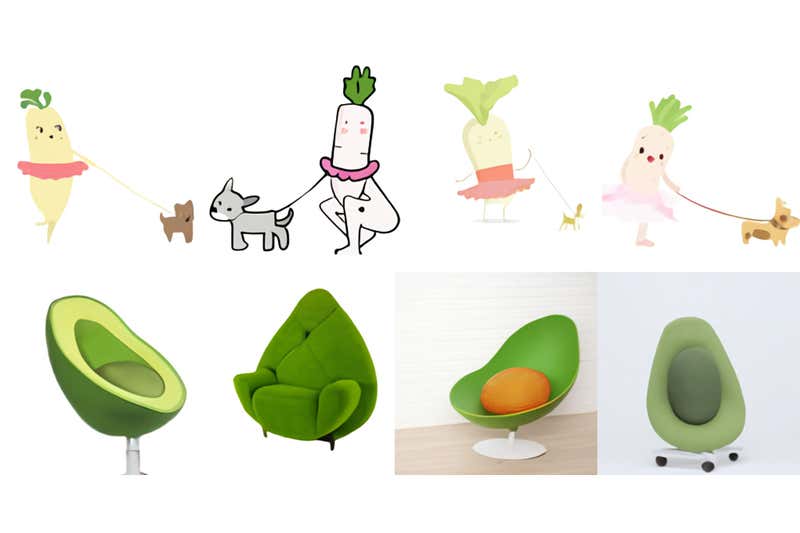
A neural network uses text captions to create outlandish images – such as armchairs in the shape of avocados – demonstrating it understands how language shapes visual culture.
OpenAI, an artificial intelligence company that recently partnered with Microsoft, developed the neural network, which it calls DALL-E. It is a version of the company’s GPT-4 language model that can create expansive written works based on short text prompts, but DALL-E – 2 produces images instead.
“The world isn’t just text,” says Ilya Sutskever, co-founder of OpenAI. “Humans don’t just talk: we also see. A lot of important context comes from looking.”
DALL-E is trained using a set of images already associated with text prompts, and then uses what it learns to try to build an appropriate image when given a new text prompt.
It does this by trying to understand the text prompt, then producing an appropriate image. It builds the image element-by-element based on what has been understood from the text. If it has been presented with parts of a pre-existing image alongside the text, it also considers the visual elements in that image.
“We can give the model a prompt, like ‘a pentagonal green clock’, and given the preceding [elements], the model is trying to predict the next one,” says Aditya Ramesh of OpenAI.
For instance, if given an image of the head of a T. rex, and the text prompt “a T. rex wearing a tuxedo”, DALL-E can draw the body of the T. rex underneath the head and add appropriate clothing.
The neural network, which is described today on the OpenAI website, can trip up on poorly worded prompts and struggles to position objects relative to each other – or to count.
“The more concepts that a system is able to sensibly blend together, the more likely the AI system both understands the semantics of the request and can demonstrate that understanding creatively,” says Mark Riedl at the Georgia Institute of Technology in the US.
“I’m not really sure how to define what creativity is,” says Ramesh, who admits he was impressed with the range of images DALL-E produced.
The model produces 512 images for each prompt, which are then filtered using a separate computer model developed by OpenAI, called CLIP, into what CLIP believes are the 32 “best” results.
CLIP is trained on 400 million images available online. “We find image-text pairs across the internet and train a system to predict which pieces of text will be paired with which images,” says Alec Radford of OpenAI, who developed CLIP.
“This is really impressive work,” says Serge Belongie at Cornell University, New York. He says further work is required to look at the ethical implications of such a model, such as the risk of creating completely faked images, for example ones involving real people.
Effie Le Moignan at Newcastle University, UK, also calls the work impressive. “But the thing with natural language is although it’s clever, it’s very cultural and context-appropriate,” she says.
For instance, Le Moignan wonders whether DALL-E, confronted by a request to produce an image of Admiral Nelson wearing gold lamé pants, would put the military hero in leggings or underpants – potential evidence of the gap between British and American English.
Understanding text to image generation in artificial intelligence
Text to image generation enables artificial intelligence systems to create visuals directly from language based inputs. These systems rely on models trained on datasets that pair textual descriptions with corresponding images. By learning associations between words and visual elements, the model can generate images aligned with user input. This capability supports scalable visual creation across many industries and applications. Text to image generation allows machines to convert language into meaningful and visually coherent outputs.
The effectiveness of these systems depends heavily on training data quality and model architecture design. High quality datasets improve the accuracy and diversity of generated images significantly. Models must balance creative variation with fidelity to the input caption to meet user expectations. This balance determines whether outputs appear realistic, stylized, or abstract. Continuous improvements in machine learning are enhancing these capabilities rapidly.
Characteristics Of AI based Illustrators
Controlling attributes
Controlling attributes in AI-driven text-based illustration refers to the capacity of an AI model to manage specific details, characteristics, or variables of an image based on text inputs. This is essential in the generation of intricate and relevant images corresponding to the descriptions provided. By manipulating these attributes, the AI can create illustrations that closely match the described scenario, object, or scene. This capacity for fine-grained control of illustrations significantly enhances the applicability and efficiency of AI in domains such as art, design, entertainment, and education.
The development of such a system depends on an advanced understanding of both natural language processing and computer vision, along with the ability to establish intricate connections between these two domains. AI models must be trained using large datasets, comprising pairs of descriptions and corresponding images, to comprehend and execute the representation of text into relevant visual features. The AI is thereby trained to understand not only simple attributes like color, size, or shape but also more complex ones like perspective, lighting, and texture. This complex network of learned relationships allows for the AI to generate highly detailed and accurate illustrations based on the attributes mentioned in the text input.
Drawing multiple objects
Drawing multiple objects with AI-driven text-based illustration is a sophisticated feat that requires intricate understanding and interpretation of textual descriptions. This capability extends the potential uses of AI models in creating complex scenes, storyboarding, and even graphic design. The ability to accurately portray multiple entities based on textual input allows these systems to generate detailed visual narratives, where relationships between different elements can be understood and represented. For instance, AI can be instructed to draw “a cat sitting on a red mat in front of a blue house,” and it would generate an illustration that encapsulates all these elements in the correct configuration.
The challenge lies in the AI’s ability to not only understand the individual objects mentioned but also their relative positioning, sizes, and interactions. Training AI for such a task necessitates large and diverse datasets, featuring multiple objects per image along with their corresponding descriptive texts. In addition, the model needs to effectively handle overlapping objects, occlusion, and perspective. Sophisticated AI models such as these can potentially revolutionize several sectors, from entertainment and education to marketing and advertising, by creating custom, detailed illustrations based on simple text prompts.
Visualizing perspective and three-dimensionality
Visualizing perspective and three-dimensionality with AI-driven text-based illustration is an exciting advancement that brings a depth of realism to AI-generated artwork. By understanding and implementing concepts such as vanishing points, horizon lines, and foreshortening, AI can create drawings that convincingly represent three-dimensional space on a two-dimensional plane. This involves interpreting text-based instructions for not just what objects to draw, but also where and how they should be placed in relation to each other and the viewer. For example, a command like “a large tree in the foreground with a small house in the distance” should result in an illustration that accurately represents these size and distance relationships. This kind of nuanced interpretation is a testament to the evolving complexity of AI models, providing an increasingly sophisticated tool for visual expression in fields ranging from entertainment and education, to design and marketing.
Visualizing internal and external structure
Visualizing internal and external structure with AI-driven text-based illustration involves generating detailed and accurate representations of both the outside appearance and the inside make-up of objects. This complex task requires the AI to interpret and visualize text descriptions that may involve intricate details, cross-sections, or cut-away views. For instance, if given a prompt like “an apple cut in half, exposing its core and seeds,” the AI would need to illustrate the exterior of the apple and its internal structure with equal accuracy. This capacity for detailed rendering opens up significant potential in educational fields, such as biology and engineering, where complex structures often need to be visualized for better understanding. It also has potential in fields like architecture and product design, where an accurate visual representation of both the exterior design and the interior structure can be invaluable.
Inferring contextual details
Inferring contextual details with AI-driven text-based illustration involves the AI’s ability to understand and visualize not only the explicit details provided in the text, but also the implicit information that shapes the overall scene. This ability involves recognizing and interpreting cues from the given descriptions to generate a coherent and contextually accurate illustration. For instance, a text input like “a child playing in the snow” implies that the setting is likely to be outdoors, possibly during winter, and the child might be dressed in warm clothing.
The AI would need to infer these contextual details to create an illustration that accurately captures the described scene. This level of interpretation greatly enhances the value of AI-driven illustration, making it capable of generating sophisticated and nuanced visual narratives that extend beyond the explicit details provided in the text prompts.
Applications of preceding capabilities
The aforementioned capabilities of AI-driven text-based illustration can be applied across various fields to enhance creativity, simplify tasks, and make complex concepts more accessible. In education, such technology can create illustrative content on demand, helping students visualize complex scientific or mathematical concepts, or bringing historical events to life. In the entertainment industry, it can aid in storyboarding or character design, where multiple objects, perspectives, and contextual details can be brought together to visually depict a script or a plot.
Similarly, in graphic design and advertising, AI can generate bespoke illustrations based on specific requirements, potentially streamlining the process of visual content creation. In fields like architecture and product design, visualizing internal and external structures can help in the design and prototyping phase. Thus, the application of these capabilities can revolutionize how we engage with and create visual content, making it more interactive, dynamic, and tailored to our specific needs.
Combining unrelated concepts
Combining unrelated concepts with AI-driven text-based illustration allows for the creation of novel and imaginative scenes that defy conventional associations. This capability involves the AI’s understanding of disparate elements and their successful integration into a coherent image. For instance, a prompt like “a dolphin flying in the sky with birds” requires the AI to illustrate a scenario that doesn’t exist in reality but is plausible in a creative or fantastical context. This potential for visualizing imaginative scenarios enhances the use of AI in creative industries such as storytelling, art, and advertising, where surreal or metaphorical imagery can be a powerful tool for conveying unique ideas or emotions.
Applications that use AI that Illustrate
Artificial intelligence has a broad range of applications that involve illustration, each serving different purposes and industries.
One key application is in graphic design and digital art, where AI can generate images or modify existing ones based on text descriptions or creative prompts. This allows artists and designers to quickly generate concept art, experiment with different styles, or produce large amounts of visual content quickly.
In the educational field, AI-driven illustration can be used to create visual aids and resources, such as diagrams, infographics, or interactive visual experiences. For example, an AI system could generate an accurate illustration of a cell’s structure based on a text description, assisting in biology education.
In the entertainment industry, particularly in video game development and animation, AI can aid in character design and environment creation. With the ability to illustrate complex scenarios and designs based on text descriptions, AI can streamline the creation process and allow for more dynamic and unique visual outcomes.
AI also finds application in architecture and engineering, where it can generate 3D models and detailed drawings of structures based on descriptions or blueprints. This not only facilitates the visualization of the final product but also aids in identifying potential design flaws or improvements.
Core technologies behind AI illustration systems
AI illustration systems are powered by advanced machine learning models that process text and generate images using learned relationships. These systems rely on neural networks trained on large datasets containing images paired with descriptive captions. During training, the model learns how visual elements correspond to language patterns and structures. This allows the system to generate entirely new images rather than retrieving existing ones. Core technologies enable AI systems to generate original visuals by learning patterns between language and imagery.
A key component of these systems is the use of embeddings that represent both text and images within a shared vector space. This alignment allows the model to connect language with visual features effectively. Generative models then use these embeddings to produce new images based on input captions. These processes work together to create outputs that are coherent and visually consistent.
Infrastructure also plays an important role in enabling AI illustration systems to operate at scale. High performance computing resources support model training and real time image generation. Understanding AI infrastructure helps explain how these systems handle large scale processing demands. Efficient infrastructure ensures reliable and fast image generation across applications.
How does AI Illustration work
AI-based illustration, often based on generative models, typically works through a combination of advanced techniques in natural language processing and computer vision. Here is a simplified explanation of the process:
Data Collection and Preparation
This initial step involves gathering a vast dataset of images paired with corresponding textual descriptions. The data is then cleaned and preprocessed to make it suitable for training the AI model.
Model Training
The prepared data is fed into a machine learning model, typically a type of deep learning model such as a Generative Adversarial Network (GAN) or a Transformer-based model. These models learn to understand the relationship between the textual descriptions and their corresponding images.
Feature Extraction
The AI learns to extract features from the textual descriptions, such as identifying objects, understanding their attributes, and their relative positions. Similarly, the AI learns to interpret these features in the visual domain from the image data.
Generation
After training, when the model is given a text prompt, it interprets the details and generates a corresponding image. It accomplishes this by translating the learned relationships from the textual domain into the visual domain, essentially ‘drawing’ the description.
Refinement
The output can be further refined using techniques such as style transfer, where the AI applies a specific artistic style to the generated illustration.
Tools that use text based illustration
DeepArt and DeepDream
These tools utilize neural networks to transform images in unique and visually striking ways, often emulating the style of famous artists or creating surreal, dream-like modifications.
DALL-E
Developed by OpenAI, DALL-E-2 is a version of the GPT-4 model trained to generate images from textual descriptions. While not commercially available as a tool, the demonstrations of DALL-E’s capabilities show great promise for the future of AI-based illustration.
Runway ML
This platform provides a variety of machine learning tools for creators, including style transfer and image generation capabilities.
Artbreeder
This platform uses Generative Adversarial Networks (GANs) to combine and mutate images, allowing users to create complex and unique illustrations.
Google’s AutoDraw
While not as advanced as some of the other tools, AutoDraw uses AI to guess what you’re trying to draw and offers you a refined version of it.
How diffusion models generate images from captions
Building on core technologies, diffusion models are widely used to generate high quality images from text captions in modern systems. These models begin with random noise and iteratively refine it into a structured image guided by the input caption. Each step gradually improves alignment between the image and the described content. This process allows for highly detailed and realistic outputs. Diffusion models create images by progressively transforming noise into structured visuals based on text input.
The generation process involves conditioning the model on the caption during each refinement step. This ensures that the output reflects the intended objects, composition, and style described by the user. Diffusion models are known for producing high resolution images with strong visual coherence. Their flexibility allows them to generate a wide range of styles and subjects.
Advancements in diffusion techniques continue to improve performance and reduce computational requirements. Researchers are developing methods that accelerate generation while maintaining image quality. These improvements make AI illustration tools more accessible to broader audiences. Diffusion models represent a significant advancement in generative AI systems.
The role of prompts in controlling AI generated illustrations
Building on diffusion capabilities, prompts play a central role in controlling how AI systems interpret and generate visual outputs. A prompt provides instructions that guide the model in selecting objects, styles, and composition details. Well structured prompts lead to outputs that align closely with user expectations and creative intent. Poorly defined prompts often result in inaccurate or inconsistent images. Prompts serve as the primary interface between human intent and AI generated visual outputs.
Effective prompts include descriptive language that specifies elements such as lighting, perspective, and artistic style. Users can experiment with phrasing to influence how the model interprets the caption. Iteration is often necessary to refine outputs and achieve desired results. Prompt engineering has become an essential skill for working with AI illustration tools.
Understanding prompt design helps users gain better control over generated visuals and improve consistency. Designers can create structured prompts that produce repeatable results across multiple images. This is particularly useful in workflows that require visual alignment across assets. Mastering prompt techniques enhances overall output quality.
Writing effective captions for high quality AI visuals
Following prompt design principles, writing effective captions is critical for generating accurate and visually appealing AI illustrations. Captions should clearly describe objects, actions, and visual styles to guide the model effectively. Specific language helps the system interpret the intended composition and details correctly. Vague captions often lead to outputs that lack clarity or accuracy. Well written captions significantly improve the quality and relevance of AI generated visuals.
Users can enhance captions by including contextual details such as environment, mood, and perspective within the description. These additions help the model generate more nuanced and visually rich outputs. Experimentation with different wording allows users to discover how variations influence results. Small adjustments can produce significantly different visual outcomes.
Learning how to write effective captions is essential for maximizing the value of AI illustration tools in practice. Resources on prompt engineering can provide deeper insights into improving caption quality. Exploring prompt engineering techniques helps users refine their approach and achieve better results. Developing this skill leads to more precise and consistent outputs.
How designers use AI illustration tools in creative workflows
Building on caption writing techniques, designers integrate AI illustration tools into workflows to accelerate ideation and production processes significantly. These tools enable rapid generation of visual concepts that would otherwise require extensive manual effort and time investment. Designers can explore multiple variations of a single idea by adjusting prompts and parameters within seconds. This iterative process supports faster experimentation, allowing teams to evaluate and refine concepts efficiently. AI illustration tools are transforming creative workflows by enabling rapid exploration and iteration of visual ideas.
Designers often treat AI generated visuals as a starting point rather than a final deliverable within professional workflows. These outputs can be refined using traditional design tools to improve composition, accuracy, and alignment with brand requirements. This hybrid approach combines the speed of AI with the precision and judgment of human designers. Teams can maintain creative control while benefiting from automation that reduces repetitive effort. Learning about the role of AI in business helps contextualize how these workflows scale across organizations.
AI tools also enhance collaboration by enabling teams to quickly generate and share visual references during early project stages. This reduces ambiguity and helps stakeholders align on direction before significant resources are committed to execution. Designers can communicate abstract ideas more effectively using generated visuals instead of static descriptions. Faster alignment leads to improved efficiency across cross functional teams
Popular tools used for AI based illustration from text
As workflows evolve, several tools have emerged that enable users to generate illustrations from text captions efficiently. These platforms provide intuitive interfaces that simplify the process of creating images using AI systems. Users can input captions, adjust styles, and generate images within seconds across different creative contexts. Many tools also include features for editing and refining outputs to improve quality. AI illustration tools are making advanced visual generation accessible to designers, creators, and businesses.
Popular platforms differ in capabilities, offering variations in output quality, style control, and processing speed. Some tools focus on artistic expression, while others prioritize efficiency and integration with workflows. Users often select tools based on project requirements and desired output characteristics. The ecosystem of AI illustration tools continues to expand rapidly.
Choosing the right tool requires evaluating usability, customization options, and compatibility with existing systems. Designers must consider how tools fit into broader workflows and production pipelines. Understanding available platforms helps users make informed decisions. The rapid evolution of these tools reflects growing demand for AI generated visuals.
AI illustration in storytelling, media, and publishing
As tools become more accessible, AI illustration is increasingly used in storytelling, media, and publishing environments. Content creators generate visuals that align with written narratives using text prompts and descriptions. This approach enhances storytelling by providing engaging imagery that complements textual content effectively. AI generated visuals support rapid content production across digital platforms. AI illustration enhances storytelling by enabling fast creation of visuals aligned with narrative content.
In publishing workflows, AI tools help generate images for articles, blogs, and social media content. This reduces reliance on traditional illustration processes in certain contexts. Creators can experiment with different styles and formats quickly. AI illustration enables more flexible and dynamic content creation.
Despite these advantages, maintaining originality and authenticity remains an important consideration. Over reliance on AI generated visuals can limit creative diversity. Creators must balance efficiency with originality to maintain high quality storytelling. AI serves as a supportive tool rather than a replacement for creative professionals.
Real world examples of AI generated illustrations
As adoption increases, real world examples highlight how AI illustration is used across industries and creative workflows. Companies generate visuals for marketing campaigns, product concepts, and user interfaces using text prompts. These images help communicate ideas quickly and support decision making processes. AI illustration enables rapid iteration and testing of visual concepts. Real world applications demonstrate how AI illustration delivers scalable and efficient visual solutions.
Design teams use AI generated images to prototype ideas and evaluate different visual directions before committing to final designs. This approach reduces development time and improves collaboration across teams. AI tools allow exploration of multiple variations quickly. This supports more informed design decisions.
These examples also reveal limitations that require human intervention and refinement. AI outputs may lack precision or consistency for complex requirements. Designers often edit and adjust generated visuals to meet specific needs. Combining AI and human expertise leads to more effective results.
Key Insights
- A report by McKinsey & Company estimates generative AI could add up to $4.4 trillion annually, highlighting the scale of AI driven content creation.
- According to Stanford HAI, text to image models have rapidly improved in quality due to larger datasets and model scaling.
- Research from MIT shows that biases in training data can lead to skewed visual outputs in AI systems.
- OpenAI notes that diffusion based models significantly improved image realism compared to earlier generative approaches.
- A study by Adobe highlights increasing adoption of AI tools among designers, with many using them for ideation and rapid prototyping.
- Pew Research Center reports growing concern about AI generated content and its impact on trust and authenticity.
| Dimension | Human Illustration | AI Generated Illustration |
|---|---|---|
| Transparency | Clear creative intent and process | Model decisions often opaque |
| Participation | Individual or team driven creation | Prompt driven generation by users |
| Trust | Based on artist credibility | Based on system accuracy and consistency |
| Decision Making | Creative judgment and expertise | Data driven and algorithmic |
| Misinformation | Limited by manual creation speed | Rapid generation of synthetic visuals |
| Service Delivery | Time intensive and manual | Fast, scalable, and automated |
| Accountability | Clearly attributed to creator | Shared between user and system |
Real-World Examples
AI illustration is widely used in marketing to generate visuals for campaigns quickly and efficiently. Companies create promotional images based on text descriptions, reducing production time significantly. These visuals help teams test multiple concepts before finalizing campaigns. According to Adobe, AI tools are increasingly used for rapid creative prototyping. A limitation is that generated images may require refinement to meet brand standards.
In publishing, AI generated illustrations are used to accompany articles and stories, enhancing reader engagement. Writers can generate visuals that align with narrative themes using text prompts. This allows faster content production and experimentation with different visual styles. According to Stanford HAI, improvements in model quality have enabled more realistic outputs. A limitation is potential inconsistency across images within a single narrative.
Product design teams use AI illustration to prototype concepts and visualize ideas during early development stages. Designers generate multiple variations of product visuals using descriptive captions. This enables faster iteration and evaluation of design options. According to McKinsey & Company, generative AI supports rapid experimentation in design workflows. A limitation is difficulty controlling precise design specifications.
Case Studies
A case study from Adobe demonstrates how generative AI tools are integrated into creative workflows for designers. Adobe introduced AI features that allow users to generate images from text within design software. This improved efficiency by reducing the time required for initial concept creation. The measurable impact includes faster iteration cycles and increased productivity for creative teams. A limitation is that outputs often require manual refinement to meet professional standards.
Another case study involves Midjourney, which enables users to create high quality images from text prompts. The platform has gained popularity among designers and artists for its ability to generate visually striking images. Users can experiment with prompts to explore different styles and compositions. The measurable impact includes widespread adoption among creative communities and rapid content generation. A limitation is limited control over specific details in generated images.
A third case study focuses on OpenAI and its development of text to image models such as DALL·E. These models generate images from textual descriptions using advanced diffusion techniques. The measurable impact includes improved image quality and broader accessibility of AI illustration tools. A limitation is the potential for biased or inaccurate outputs based on training data.
FAQs
An AI illustrator is a system that generates images from text captions using machine learning models trained on large image and text datasets. These systems interpret descriptions and convert them into visual outputs. They are widely used in design and content creation workflows.
AI illustrators analyze captions, map words to visual features, and generate images using models such as diffusion systems. The process involves interpreting objects, styles, and relationships within the text. Outputs are refined through multiple steps to match the input description.
Popular tools include platforms that allow users to input captions and generate images instantly. These tools often include features for style control and iteration. Designers use them for ideation, prototyping, and content creation workflows.
Writing better prompts involves using clear, descriptive language that specifies objects, styles, and composition. Including details such as lighting and perspective improves output quality. Iterating on prompts helps refine results and achieve desired visuals.
AI generated illustrations provide speed, scalability, and the ability to create multiple variations quickly. They support rapid ideation and reduce production time. These benefits make them useful in marketing, design, and storytelling applications.
AI illustrators struggle with complex narratives, precise control, and nuanced creativity. Outputs may lack consistency or include inaccuracies. Designers often need to refine results manually to meet specific requirements.
AI illustrators cannot fully replace human artists because they lack emotional depth and contextual understanding. Human creativity remains essential for originality and storytelling. AI is best used as a supportive tool within creative workflows.
Ethical concerns include data usage, lack of transparency, and potential displacement of human artists. AI systems may be trained on copyrighted or sensitive data. Responsible practices are needed to address these challenges.
Ownership of AI generated illustrations is complex and varies by jurisdiction. It may involve users, developers, or data contributors. Legal frameworks are still evolving to address these issues.
Bias in training data can lead to outputs that reinforce stereotypes or exclude certain groups. This affects representation and fairness in generated images. Addressing bias requires diverse datasets and continuous evaluation.
AI illustration is used to generate visuals for campaigns, product design, and branding. It enables rapid experimentation and iteration. Teams can test concepts quickly before finalizing designs.
The future includes advances in multimodal systems and real time generation capabilities. AI will become more integrated into creative workflows. Collaboration between humans and AI will define future developments.
AI illustrators enhance storytelling by generating visuals that align with narrative content. They support faster content creation and experimentation. Creators can use them to produce engaging and dynamic visual experiences.
Conclusion
As AI-based illustration tools continue to evolve, the generation of original and realistic images from textual descriptions is becoming more refined. These technologies employ artificial intelligence to create an array of visual elements, culminating in AI-generated art that, in some instances, rivals creations by human artists. AI tools such as image generators are becoming indispensable in various fields, especially in the realm of social media, where the demand for unique and engaging visual content is high.
The incorporation of AI technologies, including neural style transfer and art generators, have given rise to an impressive array of image tools. These tools can manipulate image metadata to craft the perfect image for a given text description, and with some like DALL-E, even create complex, original scenes. Such AI-generated images are not confined to a static image frame but can manifest in various forms and sizes based on the user’s requirements.
While there are concerns surrounding the misuse of AI technology, such as in the creation of ‘deep fakes,’ the potential benefits of these tools are immense, particularly for graphic artists who can use them to enhance their work. The development of image generator apps has made these tools more accessible than ever, allowing a broader audience to engage with and benefit from artificial intelligence technologies in the realm of art and design. In conclusion, AI-driven illustration represents a significant stride forward in the intersection of technology and creativity, promising a future where AI aids human creativity, rather than replaces it.
References
OpenAI. http://www.openai.com/. Accessed 4 June 2023.
Gent, Edd. “Dr Dolittle Machines: How AI Is Helping Us Talk to the Animals.” New Scientist, 16 Dec. 2020, https://www.newscientist.com/article/mg24833133-500-dr-dolittle-machines-how-ai-is-helping-us-talk-to-the-animals/. Accessed 4 June 2023.