
Introduction
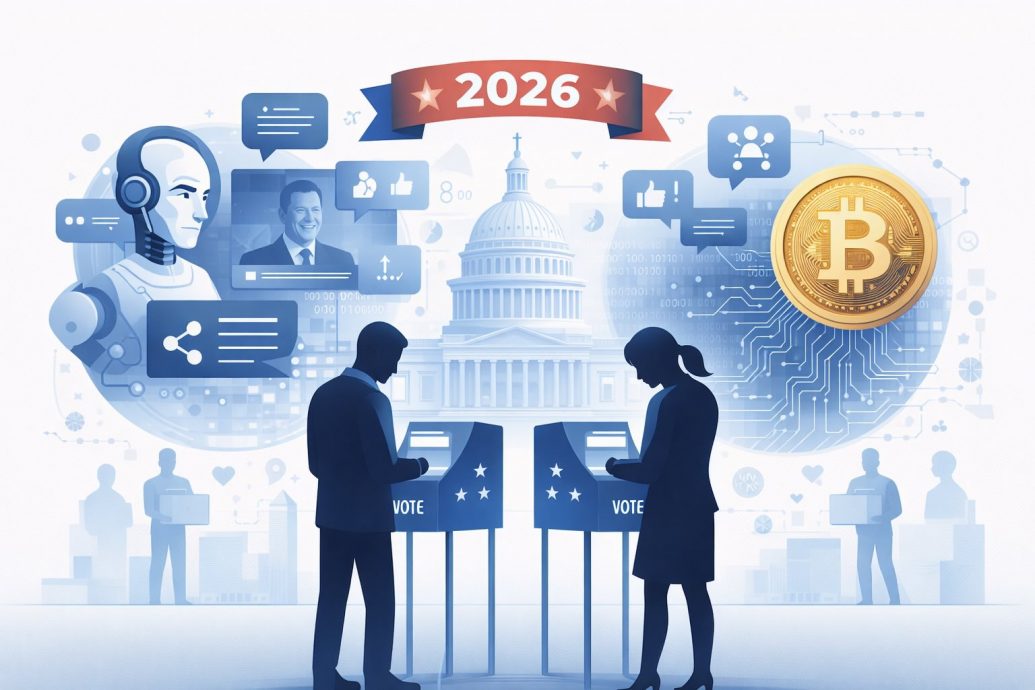
AI and Crypto Disrupt 2026 Elections signals a turning point in how political campaigns are planned, funded, and executed in the digital age. As U.S. midterm races intensify, candidates and political action committees (PACs) are leveraging artificial intelligence for hyper-personalized content, donor engagement, and synthetic media strategies. At the same time, cryptocurrency is reshaping campaign finance using decentralized donations and limited financial transparency. With lessons from the 2020 and 2022 cycles in consideration, the 2026 elections now sit at the intersection of innovation and democratic accountability. Expert commentary, data insights, and real-world instances show how these technologies may redefine electoral norms and test current regulatory frameworks.
Key Takeaways
- AI tools are powering campaigns through automated donor targeting, AI-generated ads, and synthetic video content.
- Cryptocurrency-based donations are growing, leading to transparency concerns among regulators.
- Technology adoption in politics has accelerated since 2020, though strategies vary by region and party.
- The 2026 U.S. elections serve as a global case study in politically driven tech influence, with international events fueling narratives.
AI’s Expanding Role in U.S. Campaign Strategy
Campaign teams are deploying artificial intelligence across multiple stages of their election strategies. From mining voter databases for segmentation to using generative AI for drafting personalized emails and ad scripts, political outreach has become faster and more adaptive to voter behavior.
One of the most significant tools introduced in 2026 is the AI-generated political ad. These dynamic videos adjust tone, language, and visuals based on an individual voter’s previous interactions with political content. A Washington-based consultancy reported a 37 percent engagement increase with AI-created ads compared to traditional versions since mid-2025.
Deepfake generation is now part of campaign toolkits. It enables the creation of convincing endorsements, simulated “town hall” exchanges, and rapid-response media rebuttals. As highlighted in a report on AI and election misinformation, the blurred line between real and fake content introduces risks to voter trust and electoral integrity.
Crypto-Enabled Fundraising and Its Implications
Fundraising methods have also evolved. Political candidates and PACs are embracing cryptocurrency to connect with tech-savvy donor bases, especially among younger generations. Pro-crypto PACs with libertarian leanings have reported seven-figure donations denominated in assets such as Ethereum, Solana, and Bitcoin during the first half of 2025.
Despite their appeal, these donation channels complicate financial transparency. Blockchain records are public and traceable, yet linking wallet addresses to actual identities remains a challenge. Funds routed via decentralized finance (DeFi) networks may further obscure donor origins, raising concerns addressed in new studies on crypto, AI, and social media involvement in modern politics.
While the Federal Election Commission has shared minimal guidance since 2022, bipartisan legislative efforts in late 2025 aim to close loopholes by improving disclosure requirements. Enforcement, however, remains behind the pace of innovation.
From 2020 to 2026: A Timeline of Tech Integration in Elections
| Election Year | AI Use Cases | Crypto Campaign Activity |
|---|---|---|
| 2020 | Basic voter data analytics and social media monitoring | Minimal usage, mostly experimental |
| 2022 | Chatbots, predictive modeling, A/B testing for digital ads | Some PACs begin accepting crypto |
| 2024 | Prompted AI-generated emails and auto-scripting | Spike in crypto donations; regulatory questions emerge |
| 2026 | Deepfakes, hyper-targeted synthetic ads, dynamic canvassing tools | Widened adoption, decentralized donor pools; bipartisan legislation proposed |
Geopolitics and Narrative Engineering: The Israel Example
Political campaigns increasingly rely on AI to frame geopolitical events in a way that influences voter sentiment. Tensions related to Israel from 2025 to 2026 became a source of campaign messaging targeted to Jewish-American voters and pro-Israel groups via algorithmically shaped messaging.
According to the Georgetown Center for Cyber Politics, this trend of narrative engineering carries psychological targeting effects that are difficult to monitor or regulate. “In swing districts with large diaspora populations, campaigns are utilizing AI-driven content about the Middle East as powerful persuasion tools,” noted Dr. Eliza Warren, a lead researcher at the center.
Challenges for fact-checkers and watchdog organizations are growing. Many struggle to track and verify content curated algorithmically, especially when disseminated across encrypted apps and small digital platforms. As discussed in AI-based fake news and its role in elections, such content can distort public perception and pose risks to informed voting.
Differences in Strategy Across Parties and Regions
Although both major political parties employ AI and crypto tools, their approach varies depending on demographic targeting and campaign priorities. Democratic operations often use bilingual generative messaging and urban mobilization software. On the Republican side, consultants have emphasized crypto funding transparency and blockchain’s appeal to libertarian-leaning voters.
Regional strategies also differ. Western states like California and Washington report higher crypto fundraising, while southern races rely more heavily on data-driven AI outreach in rural communities. Primaries in Florida and Texas in early 2026 have already featured both approaches, signaling split strategies based on local electoral dynamics.
An OpenSecrets report forecasts over $175 million in blockchain-based donations for the 2026 election cycle. Use of AI in down-ballot races is expected to exceed 65 percent, a dramatic rise from the 30 percent seen in 2022. This increase, illustrated in recent concerns over AI risks influencing election outcomes, underscores the transformative impact of technology in modern campaigns.
Technology and Regulation Forecast: What to Expect by November 2026
There is growing agreement on the need for updated legal frameworks. The FEC, in collaboration with the Department of Justice and Federal Trade Commission, is expected to release new rules addressing AI content ethics, synthetic media, and crypto contributions by mid-2026. Draft language includes mandatory disclosure for AI-generated content and identity verification for crypto donors above $200.
Legal professionals argue that automated monitoring and quick-response systems are critical. According to NYU law professor Marianne Kroll, “Waiting weeks to detect deepfakes in campaign ads is not acceptable. We need enforcement tools that operate in real time.”
In response, civil groups and advocacy networks are developing public tools to identify synthetic content swiftly. One such project, CivicVerify, has launched beta testing to label manipulated campaign media within minutes of detection. Developers say it aims to empower users with transparency capabilities and restore public trust in digital political communication. More on these initiatives is covered in efforts to empower users through AI and blockchain.
Frequently Asked Questions
How is AI being used in political campaigns?
Campaigns use AI to generate targeted content, analyze voter data, customize emails and ad messaging, and create deepfake-style videos. These tools help organize outreach according to real-time trends and behavioral patterns.
Can politicians accept crypto donations?
Yes, politicians may accept crypto contributions as long as they follow FEC guidelines. These rules include capturing the token’s market value during the transaction, identifying the donor, and reporting the donation for public record.
What are the risks of deepfakes in elections?
Deepfakes pose serious risks including voter manipulation, false endorsements, and public misinformation. Current laws do not offer fast or reliable ways to remove or counteract such content once it is posted.
How are U.S. elections changing with technology?
Modern elections are increasingly digital. Campaigns now use AI and blockchain for voter targeting, fundraising, and media creation. While efficient, these tools also bring new concerns regarding privacy, misinformation, and regulatory oversight.
How could AI influence the 2026 elections?
AI could influence the 2026 elections through automated content generation, targeted political advertising, deepfake videos, bot amplification, and real-time voter sentiment analysis. Campaigns may use AI to optimize messaging and outreach, while malicious actors could use it to spread misinformation or manipulate public perception.
Can AI-generated deepfakes impact election results?
Yes, AI-generated deepfakes can impact elections by spreading misleading audio or video content that appears authentic. Deepfakes may damage candidate reputations, influence voter trust, and distort public debate. Rapid detection and platform moderation will be critical in limiting their potential effect.
How is cryptocurrency connected to election disruption?
Cryptocurrency can be used for anonymous political donations, funding misinformation campaigns, or facilitating cross-border financial influence. Because blockchain transactions can obscure identities, regulators are concerned about transparency and compliance in election-related funding.
Could AI bots manipulate voter opinion in 2026?
AI-powered bots can amplify political narratives, create coordinated engagement spikes, and simulate grassroots support. These tactics can distort perceived public sentiment and influence undecided voters. Social media platforms are investing in bot detection and content authenticity measures to address this risk.
Is AI-generated political content legal?
AI-generated political content is not inherently illegal. However, regulations vary by jurisdiction regarding disclosure, transparency, and misinformation. Some governments are proposing laws that require labeling AI-generated political ads or synthetic media during election cycles.
How are governments preparing for AI election interference?
Governments are increasing cybersecurity funding, collaborating with social media companies, investing in deepfake detection technology, and developing AI transparency frameworks. Election commissions are also updating policies to address synthetic media and digital campaign finance risks.
Can blockchain improve election security?
Blockchain technology can enhance election transparency by creating tamper-resistant records. However, concerns remain about scalability, voter privacy, and implementation complexity. Blockchain is more commonly discussed for auditing and verification rather than direct vote casting.
Will AI make political campaigns more efficient?
Yes, AI can make campaigns more efficient by analyzing voter data, predicting turnout patterns, optimizing fundraising, and automating communications. This efficiency may advantage well-funded campaigns with access to advanced data infrastructure.
Are 2026 elections at higher risk because of AI and crypto?
Experts believe risk levels are increasing due to rapid AI advancement and decentralized financial tools. However, awareness, regulation, and detection capabilities are also improving. The overall impact will depend on enforcement, transparency, and digital literacy.
Conclusion
AI and cryptocurrency introduce new layers of complexity to the 2026 election cycle. AI enables hyper-targeted messaging, automated persuasion, and synthetic media at unprecedented scale. Cryptocurrency introduces funding channels that challenge traditional transparency frameworks. While these technologies can increase efficiency and innovation, they also raise serious concerns about misinformation, anonymity, and electoral integrity. The 2026 elections will likely serve as a defining test for regulatory preparedness, platform accountability, and public resilience in an increasingly automated political landscape.