
Introduction
A recent breakthrough study, titled AI’s Thinking Limits Exposed by Study, from the Max Planck Institute has sparked a critical reassessment of how we understand artificial intelligence, especially large language models like ChatGPT. This research reinforces a growing concern among scientists and technologists: while these systems generate impressively fluent text, that output is not backed by human-like reasoning or deep understanding. Businesses, developers, and policymakers must grapple with the reality that AI’s surface-level competence often conceals fundamental cognitive deficiencies. As AI becomes more integrated into daily and professional life, identifying these limitations remains essential.
Key Takeaways
- Large Language Models (LLMs) perform well in basic or templated tasks but struggle with tasks requiring abstract thinking or multi-step reasoning.
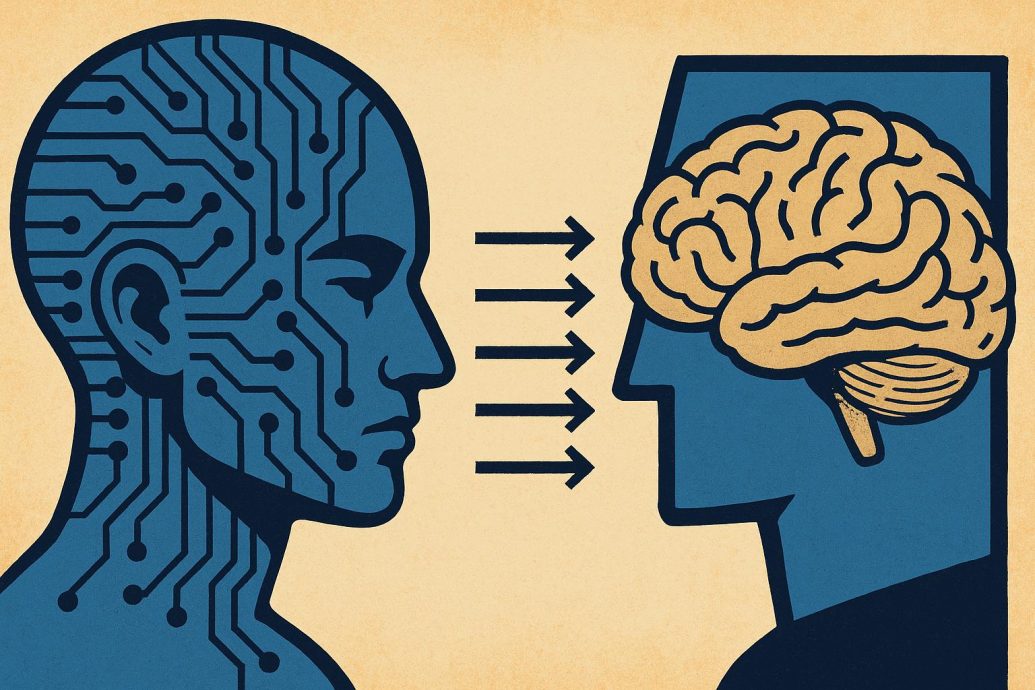
- The study highlights a clear mismatch between human understanding and AI simulation, emphasizing the lack of genuine cognition in models like ChatGPT.
- Experts caution against interpreting fluent language generation as evidence of intelligence or understanding.
- Understanding AI’s real limitations is necessary to prevent misuse in critical decision-making areas.
Understanding the Study: LLMs vs Cognitive Reasoning
This study conducted by researchers at the Max Planck Institute evaluated multiple language models, including ChatGPT, using reasoning, logic, and planning tasks. Researchers analyzed not just correctness but also logical coherence, consistency, and contextual awareness.
LLMs provided high performance on straightforward factual prompts. Performance dropped sharply when faced with tasks requiring long-term planning or pattern recognition. In contrast, human participants demonstrated far greater accuracy across these more complex tasks.
Quantifying the Gap: Humans vs LLMs
The study illustrated the difference through statistical performance data:
- Basic Factual Retrieval: LLMs achieved over 95 percent accuracy, closely matching humans.
- Intermediate Logic Puzzles: Humans achieved 82 percent accuracy. LLMs averaged about 54 percent.
- High-Level Abstract Reasoning: LLMs dropped below 30 percent. Humans reached roughly 76 percent.
This steep decline in AI performance supports previous findings in areas such as mathematical reasoning, where LLMs consistently show poor handling of layered logic. The models mimic linguistic structure without underlying comprehension.
Why Language Fluency Does Not Equal Intelligence
Fluency in language may suggest intelligence, yet this is misleading. Models like ChatGPT are trained on massive datasets, predicting the next likely word based on statistical patterns. They do not possess awareness, intentionality, or reasoned thought. Their responses often mirror coherence but lack any internal representation.
Dr. Jakob Liebeskind, one of the study authors, explained that these models rely purely on correlations in data. He stated, “They can talk about logic without applying it.” This confirms that even when AI appears capable, its responses are not the result of deliberate reasoning.
Expert Reactions from AI Ethics and Cognitive Science
Scholars and ethicists have responded with concern. Dr. Emily Bender, known for her work in AI linguistics, said, “This study confirms what many of us suspected. There’s a fundamental disconnection between language form and cognitive content in LLMs.”
From an ethical standpoint, Dr. Timnit Gebru emphasized the risk of over-trusting fluent AI systems. She noted that when models speak convincingly, users assume correctness. That can be dangerous in areas such as law or medicine where accuracy and human interpretation are vital.
Implications for Developers, Policymakers, and Everyday Users
For developers, the study highlights the need for better design benchmarks. Reliance on token accuracy or fluency scores does not capture true limitations. Tests must include multi-step reasoning and logic-focused evaluations. Resources like explaining AI thought processes are useful for designing these new evaluation methods.
Regulators must understand these deficiencies when considering AI applications in law enforcement or healthcare. Public disclosures must state clearly that LLMs produce text without understanding. These are linguistic tools, not autonomous agents.
Users, including students and professionals, should be aware that ChatGPT output requires human supervision. For now, reliance on critical thinking and verification remains essential.
Comparing Simple vs Complex AI Outputs: Real Examples
Example 1: Simple Retrieval
Prompt: “What year was the Declaration of Independence signed?”
ChatGPT Response: “The Declaration of Independence was signed in 1776.”
✔️ Correct, based directly on well-known training data.
Example 2: Complex Reasoning
Prompt: “John has twice as many apples as Mary. Mary has three more than Tom. If Tom has four apples, how many do John and Mary have altogether?”
ChatGPT Response: “Tom has 4, Mary has 7 (4 + 3), and John has 14 (twice of 7). Total: 21 apples.”
❌ The calculation appears correct in this case. Still, variations of phrasing in trials caused incorrect answers, showing that LLM logic is fragile. Studies like human-AI comparison benchmarks have shown LLM inconsistency when parsing natural language numerics.
How the Research Fits Global AI Trends
This research aligns with broader observations across the AI industry. DeepMind’s work with AlphaCode illustrated difficulty in solving open-ended coding tasks. Even with specialized modeling, success required strict structure and supervision. OpenAI posted a technical note in March 2024 acknowledging the limits of GPT-4 in planning and self-evaluation, referring to the absence of “meta-cognitive abilities.”
Other developments, such as OpenAI’s O1 model experiments, also indicate improvement in code and reasoning remains largely experimental. No breakthroughs suggest that large models can yet perform adaptive original thinking.
Frequently Asked Questions
Can artificial intelligence really think like a human?
No. Language models do not possess emotional awareness, self-reflection, or purpose. They match patterns but do not experience or reason the way humans do.
What is the cognitive limit of large language models like GPT?
LLMs perform well on basic language tasks. They struggle with tasks that require abstract reasoning, original logic, or flexible planning. These require skills beyond their current design.
How accurate is ChatGPT in reasoning tasks?
Results show high scores on factual recall but much lower accuracy on tasks with multiple steps or abstract logic. These models reached below 30 percent performance in advanced challenges during the Max Planck study.
Why do AI models fail at complex problem-solving?
They function by predicting statistical patterns, not by considering task objectives. This causes misinterpretation of logical tasks since they lack reasoning frameworks.
Is ChatGPT capable of abstract thinking?
No. It can describe abstract topics by finding related examples in training data. Yet it cannot form new abstract ideas or adapt logic independently.