
Introduction
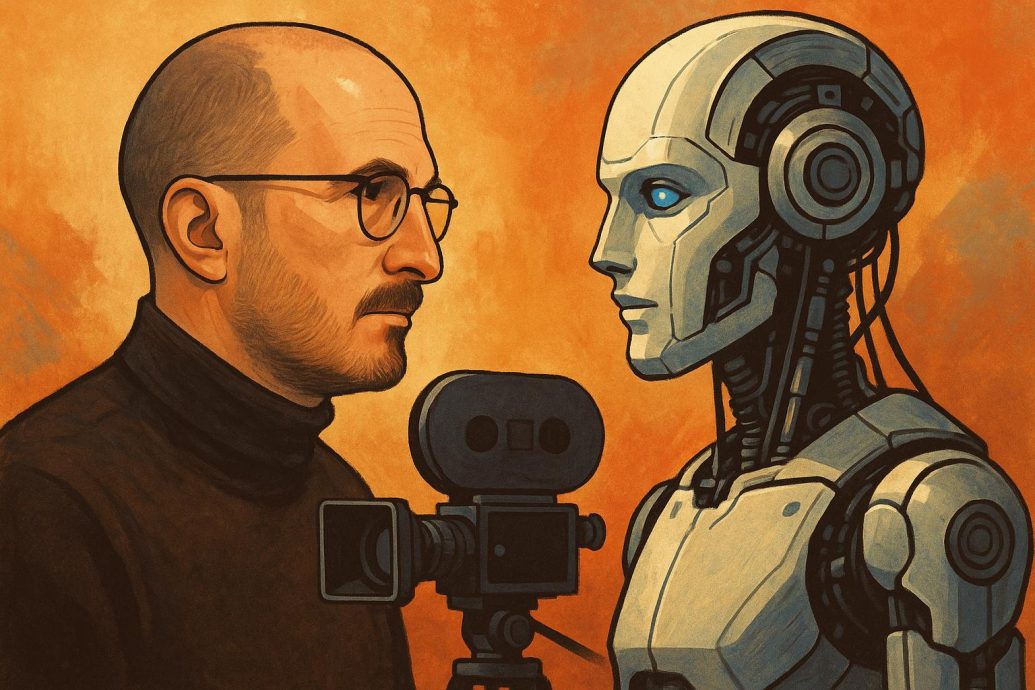
Aronofsky’s Bold Bet on AI Cinema aims to redefine the boundary between historical truth and digital artifice. In one of the most watched and debated premieres at Sundance, Darren Aronofsky debuted a project that blends cutting-edge deepfake technology and generative AI scripting with a traditional documentary format. The film does not just impress with visual feats, it also ignites critical conversations across artistic, ethical, and philosophical domains. Why would an acclaimed auteur known for psychological and philosophical explorations pivot toward neural networks? This in-depth feature unpacks the vision, tech, controversy, and industry ramifications behind Aronofsky’s AI-powered docudrama.
Key Takeaways
- Darren Aronofsky’s AI film merges historical docudrama with synthetic media generated using deep learning tools.
- The production utilized advanced deepfake software and large language models to recreate people, events, and scripts.
- This approach has sparked ethical debates surrounding authenticity, viewer trust, and content ownership.
- The project signals a provocative shift in film, raising questions about how far AI-assisted storytelling should go.
Behind the Curtain: What Aronofsky Created
Aronofsky’s latest experimental film is a historically driven documentary that uses generative AI tools to recreate scenes and people that may never have been recorded. The project reconstructs moments from early 20th-century geopolitics, blending voice cloning, visual synthesis, and LLM-driven scripting to simulate events and interviews. The result is a high-fidelity visual world that blurs lines between archival footage and synthesized imagery. The director claims the intent was not to deceive but to provoke reflection on media trust, memory, and how stories are told.
The central narrative unfolds through interviews with figures no longer living, reconstructed not only with facial deepfakes but also with voice AI systems trained on scarce archival materials. The scripting process involved OpenAI’s GPT-4 and custom fine-tuned versions trained on historical texts, speeches, and memoirs. The performance capture and voice cloning were rendered using tools like Respeecher and Synthesia.
The AI Toolkit: What Powered the Film
A range of synthetic media platforms helped bring this film to life. Here are several tools used:
- Deepfake Visuals: Face-swapping and identity recreation were handled with DeepFaceLab and proprietary GAN-based pipelines. These tools allowed the filmmakers to generate convincingly lifelike facial movements synced with dialogue.
- Voice Cloning: Voice replicas of historical figures were created using Respeecher and ElevenLabs technologies, which produced emotionally nuanced speech from textual outlines.
- Language Models for Scriptwriting: The scripting team used GPT-4 API and fine-tuned LLaMA-based models to simulate historically plausible dialogue and voice patterns.
- Visual Style Transfer: StyleGAN and Runway’s AI video editor helped mimic film textures from early 20th-century recordings, adding layers of visual believability.
By combining these technologies, the film crafts a seamless narrative illusion, even though the entire production lacks traditional footage or interviews. Every visual and voice sequence was AI-generated or manipulated, making this one of the most comprehensive uses of generative AI in cinema to date. For a broader look at this evolving trend, see how AI is transforming the entertainment industry.
Cinematic First or Ethical Minefield?
The unveiling of the film at Sundance triggered both awe and alarm. While critics marvel at the technical sophistication, ethicists raise questions about consent and manipulation. The central concern lies in whether it is appropriate to portray historical persons through AI approximations without explicit disclaimers embedded into the storytelling experience. Though the end credits contain disclosures, mid-film contextual transparency is lacking, a point flagged by several media ethics experts at the festival’s post-screening panels.
Legal scholars and copyright analysts observed that the current frameworks for likeness rights and creative ownership are insufficient to adjudicate what this film does. The estates of historical figures were not consulted for voice or face usage, relying instead on public domain status and fair use interpretations.
Some in the documentary filmmaking community see this as a betrayal of nonfiction authenticity, while others hail it as a bold rethinking of the genre. The film invites viewers to question how they define “truth” on screen, and whether AI-assisted recreations dilute or deepen historical understanding. For insights into how AI can empower creative decisions, explore how AI helps filmmakers.
Audience Trust and Emotional Impact
Initial audience surveys at Sundance and post-festival screenings reveal conflicted responses. A poll conducted by the Media Lab at a major West Coast university found that 58 percent of viewers were impressed by the realism of AI-generated footage, but 67 percent expressed discomfort once informed of the extent of synthetic manipulation. Notably, 71 percent of surveyed viewers believed that AI-assisted storytelling should carry on-screen disclosures before or during key scenes, not solely in post-credits.
Psychologists studying media trust observed a new phenomenon: emotional dissonance. Viewers emotionally connect with the recreated figures, but cognitive awareness of their artificiality often creates unease. This may have long-term implications for historical storytelling, empathy mechanisms, and viewer memory retention.
Comparison: Other AI-Driven Documentaries
Aronofsky’s film is not the first to use synthetic media, but it is arguably the most holistic. Previous projects have dabbled in voice cloning or deepfake inserts, including:
- “Roadrunner: A Film About Anthony Bourdain” used synthetic voice techniques to reconstruct three spoken quotes from Bourdain. The use was not disclosed in the film, prompting backlash.
- “The Andy Warhol Diaries” on Netflix deployed AI voice synthesis to mimic Warhol’s cadence and tone from his journal entries.
- “Welcome to Chechnya” fused deepfake overlays to anonymize LGBTQ+ activists without compromising emotional transparency.
These case studies show divergent use cases of AI in documentary filmmaking. Some aim to overcome anonymity or narrative gaps, while Aronofsky’s project constructs a fictional tapestry validated through historical inference. To explore titles that portray artificial intelligence with nuance, review these films that get AI right.
Legal and Scholarly Perspectives
Civil rights groups and digital scholars have weighed in. The Electronic Frontier Foundation emphasized the need for stronger viewer disclosure standards in AI-generated films. Media law expert James Grimmelmann notes that the copyright status of AI-generated scripts remains unsettled. “Who owns a script generated by GPT-4 using training data scraped from thousands of books? That’s still being litigated,” he said in a recent panel at Stanford’s Center for Internet and Society.
Academics urge development of industry norms or certifications that disclose origin, degree, and representation method of synthetic content. This could look similar to food labels or cybersecurity verifications, building a trust architecture to keep viewers informed. For more about industry changes, read how AI is reshaping Hollywood.
FAQs
How is AI being used in filmmaking?
AI is being used across various stages of film production. This includes scriptwriting using language models like GPT-4, animation and facial generation through GANs, voice cloning via neural networks, and even real-time editing recommendations using pattern analysis. These tools accelerate production, reduce costs, and expand creative possibilities.
What are the ethical concerns with deepfake documentaries?
Ethical concerns include the risk of misinformation, manipulation of viewers’ emotions, violation of posthumous privacy, and lack of transparent disclosure. Critics argue that AI-generated likenesses of real people can misrepresent their beliefs, contradict known facts, or deceive audiences lacking context.
What is Darren Aronofsky’s AI documentary about?
It is a historical docudrama created using AI-generated visuals and dialogue. The film reconstructs early 20th-century events, relying on deepfake technology for visuals and generative AI for scripting and voiceovers. It explores memory, truth, and how synthetic storytelling may reframe history.
Can AI-generated films be considered art?
Yes, many experts argue that AI-generated films reflect human creative intention shaped through a different medium. While the tools are algorithmic, the vision, editing choices, and thematic framing are still directed by humans, qualifying these works as a form of digital or synthetic art.