
Introduction
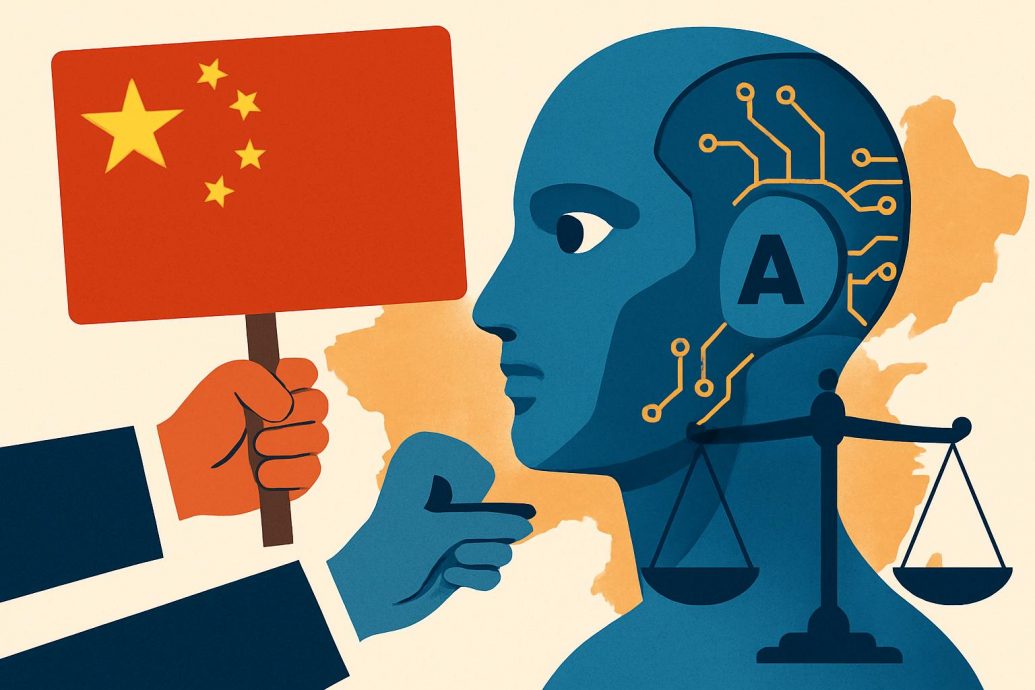
China Sets Bold AI Regulation Standard with sweeping new policies that reshape the global conversation around artificial intelligence governance. Designed to enforce algorithmic transparency, ethical standards, and responsible content creation, these AI laws position China as a global benchmark setter while Western nations remain in debate. With far-reaching impacts on domestic tech leaders like Baidu and Alibaba, as well as multinational corporations operating in China, this regulatory framework not only aims to safeguard against misuse but also signals the country’s ambition to lead the future of digital governance.
Key Takeaways
- China’s AI regulations focus on algorithm transparency, ethical AI usage, and mandatory disclosure for AI-generated content.
- Tech companies must report algorithmic functions and label AI-generated material transparently.
- These laws apply to Chinese firms and international entities operating within China.
- China’s proactive regulatory stance contrasts with slower U.S. and EU AI governance efforts.
China’s Regulatory Leap into AI Ethics and Control
In a decisive move, China has released one of the most comprehensive AI regulations globally. The rules are overseen by the Cyberspace Administration of China (CAC) and cover a wide range of areas, including generative AI use, algorithm transparency, content labeling, and algorithmic discrimination prevention. These measures aim not only to prevent technological abuse but also to establish accountability frameworks for public and private sector actors leveraging AI systems.
Some of the core components include:
- Mandatory labeling of content created by generative AI models
- Prohibitions against discrimination in algorithmic decision-making
- Mandatory reporting of how recommendation or generative algorithms function
- Ethical use principles aligned with socialist values and national security
This move aligns with China’s strategy to lead the world in AI development and deployment while maintaining firm control over its societal applications. The nation already leads in facial recognition and smart surveillance, and these regulations now expand that control into the algorithmic and generative AI space. For a deeper look into this progression, visit the article on China accelerating ahead in the AI race.
Generative AI Under Scrutiny: The New Requirements
Generative AI platforms in China, whether domestic or foreign, face new operational constraints. These span from the pre-training phase through public deployment. Key mandates include:
- Content Censorship: AI outputs must not create, enhance, or disseminate rumors, violence, or content that undermines social stability.
- Mandatory Content Labeling: Companies must display a visible notice when content is generated by AI.
- Data Provenance and Safety: Training data must be sourced from legitimate, non-discriminatory, and non-infringing materials.
- Prior Review Mechanisms: All public-generative AI tools must pass technical and content review before launch.
Penalties for non-compliance can include service suspension, financial fines, and even criminal investigations under China’s cybersecurity and data governance laws. This means platforms like Google, OpenAI, and Midjourney must now design AI tools that fit within this rule-based structure.
Who Must Comply: Domestic and International Targets
The rules are binding for both Chinese tech enterprises and foreign firms operating within China’s digital ecosystem. Large companies such as Tencent, Alibaba, Huawei, and Baidu have already invested in AI ethics panels and algorithm audit tools to ensure compliance. Even global firms like Microsoft and Apple are being prompted to review services that involve AI productivity applications in China.
These regulations affect sectors such as social media, e-commerce, recruitment, and public services. Any platform using AI to influence user behavior or generate content must implement oversight tools and transparent disclosures. For companies aiming to understand broader AI governance, the article on AI governance trends and regulations offers further insights.
China vs EU vs US: AI Regulation Comparison Table
| Policy Area | China | European Union (EU) | United States (US) |
|---|---|---|---|
| Algorithm Transparency | Mandatory algorithm reporting and disclosure | High-risk AI systems must disclose logic under the EU AI Act | Voluntary guidance under NIST AI Risk Management Framework |
| Generative AI Content Labeling | Compulsory labeling of AI-generated content | Planned under draft guidelines | No federal requirement |
| Ethical Principles and Alignment | Must align with socialist principles and uphold unity | Centered around human rights and safety | Diverse ethical interpretations across agencies |
| Regulatory Enforcement | Centralized under CAC with fines and operational bans | Enforced by national supervisory authorities | Primarily self-regulated with federal advisory |
Expert Outlook: International Reactions and Implications
AI law scholars have highlighted that this regulatory leap shows China’s determination to lead not just in AI development but also in governance. Dr. Lin Hui at Tsinghua University commented that “China’s forward motion on algorithm ethics will shape how global companies design compliant AI systems.”
Global companies are adjusting their approaches. A spokesperson from Google mentioned during a recent panel that these laws represent a new baseline for high-control environments, and scalability for compliance is now a top priority.
Some analysts warn that strict requirements may slow innovation. Small and medium-sized tech startups may struggle with the resources needed to manage rigorous oversight tools and frequent audits. Despite this, the direction is clear. The nation’s AI policies are quickly becoming part of international strategic discussions, including those led by UNESCO and the UN’s ITU councils.
Impact on Global AI Governance Trends
While the U.S. is still shaping federal AI policy and the EU finalizes its risk-based AI Act, China’s legislation is already in force. This gives the nation an enforcement advantage and positions it to export its standards globally. For comparison to U.S. developments, read about the White House unveiling AI regulation rules.
Ideas like watermarking AI content and requiring sandbox testing environments now have precedence thanks to China’s early regulatory efforts. The conversation around global policy alignment has already started, with signs pointing to increased international interest in copying aspects of the Chinese model. For instance, algorithm disclosures and pre-release reviews are being discussed more frequently as non-negotiable features of upcoming international frameworks.
What International Companies Should Know
For businesses operating in China, aligning AI systems with local law is not optional. To avoid penalties or service bans, organizations should take these preparatory steps:
- Audit existing AI systems used within Chinese markets
- Label AI-generated content across user interfaces
- Document the function and logic of algorithmic models
- Create internal oversight teams dedicated to AI ethics and risk management
Proactive compliance will not just reduce risk. It may also serve as a competitive advantage as more countries begin adopting similar regulatory approaches. Learn more about how China’s AI priorities are reshaping sectors from education to big tech in China’s AI usage in classrooms.
Frequently Asked Questions
What are China’s new AI regulations?
China’s new AI regulations are mandated by the Cyberspace Administration of China. They require AI tools to clearly label generated content, prohibit discriminatory algorithmic practices, and demand transparency in algorithmic logic. These apply to both Chinese and foreign tech entities operating within China.
How does China’s AI law compare to the EU AI Act?
China enforces real-time operational oversight through centralized regulators. The EU AI Act uses a tiered risk model with enforcement shared among national and regional bodies. China’s model is stricter and implemented without waiting for industry self-regulation.
What AI regulation did China recently announce?
China announced a comprehensive AI regulation framework that sets guidelines for safety, data privacy, accountability, and risk management across AI systems. The rules aim to govern development, deployment, and use of artificial intelligence to align with national priorities and risk thresholds.
Why is China’s AI regulation considered bold?
China’s AI regulation is considered bold because it extends beyond narrow safety rules to include mandatory risk assessment, transparency requirements, algorithmic accountability, and sector-wide oversight. It creates enforceable standards for developers, deployers, and platform owners.
What are the main goals of China’s AI regulatory standards?
The main goals are to ensure AI safety, protect personal data, prevent algorithmic bias, and promote responsible innovation. The standards also focus on national security, economic stability, and social harmony by managing high-risk AI applications.
Which organizations are affected by China’s new AI rules?
Technology companies, AI developers, platform operators, data service providers, and research institutions operating within China are affected. The regulation requires entities to conduct risk assessments and adhere to governance and reporting requirements.
How does China’s AI regulation impact data privacy?
The regulation strengthens data privacy by imposing strict requirements on data collection, storage, processing, and usage. Entities must ensure lawful data handling, protect sensitive personal information, and conduct privacy impact assessments.
Does China require algorithm transparency in its AI regulation?
Yes, China’s AI regulation requires algorithm transparency for systems that affect public interests or user rights. Organizations must provide documentation, explainable logic, and audit trails to regulators and, in some cases, users.
How does China enforce its AI regulatory standards?
China enforces AI standards through inspections, audits, compliance reporting, and penalties for violations. Regulatory authorities can demand corrective actions, fines, or suspensions of AI services that pose unacceptable risks.
Will China’s AI regulation affect foreign companies?
Foreign technology companies operating in China must comply with the regulatory standards for AI products and services offered within the country. This includes localization of data, compliance audits, and risk reporting obligations.
Are there penalties for non-compliance with China’s AI rules?
Yes, non-compliance can result in fines, operational restrictions, suspension of services, and reputational impact. Regulators have authority to enforce corrective measures and escalating sanctions for repeated violations.
How does China’s AI regulation compare to the EU AI Act?
China’s AI regulation and the EU AI Act both emphasize risk-based frameworks, transparency, and accountability. China’s approach is more centralized and state-driven, while the EU focuses on harmonizing standards across member states with strong individual rights protections.
What industries are most affected by China’s AI regulations?
Highly affected industries include finance, healthcare, autonomous vehicles, public security, education, and consumer tech. Any sector deploying AI systems that impact safety, finance, or personal data is subject to stricter oversight.
How will China’s AI rules shape global AI governance?
China’s AI standards could influence global governance by setting benchmarks for government oversight, algorithm transparency, and risk control. Other nations may reference or adapt elements in their regulatory frameworks.