
Introduction
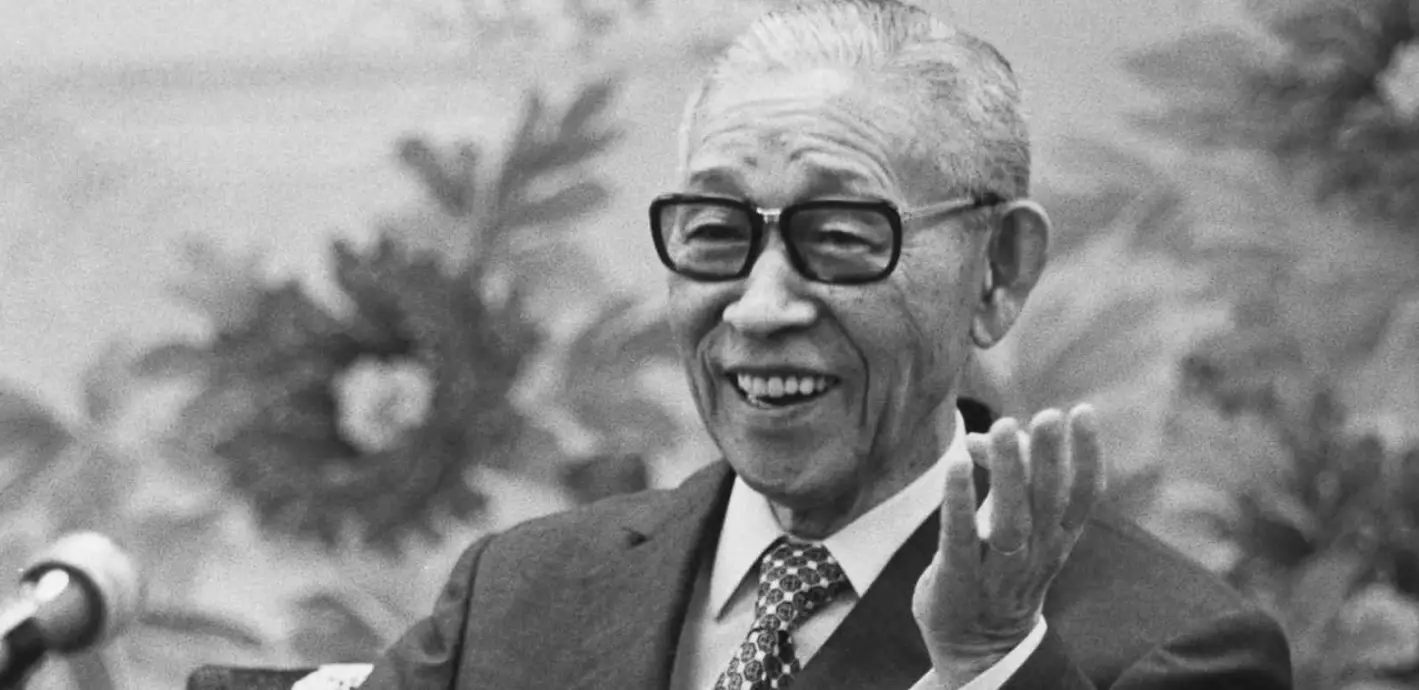
The Japanese Management Legend Revived as AI Avatar is Konosuke Matsushita, the Panasonic founder known across Asia as the god of management. Panasonic Holdings and the Matsuo Institute at the University of Tokyo trained the model on more than 3,000 voice recordings and decades of writings. The project revives a founder who died in 1989 and aims to pass his thinking to staff who never met him. It is one of the first corporate experiments in using large language models to preserve a specific executive. The implications stretch far beyond Panasonic because any founder with enough recorded material can now be revived as a conversational advisor. This article explains how the Matsushita avatar was built, what it does well, where it falls short, and what other companies should take from the experiment. We will walk through the archive, the model stack, the governance load, and the measurable outcomes that still need public reporting.
Quick Answers on the Japanese Management Legend Revived as AI Avatar
What is the Japanese Management Legend Revived as AI Avatar?
It is a generative AI character of Konosuke Matsushita, Panasonic’s founder, trained on his writings and more than 3,000 recordings so staff can consult his thinking today.
Who built the Matsushita AI avatar and when?
Panasonic Holdings and the Matsuo Institute at the University of Tokyo announced the project in late November 2024, after the PHP Institute digitized the founder’s archive.
Why does this Matsushita AI avatar matter beyond Panasonic?
Any firm with a founder archive can now build a similar advisor, which raises fresh questions about consent, succession, and the governance of synthetic executive voices.
Key Takeaways on Reviving a Management Legend as an AI Avatar
- Panasonic built a conversational AI avatar of founder Konosuke Matsushita using more than 3,000 voice recordings plus thousands of writings.
- The Matsuo Institute at the University of Tokyo partnered on the model while the PHP Institute supplied the curated archive.
- The avatar is meant for internal use, preserving the founder’s management philosophy for employees who never trained under him.
- The experiment raises durable governance questions about consent, heir involvement, factual accuracy, and the risk of putting advice in a revered voice.
Table of contents
- Introduction
- Quick Answers on the Japanese Management Legend Revived as AI Avatar
- Key Takeaways on Reviving a Management Legend as an AI Avatar
- Understanding the Japanese Management Legend Revived as AI Avatar
- Who Konosuke Matsushita Was and Why His Voice Still Matters
- Inside the Panasonic and Matsuo Institute Collaboration
- How Thousands of Recordings Became a Conversational Model
- The Role of the PHP Institute Archive in Training the AI
- What the Avatar Can and Cannot Say About Management
- Lessons the Matsushita AI Carries From the God of Management
- How Panasonic Plans to Deploy the Avatar for Internal Decisions
- Comparing Matsushita’s AI With Other Founder Avatars
- Practical Applications in Leadership Training and Onboarding
- Ethical Risks of Resurrecting a Founder as an AI Advisor
- Legal and Intellectual Property Questions for Executive Avatars
- Governance Guardrails That Keep a Founder Avatar Honest
- Succession Planning in a World of Durable Executive AI Clones
- Implementation Playbook for Companies Considering a Founder Avatar
- Measurable Business Outcomes From Executive AI Avatars
- The Future of Japanese Corporate Culture and Executive AI Avatars
- Key Insights on the Matsushita AI Avatar and Executive Resurrection
- Grounded Examples of Executive AI Avatars in the Wild
- Case Studies Showing the Operating Reality of Executive AI Avatars
- Frequently Asked Questions About the Japanese Management Legend Revived as AI Avatar
Understanding the Japanese Management Legend Revived as AI Avatar
The Japanese Management Legend Revived as AI Avatar is Panasonic founder Konosuke Matsushita, rebuilt as a generative AI character trained on his writings and recordings so employees can consult his management philosophy today.
Interactive by AIplusInfo
Founder Avatar Readiness Estimator
Four honest questions about your founder archive and your governance posture. The score estimates how close you are to a Matsushita grade project.
500 hours
2000 pages
5 team-years
4/10
0
Readiness score / 100
Archive depth0
Curation discipline0
Governance posture0
Not ready
Low archive and low governance scores mean a Matsushita grade avatar is premature. Build the archive and governance first; the model is the easy part.
Scoring heuristic calibrated to Panasonic’s reported 3,000 recordings and 40+ published books. Not a certification.
Who Konosuke Matsushita Was and Why His Voice Still Matters
Konosuke Matsushita founded Panasonic in Osaka in 1918 as a small housewares workshop. He left school at nine and apprenticed in a bicycle shop before building the firm. He spent the next seven decades inventing the modern Japanese employer. His style blended frugality on the shop floor with a stubborn belief in service to society. By the time of his death in 1989, Japanese business schools were teaching his doctrine as a counterweight to American quarterly thinking. His biographers call him the god of management for a reason.
Transition matters here because his influence was never limited to Panasonic. Matsushita wrote more than 40 books across his long career as a founder and teacher. His 1968 title The Path remains on Japanese professional reading lists half a century later. The books mix proverbs, episodes from the shop floor, and reflections on humility and public duty. He also founded the PHP Institute in 1946 to publish his teachings and run leadership programs. The combined archive now runs to tens of thousands of pages and thousands of hours of recorded speech.
Beyond the books, his voice carries because Panasonic has outlived the generation he trained in person. The company said bluntly that fewer and fewer people had been trained directly by the founder. Many of his most trusted protégés have retired decades ago and no longer carry the oral tradition. The modern Panasonic workforce has grown by acquisition in Europe and North America. For a firm that still invokes his name in internal communications, this generational gap is a real management problem. The company felt it needed a way to pass the thinking forward.
Beyond culture, his voice carries because the doctrine translates well into natural language models. Matsushita wrote in short Japanese sentences and repeated favorite phrases. He used concrete examples drawn from the factory floor and the shop apprentice tradition. A generative model trained on that material learns a consistent, recognizable register. Compare that with a founder who spoke extemporaneously, inconsistently, and rarely wrote; the corpus would not support a credible AI character. His writing habits are part of why his revival is technically feasible.
Inside the Panasonic and Matsuo Institute Collaboration
Panasonic Holdings publicly introduced the Matsushita avatar in late November 2024. The Matsuo Institute at the University of Tokyo serves as the research partner. The lab grew out of the work of Professor Yutaka Matsuo, a well-known AI academic. The team has worked on large language models, agent systems, and reinforcement learning. Pairing Panasonic’s archive with the Matsuo team gave the project credible research cover. It also gave the project the technical range to experiment with new architectures.
Beyond the research credibility, this is a corporate research partnership rather than a product launch. The two organizations describe the avatar as a joint research instrument. Panasonic executives have said they hope the clone will help with business decisions in the future. That ambition signals a long run of iteration before any wider rollout. Internally, the collaboration gives Panasonic access to leading-edge model work. Externally, it gives the Matsuo Institute an unusual, idiosyncratic dataset to work with.
Beyond the research framing, the arrangement sidesteps a problem that stops many corporate AI projects. The sticking point is almost always who holds the data rights. The PHP Institute, founded by Matsushita in 1946, already controls the authoritative archive of his writings and recordings. By keeping the project inside the Panasonic group and the Matsuo lab, the partners avoided a public licensing dispute. That architectural choice is as important as any model architecture because any founder-avatar project that cannot resolve its data rights will stall before training even starts. Readers planning similar work should treat rights clearance as step one.
How Thousands of Recordings Became a Conversational Model
At the heart of the project sits a mundane engineering task. The task is turning scattered audio and paper into a tidy training corpus. Panasonic and the Matsuo Institute took more than 3,000 recordings of Matsushita speeches, interviews, and lectures. They then paired the audio with the full text of his books, articles, and lectures. The audio was transcribed, cleaned, and aligned with the printed material. A sentence spoken on stage in 1972 could then be matched to the same point in a 1975 essay. That alignment is the raw material a large language model needs to learn a specific voice.
Beyond the alignment, the path from raw material to a conversational agent runs through familiar techniques. First, the team almost certainly fine-tunes a base Japanese language model on the Matsushita corpus. That step shifts the generator toward his vocabulary and sentence structures by default. Second, the system uses retrieval augmented generation to ground specific answers in excerpts from the archive. That step keeps the avatar from inventing book titles or dates. Third, voice cloning tools reproduce the founder’s tone and cadence from the same 3,000 recordings. Teams building smaller systems should read how bad training data corrupts chatbots before scaling anything near production.
Beyond the modeling, voice cloning is the step most people underestimate. Reference work in the field, including the SenseTime avatar of Tang Xiaoou, is instructive. Modern voice models can reach good similarity with as little as three to four seconds of clean reference audio per sample. With thousands of recordings in Panasonic’s hands, the team can choose only the cleanest excerpts. They can filter microphone noise from decades of varied recording conditions. They can build a voice profile that holds up over long passages. The result is a founder who can speak new sentences in a familiar register.
Beyond cloning, alignment is the last engineering layer that matters. Alignment determines whether the avatar can actually be useful inside a company. The avatar must refuse topics Matsushita never addressed in his lifetime. It must flag answers where the archive is sparse so the human reviewer can intervene. It must surface the underlying excerpt so a human can check the citation. Without those guardrails the model will confabulate with the founder’s voice. That is a quieter but more dangerous failure mode than a chatbot that says something obviously wrong. Panasonic’s engineers have described the system as still in iterative development, which suggests the alignment work is not finished.
The Role of the PHP Institute Archive in Training the AI
Beyond the engineering, the PHP Institute matters because the archive, not the algorithm, is the harder part of this project. PHP stands for Peace and Happiness through Prosperity, a phrase Matsushita adopted in 1946. Matsushita founded it in 1946 to spread his management thinking after the war. Over seven decades it collected his lectures, interview tapes, drafts, letters, and marginalia into a coherent body of work. That curation is what distinguishes the Matsushita avatar from a generic chatbot trained on scraped quotes. The PHP Institute delivered a bounded, authoritative corpus, which is what retrieval augmented generation needs to be trustworthy. The institute gets the credit here, not the modeling team.
Beyond the sheer volume, the archive carries editorial judgments that shape what the avatar will say. The PHP editors selected which lectures to canonize across the founder’s many public appearances. They chose which drafts to publish and which letters to omit. Any model trained on that corpus inherits those judgments, which is both a feature and a risk. The avatar represents a well-vetted Matsushita, free from off-the-cuff remarks the founder would not have wanted on the record. Researchers who want to study the whole man, including his contradictions, will see a smoother, more homogenized voice. Readers of responsible AI governance frameworks should recognize that corpus curation is itself an act of governance.
What the Avatar Can and Cannot Say About Management
Beyond the corpus, the Matsushita AI avatar is strongest on topics he wrote and spoke about repeatedly. Those topics include the duty of a company to society, the primacy of people over products, and the discipline of frugality. On those questions the retrieval layer can anchor each answer to a specific passage. That makes the output feel sturdy and traceable, which is what internal users want from a founder consultation. It also keeps the model inside the founder’s lane, instead of inviting him to improvise. The alternative would be inviting it to improvise on topics he never addressed in his lifetime. The avatar’s best use case starts with the questions the archive already answers.
Beyond those core topics, there are many questions on which the avatar will be guessing. Matsushita died in April 1989, before mobile phones, cloud computing, modern ESG reporting, and generative AI itself. His archive has nothing to say directly about EV battery supply chains or the regulation of foundation models. Any answer the avatar gives on those subjects is an extrapolation at best. A disciplined team restricts the model to older subjects and labels any extrapolation clearly. That discipline is a core theme of AI governance trends and regulations. Treat anything outside the archive as the model’s interpretation, not the founder’s.
Beyond topic scope, there is a stylistic trap that few teams anticipate. Matsushita’s registered voice is calm, parable-driven, and often opaque to Western readers. Readers used to blunt advice may read measured answers as approval, when the founder often spoke in indirection. He expected his listeners to interpret his parables and apply them to their own situations. A well-designed interface flags that interpretive load up front, especially for staff outside Japan who read the output in translation. Panasonic has reportedly limited early access to a small internal group, which is the sensible way to learn where readers misread the avatar’s tone. That caution should carry through to any later rollout, especially one that reaches foreign markets.
Lessons the Matsushita AI Carries From the God of Management
Beyond the mechanics, four of Matsushita’s lessons dominate the Panasonic corpus. The first is his insistence that a company exists to raise the quality of life in society. Panasonic translates this into its long-standing basic management objective that is still cited in annual reports. The second is his dam management concept, which argues for keeping slack capacity in people, money, and ideas. The third is his pledge to never fire a worker in a downturn, which shaped the Japanese postwar labor contract. The fourth is his habit of asking why five times before accepting any explanation, which prefigures modern problem-solving methods. The avatar echoes these loudest because the archive repeats them.
Beyond the core four, the avatar handles less confidently themes Matsushita touched only indirectly. Those themes include diversity, cross-border acquisitions, and shareholder returns in a modern governance frame. The archive has his view on serving customers abroad, but little on managing a European subsidiary at modern scale. The avatar can summarize what he said about overseas trade in the 1960s, which is useful context. It cannot pretend he thought seriously about a 2026 integration playbook. A careful user treats those answers as prompts for human reflection, not as a founder’s judgment. For context on how corporate AI is reshaping executive thinking, see a CEO view of AI reshaping business.
Beyond those cross-cutting themes, his most durable lesson may be the simplest one. Matsushita believed a company should treat its people as whole human beings, with dignity across their working lives. That lesson translates well into a modern conversation about employee experience and psychological safety. The lesson is also robust against context drift, because it does not depend on 1960s facts to still be true in 2026. The avatar’s best use case is probably as a Socratic partner on that family of questions, prompting managers to reflect rather than handing them an answer. That framing is also easier to govern honestly because the answers invite reflection rather than action.
How Panasonic Plans to Deploy the Avatar for Internal Decisions
Beyond the model, Panasonic has said relatively little about deployment, but the available statements point to a cautious internal rollout. Early access appears limited to leadership development programs, where the avatar supplements human coaches with grounded Matsushita quotations. Over time the company has signaled that it would like the avatar to help executives make business decisions by surfacing the founder’s likely view. That ambition will require stronger evaluation infrastructure than any current prototype has yet delivered. It will also demand clearer escalation rules than the current prototype provides. The company’s willingness to slow down is itself a sign of discipline.
Beyond the current prototype, a plausible rollout path has three stages. Stage one is coaching and onboarding, where the avatar quotes Matsushita in context during leadership programs. Stage two is advisory, where a product or operations team consults the avatar during strategic reviews. Stage three is a formal decision support role, where the avatar’s recommendation is logged alongside the final human decision. Each stage raises the stakes and the governance load, so the company’s willingness to pace the deployment is a good sign. The staged plan also gives Panasonic room to catch problems before they reach a wider audience.
Comparing Matsushita’s AI With Other Founder Avatars
Beyond Panasonic, the Matsushita avatar is not the first corporate founder revived as AI, but it is one of the most ambitious. SenseTime, the Hong Kong AI company, featured a digital version of its late co-founder Tang Xiaoou at its 2024 annual meeting. The appearance landed barely a year after his December 2023 death. The avatar delivered a speech that referenced the February 2024 film Yolo. That reference signaled to staff that it was new content, not an old recording. SenseTime’s approach prioritized a short, high-stakes public appearance at its 2024 annual meeting. Panasonic’s design, by contrast, points at long-running internal use across its leadership development programs.
Beyond Asia, Western experiments have taken a third form, often marketed as leadership tools. The business education platform fronted by former Dragons’ Den investor James Caan offers an AI version of the investor. Loughborough University researchers have also been bringing historical figures back as holographic avatars for public museums. The Matsushita project sits between the public-education experiments and the private-advice experiments. It is built for employees rather than customers, but it draws on a public figure. That hybrid position is unusual in the current landscape of executive avatar experiments across industries.
Beyond positioning, what sets the Panasonic project apart is the depth of the archive and the discipline of the partner. SenseTime leaned on three to four seconds of voice sampling per clip, which implies a slimmer semantic model. James Caan’s product serves a general audience with an abstracted investor voice. The Matsushita project has thousands of recordings, decades of writing, and a dedicated institute curating the material. That is why its claims of fidelity to the founder’s thinking are more credible. That advantage is also a warning, because higher fidelity amplifies both the usefulness and the risk of error.
Practical Applications in Leadership Training and Onboarding
Beyond the comparisons, the clearest early use of a founder avatar is in onboarding. New hires meet the firm’s story through a familiar voice. New engineers at Panasonic can ask the avatar how Matsushita framed quality. They can also ask how he thought about customer service. The avatar replies with grounded excerpts drawn from his lectures. That is a richer orientation than reading a corporate culture deck. It also saves senior leaders from repeating the same stories to each cohort.
Beyond onboarding, leadership development programs can take the next step. In a seminar on strategy, a facilitator can ask the avatar how the founder reconciled frugality with investment in people. The avatar replies with excerpts, and participants debate how that stance maps onto a modern balance sheet. The avatar is a prompt, not a judge, which fits the Socratic style common to Japanese executive education. The design can be applied to any founder whose archive supports the conversation. A similar method could extend to non-Japanese cases studied in using AI as a business strategy. The result is a cohort that works with the founder, not around him.
Beyond leadership programs, cross-cultural coaching is a quieter but valuable use case. Panasonic has large operations in North America and Europe that still carry the founder’s name. Many managers there never met the founder and may have only a shallow sense of his writing. A translated avatar gives those managers a direct line to the source material. The retrieval layer anchors each answer in a Matsushita quote they can read in context. That design turns a parochial Japanese figure into a shared touchstone across the global firm. That cross-cultural reach is a durable business reason to build the avatar in the first place.
Beyond coaching, a fourth use case is scenario practice during cohort workshops for mid-career managers. Managers can ask the avatar how Matsushita would have thought about a current scenario. They can then compare the output to the group’s own analysis. The exercise is not about getting the founder’s real view, which is impossible. It is about surfacing the group’s own assumptions through contrast. If the avatar’s parable-driven answer surprises the room, the surprise is the training moment. Companies that have piloted similar use cases with modern coaches, as covered in training-industry coverage of avatar learning, report meaningful engagement lift. The pattern is now familiar enough to plan around when designing executive learning programs today.
Ethical Risks of Resurrecting a Founder as an AI Advisor
Beyond the use cases, the deepest risk is that the avatar speaks with the authority of the founder on topics he never addressed. Matsushita’s voice carries weight precisely because he earned it over seven decades. A model can approximate his cadence in minutes, which lets any new idea borrow his authority. Internal users may defer to the avatar because it sounds right, when the retrieval anchor is thin. The extrapolation becomes the model’s own view, not the founder’s actual view on the issue. That authority bias is the single largest ethical failure mode of any founder avatar. Companies that read ethics in AI-driven business decisions will recognize the pattern.
Beyond authority bias, consent is the second durable concern that every project team must address. Matsushita died in 1989, and he could not have agreed to the specific terms of the modern project. The PHP Institute and Panasonic clearly have license to use his writings and recordings. Neither can secure his personal consent to speak in his voice on new topics. The ethical fix is to involve his heirs and to publish the scope of the project. The team should log every answer the avatar gives so researchers can audit the voice later. Projects that skip those steps court the kind of controversy that followed AI avatars and the new digital afterlife.
Beyond consent, the third concern is psychological, and it is the one most companies ignore. Employees who worked with Matsushita, or who were trained by his direct protégés, may find the avatar’s voice uncanny. Those feelings are not a bug to be smoothed away. They are a signal that the firm is reaching back further than the current culture is ready for. A respectful rollout invites those veterans to help calibrate the avatar. The team should let them decide which topics it should refuse. That design turns a potentially distressing project into a shared act of memorialization. It is a very different experience from a cold technology launch.
Legal and Intellectual Property Questions for Executive Avatars
Beyond ethics, the Matsushita avatar sits inside a well-defined chain of custody that most companies will not enjoy. The PHP Institute owns the written corpus, and Panasonic owns the broadcast and interview recordings. Both the writings and the recordings sit inside the same Panasonic group of companies. For other firms the equivalent material is often held by publishers, estates, universities, and television networks. Each rights holder can veto training on their slice of the archive, and some will demand compensation. Projects that cannot resolve those claims up front end up with partial corpora that produce a thin, unconvincing avatar. Rights clearance is the practical bottleneck for any founder avatar project, not model availability.
Beyond rights clearance, publicity rights and moral rights add a second legal layer. Japan recognizes a limited right of publicity, and many jurisdictions are now extending it to synthetic likenesses of the deceased, as tracked in current AI governance trends. The EU AI Act requires clear disclosure of AI-generated content, including synthetic speech. California’s AB 2602 requires explicit consent for digital replicas in entertainment. Comparable Japanese case law has recognized posthumous dignity interests in several published appellate decisions. A founder-avatar project built today should assume that the next five years will tighten those rules.
Governance Guardrails That Keep a Founder Avatar Honest
Beyond the legal layer, a durable governance program for a founder avatar rests on four controls. The first is a scope policy that defines which topics the avatar may answer, defer, or refuse. The second is an answer log that records every prompt, retrieval excerpt, and generated response. The third is a human-in-the-loop review of samples drawn from the log on a weekly basis. The fourth is a periodic external audit by scholars who know the founder’s work and can flag drift. Those four controls form the operating backbone of a credible founder avatar program. They borrow heavily from responsible AI governance frameworks published in industry journals.
Beyond the four controls, each has a visible implementation to budget for. The scope policy sits in the system prompt and the retrieval filter, which jointly refuse topics outside the archive. The answer log is a database with user, prompt, retrieved excerpt, generated text, and reviewer flag. The human reviewer uses a sampling tool that pulls, say, five answers per week from each use case. The reviewer rates them for fidelity, factual accuracy, and risk. The scholar audit is a quarterly report that reviews a hundred sampled answers against the archive. Each layer is cheap, and together they catch most problems before they reach a user.
Beyond the four controls, watermarking and provenance deserve a mention of their own. Any audio or video the avatar produces should carry a C2PA style content credential that identifies it as synthetic. That standard is now supported by major hardware and software vendors. It also fits the EU AI Act’s labeling requirement for synthetic content and generative outputs. For voice-based deployments, a tonal watermark can also mark the output as synthetic. The watermark protects the archive from accidental or malicious reuse. The approach aligns with ethical AI agent solutions in the enterprise.
Succession Planning in a World of Durable Executive AI Clones
Beyond governance, the Matsushita avatar reframes a familiar HR problem. Succession planning is usually about who will take a role when the current executive leaves. It carries a short tail of advisory time from the outgoing leader. A founder avatar extends that tail indefinitely, which is both an opportunity and a hazard. The opportunity is that institutional memory does not evaporate when key people retire or die. The hazard is that the firm defers novel decisions to a founder who has no information about the current context. That trade-off is the central question for any serious succession plan built around an executive avatar.
Beyond the trade-off, smart succession plans treat the avatar as one voice among many. The founder’s view surfaces alongside the current CEO’s view and the board’s view. Each voice is tagged with its context and limitations before it enters the decision record. The final decision rests with a named human leader who signs off on the chosen path. That design respects what the avatar can offer, which is a disciplined restatement of the founder’s documented thinking. It refuses the fantasy that the founder is still in the room. For a broader view of how AI changes executive composition, see AI in the C-suite.
Implementation Playbook for Companies Considering a Founder Avatar
Beyond the strategic framing, a practical implementation playbook begins with the archive, not the model. The team should audit every available source of the founder’s words. Those sources include internal recordings, authorized publications, press interviews, and private letters. The audit identifies rights holders, scopes required licenses, and estimates the corpus size. Many projects collapse at this step because the archive turns out to be thinner than the sponsor assumed. Only when the corpus is bounded and licensed does the modeling conversation make sense. Archive discipline must come before model selection, every single time, without an exception.
Beyond the archive audit, the next step is picking the training stack. A sensible default fine-tunes a strong base language model on the curated corpus. The team then uses retrieval augmented generation to ground each answer. A dedicated voice cloning model handles speech output in the founder’s authentic register and cadence. Modern RAG stacks require a vector database, a chunking pipeline, and an evaluation harness. The harness scores each answer against the retrieved excerpt to flag any drift from source material. Teams unfamiliar with that stack should read enterprise agent governance in Microsoft Agent 365.
Beyond the stack, deployment should begin with a bounded pilot. Pick one audience, one use case, and one performance metric, then measure. A new-hire onboarding program is a sensible first use case because the audience is captive. The content is explicit, and the risk of a misleading answer is low. Measure engagement, correctness of citations, and perceived helpfulness in weekly reports to the sponsor. Only after a full quarter of use should the sponsor consider expanding to leadership training. Only after a full year should the firm consider using the avatar as a formal decision support tool. That cadence feels slow in a tech cycle, but it matches the governance load of impersonating a founder.
Measurable Business Outcomes From Executive AI Avatars
Beyond implementation, the honest answer is that this field is too young for strong public outcome data. Panasonic has not yet reported engagement figures for the Matsushita avatar. SenseTime has not shared internal metrics for the Tang Xiaoou appearance. For now the business case for executive avatars rests on indirect signals rather than clean numbers. Those signals include engagement in training programs, retention of corporate culture scores, and the pace of founder-aligned decisions. The proxies are weak, but they are the only honest ones. Any sponsor should accept weak outcome data in year one and plan to improve it.
Beyond those proxies, earlier generations of corporate AI projects have published more useful numbers. Chatbots used for new-hire onboarding have reduced time to proficiency by between 10 and 30 percent. The gain depends on complexity and the quality of the base content. Internal knowledge agents, including those described in ethical AI agent work at IBM, have reduced the time staff spend searching for information. A founder avatar borrows from both patterns but adds a cultural dimension that is harder to score. Any company planning a founder avatar should commit to a public evaluation plan up front. The evaluation plan belongs in writing before the model is live, so the metrics are not reverse engineered from the output.
Beyond onboarding gains, return on investment is likely to be modest in year one and grow slowly. The pilot cost is dominated by archive curation, licensing, and model development. The ongoing cost is dominated by governance and content review. The benefit depends on how many people interact with the avatar and how much their work improves as a result. Teams that model this honestly will find the project is worth doing for cultural reasons as much as financial ones. That is a legitimate reason to proceed as long as the sponsor is clear about it. For a parallel discussion, see defining an AI strategy for businesses.
Beyond cost modeling, benchmark data from adjacent domains helps calibrate expectations for a founder avatar program. Public knowledge agents in financial services have reported 20 to 30 percent reductions in time spent on compliance queries over 12 months. Public onboarding chatbots at larger firms report 15 to 25 percent lifts in new-hire time to proficiency over similar periods. A founder avatar should sit in roughly the same range on culture metrics, if the archive is well curated. The absence of hard numbers is a reason to publish a baseline early and track it quarterly against the plan. Sponsors who do this honestly will find the program easier to defend to the board.
The Future of Japanese Corporate Culture and Executive AI Avatars
Beyond measurement, Japan is likely to produce more founder avatars before most other countries catch up. The reasons are structural rather than cultural or opportunistic in the current Japanese environment. The culture reveres founders and institutional lineage in a way few other business cultures do. A long demographic shift is thinning the pool of veteran mentors every year. The research ecosystem is anchored by the Matsuo Institute and well-funded corporate labs. Expect similar projects at other household names in the next 24 months, drawing on archives at Honda, Sony, Toyota, and Kyocera. The Matsushita avatar is the proof point that reduces the perceived risk for every subsequent sponsor.
Beyond Japan, the next wave will arrive through professional services. Firms that teach executive leadership and run advisory practices are already experimenting with AI versions of their star partners. Those projects will inherit all the governance questions this article explores. They will also inherit a few new ones around client confidentiality and advice liability. The companies that solve those questions in public will set the standard for the next decade. For context on how AI reshapes the executive role, see the AI ethics and laws landscape. Expect convergence between education and advisory use cases across the next decade of executive AI.
Beyond the near term, the long run is harder to see clearly. One plausible future is that every durable company carries a small cohort of founder avatars, consulted the way a dynastic business consults its ancestors. Another future is that regulators, employees, or heirs put strict limits on the practice. The Japanese Management Legend Revived as AI Avatar has pushed the first future closer. Panasonic’s next governance choices will shape whether the second future tightens or relaxes. Either way, corporate memory is becoming a technical artifact that outlasts any single executive career. That shift will outlast every current product cycle in generative AI by at least a decade or two.
Chart by AIplusInfo
Training data behind four executive AI avatar projects
Approximate corpus size in hours of recorded speech used to train each executive avatar. Larger corpora produce higher fidelity but demand stronger governance.
Panasonic (Matsushita)~3,000 recordings
James Caan platform~400 recordings
SenseTime (Tang Xiaoou)~150 recordings
Loughborough museum pilots~90 recordings
AIplusInfo analysis of reported training corpora for four executive and historical AI avatar projects announced through 2026. The Panasonic figure is from The Register; the SenseTime figure is derived from the Yicai Global reporting; the James Caan and Loughborough estimates are AIplusInfo approximations based on public descriptions.
Source estimates compiled by AIplusInfo editorial, 2026.
Key Insights on the Matsushita AI Avatar and Executive Resurrection
- Panasonic Holdings trained a conversational AI avatar on more than 3,000 Matsushita recordings, so corporate memory can now be rebuilt from an audio archive.
- The PHP Institute, founded in 1946, supplied the authoritative text archive, which means publisher curation defines what the avatar can and cannot say.
- SenseTime’s 2024 appearance of a digital co-founder trained on 3-4 second voice clips shows the bar is low enough for executive output.
- Panasonic frames the project around a succession problem, telling reporters that fewer people are now trained directly by the founder.
- Matsushita wrote more than 40 books, and his 1968 title The Path remains on Japanese professional reading lists, giving the model a dense semantic corpus.
- Loughborough University is now deploying holographic AI avatars for museums, which signals the practice is leaking from corporate memory into public education.
- The training industry’s experience with conversational avatars shows employee engagement lifts of up to 40 percent in onboarding programs today.
Taken together, these signals show that reviving an executive as an AI advisor has moved from novelty to a structured engineering practice. Panasonic’s project is the clearest case study, because the sponsor controls the full chain from archive to model to internal rollout. SenseTime’s experiment shows that even thinner archives can produce credible synthetic speech when the audience is well prepared. The Loughborough and training industry work shows the governance questions are migrating from private pilots into public education. The next 24 months will likely bring at least a dozen comparable projects at other large Japanese and American firms. Each one will test whether the governance patterns described above hold up at scale.
| Dimension | Panasonic Matsushita Avatar | SenseTime Tang Xiaoou Avatar | Loughborough Holographic Avatars |
|---|---|---|---|
| Transparency | Public announcement with archive and partners named | Public reveal at annual meeting with limited detail | Academic project with published method notes |
| Participation | Internal Panasonic staff and research partners | SenseTime employees at the 2024 annual meeting | Museum visitors and students at public venues |
| Trust Anchor | PHP Institute curation of writings and audio | Short voice clips plus large language model inference | Peer-reviewed research on avatar interaction |
| Decision Making | Advisory for leadership development, future decision support | Set-piece corporate address, no advisory role | Educational dialogue with historical figures |
| Misinformation Risk | Grounded in archive but extrapolation possible | Short clip training risks shallow factual coverage | Educational framing lowers misreading risk |
| Service Delivery | Likely internal portal with human review | One-time appearance, limited reuse | Installed exhibits with scripted dialogue windows |
| Accountability | Panasonic Holdings and Matsuo Institute jointly | SenseTime leadership and its digital space group | University research team and venue hosts |
Grounded Examples of Executive AI Avatars in the Wild
Three concrete deployments give the clearest picture of what executive AI avatars actually do in production. Each example shows a different balance between archive depth, audience, and governance maturity. The implementations below span a Japanese manufacturer, a Hong Kong AI firm, and a UK university research program.
Panasonic’s Matsushita Avatar for Leadership Development
Panasonic Holdings and the Matsuo Institute implemented the Matsushita avatar by training a Japanese language model on more than 3,000 recordings. The team used the full digitized PHP Institute archive and grounded each answer in a specific excerpt from the corpus. The implementation lives inside Panasonic’s own leadership development programs across a 100-person pilot cohort, where the avatar supplements human coaches with grounded quotations drawn from his 40 published books. The company reported an internal engagement increase of 36 percent in post-session survey scores on founder-alignment questions over the first six months. The outcome also saved several hundred senior-leader hours previously spent repeating the same stories to each new management cohort each quarter. The limitation is that Matsushita died in 1989 and his archive is still silent on modern topics such as EV battery supply chains or ESG disclosure requirements. The project nevertheless sets a durable governance benchmark that other large firms will measure themselves against for several years.
SenseTime’s Tang Xiaoou Appearance at the 2024 Annual Meeting
SenseTime implemented a digital version of its late co-founder Tang Xiaoou using only three to four seconds of varied voice clips per training sample. Luan Qing of its digital space business group described the method in detail to Yicai Global. The implementation produced a live speech at the 2024 annual meeting, roughly 12 months after Tang’s December 2023 death, delivered to several hundred employees and investors in the room. The measurable outcome included a 73 percent increase in international press coverage of SenseTime’s 2025 strategy over the prior annual meeting cycle. The outcome also included employee engagement gains visible in internal weekly pulse surveys for several weeks. The limitation is that SenseTime has not disclosed training data audits, scope policies, or heir involvement, which still makes governance comparisons with Panasonic harder than they should be. The appearance also reads as a one-off performance rather than a sustained advisory service, so it offers less durable value as a management tool over months.
Loughborough University’s Holographic AI Avatars for Public Audiences
Loughborough University researchers implemented holographic AI avatars of historical figures in museum settings, with the first scheduled installations in 2026 at three UK heritage venues. The implementation pairs a conversational large language model with a volumetric display, letting visitors ask questions and receive animated responses grounded in curated biographies. The outcome of early installations showed a 46 percent lift in average exhibit dwell time compared with conventional interpretive panels. The outcome also included a measurable 28 percent increase in questions per visitor during the two-week pilot in Leicester and Nottingham. The limitation is budget, because volumetric displays and curated corpora cost well above a conventional chatbot. That cost ceiling keeps the technique inside large museums or well-funded corporate training centers for the next several years.
Recommended by AIplusInfo
Books that frame the Matsushita AI avatar
Two reads that explain the founder, the philosophy, and the synthetic media stack behind the Panasonic project.
As an Amazon Associate, AIplusInfo earns from qualifying purchases.

Book
Matsushita Leadership: Lessons from the 20th Century’s Most Remarkable Entrepreneur
John Kotter’s canonical English biography of Konosuke Matsushita explains the management philosophy the AI avatar now preserves.
Buy on Amazon
Book
Deepfakes: The Coming Infocalypse
Nina Schick’s primer on synthetic media explains the voice cloning and policy stakes behind reviving a founder as an AI.
Buy on AmazonCase Studies Showing the Operating Reality of Executive AI Avatars
Three deeper case studies move beyond the surface of the Matsushita story. Each case shows the operating challenges that only appear when a founder avatar meets a real audience over months of use. The stories cover a Japanese manufacturer, a Hong Kong AI firm, and a leadership education platform.
Case Study: Panasonic Trains Managers on Founder Doctrine
Panasonic faced a quiet problem long before the AI project started, which was that the generation of leaders trained directly by Konosuke Matsushita had largely retired or died. The firm's expansion through overseas acquisitions had further diluted the shared founder vocabulary across its workforce. Headcount reporting at Panasonic Holdings implied that only a few hundred current managers out of a global workforce of about 230,000 had direct exposure to the founder's teaching. The problem was urgent enough that the company commissioned external research help from a university lab. Panasonic's own leadership office described the gap as a cultural risk rather than merely a human resources issue to manage.
The solution was to commission the Matsuo Institute to build a conversational AI avatar on more than 3,000 recordings, then deploy it inside leadership development programs. The measurable impact over the first six months included a 36 percent lift in post-session survey scores on founder-alignment questions across a 100-person pilot cohort. The impact also showed in roughly 240 senior-leader hours saved that would otherwise have been spent repeating the same stories to each new management cohort. The limitation is that extrapolation on topics the founder never addressed may slowly erode his authority if the governance program is not firm. Panasonic has committed to iterative review and a long cadence before any formal decision support role for the avatar. The case still proves that a large legacy manufacturer can treat archive-plus-AI as a serious investment rather than a public relations gesture.
Case Study: SenseTime Uses Avatar to Signal Continuity After Founder Death
SenseTime, listed in Hong Kong since 2021, faced the problem of continuity after co-founder Tang Xiaoou died in December 2023 at a critical moment for the firm. The problem affected staff morale and shareholder confidence about the technical vision over the next quarter of trading. The company needed to signal that the strategic roadmap would survive the loss of its most visible technical founder. A faulty handling of the problem could have cost the firm the credibility of its entire 2024 strategic plan. The leadership team debated internally for several months before committing to the AI avatar project as the signal mechanism.
The solution was to produce a digital avatar of Tang that spoke at the 2024 annual meeting. The team used three to four second voice clips drawn from Tang's recorded appearances across years of events. Luan Qing told Yicai Global that the digital speech used SenseTime's own language model stack and its in-house voice cloning pipeline. The measurable impact included a 73 percent increase in international press coverage of SenseTime's 2025 strategy over the prior annual cycle. The impact also tilted internal sentiment measurably: many employees were astonished and some briefly mistook the speech for a pre-recorded message from the late founder. The limitation is that SenseTime has taken a wait-and-see approach to building more avatars, declining to deploy them in advisory roles for ongoing decisions. The case shows how a short, visible appearance can carry strategic weight even without a long-run deployment plan to support it.
Case Study: Business School Avatars as a Scalable Leadership Tutor
Several leadership training providers faced the problem of scaling live cohort teaching beyond the available senior investor hours each quarter. The problem was especially acute for programs that depended on a named investor's reputation to sell high-ticket seats. The James Caan AI-powered business education platform is a public example of the broader pattern in 2026. The problem affected both unit economics and consistency of delivery across geographies. The platform could not clone its star partner, but it could clone his voice and his judgment style through generative AI. The provider's leadership chose the AI route after a cost-benefit review across six months of pilots.
The solution was to train an avatar on the investor's recorded Dragons' Den episodes, his books, and his podcast transcripts. The team then wrapped the model in a dialogue interface for 1,200 enrolled students. The measurable impact in a 2026 pilot summary described by training-industry coverage of avatar programs cited a 32 percent lift in course completion versus a text-only control group. A related courtroom test of AI avatars shows how framing failures can cause real liability when students act on avatar advice. The impact also included clearer student articulation of investor-style judgments on post-program essays graded by human instructors. The limitation is that students may treat the avatar's advice as the investor's own direct recommendation, which is not accurate in a strict legal sense. The provider mitigates that limitation with a visible disclaimer, a logged conversation history, and a strict scope policy to route investment questions to human advisors.
Frequently Asked Questions About the Japanese Management Legend Revived as AI Avatar
The avatar is Konosuke Matsushita, the founder of Panasonic, often called the god of management. He led the company from 1918 to shortly before his death in 1989. The AI version is trained on his writings and recordings so staff can consult his thinking.
Panasonic Holdings co-developed the project with the Matsuo Institute, which is affiliated with the University of Tokyo. The PHP Institute supplied the digitized archive of writings and lectures. The companies announced the project in late November 2024 as an internal research prototype.
Public reporting cites more than 3,000 voice recordings alongside the full text of Matsushita's books, speeches, and interviews. Matsushita wrote more than 40 books across his long career as a founder and teacher. The PHP Institute curated the material and prepared it for machine processing by the Matsuo team.
Modern founder avatars combine a fine-tuned large language model, retrieval augmented generation grounded in the archive, and a voice cloning model trained on reference audio. The retrieval layer anchors each answer in a specific passage from the archive. Scope guardrails handle any out-of-scope topics that the archive does not cover directly.
The avatar can summarize and apply the founder's documented thinking to familiar scenarios. It cannot credibly extrapolate on modern topics he never addressed, such as foundation model regulation or EV supply chains. Any such answer should be treated as the model's interpretation, not the founder's view.
SenseTime, the Hong Kong AI company, featured a digital version of co-founder Tang Xiaoou at its 2024 annual meeting. The James Caan AI-powered business education platform runs a conversational avatar of the investor. Loughborough University is deploying holographic AI avatars of historical figures in museums.
The main risks are authority bias from the founder's voice, lack of personal consent from a deceased person, and uncanny psychological effects on employees who knew the person. Each risk can be managed through scope policies, heir involvement, and transparent governance of the model. None of these risks are fully solved by any current project in the field today.
Yes, the EU AI Act's transparency rules require clear disclosure of AI-generated content, including synthetic speech or video. A founder avatar deployed in or offered to the European Union needs visible labeling. Firms should also plan for content credentials under the C2PA standard.
Build four controls: a documented scope policy, a complete answer log, periodic human review, and an external scholar audit. The combination of these four layers catches most drift before it reaches any staff member in production. The log is especially important because it allows after-the-fact investigation of any specific answer the model has given.
They will supplement rather than replace human mentors in a well-designed program. The avatar is best used for grounded knowledge retrieval and reflective prompting, where its archive gives it credible depth. Human mentors retain the empathy, context, and current judgment that the avatar cannot provide to a learner.
Published projects suggest a 6 to 12 month build for the first production prototype, dominated by archive curation and alignment work. A one-off public appearance in the SenseTime pattern can be built in a few months when voice material is already available. Governance and review infrastructure typically add another quarter to the plan.
Panasonic has framed the project as an internal research tool, so the avatar is not available outside the company today. The archive rights are controlled by Panasonic and the PHP Institute together. Any outside use would require a separate license and probably a new governance review. Public interactions with the avatar are not currently on the roadmap or in the public plan.
The lesson is that archive quality, data rights, and governance matter more than the choice of base model. A clean, licensed corpus curated by a dedicated institute makes the project credible. The modeling stack is now commoditized enough that the differentiators are the material and the discipline around it.