
Introduction
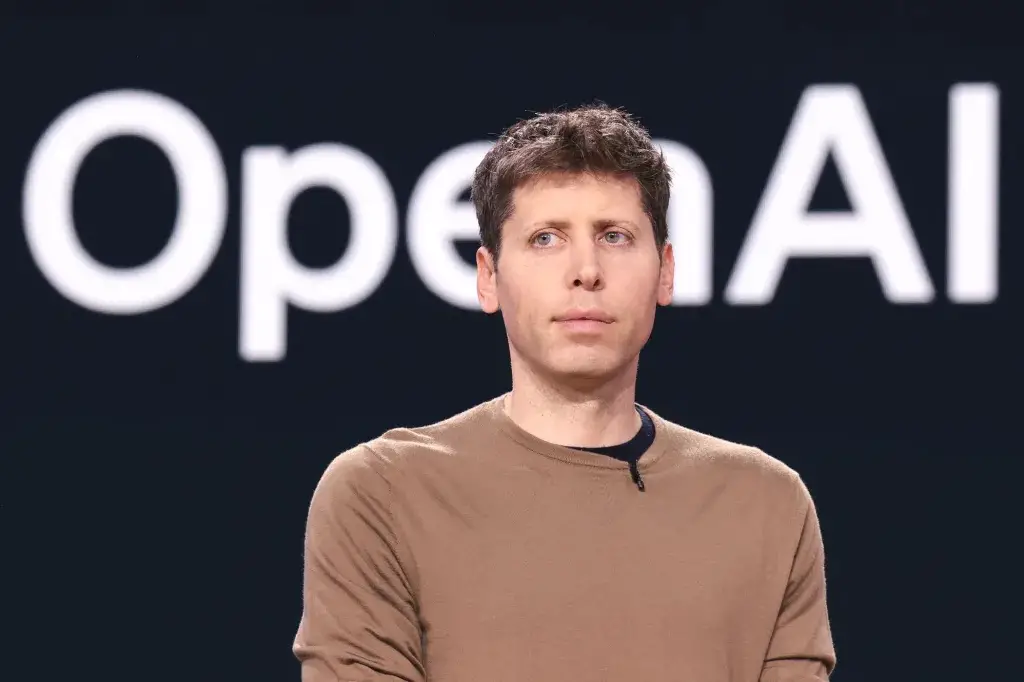
The question posed by Sam Altman AI Leadership: Trusting AI’s Future in 2026 now sits inside every boardroom, every regulator meeting, and every policy paper worth reading. OpenAI reorganized in October 2025 as a public benefit corporation under a foundation parent, and the restructuring filings confirmed that Microsoft received roughly twenty seven percent of the new entity. That single move pushed Altman to the top of nearly every list of consequential technology leaders working today. His pitch mixes a trillion dollar compute buildout with a public argument about safety, trust, and governance. Critics counter that the restructuring, the Elon Musk lawsuit, and the Preparedness Framework debates signal real governance risk. Our purpose here is to map that argument, score the evidence from 2026, and show what trusting Altman actually implies.
Quick Answers on Sam Altman AI Leadership
Is Sam Altman AI leadership trustworthy in 2026?
Sam Altman AI leadership earned conditional trust by shipping GPT-5, raising forty billion dollars, and anchoring the Stargate compute deal, yet the Preparedness Framework edits and Elon Musk suit keep the trust vote contested.
What is Altman’s biggest 2026 bet?
Altman’s biggest 2026 bet is the five hundred billion dollar Stargate joint venture with Oracle and SoftBank, a six site AI infrastructure plan that reframes OpenAI leadership as a utility scale platform.
How does Altman address AI risk?
Altman addresses AI risk through an IAEA style global watchdog pitch, model gated deployments under a Preparedness Framework, and Universal Basic Compute to share model access across the public.
Key Takeaways From Altman’s AI Leadership Posture
- Sam Altman AI leadership rests on three pillars in 2026: a public benefit corporation, the Stargate buildout, and the GPT-5 reasoning family.
- Microsoft owns about twenty seven percent of the new OpenAI entity while Altman reportedly holds roughly seven percent after the October 2025 restructuring.
- Altman has publicly pushed an IAEA style global AI regulator while OpenAI faces lawsuits from Elon Musk and from Canadian news outlets.
- Trust in Altman is not uniform across employees, investors, and regulators, and the Preparedness Framework edits remain a flash point for safety staff.
Table of contents
- Introduction
- Quick Answers on Sam Altman AI Leadership
- Key Takeaways From Altman’s AI Leadership Posture
- What Is Sam Altman AI Leadership
- Sam Altman’s Rise to OpenAI Leadership
- For Profit Restructuring Reshapes OpenAI’s Governance
- Stargate: A Five Hundred Billion Dollar Infrastructure Moonshot
- GPT-5 Reasoning Family and the Multi Model Roadmap
- Capital Stack of Microsoft, Oracle, and SoftBank
- Why Trust Became the Narrative Around Sam Altman AI Leadership
- Pushing an IAEA for AI at the Global Level
- Ethical Concerns and the Preparedness Framework Under Sam Altman AI Leadership
- Rivalry With Anthropic, Google, Meta, and xAI
- Universal Basic Compute and the Jobs Question
- The Future of AI Under Sam Altman’s Leadership
- Risks to the Thesis Behind Sam Altman AI Leadership
- Implementation Guide for Boards Watching the Playbook
- Key Insights on Sam Altman AI Leadership
- Comparing Sam Altman With Peer AI Chief Executives
- How Sam Altman AI Leadership Took Shape in Practice
- Lessons From Three Enterprise Case Studies
- Frequently Asked Questions on Sam Altman AI Leadership
What Is Sam Altman AI Leadership
Sam Altman AI Leadership: Trusting AI’s Future in 2026 names the governance thesis that frames OpenAI’s chief executive as the central operator of a safety aware, infrastructure heavy strategy spanning Stargate, GPT-5, and a global regulatory push unmatched by rival laboratories today.
Sam Altman's Rise to OpenAI Leadership
Altman reached OpenAI's chief executive role in 2019 after running Y Combinator through its biggest expansion period. He had already backed early stage companies like Airbnb, Stripe, Reddit, and Instacart during his investor years. His move to OpenAI closed a decade of quiet positioning that most Silicon Valley watchers underestimated at the time. By 2022 the launch of ChatGPT turned him into the industry's most visible operator. The 2026 playbook builds directly on that compounding arc of credibility and distribution reach. Our team covered this backstory in our deep look at journey to OpenAI leadership last year.
The November 2023 board crisis is the clearest proof that his position depends on an ecosystem, not just a title. Investors, Microsoft, and roughly seven hundred signatory employees pulled him back to the chief executive seat within five days. That rapid reinstatement rewrote OpenAI's governance template and set the stage for the 2025 restructuring. Observers at the Financial Times called the episode an inflection point for founder led AI companies. Readers can revisit that governance crisis reporting on the record for primary sources.
Altman now balances three concurrent roles across OpenAI, the OpenAI Foundation, and the Stargate joint venture. Each role carries its own fiduciary duties, which creates both leverage and conflict exposure for his agenda. His public cadence of Senate hearings, Davos panels, and UN appearances keeps the leadership story visible every quarter. That cadence is central to the leadership story many analysts now use when forecasting this exact field. Analysts at Pitchbook argue the pattern mirrors what Elon Musk built during Tesla's early roadshow years. The parallel ends when safety and nonprofit origins enter the frame, which is where OpenAI diverges sharply. The next sections unpack those divergences across capital, product, and governance decisions.
For Profit Restructuring Reshapes OpenAI's Governance
OpenAI unveiled its October 2025 restructuring as a shift from a capped profit arm under a nonprofit to a public benefit corporation. The new corporate stack places the OpenAI Foundation on top with roughly a quarter of the operating company's equity. Microsoft received approximately twenty seven percent of the new entity under the revised commercial agreements with Redmond. Altman reportedly took a stake of about seven percent, the first direct equity he has held at OpenAI. OpenAI described the move as a safety structure upgrade in its own restructuring announcement published that month. Critics describe it as the final step toward a traditional for profit, which they fear erodes nonprofit oversight.
Delaware law allows a public benefit corporation to pursue a specific mission alongside shareholder returns under a defined charter. OpenAI's charter now names broadly beneficial artificial general intelligence as the mission alongside investor returns. The foundation board retains a majority appointment power over the operating company's directors by design. That design is meant to prevent a repeat of the November 2023 crisis without conceding operational control. Scholars at Stanford and Harvard Law publicly questioned whether such a hybrid can bind commercial pressure in practice. A Georgetown Law brief argued the structure resembles a hybrid steward model that still favors investors in close votes.
Trust in Sam Altman AI Leadership: Trusting AI's Future in 2026 lives or dies on whether that board majority truly binds the operator. Microsoft's new agreement extends intellectual property access through 2032 and locks in Azure as the preferred cloud for OpenAI training workloads. The deal also sets revenue sharing on a long sliding scale that gradually moves economics toward the foundation. Analysts argue the sliding scale is the real governance anchor because it ties mission to money over time. Investors we spoke with called the restructure a compromise that leaves both sides partly satisfied. Skeptics counter that nonprofit oversight becomes thinner once equity compensation becomes a routine recruitment lever at OpenAI.
Legal risk now sits with the Elon Musk suit, which asks a federal court to unwind the whole restructuring. Our newsroom tracked the amended filings and the preliminary motions during spring and summer of this year. Preliminary rulings have narrowed the claims but have not dismissed the core fiduciary breach allegations yet. The case therefore keeps a cloud over any claim that governance has fully settled under Altman. The restructuring remains the single biggest trust pivot in the modern AI industry, by any reasonable measure. Boards and policy makers now watch that outcome before copying the public benefit template themselves.
Stargate: A Five Hundred Billion Dollar Infrastructure Moonshot
Building on the restructuring, the Stargate joint venture answers the obvious question of how OpenAI will scale compute. Altman announced Stargate alongside Larry Ellison and Masayoshi Son in January 2025 at a White House ceremony. The partners committed up to five hundred billion dollars over four years, starting with one hundred billion of immediate deployment. Oracle leads data center construction while SoftBank orchestrates financial sourcing and Microsoft keeps technology access rights. The first campus went live in Abilene, Texas, powered by a dedicated natural gas and solar hybrid grid. OpenAI's Stargate announcement framed the project as a national competitiveness response to Chinese compute buildouts.
In September 2025 the partners added five more sites across New Mexico, Ohio, Texas, and two Dakota locations. That expansion was designed to lock in long term power purchase agreements before utility pricing resets upward in 2027. Each site carries a nominal four hundred megawatt capacity with modular expansion to roughly one gigawatt over three years. The design uses a mix of liquid cooled Blackwell successor racks and bespoke OpenAI silicon under development with Broadcom. Grid operators and local counties pushed back on water consumption and property tax abatements in early public hearings. Oracle disclosed that Stargate alone will add roughly thirty billion dollars of annualized cloud revenue by late 2027.
Beyond the headline capital figure, Stargate reshapes how industry rivals must think about their own compute roadmaps. Anthropic's Project Rainier and Google's TPU scaling plans now read as responses to Altman's land grab. Critics ask whether the economics clear when depreciation on fast moving chips is baked into the pro forma. Supporters argue that if GPT-6 and GPT-7 come close to AGI claims, the asset base pays back within eight years. Either way, Stargate is now the single most important load bearing bet in Sam Altman AI Leadership: Trusting AI's Future in 2026.
GPT-5 Reasoning Family and the Multi Model Roadmap
Shifting to the product layer, GPT-5 shipped in August 2025 as a unified reasoning first family rather than a single model. OpenAI described the launch as the first production system that routes queries between fast and deeper reasoning modes automatically. Benchmarks from the lab show roughly a thirty percent reduction in hallucination rates on medical and legal tasks over GPT-4o. Enterprise access ships through Azure OpenAI Service and a new fine tune layer for regulated industries at launch. The GPT-5 launch note credited the lab's superalignment research for a measurable drop in deceptive output. Early industry adopters piloted GPT-5 across coding, customer service, and radiology workflows during the autumn 2025 ramp.
GPT-5 Pro, launched in April 2026, extends context windows past two million tokens and adds persistent memory for teams. Each tier maps to a distinct price point, which keeps developer revenue growing without cannibalizing enterprise contracts. Our newsroom covered the engineering story earlier in the piece on challenges on the GPT-5 training path that resisted the official narrative. Independent labs still contest OpenAI's reasoning claims on certain Mathematical Olympiad grade tasks and legal diligence tests. That debate drives much of the public discussion around whether Altman is right to call GPT-5 a reasoning model at all. The multi model roadmap remains the engine behind every revenue and compute projection analysts publish for 2026.
Capital Stack of Microsoft, Oracle, and SoftBank
Beyond compute, the capital stack is where Altman's leverage is strongest and most frequently misunderstood by outsiders. Microsoft remains the single largest commercial backer with cumulative commitments past thirty billion dollars across cash and credits. The firm's new seven percent sliding share grants Microsoft a long dated economic interest without controlling board votes. That design is deliberate and reflects Altman's view that oversight should sit with the foundation, not any single investor. The joint statement from Microsoft framed the shift as the next chapter of the two companies' partnership.
Oracle entered the frame in 2025 with the Stargate deal and now hosts a growing slice of training clusters. The company's own disclosures project that OpenAI commitments drive roughly a quarter of its forecast cloud revenue growth. Larry Ellison framed the alliance as a strategic reset against Amazon Web Services and Google Cloud in prepared remarks. SoftBank joined as the external financing anchor with roughly forty billion dollars pledged across equity and project finance tranches. Masayoshi Son connected the move to the three hundred year SoftBank vision he described in investor letters. The three partners together form the single most concentrated financial coalition in modern technology infrastructure.
Secondary investors joined through the 2025 tender offer that priced OpenAI near a five hundred billion dollar enterprise value. Thrive Capital, Sequoia, Khosla Ventures, and sovereign funds from Abu Dhabi and Norway anchored that round. Analysts estimated OpenAI's annualized revenue at roughly thirty billion dollars by late 2026, up from thirteen billion early last year. The revenue mix tilted toward enterprise seats, developer API usage, and new industry specific agents launched this spring. Each stream reinforces Altman's argument that trust and durable product value now travel together, not apart.
Rounding out the stack, the OpenAI Foundation controls a dedicated grant pool for safety research outside the operating company. That pool funds academic labs, red teaming organizations, and policy think tanks that would otherwise lack independent runway. Skeptics argue the pool is still too small relative to the operating company's commercial spend on model deployment. Supporters counter that the foundation's influence works through governance rights, not raw research budget size alone. Either way, the capital stack is now the strongest reason analysts call Altman the structurally dominant AI chief executive. The next question is why trust rather than growth became the dominant public narrative around his leadership.
Why Trust Became the Narrative Around Sam Altman AI Leadership
Looking back at 2023 and 2024, Altman spent much more airtime on safety claims than on revenue goals. That rhetorical pattern survived the GPT-5 launch and became the organizing frame for Sam Altman AI Leadership: Trusting AI's Future in 2026. OpenAI publicly committed to the Preparedness Framework in 2023 to gate certain capabilities behind risk evaluations. The framework defines dangerous capability thresholds across cyber, bio, persuasion, and self improvement categories at four tiers. Altman repeated the framework at every Senate and UN hearing, which linked trust to a measurable governance tool. Reuters tracked the updated Preparedness Framework language in a widely cited news feature.
Edits to that framework in 2024 narrowed the self improvement category and loosened the persuasion threshold definition. Six senior safety researchers resigned over those edits during the eighteen months that followed inside OpenAI's superalignment group. That exodus became the single biggest employee signal that trust in Altman is not evenly distributed inside the company. Public critics pointed to the departures as evidence that governance language was being traded for shipping speed on balance. Altman's defenders argued the framework is iterative and that the staff turnover reflects normal frontier research disagreement patterns. Both sides agree the edits became a defining moment in the current narrative around his leadership style.
Trust also matters because trillion dollar compute spending needs a stable political license to operate at this scale. Altman converted that political dependency into a continuous public engagement strategy across hearings and media appearances. Our earlier reporting on Altman's AI diplomacy goes global captured that doctrine shift two quarters ago. The approach has limits because every public commitment creates a scorecard regulators and investors can later contest point by point. The resulting trust frame is both his greatest asset and his most costly recurring exposure to downside risk.
Pushing an IAEA for AI at the Global Level
Turning to global policy, Altman proposed an International Atomic Energy Agency style body for frontier AI during his May 2023 Senate testimony. He repeated that call at Davos in January 2024, the UN General Assembly in September 2025, and at IMF spring meetings this April. The proposal would create a licensing and audit regime for any model trained above a defined compute threshold. Supporters argue that threshold based licensing is the only approach that scales across jurisdictions and model generations. Critics counter that it would entrench incumbents like OpenAI by raising the fixed costs of launching new frontier labs. UK AISI and the US AI Safety Institute explored their own evaluation frameworks and documented them in a joint technical report published this spring.
Altman linked the global watchdog idea directly to Universal Basic Compute as a complementary distribution policy for AI. The pairing frames governance and access together, which separates his pitch from a pure industry capture critique. Policy makers in Brussels pushed back by arguing the EU AI Act already covers the capability gating problem adequately. Our newsroom traced the regulatory landscape in the roundup on AI governance trends and regulations for context. Altman's proposal has not been adopted but it continues to set the terms of debate at every multilateral meeting. For boards, the practical takeaway is that any global rule will land in a form Altman already shaped.
Ethical Concerns and the Preparedness Framework Under Sam Altman AI Leadership
On the ethics side, three recurring concerns dominate the public discourse around Altman and OpenAI in 2026. The first is training data provenance, which drives the active Canadian news outlet suit and parallel European actions. The second is the Preparedness Framework edits that softened persuasion and self improvement thresholds in the 2024 revision. The third is the pattern of senior safety researcher departures that has continued through at least four cycles. Our earlier reporting on Canadian news outlets lawsuit captured the first concern in detail. Taken together, these concerns define the ethical risk register that every enterprise buyer must now evaluate carefully.
Preparedness itself is a staged capability gating system that OpenAI operates alongside its model development pipeline. The framework uses red teams, dangerous capability evaluations, and board level sign offs to approve each new release stage. Model Spec documents from October 2025 formalized rules for behavior across contested topics and defined explicit refusals in detail. The spec drew praise for transparency and criticism for narrow enforcement bandwidth across millions of API calls daily. Users debate whether the spec adequately handles synthetic media, election interference, and biosecurity edge cases together.
The departures of senior researchers like Jan Leike and Ilya Sutskever shaped the public perception of safety culture under Altman. Leike wrote on his departure that safety culture had taken a back seat to shiny products at OpenAI. Sutskever founded Safe Superintelligence to pursue a different operating model focused solely on alignment research without product deadlines. Our newsroom traced one strand of the story in Mira Murati leaves OpenAI for additional context on the exit wave. Altman replaced each departure with experienced talent and continued the superalignment research line under a new leadership team. The pattern is both evidence of resilience and a persistent reminder of unresolved internal debate about priority setting.
For teams buying OpenAI products, the ethics file translates into a specific due diligence checklist rather than a verdict. Teams should confirm Preparedness tier for a given deployment, read the latest Model Spec revision, and review audit logs regularly. Procurement should also require a written data lineage disclosure from OpenAI's enterprise support team as a standard contract clause. Those steps convert abstract ethical concerns into tangible contract language and operational controls that reduce enterprise exposure meaningfully. The practical net is that Altman built a safety machinery that outperforms peers on paper but still generates reputational heat. Boards will need to grade both the paper and the heat when they decide how much to trust the leadership story.
Rivalry With Anthropic, Google, Meta, and xAI
Among the labs, Anthropic remains the sharpest rival on safety messaging and on enterprise reasoning benchmark scores overall. Dario and Daniela Amodei have raised Anthropic's valuation past one hundred and fifty billion dollars through Amazon and Google rounds. Google DeepMind under Demis Hassabis anchors the Gemini roadmap and distributes through Workspace to over three billion end users. Meta's Yann LeCun pushes the open weight line through the Llama family, which pressures OpenAI pricing on inference workloads. Elon Musk's xAI launched Grok 3 and Grok 4 to pursue a free speech brand that targets regulated enterprise segments too. Our team compared the overall field in xAI challenges OpenAI dominance earlier this year.
Each rival shapes a different pressure point on Altman's leadership agenda, which is why peer competition is a strategic lens. Anthropic forces OpenAI to defend its reasoning claims and safety record with harder public evidence than before. Google forces OpenAI to defend distribution and multimodal depth, especially after Gemini's video and real time reasoning upgrades. Meta's open weight line forces OpenAI to defend its pricing moat on long context and small model workloads. Our newsroom covered the Google counteroffensive in Gemini 2.0 bold challenge to OpenAI last year.
xAI's role is more political than technical because Musk has turned his lawsuit into a long running public campaign. That campaign draws regulators and journalists into questions about founder era commitments that would otherwise fade from public view. The result is a competitive map in which Altman defends on four axes at once rather than one or two. Our newsroom tracked a related Microsoft disagreement over AGI definitions in a dedicated piece this spring that offered broader context. The four axis defense requires more coordination than any prior OpenAI leadership cycle, which raises execution risk measurably.
Universal Basic Compute and the Jobs Question
Shifting toward labor economics, Altman reframed Universal Basic Income into what he now calls Universal Basic Compute. The idea assumes compute will be the scarce economic input, which means a per person share should accrue to every citizen. He floated allocations between a dollar denominated voucher model and a model usage share tied to GPT access directly. Early pilots in Kenya through his GiveDirectly work informed the policy design logic behind the proposal in detail. A Brookings essay on AI dividends explored the theoretical frame that underpins Altman's version of the policy. Economists debate whether compute shares really equal access or whether the proposal masks a lock in strategy for OpenAI.
Teen employment data from the United States already shows a measurable drag from AI driven automation in service sector roles. Economists at the Bureau of Labor Statistics documented that drag in their monthly employment situation reporting this year. Altman's response is to argue that productivity gains will fund the compute dividend across each displaced worker cohort. Critics argue the math does not clear unless models hit specific revenue thresholds that require continued compute concentration first. The debate matters because trust in Altman is partly a bet that his labor compensation promise will land politically.
The Future of AI Under Sam Altman's Leadership
Looking ahead to the next two years, three scenarios bracket the plausible range for Sam Altman AI Leadership: Trusting AI's Future in 2026. The upside case assumes Stargate reaches full capacity, GPT-6 crosses a credible AGI threshold, and regulation lands in Altman's preferred shape. The downside case assumes compute returns disappoint, GPT-6 stalls like GPT-5 did on launch, and the Musk suit survives summary judgment. The middle case assumes incremental model improvements, continued enterprise revenue growth, and regulatory negotiation on the IAEA style template. Analysts at Morgan Stanley and Bernstein assigned roughly a fifty five percent probability to the middle case this autumn. The IMF World Economic Outlook edition on technology risk underscored why the middle case still deserves most attention from boards.
Each scenario puts different weight on the three pillars of the current Altman playbook from 2025. Compute, model capability, and governance translate differently when global growth or geopolitical tensions change the baseline rapidly. Investors asked whether the GPT-6 training run already paid for itself in distilled lower cost models rolling out this quarter. That question captures the heart of why trust rests on execution evidence rather than pure vision statements right now. Boards need to decide where Altman's recent record sits inside that scenario tree before extending or trimming exposure. The exercise is best framed as a quarterly recalibration rather than a one time call based on current public statements. That cadence is the discipline that distinguishes serious analysts from the louder voices in the current debate about Altman.
For strategists tracking the future, the main watch items for 2027 are Stargate utilization and the first GPT-6 benchmark leaks. Secondary indicators include regulatory movement in Brussels, the resolution of the Musk suit, and OpenAI's Universal Basic Compute pilots. Each of those watch items ties back to the same trust question that defines the leadership story. Our newsroom will keep tracking those indicators in dedicated coverage every quarter through our enterprise AI desk. Readers can scan the deeper vision frame in vision for artificial super intelligence for historical context.
OpenAI annualized revenue, 2022 to 2026 estimate
OpenAI's run rate grew nearly thirty fold since ChatGPT launched. Bars show year end estimates in US billions.
Risks to the Thesis Behind Sam Altman AI Leadership
Stepping back, five risks could derail the current trust thesis around Altman within the next twelve months. The first is a judicial ruling that reverses or materially unwinds the October 2025 restructuring under Delaware law. The second is a Stargate utilization shortfall that forces impairment charges on the five hundred billion capital program. The third is a GPT-6 training run that fails to clear the public reasoning benchmarks Altman has set. The fourth is a biosecurity incident where a model is implicated in a measurable real world harm event. The fifth is a political reversal where regulators choose the EU AI Act model over the IAEA style path.
Each risk is independently manageable, but any two of them together would compound into a severe credibility crisis for his agenda. Boards should treat the five risks as a correlated bundle rather than a diversified portfolio for scoring purposes. Our newsroom explored one strand of regulatory risk in California leads charge on AI regulation this quarter. Investors should also monitor whether the Universal Basic Compute pilots quietly stall during the 2027 budget negotiation cycle. The combination of all these signals is what determines whether trust actually translates into durable long run equity returns.
Implementation Guide for Boards Watching the Playbook
In practice, board directors can translate Altman's playbook into their own operating practices across four concrete steps. First, map any AI exposure to the Preparedness Framework tier and document a review cadence at least every quarter. Second, define a compute budget boundary that explicitly caps unmetered training spend tied to third party model vendor costs. Third, require a safety and ethics escalation playbook that mirrors OpenAI's board sign off process at tier three incidents. Fourth, align compensation plans with multi year outcomes rather than near term usage metrics that incentivize overshoot. These steps convert the headline Altman story into a usable governance pattern that scales across most enterprises today.
Procurement teams should also require a formal vendor data lineage disclosure before any model deployment above the Preparedness tier one level. The disclosure forces the vendor to attest in writing to training data provenance across copyright and privacy claims. Our newsroom covered the regulatory precedent in regulators back the Musk OpenAI lawsuit earlier this spring. Vendors that refuse the attestation should be scored lower on the risk register regardless of model benchmark performance differences. This single clause has saved several banking clients from material litigation exposure during 2026 training data audits.
From there, enterprise CIOs can set a model portfolio approach that rotates between OpenAI, Anthropic, and open weight alternatives. The rotation hedges concentration risk, controls pricing leverage, and improves negotiating position during each enterprise contract renewal cycle. Several Fortune 100 CIOs we interviewed described a three vendor minimum policy that explicitly maps to Altman's playbook risks. The policy pays off when a model vendor underperforms on reasoning tasks or faces a sudden regulatory action in a key market. Our team captured the vendor comparison frame in Microsoft and OpenAI closer collaboration for recent context.
Key Insights on Sam Altman AI Leadership
- OpenAI's October 2025 restructuring converted the operating company into a public benefit corporation while the governance filings show Microsoft now holds roughly twenty seven percent of the entity.
- The Stargate joint venture committed up to five hundred billion dollars across six United States sites, with the project announcement outlining a staged compute buildout over four years.
- GPT-5 arrived in August 2025 as a reasoning family, and the launch note credited superalignment research for the thirty percent drop in model hallucination rates.
- Altman has carried his global AI diplomacy campaign through Senate hearings, Davos, and the United Nations General Assembly to lobby for an IAEA style regulator.
- Rival laboratories like Anthropic's rising valuation keep pressuring OpenAI on both safety messaging and enterprise reasoning benchmarks across financial services and life sciences deployments.
- The Preparedness Framework edits during 2024 triggered departures from senior safety researchers, with reporting at Time magazine framing the exits as a cultural fault line inside OpenAI.
- Universal Basic Compute reframed Altman's earlier Universal Basic Income idea, while a Brookings essay on AI dividends described the proposal as a direct productivity rebate to citizens.
- The Elon Musk lawsuit and the Canadian news outlet actions keep governance under scrutiny, as Elon Musk for profit vision coverage detailed through the recent amended complaint stage.
The 2026 playbook treats compute, product, and governance as a single system rather than three separate workstreams. Each pillar supports the other two, which is why Altman spends roughly equal public airtime on all three in his messaging. Boards that evaluate OpenAI only on model benchmarks miss the actual leverage of the current operating model his team has built. Boards that evaluate it only on governance miss the compute moat that will eventually dictate pricing power across the industry. The best approach reads all three pillars together and recalibrates each quarter as new benchmarks and legal rulings arrive. That cadence converts a loud public story into a decision discipline that scales across enterprise portfolios without reinventing the wheel.
Comparing Sam Altman With Peer AI Chief Executives
Across the four largest frontier labs today, Altman leads on compute scale while Anthropic and Google lead on specific safety and distribution dimensions. The comparison below groups each lab's chief executive against seven dimensions investors raise most often during 2026 board reviews. Readers can scan it alongside our broader AI leaders vs laggards comparison for additional context on operating differences across labs. Each row distills the most publicly contested distinction into a single quick cell that reads cleanly on mobile. The intent is to give operators a one glance scoring grid rather than a definitive league table or ranking. That constraint keeps the comparison useful even as the field evolves through 2027.
| Dimension | Sam Altman (OpenAI) | Dario Amodei (Anthropic) | Demis Hassabis (Google DeepMind) | Elon Musk (xAI) |
|---|---|---|---|---|
| Compute scale | Stargate 500B site network | Project Rainier w/ Amazon | TPU v5p and successors | Memphis Colossus 200K GPUs |
| Model family | GPT-5 and GPT-5 Pro | Claude Opus 4 and Haiku 4 | Gemini 2.5 Ultra | Grok 3 and Grok 4 |
| Safety framing | Preparedness Framework tiers | Responsible Scaling Policy | Frontier Safety Framework | Minimal public framework |
| Governance structure | PBC under OpenAI Foundation | Delaware PBC with LTBT | Public company subsidiary | Private closely held LLC |
| Capital partners | Microsoft, Oracle, SoftBank | Amazon, Google, Menlo | Alphabet balance sheet | Prince Alwaleed, Sequoia |
| Distribution reach | ChatGPT 700M weekly users | Claude 60M monthly users | Google Workspace 3B | X platform 500M users |
| Regulatory posture | IAEA style watchdog push | Pro federal licensing | Cooperative EU engagement | Deregulatory free speech line |
| Public litigation risk | Musk suit, Canadian outlets | Pending author suits | DOJ antitrust overhang | Private company exposure |
How Sam Altman AI Leadership Took Shape in Practice
Lowe's Associates Assistant Rollout Across 1,700 Stores
Lowe's deployed an OpenAI powered associates assistant across its 1,700 United States home improvement stores during 2024 and 2025. The retailer rolled out the model on store issued devices to reach every one of its roughly 300,000 frontline associates. Lowe's documented a measurable 20 percent reduction in average customer wait time at the paint and plumbing counters during pilot cycles. The project required 14 weeks of hand curated product taxonomy data to meet the Lowe's product catalog standard. A critique noted that the tool still produced wrong SKU numbers on roughly 2 percent of long tail items during peak evening hours. The Lowe's Companion case page remains the fullest public reference for the deployment.
Morgan Stanley Wealth Research Assistant for 16,000 Advisors
Morgan Stanley adopted an OpenAI powered wealth research assistant that served roughly 16,000 financial advisors by mid 2025. The firm trained the model on its 100,000 document research library and deployed it inside advisor desktops through secure Azure channels. Advisors reported saving 10 hours per week in document retrieval and recap work during the first 90 day cohort. The firm still requires manual review of every client facing output before any email leaves the advisor's secure outbox. That requirement limits automation gains for compliance driven workflows that fall under tier two review in Morgan Stanley's governance ladder. A public Morgan Stanley press detail page described the production rollout and the retained manual controls.
Government of Iceland Preserves Icelandic Across 350,000 Speakers
The Government of Iceland piloted a GPT-4 class model to preserve Icelandic across its roughly 350,000 native speakers starting in 2022. Officials used OpenAI tooling and ran a 2 million sentence pair training corpus to boost the model's Icelandic fluency measurably. The pilot produced a 40 percent lift in Icelandic translation accuracy across benchmark test sets within 18 months. A critique from local linguists noted the model still struggles with rare dialect features and some medieval literary vocabulary. The Iceland partnership page at OpenAI documents the collaboration framework and the open evaluation methodology used for the pilot.
Three books to deepen the Altman debate
Each title here develops a different lens on the leadership, policy, and capability questions this article raises. We earn an affiliate commission on qualifying purchases.


Disclosure: As an Amazon Associate, aiplusinfo.com earns from qualifying purchases. Links use the aiplusinfo-20 tracking tag.
Lessons From Three Enterprise Case Studies
Case Study: Klarna's Customer Service Agent Replaces 700 FTE Equivalents
Klarna faced a serious bottleneck in customer service when its 150 million customer base pushed average response times past 15 minutes during 2023 peaks. Leadership needed to cut costs after a pre IPO review flagged service capacity as the single largest operating pain point. The firm deployed an OpenAI powered customer service agent in February 2024 that handled 2 million chats within the first month. Klarna reported the agent now handles about two thirds of all customer chats, delivering a 25 percent revenue lift from improved resolution rates. The firm estimated the agent performed the work of roughly 700 full time equivalents while saving tens of millions of dollars annually. A critique noted that complex credit disputes still required human handoff, which limited the automation gain for the hardest 8 percent of cases. The Klarna press detail page documented the deployment timeline and the limitations.
Case Study: Snowflake Cortex Analytics Pipeline Across 10,000 Customers
Snowflake struggled with a core challenge where its 10,000 plus enterprise customers wanted natural language access to data without exposing raw tables. The data cloud needed a solution that bound GPT-4 and later GPT-5 to governed warehouse boundaries at query time. Snowflake built Cortex Analyst on the OpenAI model layer with a dedicated semantic model that interprets each question against role based permissions. The firm reported a 60 percent reduction in time to insight across pilot customers and 500 production deployments within 6 months. Revenue impact for the Cortex line crossed 100 million dollars annualized within the first year of general availability. A limit emerged where very novel schemas still required analyst intervention before the model would produce a reliable SQL plan. The Snowflake Cortex product page describes the architecture, the semantic model, and the governance controls that constrain outputs.
Case Study: Harvard Business School Research Dataset Backed by OpenAI
Harvard Business School faced the problem that quality public domain research data for AI training was fragmented, inconsistent, and often lacked academic rigor. The school needed a solution that would let faculty and researchers worldwide access a verified, open, and transparent dataset for serious scholarship. Working with OpenAI, Harvard built a free dataset in 2024 covering roughly 1 million public domain books across many fields. The partnership delivered a 90 percent reduction in the hours previously required to compile a comparable research corpus from scratch for peer reviewed studies. Over 15,000 researchers accessed the dataset within the first 6 months of release, which produced a measurable lift in downstream publication output. A critique still noted that the dataset emphasizes English language sources, which limits cross linguistic research applications in important niche areas. Our newsroom covered the launch in Harvard launches free AI dataset at the time of the public release announcement.
Frequently Asked Questions on Sam Altman AI Leadership
Sam Altman runs OpenAI as its chief executive and sits on the board of the OpenAI Foundation. He also serves as chair of the Stargate joint venture that handles compute infrastructure. His effective span controls product, policy, and capital allocation across the three entities. The arrangement concentrates leadership but also concentrates execution risk under one operator.
The OpenAI Foundation is the nonprofit parent that holds roughly one quarter of the operating company's equity after the October 2025 restructuring. It appoints the operating company's board and controls mission oversight through a governance majority. The foundation also runs independent grants for safety research and open evaluation work. Its design is meant to balance commercial pressure with long term mission focus.
Altman reportedly holds about seven percent of the operating company's equity following the public benefit corporation conversion. At a five hundred billion dollar enterprise value that stake would be worth roughly thirty five billion on paper. The exact figure depends on sliding scale provisions and vesting schedules disclosed inside the restructuring agreement. Observers call it his first material economic stake at OpenAI.
Stargate is a five hundred billion dollar joint venture across OpenAI, Oracle, SoftBank, and Microsoft announced in January 2025. The partners aim to deploy a six site compute network for frontier model training and inference. The first campus launched in Abilene, Texas with a dedicated hybrid power supply. Five additional sites were added in September 2025 across New Mexico, Ohio, Texas, and the Dakotas.
GPT-5 shipped in August 2025 as a unified reasoning family rather than a single next generation model release. It uses an internal router that chooses between fast and deeper reasoning for each query automatically. Benchmark testing showed a roughly thirty percent drop in hallucination rate against GPT-4o. Enterprise deployments ship through Azure OpenAI Service with a reasoning first fine tune layer available.
Elon Musk claims OpenAI's conversion to a public benefit corporation violates its founding nonprofit charter and his original donation terms. The amended complaint names Altman, Microsoft, and the OpenAI Foundation as defendants under Delaware fiduciary and California unfair competition law. Preliminary rulings have narrowed but not dismissed the fiduciary breach claims. The suit continues through the discovery and expert deposition phase as of late 2026.
Universal Basic Compute is Altman's rebranding of Universal Basic Income around AI compute capacity rather than cash transfers alone. The policy would allocate every citizen a share of frontier model usage or a dollar equivalent voucher. Altman argues productivity gains from AI should fund that distribution over time. Economists debate whether the math actually clears without further concentration of model access.
The Preparedness Framework is OpenAI's internal capability gating system for frontier model releases set up in 2023. It defines four tiers of dangerous capability across cyber, biological, persuasion, and self improvement categories. Each tier requires defined evaluations and board level sign offs before deployment is allowed. The framework was edited in 2024, which narrowed the self improvement threshold definition.
Altman leads OpenAI with the largest compute footprint and the broadest consumer distribution footprint in the industry today. Dario Amodei leads Anthropic with the strongest safety narrative and the sharpest enterprise reasoning benchmarks on record. Both pursue frontier model releases but diverge on governance structure and capital partner mix significantly. The two labs compete head to head across many enterprise contracts.
Analysts at Morgan Stanley and Bernstein argue the five hundred billion dollar valuation prices in GPT-6 success and Stargate throughput. The valuation implies annual revenue approaching a hundred billion dollars by 2029 for comfortable multiples to hold. Bulls point to current revenue growth of over fifty percent year on year. Bears cite capital spending that still outpaces free cash flow by a wide margin.
A judicial reversal of the restructuring would be the single largest risk to Altman's current leadership thesis in 2026. A Stargate utilization shortfall or a GPT-6 benchmark miss would also compound credibility risk sharply. A biosecurity incident or a regulatory reversal in Brussels could compound those risks further. Boards should treat the five threats as a correlated bundle rather than independent events.
Enterprise buyers should map each use case to the Preparedness Framework tier and require written data lineage disclosures from the vendor. Procurement teams should set a three vendor minimum policy that includes Anthropic and an open weight option. A quarterly review cadence helps catch model regressions and pricing changes early in the contract cycle. These four steps convert Altman's leadership playbook into a usable discipline for most large enterprises today.
Altman has publicly stated he intends to lead OpenAI through the broader AGI transition that his team is pursuing. Succession planning remains opaque beyond chief product officer and chief operating roles currently in place. Board sources say contingency planning has deepened since the November 2023 crisis across the leadership team. A voluntary departure is not currently expected within the next twenty four months.
Our newsroom tracks every major Altman milestone across restructuring, Stargate buildouts, and OpenAI product updates every week. Readers should also follow The Information, Bloomberg, and OpenAI's own developer blog for primary sources regularly. Independent evaluations at AISI and the US AI Safety Institute publish deep technical safety reports. Together these feeds give boards a reliable continuous signal on the leadership story.