
Image Recognition in AI: How It Works
Why it matters: How does image recognition work? See the full pipeline from pixels to predictions, real accuracy data, top uses, and the risks every team should know.
Everything AI, Robotics, and IoT
Why it matters: How does image recognition work? See the full pipeline from pixels to predictions, real accuracy data, top uses, and the risks every team should know.

Why it matters: Computer vision explained for 2026: what it is, how CNNs, ViTs, YOLO and SAM work, real deployments, risks and the path to shipping production vision.

Why it matters: Compare supervised, unsupervised, and reinforcement learning algorithms, see named case studies, and learn how to pick the right AI algorithm for your project.

Master the basics of neural networks and how they work: layers, backpropagation, Python code, risks, and the 2026 architectures behind every AI product.

Why it matters: Beginner guide to artificial intelligence: what it is, how it works, real examples, risks, ethics, and a 30 day starter plan you can follow this month.

Why it matters: Machine learning models: what they are, how they work, and where they fail. A 2026 guide with real cases, examples, and governance guardrails.
Why it matters: How to train an AI in 2026: full pipeline, data, compute, fine-tuning, LoRA, RLHF, MLOps, risks, regulation, and future trends explained end to end.
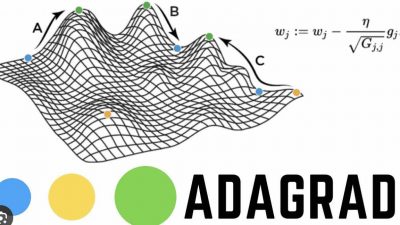
Why it matters: The AdaGrad optimizer explained: 2011 formula, torch.optim.Adagrad PyTorch guide, adagrad vs adam trade-offs, and where it still wins in 2026.

Why it matters: Instance segmentation explained: what it is, how Mask R-CNN and maskrcnn_resnet50_fpn_v2 work in PyTorch, plus real deployments and 2026 outlook.

Why it matters: Data augmentation expands training data with smart transforms and synthetic samples to cut overfitting and lift accuracy. See techniques, examples, and risks.