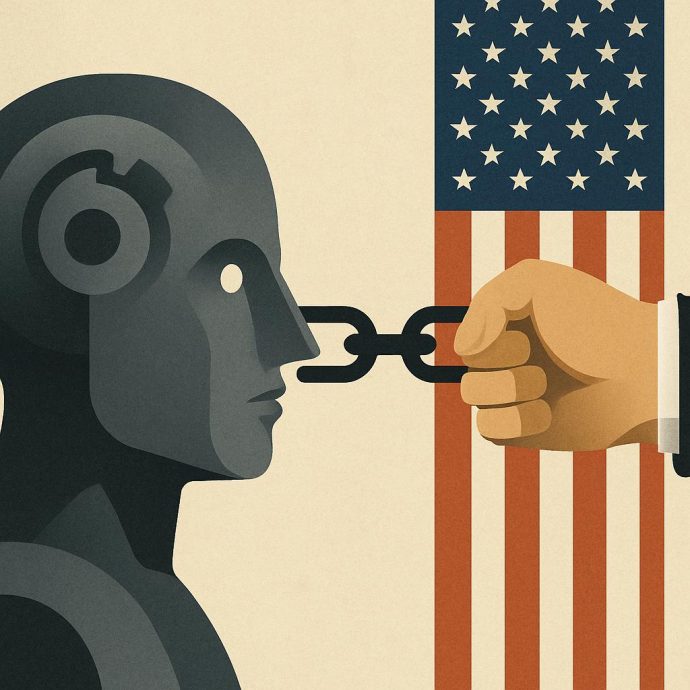

US Threats to Anthropic And The Future Of AI
The United States government is shifting from enthusiastic AI booster to assertive rule setter, and Anthropic, the safety focused lab behind Claude, now sits in the middle of that turn. In 2023, the US accounted for about 60 percent of global frontier AI model training runs, according to the Stanford AI Index, so choices made in Washington can reshape which tools students, developers, and companies can rely on worldwide. As officials float tougher scrutiny of frontier labs and hint at “further action” toward companies like Anthropic, the outcome will influence not only one company’s fate but also global norms on safety, openness, and innovation. If you use advanced AI for study, work, or research, understanding these US threats is no longer a niche policy concern, it is a practical question about whether your favorite tools will still be there next semester or next quarter.
Key Takeaways
- US policy decisions on national security, competition, and safety could materially restrict or reshape Anthropic’s products, partnerships, and growth.
- Anthropic’s safety focused identity can be both a shield and a target, attracting cooperation with regulators while inviting deeper scrutiny and obligations.
- Export controls, licensing rules, and antitrust actions are the most realistic channels for serious US government pressure on frontier AI labs.
- How US institutions handle Anthropic will help set global precedents for AI governance, access, and the balance between innovation and control.
Your AI Future Could Change Faster Than You Expect
Imagine Losing Access to Claude Mid Semester
Picture a student who relies on Anthropic’s Claude models for drafting essays, debugging code, and exploring complicated readings in policy or biology. These tools quietly weave themselves into daily routines, especially once instructors and employers start expecting AI assisted output. Now imagine that overnight, a new US rule forces Anthropic to restrict certain regions or education programs from accessing its most capable models. The student logs in to Claude during midterms and sees a message explaining that access has been limited under updated US compliance requirements. Deadlines remain, expectations remain, and yet the primary AI assistant has changed behavior or disappeared for reasons that feel distant and political. This scenario feels dramatic, yet it captures the downstream impact that national security and export control decisions can trigger when frontier AI sits inside a small number of US controlled labs.
Why One Policy Fight Matters For Everyone Using AI
Most people do not follow US congressional hearings or executive orders until those decisions suddenly touch the tools they use every day. Anthropic operates in a category known as frontier AI, meaning general purpose models at the cutting edge of capability and potential risk, and US officials increasingly treat such systems as strategic assets. In 2023, the White House AI Executive Order directed the Department of Commerce to explore requirements for companies training large models above specific compute thresholds, a category that clearly includes Anthropic and other major labs. When a US administration signals that it might pursue “further action” against a particular lab, investors, universities, startups, and foreign governments pay attention. This is not only about one company’s regulatory headaches, since decisions taken in Washington can influence which safety methods become mandatory, which business models survive, and who gets to access the most powerful AI systems. For readers who simply want reliable tools, the stakes revolve around continued access, trust in safeguards, and the pace of improvement in models like Claude.
Anthropic, Ownership, And Why Washington Cares
What Is Anthropic?
Anthropic is a San Francisco based artificial intelligence company that describes itself as an AI safety and research lab focused on building helpful, honest, and harmless systems. It was founded in 2021 by former OpenAI researchers, including Dario Amodei and Daniela Amodei, who left over disagreements about safety and direction. The company is best known for its Claude family of models, which compete with tools like OpenAI’s GPT series and Google’s Gemini for tasks such as writing, coding, analysis, and conversation. Anthropic’s researchers helped popularize the idea of “Constitutional AI,” a training method that guides models using a written set of principles rather than purely human reinforcement. For readers new to this space, it can help to see Anthropic as both a product company and a policy experiment in how to embed safety values into frontier AI from the start, an approach that regulators watch very closely.
Who Owns Anthropic?
Anthropic is a privately held company with a complex cap table that blends founders, employees, venture backers, and major strategic investors like Amazon and Google. In 2023, Amazon announced up to 4 billion dollars in investment in Anthropic, including an initial 1.25 billion dollar commitment, in exchange for making Amazon Web Services a primary cloud provider for model training and deployment. Google’s parent company Alphabet has also invested hundreds of millions of dollars and hosts some Anthropic workloads on Google Cloud, so two US tech giants hold significant stakes and operational influence. Public reporting from The Information and other outlets has placed Anthropic’s valuation in the 15 to 20 billion dollar range after these funding rounds, although the company remains far from public listing. No government owns Anthropic, yet the combination of US investor control, US based infrastructure, and US staff makes the company deeply exposed to American law and policy. For regulators, this ownership mix raises questions about competition, concentration of AI power, and the leverage that large cloud providers might exercise over frontier research labs.
Why Is The US Government Concerned About Anthropic?
US concern about Anthropic forms part of a broader unease about all frontier AI labs, rather than a unique obsession with one firm. Officials worry that extremely capable models could be misused for cyber attacks, biological weapon design, or large scale disinformation, themes that appear in the White House AI Executive Order and in Department of Defense discussions. Because Anthropic trains models at scale using advanced chips like NVIDIA’s A100 and H100, its work intersects directly with export controls and national security debates about China and other competitors. Lawmakers also see concentration of power among a handful of labs tied to big tech platforms and ask whether that structure threatens competition or public accountability. Agencies such as the Federal Trade Commission have warned AI companies against overstating safety claims or underplaying risks, which is particularly relevant for a firm that markets itself as safety first. When Anthropic executives testify before Congress, they are often treated as both partners in managing risk and as potential subjects of future oversight, a dual role that creates strategic uncertainty for product planning and partnerships.
How US Politics Turned Frontier Labs Into Strategic Assets
From AI Darlings To National Security Priorities
In the early wave of public excitement around tools like ChatGPT and Claude, much of the political conversation focused on innovation, productivity, and competitiveness. Within a year, that tone shifted as national security agencies, including the Department of Defense and the intelligence community, began describing advanced AI as critical infrastructure, similar in sensitivity to satellites or cryptography. The Stanford AI Index reported that in 2023, more than 80 percent of large language models with publicly known training locations were trained in the United States, which concentrated capability and scrutiny in one jurisdiction. Policy experts at organizations like the Center for Security and Emerging Technology and RAND began publishing detailed reports about how generative models could lower barriers for cybercrime or biological threats. This kind of analysis influenced White House thinking and gave political cover to moves like directing NIST to produce the AI Risk Management Framework, a voluntary but influential guidance document. As a result, companies like Anthropic now find themselves treated less like ordinary software startups and more like dual use technology vendors whose work touches defense, intelligence, and global power balances, an evolution that affects everything from hiring to release cadence.
What “Further Action” Against Anthropic Might Actually Mean
When a US administration says it will not rule out “further action” against a specific AI company, that phrase can sound like a threat of shutdown, yet the realistic tools are more nuanced. In practice, Washington can open investigations through agencies like the FTC or Department of Justice, which might examine claims about safety, data use, or competition with partners such as Amazon and Google. Officials can also tighten export controls on advanced chips or on providing model access to certain foreign users, which would indirectly pressure Anthropic’s growth strategy without directly targeting the company by name. In extreme cases, national security reviews through bodies like the Committee on Foreign Investment in the United States, known as CFIUS, might examine particular funding arrangements or data flows if foreign investors are involved. Another plausible form of “further action” is to require licensing or registration for training models above a defined compute threshold, which the White House executive order already directed agencies to explore and that fits into broader AI governance trends. For users, what many people underestimate is that these bureaucratic sounding steps can translate into slower releases, regional restrictions, or more limited model capabilities in everyday tools.
The Main US Policy Tools That Could Pressure Anthropic
Regulatory Levers Washington Can Pull
Several branches of the US government already hold concrete tools that could change Anthropic’s trajectory without passing brand new laws. The Federal Trade Commission can investigate whether marketing claims about safety, reliability, or training data privacy are deceptive or unfair, as FTC Chair Lina Khan has warned in blog posts about AI hype. The Department of Justice and state attorneys general can look at whether Anthropic’s partnerships with Amazon and Google lessen competition in cloud services or AI markets, drawing on recent antitrust cases against Google and Meta as templates. The Department of Commerce, through the Bureau of Industry and Security, controls export licenses for advanced chips and may extend certain export restrictions to cover access to model weights or highly capable hosted systems. National security agencies, such as the Department of Defense, can shape behavior by tying contract opportunities to specific safety, audit, and access control requirements, which can become de facto standards for the whole sector. Congress can also create liability rules for AI harms, and even without new statutes, plaintiffs can try to use existing product liability or consumer protection doctrines to sue labs over misuse, which could push regulators to clarify expectations. For a company like Anthropic, each of these levers adds a different kind of strategic risk, from compliance cost and delay to potential fines or structural changes.
Myth Versus Reality About A Potential Crackdown
A common mistake in public debate is the assumption that US officials want to shut down frontier AI labs entirely, which does not match current policy documents or public hearings. Lawmakers from both parties repeatedly state that they view advanced AI as essential to economic growth and national defense, and they worry that too much restriction would hand an advantage to rivals like China and accelerate the AI arms race. The more realistic scenario involves progressively tighter obligations such as mandatory red teaming, third party safety audits, and incident reporting, similar to patterns seen in cybersecurity regulation. Another misconception is that if Anthropic were seriously constrained, alternative tools would immediately fill the gap at the same level of capability and trustworthiness. In reality, most frontier labs depend on similar US based compute and supply chains, and open source models, while powerful, may not yet match closed systems like Claude on safety alignment for the most hazardous tasks. That means heavy handed or poorly tailored actions could narrow the frontier model ecosystem rather than simply shifting usage from one company to another, a risk that policy makers and users often overlook.
Why Policy Hits Anthropic, OpenAI, And Google Differently
Key Differences Between Anthropic And OpenAI
Anthropic and OpenAI are often grouped together as frontier labs, yet their governance and positioning create different policy exposures. OpenAI operates under a capped profit structure anchored by a nonprofit, with Microsoft as a controlling partner for many business decisions and cloud operations. Anthropic, by contrast, remains a standard for profit corporation, although it has discussed exploring benefit corporation structures, and it intentionally split major investments between Amazon and Google rather than relying on a single giant partner. OpenAI leans heavily on mass consumer deployment through ChatGPT, which raises content moderation, child safety, and misinformation questions for regulators worldwide. Anthropic, at least so far, has focused more on enterprise and developer APIs, which shifts attention toward security, reliability, and compliance in professional settings. In public testimony and blog posts, Anthropic leaders repeatedly foreground Constitutional AI and alignment research, whereas OpenAI tends to highlight a mix of openness, ubiquity, and safety, which creates different expectations when policymakers judge performance against promises. These distinctions matter when agencies choose targets for antitrust suits, consumer protection actions, or partnership contracts that may reshape market structure.
How US Policy Exposure Varies Across Major Labs
US regulatory and political risks do not fall evenly across Anthropic, OpenAI, Google DeepMind, and Meta, because each organization has a different mix of business lines and public narratives. Google and Meta already face long running antitrust and privacy battles, so any AI investments can be seen as extensions of existing dominant platforms, a context that Anthropic partly avoids as a newer independent firm. OpenAI’s close relationship with Microsoft concentrates risk around a single corporate alliance, raising questions at the Department of Justice and European Commission about bundling AI into Windows and Office. Meta’s decision to release open weight Llama models has attracted attention from security experts and policymakers worried that diffuse powerful systems might be harder to control, even though supporters argue that openness improves oversight. Anthropic’s heavy reliance on external cloud providers makes it vulnerable to shifts in export controls and data residency rules, because it cannot fully reconfigure infrastructure without cooperation from partners. When the White House or Congress designs rules around frontier models, each lab’s architecture, funding, and branding influence how costly compliance will be and how credible their input appears during negotiations.
Comparison Table: Policy Exposure Across Major AI Labs
The following comparison highlights how different AI labs might experience US policy pressure when regulators focus on safety, competition, and national security.
| Factor / Risk | Anthropic | OpenAI | Google / DeepMind | Meta (Llama) |
|---|---|---|---|---|
| Main business model | API and enterprise access to Claude models | API, ChatGPT consumer apps, enterprise products | Integrated AI across search, cloud, and productivity tools | Open weight models plus integration into social platforms |
| Safety branding | Strong AI safety and alignment emphasis | Safety plus rapid product launches | Responsible AI framed within large tech governance | Open innovation posture with guardrails messaging |
| Big tech dependence | Significant reliance on Amazon and Google cloud | Deep integration with Microsoft Azure | Primarily in house data centers and infrastructure | In house infrastructure with some external partners |
| Primary US policy risks | Frontier model controls, export compliance, partnership scrutiny | Licensing, safety obligations, competition questions | Antitrust, content regulation, privacy enforcement | Content moderation, antitrust, open model misuse concerns |
Seeing Anthropic against this landscape clarifies that its biggest vulnerabilities lie where safety and national security concerns intersect with concentrated compute and cloud partnerships, rather than in consumer facing moderation fights that dominate debate about social networks.
Timeline: How US Scrutiny Of Frontier AI Has Escalated
Key Moments In Government Attention To Anthropic
Anthropic’s story unfolds in parallel with a rapid shift in US AI governance, and mapping that timeline helps explain why threats from Washington have grown sharper. In 2021 and early 2022, Anthropic raised its first major funding rounds and published early research on Constitutional AI, while US debate centered mostly on algorithmic bias and social media recommendation systems. In 2023, the Biden administration released the Blueprint for an AI Bill of Rights and then the AI Executive Order, which explicitly referenced frontier models and directed agencies to work with labs, including Anthropic, on safety testing and reporting. Around the same time, Anthropic joined the Frontier Model Forum with OpenAI, Microsoft, and Google, committing to voluntary safety measures such as red teaming and vulnerability disclosure programs. In 2024, congressional hearings began drilling into the details of compute thresholds, licensing, and export rules, and Anthropic’s leaders testified about the need for careful but firm oversight of the most capable systems. As political leadership shifted and some officials began signaling that stronger measures against individual labs were on the table, analysts started treating Anthropic as a bellwether case for how the US might discipline frontier AI players and manage global AI competitiveness.
Election Cycles And Shifting AI Rhetoric
Election years tend to magnify concerns about technology, and AI now sits at the center of debates over jobs, national security, and information integrity. Candidates in both major US parties promise to be tough on big tech while also endorsing innovation, a balancing act that can create sudden rhetorical swings between praise for AI leadership and calls to crack down on perceived threats. Policy researchers at Brookings and Carnegie Endowment note that emerging technology often becomes a symbolic issue in campaigns, where nuanced regulation gives way to headline friendly proposals. This political volatility matters for Anthropic because new appointees at agencies like the FTC, DOJ, and Commerce can reinterpret existing authorities without waiting for Congress to pass detailed AI laws. Some election platforms emphasize protecting jobs from automation and limiting corporate control over AI, which could translate into stronger labor and competition oversight on labs that supply enterprise automation tools. Other platforms prioritize strategic rivalry with China and therefore favor heavy support for domestic leaders like Anthropic while demanding strict controls on model exports and access, a pattern that fits into narratives about whether China is advancing faster in AI. The outcome of these cycles will influence whether Anthropic faces a more cooperative or a more confrontational policy environment in the next few years.
Inside Anthropic’s Safety And Governance Methods
How Constitutional AI And Safety Evaluations Work
Understanding Anthropic’s technical approach helps explain why US regulators watch it closely and sometimes treat it as a model for safer practices. Constitutional AI, introduced in Anthropic research papers, trains models to follow a written set of principles derived from documents like the UN Universal Declaration of Human Rights and other normative sources. During training, these principles guide the model’s behavior through automated feedback and human review, teaching it to refuse harmful requests such as instructions for building weapons, while still assisting on benign tasks. Anthropic publicly describes extensive red teaming of Claude models, where internal teams and external partners probe for vulnerabilities in areas like cyber security, biology, and persuasion. The company has participated in government organized evaluations, including red teaming events hosted at the UK AI Safety Summit, which align with NIST’s AI Risk Management Framework that encourages systematic testing, transparency, and documentation. These technical and procedural steps show up in Anthropic’s model cards and system reports, which regulators and enterprise buyers increasingly use as reference points for what “responsible AI” looks like in practice. Many observers underestimate how resource intensive this evaluation pipeline is, since it requires specialized domain experts and continuous iteration as models evolve and as regulatory expectations expand.
Operational Security, Export Controls, And Compute Management
The US government’s concern about model weights leaking or being stolen by adversaries has pushed Anthropic and peers to adopt stricter operational security practices. That includes segregated training environments on cloud platforms, fine grained access control for sensitive model artifacts, and logging systems that track who interacts with internal tools, in line with guidance from agencies like CISA on protecting critical software infrastructure. Anthropic must also navigate US export control rules that restrict the sale of advanced chips and, increasingly, limit certain AI services to regions of concern, especially where there is perceived risk of military or surveillance usage. Reports from CSET estimate that a very high share of top tier AI accelerators originate from US companies such as NVIDIA, which means denial of export licenses or new rules on remote access can ripple directly into Anthropic’s training schedules. To manage costs and compliance, the lab has to plan compute usage years ahead, negotiate capacity with Amazon and Google, and design model architectures that can scale under constrained hardware budgets. These operational realities shape everything from release timing to which research directions are feasible, since some explorations of larger or more specialized models might be delayed if they threaten to exceed regulatory thresholds or cloud capacity commitments.
Three Overlooked Realities About US Threats To Anthropic
Hidden Infrastructure And Compliance Costs
One insight that many public discussions miss is the sheer cost of complying with evolving US AI rules, particularly for a company that markets safety as a core product feature. Building internal policy teams, maintaining audit trails that meet possible NIST or FTC expectations, and integrating red teaming results into product workflows all require significant staff and tooling. As regulators request more detailed reporting on training runs, safety incidents, and mitigation plans, Anthropic must divert engineering talent from pure research into documentation and governance systems. This burden might be manageable for a well funded lab, yet it creates a competitive moat that disadvantages smaller entrants and open source projects that cannot match compliance expenditure. When policy commentators describe safety requirements as light touch or voluntary, they often ignore these opportunity costs that shape which organizations can realistically participate at the frontier. For Anthropic, accepting this overhead is partly a strategic choice, since it reinforces its reputation with policymakers, but it also locks the company into a path where failure to meet rising standards could be judged more harshly than for less vocal competitors.
Dependence On A Narrow Chip And Cloud Supply Chain
Another underexplored challenge lies in Anthropic’s dependence on a narrow set of hardware and cloud providers that are themselves targets of US regulatory and geopolitical pressure. Training Claude level models typically requires tens of thousands of advanced GPUs, and right now that means processors designed by US firms and manufactured through complex global supply chains monitored by export control agencies. If Washington broadens restrictions on selling or remotely providing access to specific chip generations for models above certain sizes, Anthropic would have limited immediate options for alternative hardware. Cloud partners like Amazon and Google also must comply with sanctions, intelligence community guidelines, and potential requests for government access under laws such as the CLOUD Act, all of which can influence Anthropic’s architecture decisions. This stack of dependencies means that even if US regulators never name Anthropic directly, policy changes aimed at chips, cloud, or data flows can impact the company’s capabilities and costs. Many practitioners inside large AI organizations now devote as much effort to anticipating these supply chain constraints as they do to designing new model architectures, which increases planning complexity and risk.
Reputational Risk From Being The “Safety Lab”
A third gap in common analysis concerns the reputational dynamics that come with branding Anthropic as the safety centered alternative to other frontier labs. This identity opens doors in Washington and at international summits, because officials want to showcase partners who appear aligned with responsible AI principles. That same image, however, creates expectations that Anthropic will push for and comply with the strictest possible norms, which can turn into pressure if incidents occur or if internal research reveals worrying capabilities. Civil society groups and academic researchers may hold Anthropic to a higher standard than they apply to firms that do not emphasize safety, scrutinizing deployment decisions for signs of compromise under investor or partner pressure. Investors, for their part, might question how far the company is willing to slow or limit product rollouts in response to policy concerns, particularly if rivals move faster. This combination of political access and heightened scrutiny makes Anthropic uniquely sensitive to US threats that touch its safety narrative, such as inquiries into whether Claude’s guardrails genuinely prevent high risk misuse in areas like biosecurity or advanced cyber operations.
Real World Case Studies: Policy, Safety, And Frontier Labs
Microsoft And OpenAI Under US Antitrust And Safety Spotlight
One instructive case involves the growing antitrust and safety scrutiny of Microsoft’s partnership with OpenAI, which signals how US regulators might approach Anthropic’s alliances. The Federal Trade Commission opened an inquiry in 2024 into whether Microsoft’s relationship with OpenAI should be treated as a de facto acquisition, despite not following traditional merger processes. At the same time, members of Congress questioned whether integrating GPT models deeply into Windows and Office centralizes too much AI power under a single corporate umbrella. Microsoft responded by emphasizing safety investments and oversight structures, including internal Responsible AI offices, as evidence that powerful models would be monitored and constrained. This experience suggests that similar questions could arise around Amazon’s and Google’s influence over Anthropic, especially if Claude becomes embedded broadly in cloud and productivity suites. It also demonstrates that safety narratives, while helpful, do not prevent regulators from probing market structure and control over frontier AI capabilities.
Google DeepMind’s Engagement With UK And US Safety Initiatives
Another relevant example comes from Google DeepMind’s participation in the UK AI Safety Summit and related transatlantic policy work, which foreshadows how Anthropic might be integrated into formal governance efforts. At the 2023 summit, DeepMind presented technical papers and joined other labs, including Anthropic and OpenAI, in committing to model evaluations by independent experts from academia and government. The UK government established an AI Safety Institute that now collaborates with NIST and US agencies on shared evaluation methods, creating cross border norms for how to test frontier systems for dangerous capabilities. For DeepMind, this involvement strengthens its reputation as a responsible actor, but it also binds the company to emerging standards that may later inform binding regulation. Anthropic, which took part in similar discussions and demonstrated Claude’s safety features at the summit, faces a comparable path where voluntary commitments become reference points for US policymakers. This case illustrates how international safety diplomacy can turn into de facto regulatory baselines that frontier labs must internalize in their research and product cycles.
Meta’s Open Llama Models And Policy Backlash Concerns
A third case involves Meta’s release of open weight Llama models, which sparked significant debate in the policy community about open versus closed approaches to powerful AI. When Llama 2 and Llama 3 appeared, open source advocates praised Meta for enabling broad research and innovation, while some security experts warned that easily downloadable weights could be adapted for harmful uses without oversight. Reports from think tanks like RAND and CSET explored scenarios in which open models might assist in developing malware or designing harmful biological sequences, although empirical evidence of such misuse remains limited and context dependent. Policymakers took notice, and some proposed rules that would treat open and closed frontier models differently in terms of reporting obligations or export controls. For Anthropic, which has chosen not to release Claude weights and instead focuses on tightly controlled APIs, this episode demonstrates both the perceived safety advantages and the strategic risks of its approach. If regulators decide that controlled access is safer, Anthropic’s model strengthens, yet if open source ecosystems gain political favor as tools for transparency and resilience, the company might face new forms of criticism.
Frequently Asked Questions
What are the main US threats to Anthropic right now?
The most significant US threats to Anthropic come from regulatory and policy channels rather than immediate bans. Agencies like the Federal Trade Commission could investigate claims about safety, data practices, or competition, especially given Anthropic’s close ties to Amazon and Google. Export controls managed by the Department of Commerce might limit access to advanced chips or restrict providing Claude’s capabilities to certain countries. Congress may create licensing or reporting requirements for training large models that increase compliance costs and slow releases. Together, these pressures create uncertainty about Anthropic’s growth, product roadmap, and international reach, a pattern that fits recent moves discussed in analysis of the White House AI regulation rules.
Could the US government actually shut down Anthropic’s AI research?
A full shutdown of Anthropic’s research operations is unlikely under current law and political conditions, yet more targeted actions are plausible. Officials are more focused on shaping behavior through oversight, audits, and partnership conditions than on eliminating frontier labs entirely. National security tools like CFIUS or export controls could constrain specific funding arrangements or overseas collaborations if they raise red flags. Safety regulations might require pauses or redesigns of certain model training runs until evaluation criteria are met. For most users, the risk is more about slowed progress and restricted access than complete disappearance of Claude.
How does the White House AI Executive Order affect Anthropic?
The 2023 White House AI Executive Order directly affects Anthropic because it targets frontier model developers above certain compute thresholds. It requires labs training very large models to notify the government and share safety test results, which means Anthropic must build robust evaluation and reporting systems. The order also tasks NIST with developing technical standards that Anthropic is expected to follow if it wants to be seen as a responsible leader. Commerce and other agencies must consider export controls and critical infrastructure safeguards that touch Anthropic’s chip supply and cloud usage. Over time, these provisions will likely turn into more detailed guidance and possibly binding rules that influence every major product Anthropic ships.
Why is Anthropic treated as a national security concern?
Anthropic is treated as a national security concern because its Claude models could, in principle, be misused for high impact threats if not properly aligned and controlled. Policymakers worry about capabilities like helping design sophisticated cyber attacks, aiding in biological weapon research, or generating convincing disinformation at scale. Frontier labs also consume large amounts of advanced computing hardware that is central to US economic and military advantage. When a single company controls such powerful systems and tightens partnerships with major cloud providers, officials see both opportunity and risk. As a result, national security agencies watch Anthropic’s research and deployment choices with the same seriousness they apply to other dual use technologies.
How do US export controls on chips impact Anthropic?
US export controls on advanced chips like NVIDIA A100 and H100 affect Anthropic by limiting where and how it can train or serve its most capable models. If certain regions or entities cannot legally access high end compute, Anthropic cannot deploy Claude at full strength there without running afoul of Commerce Department rules. Potential future controls on providing remote model access for sensitive tasks could further restrict Anthropic’s international customer base. These constraints also influence long term infrastructure planning, since the company must secure compliant capacity on US aligned cloud platforms. In practice, export rules act as both a security measure and a strategic bottleneck for scaling Anthropic’s offerings globally.
Is Anthropic more vulnerable to US regulation than OpenAI or Google?
Anthropic’s vulnerability to US regulation differs from OpenAI or Google rather than simply being greater or smaller. As a younger company heavily dependent on external cloud partners, it may have less leverage in negotiations over compliance and infrastructure than a tech giant like Google. Its strong safety branding invites both trust and scrutiny, which can lead regulators to expect especially rigorous safeguards and transparency. OpenAI faces more attention around consumer products and its tight integration with Microsoft, while Google deals with long standing antitrust and privacy investigations. Anthropic occupies a middle position where frontier safety and national security concerns are central, and this focus could intensify under future policy regimes.
What role do Amazon and Google play in Anthropic’s US policy risks?
Amazon and Google play a significant role in Anthropic’s exposure because they provide critical cloud infrastructure and hold major equity stakes. Their existing regulatory challenges, including antitrust suits and data protection questions, can spill over into how authorities view their AI partnerships. If regulators worry that Amazon or Google are using Anthropic to entrench dominance in cloud or AI services, they might scrutinize contract terms and market impacts. These partners also must comply with export controls and surveillance related laws, shaping how Anthropic can architect its systems. In short, the same relationships that give Anthropic scale and resources also tie its fate more closely to big tech regulatory battles.
How could new US AI licensing rules affect access to Claude?
New AI licensing rules in the United States could require Anthropic to register certain training runs, obtain approvals, or demonstrate safety measures before deploying powerful Claude versions broadly. That process might slow down how quickly the latest capabilities reach general users or specific high risk sectors such as bio research or cyber operations. Licensing conditions might also mandate regional restrictions, logging requirements, or identity verification for sensitive use cases. For enterprises, this could increase onboarding steps and compliance checks when integrating Claude into workflows. For individual users, the impact would likely appear as more gradual feature rollouts and clearer explanations of why some actions are blocked.
What does NIST’s AI Risk Management Framework mean for Anthropic?
NIST’s AI Risk Management Framework provides detailed guidance on identifying, assessing, and mitigating risks across an AI system’s lifecycle, which closely aligns with Anthropic’s safety narrative. While the framework is officially voluntary, federal agencies and many enterprises use it to shape procurement and evaluation, effectively turning it into a soft standard. Anthropic must show that its development processes, red teaming, and monitoring align with NIST’s categories of governance, mapping, measuring, and managing risks. Doing so supports government and enterprise contracts but requires ongoing investment in documentation and process engineering. Over time, parts of the framework may be codified into sector specific rules, making early adoption a strategic hedge for Anthropic.
How does US public opinion about AI influence government threats?
US public opinion influences how aggressive or cautious lawmakers feel they can be when regulating companies like Anthropic. Surveys from Pew Research Center show that a significant share of Americans feel more concerned than excited about AI, and many support stronger government oversight. Politicians respond to these sentiments by promising to “rein in” AI risks and protect jobs, which can translate into tougher hearings and stricter proposals targeting frontier labs. At the same time, businesses and universities lobby for access to advanced tools, reminding officials that overly restrictive rules could hurt competitiveness. This push and pull shapes the tone and content of threats directed at Anthropic, especially during election seasons.
What is the difference between voluntary safety commitments and binding regulation for Anthropic?
Voluntary safety commitments, such as those Anthropic signed at the White House and international summits, signal good faith and allow experimentation with best practices without immediate legal penalties. These commitments often include pledges to conduct red teaming, publish system cards, and coordinate with authorities on major incidents. Binding regulation, in contrast, would attach legal consequences to failing specific standards or ignoring reporting requirements. For Anthropic, voluntary steps help build credibility but can evolve into expectations that regulators later formalize into rules. The transition from voluntary norms to binding obligations is a central dynamic in the current policy environment and a key source of uncertainty.
How might US elections change the trajectory of Anthropic and AI?
US elections can change the trajectory of Anthropic and AI by reshaping leadership at agencies that control enforcement priorities and interpret existing laws. A government that emphasizes national security might push for stricter export controls and licensing, benefiting labs considered cooperative partners but constraining international growth. A leadership focused on competition and labor issues could prioritize antitrust actions and worker protection rules that affect how quickly companies adopt automation tools. Different administrations may also vary in how much they trust industry self regulation versus detailed statutory frameworks for AI. For Anthropic, this means long term planning must account for multiple scenarios, ranging from collaborative public private governance to more adversarial regulatory stances.
Can users or organizations influence how the US treats Anthropic?
Users and organizations can influence US treatment of Anthropic indirectly by participating in public comment processes, industry coalitions, and civil society advocacy. When agencies propose new AI rules or guidance, they often invite feedback from companies, researchers, and the public through official comment portals. Universities, enterprises, and advocacy groups that depend on Claude can submit evidence about benefits, risks, and practical needs, which can shape final regulations. Professional associations and standards bodies, such as IEEE or sector specific groups, also lobby for balanced approaches that protect safety while preserving innovation. While individual users have less direct impact, their experiences and concerns often feed into surveys and media coverage that policymakers read when evaluating AI labs.
Conclusion
US threats to Anthropic sit at the intersection of national security, competition, and a genuine effort to prevent harm from increasingly powerful AI systems. The same technical advances that make Claude useful for students, researchers, and businesses also create pressure for governments to understand and control how such models are trained, deployed, and accessed. Anthropic’s safety centered identity gives it a strong voice in these debates, yet it also means that lapses or misalignments could invite especially sharp responses from regulators who view the company as a test case.
For anyone relying on advanced AI, the practical takeaway is to recognize that policy and infrastructure shape which tools remain available and how they behave as much as model architecture does. Organizations should track developments from agencies like NIST, the FTC, and the Department of Commerce, and design their own AI adoption plans with flexibility for changing access rules or licensing conditions. Individuals should expect more transparency, clearer safety explanations, and sometimes slower rollouts as Anthropic and its peers adapt to evolving US requirements. The future of AI will not be decided solely in research labs or market competition, it will emerge from the ongoing dialogue between companies like Anthropic and the governments that increasingly treat their systems as strategic infrastructure, and those who follow that dialogue closely will be better prepared to protect their own AI strategies.
References
- Stanford Institute for Human-Centered Artificial Intelligence, “Artificial Intelligence Index Report 2024.” https://aiindex.stanford.edu/report/
- The White House, “Executive Order on the Safe, Secure, and Trustworthy Development and Use of Artificial Intelligence,” October 30, 2023. https://www.whitehouse.gov/briefing-room/presidential-actions/2023/10/30/executive-order-on-the-safe-secure-and-trustworthy-development-and-use-of-artificial-intelligence/
- National Institute of Standards and Technology, “Artificial Intelligence Risk Management Framework (AI RMF 1.0),” 2023. https://www.nist.gov/itl/ai-risk-management-framework
- Federal Trade Commission, “Generative AI: A Consumer Protection and Competition Enforcement Challenge,” FTC Business Blog, 2023. https://www.ftc.gov/business-guidance/blog
- Center for Security and Emerging Technology, “AI and Compute: How Much Is Enough,” CSET Reports. https://cset.georgetown.edu
- Anthropic, “Constitutional AI: Harmlessness from AI Feedback,” Anthropic research paper and blog. https://www.anthropic.com
- Amazon, “Amazon and Anthropic announce strategic collaboration,” company press release, 2023. https://press.aboutamazon.com
- Alphabet Inc., quarterly and annual reports referencing AI investments and risks, SEC EDGAR database. https://www.sec.gov/edgar/search/
- UK Government, “AI Safety Summit 2023: Outcomes and Proceedings.” https://www.gov.uk/government/topical-events/ai-safety-summit-2023
- Pew Research Center, “Public Awareness of AI and Views on Its Impact on Daily Life,” 2023. https://www.pewresearch.org
- RAND Corporation, “Risks of Large-Scale Misuse of Generative AI,” research reports. https://www.rand.org