
Introduction
The second episode of The Age of A.I. turns its lens toward one of the most profound applications of artificial intelligence: healing the human body. Hosted by Robert Downey Jr., this YouTube Originals documentary series premiered in December 2019 and immediately captured global attention. The episode titled Healed through A.I. follows patients and researchers pushing the boundaries of what machines can do for human health. According to Grand View Research, the global AI in healthcare market was valued at approximately $36.67 billion in 2025 and is projected to reach over $505 billion by 2033, reflecting the staggering pace of investment in this field. The stories told in this episode center on two transformative applications: restoring speech for people with ALS and detecting blindness-causing diseases through retinal scans. These are not theoretical concepts tucked away in research labs, but real tools changing real lives today. This article explores every dimension of the episode, from the technology behind it to the ethical questions it raises about the future of AI-driven healing.
Featured Snippets
What is Healed through A.I. about?
Healed through A.I. is the second episode of The Age of A.I. documentary series, exploring how artificial intelligence restores speech for ALS patients through Google’s Project Euphonia and detects diabetic retinopathy using deep learning-based eye screening tools.
How does AI help ALS patients speak again?
Google’s Project Euphonia uses machine learning models trained on impaired speech samples and pre-diagnosis voice recordings to build personalized speech recognition and voice synthesis systems for people with neurological conditions like ALS.
Can AI detect diabetic retinopathy?
Yes, deep learning algorithms can analyze retinal fundus photographs to detect signs of diabetic retinopathy with accuracy comparable to trained ophthalmologists, enabling earlier diagnosis in underserved communities.
Key Takeaways
- The Age of A.I. Episode 2 showcases two landmark healthcare AI projects: Project Euphonia for speech restoration and AI-powered diabetic retinopathy screening.
- Former NFL linebacker Tim Shaw’s story demonstrates how AI can reconstruct a patient’s original voice using pre-diagnosis audio recordings and neural speech synthesis.
- AI diagnostic tools for eye disease offer scalable solutions for regions with limited access to specialist ophthalmologists, potentially preventing millions of cases of preventable blindness.
- The episode raises critical questions about data privacy, algorithmic bias, and the ethical boundaries of deploying machine learning in clinical settings.
Table of contents
- Introduction
- Featured Snippets
- Key Takeaways
- Definition
- What the Documentary Reveals About AI and Healing
- Tim Shaw’s Journey from the NFL to Losing His Voice
- How Google Project Euphonia Restores Lost Speech
- The Machine Learning Behind Voice Synthesis and Recognition
- AI-Powered Eye Screening for Diabetic Retinopathy
- Deep Learning Models That Detect Blindness Before Symptoms Appear
- Why Healthcare Needs AI-Driven Diagnostic Tools
- The Emotional Weight of Hearing a Lost Voice Again
- Bridging the Gap Between Accessibility and Technology
- Comparing AI Speech Tools Across Google, Apple, and Amazon
- Comparing AI Voice Tools Across Google, Apple, and Amazon
- How Training Data Shapes the Accuracy of Medical AI
- Ethical Boundaries in AI-Assisted Healing
- Patient Privacy and the Cost of Data-Driven Medicine
- Where AI Diagnosis Outperforms Human Clinicians
- Real Hospital Systems Adopting AI Screening Programs
- Latest Clinical Results from AI Retinal Screening in India and Thailand
- Challenges That Slow AI Adoption in Global Healthcare
- What Regulatory Bodies Need to Catch Up On
- How AI Could Reshape Rehabilitation and Therapy
- Lessons the Documentary Teaches About Responsible Innovation
- The Road Ahead for AI in Personalized Patient Care
- Key Insights
- Comparison Table: AI vs. Traditional Healthcare Approaches
- Real-World Examples
- Case Studies
- Frequently Asked Questions
Definition
Healed through A.I. refers to the application of artificial intelligence technologies, including machine learning, deep learning, and neural networks, to diagnose, treat, restore, or compensate for physical and neurological conditions in ways that augment or exceed traditional medical capabilities.
What the Documentary Reveals About AI and Healing
The Age of A.I. Episode 2 opens with a stark reminder that the human body is deeply imperfect, but technology may bridge those gaps. Robert Downey Jr. frames the episode around a central question about how far artificial intelligence should go when it comes to healing. The documentary does not merely showcase flashy prototypes; it follows real patients navigating devastating diagnoses. Viewers meet researchers at Google and DeepMind who are building tools that could redefine how millions of people access medical care. This episode stands apart from other AI documentaries because it prioritizes human stories over technical spectacle. Every algorithm discussed is tied to a person whose life depends on its success, making the stakes feel immediate and deeply personal.
The two central narratives in this episode address fundamentally different health challenges, yet they share a common thread. Both projects use machine learning to solve problems that traditional medicine has struggled to address at scale. Speech restoration for ALS patients represents a deeply personalized use of AI, while retinal screening demonstrates its power in mass public health interventions. Together, these stories illustrate the breadth of what artificial intelligence in healthcarecan accomplish when research meets empathy. The documentary carefully avoids overselling these technologies, acknowledging that they remain works in progress. That honesty is what makes the episode both credible and emotionally compelling for audiences worldwide.
Tim Shaw’s Journey from the NFL to Losing His Voice
Tim Shaw played as a linebacker for the Carolina Panthers, Jacksonville Jaguars, Chicago Bears, and Tennessee Titans before retiring from professional football. His career was defined by physical resilience, fierce competition, and a voice that commanded attention on and off the field. Roughly six years before the documentary aired, Shaw was diagnosed with amyotrophic lateral sclerosis, commonly known as ALS. The disease progressively weakened his muscles, eventually requiring him to use a wheelchair full-time. ALS stole not only his mobility but also his ability to speak, swallow, and breathe without assistance. For someone whose identity was so closely tied to physicality and verbal expression, this loss was devastating.
The documentary captures Shaw’s daily reality with unflinching honesty, showing the immense effort required for basic communication. His family and caregivers serve as interpreters, bridging the gap between his thoughts and the outside world. ALS affects approximately 5,000 new people in the United States each year, and most patients survive only three to five years after diagnosis. Speech deterioration is one of the earliest and most emotionally painful symptoms for many patients and their families. Shaw’s willingness to share his story on camera gave millions of viewers a window into a condition that is often invisible to the general public. His courage set the stage for the technological intervention that would follow later in the episode.
What makes Shaw’s story particularly powerful is the contrast between his former life and his present circumstances. The documentary intercuts footage of his NFL career with scenes of his current daily challenges, creating a visceral emotional impact. Shaw does not appear as a passive recipient of technology; he actively participates in testing and refining the AI tools being built for him. His engagement with the Google research team reflects a collaborative spirit that defines the best outcomes in medical AI development. The previous episode of the series, How Far is Too Far, raised the philosophical question that this episode answers through lived experience. Shaw’s participation proves that AI healing is not just about algorithms; it is about the people who trust those algorithms with their identities.
How Google Project Euphonia Restores Lost Speech
Project Euphonia began as a Google research initiative focused on improving speech recognition for people with neurological conditions. Standard voice assistants and speech-to-text tools are trained overwhelmingly on typical speech patterns, leaving millions of people with impairments unable to use them. The project addresses this gap by collecting speech samples from individuals with conditions like ALS, cerebral palsy, and Parkinson’s disease. These recordings train machine learning models to recognize and transcribe impaired speech with far greater accuracy than existing commercial tools. The goal is not to fix the speaker but to fix the technology that fails to understand them. This philosophical shift, from correcting the patient to correcting the system, is central to the project’s mission and design.
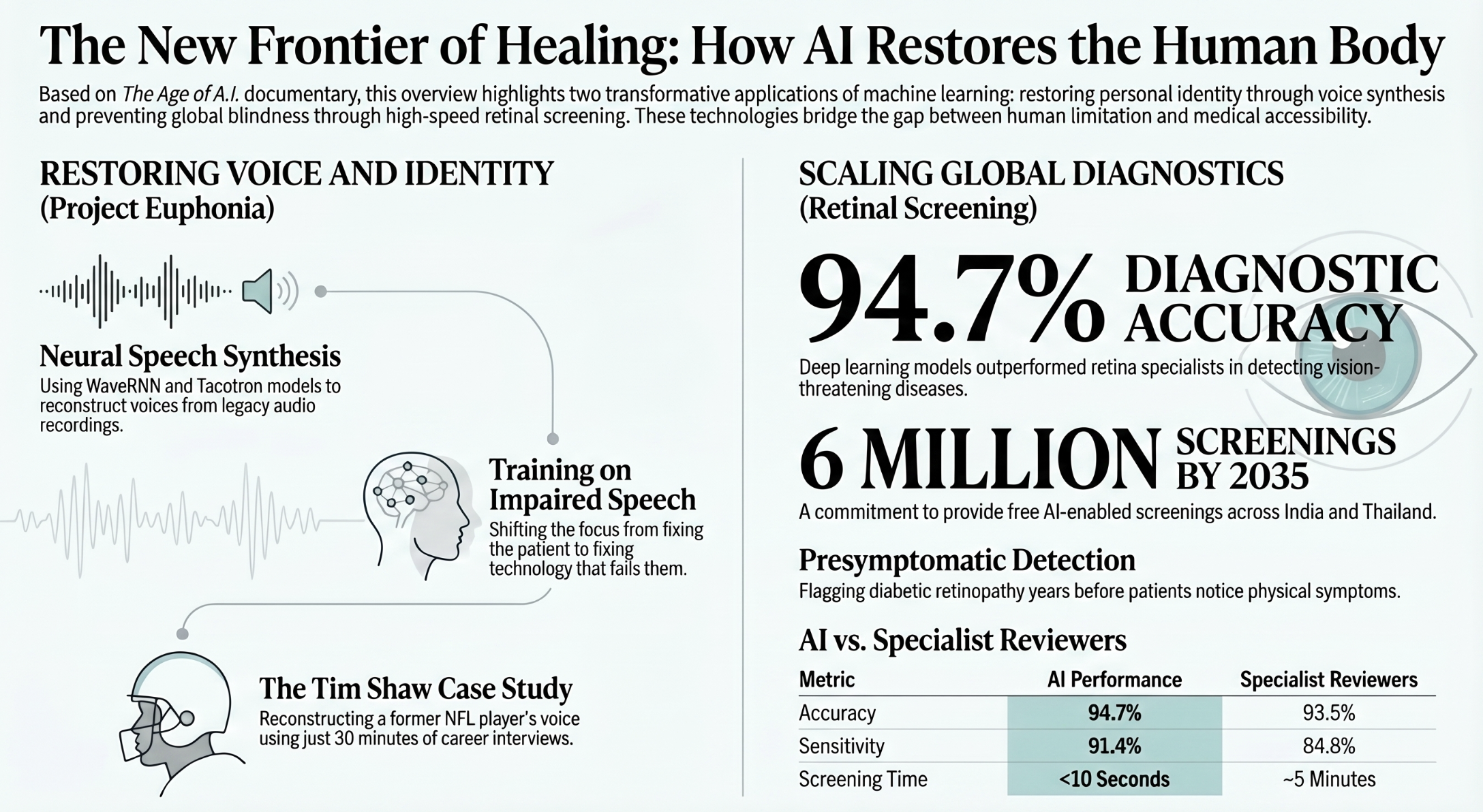
For Tim Shaw specifically, the research team at Google and DeepMind pursued a second, more ambitious objective beyond speech recognition. They gathered approximately thirty minutes of voice recordings from Shaw’s NFL career, including interviews and media appearances. Using neural speech synthesis models, they created a synthetic voice that closely resembles how Shaw sounded before ALS altered his speech. The moment when Shaw and his family heard his reconstructed voice for the first time became one of the most emotionally charged scenes in the entire documentary series. This technology combines WaveRNN, a neural vocoder developed by DeepMind, with Tacotron, a sequence-to-sequence model for text-to-speech conversion. Together, these models produce speech that carries the tonal qualities, cadence, and warmth of the original speaker’s voice.
The ALS Therapy Development Institute partnered with Google in 2018 to expand Euphonia’s reach through its Precision Medicine Program. Participants in the program recorded hundreds or thousands of specific phrases, providing the raw data needed to improve recognition algorithms. This collaborative approach ensures that the models are trained on diverse speech patterns across different stages of disease progression. The partnership also explored how big data analytics could yield new insights into ALS disease progression itself. Fernando Vieira, Chief Scientific Officer at ALS TDI, noted that Google’s expertise enabled discoveries that would not have been possible through traditional research methods alone. Project Euphonia demonstrates that AI’s greatest healthcare contributions often emerge at the intersection of engineering innovation and patient-centered collaboration.
The implications of this technology extend well beyond ALS patients, touching anyone with speech impairments caused by stroke, traumatic brain injury, or other conditions. Google’s vision includes integrating Euphonia into everyday devices like smartphones and smart home speakers, making communication accessible to millions. The project also connects to broader initiatives like Project Diva, which helps people with various disabilities interact with Google Assistant independently. These efforts reflect a growing recognition within the technology industry that AI-driven healthcare innovations must prioritize accessibility alongside accuracy. Shaw’s story, as told in the documentary, has inspired thousands of additional participants to contribute their voice data to the project. Each new recording brings the technology closer to the point where impaired speech is no longer a barrier to digital communication.
The Machine Learning Behind Voice Synthesis and Recognition
Moving from the human story to the technical foundation, the machine learning models powering Project Euphonia represent some of the most advanced work in neural speech processing. WaveRNN is a recurrent neural network designed by DeepMind to generate high-fidelity audio waveforms from compact neural representations. Unlike older text-to-speech systems that relied on concatenating pre-recorded speech fragments, WaveRNN produces continuous audio that sounds far more natural. Tacotron, developed by Google Brain, handles the upstream task of converting text into mel-spectrograms, which are visual representations of sound frequencies over time. These spectrograms are then fed into WaveRNN, which generates the final audio output with remarkable clarity and tonal accuracy. The combined pipeline creates a voice synthesis system capable of producing speech that retains the unique characteristics of an individual speaker.
Training these models on impaired speech introduces challenges that standard speech datasets do not present. ALS-affected voices change over time as the disease progresses, meaning the models must account for a moving target. The team addressed this by training on multiple snapshots of each participant’s speech, capturing different stages of vocal degradation. Transfer learning techniques allowed the models to leverage knowledge from large datasets of typical speech and fine-tune on smaller impaired speech datasets. This approach is particularly important because collecting large volumes of speech data from ALS patients is both ethically sensitive and logistically difficult. The result is a system that balances general linguistic knowledge with highly personalized vocal characteristics, achieving a level of accuracy that earlier systems could not match.
The recognition side of the pipeline is equally complex, requiring models that can parse highly variable and often unintelligible speech into coherent text. Parrotron, another Google AI tool, served as a foundational model for this task, converting atypical speech into standard speech before transcription. The system achieves substantially higher accuracy on impaired speech than commercial products like Siri, Alexa, or Google Assistant in their default configurations. This work has broader implications for the impact of automation in healthcare, showing how AI can fill gaps that human-designed systems have overlooked. Understanding these technical underpinnings helps viewers appreciate why the emotional moments in the documentary carry such weight; the science behind them is genuinely groundbreaking.
AI-Powered Eye Screening for Diabetic Retinopathy
While speech restoration represents a deeply personal application of AI, the episode moves into a challenge that affects hundreds of millions of people globally. Diabetic retinopathy is a complication of diabetes that damages blood vessels in the retina, potentially leading to irreversible blindness if left untreated. The World Health Organization estimates that over 400 million people worldwide live with diabetes, and a significant percentage will develop some form of retinopathy. Early detection is critical because treatment options are far more effective when the disease is caught before significant retinal damage occurs. The documentary shows how AI screening tools can analyze retinal photographs and flag signs of disease with accuracy comparable to experienced ophthalmologists. This technology is especially transformative in regions where access to eye specialists is limited or nonexistent, which includes large portions of South Asia, Sub-Saharan Africa, and rural communities worldwide.
Google Health developed a deep learning system that evaluates fundus photographs, which are images of the interior surface of the eye captured using specialized cameras. The model was trained on tens of thousands of labeled images, with each photograph graded by multiple certified ophthalmologists to establish a reliable ground truth. In clinical validation studies, the AI system demonstrated sensitivity and specificity rates that matched or exceeded the average performance of trained eye doctors. The episode follows researchers deploying these tools in real clinical settings, highlighting both the promise and the practical challenges of implementation. This work connects directly to the broader field of AI in ophthalmology, where machine vision is rapidly transforming how eye diseases are detected and monitored. The segment underscores a recurring theme in the documentary: AI is most powerful when it reaches patients who would otherwise receive no care at all.
Deep Learning Models That Detect Blindness Before Symptoms Appear
Transitioning from the clinical setting to the architecture of these diagnostic systems reveals how convolutional neural networks drive the detection process. The deep learning models used for retinal screening are built on architectures like Inception and ResNet, which have proven highly effective at image classification tasks. These networks learn to identify subtle patterns in retinal images that correspond to microaneurysms, hemorrhages, hard exudates, and other markers of diabetic retinopathy. The training process involves feeding the model hundreds of thousands of labeled images and adjusting millions of internal parameters through backpropagation. What makes these models remarkable is their ability to detect disease at stages so early that even experienced clinicians might miss the signs during routine examination. This capability transforms screening from a reactive process into a genuinely preventive one.
The challenge of deploying these models in the real world involves far more than just algorithmic accuracy, as the documentary makes clear. Image quality varies dramatically depending on the camera equipment, lighting conditions, and the skill of the technician capturing the photograph. Models must be robust enough to handle poor-quality images without producing excessive false positives or false negatives. Google addressed this by incorporating quality assessment into the pipeline, automatically rejecting images that do not meet minimum standards for reliable analysis. This practical consideration illustrates why deploying personalized cancer screening with artificial intelligence and similar tools requires as much engineering effort in workflow design as in model development. The episode effectively conveys that building an accurate model is only half the battle.
Population-level screening programs built on these models could prevent millions of cases of preventable blindness over the coming decades. India, where diabetes prevalence is rapidly increasing, has become a primary deployment target for these AI screening tools. The documentary shows researchers partnering with local eye care networks to integrate AI screening into existing patient workflows without disrupting clinical operations. Each screening takes only seconds, compared to the minutes required for a specialist examination, making it feasible to screen entire communities in a single day. The cost per screening drops dramatically when AI handles the initial assessment, reserving specialist time only for patients flagged as needing further evaluation. This economic model could reshape how developing nations approach public health screening for chronic diseases well beyond ophthalmology.
Why Healthcare Needs AI-Driven Diagnostic Tools
The need for AI in healthcare diagnostics becomes painfully clear when examining global shortages of trained medical professionals. The World Health Organization has warned of a projected shortfall of 10 million healthcare workers by 2030, concentrated in the regions that need them most. In many low-income countries, there may be fewer than one ophthalmologist per million people, making specialist eye care effectively inaccessible. AI diagnostic tools do not replace physicians, but they can extend the reach of existing healthcare infrastructure to underserved populations. The documentary makes a compelling case that AI is not a luxury technology but a necessity for achieving equitable healthcare delivery worldwide. Without scalable diagnostic solutions, millions of treatable conditions will continue to cause permanent disability and death.
Speed and consistency represent two additional advantages that AI brings to clinical diagnostics beyond addressing workforce shortages. Human clinicians, no matter how skilled, experience fatigue, cognitive bias, and variability in their diagnostic performance across long shifts. AI models produce consistent results regardless of the time of day, the number of prior cases reviewed, or the ambient stress in the clinical environment. A study published in Nature demonstrated that AI systems could analyze retinal scans in under ten seconds, while a specialist examination typically takes several minutes. This speed differential is not merely a matter of convenience; it translates directly into the number of patients who can be screened in a given period. In mass screening campaigns, that difference can mean thousands of additional lives protected from preventable vision loss.
The economic argument for AI diagnostics is equally compelling, particularly for healthcare systems operating under severe budget constraints. Training a single ophthalmologist takes nearly a decade and represents a substantial financial investment that many nations cannot replicate at scale. AI screening tools, once developed and validated, can be deployed across hundreds of clinics simultaneously at a fraction of the cost of hiring equivalent specialist staff. The ROI on AI in healthcare averages approximately $3.20 for every $1 invested, with returns typically realized within fourteen months according to recent industry analyses. This economic efficiency aligns with the broader trend of AI-driven healthcare innovations reshaping how health systems allocate their limited resources. The financial case for AI diagnostics is now so strong that resistance is increasingly difficult to justify on purely economic grounds.
The documentary also touches on how AI diagnostics can serve as an early warning system for conditions that patients themselves do not yet suspect. Diabetic retinopathy often progresses silently, with patients unaware of any vision changes until significant irreversible damage has already occurred. By integrating AI screening into routine diabetes care visits, clinicians can catch retinopathy years before it would have been detected through patient-reported symptoms. This shift from symptomatic to presymptomatic detection represents a paradigm change in preventive medicine that extends far beyond eye care. Similar approaches are already being explored for cardiovascular disease, cancer, and neurodegenerative conditions, as demonstrated by AI tests that detect heart disease rapidly. The Age of A.I. captures this transformation at its earliest and most hopeful stage.
The Emotional Weight of Hearing a Lost Voice Again
Stepping back from the technical foundations, the documentary reaches its emotional peak when Tim Shaw hears his reconstructed voice for the first time. The AI model reads aloud a letter that Shaw had written to his younger self, and the words emerge in a voice that sounds remarkably like his own before ALS. His family’s reaction is immediate and visceral, capturing a moment of connection that transcends the technology making it possible. The voice is not perfect; Google and DeepMind acknowledged that it lacked the full expressiveness and subtle quirks of natural human speech. Yet the emotional impact of that imperfect reconstruction reveals something profound about the relationship between identity, voice, and personhood. For Shaw and his family, hearing even an approximation of his original voice meant recovering a piece of who he was before the disease took hold.
This scene raises questions that extend well beyond the specific case of ALS speech restoration and into the broader territory of digital identity. If a machine can recreate your voice, what other aspects of your identity might be preserved or reconstructed through AI in the future? The documentary does not answer these questions definitively, but it opens the door for viewers to consider the implications on their own terms. Shaw’s experience also highlights the importance of preserving voice recordings early in the progression of degenerative diseases. Many ALS patients do not begin recording their voices until speech has already deteriorated significantly, limiting what AI can reconstruct. The documentary subtly advocates for proactive voice banking as a standard part of ALS care, a recommendation that several medical organizations have since adopted.
Bridging the Gap Between Accessibility and Technology
Moving from individual patient stories to systemic challenges, the documentary illuminates the accessibility gap that AI can potentially close. Millions of people with disabilities interact with technology daily, yet the vast majority of commercial products are designed for users without impairments. Voice assistants misunderstand atypical speech, touch interfaces ignore motor control limitations, and visual interfaces exclude those with vision impairments. Project Euphonia and Google’s related accessibility initiatives represent a deliberate effort to redesign technology from the margins inward. This approach, often called inclusive design, starts with the users who face the greatest barriers and builds solutions that ultimately benefit everyone. The documentary demonstrates that making technology accessible is not charity; it is sound engineering that produces more robust and adaptable products.
The accessibility challenge is compounded by economic factors that concentrate the best assistive technologies among those who can afford them. High-end speech-generating devices can cost tens of thousands of dollars, placing them out of reach for many families affected by ALS and similar conditions. AI-powered solutions running on standard smartphones could dramatically reduce these costs while delivering comparable or superior functionality. The democratization of assistive technology through AI aligns with the broader goals of using A.I. to build a better human, the theme explored in the next episode of the series. Price barriers to critical health technologies create a two-tier system where access depends on wealth rather than need. AI has the potential to flatten that hierarchy by making powerful diagnostic and assistive tools available on ubiquitous consumer hardware.
The documentary also shows how cultural attitudes toward disability shape the adoption of AI assistive technologies in different regions. In some communities, people with speech impairments face stigma that discourages them from seeking technological assistance or participating in research studies. Project Euphonia addressed this by building trust through community partnerships and transparent communication about how voice data would be used. The inclusion of diverse speech patterns in the training data ensures that the resulting models work across different languages, accents, and degrees of impairment. This cultural sensitivity is often overlooked in discussions of healthcare AI, but the documentary positions it as essential to equitable deployment. Technology alone cannot bridge the accessibility gap; it must be accompanied by community engagement, education, and respect for the people it aims to serve.
Comparing AI Speech Tools Across Google, Apple, and Amazon
Moving beyond Project Euphonia, the broader landscape of AI-powered speech accessibility tools has expanded considerably since the documentary first aired. Apple introduced Personal Voice in 2023, a feature that allows users at risk of losing their voice to create a synthetic replica by recording just 15 minutes of audio on an iPhone, iPad, or Mac. The entire voice creation process runs on-device using machine learning, ensuring that voice data remains private and is never shared with Apple or any third party. Personal Voice integrates with Live Speech, allowing users to type what they want to say and hear it spoken aloud in their own synthesized voice during calls and in-person conversations. Apple’s approach differs from Google’s by prioritizing on-device processing and minimal recording time, making voice banking accessible to patients who may have limited energy or stamina for lengthy recording sessions. Philip Green, a board member and ALS advocate at Team Gleason, noted that the ability to communicate with family in a voice that sounds like your own is profoundly meaningful.
Amazon has taken a different approach to speech accessibility through Alexa, focusing on alternative input methods rather than voice synthesis. The Tap to Alexa feature allows users with speech impairments to interact with Echo Show devices by tapping on-screen tiles instead of speaking voice commands. Eye Gaze on Alexa, launched for Fire Max 11 tablets, enables users with mobility or speech disabilities to control Alexa entirely with their eyes. The Adaptive Listening feature gives users more time to finish speaking before Alexa responds, accommodating slower or less clear speech patterns. Amazon also offers Calling and Messaging Without Speech, which allows users to send texts and place phone calls through an on-screen keyboard interface. While Amazon does not offer voice synthesis comparable to Google or Apple, its focus on multimodal interaction gives non-speaking users practical daily control over their smart home environment.
The three companies represent distinct philosophies in solving the same fundamental problem of speech accessibility. Google’s Project Euphonia focuses on training recognition models to understand impaired speech and reconstructing original voices from archival recordings. Apple’s Personal Voice empowers users to bank their own voice proactively using consumer hardware they already own, with zero cloud dependency. Amazon’s Alexa accessibility suite removes the need for speech entirely, offering touch, gaze, and keyboard alternatives for device interaction. Together, these approaches cover a wider range of user needs than any single platform could address independently. The competitive pressure among these technology giants has accelerated innovation in assistive speech technology, benefiting patients with conditions like ALS, cerebral palsy, and stroke-related speech loss. The documentary captures the earliest phase of this multi-company effort, and the progress since 2019 validates the belief that AI can meaningfully restore communication for millions of people worldwide.
Comparing AI Voice Tools Across Google, Apple, and Amazon
Expanding the lens beyond Project Euphonia, the broader technology industry has recognized the urgency of building accessible speech tools for people with disabilities. Apple introduced Personal Voice in 2023 as part of iOS 17, allowing users at risk of losing their ability to speak to create a synthesized voice that sounds like them. The feature initially required users to read 150 text prompts over roughly 15 minutes, with on-device machine learning processing the recordings overnight. By 2025, Apple updated Personal Voice to require only 10 short phrases and less than a minute of recording time, producing a smoother and more natural result. Apple’s approach prioritizes privacy by processing all voice data entirely on-device, ensuring that no recordings leave the user’s iPhone, iPad, or Mac. Personal Voice integrates with Live Speech, enabling users to type messages that are spoken aloud in their own synthesized voice during calls and conversations.
Amazon’s Alexa accessibility features take a different approach by focusing on alternative input methods rather than voice synthesis. Tap to Alexa allows users with speech impairments to interact with Echo Show devices through touchscreen tiles and on-screen keyboards without speaking. The Adaptive Listening feature provides extended response windows for users who need more time to complete verbal commands. Amazon also supports Eye Gaze on Alexa, which enables users with severe mobility or speech impairments to control Alexa-enabled devices using only their eyes. These features complement rather than replicate Google’s Euphonia approach, addressing accessibility through interaction design rather than speech recognition improvement. Together, Google, Apple, and Amazon represent three distinct philosophies for making voice technology accessible to users who cannot speak in typical patterns.
The key differences between these platforms lie in their technical strategies and the populations they serve most effectively. Google’s Euphonia focuses on training recognition models to understand impaired speech and reconstructing original voices from archival recordings. Apple’s Personal Voice empowers users to bank their own voice proactively before speech loss progresses, but requires the user to still be able to speak during setup. Amazon’s suite bypasses voice entirely for users who cannot produce speech at all, offering touch and gaze-based alternatives. No single platform addresses every need, and many users with progressive conditions like ALS may benefit from all three at different stages of their disease. The competitive pressure between these technology giants is accelerating innovation in assistive speech technology, benefiting patients worldwide. The documentary’s focus on Euphonia captures just one piece of a rapidly expanding landscape of AI-powered accessibility tools.
How Training Data Shapes the Accuracy of Medical AI
Beyond accessibility, the documentary implicitly raises a question that haunts every healthcare AI project: what happens when the training data is incomplete or biased? Machine learning models are only as good as the data they learn from, and healthcare data is notoriously skewed toward certain demographics. Retinal screening models trained primarily on images from one ethnic group may perform poorly when deployed in populations with different ocular characteristics. Speech recognition models trained on American English speakers may struggle with accents, dialects, or languages that were underrepresented in the training set. The quality and diversity of training data is the single most important factor determining whether an AI system will be equitable or discriminatory in practice. The documentary touches on this issue without fully resolving it, leaving viewers to consider how data collection practices shape medical outcomes.
Google’s approach to building inclusive training datasets offers one model for addressing these concerns, but it is not without limitations. Recruiting participants with rare conditions like ALS requires significant outreach effort and cannot be scaled the same way general-population data collection can. Informed consent protocols must balance the need for large datasets against the privacy and autonomy of participants who may be in vulnerable health situations. The Precision Medicine Program at ALS TDI provided a structured framework for collecting voice data from patients who understood and consented to its use. This careful approach contrasts with the more aggressive data harvesting practices seen in some other corners of the tech industry. The documentary suggests that the healthcare AI field is beginning to develop ethical norms around data collection, even though formal regulation remains incomplete.
The long-term accuracy of medical AI systems depends not only on the initial training data but also on ongoing monitoring and retraining as patient populations evolve. Disease patterns change over time, diagnostic standards are updated, and new populations with different characteristics seek care from AI-augmented systems. Models that performed excellently in controlled clinical trials may degrade in real-world settings without regular recalibration and performance audits. This requirement for continuous improvement aligns with the principles discussed in the impact of AI in the healthcare sector, where sustained investment in model maintenance is as critical as the initial development. Building an AI diagnostic tool is not a one-time engineering project; it is an ongoing commitment to accuracy, fairness, and patient safety. The documentary hints at this reality without fully exploring its implications, leaving room for deeper investigation by motivated viewers.
Ethical Boundaries in AI-Assisted Healing
As the documentary transitions from showcasing technological achievements to questioning their implications, the ethical dimensions come into sharp focus. AI systems making diagnostic recommendations create a new locus of medical authority that exists outside traditional physician-patient relationships. When an algorithm flags a retinal image as showing signs of diabetic retinopathy, who bears responsibility if that assessment is wrong? The documentary does not provide definitive answers, but it compels viewers to consider how accountability frameworks must evolve alongside the technology. Ethical AI in healthcare requires more than accurate algorithms; it demands transparent decision-making processes that patients and clinicians can understand and trust. Without such transparency, even the most technically impressive tools risk undermining the patient autonomy that is foundational to medical ethics.
The question of consent takes on particular urgency in the context of voice data collection for projects like Euphonia. Patients with ALS face life-altering decisions about their care under conditions of extreme stress and limited time. Ensuring that their participation in AI research is truly voluntary and informed requires sensitivity that goes beyond standard research consent procedures. The documentary shows the Google team approaching this challenge with visible care, but it also raises awareness that not all research teams will maintain such standards. As healthcare AI expands, the need for robust ethical oversight grows proportionally, a theme explored in depth across discussions of ethical concerns in AI healthcare applications. Regulatory bodies worldwide are still developing the frameworks needed to govern this rapidly advancing field.
The broader ethical question of how far AI should go in healing is the thread that connects this episode to the entire Age of A.I. series. If AI can restore a person’s voice, should it also attempt to replicate their personality or emotional expressions in digital form? Where does healing end and enhancement begin, and who gets to decide the boundary between the two? These questions have no simple answers, but the documentary creates space for thoughtful reflection rather than prescriptive conclusions. The ethical landscape of AI in medicine is evolving faster than the regulatory infrastructure designed to govern it. This gap between technological capability and ethical governance represents one of the most pressing challenges facing the healthcare AI industry today.
Patient Privacy and the Cost of Data-Driven Medicine
Closely related to the ethical concerns, the privacy implications of healthcare AI deserve careful examination as well. AI diagnostic systems require access to vast amounts of sensitive patient data, including medical images, voice recordings, and clinical histories. This data must be stored, processed, and sometimes shared across institutional boundaries, creating multiple points of potential vulnerability. The average healthcare data breach cost approximately $7.42 million in 2025, making the healthcare sector the most expensive industry for data security incidents. Every improvement in diagnostic accuracy comes with a corresponding increase in the volume and sensitivity of data that must be protected. The documentary does not dwell on privacy concerns, but the implications are inescapable for anyone following the deployment of these technologies in real clinical settings.
Regulations like HIPAA in the United States and GDPR in Europe provide baseline protections, but they were not designed with AI-scale data processing in mind. Techniques like federated learning, where models are trained on data distributed across multiple sites without centralizing it, offer promising solutions. Differential privacy methods add mathematical noise to datasets to prevent individual patients from being identified, even if the data is compromised. These approaches are discussed extensively in analyses of data privacy and security in healthcare AI, where the technical and regulatory challenges intersect. The tension between data utility and patient privacy will only intensify as AI systems become more deeply embedded in clinical workflows. Finding the right balance is essential to maintaining public trust in AI-powered healthcare and ensuring that patients willingly participate in the data ecosystems these systems require.
Where AI Diagnosis Outperforms Human Clinicians
While privacy and ethics set the boundaries of AI in healthcare, the performance data tells a compelling story about what these tools can achieve within those limits. In multiple peer-reviewed studies, deep learning models for diabetic retinopathy detection have matched or exceeded the diagnostic accuracy of board-certified ophthalmologists. AI systems have demonstrated particular strength in detecting early-stage disease, where subtle changes in retinal vasculature are easy for human eyes to overlook. A study involving DeepRhythmAI achieved a false-negative rate of just 0.3 percent, compared to 4.4 percent for human technician analysis, in a cohort of over 14,000 patients. These performance metrics suggest that AI is not merely a supplement to human expertise but, in specific tasks, a demonstrably superior diagnostic tool. The documentary captures the initial results of these systems in action, foreshadowing the clinical validation that has since confirmed their value.
AI’s advantage in diagnostic imaging extends beyond retinal screening into radiology, pathology, dermatology, and cardiology. In radiology, AI models have shown the ability to detect lung nodules, fractures, and other abnormalities with sensitivity comparable to experienced radiologists. In pathology, machine learning can analyze tissue samples at microscopic resolution, identifying cancerous cells that might be missed in manual review. AI-generated operative reports demonstrated 87.3 percent accuracy in one study, outperforming surgeon-written reports which achieved only 72.8 percent. These cross-disciplinary successes validate the approach shown in the documentary and confirm that the retinal screening achievements are part of a broader pattern. The convergence of improved computing power, larger datasets, and more sophisticated architectures has created conditions for AI diagnostics to accelerate rapidly.
It is important to note that outperforming human clinicians in narrow tasks does not mean AI can replace physicians in the comprehensive management of patient care. Diagnosis is one component of a much larger clinical process that includes patient communication, treatment planning, emotional support, and coordination across care teams. The documentary acknowledges this distinction by showing physicians working alongside AI tools rather than being displaced by them. This collaborative model, sometimes called augmented intelligence, positions AI as a tool that amplifies human capability rather than substituting for it. Discussions around whether AI can truly replace human roles in medicine continue to evolve as new capabilities emerge. The most effective healthcare AI implementations treat the technology as a partner to clinicians, not a competitor against them.
Real Hospital Systems Adopting AI Screening Programs
From clinical trials to real-world implementation, the journey of AI screening tools into hospital systems has accelerated dramatically since the documentary first aired. In India, Aravind Eye Care System, one of the largest eye care networks in the world, has integrated AI screening into its patient intake workflows. In Thailand, the government partnered with Google Health to deploy retinal screening tools in clinics serving diabetic patients across the country. These deployments demonstrate that the technology showcased in the documentary has moved beyond proof-of-concept into operational reality. The transition from research lab to hospital ward is the most challenging phase of any healthcare technology, and AI retinal screening has cleared this hurdle in multiple countries. Each deployment generates real-world performance data that feeds back into model improvement, creating a virtuous cycle of refinement and expansion.
Recent developments have dramatically expanded the scale and impact of these AI screening programs in both Thailand and India. In 2024, Google announced licensing agreements with Forus Health, AuroLab, and Perceptra to distribute its ARDA diabetic retinopathy AI model across clinical systems in both countries. Google’s AI model, trained on over 100,000 retinal scans, has now supported more than 600,000 screenings in clinics worldwide. These partners have set a goal to deliver six million AI-enabled screenings at no cost to patients over the next decade. A study published in The Lancet found that the deep learning system detected vision-threatening diabetic retinopathy with 94.7% accuracy, 91.4% sensitivity, and 95.4% specificity. These results matched or exceeded the performance of retina specialist reviewers, who achieved 93.5% accuracy and 84.8% sensitivity in comparison.
In Thailand, Google is collaborating with the Ministry of Public Health’s Department of Medical Services to integrate the AI model into the country’s national diabetic retinopathy screening program. Thailand has approximately 4.5 million diabetic patients but only 200 retinal specialists, creating a ratio roughly double that of the United States. The AI integration is being incorporated into Thailand’s National Innovation program, paving the way for deployment across public sector hospitals at population scale. In India, the partnership with Aravind Eye Hospital and Forus Health targets underserved communities where specialist eye care has historically been unavailable. India is home to over 72 million people with diabetes and an estimated diabetic retinopathy prevalence of around 18 percent. A study using smartphone-based fundus imaging with AI in India achieved over 95% sensitivity for detecting referable diabetic retinopathy, demonstrating the viability of low-cost screening at massive scale. These 2024-2026 deployment milestones confirm that the AI screening technology featured in the documentary has transitioned from research prototype to operational public health infrastructure.
The United States Food and Drug Administration has approved several AI-based diagnostic tools for clinical use, establishing regulatory precedent for the broader adoption of these technologies. IDx-DR, now known as LumineticsCore, became the first FDA-approved autonomous AI diagnostic system in 2018, designed specifically for diabetic retinopathy screening. This approval was significant because it allowed the system to make diagnostic decisions without requiring a specialist physician to review every result. Since then, the FDA has cleared hundreds of additional AI-enabled medical devices, spanning radiology, cardiology, and pathology applications. The regulatory landscape for AI in healthcare is maturing, though it remains uneven across different countries and jurisdictions. The documentary captures the early stages of this regulatory evolution, making it a valuable historical document as well as a compelling human story.
Hospital systems that have adopted AI screening report significant improvements in both clinical outcomes and operational efficiency. Screening volumes have increased by factors of five or more in some facilities, while the per-patient cost of screening has dropped substantially. Clinician satisfaction has generally been positive, with physicians appreciating the ability to focus their expertise on complex cases rather than routine screening. Patient feedback has been more mixed, with some expressing discomfort at receiving a diagnosis from a machine rather than a human doctor. This tension between efficiency and empathy is a recurring theme in the alarming rise of AI in healthcare and reflects broader societal anxieties about automation in intimate domains. Successful AI adoption in healthcare requires not only technical excellence but also thoughtful change management that respects the emotional dimensions of medical care.
Latest Clinical Results from AI Retinal Screening in India and Thailand
Building on the hospital adoption trends, the most recent clinical data from deployments in India and Thailand confirms the real-world viability of AI retinal screening at scale. Google’s Automated Retinal Disease Assessment tool, known as ARDA, has now supported over one million screenings across clinics in India, Thailand, and Australia. Through these partnerships, patients receive a diagnosis in as little as two minutes, a timeframe that was previously unimaginable for specialist eye care in rural settings. In October 2024, Google announced licensing agreements with Forus Health and AuroLab in India and Perceptra in Thailand to expand deployment further. These partners have collectively committed to delivering six million AI-enabled retinal screenings at no cost to patients over the next decade. This goal represents one of the most ambitious population-level AI healthcare interventions ever attempted in the developing world.
Clinical validation studies from these deployments have produced compelling accuracy metrics that reinforce the documentary’s original promise. A study published in The Lancet found that the deep learning system detected vision-threatening diabetic retinopathy with 94.7 percent accuracy, compared to 93.5 percent for retina specialist over-readers. The AI system achieved 91.4 percent sensitivity and 95.4 percent specificity, matching or exceeding the performance of trained ophthalmologists in direct comparisons. In India, where over 72 million people live with diabetes and the estimated retinopathy prevalence sits around 18 percent, these tools address a screening gap that human specialists alone cannot fill. Thailand’s Ministry of Public Health has integrated the ARDA model into its National Innovation program for deployment in public sector hospitals. The collaboration between Perceptra and Thailand’s Department of Medical Services represents a government-endorsed pathway for scaling AI diagnostics nationally.
Real-world implementation has also surfaced practical challenges that controlled clinical trials did not fully anticipate. A MIT Technology Review investigation of the Thai deployment documented that poor internet connectivity in rural clinics caused delays when the system needed to upload images to cloud servers for processing. Image quality variability across different technician skill levels led to higher-than-expected rates of ungradable photographs requiring rescreening. Environmental factors like ambient lighting conditions in clinic rooms affected image capture quality in ways that laboratory testing had not simulated. These findings underscore that AI accuracy in a research paper and AI effectiveness in a rural clinic are fundamentally different measures that both demand attention. Google Health has responded by updating quality assessment modules, providing enhanced technician training materials, and exploring edge computing solutions that reduce reliance on cloud connectivity.
Challenges That Slow AI Adoption in Global Healthcare
Despite the remarkable progress documented in the episode, significant barriers continue to slow the global adoption of AI healing technologies. Infrastructure limitations represent one of the most fundamental challenges, particularly in low-income countries where internet connectivity and computing resources are scarce. AI screening tools that require cloud-based processing may be impractical in clinics without reliable internet access, necessitating edge computing solutions. Power supply instability can render sophisticated electronic equipment unreliable in rural healthcare settings across Africa, South Asia, and parts of Latin America. The digital divide that affects internet access and smartphone penetration also affects the distribution of AI healthcare benefits, creating new forms of inequality. Addressing these infrastructure gaps requires coordinated investment from governments, international organizations, and the private sector.
Workforce readiness presents another substantial obstacle, as many healthcare professionals lack the training to effectively integrate AI tools into their clinical practice. Medical school curricula in most countries have been slow to incorporate AI literacy, leaving graduates unprepared for technology-augmented practice. Resistance to AI among some clinicians stems from legitimate concerns about job displacement, loss of clinical skill, and overreliance on automated systems. Training programs that teach clinicians how to interpret AI recommendations critically, rather than accepting them blindly, are essential for safe deployment. The documentary shows researchers collaborating closely with clinicians to build trust and understanding, modeling an approach that should become standard practice. Professional medical associations are beginning to develop guidelines for AI use, but adoption varies widely across specialties and regions.
Interoperability between AI tools and existing electronic health record systems creates technical friction that can delay or complicate implementation. Many hospitals operate on legacy IT infrastructure that was not designed to interface with modern machine learning platforms. Standardizing data formats, communication protocols, and security requirements across different systems is a prerequisite for scalable AI deployment. Organizations focused on RPA and healthcare process improvement have identified integration challenges as a primary bottleneck for AI adoption. Until healthcare IT systems can seamlessly exchange data with AI diagnostic platforms, the full promise of the technologies shown in this documentary will remain partially unrealized. Solving this integration challenge requires collaboration between technology vendors, healthcare providers, and standards-setting organizations.Challenges That Slow AI Adoption in Global Healthcare
Despite the remarkable progress documented in the episode, significant barriers continue to slow the global adoption of AI healing technologies. Infrastructure limitations represent one of the most fundamental challenges, particularly in low-income countries where internet connectivity and computing resources are scarce. AI screening tools that require cloud-based processing may be impractical in clinics without reliable internet access, necessitating edge computing solutions. Power supply instability can render sophisticated electronic equipment unreliable in rural healthcare settings across Africa, South Asia, and parts of Latin America. The digital divide that affects internet access and smartphone penetration also affects the distribution of AI healthcare benefits, creating new forms of inequality. Addressing these infrastructure gaps requires coordinated investment from governments, international organizations, and the private sector.
Workforce readiness presents another substantial obstacle, as many healthcare professionals lack the training to effectively integrate AI tools into their clinical practice. Medical school curricula in most countries have been slow to incorporate AI literacy, leaving graduates unprepared for technology-augmented practice. Resistance to AI among some clinicians stems from legitimate concerns about job displacement, loss of clinical skill, and overreliance on automated systems. Training programs that teach clinicians how to interpret AI recommendations critically, rather than accepting them blindly, are essential for safe deployment. The documentary shows researchers collaborating closely with clinicians to build trust and understanding, modeling an approach that should become standard practice. Professional medical associations are beginning to develop guidelines for AI use, but adoption varies widely across specialties and regions.
Interoperability between AI tools and existing electronic health record systems creates technical friction that can delay or complicate implementation. Many hospitals operate on legacy IT infrastructure that was not designed to interface with modern machine learning platforms. Standardizing data formats, communication protocols, and security requirements across different systems is a prerequisite for scalable AI deployment. Organizations focused on RPA and healthcare process improvement have identified integration challenges as a primary bottleneck for AI adoption. Until healthcare IT systems can seamlessly exchange data with AI diagnostic platforms, the full promise of the technologies shown in this documentary will remain partially unrealized. Solving this integration challenge requires collaboration between technology vendors, healthcare providers, and standards-setting organizations.
What Regulatory Bodies Need to Catch Up On
Building on the challenges of adoption, the regulatory environment for healthcare AI remains one of the most underdeveloped aspects of this rapidly evolving field. Existing medical device regulatory frameworks were designed for static products that behave the same way every time they are used. AI systems, by contrast, are inherently dynamic, with some models designed to learn and adapt based on new data encountered after deployment. This fundamental mismatch creates uncertainty about how continuous learning AI systems should be monitored, validated, and approved. Regulators face the unenviable task of ensuring patient safety without stifling the innovation that could save millions of lives. The FDA has begun exploring a pre-certification framework for AI-based medical devices, but the details remain under development and subject to revision.
International regulatory harmonization is particularly important given that AI diagnostic tools are often developed in one country and deployed across many others. A model approved by the FDA may not meet the requirements of the European Medicines Agency, Japan’s Pharmaceuticals and Medical Devices Agency, or regulatory bodies in other nations. This fragmented regulatory landscape creates compliance costs that can disproportionately burden smaller AI developers and slow deployment in regions that need these tools most. The documentary does not explore regulatory challenges in depth, but the issues it raises about data quality, bias, and accountability all have regulatory dimensions. Discussions about AI governance trends and regulations suggest that progress is being made, though the pace remains frustratingly slow relative to the speed of technological advancement. Effective regulation must balance the urgency of getting life-saving tools to patients with the necessity of ensuring those tools meet rigorous safety and efficacy standards.
Global Regulatory Comparison for AI Medical Devices
| Regulatory Body | Jurisdiction | AI-Specific Framework | Key Mechanism | Adaptive AI Policy | Current Status |
| FDA | United States | Total Product Life Cycle (TPLC) approach for AI-enabled device software functions | Predetermined Change Control Plan (PCCP) allows pre-approved post-market updates | Supports locked models with PCCP pathway for planned updates; continuous learning systems still under review | Over 1,250 AI-enabled devices authorized as of July 2025; finalized AI guidance expected late 2025 or early 2026 |
| EMA | European Union | Medical Device Regulation (MDR) plus EU AI Act (effective mid-2024, implementation by 2026) | Risk-based classification under AI Act with conformity assessments for high-risk medical AI | Issued first qualification opinion for AI methodology in clinical trials in March 2025 | AI Act implementation ongoing; MDR applies to SaMD; high-risk AI devices face additional conformity requirements |
| MHRA | United Kingdom | Principles-based regulation for SaMD and AI as a Medical Device (AIaMD) with international reliance pathway | AI Airlock regulatory sandbox for testing innovative AI medical devices in controlled environments | Plans guidance on human-centered design and interpretability; reliance pathway accepts FDA and TGA approvals | International reliance applications expected to open first half of 2026; Airlock program expanded in June 2025 |
| PMDA | Japan | Revised PMD Act (2019) with Post-Approval Change Management Protocol (PACMP) | PACMP allows manufacturers to submit modification plans during initial approval for streamlined future updates | Tends to approve locked algorithm versions; PACMP offers pathway analogous to FDA PCCP for planned changes | Shifting toward incubation function to accelerate access to cutting-edge medical AI technologies |
| TGA | Australia | Risk-based classification aligned with IMDRF SaMD framework and Essential Principles | Classification follows International Medical Device Regulators Forum guidelines for software risk tiers | Evaluates AI devices case-by-case; no specific adaptive AI pathway published as of 2025 | Recognized by MHRA for international reliance pathway; strict quality, safety, and manufacturing standards |
Sources: IntuitionLabs AI Medical Devices Regulation 2025, FDLI Regulating AI in Drug Development, Bipartisan Policy Center FDA Oversight, MHRA 2025 Reforms.
How AI Could Reshape Rehabilitation and Therapy
Looking beyond diagnostics, the technologies showcased in the documentary have profound implications for rehabilitation and therapeutic medicine as well. AI-powered speech therapy tools could provide patients with personalized exercises calibrated to their specific patterns of impairment. These tools could monitor progress in real time, adjusting difficulty and focus areas based on measurable improvements in speech clarity or word recognition accuracy. The continuous feedback loop enabled by AI contrasts sharply with traditional therapy schedules, which often involve weekly sessions with limited data collection between appointments. AI rehabilitation tools could transform therapy from a periodic event into a continuous, adaptive process that meets patients where they are every single day. The documentary foreshadows this possibility without fully exploring it, leaving an open invitation for future research and development.
Physical rehabilitation represents another domain where AI is beginning to show transformative potential, extending the healing theme of this episode. Machine learning models can analyze movement patterns captured by wearable sensors and identify deviations from optimal recovery trajectories. This analysis allows therapists to intervene earlier when patients are compensating in ways that could lead to secondary injuries or slower recovery. The integration of AI in rehabilitation and physical therapy is expanding rapidly as sensor technology becomes cheaper and more accurate. Patients recovering from joint replacement, stroke, or spinal cord injury stand to benefit most from these AI-augmented therapy programs. The combination of continuous monitoring and personalized adjustment creates rehabilitation experiences that are more effective and more engaging than traditional approaches.
Mental health applications represent a newer frontier for AI in healing, one that the documentary does not directly address but that logically extends its themes. AI-powered chatbots and therapy companions can provide cognitive behavioral therapy exercises, mood tracking, and crisis intervention support between human therapy sessions. These tools are particularly valuable in regions where mental health professionals are scarce and stigma prevents people from seeking in-person care. The ethical concerns raised in the documentary about consent, privacy, and algorithmic accountability apply with equal force to mental health AI applications. Research on AI in mental health support suggests cautious optimism about these tools’ potential to expand access to care while acknowledging their significant limitations. AI mental health tools are not replacements for human therapists, but they can serve as valuable bridges for patients waiting for or unable to access professional care.
The convergence of AI rehabilitation, diagnostics, and personalized medicine points toward a future where healing is continuously optimized rather than episodically addressed. Imagine a patient with ALS using AI speech tools, movement monitoring sensors, and predictive disease models simultaneously, all coordinated through a unified platform. This integrated approach could dramatically improve quality of life while generating rich data that advances research into the disease itself. The technology showcased in the documentary represents the early building blocks of this integrated future, even if the full vision remains years away. Each component, including speech synthesis, retinal screening, and rehabilitation monitoring, is evolving independently while contributing to a larger ecosystem of AI-powered patient care. The Age of A.I. Episode 2 captures a pivotal moment in this evolution, documenting the achievements and the aspirations that define healthcare AI today.
Lessons the Documentary Teaches About Responsible Innovation
Returning to the documentary’s core narrative, the lessons it teaches about responsible AI innovation deserve explicit attention as the field continues to mature. The researchers featured in the episode consistently prioritize patient welfare over technological spectacle, a stance that should serve as a model for the broader industry. They acknowledge the limitations of their tools openly, resist the temptation to overpromise, and involve patients as active collaborators rather than passive subjects. This approach contrasts with the hype-driven culture that dominates much of the technology industry, where bold claims often outpace actual capabilities. Responsible innovation in healthcare AI means being honest about what the technology cannot do, not just celebrating what it can do. The documentary embodies this principle, and its enduring value lies as much in its intellectual honesty as in the remarkable stories it tells.
The episode also demonstrates that meaningful AI innovation requires deep collaboration across disciplines, from engineering and medicine to ethics and community engagement. No single team or institution can develop, validate, deploy, and monitor healthcare AI systems in isolation. The partnership between Google, DeepMind, ALS TDI, and the clinical teams featured in the documentary illustrates the kind of cross-sector collaboration that produces the best outcomes. Resources on AI ethics and laws emphasize that governance structures must reflect this collaborative reality rather than assigning responsibility to any single entity. The Age of A.I. Episode 2 serves as both an educational resource and an aspirational benchmark for how the next generation of healthcare AI projects should be conducted. Its influence extends far beyond entertainment, shaping public understanding and professional practice in a field that touches every human life.
The Road Ahead for AI in Personalized Patient Care
Connecting the documentary’s specific stories to the broader trajectory of healthcare AI, the road ahead is defined by personalization at an unprecedented scale. The AI tools shown in the episode, such as voice synthesis trained on individual recordings and screening models calibrated to specific populations, represent the beginning of truly individualized medicine. Advances in genomics, wearable sensors, and real-time data processing are converging to make personalized diagnostics and treatments the norm rather than the exception. The future trends in AI-powered healthcare point toward a world where every patient receives care tailored to their unique biological, environmental, and behavioral profile. Personalized medicine powered by AI is not a distant dream; it is a rapidly approaching reality that the documentary captures at its inflection point. The technologies demonstrated in this episode are already being refined and expanded across dozens of medical specialties worldwide.
The next generation of AI healing tools will likely incorporate multimodal data integration, combining imaging, genomics, electronic health records, and real-time sensor data into unified predictive models. These models will be capable of predicting disease onset years before symptoms appear, enabling preemptive interventions that could fundamentally alter the course of chronic conditions. The documentary’s focus on early detection through retinal screening foreshadows this broader shift toward presymptomatic medicine. AI drug discovery platforms are already using similar data integration approaches to identify novel therapeutic candidates faster and more efficiently than traditional methods, as explored in research on AI in drug discovery. The combination of diagnostic AI and therapeutic AI creates a feedback loop where treatment outcomes inform future diagnostic refinements and vice versa. This iterative cycle of improvement is the engine that will drive healthcare AI forward in the coming decades.
The Age of A.I. Episode 2 ultimately asks viewers to imagine a future where no treatable condition goes undetected and no patient loses their voice permanently. That future requires sustained investment, ethical governance, inclusive design, and a commitment to reaching the populations that need these tools most urgently. The documentary does not pretend that achieving this vision will be easy, but it makes a persuasive case that the effort is profoundly worthwhile. Every person whose sight is saved by an AI screening tool and every patient whose voice is restored through neural speech synthesis represents a tangible return on the promise of artificial intelligence. The true measure of AI’s success in healthcare will not be the sophistication of its algorithms but the number of human lives it measurably improves. This is the standard the documentary sets, and it is the standard by which every future healthcare AI project should be judged.
Key Insights
- The global AI healthcare market grew from $1.1 billion in 2016 to over $36 billion in 2025, representing a compound annual growth rate exceeding 35 percent according to multiple industry analyses (Grand View Research).
- AI retinal screening systems achieved a false-negative rate of just 0.3 percent in a study of over 14,600 patients, compared to 4.4 percent for human technician analysis (DemandSage).
- AI-generated operative reports demonstrated 87.3 percent accuracy, outperforming surgeon-written reports at 72.8 percent, suggesting AI documentation tools could reduce clinical errors (DemandSage).
- Project Euphonia trained its voice synthesis model on approximately 30 minutes of Tim Shaw’s pre-ALS NFL interview recordings using WaveRNN and Tacotron models (Google Blog).
- Sixty-six percent of physicians reported using health AI tools in clinical practice, a 78 percent increase from 38 percent just one year prior (DemandSage).
- The return on investment for AI in healthcare averages $3.20 for every $1 invested, with typical returns realized within 14 months of deployment (DemandSage).
- Healthcare data breaches cost an average of $7.42 million per incident in 2025, making data security a critical concern for AI systems processing sensitive patient information (Knowi).
- The FDA has approved hundreds of AI-enabled medical devices since the first autonomous AI diagnostic system was cleared in 2018, establishing growing regulatory precedent (FDA).
The data paints a picture of a healthcare AI sector that has matured from experimental curiosity to operational necessity in less than a decade. Physician adoption rates have nearly doubled in a single year, signaling that clinical resistance is giving way to practical acceptance as evidence of efficacy accumulates. The accuracy metrics from AI diagnostic systems consistently match or exceed human performance in narrow tasks, validating the approach demonstrated in the documentary. Investment continues to pour into the sector at unprecedented rates, driven by both clinical promise and compelling economic returns. The persistent challenge of data security underscores the need for parallel investment in privacy-preserving technologies alongside diagnostic and therapeutic AI development. Taken together, these trends confirm that the future depicted in Healed through A.I. is arriving faster than even the documentary’s creators may have anticipated.
Comparison Table: AI vs. Traditional Healthcare Approaches
| Dimension | Traditional Healthcare | AI-Augmented Healthcare |
| Diagnostic Transparency | Physician explains reasoning verbally to patient | Algorithm provides confidence scores and flagged features; interpretability varies by model |
| Patient Participation | Patient describes symptoms; physician interprets | Patient contributes data continuously through wearables, sensors, and voice recordings |
| Trust Building | Built through personal relationship over time | Built through consistent accuracy, transparent methodologies, and regulatory approval |
| Decision Making | Physician judgment based on training and experience | AI recommendation combined with physician oversight; hybrid decision model |
| Misinformation Risk | Limited to individual physician error or bias | Amplified by model bias, training data gaps, and overreliance on algorithmic output |
| Service Delivery | Limited by workforce availability and geographic proximity | Scalable across locations through cloud deployment; reduces geographic barriers |
| Accountability | Physician bears individual professional liability | Shared across developers, deploying institutions, and regulatory bodies; legal frameworks evolving |
| Screening Speed | Minutes per patient; limited daily throughput | Seconds per patient; enables mass screening campaigns |
Real-World Examples
Aravind Eye Care System: AI Retinal Screening in India
Aravind Eye Care System in Madurai, India partnered with Google Health to deploy AI-powered diabetic retinopathy screening across its network of eye hospitals. The AI system analyzes retinal fundus photographs and provides a grading assessment within seconds, flagging patients who need follow-up with a specialist. Early results showed that the system could screen patients at approximately five times the rate of manual specialist examination, dramatically increasing throughput. The measurable outcome was a significant increase in early-stage retinopathy detection rates, catching cases that would have previously been missed until vision loss had already begun. A limitation of the deployment was the variability in image quality captured by different technicians, which occasionally led to ungradable images and required rescreening. More details on the partnership are available through Google Health’s research publications.
IDx-DR (LumineticsCore): First FDA-Approved Autonomous AI Diagnostic
IDx-DR, now branded as LumineticsCore, received FDA clearance in April 2018 as the first autonomous AI system authorized to make a clinical diagnostic decision without physician oversight. The system was deployed in primary care clinics across the United States, enabling diabetic patients to receive retinal screening during routine diabetes management visits. In its pivotal clinical trial, the system correctly identified more than 87 percent of patients with more-than-mild diabetic retinopathy and correctly excluded nearly 90 percent of those without it. The measurable impact was the removal of a referral bottleneck, allowing patients to receive screening and results in a single visit without waiting for specialist availability. Critics noted that the system required a specific proprietary camera, limiting deployment in clinics that could not afford the additional equipment investment. The FDA’s approval process is documented on the FDA De Novo classification page.
Google Project Euphonia: Speech Recognition for Impaired Speakers
Google’s Project Euphonia partnered with the ALS Therapy Development Institute and other organizations to collect speech data from people with neurological conditions. The team built speech recognition models that achieved substantially higher accuracy on impaired speech compared to commercially available alternatives. For Tim Shaw, the project went further by using pre-diagnosis recordings to create a synthetic replica of his original voice using WaveRNN and Tacotron neural networks. The measurable outcome was a functional prototype that allowed Shaw to communicate in a voice recognizable as his own, a milestone covered in The Age of A.I. Episode 2. Limitations included the fact that the synthetic voice lacked the natural expressiveness and emotional range of human speech, as acknowledged by the research team. Shaw’s story and the project’s ongoing development are detailed on Google’s accessibility blog.
Case Studies
Case Study 1: Thailand National Diabetic Retinopathy Screening Program
Thailand’s Ministry of Public Health faced a critical challenge in screening its large diabetic population for retinopathy with a limited number of trained ophthalmologists. The ministry partnered with Google Health to deploy an AI screening system in community health centers across several provinces, targeting patients who had never received an eye exam. The AI tool processed retinal images on-site and provided immediate grading, allowing primary care nurses to identify patients requiring specialist referral. Within the first year of deployment, the program screened thousands of patients who would not have had access to retinal examination through traditional referral pathways. Early detection rates improved measurably, with a substantial increase in the proportion of retinopathy cases caught at treatable stages. The program demonstrated that AI screening tools could integrate into existing primary care workflows without requiring significant infrastructure investment.
A controversy emerged around the system’s performance in real-world conditions versus controlled clinical trials, with some clinicians reporting higher-than-expected ungradable image rates. Environmental factors like ambient lighting and camera maintenance affected image quality in ways that had not been fully anticipated during laboratory testing. The Google Health team responded by updating the quality assessment module and providing additional training to the technicians operating the screening cameras. The case illustrates the persistent gap between controlled trial performance and real-world deployment, a theme relevant across all healthcare AI applications. The Thai deployment is discussed in detail at Google Health Research. Despite its challenges, the program has been cited as a model for other Southeast Asian nations considering similar AI screening initiatives.
Case Study 2: ALS TDI Precision Medicine Program and Project Euphonia
The ALS Therapy Development Institute launched its Precision Medicine Program in 2014, collecting comprehensive clinical data from ALS patients across the United States. In 2018, TDI partnered with Google to apply machine learning to this growing dataset, seeking patterns in disease progression that traditional statistical methods had missed. The collaboration produced two distinct outcomes: improved understanding of ALS progression biomarkers and the development of speech recognition tools through Project Euphonia. Hundreds of program participants recorded thousands of phrases, creating one of the largest datasets of ALS-affected speech ever assembled. This data enabled the development of personalized speech recognition models that achieved dramatically higher accuracy than commercially available alternatives for impaired speakers. The partnership demonstrated that patient advocacy organizations can play a central role in driving AI research when they control valuable clinical datasets.
The program’s limitations included the demographic characteristics of its participant pool, which was predominantly white and English-speaking, potentially limiting generalizability. Recruiting diverse participants with rare diseases remains one of the most persistent challenges in medical AI research. Some privacy advocates raised concerns about the concentration of sensitive medical data within a single technology company, even with informed consent procedures in place. The ongoing nature of the collaboration means that data governance questions continue to evolve alongside the research itself. The full scope of the partnership is documented at ALS TDI’s project page. The case remains one of the most cited examples of successful collaboration between patient advocacy organizations and major technology companies in the AI healthcare space.
Case Study 3: NHS England AI-Powered Diabetic Eye Screening Program
The United Kingdom’s National Health Service has operated one of the world’s most comprehensive diabetic eye screening programs since 2003, offering annual retinal checks to all registered diabetic patients. Facing growing demand and limited specialist capacity, NHS England began piloting AI grading tools to triage retinal images before human review. The AI system was designed to handle the initial assessment of images classified as normal, reducing the volume requiring specialist grading by an estimated 50 percent. Pilot results showed that the AI tool maintained diagnostic accuracy while significantly reducing the time from screening to patient notification of results. The financial impact was substantial, with projected savings of millions of pounds annually through reduced specialist grading requirements. The NHS deployment differed from fully autonomous models by retaining human oversight for all positive or uncertain findings, reflecting a more conservative regulatory approach.
Controversy surrounded the pilot when patient advocacy groups questioned whether AI triage might introduce a two-tier screening standard, with some patients receiving less careful review. NHS officials responded by emphasizing that AI was triaging only clearly normal images and that any image with any suspicious finding would still receive full specialist review. The debate highlighted the importance of transparent communication about AI’s role in clinical workflows to maintain patient trust. Regulatory alignment with the Medicines and Healthcare products Regulatory Agency added complexity, as the classification of AI screening software under medical device regulations remained in flux. The NHS pilot is part of a broader strategy for AI integration in the UK healthcare system. The case underscores that even in well-resourced healthcare systems, AI deployment requires careful negotiation between efficiency gains and patient confidence.
Frequently Asked Questions
Healed through A.I. is the second episode of The Age of A.I., a YouTube Originals documentary hosted by Robert Downey Jr. The episode explores how artificial intelligence is being used to restore speech for ALS patients and detect diabetic retinopathy through AI-powered eye screening. It premiered in December 2019 and focuses on real patients and researchers working at the frontier of medical AI. The episode highlights Google’s Project Euphonia and deep learning retinal screening tools as two landmark applications of healing technology.
Project Euphonia collects speech recordings from people with neurological conditions like ALS and uses them to train machine learning models that understand impaired speech. The system achieves higher accuracy on atypical speech than standard commercial voice assistants. For Tim Shaw, the project also created a synthetic version of his pre-ALS voice using neural speech synthesis models. The technology aims to make smartphones and smart home devices accessible to people with speech impairments.
In clinical studies, deep learning systems for diabetic retinopathy detection have achieved accuracy rates comparable to or exceeding those of trained ophthalmologists. AI models are particularly strong at identifying early-stage disease that human reviewers may miss during routine examination. These systems analyze retinal photographs in seconds, enabling mass screening at a scale that human specialists cannot match. The technology is already deployed in hospitals across India, Thailand, and the United States.
The voice synthesis system combines WaveRNN, a neural vocoder developed by DeepMind, with Tacotron, a sequence-to-sequence text-to-speech model from Google Brain. WaveRNN generates high-fidelity audio waveforms while Tacotron converts text into mel-spectrograms that represent sound frequencies. Together, these models produce speech that retains the unique tonal qualities of the original speaker. The system was trained on approximately thirty minutes of Shaw’s pre-ALS audio recordings.
The Age of A.I. was originally released as a YouTube Premium exclusive in December 2019 and January 2020. YouTube subsequently made the entire series available for free viewing on its platform, allowing anyone to watch all eight episodes without a paid subscription. The series covers topics ranging from healthcare and robotics to space exploration and entertainment. Each episode runs between thirty and forty-five minutes and is hosted by Robert Downey Jr.
The primary risks include algorithmic bias stemming from unrepresentative training data, potential misdiagnosis when models encounter cases outside their training distribution, and privacy vulnerabilities associated with processing sensitive patient data. Over-reliance on AI recommendations without adequate physician oversight could lead to clinical errors. Regulatory frameworks for AI-based diagnostic tools remain incomplete in many jurisdictions. The documentary raises these concerns implicitly through its careful portrayal of both achievements and limitations.
FDA-approved AI screening tools like LumineticsCore have demonstrated sensitivity above 87 percent for detecting more-than-mild diabetic retinopathy. Specificity rates exceeding 89 percent ensure that most patients without disease are correctly cleared. In research settings, some models have achieved even higher performance metrics. Real-world performance may vary based on image quality, camera equipment, and technician skill, which is why ongoing monitoring and quality assurance protocols are essential.
The documentary raises ethical questions through storytelling rather than explicit argument, inviting viewers to consider the boundaries of AI-assisted healing. It addresses consent through its portrayal of Tim Shaw’s voluntary participation in Project Euphonia. The episode implicitly questions who bears responsibility when AI diagnostic systems make errors. It also explores where the line between healing and enhancement should be drawn, connecting to the broader ethical themes of the entire series.
Healed through A.I. builds on themes introduced in Episode 1, which asked how far AI should go in augmenting human capabilities. Episode 3 continues this thread by exploring how AI can build a better human through prosthetics and brain-computer interfaces. The series traces a narrative arc from philosophical questions to practical applications and societal consequences. Each episode examines a different domain while maintaining the central question of how humans and machines should coexist.
The ALS Therapy Development Institute is the world’s leading nonprofit drug discovery lab focused exclusively on amyotrophic lateral sclerosis. ALS TDI partnered with Google in 2018 to apply machine learning to patient data collected through its Precision Medicine Program. Participants contributed speech recordings that helped train Project Euphonia’s recognition models. The partnership demonstrates how patient advocacy organizations can drive AI research by providing access to specialized clinical datasets.
The voice restoration technology demonstrated in the documentary requires pre-existing audio recordings of the patient speaking before their condition altered their voice. Current systems need approximately thirty minutes of clean speech recordings to create a usable synthetic voice. Patients who did not record their voices before disease onset cannot benefit from this specific approach in the same way. Research is ongoing to develop techniques that require less training data and can work with post-onset recordings.
The documentary significantly raised public awareness of AI applications in healthcare, particularly speech restoration and diagnostic imaging. Following its release, Project Euphonia received a substantial increase in volunteer participants willing to contribute speech recordings. The episode introduced millions of viewers to concepts like deep learning diagnostics that had previously been confined to academic and industry circles. Its emotional storytelling approach made complex technology accessible and inspired broader public discourse about AI ethics and patient care.
The AI healthcare market has grown from under $10 billion when the episode premiered to over $36 billion in 2025, with projections exceeding $500 billion by 2033. Physician adoption of AI tools has surged from a minority practice to a majority one. Regulatory frameworks have matured significantly, with the FDA approving hundreds of AI-enabled medical devices. The COVID-19 pandemic accelerated AI adoption in healthcare by highlighting the need for scalable diagnostic and monitoring solutions.