
Introduction
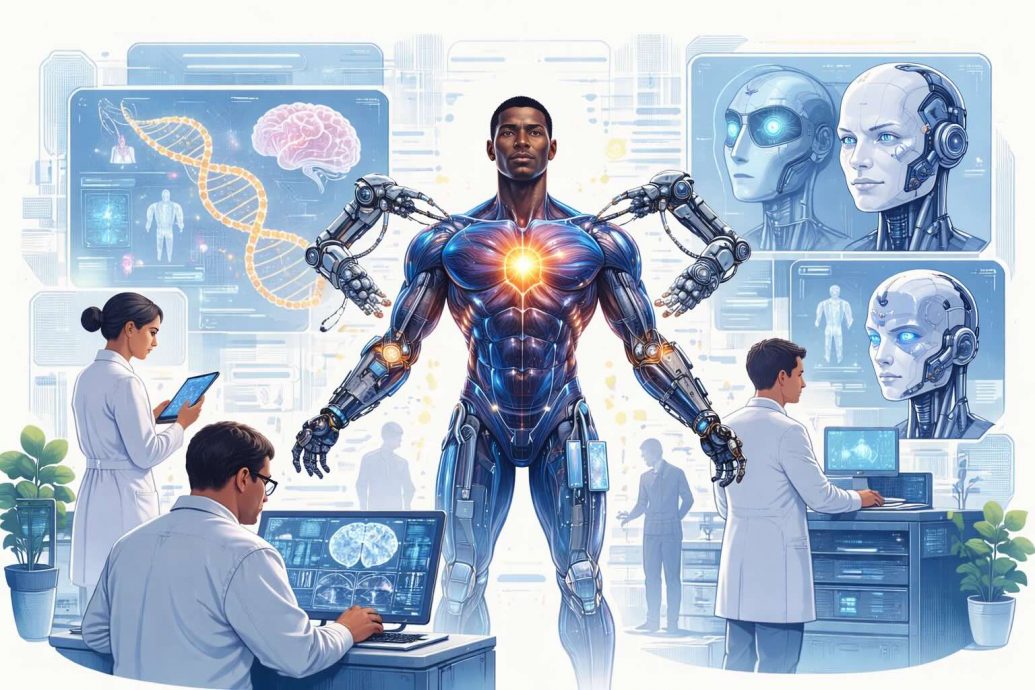
The third episode of The Age of A.I. takes viewers into a world where human beings are literally being rebuilt with the help of artificial intelligence. Hosted by Robert Downey Jr., this installment moves beyond healing into the territory of human enhancement, asking what happens when technology makes us stronger than we were before. The episode premiered on YouTube in December 2019 as part of the eight-part documentary series exploring AI across healthcare, robotics, and beyond. The global prosthetics and orthotics market was valued at approximately $9.21 billion in 2025 and is projected to reach $14.51 billion by 2035, reflecting a rapidly expanding field of human augmentation. From revolutionary bionic limbs that connect directly to the nervous system to AI-powered firefighter helmets that see through smoke, this episode showcases technologies that once existed only in comic books. The central message is clear: we now have the tools to build better versions of ourselves, and the only remaining question is how far we should go.
Featured Snippets
What is Using A.I. to Build a Better Human about?
Using A.I. to Build a Better Human is the third episode of The Age of A.I. documentary, exploring how AI-powered bionic limbs, data-driven motorsport strategy, and augmented reality firefighting tools are transforming human capabilities beyond natural biological limits.
What is the Ewing Amputation and how does it use AI?
The Ewing Amputation is a surgical procedure developed at MIT that preserves natural muscle relationships in amputated limbs, enabling bidirectional neural communication with AI-powered bionic prostheses so that users can feel and control synthetic limbs as part of their own body.
How does the C-THRU device help firefighters?
C-THRU by Qwake Technologies is a helmet-mounted augmented reality system that combines thermal imaging with AI-powered edge detection, allowing firefighters to see through dense smoke, locate victims faster, and navigate burning buildings with both hands free.
Key Takeaways
- The episode profiles Jim Ewing, the first person to undergo the AMI bionic limb surgery at MIT, demonstrating how AI enables prosthetic limbs that feel like part of the body.
- Hugh Herr’s NeuroEmbodied Design framework represents a paradigm shift from tool-like prosthetics to fully integrated synthetic limbs controlled by the brain’s nervous system.
- NASCAR teams use AI and machine learning to process 750,000 data points per minute, optimizing race strategy, pit timing, and vehicle performance in real time.
- Qwake Technologies’ C-THRU helmet cuts firefighter search times in half by combining thermal imaging, edge detection, and AI-powered navigation into a hands-free augmented reality system.
Table of contents
- Introduction
- Featured Snippets
- Key Takeaways
- Definition
- What This Episode Reveals About Human Augmentation
- Jim Ewing’s Rock Climbing Accident and the Decision to Amputate
- How the AMI Bionic Limb Connects to the Nervous System
- Hugh Herr’s Vision for Ending Disability Through Bionics
- The Moment Jim Ewing Returned to Rock Climbing
- How NASCAR Uses AI and Machine Learning to Optimize Performance
- C-THRU: The AI Helmet That Lets Firefighters See Through Smoke
- The Science of Proprioception and Why It Matters for Bionics
- Where Human Enhancement Crosses Ethical Lines
- Data-Driven Performance: AI in Sports Beyond NASCAR
- How AI-Powered Prosthetics Compare Across Leading Platforms
- Augmented Reality in Emergency Response Beyond Firefighting
- Neural Interfaces and the Future of Brain-Machine Communication
- What the Prosthetics Industry Needs to Scale These Technologies
- How This Episode Connects to the Broader Age of A.I. Series
- The Emotional Impact of Becoming More Than Human
- What the Future Holds for AI-Enhanced Human Bodies
- Key Insights
- Comparison Table: Human Augmentation Technologies Featured in Episode 3
- Real-World Examples
- Case Studies
- Frequently Asked Questions
Definition
Building a better human through A.I. refers to the use of artificial intelligence, bionics, machine learning, and augmented reality to restore, enhance, or extend human physical and cognitive capabilities beyond their natural biological limits through integration of synthetic and digital systems with the human body.
What This Episode Reveals About Human Augmentation
The Age of A.I. Episode 3 opens with Robert Downey Jr. drawing a direct parallel between AI-powered human enhancement and the superhero origin stories that have captivated audiences for decades. The comparison is deliberate: the technologies featured in this episode genuinely grant abilities that would have seemed impossible just a generation ago. Where Episode 2 focused on healing existing conditions, this installment pushes further into the realm of making people better, faster, and stronger than their original biology allowed. The documentary follows three distinct storylines that converge on a single theme: AI is redefining the boundary between human limitation and human potential. Each narrative thread, from bionic limbs to motorsport analytics to firefighter safety, demonstrates that AI augmentation is not science fiction but an operational reality already changing lives. The episode balances technical depth with emotional storytelling, making complex engineering accessible to a mainstream audience.
The documentary positions this episode as a natural extension of themes explored in the previous episode on AI healing, shifting from restoring what was lost to building something entirely new. This progression mirrors the broader trajectory of the bionics field itself, which has evolved from simple mechanical replacements to sophisticated AI-integrated systems. Viewers see firsthand how researchers at MIT, engineers at NASCAR teams, and innovators at Qwake Technologies are each applying AI to amplify human capability in radically different domains. The common thread connecting these stories is the principle that AI should serve as an extension of human intent, not a replacement for human agency. This philosophical stance distinguishes the episode from dystopian narratives about technology replacing humanity. Instead, it presents a hopeful vision where technology and biology merge to create possibilities that neither could achieve alone.
Jim Ewing’s Rock Climbing Accident and the Decision to Amputate
Jim Ewing was an accomplished rock climber from Maine whose life changed permanently on December 26, 2014, during a climbing trip in the Cayman Islands. While ascending a cliff called Dixon’s Wall with his daughter and friends, Ewing suffered a catastrophic fall that severely damaged his left ankle. The injury left him facing years of painful reconstructive surgeries with no guarantee of restoring full function to his leg. Traditional medical options offered limited outcomes, and Ewing confronted the possibility that his active lifestyle might be permanently compromised. The turning point came when Ewing contacted Hugh Herr at MIT, a bionic limb researcher who also happened to be a fellow climber and a double amputee himself. Herr understood Ewing’s situation from both a scientific and deeply personal perspective, creating a unique foundation for their collaboration.
Herr presented Ewing with an option that no patient had ever been offered before: a fundamentally new kind of amputation surgery designed at MIT’s Center for Extreme Bionics. The procedure, called the agonist-antagonist myoneural interface or AMI, would preserve the natural muscle relationships within Ewing’s residual limb during amputation. This preservation would enable bidirectional neural communication between Ewing’s brain and a future bionic prosthesis. In traditional amputations, the dynamic connections between opposing muscle pairs are severed, leaving the brain disconnected from the missing limb. The AMI approach maintains these connections, allowing the central nervous system to continue sending and receiving movement signals. Ewing volunteered to become the first human patient to undergo this revolutionary procedure, a decision that required extraordinary trust in experimental science.
The documentary captures the weight of Ewing’s choice with remarkable intimacy, showing the conversations with his family and medical team that preceded the surgery. Choosing elective amputation to gain access to superior bionic technology represents one of the most striking decisions featured in the entire Age of A.I. series. Ewing’s background as a climber meant he understood physical risk, but this was a gamble of a fundamentally different kind. The surgery took place in July 2016 at Brigham and Women’s Hospitalunder the clinical direction of Dr. Matthew Carty, in collaboration with Herr’s team at MIT. The procedure was subsequently named the Ewing Amputation in his honor, cementing his role as a pioneer in the field of human-machine integration. Ewing did not merely accept a new technology; he helped create it by volunteering his body as the proving ground for a surgical paradigm that could eventually benefit millions.
How the AMI Bionic Limb Connects to the Nervous System
The agonist-antagonist myoneural interface represents a fundamental rethinking of how amputation surgery should be performed and how prosthetic limbs should communicate with the human body. In a healthy leg, pairs of opposing muscles work together: when one contracts, the other stretches, and this dynamic relationship sends proprioceptive signals to the brain. These signals tell you where your foot is in space without needing to look at it, enabling the unconscious adjustments that make walking feel natural. Traditional amputation severs these muscle pairs, cutting the brain off from this proprioceptive feedback and leaving patients feeling disconnected from their prosthetic devices. The AMI preserves these opposing muscle relationships within the amputated residuum, maintaining the neurological connection that makes movement feel embodied rather than mechanical. This approach transforms amputation from a destructive endpoint into a constructive interface between biology and technology.
During Ewing’s surgery, two AMI constructs were built within his residual limb to control two planes of motion in his future bionic ankle. The first linked the tibialis anterior to the lateral gastrocnemius for ankle flexion and extension control. The second connected the peroneus longus to the tibialis posterior for inversion and eversion movements. Synovial canals harvested from the discarded ankle joint were used as pulleys, allowing low-friction movement between the connected muscle pairs. Surface electrodes placed over each AMI pair translate voluntary muscle contractions into control signals for the external bionic prosthesis. The system also works in reverse, with the prosthesis sending movement feedback back through the AMI muscles to the brain, creating a closed-loop communication channel.
Connecting this surgical innovation to the broader field of AI-powered prosthetics, the results exceeded even the research team’s expectations. When Ewing first wore the bionic ankle designed by Herr’s lab, natural movement patterns emerged through the synthetic limb as involuntary, reflexive behavior. He was not consciously trying to control the prosthesis; his nervous system recognized the device and began using it as if it belonged to his body. Herr described this phenomenon as neural embodiment, a state where the boundary between the biological body and the synthetic extension dissolves. Ewing himself captured the experience powerfully when he told the research team that the robot became part of him. This moment of neural embodiment represents perhaps the most significant milestone in the history of prosthetic limb development.
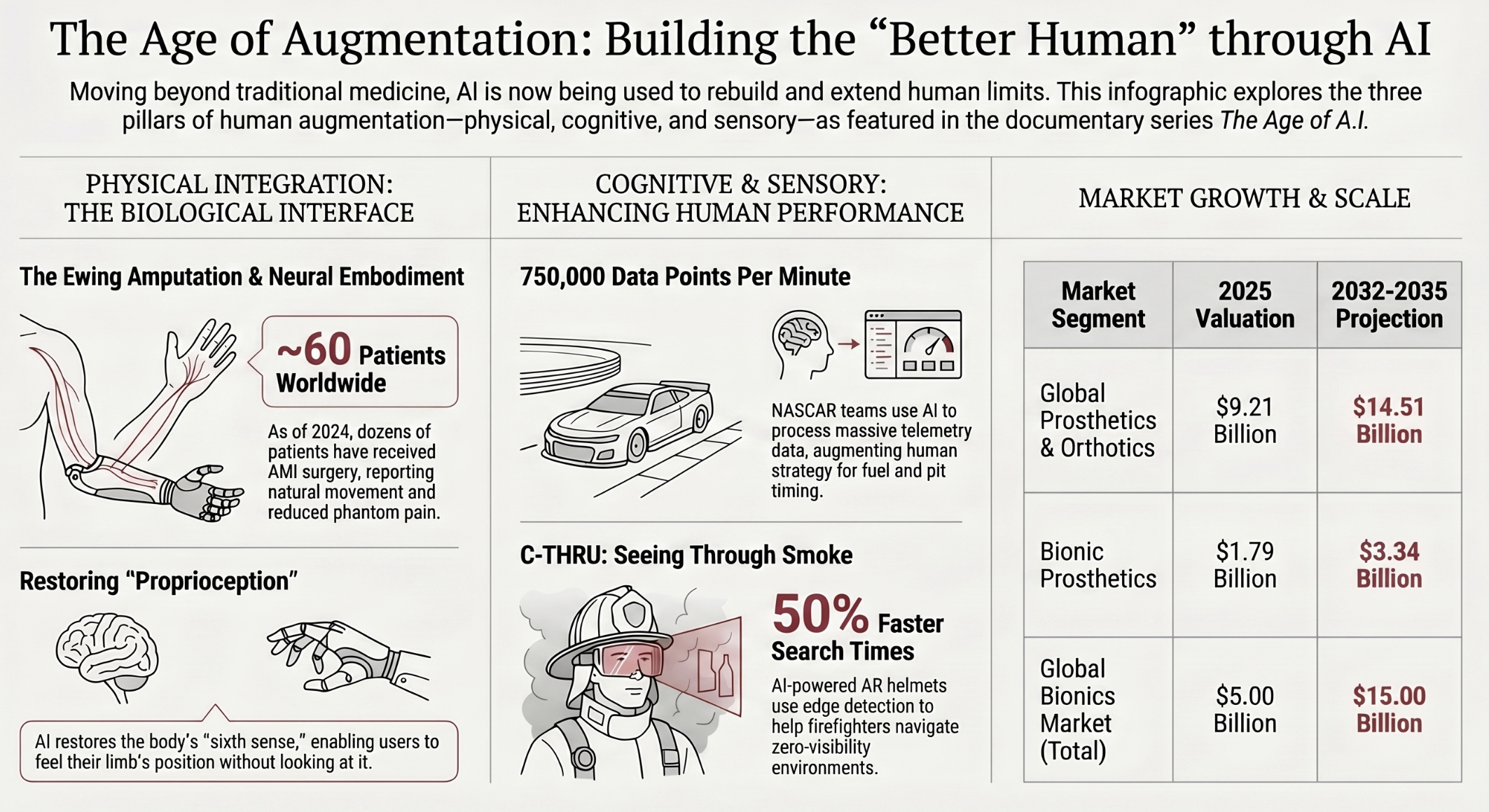
A 2024 study published in Nature Medicine confirmed these early findings at scale, showing that AMI patients achieved natural gait patterns, reduced pain, and less muscle atrophy compared to traditional amputees. Approximately 60 patients worldwide have now received the AMI procedure, with surgeries performed at Brigham and Women’s Hospital and Walter Reed National Military Medical Center. The study demonstrated that even when using traditional prostheses rather than advanced bionics, AMI recipients experienced improved outcomes. This finding suggests that the surgical innovation itself, independent of the prosthetic hardware, provides meaningful benefits to patients. The combination of AMI surgery with AI-controlled bionic limbs represents the full realization of what the research team calls NeuroEmbodied Design. The documentary captures this science at its earliest and most dramatic stage, documenting Ewing’s journey from injury to augmentation.
Hugh Herr’s Vision for Ending Disability Through Bionics
Transitioning from the surgical details to the broader vision driving this work, Hugh Herr brings a uniquely personal perspective to the quest for building better humans. As a teenager, Herr was a rising rock-climbing prodigy before a severe frostbite injury during a mountaineering expedition resulted in the amputation of both his legs below the knee. Rather than accepting disability as a permanent limitation, Herr channeled his experience into a career devoted to eliminating disability through technology. He now leads the Biomechatronics research group at MIT’s Media Lab and co-directs the K. Lisa Yang Center for Bionics. Herr’s central thesis is radical in its ambition: he believes that within our lifetimes, technology will advance to the point where bionic limbs will be equal to, and eventually superior to, intact biological limbs. The documentary presents this vision not as speculative futurism but as an engineering roadmap grounded in measurable scientific progress.
Herr’s approach, which he calls NeuroEmbodied Design, fundamentally reframes the relationship between humans and technology. Traditional prosthetics function as tools, external devices that the user must consciously operate and that never feel like part of the body. NeuroEmbodied Design instead treats the biological body itself as a designable component, surgically modifying flesh and bone to create seamless interfaces with synthetic systems. This philosophy represents a departure from centuries of prosthetic design that treated the human body as a fixed constraint to work around. The implications extend well beyond limb replacement to encompass any domain where biological and synthetic systems might merge. Brain-computer interfaces, sensory augmentation devices, and exoskeletons all fall within the scope of this design paradigm, as explored across discussions of robotics and its connection to AI.
The documentary also shows the deeply human side of Herr’s mission, capturing moments of connection between the researcher and the patients whose lives his work transforms. His shared experience with Ewing as a fellow climber and amputee creates a bond that transcends the typical doctor-patient relationship. Herr climbs alongside Ewing in the episode, demonstrating through his own body what advanced prosthetics can achieve when paired with determination and skill. This personal dimension gives the documentary an emotional authenticity that purely technical presentations cannot replicate. Herr’s story illustrates a powerful principle: the researchers best equipped to build technology for disabled people are often those who have lived the experience themselves. His presence in the episode transforms the narrative from a showcase of impressive engineering into a deeply human story about resilience, purpose, and the refusal to accept limits.
The Moment Jim Ewing Returned to Rock Climbing
Building on the emotional arc of the previous sections, the documentary reaches one of its most powerful moments when Jim Ewing returns to the Cayman Islands to climb again. The same cliffs that nearly ended his active life become the setting for a triumphant demonstration of what AI-powered bionics can achieve. Ewing ascends the rock face using his bionic limb, his nervous system communicating seamlessly with the prosthetic ankle beneath him. The scene is filmed with deliberate attention to the emotional weight of the moment, intercut with footage from his original accident and recovery. Watching Ewing climb again is not merely impressive; it represents a tangible refutation of the idea that amputation must define or limit a person’s physical capabilities. The technology that made this moment possible involved years of surgical innovation, engineering development, and AI-driven control system design.
This scene also serves a broader narrative purpose by demonstrating the practical real-world impact of laboratory research in a way that statistics and clinical data cannot capture. Ewing’s return to climbing validates every design decision, every surgical technique, and every line of code that went into creating the AMI system. For viewers who may have been skeptical about the practical value of bionic limb research, seeing a real person perform a demanding physical activity with a synthetic leg changes the conversation entirely. The documentary connects this individual achievement to the larger promise of AI-powered robotics advancements that are reshaping rehabilitation and human augmentation worldwide. Ewing’s climb demonstrates that the technology works not just in controlled laboratory settings but in the unpredictable, physically demanding conditions of real outdoor activity. The emotional resonance of this scene has made it one of the most shared and discussed moments from the entire Age of A.I. series.
How NASCAR Uses AI and Machine Learning to Optimize Performance
Shifting from the intensely personal story of bionic limbs to the high-speed world of motorsport, the documentary explores how AI transforms competitive racing strategy. NASCAR teams operate in an environment where fractions of a second separate winners from losers, and the volume of available data far exceeds human analytical capacity. Hendrick Motorsports processes approximately 750,000 data points per minute during races, covering everything from tire pressure and engine temperature to aerodynamic load and fuel consumption. Machine learning models analyze this telemetry data in real time, identifying patterns that human engineers would take hours or days to detect manually. The connection to building a better human lies in how AI amplifies human decision-making, turning engineers and strategists into superhuman analysts who can process information at machine speed. NASCAR provides a compelling case study in augmented cognition, where AI does not replace human judgment but dramatically extends its reach and precision.
Pit strategy represents one of the most critical applications of AI in racing, where timing decisions made in seconds can determine the outcome of an entire race. AI models predict tire degradation rates based on track conditions, temperature, and driving style, recommending optimal pit windows that maximize track position. Fuel consumption modeling allows teams to calculate the precise amount of fuel needed to reach the finish without carrying unnecessary weight. In September 2022, General Motors acquired Pit Rho, an AI race analytics company that uses deep learning models to provide real-time competitive intelligence during races. This acquisition signaled the mainstream adoption of AI-driven race strategy, moving it from experimental advantage to competitive necessity. The documentary captures the intensity of race-day AI analytics, showing engineers monitoring dashboards of predictions while communicating strategy to drivers via radio.
Beyond pit strategy, AI is reshaping every aspect of NASCAR vehicle development and testing. Engine testing at NASCAR teams involves pushing components to their absolute limits, with AI-powered condition monitoring systems detecting signs of failure before catastrophic events occur. Machine learning models trained on historical test data can predict engine behavior with remarkable accuracy, reducing the time and cost of development cycles. Computer vision systems analyze photographs of cars during races, automatically detecting crash damage in seconds rather than the minutes previously required for manual inspection. These applications connect to broader trends in AI and autonomous driving technology where real-time data processing and predictive modeling are equally critical. The NASCAR segment demonstrates that building a better human is not limited to physical augmentation; it extends to cognitive enhancement through AI-powered decision support systems.
C-THRU: The AI Helmet That Lets Firefighters See Through Smoke
Moving from the racetrack to burning buildings, the documentary introduces one of its most compelling technologies: the C-THRU augmented reality helmet developed by Qwake Technologies. Firefighters entering smoke-filled structures traditionally rely on limited thermal imaging cameras that are handheld, heavy, and require them to look away from their immediate surroundings to interpret. C-THRU replaces this paradigm with a helmet-mounted system that projects thermal imaging directly onto a heads-up display visible through the firefighter’s breathing apparatus. The system uses proprietary edge detection algorithms powered by AI to outline walls, doors, furniture, and most critically, people trapped in smoke-filled rooms. By cutting primary search times roughly in half, the C-THRU platform represents a genuine life-saving advancement for both firefighters and the civilians they rescue. The technology earned Fast Company’s 2025 World Changing Ideas Award, validating its real-world impact.
Sam Cossman, CEO of Qwake Technologies, developed the foundational technology while leading expeditions into active volcanoes, where visibility conditions mirrored those inside burning buildings. The company, founded in 2014 and headquartered in Austin, Texas, has since iterated through more than ten prototype versions of the C-THRU system. The Department of Homeland Security awarded Qwake $8.4 million in total funding to produce 400 units for standardized testing across 80 fire departments in all FEMA regions. The system includes four vision modes, a mayday function that alerts nearby firefighters when a colleague becomes lost, and real-time video streaming to incident commanders outside the building. This combination of thermal imaging, AI-powered edge detection, and networked communication transforms firefighting from an individual effort into a coordinated, data-enhanced operation. The documentary showcases early prototypes of this technology, foreshadowing the wider deployment that has since followed.
The C-THRU system also represents a broader principle about how AI can build better humans in professions where split-second decisions determine life or death. Firefighters experience cognitive decline under extreme stress, heat, and physical exertion, making it harder to process information and make sound decisions. By delivering visual information through intuitive augmented reality cues rather than requiring conscious interpretation of raw sensor data, C-THRU reduces cognitive load at the exact moments when it matters most. This approach aligns with the principles discussed in coverage of working with AI for human-machine collaboration where the technology adapts to human needs rather than demanding that humans adapt to the technology. The firefighting segment demonstrates that building a better human sometimes means building better tools that amplify existing human capabilities at their point of greatest vulnerability. Qwake’s 27 original patents protect a technology platform that could eventually extend beyond firefighting to military, mining, and industrial rescue applications.
The Science of Proprioception and Why It Matters for Bionics
Returning to the bionic limb narrative, understanding why the AMI procedure represents such a breakthrough requires grasping the concept of proprioception. Proprioception is the body’s sixth sense, the unconscious awareness of where your limbs are positioned in space without needing to look at them. When you reach for a glass of water in the dark, proprioception guides your hand to the correct position based on sensory feedback from muscles, tendons, and joints. This sense is mediated by biological receptors called muscle spindles and Golgi tendon organs that detect stretching and force within opposing muscle pairs. Traditional amputation destroys these receptors and the muscle relationships they monitor, robbing patients of the proprioceptive feedback essential for natural movement. The loss of proprioception is why conventional prosthetic users must constantly watch their artificial limbs to know where they are positioned, making movement feel laborious and unnatural.
The AMI procedure addresses this gap by preserving the agonist-antagonist muscle dynamics that drive proprioceptive sensing within the residual limb. When Ewing thinks about moving his phantom ankle, his AMI muscles contract and stretch in patterns that match what would happen in an intact biological leg. These movements are detected by sensors and translated into control signals for the bionic prosthesis, which moves in response to the brain’s natural motor commands. The prosthesis simultaneously sends movement feedback back through the AMI muscles, completing a sensory loop that recreates the feeling of having a real ankle. This bidirectional communication is what produces the neural embodiment phenomenon that makes users feel the prosthesis has become part of their body. The documentary captures this scientific achievement in accessible terms, using visual demonstrations rather than jargon to convey the significance of restored proprioception.
The implications of restoring proprioception extend far beyond improved walking mechanics to encompass fundamental questions about identity and selfhood. Patients with traditional amputations frequently report feeling that their prosthetic limb is a foreign object attached to their body, never truly belonging to them. AMI patients consistently describe the opposite experience: the bionic limb feels integrated, natural, and authentically theirs. This psychological shift has measurable clinical benefits, including reduced phantom limb pain, better mental health outcomes, and greater willingness to use the prosthesis consistently. The intersection of neuroscience, surgery, and AI engineering that produces this outcome represents exactly the kind of cross-disciplinary innovation discussed in analyses of AI in robotics. Proprioception is not merely a technical feature of the AMI system; it is the foundation that transforms a prosthetic device from a tool into a genuine extension of self.
Where Human Enhancement Crosses Ethical Lines
Moving from the technical achievements to their broader implications, the documentary raises difficult ethical questions about the limits of human augmentation. If bionic limbs can eventually exceed the performance of biological limbs, should healthy individuals be permitted to choose amputation for enhancement purposes? The question sounds extreme, but the documentary’s presentation of Ewing’s elective amputation makes it less hypothetical than it initially appears. Competitive sports already grapple with this tension: Oscar Pistorius’s carbon fiber running blades sparked debates about whether prosthetic technology could confer unfair advantages. The ethical boundary between restoration and enhancement is not a bright line but a spectrum, and the technologies featured in this episode push us further along that spectrum than ever before. The documentary invites viewers to consider where they would personally draw the line between acceptable augmentation and problematic enhancement.
Equity and access represent another ethical dimension that the episode touches on implicitly through its focus on cutting-edge research institutions and well-resourced technology companies. The AMI procedure and the bionic limbs it enables require access to world-class surgical teams, advanced prosthetic hardware, and ongoing technical support that most amputees worldwide cannot afford. If human augmentation becomes the domain of the wealthy while others are left with basic mechanical prosthetics, the result could be a new form of physical inequality. Insurance coverage for bionic limbs remains limited, with Herr’s team actively advocating for reimbursement policies that would make these technologies more widely accessible. The broader conversation about AI ethics and laws must address not only whether we can build better humans but who gets access to these enhancements. The documentary raises this concern without resolving it, leaving the question open for public discourse.
Military applications add yet another layer of ethical complexity to the human augmentation conversation presented in the episode. The AMI procedure has been performed at Walter Reed National Military Medical Center, explicitly connecting bionic limb technology to the rehabilitation of wounded service members. Defense agencies worldwide are investing heavily in exoskeletons, neural interfaces, and cognitive enhancement technologies that blur the line between medical rehabilitation and combat enhancement. The documentary does not explore military applications in depth, but the connection is unmistakable for informed viewers. Questions about the ethics of creating enhanced soldiers who can run faster, lift more, and process information more quickly than unaugmented humans are not theoretical. The same technology that helps Jim Ewing climb again could, in a different context, be used to create capabilities that raise profound questions about the future of armed conflict and human rights.
Data-Driven Performance: AI in Sports Beyond NASCAR
Expanding the motorsport narrative from the documentary to the broader sports landscape, AI-driven performance optimization has become a competitive necessity across virtually every professional sport. Formula 1 teams employ hundreds of data scientists to analyze telemetry from cars equipped with over 300 sensors each, generating terabytes of data per race weekend. Ferrari’s partnership with Amazon Web Services integrates machine learning and AI capabilities into their race strategy, vehicle development, and driver training programs. The principles are identical to those shown in the NASCAR segments of the documentary: collect massive volumes of data, apply machine learning models to find patterns, and translate insights into competitive advantage. The evolution of AI in sports mirrors the broader theme of the episode, showing how technology augments human performance in domains where raw talent alone is no longer sufficient. Every major sports league now employs some form of AI analytics, from player performance tracking to injury prediction and game strategy optimization.
The sports analytics market reflects the scale of this transformation, with teams investing millions annually in AI infrastructure and data science talent. General Motors’ acquisition of Pit Rho for its NASCAR program represents just one example of major corporations treating AI analytics as a strategic competitive asset. The documentary captures the early stages of this trend, showing how NASCAR teams were among the first in motorsport to embrace AI-driven decision-making. Since the episode aired, the integration of AI in sports has accelerated dramatically, with real-time predictive models now standard equipment for competitive teams worldwide. This acceleration validates the documentary’s thesis that AI augmentation of human capabilities is not a passing trend but a permanent transformation. The lessons from sports analytics apply directly to other high-stakes decision-making environments, from emergency medicine to financial trading to military operations.
How AI-Powered Prosthetics Compare Across Leading Platforms
Connecting the documentary’s bionic limb coverage to the broader prosthetics landscape, several companies and research institutions are pursuing different approaches to AI-powered human augmentation. Ottobock, a German company reporting annual revenues of approximately $1.1 billion, manufactures some of the most widely used microprocessor-controlled prosthetic knees and feet. Their POWER KNEE, launched in September 2022, uses sophisticated algorithms to learn and adapt to the wearer’s movement patterns in real time. Open Bionics, a UK-based company, focuses on making bionic hands affordable through 3D printing technology, targeting children and lower-income populations. The diversity of approaches across these companies reflects a market that is maturing rapidly, with the bionic prosthetics market valued at approximately $1.79 billion in 2025 and projected to reach $3.34 billion by 2032. Each company addresses different segments of the amputee population, from high-performance athletes to everyday users seeking basic mobility restoration.
MIT’s AMI approach, featured in the documentary, differentiates itself from commercial platforms by focusing on the surgical interface rather than the prosthetic hardware alone. While companies like Ottobock and Ossur build increasingly sophisticated prosthetic devices, the AMI research demonstrates that the quality of the biological-synthetic connection matters as much as the sophistication of the device itself. A patient with an AMI amputation achieves better outcomes even with a standard prosthesis than a patient with a traditional amputation wearing the most advanced hardware available. This finding has profound implications for the direction of future research and investment in the prosthetics industry. The combination of AMI surgery with advanced bionic limbs represents the gold standard for functional restoration, as discussed in analyses of robotic surgery powered by AI. The documentary positions MIT’s work as the vanguard of a field that is rapidly converging on the goal of full neural integration between humans and machines.
Cost remains the most significant barrier to widespread adoption of AI-powered prosthetics, with advanced bionic limbs costing anywhere from $20,000 to over $100,000. Insurance coverage varies dramatically by country and policy, with many plans covering basic prosthetics but excluding the advanced bionic devices that offer the greatest functional benefits. The Amputee Coalition estimates that over 185,000 amputations occur in the United States annually, and by 2050 an estimated 3.6 million Americans will be living with limb loss. Meeting this growing demand with AI-powered prosthetics requires both continued technological innovation to reduce costs and policy advocacy to expand insurance reimbursement. The gap between what technology can achieve and what patients can access represents one of the most pressing challenges in the field of human augmentation. The documentary hints at this gap without fully exploring it, leaving room for the policy conversations that must accompany technological progress.
Augmented Reality in Emergency Response Beyond Firefighting
Building on the C-THRU firefighting segment, augmented reality technology is finding applications across the full spectrum of emergency response and public safety. Military operations in low-visibility environments face challenges similar to those encountered by firefighters, and several defense contractors are developing helmet-mounted AR systems for combat personnel. Search and rescue teams operating after earthquakes, avalanches, and building collapses could benefit from thermal imaging and AI-powered victim detection systems similar to C-THRU. Mining operations, where underground visibility can be severely limited by dust and gas, represent another natural application for this technology platform. The modular design of C-THRU, which Qwake describes as a platform rather than a single product, enables adaptation to multiple use cases beyond the firefighting environment shown in the documentary. This extensibility transforms a firefighting tool into a broader human augmentation technology with applications across any profession where visibility and situational awareness save lives.
The integration of AI into emergency response also raises important questions about training, certification, and operational protocols that must evolve alongside the technology. Firefighters who have used C-THRU in testing environments report that the technology changes fundamental aspects of how they navigate, communicate, and make decisions inside burning buildings. Training programs must be redesigned to incorporate these new capabilities, and operational standards must account for the possibility that some team members have AR equipment while others do not. The Department of Homeland Security’s decision to fund large-scale standardized testing across 80 fire departments reflects an understanding that technology deployment requires systematic evaluation. Resources discussing how AI can improve disaster response highlight the broader transformation underway in how emergency services leverage data and AI to protect communities. The documentary captures this transformation at its inception, documenting a technology that has since moved from prototype to operational deployment in fire departments across the United States.
Neural Interfaces and the Future of Brain-Machine Communication
Looking beyond the technologies shown in the episode, the AMI procedure opens the door to a broader class of neural interface technologies that could redefine human-machine interaction. Brain-computer interfaces developed by companies like Neuralink, Synchron, and BrainGate aim to create direct communication pathways between the brain and external devices. These technologies could eventually enable paralyzed individuals to control computers, robotic arms, or even their own reanimated limbs through thought alone. The AMI approach differs by operating at the peripheral nervous system level rather than the brain, using existing muscle-nerve pathways instead of implanted brain electrodes. Both approaches share a common goal: creating seamless, intuitive, bidirectional communication between the human nervous system and synthetic technology. The documentary positions the AMI work as one step along a trajectory that will eventually lead to far more intimate integration between human biology and artificial intelligence.
Herr’s research team at MIT is already exploring next-generation interfaces that go beyond the surface electrodes currently used with AMI constructs. Small magnets implanted into AMI muscles can precisely track muscle contractions with greater accuracy than surface electrodes, enabling finer motor control of prosthetic joints. This magnetomicrometry technique, developed in Herr’s lab, represents a step toward fully implantable neural interfaces that operate without any external sensors touching the skin. The progression from surface electrodes to implanted magnets to potential direct neural connections traces a clear path toward the kind of seamless human-machine integration that science fiction has long imagined. These advances connect to broader developments in the rise of intelligent machines that are expanding the boundaries of what technology can accomplish in partnership with human biology. The documentary provides viewers with a foundation for understanding these future developments by grounding them in the tangible, present-day achievements of the AMI system.
The convergence of neural interfaces, AI, and advanced materials science points toward a future where the distinction between biological and synthetic body parts becomes increasingly blurred. Sensory feedback systems are being developed that could allow prosthetic users to feel temperature, texture, and pressure through their artificial limbs. Powered exoskeletons controlled by neural interfaces could restore walking ability to people with spinal cord injuries, a population that current prosthetic technology cannot serve. The documentary’s focus on the AMI procedure represents the leading edge of this broader revolution in human-machine integration. Within the next decade, the line between a person with a disability and a person with an augmented capability may become impossible to draw, fundamentally reshaping how society defines ability and limitation. This transformation is the ultimate promise of using AI to build a better human, and the documentary captures the moment when that promise began to materialize.
What the Prosthetics Industry Needs to Scale These Technologies
Connecting the documentary’s research showcases to the practical challenge of bringing these technologies to millions of people, the prosthetics industry faces several structural barriers that must be addressed. Manufacturing costs for advanced bionic limbs remain high, driven by the complexity of the electromechanical systems, the precision of the AI control algorithms, and the need for individualized fitting. Three-dimensional printing technology is beginning to reduce production costs for certain prosthetic components, with companies like Open Bionics demonstrating that functional bionic hands can be manufactured for a fraction of traditional costs. Scaling production while maintaining quality and safety standards requires investment in manufacturing infrastructure that many prosthetics companies currently lack. The global prosthetics and orthotics market is growing at a compound annual growth rate of 4.65 percent, but this growth rate may be insufficient to meet the accelerating demand driven by diabetes-related amputations and aging populations worldwide. The documentary showcases what is possible at the frontier of prosthetic technology, but the gap between frontier innovation and widespread availability remains substantial.
Regulatory pathways for AI-powered prosthetics add complexity and cost to the commercialization process that companies must navigate. The FDA classifies bionic prosthetic limbs as medical devices, requiring extensive clinical testing, safety documentation, and ongoing post-market surveillance. International regulatory harmonization remains incomplete, meaning that a prosthetic device approved in the United States may require entirely separate approval processes for markets in Europe, Japan, or Australia. These regulatory requirements protect patient safety but also slow the pace at which new technologies reach the people who need them. Discussions about FDA approval and regulation of AI healthcare tools highlight the tension between innovation speed and safety assurance that characterizes the broader medical device industry. Streamlining regulatory pathways without compromising safety standards is essential for accelerating the transition from laboratory breakthrough to clinical availability.
Workforce development represents another critical factor, as the deployment of AI-powered prosthetics requires clinicians trained in both traditional rehabilitation and advanced bionic technology. Prosthetists, physical therapists, and surgeons must develop new competencies in neural interface technology, AI-driven control systems, and patient training for bionic devices. Medical education programs are beginning to incorporate these topics, but the pace of curricular reform lags behind the speed of technological advancement. The approximately 60 patients who have received the AMI procedure represent a tiny fraction of the millions of amputees who could potentially benefit from this technology. Scaling from dozens of patients to thousands requires not only more surgical capacity but also a trained ecosystem of rehabilitation professionals who understand how to optimize outcomes. Building a better human through AI is not only a technological challenge but also an educational, economic, and institutional one that requires coordinated action across multiple sectors.
How This Episode Connects to the Broader Age of A.I. Series
Stepping back from the individual technologies to consider the episode’s place within the larger documentary, Using A.I. to Build a Better Human serves as the series’ most ambitious exploration of human-machine integration. Episode 1 asked how far is too far in the pursuit of AI capabilities, establishing the philosophical framework for the series. Episode 2 explored healing through AI, demonstrating how technology can restore lost function and detect disease. Episode 3 pushes beyond restoration into enhancement, asking not just whether AI can fix what is broken but whether it can build something better than what nature provided. This escalating progression from philosophical inquiry to healing to enhancement mirrors the actual trajectory of AI research over the past two decades. Later episodes continue this arc by exploring AI in art, space exploration, employment, and existential risk, but Episode 3 represents the series’ most direct engagement with the question of what it means to be human.
The documentary series as a whole can be understood as a comprehensive exploration of the boundary between human and machine. Episode 4 examines love, art, and stories decoded through AI, while Episode 5 explores the space architects of Mars. Each episode adds new dimensions to the central question that Episode 3 poses most directly: if technology can make us better than we are, should we embrace that possibility or resist it? Robert Downey Jr.’s role as host provides a unifying thread, with his association with Tony Stark and Iron Man adding resonance to themes of technological self-improvement. The documentary does not prescribe answers but trusts viewers to engage with these questions on their own terms, making it valuable not just as entertainment but as a catalyst for public dialogue. Episode 3’s focus on physical augmentation grounds the abstract ethical questions in tangible, emotionally compelling human experiences that make the stakes feel immediate and personal.
The Emotional Impact of Becoming More Than Human
Connecting the series-level perspective back to the individual stories, the emotional dimension of human augmentation deserves attention alongside the technical and ethical dimensions. Jim Ewing’s description of the moment his nervous system recognized the bionic limb as part of his body reveals something profound about the psychology of embodiment. He reported that when researchers turned off the prosthesis to reset the system, the experience was emotionally jarring, like losing his foot all over again. This reaction demonstrates that neural embodiment is not merely a neurological phenomenon but a deeply emotional one, reshaping the patient’s sense of identity and wholeness. The technology does not just restore function; it restores a sense of self that amputation had fractured, making the impact simultaneously physical, psychological, and existential. The documentary captures these intimate moments with sensitivity, allowing viewers to understand the human significance behind the engineering achievement.
For firefighters using C-THRU, the emotional impact is different but equally significant: the technology reduces the fear and uncertainty that accompany every entry into a burning building. Mark Dejnozka of the Saratoga Springs Fire Department described situations where he became disoriented and lost inside a fire, unable to locate doors or walls through dense smoke. C-THRU addresses this specific terror by providing visual clarity in conditions where human vision is completely useless. The confidence that comes from being able to see in an environment designed to blind represents a psychological augmentation that complements the technological one. Firefighters consistently report that the technology changes not just their capabilities but their relationship with the inherent dangers of their profession. This psychological dimension of human augmentation often receives less attention than the technical specifications, but it may be equally important for understanding the technology’s true value.
The NASCAR segment adds yet another emotional texture, showing how AI augmentation affects the psychology of competition and team dynamics. Engineers who rely on AI analytics describe a new kind of confidence in their strategic decisions, backed by data processing capabilities that exceed individual human analysis. Drivers benefit from strategies optimized by machine learning models that account for variables no human mind could simultaneously track. This collaborative dynamic between human intuition and AI analysis creates a team relationship that is fundamentally different from traditional racing partnerships. The emotional experiences described across all three segments of the episode converge on a single insight about the nature of human augmentation. Building a better human is not ultimately about making people faster, stronger, or smarter; it is about giving them the confidence, safety, and capability to live more fully in whatever domain matters most to them.
What the Future Holds for AI-Enhanced Human Bodies
Drawing together the documentary’s themes into a forward-looking perspective, the future of AI-enhanced human bodies is being shaped by converging advances in multiple fields simultaneously. Material science breakthroughs are producing lighter, stronger, and more biocompatible components for prosthetic devices and implantable interfaces. AI algorithms are becoming more sophisticated at interpreting neural signals and translating them into precise mechanical movements. Surgical techniques like the AMI are making it possible to create biological interfaces that communicate seamlessly with synthetic systems. The convergence of these advances suggests that the technologies shown in the documentary represent not the endpoint of human augmentation but merely its first chapter. Within the next decade, bionic limbs may incorporate touch sensation, temperature awareness, and pain response alongside the proprioceptive feedback already demonstrated by the AMI system.
The global bionics and smart prosthetics market, estimated at $5 billion in 2025, is projected to reach approximately $15 billion by 2033, driven by a CAGR of 15 percent. This market growth reflects increasing demand, improving technology, and expanding insurance coverage across developed and developing economies. Emerging markets in Asia, Latin America, and Africa represent particularly high growth potential, where large amputee populations currently have limited access to advanced prosthetic technology. The introduction of more affordable bionic solutions through 3D printing and modular design could democratize access to human augmentation in ways that the current cost structure does not permit. The documentary’s focus on cutting-edge MIT research represents the aspirational end of a market that is simultaneously working to make simpler, cheaper, and more accessible bionic solutions available to millions. Both ends of this spectrum are essential for realizing the episode’s vision of building better humans through AI.
The Age of A.I. Episode 3 ultimately leaves viewers with a vision of human potential that is both inspiring and unsettling in its implications. If we can build limbs that connect to the nervous system, helmets that see through smoke, and AI systems that process data faster than any human mind, where do we stop? The documentary does not attempt to answer this question definitively, recognizing that the answer will emerge through the collective choices of patients, clinicians, engineers, policymakers, and society at large. What it does accomplish is demonstrating that these choices are not hypothetical: they are being made right now, in surgical theaters, on racetracks, and inside burning buildings. The true measure of whether we succeed in building better humans will not be the sophistication of our technology but the wisdom with which we deploy it and the equity with which we distribute its benefits. This is the challenge and the opportunity that Episode 3 presents, and it remains as urgent today as when the documentary first aired.
Key Insights
- Approximately 60 patients worldwide have received the AMI bionic limb procedure, with surgeries performed at Brigham and Women’s Hospital and Walter Reed National Military Medical Center.
- The Ewing Amputation, first performed in July 2016, demonstrated that AMI patients achieve natural gait patterns, reduced pain, and less muscle atrophy compared to traditional amputees, as published in Nature Medicine 2024.
- NASCAR’s Hendrick Motorsports processes 750,000 data points per minute during races, using AI to optimize fuel strategy, pit timing, and vehicle performance.
- The C-THRU firefighter AR helmet received $8.4 million in DHS funding for 400 units distributed across 80 fire departments for standardized testing.
- C-THRU reduces primary search times by approximately half, enabling faster victim rescue in smoke-filled buildings, as recognized by the Fast Company 2025 World Changing Ideas Award.
- The global prosthetics and orthotics market was valued at $9.21 billion in 2025 and is projected to reach $14.51 billion by 2035, growing at a CAGR of 4.65 percent.
- Over 185,000 amputations occur in the United States annually, and by 2050 an estimated 3.6 million Americans will be living with limb loss, according to the Amputee Coalition.
- The bionic prosthetics market is valued at $1.79 billion in 2025 and is expected to grow at a 9.3 percent CAGR to reach $3.34 billion by 2032, according to Coherent Market Insights.
The convergence of data across bionics, motorsport AI, and emergency response technology paints a picture of human augmentation transitioning from research curiosity to mainstream application. The AMI procedure’s validation in Nature Medicine elevates it from experimental technique to evidence-based surgical practice, paving the way for wider clinical adoption. NASCAR’s integration of AI analytics at the scale of 750,000 data points per minute demonstrates that cognitive augmentation through AI is already operating at industrial scale in competitive environments. C-THRU’s progression from documentary prototype to DHS-funded deployment across 80 fire departments confirms that the technologies featured in the episode are not speculative but operational. The market data validates a growing demand that is attracting significant investment across multiple segments of the human augmentation ecosystem. Taken together, these data points confirm that building a better human through AI is no longer a question of technical feasibility but of scale, access, and ethical governance.
Comparison Table: Human Augmentation Technologies Featured in Episode 3
| Dimension | AMI Bionic Limb | NASCAR AI Analytics | C-THRU Firefighter AR |
| Type of Augmentation | Physical: restores and enhances limb function through neural integration | Cognitive: amplifies strategic decision-making through real-time data analysis | Sensory: extends visual capability and spatial awareness through smoke |
| AI Role | Control algorithms translate neural signals to prosthetic movement and provide proprioceptive feedback | Machine learning models process telemetry data, predict tire wear, and optimize pit strategy | Edge detection AI outlines objects and people in thermal camera feed for heads-up display |
| Human-AI Interface | Bidirectional neural communication through preserved muscle pairs and surface electrodes | Data dashboards and radio communication between AI systems and human engineers/drivers | Helmet-mounted AR display projecting AI-processed imagery onto firefighter’s field of vision |
| Current Deployment | Approximately 60 patients across Brigham and Women’s Hospital and Walter Reed | Used by nearly every NASCAR Cup and Xfinity team; GM acquired Pit Rho in 2022 | 400 units distributed to 80 fire departments for DHS-funded standardized testing |
| Key Limitation | High cost; limited surgical capacity; insurance coverage gaps | NASCAR rules restrict real-time telemetry access to driver during races | Requires internet connectivity for some features; image quality varies in extreme conditions |
| Emotional Impact | Neural embodiment makes prosthesis feel like part of the body; reduces phantom pain | Increased confidence in strategic decisions; changes team dynamics | Reduced fear and disorientation; psychological safety in dangerous environments |
| Future Potential | Implanted magnets for finer control; sensory feedback for touch and temperature | Autonomous vehicle development; AI-driven race format optimization | Military, mining, and industrial rescue applications; enhanced navigation |
Real-World Examples
Jim Ewing and the First AMI Surgery at Brigham and Women’s Hospital
In July 2016, Jim Ewing became the first patient to undergo the AMI amputation procedure at Brigham and Women’s Hospital, under the clinical leadership of Dr. Matthew Carty in collaboration with Hugh Herr’s MIT team. The surgery constructed two AMI pairs within Ewing’s residual limb, preserving the neural pathways needed for proprioceptive feedback from a bionic ankle. When fitted with Herr’s robotic ankle prosthesis, Ewing demonstrated natural stair-climbing mechanics without conscious effort, a behavior never previously observed in prosthetic users. The measurable outcome was restored proprioception, reduced phantom pain, and natural involuntary movement patterns mediated by the central nervous system. A limitation was that the bionic hardware is not yet covered by insurance, limiting access to the full AMI-plus-bionics system for most patients. The procedure’s results are documented in MIT Media Lab publications.
Qwake Technologies’ C-THRU Deployment Across U.S. Fire Departments
Qwake Technologies developed the C-THRU augmented reality platform through more than ten prototype iterations, with DHS Science and Technology Directorate providing $8.4 million in total contractual funding. In 2024, the system entered large-scale standardized testing across 80 fire departments spanning all FEMA regions, with each department testing the device in its own operational environment. Corpus Christi Fire Department, one of the early adopters, found that nearly every rescue was faster when firefighters used C-THRU compared to traditional methods. The measurable outcome was a roughly 50 percent reduction in primary search times, directly translating to increased survival probability for trapped civilians. Limitations included the need for additional training, equipment compatibility challenges across different helmet models, and the ongoing process of securing NFPA certification. Deployment details are published on the DHS Science and Technology website.
General Motors’ Acquisition of Pit Rho for NASCAR AI Analytics
In September 2022, General Motors acquired Pit Rho, an AI race analytics company that had been providing real-time predictive modeling services to NASCAR teams. Pit Rho’s platform collects competitor data and lap time information, feeding it through machine learning and deep learning models to generate strategic recommendations during live races. The acquisition integrated Pit Rho’s analytics capabilities into GM’s broader motorsport operation across NASCAR and IndyCar programs. The measurable outcome was improved competitive performance through data-driven pit strategy decisions that optimized timing for fuel stops and tire changes. A limitation was NASCAR’s regulatory restrictions on car-to-pit telemetry, which prevent teams from accessing the full volume of real-time data that AI models could theoretically process. The acquisition and its competitive implications are discussed in motorsport AI industry analyses.
Case Studies
Case Study 1: AMI Validation in Nature Medicine (2024)
The MIT research team conducted a controlled study comparing walking mechanics between AMI amputees and patients with traditional below-knee amputations. The study, published in Nature Medicine in July 2024, enrolled participants who had undergone either AMI or conventional amputation surgery and evaluated their gait patterns using motion capture and force plate analysis. AMI patients demonstrated significantly more natural ankle and foot placement patterns during stair ascent and descent compared to the control group. The study found that AMI patients experienced less pain, less muscle atrophy in their residual limbs, and greater psychological acceptance of their prosthetic devices. The research established that the AMI procedure achieves neural control of prosthetic movement that had never been demonstrated before in any clinical population. Lead author Hyungeun Song and senior author Hugh Herr concluded that the results validated the NeuroEmbodied Design paradigm as a clinically effective approach.
A key controversy emerged around the practical scalability of the procedure, given that it requires highly specialized surgical expertise currently available at only a handful of institutions worldwide. Some rehabilitation medicine experts cautioned that the benefits demonstrated in the study may be difficult to replicate in settings without the MIT team’s level of engineering support. The cost of the bionic hardware, which is not covered by most insurance policies, limits the clinical applicability of the full AMI-plus-prosthesis system. Despite these limitations, the study provided the first Level 1 clinical evidence that neural integration surgery improves functional outcomes for amputees. The full study is accessible through MIT News. The findings have prompted several additional medical centers to begin training teams in the AMI technique, signaling the beginning of broader clinical adoption.
Case Study 2: C-THRU Operational Field Assessment by DHS
The Department of Homeland Security’s Science and Technology Directorate conducted an Operational Field Assessment of the C-THRU Navigator system at the San Diego Fire-Rescue Training Center. Firefighters performed standard response tasks while wearing C-THRU in environments filled with simulated smoke and elevated temperatures. The assessment evaluated usability, compatibility with existing personal protective equipment, and effectiveness in low-visibility search and rescue scenarios. Results confirmed that C-THRU significantly improved situational awareness and navigation speed compared to traditional thermal imaging cameras. The DHS assessment led directly to the $4.7 million funding award for 400 production units, escalating C-THRU from prototype to large-scale field testing. The assessment acknowledged that further evaluation of extreme-environment durability and NFPA certification remained necessary before full operational deployment.
Fire department leaders who participated in the testing provided uniformly positive assessments of C-THRU’s impact on search effectiveness and firefighter confidence. Assistant Chief David Saenz of Corpus Christi described the technology as a potential game-changer that provides edge detection enabling faster navigation and victim location. The hands-free design was particularly valued, as it eliminated the need for firefighters to carry separate handheld thermal imaging cameras that occupied one hand. Concerns raised during the assessment included battery life under sustained operations, display visibility in extremely bright fire conditions, and integration with existing radio communication systems. The full Operational Field Assessment Report is published on the DHS website. The assessment represents one of the most rigorous evaluations of AR technology in emergency response conducted by any government agency to date.
Case Study 3: Hendrick Motorsports AI Partnership with HP
Hendrick Motorsports, one of NASCAR’s most successful racing teams with over 300 race victories, partnered with HP to implement AI-powered analytics across their competition program. Engine simulation analyst Brian Kurn described how the team uses AI to optimize fueling strategy and reduce engine cooling time, two critical factors in race performance. The partnership leveraged HP’s AI tools to process the massive volume of data generated during testing and races, enabling insights that manual analysis could not achieve. Kurn initially explored generative AI tools but encountered hallucination problems, discovering that an AI system cited a technical paper that did not actually exist. This experience led the team to prioritize specialized, reliable AI tools over general-purpose generative models, demonstrating the importance of domain-specific AI in high-stakes environments. The team’s approach reflects a maturation in how organizations adopt AI, moving from experimental curiosity to disciplined deployment focused on verified accuracy.
The Hendrick-HP partnership also highlighted the unique constraints of AI in NASCAR compared to other motorsports. NASCAR rules prohibit real-time car-to-pit telemetry during races, meaning that AI models must operate on pre-race data and limited in-race information, unlike Formula 1 where continuous telemetry is permitted. This constraint forces creative applications of AI, including predictive modeling based on practice session data and computer vision analysis of damage from trackside photographs. The team’s experience was shared at the AI Summit London 2025, where it was presented as a case study in applying AI under regulatory constraints. The partnership demonstrates that AI’s value in building better human performance is not diminished by constraints; rather, constraints drive more creative and disciplined applications. Hendrick’s approach has influenced other NASCAR teams and motorsport organizations to invest in similar AI capabilities.
Frequently Asked Questions
This is the third episode of The Age of A.I. documentary series hosted by Robert Downey Jr., exploring how AI-powered bionic limbs, motorsport data analytics, and augmented reality firefighting tools are enabling humans to transcend their natural biological limitations. The episode features Jim Ewing’s revolutionary bionic limb surgery at MIT, NASCAR’s use of machine learning for race strategy, and Qwake Technologies’ C-THRU helmet for firefighters. It premiered on YouTube in December 2019 as part of the eight-episode series.
The Ewing Amputation is a surgical procedure developed at MIT’s Center for Extreme Bionics that preserves opposing muscle relationships within the amputated limb using the agonist-antagonist myoneural interface technique. Named after Jim Ewing, the first patient to undergo the procedure in July 2016, it enables bidirectional neural communication between the brain and a bionic prosthesis. Patients report feeling the prosthesis as part of their body rather than a separate tool, a phenomenon called neural embodiment. Approximately 60 patients have received the procedure as of 2024.
Hugh Herr is a professor at MIT’s Media Lab who leads the Biomechatronics research group and co-directs the K. Lisa Yang Center for Bionics. He is a double amputee himself, having lost both legs below the knee to frostbite during a mountaineering accident as a teenager. Herr developed the AMI surgical technique and the NeuroEmbodied Design framework that guides his research into human-machine integration. In the episode, he collaborates with Jim Ewing and climbs alongside him using his own prosthetic legs.
C-THRU is a helmet-mounted augmented reality system that combines thermal imaging cameras with AI-powered edge detection algorithms to outline objects and people through dense smoke. The system projects processed imagery onto a heads-up display visible inside the firefighter’s breathing apparatus, providing hands-free visibility in zero-visibility environments. It also includes a mayday function, real-time video streaming to incident commanders, and indoor navigation capabilities. Testing has shown it reduces primary search times by approximately half.
NASCAR teams use machine learning to process massive volumes of telemetry data covering tire pressure, engine temperature, fuel consumption, and aerodynamic forces. AI models predict optimal pit stop timing, tire degradation rates, and fuel requirements based on real-time and historical data. Computer vision systems automatically detect damage from trackside photographs, and condition monitoring systems predict engine failure before it occurs. Hendrick Motorsports processes approximately 750,000 data points per minute during races.
Neural embodiment occurs when a person’s nervous system recognizes a bionic prosthesis as part of their own body rather than an external tool. In AMI patients, this happens because the preserved muscle pairs in the residual limb maintain proprioceptive communication with the brain, creating a feedback loop with the prosthesis. Jim Ewing described the experience by saying the robot became part of him, and reported emotional distress when the device was turned off for system resets. This phenomenon represents a fundamental advancement over traditional prosthetics.
Proprioception is the body’s ability to sense the position, speed, and force of its limbs without visual input. It is mediated by biological sensors in muscles called muscle spindles and Golgi tendon organs that detect stretching and contraction in opposing muscle pairs. Traditional amputation destroys these sensors, forcing prosthetic users to constantly watch their artificial limbs to know where they are positioned. The AMI procedure preserves these muscle relationships, restoring proprioceptive feedback and enabling natural, unconscious control of bionic limbs.
Advanced bionic prosthetic limbs cost anywhere from $20,000 to over $100,000 depending on the sophistication of the device and the level of AI integration. Insurance coverage varies significantly by country and plan, with many policies covering basic prosthetics but excluding advanced bionic devices. The AMI surgical procedure itself has been largely covered by insurance, but the bionic hardware designed to work with the neural interface is not yet covered. Researchers are advocating for expanded reimbursement policies to make the technology more accessible.
Episode 2, Healed through A.I., focuses on using AI to restore lost function, specifically speech restoration for ALS patients and diabetic retinopathy screening. Episode 3, Using A.I. to Build a Better Human, pushes beyond restoration into enhancement, exploring technologies that make humans stronger, faster, or more capable than their original biological state. Episode 2 addresses healing existing conditions, while Episode 3 asks whether AI can create capabilities that exceed what nature provided.
Yes, the documentary features footage of Jim Ewing returning to the Cayman Islands, where his original climbing accident occurred, and successfully climbing again using his bionic limb. The scene represents one of the most emotionally powerful moments in the entire Age of A.I. series. Ewing’s return to climbing demonstrates the practical real-world capabilities of the AMI system beyond controlled laboratory settings. His achievement validated the surgical technique, the prosthetic engineering, and the AI control systems developed by Herr’s team at MIT
Yes, the entire Age of A.I. series is available for free viewing on YouTube. Originally released as a YouTube Premium exclusive in December 2019, the series was subsequently made available to all viewers without a paid subscription. Episode 3 runs approximately 44 minutes and is hosted by Robert Downey Jr. The series covers eight episodes spanning healthcare, robotics, art, space, employment, and other domains where AI is transforming human experience.
Major companies in the AI-powered prosthetics market include Ottobock, which manufactures microprocessor-controlled knees and ankles; Ossur, known for bionic lower limb devices; and Open Bionics, which uses 3D printing to make affordable bionic hands. The POWER KNEE by Ossur uses AI algorithms to learn and adapt to the wearer’s movement patterns. Research institutions including MIT, University of Michigan, and Johns Hopkins are also advancing neural interface technologies for prosthetic control.
As of 2025, C-THRU has been evaluated through an Operational Field Assessment conducted by the Department of Homeland Security at the San Diego Fire-Rescue Training Center. The system is currently undergoing large-scale standardized testing across 80 fire departments as part of a DHS-funded program. Full NFPA certification and extreme-environment durability testing are in progress. Qwake Technologies holds 27 original patents related to the C-THRU platform and its underlying augmented reality technology.