
Introduction
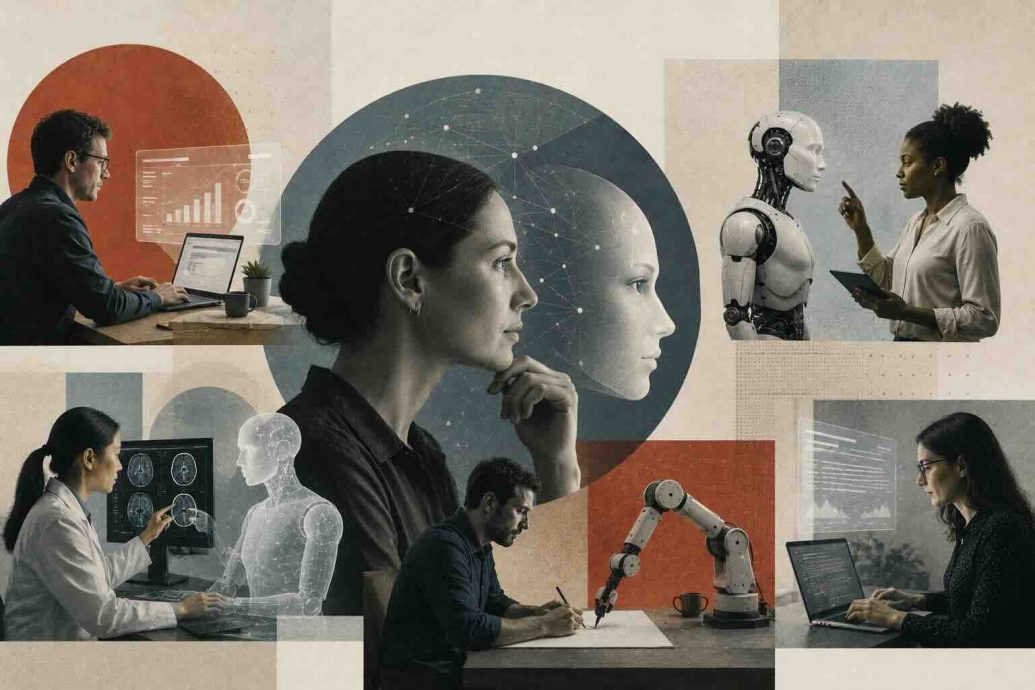
Working with AI: real stories of human-machine collaboration reveal how partnerships between people and intelligent systems have moved far beyond science fiction and into daily business operations. Organizations that invest in augmenting human capabilities with AI systems report 38% higher revenue growth compared to those focused solely on automation. The concept is not about replacing people with machines but about combining the unique strengths of each to produce outcomes neither could achieve alone. Humans bring creativity, emotional intelligence, ethical judgment, and contextual understanding to the table. Machines contribute speed, precision, pattern recognition, and the ability to process vast amounts of data without fatigue. When these capabilities converge in well-designed workflows, the results consistently surpass what either partner delivers independently. This article explores real stories and concrete evidence from organizations that have made human-machine collaboration work in practice. The goal is to cut through the hype and show what this partnership looks like on the ground, where it succeeds, where it struggles, and where it is heading next.
Quick Answers on Human-Machine Collaboration
What is human-machine collaboration and why does it matter?
Human-machine collaboration combines human judgment and creativity with AI speed and data processing to achieve results neither can deliver alone. Organizations using this approach achieve three times the performance improvement of automation-only firms.
How does human-machine collaboration differ from simple automation?
Automation replaces human tasks entirely with machine processes. Human-machine collaboration keeps humans in the loop as strategic decision makers, assigning repetitive tasks to AI while reserving creative and ethical decisions for people.
Which industries benefit most from human-machine collaboration?
Healthcare, financial services, manufacturing, creative industries, and knowledge work all see gains. Working with AI: real stories of human-machine collaboration show diagnostic accuracy gains of over 20% in radiology.
Key Takeaways
- Organizations investing in human-machine collaboration see 38% higher revenue growth and 10% workforce expansion compared to automation-focused companies.
- Effective collaboration requires structured frameworks that assign repetitive data tasks to AI while preserving human oversight for complex, creative, and ethical decisions.
- Healthcare, manufacturing, finance, and creative industries are leading the way with measurable results, including 40% faster customer resolution times and 20% reductions in inventory errors.
- The biggest risks include accountability gaps, over-reliance on AI, skill degradation, and governance challenges that 60% of enterprise AI leaders identify as primary adoption barriers.
Table of contents
- Introduction
- Quick Answers on Human-Machine Collaboration
- Key Takeaways
- Understanding Human-Machine Collaboration
- Why Augmentation Outperforms Full Automation
- The Spectrum of Human-AI Collaboration Models
- Building Trust Between Humans and AI Systems
- Human-Machine Collaboration in Healthcare
- AI and Human Teams in Financial Services
- Manufacturing and Collaborative Robotics
- Knowledge Work Transformed by AI Assistants
- Creative Industries and AI Co-Creation
- Implementation Frameworks That Deliver Results
- Measuring Success in Human-AI Partnerships
- Risks and Accountability in Collaborative AI Systems
- Ethical Dimensions of Human-Machine Teamwork
- Skills and Roles for the Collaborative Workforce
- The Rise of Agentic AI and Digital Coworkers
- Where Human-Machine Collaboration Is Heading
- Key Insights on Human-Machine Collaboration
- Human-Machine Collaboration Performance Comparison
- Successful Human-AI Partnerships in Practice
- Enterprise Case Studies in AI-Powered Collaboration
- Frequently Asked Questions About Human-Machine Collaboration
Understanding Human-Machine Collaboration
Working with AI: real stories of human-machine collaboration describe the structured partnership between people and AI systems where humans provide creativity, judgment, and ethical oversight while machines handle data processing, pattern recognition, and repetitive execution to produce superior outcomes.
Human-Machine Collaboration Impact Explorer
Productivity Gain
+38%
vs. automation-only approach
Decision Accuracy
92%
collaborative decisions correct
Est. Annual ROI
$2.4M
revenue impact estimate
Time to Value
4 months
to first measurable gains
Estimates based on published research from Accenture, EY, and enterprise case studies. Actual results vary by implementation quality.
Why Augmentation Outperforms Full Automation
The debate between automation and augmentation has produced a clear winner in the data. Research by Accenture found that firms using AI to augment human capabilities achieved three times the performance improvement of firms that used AI primarily to replace human workers. This gap exists because augmentation captures the strengths of both parties while automation discards one of them entirely. Machines excel at processing millions of data points in seconds, detecting subtle patterns, and maintaining consistent output without fatigue. Humans excel at interpreting ambiguous situations, applying moral reasoning, reading emotional cues, and generating original ideas. When organizations design workflows that leverage both sets of strengths, they unlock a performance multiplier that neither pure human effort nor pure machine execution can match. The companies that understand this distinction are pulling ahead of competitors who treat AI as a simple cost-cutting tool.
The financial evidence reinforces this conclusion. Organizations that invest in human-machine collaboration strategies report 38% higher revenue growth and expand their workforces by 10%, according to Accenture research. These numbers challenge the common narrative that AI primarily eliminates jobs. In practice, the organizations seeing the greatest returns are those creating new roles that pair human workers with AI tools, not those slashing headcount. The revenue gains come from improved decision quality, faster product development cycles, and the ability to personalize customer interactions at scale. None of these outcomes are achievable through automation alone because they all require the human capacity to understand context, adapt to unexpected circumstances, and build relationships.
Enhanced workforces deliver 2.4 times better performance when augmentation technologies are properly implemented, according to research from EY. The key qualifier in that finding is “properly implemented,” which means designing workflows where the human and machine contributions are clearly defined, where handoffs between the two are smooth, and where the human operator retains meaningful decision-making authority. Organizations that simply bolt AI tools onto existing processes without redesigning the workflow see minimal improvement. The performance gains come from rethinking work itself, not from adding technology to broken processes. Getting this right requires understanding what each partner does best and building systems that route tasks accordingly. The organizations that treat AI strategy as a design challenge rather than a technology purchase are the ones achieving these results.
The Spectrum of Human-AI Collaboration Models
Moving beyond the augmentation versus automation binary, organizations today work with three primary collaboration frameworks. Augmented Creativity positions AI as a brainstorming partner and execution assistant while humans retain full creative direction and final approval. Hybrid Decision Systems split the analytical workload between human judgment and machine processing, with AI surfacing patterns and recommendations while humans evaluate and decide. Oversight-Driven Automation allows machines to handle routine processes end to end while humans monitor, audit, and intervene when exceptions arise. Each model suits different types of work, and most organizations use a combination across their operations. A single company might use Oversight-Driven Automation in its warehouse logistics, Hybrid Decision Systems in its financial planning, and Augmented Creativity in its marketing department.
The choice of collaboration model depends on the complexity and stakes of the task. Simple, repetitive tasks with clear success criteria fit the Oversight-Driven Automation model because the machine can execute reliably and the human only needs to handle exceptions. Tasks requiring original thought, ideation, and abstract reasoning are better served by the Augmented Creativity model because the human drives the process and the AI accelerates specific steps. Decisions involving multiple variables, incomplete information, and significant financial or ethical consequences call for the Hybrid Decision approach because neither humans nor machines handle these situations well in isolation. Organizations that match the right collaboration model to each workflow see significantly better results than those applying a single approach across the board. Research from IJRASET confirms that structured frameworks for integrating human oversight with AI insights produce measurably better outcomes than ad hoc implementations.
A practical example illustrates how these models work together. Consider a retail company managing inventory across hundreds of locations. The hyperautomation model handles routine reordering for stable products without human intervention. The Hybrid Decision model kicks in for seasonal planning, where AI analyzes historical patterns and market trends while human planners factor in local events, competitor moves, and gut instincts about emerging preferences. The Augmented Creativity model governs new product launches, where marketing teams use AI to generate initial concepts, test messaging variations, and predict audience responses while the creative leads shape the brand narrative. This layered approach lets the organization apply the right level of human involvement to each decision type rather than over-investing human attention where it adds little value or under-investing where it is critical.
Building Trust Between Humans and AI Systems
Trust is the foundation that determines whether human-machine collaboration produces results or creates friction. When workers trust AI systems appropriately, they integrate machine outputs into their decision-making effectively. When trust is too low, they ignore valuable AI recommendations and lose the efficiency gains. When trust is too high, they defer to machine judgments uncritically and miss errors that human review would catch. AI governance frameworks help calibrate this trust by establishing clear guidelines for when machine recommendations should be followed, when they should be reviewed, and when they should be overridden. Research shows that 76% of enterprises now include human validation checkpoints in AI workflows, recognizing that trust must be actively managed rather than assumed.
Building appropriate trust requires transparency about what the AI system can and cannot do. Workers need to understand the training data behind machine recommendations, the error rates in different situations, and the specific conditions under which the AI is likely to fail. Organizations that invest in explainable AI and provide workers with clear performance metrics for their AI tools see higher adoption rates and better collaboration outcomes. This transparency also means acknowledging limitations honestly. An AI system that is presented as infallible will eventually make a mistake that destroys trust entirely, while a system presented with accurate confidence levels builds a more resilient working relationship. The most effective human-machine partnerships are those where both parties, and the organizations governing them, maintain a realistic understanding of each partner’s capabilities.
Human-Machine Collaboration in Healthcare
Healthcare represents one of the most compelling arenas for human-machine collaboration because the stakes are high and the data is complex. Radiologists working alongside AI imaging systems have demonstrated diagnostic accuracy improvements that neither party achieves alone. The AI rapidly screens thousands of images, flagging areas of concern and ranking them by probability, while the radiologist applies clinical judgment, considers the patient’s full medical history, and makes the final diagnosis. This partnership does not reduce the radiologist’s role but expands it, freeing them from hours of routine screening to focus on the most challenging and consequential cases. Emergency departments using AI-assisted diagnostic tools can rapidly triage patients, enabling faster intervention in critical situations where minutes determine outcomes.
Beyond diagnostics, human-machine collaboration is reshaping drug discovery, treatment planning, and patient monitoring. AI systems analyze molecular structures, predict drug interactions, and identify promising compounds at speeds that would take human researchers years to match. The human scientists then evaluate these candidates against criteria that machines struggle with, including patient safety profiles, manufacturing feasibility, and regulatory requirements. In treatment planning, AI tools process population-level data to suggest personalized protocols while oncologists adjust those recommendations based on their knowledge of individual patients. The combination of machine-scale data processing and human clinical intuition produces treatment plans that are both statistically optimized and personally appropriate. Hospitals implementing these collaborative approaches report improved readmission prediction and patient outcomes.
Mental health care is also benefiting from thoughtful human-machine collaboration. AI-powered chatbots provide initial screening, deliver cognitive behavioral therapy exercises between sessions, and monitor patient mood through text analysis. These tools do not replace therapists but extend their reach, giving patients access to support between appointments and giving therapists better data about their patients’ day-to-day experiences. The human therapist remains essential for complex therapeutic work, crisis intervention, and the empathetic relationship that drives therapeutic progress. This model demonstrates a key principle of effective collaboration: the machine handles scale and consistency while the human handles depth and nuance.
AI and Human Teams in Financial Services
Financial services firms have embraced human-machine collaboration to manage the intersection of speed, complexity, and regulatory compliance that defines modern markets. AI algorithms process vast amounts of market data in milliseconds, identifying trading opportunities, detecting anomalies, and generating risk assessments. Human traders and analysts then apply their experience, intuition, and understanding of geopolitical context to make strategic choices. This combination of machine precision and human judgment has revolutionized how financial institutions operate. Fraud detection teams use AI to scan millions of transactions for suspicious patterns while human investigators evaluate flagged cases against contextual factors that machines miss, like a customer’s recent travel or a known family emergency.
The most effective financial institutions treat AI as a partner in the analytical process rather than a replacement for human analysis. Wealth management firms use AI to generate personalized portfolio recommendations based on market conditions, risk tolerance, and tax implications, then present these recommendations to human advisors who discuss them with clients. The advisor adds emotional intelligence, relationship context, and an understanding of the client’s life goals that the algorithm cannot capture. Predictive AI systems in lending evaluate creditworthiness using hundreds of data points, but human underwriters review edge cases where the data tells an incomplete story. This layered approach reduces both the false positives that waste human time and the false negatives that miss genuine risks.
Manufacturing and Collaborative Robotics
The manufacturing floor offers some of the most visible examples of human-machine collaboration in action. Collaborative robots, known as cobots, work alongside human operators in shared workspaces without the safety cages that traditional industrial robots require. These machines handle tasks demanding precision and repetition, like placing components, applying adhesives, and performing quality inspections at microscopic resolution, while human workers handle tasks requiring dexterity, problem solving, and adaptation to unexpected situations. The result is a production line that combines the consistency of robotic execution with the flexibility of human judgment. AI-enhanced robotics is predicted to boost productivity in logistics by 25%, according to industry forecasts for the sector.
The collaboration extends beyond physical tasks to the cognitive aspects of manufacturing. AI systems monitor production data in real time, predicting equipment failures before they happen and suggesting maintenance schedules that minimize downtime. Human technicians evaluate these predictions against their experience with specific machines, local conditions, and production priorities. The AI might predict that a motor bearing will fail in 72 hours based on vibration patterns, but the human technician knows that the current production run ends in 48 hours and that replacing the bearing during the planned changeover is more efficient than interrupting production. This interplay between machine prediction and human operational knowledge produces maintenance strategies that are both data-driven and practically optimized.
Quality control is another area where the human-machine partnership delivers measurable results. AI vision systems inspect products at speeds and resolutions that human inspectors cannot match, catching defects as small as a fraction of a millimeter. Human quality engineers then analyze patterns in the defect data to identify root causes, adjust production parameters, and implement process improvements that prevent future defects. The machine finds the individual problems while the human solves the systemic ones. This division of labor has helped manufacturers reduce defect rates by significant margins while also reducing the physical strain on workers who previously spent hours performing repetitive visual inspections. The convergence of AI with robotics and artificial intelligence continues to create new possibilities for this kind of partnership.
Knowledge Work Transformed by AI Assistants
Knowledge workers across professions now use AI assistants to handle the routine cognitive tasks that previously consumed large portions of their workdays. Lawyers use AI to review documents, identify relevant precedents, and draft initial contract language. Software engineers use AI coding assistants to generate boilerplate code, debug complex problems, and write documentation. Researchers use AI to scan literature, summarize findings, and identify connections between disparate fields. In each case, the human professional directs the work, evaluates the AI output, and applies the judgment that transforms raw information into actionable insight. Employees increasingly use generative AI to compose emails, write lines of code, and generate images as part of their daily workflows.
The key to successful human-machine collaboration in knowledge work is maintaining the human’s role as the critical thinker and quality gatekeeper. AI assistants can produce impressive first drafts, but they also generate confident-sounding errors, miss nuances, and lack the contextual understanding that separates competent work from excellent work. The most effective knowledge workers use AI to expand their capacity rather than replace their thinking. They treat AI suggestions as starting points that require verification, refinement, and contextual adaptation. Organizations that train workers to collaborate with AI tools in this way, rather than simply defer to them, report productivity gains without the quality degradation that comes from uncritical AI dependence. The balance between digital worker efficiency and human oversight remains the defining challenge in knowledge work collaboration.
Creative Industries and AI Co-Creation
The creative industries offer a fascinating test case for human-machine collaboration because creativity has long been considered a uniquely human trait. AI tools now assist artists, musicians, writers, and designers at every stage of the creative process, from initial concept generation to final production. These tools can produce variations on visual themes, generate musical compositions in specific styles, draft narrative outlines, and create design mockups in seconds. The human creative professional then curates, refines, and transforms these machine outputs into work that carries emotional resonance, cultural meaning, and personal vision. The AI expands the range of possibilities the creator can explore, while the human provides the taste, judgment, and storytelling instinct that gives the work its impact.
Film and video production teams use AI for tasks ranging from script analysis to visual effects to audience testing. AI systems can predict audience engagement patterns, suggest editing cuts based on pacing analysis, and generate background elements that would otherwise require expensive manual creation. Human directors, editors, and producers use these capabilities to work faster and experiment more freely without ceding creative control. The AI handles the labor-intensive production tasks while the human shapes the artistic vision. This collaboration has made high-quality production accessible to smaller studios and independent creators who previously lacked the resources for sophisticated post-production workflows.
The most successful creative collaborations with AI maintain a clear hierarchy where the human leads and the machine serves. When this dynamic inverts, and the human starts accepting whatever the AI produces without critical evaluation, the work loses its distinctiveness and emotional depth. The AI art generation space has demonstrated both the potential and the pitfalls of this collaboration. Tools that position AI as a creative partner, suggesting directions and executing technical tasks while the artist makes all aesthetic decisions, produce more interesting work than tools that generate finished pieces with minimal human input. The creative industries are developing new workflows that reflect this understanding, embedding AI at specific production stages while preserving human creative authority.
Garry Kasparov’s freestyle chess experiments illustrate the broader principle at work in creative collaboration. In these tournaments, teams of humans and AI competed together, and the results showed that the best outcomes came not from the strongest AI or the strongest human but from the teams with the best collaboration processes. A mediocre chess player using a good AI tool with an excellent process for combining their inputs consistently outperformed grandmasters working alone or powerful computers running independently. This finding translates directly to creative work, where the quality of the collaboration process, the handoffs, the feedback loops, the decision points, matters more than the raw capabilities of either partner.
Implementation Frameworks That Deliver Results
Successful human-machine collaboration requires a structured implementation approach rather than simply deploying AI tools and hoping for the best. The most effective framework follows four phases: workflow audit, integration design, pilot deployment, and iterative scaling. The workflow audit maps every task in a process, categorizing each as machine-suitable, human-essential, or collaborative. The integration design phase creates the handoff protocols, communication interfaces, and decision rules that govern how humans and machines interact. Pilot deployment tests these designs with a small team, gathering feedback and identifying friction points. Iterative scaling expands the collaboration across the organization while continuously adjusting based on results. Organizations that approach AI implementation as a design challenge rather than a technology rollout see significantly better adoption rates.
Task division is the most critical element of the implementation design. Clear communication stands as the cornerstone of effective human-AI collaboration, with coordination relying heavily on well-structured protocols. Simple, repetitive tasks with clear success criteria can be automated with minimal human oversight. Tasks requiring original thought, ideation, and abstract reasoning must remain human-centric. Tasks requiring rapid execution across large datasets are better suited for AI. The challenge lies in the grey areas where tasks involve elements of all three categories. Effective frameworks define explicit triggers for when the AI should hand off to a human, when the human should defer to the AI, and when both should collaborate on a shared decision. These triggers must be specific enough to be actionable and flexible enough to handle edge cases.
Measuring and adjusting the collaboration is just as important as designing it. Leading organizations regularly survey employees on AI use and its effect on learning, decision making, and engagement. They track both quantitative metrics like productivity, error rates, and throughput, and qualitative feedback about the working experience. This data drives ongoing refinements to the collaboration model. A common pattern is that initial implementations over-rely on AI, leading to quality issues, followed by a correction that over-relies on human review, leading to bottlenecks, before settling into a balanced approach that produces sustainable results. Organizations that plan for this learning curve and build adjustment mechanisms into their AI strategies reach optimal performance faster than those expecting immediate perfection.
Measuring Success in Human-AI Partnerships
Traditional productivity metrics fail to capture the full value of human-machine collaboration because they measure individual output rather than collaborative outcomes. Organizations need metrics that evaluate the quality of the partnership itself, including decision accuracy when human and AI inputs combine, the speed of the collaboration cycle, the frequency and appropriateness of human overrides, and worker satisfaction with the partnership experience. The most revealing metric is the “collaboration lift,” which compares the performance of human-AI teams against the performance of each working independently on the same tasks. When this lift is positive and growing over time, the collaboration is working. When it stagnates or turns negative, the implementation needs adjustment.
Customer-facing metrics often reveal the business impact of human-machine collaboration most clearly. Customer support teams using AI-assisted workflows have seen resolution times drop by 40% while customer satisfaction scores increase. Sales teams using AI-generated lead scoring and personalized outreach see higher conversion rates without increasing the volume of human effort. These outcomes reflect the power of the collaboration model: the AI handles the data-intensive preparation work while the human handles the relationship-intensive execution work. Tracking these metrics over time helps organizations understand which collaboration patterns produce the greatest returns and where further investment in AI capabilities or human training would have the most impact on AI-driven business outcomes.
Risks and Accountability in Collaborative AI Systems
The benefits of human-machine collaboration come with significant risks that organizations must address proactively. The most fundamental challenge is accountability: when a collaborative decision produces a harmful outcome, determining responsibility between the human operator, the AI system, its developers, and the organization deploying it is genuinely difficult. Current legal and ethical frameworks were designed for decisions made by individual humans, not for decisions emerging from human-machine partnerships. This ambiguity creates real problems in regulated industries like healthcare, finance, and criminal justice where accountability must be clear. Nearly 60% of AI leaders surveyed identified risk and compliance concerns as primary challenges in adopting collaborative AI, and this concern is well-founded.
Over-reliance on AI represents one of the most insidious risks in human-machine collaboration. When humans work alongside AI systems that are usually correct, they develop a tendency to accept machine outputs without adequate scrutiny. This phenomenon, known as automation bias, has been documented across industries from aviation to radiology. The risk is that the human partner gradually stops performing the critical evaluation that justifies their role in the collaboration. When the AI eventually encounters a situation outside its training data and produces an incorrect output, the human who should catch the error fails to do so because they have lost the habit of questioning machine recommendations. Addressing this risk requires deliberate training programs, regular calibration exercises, and workflow designs that actively prompt human evaluation rather than passive acceptance.
Security vulnerabilities add another dimension of risk. Compromised AI in critical sectors like finance and defense could lead to catastrophic consequences, including financial losses and national security breaches. Adversarial attacks can manipulate AI inputs in ways that humans would not notice, producing outputs that appear normal to the machine but are fundamentally corrupted. Human-machine collaboration mitigates some of these risks because human operators can catch anomalies that the AI has been specifically engineered to miss, but only if the collaboration workflow includes meaningful human review rather than rubber-stamp approval. Organizations deploying collaborative AI systems need robust security frameworks that account for the unique vulnerabilities created by the interaction between human and machine decision-making processes.
Ethical Dimensions of Human-Machine Teamwork
The ethical landscape of human-machine collaboration extends well beyond the technical questions of bias and fairness in AI algorithms. At a fundamental level, organizations must grapple with what it means to share decision-making authority between humans and machines. When an AI system recommends denying a loan, refusing a medical treatment, or flagging someone for additional security screening, the human in the loop bears a moral responsibility that cannot be delegated to the machine. The human is not merely checking the AI’s work but exercising judgment about whether the machine’s recommendation aligns with broader values of fairness, dignity, and human rights. AI ethics and legal frameworks are evolving to address these responsibilities, but the pace of deployment often outstrips the pace of governance.
Bias in AI systems creates particular ethical challenges in collaborative settings. When an AI system trained on historical data reproduces patterns of discrimination, the human partner may not recognize the bias because the recommendation appears data-driven and objective. The veneer of computational rigor can make biased outputs harder to question than overtly subjective human decisions. Effective collaboration requires that human partners understand the data sources and training processes behind their AI tools well enough to identify when outputs may reflect historical biases rather than current reality. Organizations have an ethical obligation to train their human collaborators in AI literacy, not just AI tool operation.
The impact on worker autonomy and dignity deserves serious consideration. Human-machine collaboration at its best expands human capabilities and frees workers from tedious tasks. At its worst, it reduces human workers to appendages of machine systems, constrained by algorithmic directives and stripped of professional judgment. Warehouse workers following AI-optimized pick routes, call center agents reading AI-generated scripts, and content moderators applying AI classifications all experience collaboration in very different ways than a radiologist using AI to enhance their diagnostic process. The ethical obligation is to design collaborative systems that enhance rather than diminish the human experience of work. This means giving workers genuine agency, meaningful decision-making authority, and the ability to exercise professional judgment even when it contradicts the AI’s recommendation.
Data privacy and consent form another critical ethical frontier. Human-machine collaboration often requires collecting, storing, and analyzing data about worker behavior, performance, and decision patterns. This data is necessary for improving the collaboration, but it also creates surveillance risks and power imbalances between workers and organizations. Transparency about AI usage and data collection practices is essential, as is giving workers meaningful control over how their collaboration data is used. The ethical framework for human-machine collaboration must address not only the outcomes of collaborative decisions but also the conditions under which the collaboration itself takes place.
Skills and Roles for the Collaborative Workforce
The rise of human-machine collaboration is creating entirely new categories of work that did not exist five years ago. AI prompt engineers, machine learning specialists, AI ethics officers, and human-AI interaction designers are roles that have emerged directly from the need to build, manage, and improve collaborative systems. Beyond these specialist positions, virtually every knowledge work role is being reshaped by the expectation that workers will collaborate with AI tools as part of their standard workflow. Job displacement fears persist, but the evidence suggests that collaboration-oriented organizations create more jobs than they eliminate, provided they invest in reskilling their existing workforce. The skills most in demand are those that complement machine capabilities: critical thinking, emotional intelligence, creative problem solving, ethical reasoning, and the ability to evaluate AI outputs against real-world context.
Change fitness at the individual level involves curiosity and comfort working in human-machine workflows, while teams need new collaboration patterns and role clarity suited for AI-driven contexts. Organizations leading this transition invest heavily in training that goes beyond tool operation to include AI literacy, which means understanding how AI systems work, where they are reliable, and where they are likely to fail. This literacy enables workers to calibrate their trust in AI recommendations, ask the right questions about machine outputs, and contribute their human expertise in ways that genuinely improve the collaborative outcome. Companies that treat AI collaboration training as a one-time onboarding event miss the ongoing learning required as both AI capabilities and workflow requirements evolve. The most resilient workforces are those that develop a culture of continuous learning around AI trends and capabilities.
The Rise of Agentic AI and Digital Coworkers
The next evolution of human-machine collaboration is already underway with the emergence of agentic AI systems that can plan, execute, and adjust multi-step tasks with minimal human intervention. Unlike earlier AI tools that responded to individual prompts, agentic systems operate more like digital coworkers that can be delegated complex assignments. A marketing team can assign an AI agent to research a market segment, draft a competitive analysis, and prepare a presentation, then review the results and provide feedback that the agent incorporates into a revised version. This represents a qualitative shift from tools that assist with individual tasks to partners that manage entire workflows. The trend toward AI agents becoming digital coworkers is accelerating across industries.
This evolution raises the bar for human-machine collaboration skills. Working with an AI agent that manages a multi-step process requires different capabilities than using an AI tool for a specific task. The human must be skilled at defining objectives clearly, evaluating intermediate outputs, providing constructive feedback, and knowing when to take over from the agent. The collaboration becomes more like managing a junior team member than operating a sophisticated tool, which demands interpersonal and managerial skills that have not traditionally been associated with technology use. Organizations deploying agentic AI systems are discovering that the human side of the collaboration requires as much development and investment as the machine side. Internal governance models, policies, and safeguards for human-AI collaboration become critical for responsibly scaling these autonomous systems.
The practical implications of agentic AI extend across team structures and organizational design. Small teams can now launch global campaigns in days, with AI agents handling data analysis, content generation, and campaign optimization while humans steer strategy, maintain brand consistency, and manage stakeholder relationships. Scientific research teams are beginning to work with AI lab assistants that suggest new experiments, run simulations, and analyze results, freeing researchers to focus on hypothesis generation and experimental design. This shift enables small teams to accomplish what previously required large departments, creating a competitive advantage for organizations that learn to leverage agentic collaboration effectively. The key challenge is maintaining meaningful human oversight as AI agents take on increasingly complex and autonomous roles within the organization.
Where Human-Machine Collaboration Is Heading
The trajectory of human-machine collaboration points toward deeper integration across every aspect of work and life. Physical AI, where machines gain human-like dexterity and intelligence, will expand collaboration beyond screens and keyboards into physical environments. Autonomous warehouses, surgical assistants with tactile feedback, and construction robots that adapt to site conditions in real time represent the next frontier. The convergence of AI with robotics is predicted to create a new era where collaboration is not limited to cognitive tasks but extends to physical work that currently requires human hands and spatial awareness. This expansion will create new collaboration models that blend cognitive and physical partnerships.
The most significant shift in the coming years will be the transition from AI as a tool to AI as a genuine collaborator with increasingly sophisticated understanding of human goals, preferences, and communication patterns. Current AI systems require humans to translate their needs into formats the machine can process. Future systems will understand natural language instructions, interpret ambiguous requests, ask clarifying questions, and adapt their behavior based on accumulated experience with specific human partners. This evolution will make human-machine collaboration accessible to workers without technical training, dramatically expanding the population that can benefit from AI partnership. The challenge will be maintaining appropriate boundaries and human agency as AI systems become more capable and more integrated into daily workflows.
Education and professional development will also transform as human-machine collaboration becomes the default operating model for knowledge work. Training programs will need to develop not just technical skills but collaboration competencies: the ability to define problems in ways that leverage both human and machine strengths, the judgment to evaluate AI outputs critically, and the creativity to identify opportunities for collaborative solutions that neither humans nor machines would conceive independently. Organizations, educational institutions, and professional associations that develop these collaboration curricula first will produce the workforce best prepared for the next decade of AI and human cognitive partnership. The future belongs not to humans or machines alone but to the partnerships between them.
Human-Machine Collaboration vs. Automation: Performance Comparison
Measured outcomes across enterprise implementations (percentage improvement over baseline)
Data sources: SmythOS Enterprise Research, EY Human-Machine Economy Report, Accenture AI Research 2025
Key Insights on Human-Machine Collaboration
- Organizations using AI to augment human capabilities achieve three times the performance improvement of firms using AI primarily for automation.
- Companies investing in human-machine collaboration report 38% higher revenue growth and 10% workforce expansion compared to automation-focused peers.
- Enhanced workforces deliver 2.4 times better performance when augmentation technologies are properly implemented.
- Nearly 60% of AI leaders identify integrating with legacy systems and addressing risk and compliance as primary adoption challenges.
- Customer support teams using AI-assisted workflows report 40% faster resolution times and increased customer satisfaction.
- Schools using AI-powered adaptive learning tools have seen engagement rise by 20% and test scores improve by 15% in a single year.
- 76% of enterprises now include human validation checkpoints in their AI workflows to manage trust and quality.
- AI-enhanced robotics is predicted to boost logistics productivity by 25% through seamless human-machine teamwork.
These statistics paint a consistent picture across industries and use cases. The organizations achieving the highest returns from AI are not those pursuing full automation but those building structured partnerships between human workers and AI systems. The performance multiplier effect shows up in revenue growth, productivity improvements, customer satisfaction, and workforce development. The gains are not marginal improvements but fundamental shifts in what teams can accomplish when human creativity and judgment combine with machine speed and analytical power. The data also makes clear that reaping these benefits requires deliberate investment in collaboration design, worker training, and governance frameworks rather than simple technology deployment.
Human-Machine Collaboration Performance Comparison
| Dimension | Automation-Only Approach | Human-Machine Collaboration | Collaboration Advantage |
|---|---|---|---|
| Transparency | Low; decisions opaque to workers and stakeholders | High; human oversight creates accountability and explainability | Builds stakeholder trust and meets regulatory requirements |
| Participation | Workers excluded from AI decision processes | Workers actively involved in evaluating and directing AI outputs | Higher adoption rates and better quality outcomes |
| Trust Calibration | Binary: full trust or full distrust of AI | Nuanced: context-dependent trust with validation checkpoints | Reduces both automation bias and AI rejection |
| Decision Quality | Bounded by training data; fails on novel situations | Combines data patterns with human contextual judgment | Superior performance on complex, ambiguous decisions |
| Error Detection | Relies on automated monitoring; misses novel error types | Human review catches errors AI was not trained to detect | Lower rates of undetected critical errors |
| Accountability | Unclear; responsibility diffused across systems | Human decision-maker identifiable for each outcome | Clear accountability chain for regulated industries |
| Adaptability | Rigid; requires retraining for new scenarios | Human partners adapt in real time; guide AI toward new needs | Faster response to changing conditions and requirements |
Successful Human-AI Partnerships in Practice
Walmart’s AI-Powered Inventory Optimization
Walmart implemented AI-driven demand forecasting across its supply chain to optimize inventory management at thousands of store locations. The system analyzes historical sales data, weather patterns, local events, and social media trends to predict demand for individual products at each location. Human supply chain managers review these predictions, adjusting for factors the model may not capture, such as upcoming competitor promotions or community developments. This collaboration resulted in a 20% reduction in stockouts and overstocking situations, directly improving both customer satisfaction and profit margins. The limitation of this approach is its dependence on historical data quality, and stores with irregular sales patterns or recent format changes sometimes require more extensive human override. Retail AI case studies consistently demonstrate the value of human validation in demand forecasting.
Mayo Clinic’s Radiology-AI Diagnostic Partnership
Mayo Clinic deployed AI imaging analysis alongside its radiology team to screen for early-stage cancers in mammography and chest CT scans. The AI system flags areas of concern and assigns probability scores, enabling radiologists to prioritize their review queue and focus their expertise on the most ambiguous cases. The partnership increased diagnostic sensitivity by reducing the number of cancers missed during initial screening while maintaining specificity levels that prevent unnecessary biopsies. Radiologists report that the AI helps them work more efficiently without diminishing their clinical role. The primary limitation is that the AI performs best on common presentation patterns and requires human expertise for atypical cases or images with technical artifacts. The partnership demonstrates that predictive diagnostics achieve their best results when machine pattern recognition combines with human clinical judgment.
JPMorgan Chase’s COiN Contract Intelligence
JPMorgan Chase developed COiN (Contract Intelligence), an AI platform that reviews commercial loan agreements and extracts key data points in seconds, a task that previously required approximately 360,000 hours of lawyer time annually. The system processes documents and flags clauses that deviate from standard templates or contain unusual risk provisions. Human legal professionals then review flagged items, apply contextual analysis, and make judgment calls on risk acceptance. The result is a dramatic reduction in review time and an improvement in consistency, as the AI applies the same standards across every document without fatigue-related lapses. The limitation is that COiN handles structured document types well but struggles with highly customized or novel contract structures, requiring human lawyers to take the lead on complex negotiations. Source: SmythOS case studies on enterprise AI collaboration.
Enterprise Case Studies in AI-Powered Collaboration
Case Study: Unilever’s AI-Driven Talent Acquisition
Unilever faced the challenge of screening over 250,000 job applicants annually while maintaining hiring quality and reducing unconscious bias. The company implemented an AI-powered recruitment system that uses video analysis, game-based assessments, and natural language processing to evaluate candidates on cognitive ability, emotional traits, and social aptitude. Human recruiters then review the AI’s shortlist, conduct interviews, and make final hiring decisions using their judgment about cultural fit, team dynamics, and potential. The collaboration reduced Unilever’s hiring process from four months to two weeks and saved over 50,000 hours of recruiter time annually. Candidate diversity improved because the AI evaluated applicants on demonstrated abilities rather than resume credentials. The limitation is that AI-based personality assessment remains controversial, and critics argue that video analysis may introduce its own biases related to accent, appearance, or communication style.
Case Study: Siemens Energy’s Predictive Maintenance Partnership
Siemens Energy deployed AI-based predictive maintenance across its global fleet of gas turbines, combining machine sensor data analysis with human engineering expertise. The AI system continuously monitors vibration, temperature, pressure, and operational parameters from thousands of sensors, predicting component failures before they cause unplanned downtime. When the AI detects an anomaly, it alerts human maintenance engineers with a diagnosis and recommended action. The engineers evaluate the recommendation against their knowledge of the specific turbine’s history, operating conditions, and maintenance schedule, then decide whether to act immediately, defer, or investigate further.
This collaboration reduced unplanned downtime by 20% and extended component life by optimizing replacement timing. The AI’s ability to detect subtle degradation patterns across the entire fleet gave engineers insights they could not obtain from individual inspections. The limitation is that the system’s predictions are only as good as the sensor data quality, and environments with harsh conditions or poor sensor coverage produce less reliable forecasts. Human engineers remain essential for situations where sensor data conflicts or where operational priorities override purely data-driven maintenance schedules.
Case Study: Stitch Fix’s Human-AI Styling Model
Stitch Fix built its entire business model around human-machine collaboration in fashion retail. The company’s AI algorithms analyze customer preference data, purchase history, fit feedback, and fashion trends to generate personalized clothing recommendations. Human stylists then review, adjust, and finalize each selection, adding the fashion intuition, personal touch, and understanding of emerging style preferences that the algorithm cannot fully capture. The model sends customers curated boxes of clothing selected through this collaborative process.
This approach produced measurably higher customer satisfaction and retention rates than either pure algorithmic recommendation or pure human curation. The AI handles the data-intensive work of matching thousands of products to millions of customer profiles, while the human stylist adds the creative judgment that transforms a statistically optimized selection into a personally resonant one. The limitation is that the model depends on rich customer feedback data, and new customers with limited history receive less personalized selections until the AI has enough information to generate accurate predictions. Stitch Fix’s success demonstrates that human-machine collaboration can be a core business strategy, not just an operational improvement.
Frequently Asked Questions About Human-Machine Collaboration
Human-machine collaboration is the structured partnership between people and AI systems where each contributes their unique strengths to achieve outcomes superior to either working alone. Humans provide creativity, judgment, and ethical oversight while machines handle data processing, pattern recognition, and repetitive execution. This approach produces measurably better results than either full automation or unaided human effort. Research consistently shows that organizations embracing this model outperform those relying on either humans or machines in isolation.
Automation replaces human tasks entirely with machine processes, removing human involvement from the workflow. Human-machine collaboration keeps humans in the decision loop as strategic partners, assigning repetitive tasks to AI while preserving human authority over complex, creative, and ethically sensitive decisions. The key distinction is that collaboration designs workflows around both partners rather than eliminating one. Research shows that collaboration-focused organizations achieve three times the performance gains of automation-only approaches.
Healthcare, manufacturing, financial services, creative industries, and knowledge work see the strongest results from human-machine collaboration. Healthcare achieves improved diagnostic accuracy when radiologists partner with AI imaging systems. Manufacturing gains from cobots that combine robotic precision with human adaptability. Financial services benefit from AI-powered analysis paired with human judgment on complex investment and lending decisions.
Collaborative robots, called cobots, are industrial robots designed to work alongside human operators in shared workspaces without safety cages. They handle precise, repetitive tasks like component placement and quality inspection while humans manage problem solving and adaptation to unexpected situations. Cobots use sensors and force-limiting technology to operate safely near people, combining robotic consistency with human flexibility.
The primary risks include accountability gaps when collaborative decisions cause harm and automation bias where humans stop critically evaluating AI outputs. Skill degradation occurs when workers rely too heavily on machine assistance and lose their independent judgment over time. Security vulnerabilities from adversarial attacks on AI systems pose another serious concern. Organizations must also address governance gaps, as current regulations were designed for human decision-makers rather than human-machine partnerships.
Building appropriate trust requires transparency about AI capabilities and limitations, clear performance metrics, and regular calibration exercises. Workers need to understand the training data behind machine recommendations and the conditions under which the AI is likely to fail. Organizations should include human validation checkpoints in workflows and present AI confidence levels honestly rather than positioning systems as infallible.
Workers need critical thinking to evaluate AI outputs, emotional intelligence to handle situations machines cannot manage, and creative problem solving to identify opportunities for collaborative solutions. AI literacy, understanding how AI systems work and where they fail, is essential for calibrating trust in machine recommendations. Communication skills for providing clear instructions and constructive feedback to AI systems are becoming increasingly important.
Most organizations see initial productivity improvements within three to six months of implementing structured human-AI collaboration workflows. Full ROI typically materializes within 12 to 18 months as workers develop proficiency with AI tools and collaboration processes are refined through iterative feedback. Organizations that invest in training and workflow design upfront reach positive ROI faster than those that focus solely on technology deployment.
Agentic AI systems can plan, execute, and adjust multi-step tasks with minimal human intervention, operating more like digital coworkers than simple tools. They can be delegated complex assignments such as researching markets, drafting analyses, and preparing presentations. This shifts the human role from operating a tool to managing a capable partner, requiring skills in defining objectives, evaluating intermediate outputs, and providing constructive feedback.
Small businesses can benefit significantly from human-machine collaboration, often with lower implementation costs than large enterprises. AI assistants for customer service, accounting, scheduling, and marketing are available as affordable cloud services that require no technical infrastructure. Small teams gain a disproportionate advantage because AI collaboration allows a handful of people to accomplish work that previously required larger departments. Many small business owners report that AI collaboration tools pay for themselves within the first quarter of use.
Success measurement requires metrics beyond traditional productivity, including decision accuracy when human and AI inputs combine, collaboration cycle speed, frequency of appropriate human overrides, and worker satisfaction. The key metric is collaboration lift, which compares the performance of human-AI teams against each working independently. Customer-facing metrics like resolution times and satisfaction scores often reveal the business impact most clearly.
Key ethical considerations include accountability for collaborative decisions, managing AI bias in recommendations, preserving worker autonomy and dignity, and protecting data privacy. Organizations must ensure human partners understand AI limitations well enough to identify biased outputs. Workers should retain the authority to override AI recommendations when ethical concerns arise. Collaboration systems should enhance rather than diminish the human experience of work by giving workers genuine agency and meaningful decision-making authority.
Evidence indicates that collaboration-focused organizations create more jobs than they eliminate. Companies investing in human-AI collaboration report 10% workforce expansion alongside 38% revenue growth. New roles emerge in AI management, ethics oversight, prompt engineering, and human-AI interaction design. The shift replaces some tasks within jobs rather than eliminating entire positions, transforming roles rather than destroying them. Workers who develop strong AI collaboration skills find themselves in higher demand across industries.
The future points toward physical AI where machines gain human-like dexterity for hands-on collaboration, agentic AI systems that serve as true digital coworkers, and natural language interfaces that make collaboration accessible to non-technical workers. AI will actively join scientific discovery processes as lab assistants. Education systems will develop collaboration-specific curricula that train the next generation of workers to partner effectively with AI systems. The transition from AI as a tool to AI as a genuine collaborator represents the most significant shift expected by 2030.