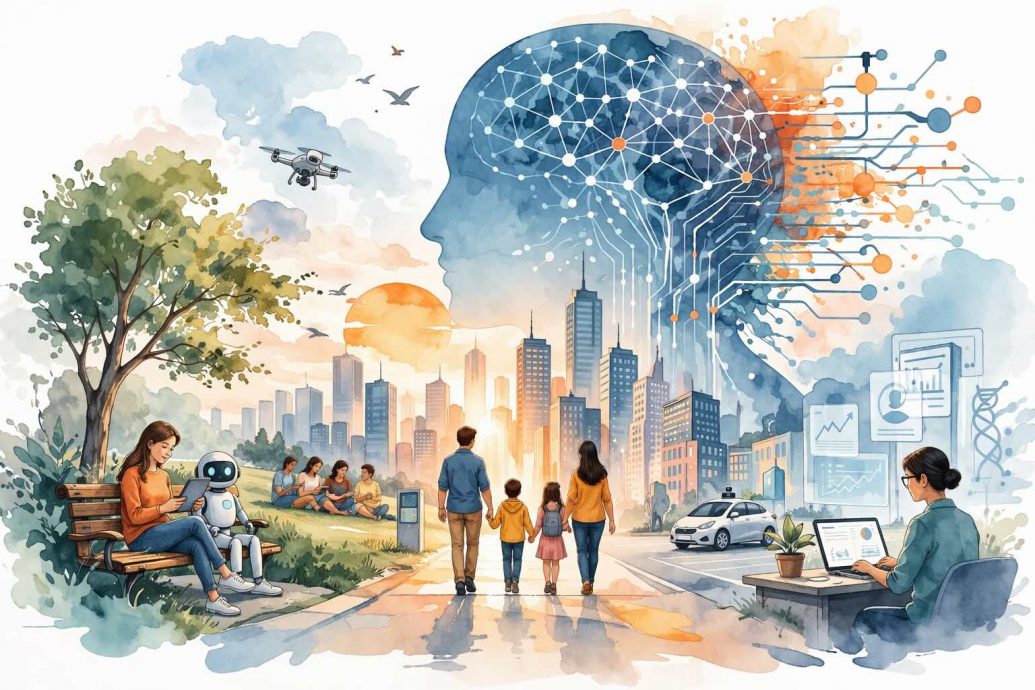

Introduction: How artificial intelligence is changing our society?
Artificial intelligence is reshaping society at a pace that continues to accelerate across industries and everyday life. According to IBM, nearly 77 percent of organizations are exploring or using artificial intelligence technologies. This widespread adoption reflects how deeply AI is embedded in decision making and operational systems. From recommendation engines to predictive healthcare, AI systems influence how individuals interact with technology daily. These systems learn continuously from data, refining outputs and improving efficiency over time. Artificial intelligence is no longer a future concept, it is actively shaping present day human experiences.
Featured Snippets
What is artificial intelligence and how is it changing society?
Artificial intelligence is changing society by automating decisions, improving efficiency, and transforming industries such as healthcare, education, and governance.
How does artificial intelligence affect daily life?
Artificial intelligence affects daily life through personalized recommendations, automation, and intelligent systems that influence decisions and behaviors.
What risks does artificial intelligence create for society?
Artificial intelligence introduces risks including bias, privacy concerns, and misinformation that can impact trust and fairness in society.
Key Takeaways
- Data and infrastructure play a central role in AI system performance.
- Artificial intelligence is influencing human behavior and decision making at scale.
- AI is transforming industries such as healthcare, education, and governance.
- Risks such as bias and privacy concerns require careful oversight.
Table of contents
- Introduction: How artificial intelligence is changing our society?
- Featured Snippets
- Key Takeaways
- Definition
- AI’s transformational power
- The impact of AI on global economies and shifting labor dynamics
- How organizations are implementing artificial intelligence across industries
- AI in healthcare, improving diagnosis and patient outcomes
- The transformation of education through artificial intelligence systems
- How governments apply artificial intelligence in public services
- Surveillance technologies and the evolution of digital privacy
- Bias in artificial intelligence systems and real world consequences
- Ethical challenges in algorithm driven decision making
- AI powered personalization and its effect on human choices
- The influence of artificial intelligence on creativity and artistic expression
- Automation trends and the changing nature of work
- Human and artificial intelligence collaboration in modern workplaces
- The technical infrastructure supporting artificial intelligence systems
- The role of data in building and scaling artificial intelligence
- Energy consumption and environmental impact of artificial intelligence
- Real world applications of artificial intelligence across industries
- Misinformation and deepfakes in an AI influenced information ecosystem
- Policy challenges in regulating artificial intelligence systems
- Future scenarios for artificial intelligence and long term societal change
- Key Insights
- Real-World Examples
- Case Studies
- FAQs
- References
Definition
Artificial intelligence refers to systems that simulate human intelligence using data and algorithms to perform tasks such as learning, reasoning, and decision making.
AI’s transformational power
Artificial Intelligence (AI) is transforming our society at an unprecedented pace. By leveraging its immense data processing capabilities, pattern recognition, and intelligent decision-making, AI is revolutionizing industries, improving our daily lives, and reshaping the way we operate.
In recent years, AI has made remarkable strides across various sectors, ranging from healthcare and transportation to finance and entertainment. Its influence can be witnessed in the development of autonomous vehicles, personalized medicine advancements, virtual assistants, and smart home devices. By enabling machines to perform tasks that were once exclusive to humans, AI is driving increased efficiency, enhanced accuracy, and innovative solutions to complex problems.
The integration of AI into society has not only introduced exciting possibilities but also raised new challenges. Discussions surrounding job displacement and the future of work, privacy and ethical considerations, and the potential biases inherent in AI systems have gained prominence. As AI continues to evolve, it is imperative that we carefully explore these implications and ensure its responsible and ethical implementation for the benefit of all.
This documentary looks at the rapid change digitalization is causing as it unfolds. In particular, breakthroughs in artificial intelligence are opening completely new horizons. In their film about AI, Tilman Wolff and Ranga Yogeshwar examine the role AI plays in the spread of fake news. They also consider a future with robots and the risks and ethical questions posed by the development of autonomous weapons.
To address these issues, they travel the globe to speak with leading experts. AI can generate perfectly forged sound and videos, making it effective for purveying fake news. Discerning the truth from fiction will become increasingly difficult. Technology will streamline work, making some jobs surplus to requirements. Software will pilot self-driving cars and aerial drones. AI is rapidly opening up new vistas, but turning blind corners at speed can be risky. How sensible is this type of progress, and at which point should society step in and set limits to its development?
The impact of AI on global economies and shifting labor dynamics
Artificial intelligence is transforming global economies by changing how value is created and distributed across industries. Automation reduces the need for repetitive tasks, allowing organizations to operate more efficiently at scale. At the same time, demand is increasing for roles in data science, machine learning, and system design. This shift creates both opportunities and disruptions within labor markets worldwide. Governments and organizations are adjusting policies to manage workforce transitions effectively. Artificial intelligence is redefining economic structures by shifting demand toward high skill and technology driven roles.
Labor market changes are uneven, with certain industries experiencing more disruption than others. Routine jobs face higher risks of automation, while technical roles continue to expand rapidly. This imbalance can lead to widening income inequality if not addressed through education and reskilling programs. Many organizations are investing in workforce development initiatives to bridge these gaps. The long term impact depends on how societies adapt to these structural changes.
How organizations are implementing artificial intelligence across industries
Artificial intelligence is being implemented across industries to improve efficiency, accuracy, and scalability in business operations. Companies use AI systems to optimize supply chains, forecast demand, and enhance customer experiences. Machine learning models analyze large datasets to identify patterns that inform strategic decisions. These capabilities allow organizations to respond quickly to changing market conditions. Businesses that adopt AI often gain a competitive advantage through data driven insights. Artificial intelligence enables organizations to operate more efficiently by leveraging large scale data analysis.
Implementation typically begins with automating routine processes and expands into more complex decision making systems. Customer service teams use AI powered chatbots to handle inquiries and reduce response times. Marketing teams apply AI to personalize campaigns and improve targeting strategies. Financial institutions rely on predictive analytics to detect fraud and manage risk. These examples demonstrate how AI can transform core business functions across sectors.
Organizations must also address challenges related to integration and governance when adopting artificial intelligence systems. Infrastructure investment is required to support large scale data processing and model deployment. Companies must ensure models are accurate, transparent, and aligned with business goals. Understanding the role of AI in business helps clarify how organizations balance innovation with accountability. Responsible implementation is essential for long term success.
AI in healthcare, improving diagnosis and patient outcomes
Artificial intelligence is transforming healthcare by improving diagnostic accuracy and enabling more personalized treatment approaches. Machine learning models analyze medical images to detect diseases such as cancer with high precision. These systems support clinicians by providing insights that enhance decision making processes. Predictive analytics helps identify potential health risks before they become critical conditions. This proactive approach improves patient outcomes and reduces healthcare costs. Artificial intelligence is enabling a shift toward proactive and data driven healthcare systems.
AI also enhances patient experience through digital tools that support continuous care and monitoring. Virtual assistants help patients manage appointments, medications, and treatment plans. Wearable devices collect real time health data, enabling early intervention when necessary. These technologies empower patients to take a more active role in managing their health. The integration of AI creates a more connected and responsive healthcare ecosystem.
Challenges remain in ensuring data privacy, accuracy, and ethical use of artificial intelligence in healthcare environments. Medical data is highly sensitive, requiring strong security measures and clear consent frameworks. AI models depend on large datasets, which can raise concerns about data ownership and transparency. Exploring AI in healthcare provides deeper insights into these challenges and opportunities. Balancing innovation with trust is essential for sustainable adoption.
The transformation of education through artificial intelligence systems
Artificial intelligence is reshaping education by enabling personalized learning experiences tailored to individual student needs. Adaptive learning platforms adjust content based on student performance and engagement levels. This approach allows learners to progress at their own pace and focus on areas that require improvement. Educators can use AI tools to analyze data and refine teaching strategies. These capabilities improve both teaching effectiveness and student outcomes. Artificial intelligence is transforming education by making learning more adaptive and personalized.
AI supports educators by automating administrative tasks and providing actionable insights into student performance. Automated grading systems reduce workload and allow teachers to focus on meaningful interactions with students. Learning analytics help identify trends and potential challenges within classrooms. These tools enable more informed decision making and continuous improvement. The result is a more efficient and responsive education system.
Despite these benefits, challenges related to access and equity remain significant concerns in AI driven education systems. Not all students have equal access to digital tools and resources, which can create disparities in learning opportunities. Addressing these gaps requires coordinated efforts from policymakers and educators. Ensuring inclusive access is critical for maximizing the benefits of AI in education.
How governments apply artificial intelligence in public services
Artificial intelligence is transforming how governments deliver services and manage complex public systems. Agencies use AI to process large datasets, improving efficiency in areas such as tax collection and social services. Predictive analytics helps governments allocate resources more effectively and anticipate public needs. Automation reduces administrative burdens and improves service delivery speed. These capabilities enable more responsive and scalable governance systems. Artificial intelligence is enabling governments to deliver services more efficiently and proactively.
Governments are also using AI to improve citizen engagement and access to information. Chatbots assist with inquiries, reducing wait times and improving service accessibility. AI systems help analyze trends in public data, supporting better policy decisions. These tools allow governments to respond to challenges such as public health risks and infrastructure demands. The result is a more data driven approach to governance.
The use of AI in public services raises important questions about accountability and transparency. Algorithmic decisions can lack clarity, making it difficult for citizens to understand outcomes. There is also a risk of reinforcing biases present in historical data. Governments must establish clear guidelines to ensure fairness and trust. Effective governance requires balancing innovation with responsible oversight.
Surveillance technologies and the evolution of digital privacy
As governments and organizations adopt artificial intelligence, surveillance technologies are becoming more advanced and widespread. Facial recognition systems can identify individuals in real time, raising significant privacy concerns. These systems are often used for security purposes, including monitoring public spaces and preventing crime. While they offer benefits, they also introduce risks related to misuse and overreach. Artificial intelligence driven surveillance is redefining the balance between security and personal privacy.
Surveillance extends beyond public safety into commercial and digital environments where user behavior is tracked and analyzed. Companies collect data to optimize services and improve user experiences. This data collection can enhance convenience but raises concerns about consent and transparency. Many individuals are unaware of how their data is used or shared across platforms. This lack of clarity can reduce trust in digital systems.
Addressing privacy concerns requires clear regulations and ethical frameworks that define acceptable use of surveillance technologies. Policymakers must establish boundaries to prevent abuse and protect individual rights. Transparency in data collection and usage is essential for maintaining public confidence. Societies must decide how to balance convenience, security, and privacy in an AI driven world.
Bias in artificial intelligence systems and real world consequences
Building on concerns around surveillance and data usage, bias remains one of the most critical challenges in artificial intelligence systems today. Artificial intelligence models can inherit biases present in training data, leading to unfair outcomes across different populations. These biases can affect decisions in hiring, lending, and law enforcement, often reinforcing existing inequalities. When systems rely on historical data, they may replicate patterns that disadvantage certain groups. This creates significant risks for fairness and trust in automated systems. Bias in artificial intelligence can produce unequal outcomes that affect real people in meaningful ways.
Organizations are increasingly investing in methods to detect and reduce bias within artificial intelligence systems. Techniques such as auditing datasets and testing models help identify problematic patterns. Diverse datasets and inclusive design practices can improve system fairness and reduce discriminatory outcomes. Despite these efforts, eliminating bias completely remains difficult due to the complexity of real world data. Continuous monitoring and evaluation are essential to maintain fairness over time.
Addressing bias requires both technical solutions and broader institutional changes that go beyond system design. Organizations must consider ethical implications and include diverse perspectives in development processes. Regulatory frameworks can help enforce accountability and transparency across industries. Understanding ethical AI principles helps guide responsible system development. Ensuring fairness remains a central goal as artificial intelligence adoption continues to grow.
Ethical challenges in algorithm driven decision making
Following the issue of bias, ethical challenges arise when artificial intelligence systems make decisions that impact human lives. Algorithms are increasingly used in healthcare, finance, and criminal justice, where outcomes can have serious consequences. These systems must balance efficiency with fairness to ensure responsible decision making. Transparency and explainability are essential for understanding how decisions are made. Ethical artificial intelligence requires systems that are both effective and accountable to human values.
One challenge lies in aligning artificial intelligence systems with societal expectations and moral standards. Developers must carefully define the criteria used in decision making processes. Ethical frameworks provide guidance, yet they often vary across cultural and institutional contexts. There is no universal agreement on how to implement ethical principles consistently. This complexity makes it difficult to establish standardized approaches.
Another concern involves accountability when automated systems produce incorrect or harmful outcomes. It is often unclear who is responsible for decisions made by algorithms. Organizations must define clear ownership and oversight structures to address these issues. Human involvement remains essential in critical decision making scenarios. Combining human judgment with artificial intelligence can improve reliability and trust.
Regulation plays a key role in addressing ethical challenges and ensuring responsible artificial intelligence deployment. Policymakers must create guidelines that promote transparency and protect individual rights. Collaboration between governments, industry leaders, and researchers is necessary for effective governance. Ethical considerations should be integrated throughout the lifecycle of artificial intelligence systems. This approach supports long term sustainability and public trust.
AI powered personalization and its effect on human choices
Building on ethical considerations, personalization represents one of the most visible ways artificial intelligence influences daily experiences. Artificial intelligence systems tailor content, recommendations, and interactions based on individual behavior and preferences. This customization improves user satisfaction by delivering relevant information and services. Businesses use personalization to increase engagement and customer retention. Artificial intelligence driven personalization shapes how individuals consume information and make decisions.
Personalization is widely used across industries such as entertainment, retail, and digital platforms. Streaming services recommend content based on viewing history, while online stores suggest products based on past purchases. These systems continuously refine predictions using new data inputs. Over time, user experiences become highly customized and adaptive. This creates a more engaging and efficient interaction with digital systems.
At the same time, personalization introduces challenges related to autonomy and diversity of information exposure. Users may be exposed primarily to content that reinforces existing preferences and beliefs. This can limit exposure to new perspectives and reduce critical thinking. Balancing personalization with diverse content is essential for maintaining a healthy information environment.
The influence of artificial intelligence on creativity and artistic expression
Transitioning from personalization, artificial intelligence is also reshaping how creativity and artistic expression are produced and consumed. AI tools can generate music, visual art, and written content, expanding creative possibilities for individuals and organizations. These systems assist creators by automating repetitive tasks and suggesting new ideas. As a result, creative processes become more efficient and accessible. Artificial intelligence is redefining creativity by enabling collaboration between humans and machines.
Artists are increasingly using artificial intelligence as a tool to explore new forms of expression. Generative models can produce unique artworks based on training data, blending styles and techniques. This allows creators to experiment with innovative concepts that were previously difficult to achieve. AI also democratizes creativity by lowering barriers to entry for new artists. More people can participate in creative industries using accessible tools.
Despite these opportunities, concerns exist around originality, ownership, and authenticity in AI generated content. Questions arise about who owns the rights to content created by artificial intelligence systems. There is also debate about whether AI generated works can be considered truly creative. These challenges highlight the need for updated frameworks that address intellectual property and creative ownership.
Automation trends and the changing nature of work
As creativity evolves alongside artificial intelligence, automation continues to reshape the nature of work across industries. AI driven automation reduces the need for repetitive and manual tasks, increasing efficiency and productivity. Many organizations are adopting automation to streamline operations and reduce costs. This shift allows employees to focus on higher value and strategic activities. Automation powered by artificial intelligence is transforming how work is structured and performed.
The impact of automation varies across different sectors and job roles. Some industries experience significant job displacement, while others see the creation of new opportunities. Roles that require creativity, problem solving, and human interaction are less likely to be automated. At the same time, technical skills are becoming increasingly important in the workforce. This creates a growing demand for education and reskilling initiatives.
Managing the transition to an automated workforce requires coordinated efforts from governments, businesses, and educational institutions. Policies must support workers affected by automation through training and employment programs. Organizations must invest in upskilling employees to prepare them for new roles. The future of work will depend on how effectively societies adapt to these changes.
Human and artificial intelligence collaboration in modern workplaces
Building on automation trends, collaboration between humans and artificial intelligence is becoming central to modern workplaces. AI systems assist employees by providing insights, automating tasks, and enhancing decision making processes. This collaboration improves productivity and allows teams to focus on complex problem solving. Employees can leverage AI tools to augment their capabilities rather than replace them. Human and artificial intelligence collaboration is creating more efficient and innovative work environments.
AI tools are used across industries to support various professional functions. In finance, AI assists with risk analysis and forecasting, while in healthcare, it supports diagnostic processes. In marketing, AI helps analyze consumer behavior and optimize campaigns. These applications demonstrate how AI complements human expertise across different domains. Collaboration between humans and machines leads to better outcomes.
Successful collaboration requires organizations to design systems that integrate seamlessly into existing workflows. Employees must be trained to use AI tools effectively and understand their limitations. Clear communication and transparency are essential to build trust in AI systems. Organizations must also address concerns related to job security and ethical use of AI. This balanced approach supports sustainable adoption.
The technical infrastructure supporting artificial intelligence systems
As collaboration increases, the infrastructure supporting artificial intelligence systems becomes increasingly important. AI systems rely on powerful computing resources, including cloud platforms and specialized hardware such as GPUs. These components enable large scale data processing and model training. Infrastructure must be designed to handle high volumes of data efficiently. Artificial intelligence depends on robust infrastructure to deliver accurate and scalable performance.
Cloud computing plays a critical role in enabling access to scalable AI resources. Organizations can deploy models and process data without maintaining extensive on premises infrastructure. This flexibility allows businesses to scale operations based on demand. Distributed systems enable faster processing and improved performance. These capabilities are essential for modern AI applications.
Building and maintaining AI infrastructure requires significant investment and technical expertise. Organizations must ensure system reliability, security, and scalability. Infrastructure decisions impact performance, cost, and long term sustainability. Understanding AI infrastructure helps organizations optimize their systems for better outcomes. Effective infrastructure design is key to successful AI implementation.
The role of data in building and scaling artificial intelligence
Following infrastructure considerations, data serves as the foundation for all artificial intelligence systems. AI models rely on large datasets to learn patterns and make predictions. The quality and diversity of data directly impact system performance and accuracy. Organizations must collect, clean, and manage data effectively to build reliable models. Data is the core element that determines the success of artificial intelligence systems.
Data collection involves gathering information from various sources, including user interactions, sensors, and transactions. This data must be processed and structured to be useful for machine learning models. Poor quality data can lead to inaccurate predictions and biased outcomes. Organizations must implement strong data governance practices to ensure reliability. Data management is a critical component of AI development.
Scaling artificial intelligence systems requires continuous data collection and model refinement. As new data becomes available, models must be updated to maintain accuracy and relevance. This iterative process enables systems to adapt to changing conditions. Organizations must balance data usage with privacy and ethical considerations. Responsible data management is essential for sustainable AI growth.
Energy consumption and environmental impact of artificial intelligence
As artificial intelligence systems scale across industries, their environmental impact is becoming increasingly difficult to ignore. Training large models requires significant computational power, which leads to high energy consumption and carbon emissions. Data centers that support artificial intelligence operations consume vast amounts of electricity on a continuous basis. This growing demand raises concerns about sustainability and long term environmental effects. Artificial intelligence growth is directly linked to increasing energy consumption and environmental strain.
Organizations are exploring ways to reduce the environmental footprint of artificial intelligence systems through optimization and innovation. More efficient algorithms and hardware can lower energy usage while maintaining performance levels. Cloud providers are investing in renewable energy sources to power data centers. These efforts aim to balance technological advancement with environmental responsibility. The long term sustainability of artificial intelligence depends on these improvements.
Real world applications of artificial intelligence across industries
As environmental considerations emerge, artificial intelligence continues to expand its presence across multiple industries with measurable impact. In finance, AI systems detect fraud and automate trading strategies using real time data analysis. In retail, companies use AI to optimize inventory management and personalize customer experiences. Healthcare organizations apply AI to improve diagnostics and patient care processes. Artificial intelligence is driving measurable improvements in efficiency and decision making across industries.
In manufacturing, AI powered automation enhances production efficiency and reduces operational costs. Predictive maintenance systems identify equipment issues before failures occur, minimizing downtime. Logistics companies use AI to optimize routes and improve delivery times. These applications demonstrate how artificial intelligence enables smarter and more efficient operations.
The adoption of artificial intelligence also introduces challenges related to integration and workforce adaptation. Organizations must invest in training and infrastructure to support new technologies. Employees need to develop skills that align with AI driven workflows. Balancing innovation with workforce readiness is critical for successful implementation.
Misinformation and deepfakes in an AI influenced information ecosystem
As artificial intelligence expands into content generation, misinformation and deepfakes are becoming significant concerns within digital ecosystems. AI systems can create realistic images, videos, and text that are difficult to distinguish from authentic content. These capabilities can be used to spread false information at scale. The rapid dissemination of misinformation can influence public opinion and decision making. Artificial intelligence is amplifying the scale and impact of misinformation in modern society.
Deepfake technology presents unique challenges by enabling the creation of highly convincing synthetic media. These manipulated videos can depict individuals saying or doing things that never occurred. This raises serious concerns about trust, authenticity, and accountability in digital content. Detecting deepfakes requires advanced tools and continuous monitoring.
Addressing misinformation requires collaboration between technology companies, governments, and researchers. Platforms must implement systems to detect and limit the spread of false content. Public awareness and media literacy are essential in helping individuals identify misleading information. Combating misinformation is a critical priority in an AI driven world.
Policy challenges in regulating artificial intelligence systems
As risks such as misinformation increase, policymakers face growing challenges in regulating artificial intelligence systems effectively. Governments must balance innovation with the need to protect individuals and society. Regulations must address issues such as data privacy, algorithmic transparency, and accountability. Developing policies that keep pace with technological advancements is a complex task. Regulation of artificial intelligence requires balancing technological progress with ethical and societal safeguards.
One challenge lies in the global nature of artificial intelligence development and deployment. Different countries have varying approaches to regulation, which can create inconsistencies. Coordinating international standards is essential for effective governance. Policymakers must also consider the economic implications of regulation on innovation.
Another issue involves defining responsibility and accountability for AI driven decisions. Organizations must be held accountable for the outcomes of their systems. Clear guidelines are needed to ensure transparency and fairness. Regulatory frameworks must evolve continuously to address emerging challenges.
Public trust is a critical factor in the success of artificial intelligence regulation. Transparent policies and clear communication can help build confidence among citizens. Governments must engage with stakeholders to develop inclusive and effective regulations. This collaborative approach supports responsible AI adoption.
Future scenarios for artificial intelligence and long term societal change
As regulatory frameworks develop, the future of artificial intelligence will shape long term societal transformation across multiple dimensions. AI is expected to become more integrated into everyday life, influencing how people work, communicate, and make decisions. Advances in machine learning and automation will continue to drive innovation across industries. These changes will redefine relationships between humans and technology. Artificial intelligence will play a central role in shaping the future structure of society and human interaction.
Future scenarios include increased collaboration between humans and intelligent systems across professional and personal contexts. AI may augment human capabilities, enabling more efficient problem solving and decision making. At the same time, ethical considerations will remain central to development and deployment. Societies must address concerns related to privacy, bias, and accountability.
Economic and social structures will continue to evolve as artificial intelligence becomes more widespread. New industries and job roles will emerge, while others may decline due to automation. Education systems will need to adapt to prepare individuals for an AI driven world. This transformation will require coordinated efforts across institutions and sectors.
The long term impact of artificial intelligence depends on how societies choose to manage its development and use. Responsible innovation, ethical governance, and inclusive access are key factors in shaping outcomes. Decisions made today will influence how artificial intelligence affects future generations. The path forward requires careful consideration and collaboration.
Key Insights
- A 2023 report by IBM found that 77% of organizations are adopting or exploring AI, highlighting rapid enterprise integration.
- According to McKinsey & Company, AI could contribute up to $13 trillion to the global economy by 2030, signaling massive economic transformation.
- Research from Stanford HAI shows increasing AI model complexity, with training costs rising significantly each year.
- A study by MIT highlights that biased datasets can lead to discriminatory outcomes in hiring systems.
- World Economic Forum estimates that 85 million jobs may be displaced by automation, while 97 million new roles could emerge.
- According to OpenAI, training large AI models can emit significant carbon emissions, raising sustainability concerns.
- A report by Pew Research Center shows that 52% of Americans are more concerned than excited about AI adoption, reflecting trust challenges.
| Dimension | Traditional Systems | AI Driven Systems |
|---|---|---|
| Transparency | Decisions often documented and traceable | Decisions may be opaque and difficult to interpret |
| Participation | Limited citizen or user input | Increased data driven personalization and interaction |
| Trust | Based on institutional processes | Influenced by algorithmic accuracy and fairness |
| Decision Making | Human judgment driven | Data driven and automated |
| Misinformation | Slower spread through traditional channels | Rapid spread through AI generated content |
| Service Delivery | Manual and time intensive | Automated and scalable |
| Accountability | Clear human responsibility | Shared or unclear responsibility across systems |
Real-World Examples
Artificial intelligence has been implemented in healthcare systems to improve diagnostic accuracy and patient outcomes. For example, AI models used in radiology can detect early signs of diseases such as cancer with high precision. These systems reduce diagnostic errors and support clinicians in decision making processes. According to research from Nature, AI models have achieved performance comparable to human experts in certain diagnostic tasks. Despite these benefits, concerns remain about data privacy and model reliability in diverse populations.
In the financial sector, artificial intelligence is used to detect fraudulent transactions and assess credit risk. Machine learning models analyze transaction patterns in real time, identifying anomalies that indicate potential fraud. This reduces financial losses and improves security for consumers and institutions. A report by Visa highlights how AI driven fraud detection systems have significantly reduced fraud rates. Limitations include false positives that may affect legitimate transactions and customer experience.
Retail companies use artificial intelligence to personalize customer experiences and optimize supply chain operations. AI systems analyze customer behavior to recommend products and predict demand. This improves inventory management and reduces waste across supply chains. According to Amazon, recommendation systems contribute significantly to sales by increasing engagement. A limitation is over reliance on algorithms, which can reduce exposure to diverse products and choices.
Case Studies
A case study from Google demonstrates how artificial intelligence is used in energy optimization within data centers. Google implemented DeepMind AI systems to manage cooling processes, reducing energy consumption significantly. This resulted in a reported 40% reduction in cooling energy usage across certain facilities. The system improved efficiency while lowering operational costs. A limitation is that such solutions require significant infrastructure and expertise, making them difficult for smaller organizations to implement.
Another case study involves Netflix, which uses artificial intelligence to power its recommendation engine. The system analyzes user behavior to suggest content tailored to individual preferences. This has increased user engagement and retention significantly over time. The measurable impact includes higher viewing hours and improved customer satisfaction. A limitation is the creation of content bubbles, where users are exposed to limited types of content.
A third case study focuses on Tesla and its use of artificial intelligence in autonomous driving systems. Tesla uses machine learning models to process real time data from vehicle sensors and cameras. This enables features such as autopilot and advanced driver assistance systems. The measurable impact includes improved driving safety and reduced human error in certain conditions. A limitation is that the technology is not fully autonomous and requires human oversight, raising safety and regulatory concerns.
FAQs
Artificial intelligence is transforming society by automating decisions and improving efficiency across industries. It influences how people work, communicate, and access services daily. These systems rely on data to improve performance and outcomes. Over time, artificial intelligence reshapes economic and social structures globally.
Artificial intelligence affects behavior through recommendation systems and personalized content delivery. These systems guide what users watch, read, and purchase online. Over time, this influences decision making and preferences. Many users interact with artificial intelligence without realizing its impact on their behavior.
Artificial intelligence is transforming industries such as healthcare, finance, retail, and education. Organizations use AI to improve efficiency and decision making. These systems enable automation and predictive analysis across operations. As adoption increases, more industries are integrating artificial intelligence into core functions.
Artificial intelligence changes employment by automating repetitive tasks and creating new technical roles. Some jobs are displaced while others are created in emerging fields. Workers need new skills to adapt to these changes. The overall impact depends on how societies manage workforce transitions.
Artificial intelligence introduces risks such as bias, privacy concerns, and misinformation. These risks can affect fairness and trust in automated systems. Organizations must address these challenges through responsible design and governance. Effective oversight is essential to mitigate negative outcomes.
Artificial intelligence influences decisions by analyzing large datasets and identifying patterns. These systems provide recommendations that guide human choices. In many cases, decisions are partially automated using AI insights. This can improve efficiency but also raises concerns about transparency and accountability.
Data is essential for training artificial intelligence models and improving system accuracy. High quality data leads to better predictions and outcomes. Organizations must manage data carefully to ensure reliability and fairness. Data governance is a critical aspect of artificial intelligence development.
Artificial intelligence is used in healthcare for diagnostics, treatment planning, and patient monitoring. These systems analyze medical data to identify patterns and risks. They support clinicians in making informed decisions. AI driven tools improve patient outcomes and operational efficiency.
Artificial intelligence raises ethical challenges related to bias, transparency, and accountability. Decisions made by algorithms can impact individuals and communities. Organizations must ensure systems align with ethical principles. Addressing these challenges requires both technical and policy solutions.
Artificial intelligence enables the creation of realistic synthetic content such as deepfakes. This content can spread misinformation quickly across digital platforms. It becomes difficult to distinguish between real and fake information. Addressing this issue requires advanced detection tools and public awareness.
Governments are developing regulations to address privacy, bias, and accountability in artificial intelligence systems. Policies aim to protect individuals while supporting innovation. Regulatory approaches vary across countries and regions. Ongoing collaboration is needed to establish effective governance frameworks.
The future of artificial intelligence involves deeper integration into everyday life and industries. AI will continue to influence work, communication, and decision making. New opportunities and challenges will emerge as technology advances. Long term outcomes depend on responsible development and regulation.
Artificial intelligence enhances surveillance capabilities through data analysis and monitoring systems. These technologies can improve security but also raise privacy concerns. Individuals may not fully understand how their data is used. Balancing security and privacy is a key challenge in AI adoption.
References
Documentary, DW. “How Artificial Intelligence Is Changing Our Society.” YouTube, Video, 18 Apr. 2020, https://youtu.be/-ePZ7OdY-Dw. Accessed 4 June 2023.