
Introduction
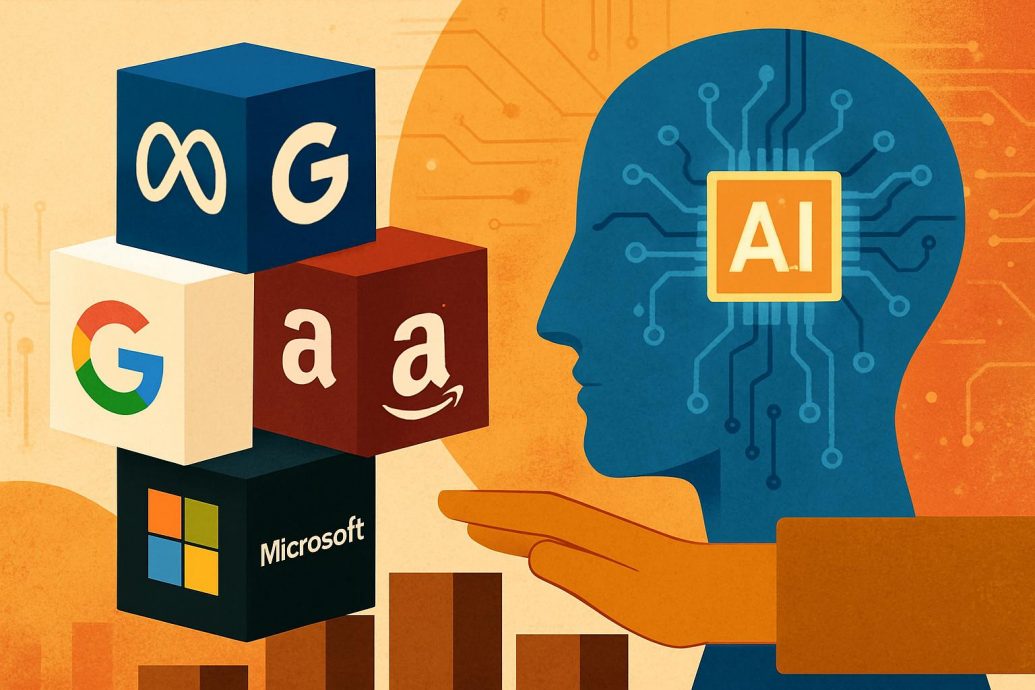
Big Tech Bets Big on AI, and the numbers back it up. In the first half of 2024, companies like Microsoft, Amazon, Meta, and Google have dramatically scaled their capital expenditures, investing billions into AI infrastructure, personnel, and innovation. These investments are more than just technology upgrades. They represent a long-term strategic transformation led by artificial intelligence. With earnings calls signaling bullish sentiment and stock prices reacting positively, it is clear that AI is now central to how tech giants envision future growth. In this article, we break down the spending strategies, global competition, market reactions, and what this means for investors and the broader tech ecosystem.
Key Takeaways
- Microsoft, Amazon, Meta, and Google are driving record-breaking capital expenditures to scale AI infrastructure and capabilities.
- Their Q1 2024 earnings calls highlighted AI as the centerpiece of future revenue strategies, with investor enthusiasm fueling stock rallies.
- Non-U.S. competitors like Tencent and Baidu are also making aggressive AI investments, which intensifies the global arms race.
- AI investment could reshape the innovation landscape, with downstream effects on cloud infrastructure, chip supply, startups, and regulation.
Why AI Is the New Tech Arms Race
The AI revolution has evolved beyond flashy demos and theoretical discussions. Today, it commands the largest line item in corporate capital budgets for the world’s biggest technology firms. According to Q1 2024 earnings disclosures, Microsoft spent over $14 billion in capital expenditures, largely fueled by its Azure AI and cloud infrastructure growth. Amazon followed closely behind with $12.8 billion, mostly attributed to AWS’ generative AI capabilities. Microsoft’s AI strategy has become a cornerstone of its long-term planning.
This momentum is not isolated. Meta confirmed it would allocate more than $35 billion in capital investments for 2024, the bulk of which is earmarked for AI and data center upgrades. Google’s parent company, Alphabet, revealed plans to exceed $40 billion in annualized CapEx. These moves are connected to its ambition to dominate AI infrastructure through platforms like Gemini and TPU technologies.
These investments are not simply expense line increases. They reflect a deep commitment to making AI the central engine of product development, operations, and monetization models.
Big Tech Capital Expenditure Trends in 2024
The primary driver behind these capital surges is the buildout of next-generation AI infrastructure. Here’s a breakdown of announced and projected CapEx for 2024 among the leading Big Tech firms:
| Company | Q1 2024 CapEx (USD) | 2024 Full-Year CapEx Guidance | Primary AI Investment Focus |
|---|---|---|---|
| Microsoft | $14.2B | $50–$52B | Azure AI, OpenAI integrations, data center buildouts |
| Amazon | $12.8B | $48–$50B | AWS generative AI, chip design, compute scaling |
| Google (Alphabet) | $11.3B | $40–$42B | TPU R&D, Gemini LLM deployment, datacenter retrofits |
| Meta | $9.3B | $35–$37B | Llama 3, AI hardware stack, infrastructure overhaul |
Much of this spend is going toward expanding AI data centers, training large language models, developing proprietary chips, and maintaining competitive lead times in foundational research. This level of investment signals a structural reorientation toward AI as the foundation of Big Tech’s future operations.
Tech Earnings Recap: Q1 AI Highlights
Each company’s Q1 earnings call underscored one key theme. AI is delivering monetizable results. Microsoft CEO Satya Nadella revealed that Azure OpenAI services now count over 65 percent of Fortune 500 companies as clients. CFO Amy Hood confirmed that 70 percent of the company’s CapEx increase went directly to AI infrastructure and cloud alignment.
Amazon’s Andy Jassy pointed to strong demand for generative AI workloads. Thousands of enterprise customers are deploying tools that rely on Bedrock and Amazon Q. Meta’s Mark Zuckerberg stated that the company’s AI services, from Llama 3 to Meta AI assistant integration across WhatsApp and Instagram, will drive the next evolution of user engagement.
Alphabet’s CFO Ruth Porat told analysts the company is prioritizing long-term efficiency in AI through custom silicon development. Google Cloud saw 28 percent year-over-year revenue growth, which was largely driven by businesses investing in AI-enhanced solutions.
How China’s Tech Giants Compare
While U.S.-based firms lead the AI spend in absolute terms, Chinese tech conglomerates are catching up quickly. Here’s how major non-U.S. players compare:
- Tencent: Investing over $10 billion into proprietary AI models and expanding data centers across mainland China. Strategy targets include AI governance and SaaS-based AI tools.
- Alibaba Cloud: Committed to building its own LLMs and silicon chips like Hanguang 800. It is allocating an estimated $8 to $9 billion in AI infrastructure spend in 2024.
- Baidu: Focused on its Ernie Bot and autonomous driving. Plans include investing around $3 billion in AI projects this year alone.
These non-U.S. rivals face regulatory and geopolitical barriers. Despite these challenges, their aggressive investments are positioning them strategically across Asia-Pacific markets.
Wall Street Analysts Weigh In
Investor sentiment around Big Tech AI investment is strong. Goldman Sachs noted that AI infrastructure is becoming a multi-year catalyst for profit margins in the tech sector. Morgan Stanley highlighted that AI-driven products will likely define revenue differentiation soon.
JP Morgan’s recent tech outlook stated that AI-oriented capital spend is translating into topline impact faster than previous innovation cycles. Firms leading in AI patents and infrastructure are outperforming peers in both stock growth and analyst ratings.
The AI-driven stock rally has also extended beyond core Big Tech firms. NVIDIA, a leader in AI chip supply, has seen its valuation hit all-time highs. Startups focusing on AI orchestration tools are attracting larger funding rounds, supported by the traction Big Tech has created.
AI Spending and Tech Stock Performance
Capital expenditure is often considered a long-term indicator, yet markets are already pricing AI optimism into current valuations. Since January 2024:
- Microsoft (MSFT): +16% YTD
- NVIDIA (NVDA): +38% YTD
- Amazon (AMZN): +14% YTD
- Alphabet (GOOGL): +13% YTD
- Meta (META): +18% YTD
Investors are betting that early AI monetization will compound future returns. Companies not participating in meaningful AI investment may find it harder to justify growth projections. As enterprise software increasingly includes AI capabilities by default, we are seeing revised forward guidance from companies adding AI solutions from Big Tech providers.
Future Outlook: AI Innovation at Scale
Big Tech’s AI commitment is influencing the global innovation pipeline. Startup ecosystems are forming around APIs and services from large providers. Cloud vendors are adjusting service-level agreements to handle AI-specific workload volumes.
Demand for AI-specific chips is also reshaping the semiconductor sector. NVIDIA’s H100 chips remain in short supply due to high demand from large cloud providers. AMD, Intel, and Google are focusing on improving performance in their AI chips to stay competitive. This has made chip innovation a critical area of competition. Governments around the world are creating regulatory frameworks for AI infrastructure growth, data rights, and responsible usage in training models.