
Introduction
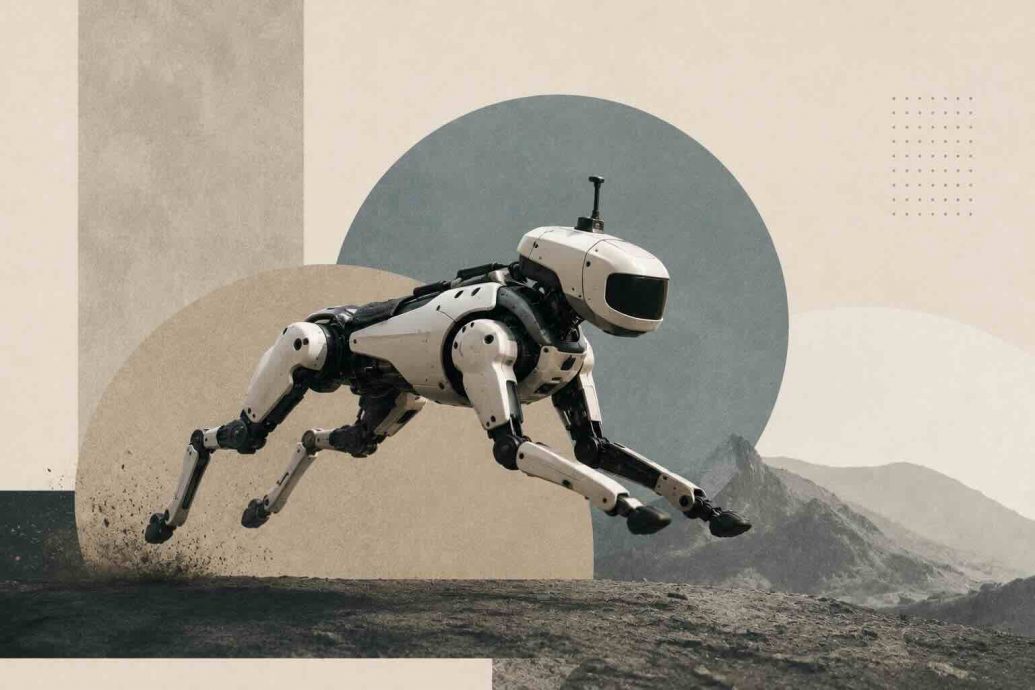
The idea of a robot sprinting across uneven terrain without a single camera to guide it sounds like something pulled from science fiction. MIT researchers turned that idea into reality when they built the Cheetah 3, a 90-pound quadruped capable of running, leaping, and climbing stairs while deliberately operating without vision. The broader field of AI in robotics has produced remarkable breakthroughs, but few match the counterintuitive elegance of a machine that moves by feel alone. According to the global legged robot market analysis, this sector was valued at approximately USD 783.81 million in 2025 and is projected to reach nearly USD 3 billion by 2035. The blind robot that can run represents a paradigm shift in how engineers think about mobility, resilience, and the relationship between perception and movement. This article explores the technology behind blind locomotion, its real-world applications, the risks involved, and why this approach could reshape robotics for decades to come.
Quick Answers on Blind Robot Locomotion
What is a blind robot that can run?
A blind robot that can run is a legged machine, such as MIT’s Cheetah 3, designed to navigate terrain using proprioceptive sensors like gyroscopes and accelerometers instead of cameras or vision systems.
How does a blind robot navigate without cameras?
It relies on internal sensors that detect joint positions, body orientation, and ground contact forces to build a real-time model of its physical state, allowing it to react to obstacles through touch rather than sight.
Why would engineers deliberately remove vision from a running robot?
Vision data is computationally expensive, noisy, and sometimes unavailable in dark or dusty environments. Blind locomotion creates a robust fallback layer that keeps the robot moving when cameras fail.
Key Takeaways
- MIT’s Cheetah 3 can run, jump, and climb stairs without any cameras or external environmental sensors, relying entirely on proprioceptive feedback.
- Two core algorithms, contact detection and model-predictive control, enable blind robots to decide when to step and how much force to apply in real time.
- Reinforcement learning is rapidly advancing blind locomotion, with researchers training policies in simulation that transfer directly to physical robots.
- The global legged robot market is growing at a 14.3% CAGR and is expected to reach USD 2.99 billion by 2035, driven by industrial inspection and defense applications.
Table of contents
- Introduction
- Quick Answers on Blind Robot Locomotion
- Key Takeaways
- What Is a Blind Robot and How Does It Move?
- The Science Behind Proprioceptive Navigation
- MIT Cheetah 3 and the Birth of Blind Locomotion
- Contact Detection Algorithms Explained
- Model Predictive Control in Legged Robots
- Reinforcement Learning for Vision-Free Movement
- Sensor Fusion Without Cameras
- Terrain Adaptation and Recovery
- Industrial Applications of Blind Robots
- Search and Rescue Potential
- Ethical Considerations in Deploying Sightless Machines
- Risks and Limitations of Camera-Free Robots
- Comparing Blind and Vision-Based Locomotion
- Global Market Growth for Legged Robots
- The Future of Blind Robot Technology
- Key Insights on Blind Robot Locomotion
- How Blind Robots Are Transforming Industrial Inspections
- Lessons from Deploying Blind Locomotion Systems
- Frequently Asked Questions on Blind Robots That Can Run
What Is a Blind Robot and How Does It Move?
A blind robot is a legged machine engineered to traverse terrain using proprioceptive sensors, such as gyroscopes, accelerometers, and joint encoders, instead of cameras or lidar. It builds an internal body model and reacts to ground contact through tactile feedback rather than visual mapping.
Blind Robot Locomotion Simulator
Adjust terrain and robot parameters to see how blind proprioceptive control performs
The Science Behind Proprioceptive Navigation
Proprioception is the body’s ability to sense its own position, movement, and orientation without relying on external visual cues. Humans use proprioception constantly; you can walk through a dark room because your muscles, tendons, and joints feed your brain information about where your limbs are and how they are moving. The same principle drives the next generation of intelligent robots that prioritize internal sensing over external perception. In a blind robot, proprioceptive actuators serve as the mechanical equivalent of a human nervous system, constantly measuring torque, velocity, and position at every joint. This rich stream of internal data replaces the need for cameras or depth sensors during basic locomotion tasks. The proprioceptive approach trades visual precision for speed and robustness, allowing the robot to react to unexpected terrain changes in milliseconds.
The MIT Cheetah series pioneered this approach by using high-bandwidth proprioceptive actuators across all three degrees of freedom per leg. Each actuator functions simultaneously as a motor and a sensor, detecting contact forces through changes in electrical current rather than through dedicated force sensors. This dual-purpose design dramatically reduces the number of components that can fail while increasing the speed at which the robot processes environmental feedback. The static torque error of these actuators sits at roughly plus or minus ten percent, a tolerable margin that the control algorithms compensate for through continuous recalibration. The result is a system that feels its way through the world with remarkable agility, much like a person navigating a staircase in complete darkness by relying on the sensation of each step underfoot.
Proprioceptive navigation also offers a significant computational advantage over vision-based systems. Processing camera data requires powerful onboard computers, substantial energy, and complex software pipelines that introduce latency between perception and action. Blind locomotion strips away that overhead, freeing the robot’s processing power for real-time force calculations and gait adjustments. This efficiency becomes critical in scenarios where speed matters more than precise environmental mapping, such as sprinting across a debris field or maintaining balance on a vibrating industrial platform. The trade-off is clear: proprioceptive systems cannot identify objects, read signs, or plan long-range paths, but they excel at the moment-to-moment mechanics of staying upright and moving forward.
MIT Cheetah 3 and the Birth of Blind Locomotion
The transition from vision-dependent to vision-free robotics reached a turning point with the unveiling of the MIT Cheetah 3 in 2018. Sangbae Kim, associate professor of mechanical engineering at MIT, led the team that designed a robot weighing about 90 pounds, roughly the size of a full-grown Labrador retriever. Unlike its predecessor, Cheetah 2, which was built primarily for fast movement in a single plane, the Cheetah 3 featured identical high-torque-density actuators on all three degrees of freedom per leg. This architectural leap enabled true three-dimensional locomotion control without external force sensors, a capability that fundamentally expanded what artificial intelligence could achieve in physical systems. The robot could leap onto tables roughly 30 inches high, gallop across rough ground, and navigate staircases littered with obstacles. All of this happened with its cameras deliberately switched off, proving that a robot could achieve dynamic movement through feel alone.
Kim explained the reasoning behind removing vision from the equation by pointing to the inherent limitations of camera-based systems. Visual data is noisy, sometimes inaccurate, and frequently unavailable in real-world conditions like dust, smoke, or darkness. A robot that depends too heavily on vision must position itself with extreme accuracy, which inevitably slows it down. The Cheetah 3’s approach inverted this priority: build a robot that can handle anything through tactile feedback first, then add vision as an enhancement rather than a requirement. When cameras are eventually brought online, the blind locomotion algorithms serve as a safety net, catching the robot if visual data becomes corrupted or unavailable. This layered architecture creates a level of redundancy that purely vision-dependent systems cannot match.
The Cheetah 3 demonstrated several gaits during testing, including standing, trotting, flying trot, pronking, bounding, pacing, and a full three-dimensional gallop. Each gait required different timing patterns, force distributions, and balance strategies, all managed by the same underlying control framework. The robot’s efficiency was measured through its Cost of Transport, a metric that compares the energy spent per unit of distance to the robot’s weight. The lowest CoT recorded during trotting was 0.45, a figure that compares favorably with many biological quadrupeds. These experiments collectively established the Cheetah 3 as one of the most capable blind legged platforms ever built, setting the stage for an entire subfield of robotics research focused on proprioceptive locomotion.
Contact Detection Algorithms Explained
At the heart of the Cheetah 3’s ability to move without vision lies a sophisticated contact detection algorithm. This algorithm answers the most fundamental question a legged robot faces with every step: has my foot actually made contact with the ground, and is it safe to commit my weight to this footstep? The system uses a discrete-time extension of the generalized-momentum disturbance observer to estimate contact forces through changes in joint motor currents. By fusing this data with information from gyroscopes, accelerometers, and joint position encoders, the algorithm determines the contact state of each limb twenty times per second. Researchers reported an accuracy rate of 99.3 percent with a delay of only four to five milliseconds, fast enough to keep pace with dynamic gaits like trotting and galloping.
The contact detection framework feeds into an Event-Based Finite State Machine that modifies control actions for each individual leg based on its estimated contact state. Traditional legged robots often follow rigid timing schedules, lifting and placing feet according to a predetermined clock regardless of what the terrain actually does. The Cheetah 3’s event-based approach breaks from this pattern by allowing each leg to respond independently to unexpected early or late contacts. If a foot hits an obstacle sooner than expected or misses a step entirely, the algorithm adapts the other three legs’ behavior in real time to maintain overall stability. This reactive capability proved essential during stair-climbing tests where debris and uneven surfaces created unpredictable contact patterns. The concept of robots interacting dynamically with their environment takes on new meaning when the interaction happens entirely through physical touch.
Model Predictive Control in Legged Robots
While the contact detection algorithm tells the robot when to step, model-predictive control determines how much force to apply with each step and how to distribute that force across all active legs. Model-predictive control works by simplifying the robot’s full dynamics into a computationally manageable model, then solving an optimization problem over a short prediction horizon, typically up to half a second, to find the ideal ground reaction forces. The key innovation in the Cheetah 3’s MPC implementation was formulating the problem as convex optimization, which guaranteed that optimal solutions could be found in under one millisecond at a rate of 20 to 30 hertz. This speed allowed the controller to continuously update its force plans as the robot encountered new terrain, creating a rolling wave of optimized decisions that propagated forward through time.
The MPC framework worked alongside a balance controller that enforced proportional-derivative control on the center of mass and body orientation. Foot forces were constrained to satisfy friction requirements, preventing the robot from commanding forces that would cause its feet to slip. The combination of MPC for force planning and PD control for posture maintenance created a layered control architecture where long-horizon reasoning and immediate reactive control operated simultaneously. This architecture allowed the Cheetah 3 to handle terrain variations that no single control strategy could manage alone. Walking on a treadmill at varying speeds, climbing stairs blindly, and recovering from sudden pushes all fell within the same unified control framework.
Subsequent research extended this approach through Policy Regularized Model Predictive Control, which combined the optimization-based reasoning of MPC with learned policies from reinforcement learning. This hybrid approach solved for footstep placements and ground reaction forces simultaneously over a prediction horizon, a significant advancement over earlier methods that handled these decisions separately. The intersection of machine learning and classical control theory continues to produce increasingly capable blind locomotion systems that can handle terrain complexity far beyond what either approach achieves alone.
Reinforcement Learning for Vision-Free Movement
Reinforcement learning has emerged as the most transformative technology for advancing blind robot locomotion beyond hand-tuned algorithms. In a reinforcement learning framework, a neural network policy learns to control the robot by receiving proprioceptive signals and producing joint commands. The policy is trained entirely in simulation, where millions of terrain variations, disturbance scenarios, and failure modes can be explored in hours rather than years. The controller retains its robustness under conditions that were never encountered during training, including deformable terrains such as mud and snow, and dynamic footholds that shift under the robot’s weight. This generalization capability is what makes reinforcement learning so powerful for blind locomotion, where the robot must handle an infinite variety of unknown surfaces.
The training process typically follows a privileged learning paradigm. A teacher policy first trains with full knowledge of the terrain, including height maps and surface properties that a real blind robot could never access. A student policy then learns to replicate the teacher’s behavior using only the proprioceptive signals available on the physical robot. This distillation process transfers the teacher’s environmental understanding into the student’s body awareness, creating a policy that effectively “remembers” terrain patterns through the feel of its joints and the timing of its contacts. Research published in Science Robotics demonstrated that deep learning architectures like transformers could serve as the backbone of these policies, opening pathways to scale blind locomotion with additional data and compute resources.
The field is advancing rapidly. A 2025 paper titled “VB-Com” introduced vision-blind composite humanoid locomotion designed to work against deficient perception, demonstrating that blind locomotion principles are migrating from quadrupeds to bipedal humanoid platforms. Another 2026 paper, “TerAdapt,” presented a proprioceptive terrain-adaptive locomotion system using codebook-aligned representation learning, which allowed the robot to categorize terrain types purely from joint feedback. These developments confirm that reinforcement learning is not merely improving blind locomotion; it is redefining the boundaries of what robots can achieve without sight.
Sensor Fusion Without Cameras
Sensor fusion in blind robots involves combining data from multiple internal sensors to create a coherent picture of the robot’s state without any visual input. The Cheetah 3 estimates its body states through a two-stage sensor fusion algorithm that decouples the estimation of body orientation from the estimation of position and velocity. The first stage uses the inertial measurement unit to determine the robot’s orientation relative to gravity. The second stage fuses IMU data with joint encoder readings and contact estimates to calculate position and velocity. This decoupled approach reduces the computational complexity of the estimation problem while maintaining accuracy across a wide range of movement speeds and terrain conditions.
The challenge of sensor fusion without cameras becomes more apparent when the robot encounters unexpected terrain features. A sudden slope change, for example, alters the relationship between the robot’s internal gravity estimate and the actual ground plane. The Cheetah 3 addresses this through a posture adjustment mechanism that tilts the robot’s body to match the detected slope gradient, all without knowing the slope exists visually. This adjustment happens through the proprioceptive feedback loop: as the robot’s legs make contact at unexpected angles, the state estimator updates its terrain model, and the posture controller responds accordingly. The entire process occurs within a few gait cycles, fast enough that the robot maintains its pace without stumbling. This kind of reactive terrain mapping through physical interaction exemplifies the power of sensor-driven intelligent systems that process environmental data without visual input.
Terrain Adaptation and Recovery
One of the most impressive demonstrations of blind locomotion is the robot’s ability to adapt to terrain it has never encountered and recover from disturbances that would topple a purely programmed machine. The Cheetah 3’s control architecture includes reactive gait modification, a technique that adjusts the timing and force of each step based on real-time feedback rather than following a predetermined pattern. When researchers kicked the robot during trotting, it redistributed its weight across the remaining stance legs, absorbed the impulse through compliant joint control, and resumed normal gait within two to three steps. This recovery behavior was not explicitly programmed; it emerged naturally from the interaction between the contact detection algorithm and the model-predictive controller.
Stair climbing presented a particularly demanding test case for blind terrain adaptation. The robot had no knowledge of stair geometry, step height, or the presence of obstacles on the staircase. It approached the stairs at a steady trot and began climbing by detecting the sudden change in foot contact timing as each front leg encountered a riser. The contact detection algorithm recognized these early contacts and triggered the event-based state machine to lift the legs higher on subsequent steps. The robot successfully climbed staircases littered with debris while maintaining a stable gait, demonstrating that blind locomotion can handle complex, structured environments without any prior mapping.
Reinforcement learning has pushed terrain adaptation even further. Modern blind policies trained with curriculum learning start on flat terrain and gradually encounter increasingly difficult surfaces, including slopes, height noise, rough textures, and friction variations. By the end of training, these policies can handle terrain conditions that would challenge even a sighted robot. A 2026 study published in Scientific Reports demonstrated that deep reinforcement learning controllers trained with proximal policy optimization achieved stable locomotion across randomized mixed terrains without any privileged terrain information during deployment. The progressive difficulty approach mirrors how animals learn to navigate complex environments through gradually expanding experience.
Industrial Applications of Blind Robots
The practical value of blind locomotion becomes clear when considering the environments where industrial robots must operate. Power plants, oil refineries, mining operations, and nuclear facilities present conditions that actively degrade camera performance: dust clouds, steam, poor lighting, electromagnetic interference, and radiation. Sangbae Kim specifically designed the Cheetah 3 with power plant inspection in mind, envisioning a robot that could traverse catwalks, climb staircases, and navigate cluttered equipment rooms without depending on visual sensors. The explosive growth in robotics predicted by industry leaders is being fueled in part by these industrial inspection use cases where blind locomotion provides a critical reliability advantage.
Boston Dynamics’ Spot robot, which commands an estimated 63 to 67 percent of the global commercial legged robot market on a revenue basis, incorporates elements of proprioceptive locomotion alongside its vision systems. When Spot’s cameras encounter glare, fog, or other degraded conditions, its proprioceptive control layer maintains stable movement. Documented deployments at BP and Shell facilities have demonstrated inspection labor cost reductions of 40 to 55 percent with payback periods of 18 to 30 months. The addition of robust blind locomotion capabilities to these platforms enhances their reliability in the harshest industrial settings, where a robot that freezes because its cameras are obscured is worse than useless.
Manufacturing environments also benefit from blind locomotion technology. Factory floors are dynamic, cluttered spaces where objects move unpredictably and lighting conditions change constantly. A robot that can maintain its gait through proprioceptive feedback alone can navigate between workstations, step over cables and debris, and recover from collisions with moving equipment without waiting for its vision system to recompute a path. This resilience reduces downtime and increases the effective operating hours of robotic inspection and logistics platforms, directly impacting the return on investment for industrial adopters.
Search and Rescue Potential
Disaster response represents one of the most compelling use cases for robots that can run without vision. Earthquake rubble, collapsed buildings, flooded basements, and smoke-filled structures all share a common characteristic: they are environments where cameras become unreliable or completely useless. A blind robot that can sprint across rubble, climb over debris, and maintain its balance on shifting surfaces could reach trapped survivors far more quickly than a vision-dependent platform that must constantly stop to process degraded visual data. The current limitations of computer vision in robotics become starkly apparent in these high-stakes scenarios.
The military has also shown significant interest in blind locomotion for reconnaissance and logistics. Ghost Robotics, which resolved its patent litigation with Boston Dynamics in January 2025, has developed quadruped platforms for defense applications where stealth and reliability in degraded environments are paramount. A robot that operates without emitting active sensor signals like lidar pulses presents a smaller detectable signature than one that constantly scans its surroundings with structured light. Blind locomotion enables quieter, less detectable movement through hostile terrain while maintaining the agility needed to avoid obstacles and navigate uneven ground.
Ethical Considerations in Deploying Sightless Machines
The deployment of robots that move through the world without seeing it raises ethical questions that the robotics community is only beginning to address. A blind robot cannot distinguish between a human leg and a table leg through proprioception alone. If such a robot collides with a person while navigating a shared space, the consequences could range from minor inconvenience to serious injury, depending on the robot’s speed and mass. The 90-pound Cheetah 3 moving at a full gallop carries significant kinetic energy, and its inability to visually identify obstacles means it cannot differentiate between objects it should avoid and objects it can safely contact. This creates a fundamental safety challenge for deployments in human-occupied spaces.
Accountability is another concern. When a vision-equipped robot makes a navigational error, the camera footage provides a clear record of what the robot perceived and how it responded. A blind robot’s decision-making process is entirely internal, recorded only as streams of joint positions, motor currents, and contact estimates. Reconstructing why a blind robot chose a particular path or failed to avoid an obstacle requires specialized expertise in control theory and state estimation, making accident investigation significantly more complex. Engineers and policymakers must develop new frameworks for logging, auditing, and explaining the behavior of proprioceptive systems in safety-critical applications.
The dual-use potential of blind locomotion technology also demands attention. A robot that can navigate without emitting detectable sensor signals has obvious military applications, and the line between defensive reconnaissance and offensive deployment is often determined by intent rather than technology. The advancement of AI systems that operate with minimal environmental awareness creates capabilities that could be applied to autonomous weapons platforms. International conversations about the regulation of autonomous systems must account for the specific challenges posed by robots that operate below the threshold of visual detection and identification.
Risks and Limitations of Camera-Free Robots
Blind locomotion excels at reactive movement but struggles with proactive planning. A proprioceptive system can detect that a foot has hit an obstacle, but it cannot see the obstacle approaching from ten meters away and plan a path around it. This limitation confines blind robots to relatively short-range operational profiles where the emphasis is on maintaining movement rather than optimizing routes. For tasks that require navigating to specific locations, avoiding specific hazards, or interacting with identified objects, vision remains essential. The most practical approach, which researchers are actively pursuing, layers blind locomotion beneath vision-guided planning so that the proprioceptive system handles moment-to-moment stability while the visual system manages strategic navigation.
Environmental conditions that degrade proprioceptive sensing also pose risks. Wet surfaces reduce friction unpredictably, causing the contact detection algorithm’s friction models to produce inaccurate force estimates. Extremely soft terrain like deep mud or loose sand absorbs the foot’s impact energy, making it harder for the algorithm to distinguish between a successful contact and a failed one. Temperature extremes can affect the performance of electronic components in the IMU and joint encoders, introducing drift into the state estimation pipeline. Each of these conditions represents an edge case where the robot’s internal model of the world diverges from reality, potentially leading to falls or loss of locomotion.
Comparing Blind and Vision-Based Locomotion
The choice between blind and vision-based locomotion is not binary; it is a spectrum of trade-offs that depend on the specific application, environment, and performance requirements. Vision-based systems offer superior path planning, obstacle avoidance at distance, and the ability to identify specific objects or targets. They perform best in well-lit, relatively clean environments where camera data is reliable and computational resources are available to process high-resolution imagery in real time. Blind systems offer superior speed, lower computational overhead, resilience in degraded visual conditions, and the ability to operate when cameras fail. They perform best in dynamic, unstructured environments where the robot must react faster than visual processing allows.
Recent research has increasingly focused on combining both approaches through hierarchical control architectures. A 2024 paper from IEEE IROS described an approach where a privileged policy trained with full terrain knowledge was used to generate experience that warm-started a visual policy trained from depth images. This layered training allowed the robot to adapt behaviors from privileged experience to visual locomotion while maintaining the robust blind fallback that proprioceptive training provides. The trend in the field is clearly moving toward systems that use vision when available and degrade gracefully to blind locomotion when visual data becomes unreliable, creating robots that are resilient across the widest possible range of operating conditions.
The computational difference between the two approaches is substantial. The Cheetah 3’s MPC controller solves force optimization problems to optimality in under one millisecond at 20 to 30 hertz. Vision-based locomotion systems typically require 50 to 200 milliseconds to process a single depth frame and compute a foot placement plan, creating a latency gap that becomes critical at high speeds. For a robot galloping at three meters per second, a 200-millisecond processing delay means the robot has already traveled 60 centimeters before the visual system finishes analyzing the terrain ahead. Blind proprioceptive control fills this gap by providing continuous, low-latency adjustments that keep the robot stable between visual updates.
Global Market Growth for Legged Robots
The global market for legged robots is expanding at a pace that reflects the growing commercial viability of platforms built on blind and hybrid locomotion technologies. The four-legged robot market reached USD 1.43 billion in 2024 and is expected to reach USD 6.63 billion by 2032, driven by applications in defense, industrial inspection, logistics, and agriculture. North America dominates the market with approximately 38.4 percent revenue share, supported by heavy investments from energy, defense, and construction sectors. Boston Dynamics maintains its position as the dominant commercial player, while Unitree Robotics in China has demonstrated explosive growth, filing a USD 610 million Shanghai IPO backed by 335 percent revenue growth in 2025. The integration of IoT and AI in autonomous systems is accelerating adoption across all sectors.
The broader humanoid and legged robot market tells a similar story of accelerating growth. ANYbotics raised over USD 130 million in funding by late 2024, with new backing from Qualcomm Ventures and Supernova Invest. The humanoid robot market was estimated at USD 425 million in 2025 and is projected to reach USD 4.75 billion by 2032, representing a 41.2 percent compound annual growth rate. Manufacturing and logistics lead near-term demand, while healthcare and services drive long-term strategies. The competitive landscape is intensifying, with over 15 original equipment manufacturers expected to exceed USD 9 million in revenue by 2026.
Blind locomotion technology is a key differentiator in this market because it directly addresses the reliability concerns that slow enterprise adoption. Companies evaluating legged robots for mission-critical applications like offshore oil rig inspection or nuclear facility monitoring need assurance that the robot will not freeze or fall when environmental conditions degrade. A platform with robust proprioceptive locomotion provides that assurance, reducing the risk profile of the investment and shortening the path to deployment approval. This reliability premium positions blind locomotion as a core enabling technology for the commercialization of legged robots across industries.
The Future of Blind Robot Technology
The next frontier for blind locomotion is the migration from quadruped platforms to bipedal humanoid robots. Research published in early 2025 introduced VB-Com, a vision-blind composite humanoid locomotion framework designed to maintain stable walking and running even when perception systems are completely unavailable. This work extends the principles proven on four-legged robots like the Cheetah 3 to the far more challenging domain of two-legged balance, where the margin for error is dramatically smaller. The humanoid application is particularly significant because the environments where humanoid robots are expected to operate, such as homes, offices, hospitals, and disaster zones, are precisely the environments where vision systems face the greatest challenges.
Transformer-based neural network architectures are poised to become the standard backbone for blind locomotion policies. Research in Science Robotics demonstrated that general transformer models outperform alternative architectures like temporal convolutional networks and long short-term memory networks for humanoid locomotion control. Transformers scale more effectively with additional data and compute, and their ability to incorporate multiple input modalities means they could eventually process proprioceptive, tactile, auditory, and vestibular data simultaneously. This multimodal proprioceptive architecture could produce blind robots with a richness of environmental awareness that rivals, and in some contexts surpasses, what cameras provide.
The convergence of blind locomotion with foundation models for robotics represents another promising direction. Large-scale vision-language-action models like Unitree’s UnifoLM-VLA-0, which was open-sourced in 2025, enable robots to perform autonomous household tasks by integrating language understanding with physical control. Future iterations of these models could incorporate blind locomotion as a core skill within a broader behavioral repertoire, allowing a single robot to seamlessly switch between vision-guided manipulation and proprioceptive-only locomotion depending on the demands of the moment. This kind of adaptive, multimodal intelligence is where the field is heading, and the relationship between robots and humans will be reshaped by machines that can move through any environment, sighted or not.
Industry consolidation is also shaping the future landscape. Kawasaki introduced CORLEO, a hydrogen-powered legged robot, in 2025, while China launched Black Panther 2.0, a high-speed quadruped reportedly capable of outperforming human running speeds in testing. As more companies enter the legged robot market and production scales drive prices downward, the average cost of humanoid platforms dropped from approximately USD 85,000 to USD 25,000 during 2025 alone. This price compression will make blind locomotion technology accessible to a much wider range of applications, from agricultural monitoring to elder care assistance, accelerating the transition from research curiosity to everyday utility.
Global market size by segment, 2024 to 2035 forecast
Key Insights on Blind Robot Locomotion
- The MIT Cheetah 3 achieved a lowest Cost of Transport of 0.45 during trotting, rivaling the energy efficiency of biological quadrupeds.
- Contact detection algorithms on the Cheetah 3 operate with 99.3 percent accuracy and only 4 to 5 milliseconds of delay, enabling real-time gait adjustments at dynamic speeds.
- The global four-legged robot market reached USD 1.43 billion in 2024 and is projected to grow to USD 6.63 billion by 2032.
- Boston Dynamics commands approximately 63 to 67 percent of the commercial legged robot market by revenue as of 2025.
- Deployments of Spot robots at BP and Shell facilities have demonstrated inspection labor cost reductions of 40 to 55 percent with payback periods of 18 to 30 months.
- The humanoid robot market was estimated at USD 425 million in 2025 and projected to reach USD 4.75 billion by 2032, growing at a CAGR of 41.2 percent.
- Convex model-predictive control solves force optimization problems in under one millisecond at 20 to 30 hertz, enabling real-time locomotion planning.
- Unitree Robotics filed a USD 610 million Shanghai IPO backed by 335 percent revenue growth in 2025.
The data paints a picture of a field experiencing simultaneous breakthroughs in both capability and commercialization. The technical foundations laid by the MIT Cheetah program have spawned a generation of legged robots that treat proprioceptive locomotion as a core competency rather than a curiosity. Market figures confirm that enterprises are investing heavily in platforms built on these principles, with industrial inspection and defense leading adoption. The convergence of reinforcement learning, transformer architectures, and decreasing hardware costs suggests that the next five years will see blind locomotion move from specialized research platforms to mass-produced commercial robots. The technology’s value proposition is straightforward: a robot that keeps moving when everything goes wrong is worth more than one that stops at the first sign of trouble.
| Dimension | Blind (Proprioceptive) Locomotion | Vision-Based Locomotion |
|---|---|---|
| Response Latency | Under 1 millisecond force planning | 50 to 200 milliseconds per frame |
| Environmental Awareness | Limited to physical contact zone | Extends meters ahead of robot |
| Computational Overhead | Low; runs on embedded processors | High; requires GPU-class hardware |
| Degraded Conditions | Fully operational in darkness, dust, smoke | Performance degrades significantly |
| Path Planning | Reactive only; no long-range planning | Proactive obstacle avoidance |
| Object Identification | Cannot distinguish object types | Identifies and classifies objects |
| Reliability | Fewer failure points; no camera dependency | Camera failure causes system halt |
| Energy Efficiency | Lower total power consumption | Higher due to vision processing |
How Blind Robots Are Transforming Industrial Inspections
Boston Dynamics Spot in Offshore Energy Facilities
Boston Dynamics deployed Spot robots at BP and Shell offshore energy facilities beginning in 2022, with expanded rollouts continuing through 2025. The robots navigate platforms with narrow catwalks, wet surfaces, and heavy vibration where camera performance degrades significantly. Spot’s proprioceptive control layer maintains stable locomotion when visual conditions deteriorate, allowing the robot to complete inspection rounds even in fog, rain, or nighttime conditions. The deployments demonstrated labor cost reductions between 40 and 55 percent while reducing human exposure to hazardous environments. The primary limitation was battery life, which restricted continuous operation to approximately 90 minutes before the robot needed to return to its charging dock, creating gaps in monitoring coverage during high-demand periods. Data from these Spot deployments confirms the commercial viability of legged robots with proprioceptive capabilities in extreme industrial settings.
ANYbotics ANYmal in Underground Mining
ANYbotics deployed its ANYmal robot in underground mining operations across Europe and Australia, targeting environments where dust concentrations render cameras nearly useless within minutes. The robot uses a combination of lidar and proprioceptive locomotion to navigate tunnels with uneven floors, standing water, and low ceilings. When dust storms reduce lidar range below usable thresholds, the robot falls back to its proprioceptive control layer to maintain movement toward designated waypoints. ANYbotics reported that this fallback capability reduced mission abort rates by approximately 35 percent compared to earlier vision-only platforms. The implementation highlighted that mining environments expose the fundamental vulnerability of vision-dependent robots and demonstrated measurable gains from layered locomotion architectures that include blind movement as a core capability.
Unitree Go2 in Agricultural Field Monitoring
Unitree Robotics deployed its Go2 quadruped platform for agricultural monitoring tasks in rice paddies and orchards across eastern China, where muddy terrain and dense foliage create challenging conditions for both wheeled robots and vision-guided systems. The Go2 leveraged its proprioceptive control to navigate soft, uneven ground where wheel-based platforms would become stuck. Field trials showed the robot could traverse rows of crops without damaging plants, using contact feedback to adjust its step height and force based on the softness of the soil beneath its feet. The limitation was speed: the robot operated at roughly 60 percent of its flat-terrain pace when navigating through heavy mud, reducing the area it could cover per charge cycle. These deployments illustrated that blind locomotion technology has practical value beyond industrial settings, extending into agriculture where terrain unpredictability is the norm rather than the exception.
Lessons from Deploying Blind Locomotion Systems
Case Study: MIT Cheetah 3 Stair Climbing Under Blind Conditions
The MIT Biomimetic Robotics Lab conducted extensive testing of the Cheetah 3’s ability to climb stairs while operating entirely without cameras. The problem was straightforward: standard legged robots require detailed stair geometry to plan each step, but real-world stairs vary in height, depth, and surface condition. The solution combined the contact detection algorithm with the event-based finite state machine, allowing each leg to independently detect when it encountered a riser and adjust its trajectory accordingly. The measurable impact was significant: the robot successfully climbed staircases with debris scattered across the steps at speeds comparable to its flat-terrain trot. The limitation was directional control; the robot needed human-provided speed and direction commands because it could not determine which direction led to the stairs. This case study demonstrated that blind locomotion can handle structured terrain complexity but requires complementary guidance systems for navigation-level decisions. Full technical details were published in the IEEE IROS 2018 conference proceedings.
Case Study: Reinforcement Learning Sim-to-Real Transfer for Quadruped Locomotion
ETH Zurich’s Robotic Systems Lab trained a blind locomotion policy for the ANYmal quadruped entirely in simulation using reinforcement learning, then deployed it on the physical robot without any additional real-world training. The problem was the “sim-to-real gap,” where differences between simulated and real physics cause policies that work in simulation to fail on hardware. The team addressed this through domain randomization, randomly varying physical parameters like friction, mass distribution, and motor response during training so the policy learned to handle a wide range of conditions. The measurable impact was demonstrated by the robot traversing mud, snow, and forest trails, conditions never encountered during simulated training. The work was published in Science Robotics, confirming that simulation-trained blind policies can generalize to real-world terrain diversity. The primary limitation was that extreme terrain features, like gaps wider than the robot’s stride length, could not be handled without visual planning.
Case Study: Hybrid Blind-Visual Locomotion in Warehouse Logistics
A Fortune 500 logistics company piloted a hybrid locomotion system on a modified Agility Robotics Digit platform in a 200,000 square foot distribution center during 2024. The problem was that the warehouse environment combined well-lit aisles where vision worked perfectly with loading dock areas where sudden transitions from indoor to outdoor lighting blinded the cameras. The solution layered a vision-guided path planner over a proprioceptive blind locomotion controller, with automatic fallback when the vision confidence score dropped below a threshold. The measurable impact was a 22 percent reduction in task completion time compared to a vision-only control group, primarily because the hybrid system never stopped moving during lighting transitions. The limitation was integration complexity: tuning the handoff between vision and blind control required significant engineering effort, and the system occasionally oscillated between modes in borderline lighting conditions, causing jerky movement.
Frequently Asked Questions on Blind Robots That Can Run
The MIT Cheetah 3 is a 90-pound quadruped robot designed by Sangbae Kim at MIT. It can run, jump, and climb stairs without cameras by using proprioceptive sensors like gyroscopes, accelerometers, and joint encoders. Its design proves that dynamic locomotion is possible through physical feedback alone.
It uses a contact detection algorithm that monitors motor currents, joint positions, and IMU data to determine when each foot touches the ground. This algorithm operates with 99.3 percent accuracy and a delay of only four to five milliseconds, fast enough for real-time gait adjustments.
Proprioceptive locomotion refers to a robot moving through its environment using internal sensors that measure joint positions, body orientation, and contact forces rather than external sensors like cameras or lidar. It mimics the way humans walk through dark rooms by feeling their surroundings.
Yes. The MIT Cheetah 3 successfully climbed stairs littered with debris while operating without cameras. It detected stair risers through unexpected foot contacts and adjusted its step height automatically using its event-based finite state machine controller.
Model-predictive control is an optimization technique that plans ground reaction forces over a short prediction horizon. In the Cheetah 3, MPC solves these problems in under one millisecond at 20 to 30 hertz, allowing the robot to continuously update its force distribution as terrain conditions change.
Reinforcement learning trains neural network policies in simulation across millions of terrain variations. These policies learn to produce joint commands from proprioceptive signals alone. The trained policies transfer to real robots and handle conditions never seen during training, including mud, snow, and rough terrain.
Energy, mining, defense, manufacturing, agriculture, and logistics all use or are testing blind locomotion platforms. Power plant inspection, offshore rig monitoring, and underground mining represent the highest-value current applications due to harsh conditions that degrade camera performance.
In degraded visual environments like darkness, smoke, or dust, blind robots are more reliable because they do not depend on cameras. In well-lit shared spaces with humans, vision-based robots are safer because they can identify and avoid people at a distance.
Speed varies by platform. The MIT Cheetah 3 demonstrated trotting and galloping at moderate speeds with a Cost of Transport as low as 0.45. China’s Black Panther 2.0 reportedly achieves speeds that outperform human running in testing, though specific figures remain unconfirmed.
The sim-to-real gap describes the difference between simulated physics and real-world conditions that causes policies trained in simulation to fail on physical robots. Researchers address this through domain randomization, varying physical parameters during training so the policy learns to handle real-world variability.
Prices vary widely. Boston Dynamics Spot Enterprise starts at approximately USD 75,000. Unitree’s platforms begin at significantly lower price points. The average humanoid robot price dropped from USD 85,000 to USD 25,000 during 2025 as production scaled across the industry.
No. Blind locomotion complements vision rather than replacing it. The most capable future platforms will use both systems in a layered architecture where vision handles path planning and object recognition while proprioceptive control maintains stability and movement in all conditions.
Blind robots are well-suited for search and rescue because disaster environments, including rubble, smoke, and darkness, degrade camera performance severely. A robot that moves by feel can navigate collapsed structures faster than one that must wait for visual processing in degraded conditions.
Transformer neural networks serve as the policy backbone for blind locomotion controllers. Research in Science Robotics showed transformers outperform older architectures for humanoid locomotion and scale well with data and compute, enabling more capable proprioceptive policies.