
Introduction
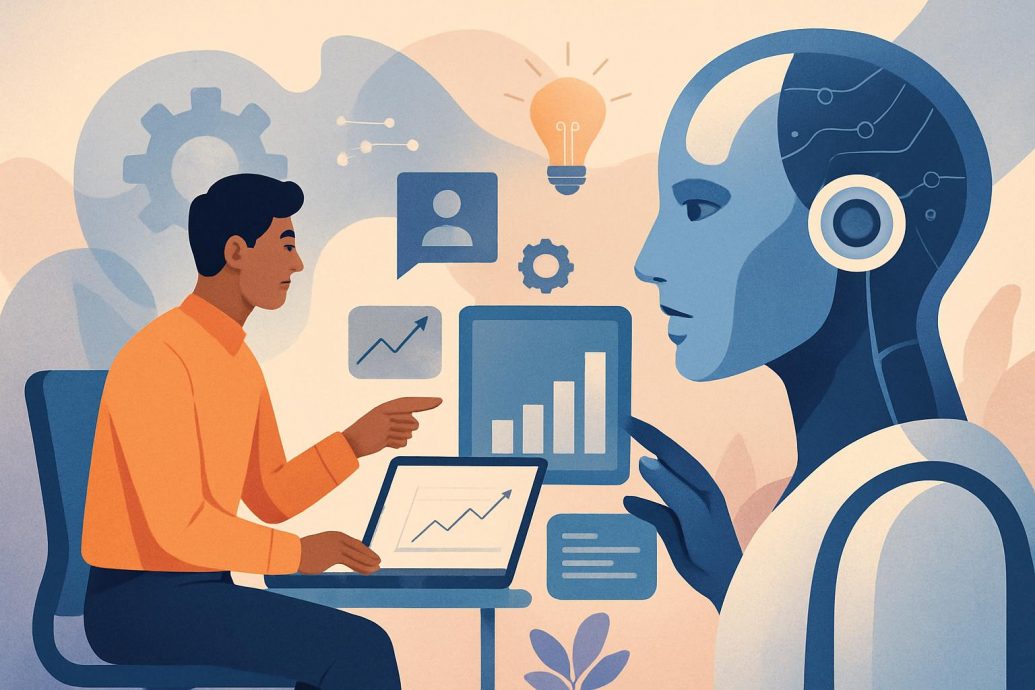
The topic of AI and the future of work is now at the forefront of public debate, and for good reason. As artificial intelligence transforms industries ranging from manufacturing to marketing, work itself is being redefined. Employees, employers, and policymakers are all facing urgent questions. Will AI take more jobs than it creates? What careers will thrive, and which will vanish? And how can we prepare future generations for a world where automation accelerates faster than regulation? This article explores the deep structural changes AI is catalyzing across the global job market. It offers data-backed insights, expert opinions, and historical analogies to equip readers with strategic understanding and actionable foresight.
Key Takeaways
- AI will displace certain jobs, but will also create new roles, especially in tech, green energy, and care industries.
- Sectors such as manufacturing, retail, and transport are at high risk of automation exposure.
- Workforce upskilling, education reform, and adaptive policy frameworks are essential to mitigate risks.
- Emotional resilience and learning agility will become critical assets for future professionals.
The Dual Impact of AI: Automation vs. Expansion
AI is a powerful force with the capacity to both disrupt and expand the workforce. According to McKinsey & Company, by 2030, up to 30 percent of hours worked globally could be automated. That same period is also expected to witness a net increase of jobs in healthcare, STEM, and renewable energy.
This paradox reflects automation’s dual role. Repetitive and predictable tasks are being replaced by algorithms and robots. New sectors and technologies are creating demand for human supervision, creative thinking, and ethical judgment. AI job creation statistics from the World Economic Forum’s 2023 Future of Jobs report suggest that 69 million jobs may be generated while 83 million could be eliminated. The key is not avoiding AI but rather investing in effective models for human-AI collaboration.
Industries Facing the Strongest Waves of Change
Automation and AI affect sectors differently. High-exposure sectors rely on routine, structured tasks that machines can replicate easily. Below is a comparative breakdown:
| Industry | Jobs at Risk from AI | AI Job Creation Potential |
|---|---|---|
| Manufacturing | High (assembly line automation) | Low to Moderate (robot maintenance, system oversight) |
| Retail | High (automated checkouts, inventory) | Moderate (eCommerce logistics, supply chain analytics) |
| Healthcare | Low (AI assists, doesn’t replace) | High (medical imaging, diagnostics, care services) |
| Finance | Moderate (automated trading, fraud detection) | High (AI in FinTech innovation, compliance) |
| Education | Low (personalization tools aid, not replace teachers) | High (AI curriculum design, edtech platforms) |
This segmentation highlights the growing divide between job types based on creative, analytical, and interpersonal complexity versus tasks guided by routine execution. For a deeper look at occupations facing the greatest threat, refer to this breakdown of jobs threatened by AI by 2030.
Historical Comparisons: Lessons from Past Technological Revolutions
AI is not the first force to reshape labor markets. The Industrial Revolution in the 18th century and the computing wave of the 20th century caused significant disruption that eventually gave way to new employment models and productivity levels.
The mechanization of farming displaced agricultural workers but increased demand for industrial labor. In the 1980s and 90s, concerns about computers reducing job availability did not bear out. In fact, that era introduced roles in IT, digital services, and software engineering. These transformations followed a familiar path: displacement followed by reinvention. The difference now is speed. Gartner reports suggest that AI development is advancing two to three times faster than previous labor-transforming technologies, making adaptation more urgent.
Reskilling & Workforce Development: Preparing for the AI Transition
To reduce disruptions and improve economic resilience, workforce development must evolve rapidly. Organizations such as MIT’s Work of the Future task force and the OECD emphasize the need for lifelong learning and flexible skill systems. Recommended measures include:
- Expand digital literacy with government-backed training and certified micro-learning initiatives.
- Incentivize employer-led upskilling using tax benefits and public-private collaboration.
- Introduce AI education across K–12 and higher education to encourage early, positive interaction with these technologies.
- Promote soft skills like emotional intelligence and critical thinking that remain uniquely human and less automatable.
The World Economic Forum lists adaptability, analytical thinking, and AI literacy as the most valuable skill areas this decade. Broader implementation of these initiatives can make the coming transitions less disruptive and more inclusive. This is an important dimension of the larger picture explored in depth within AI and the future of work.
Emotional Impact of AI: Managing Workforce Psychology
Widespread AI adoption affects workplace psychology. Many employees, especially in mid-career stages, experience stress and uncertainty while adapting to automation. Questions about identity, job security, and relevance arise even before training begins.
Dr. Rachel Liu, a labor psychologist at Oxford University, notes that fear of replacement is often stronger than the drive to retrain. Emotional resilience can help settle this discomfort. Building confidence in one’s ability to adapt is just as important as acquiring technical certifications.
Employers can reduce these anxieties by offering coaching programs focused on change management and readiness. Schools and training platforms should do more to encourage cognitive flexibility and promote realistic optimism about shifting careers.
Geographic Divide: How AI Affects Regions Differently
AI will not reshape labor equally across regions. In highly industrialized areas, high-tech sectors may expand employment options, while rural or infrastructure-poor regions could face slower transitions or higher displacement risk.
- Urban zones in North America and Europe may gain tech jobs and automation supervision roles.
- Rural communities may face longer adaptation times and need targeted broadband and training support.
- Some emerging economies may bypass older systems and jump directly into AI-enabled services, provided they receive adequate investment.
International organizations recommend cross-border collaboration to share knowledge and technology fairly. Initiatives like those from the International Labour Organization encourage bilateral partnerships that support such equitable transformation.
Policy Principles for the Age of Automation
Well-designed policy can ease the strain of AI-driven job displacement. Research from labor economists and institutions such as the Brookings Institution points to key action areas:
- Wider access to training through grants and subsidies tailored to quickly preparing displaced workers for new fields.
- AI regulation frameworks that ensure transparent and ethical use of automation, especially in hiring and evaluation processes.
- Worker transition guarantees like mobility assistance and wage insurance for those moving between industries.
- Worker inclusion in decision-making, involving unions and labor groups in technology adoption plans.
Effective policy does not resist technology but prepares people to work with it. For greater insights on such strategies in practice, visit this exploration of economic impacts of AI job threats.
Frequently Asked Questions
How will AI affect jobs in the future?
AI will automate repetitive and rule-based tasks while augmenting complex, creative, and strategic roles. Some jobs will disappear, many will evolve, and new roles will emerge in AI development, oversight, and system integration.
Will AI replace human workers?
AI will replace certain tasks, not entire professions. Jobs involving predictable workflows are most vulnerable, while roles requiring judgment, empathy, creativity, and leadership are more resistant to automation.
What jobs are most at risk from AI?
Jobs most at risk include data entry, basic accounting, routine customer service, telemarketing, and repetitive manufacturing roles. These positions rely heavily on structured tasks that AI systems can automate efficiently.
What jobs are safest from AI?
Jobs safest from AI typically require human interaction, creativity, and physical dexterity. Examples include healthcare providers, skilled trades, leadership roles, therapists, educators, and complex engineering positions.
What new jobs will AI create?
AI is expected to create roles such as AI engineers, prompt engineers, AI ethicists, data scientists, automation specialists, and human-AI workflow designers. Demand for oversight, governance, and AI integration experts is increasing.
How can workers prepare for AI disruption?
Workers can prepare by developing digital literacy, analytical thinking, adaptability, and AI collaboration skills. Learning how to use AI tools effectively will become as important as traditional technical skills.
Will AI increase productivity in the workplace?
Yes, AI can significantly increase productivity by automating repetitive tasks, analyzing data faster, and improving decision-making. Organizations using AI strategically often report measurable efficiency gains.
How does AI change workplace skills requirements?
AI shifts skill demand toward critical thinking, problem-solving, creativity, and technology fluency. Employees increasingly need to interpret AI outputs and integrate automated systems into workflows.
Will AI widen income inequality?
AI could widen income inequality if automation disproportionately impacts lower-skilled roles. However, policy interventions, reskilling programs, and inclusive AI adoption strategies may reduce this risk.
Is AI good or bad for the future of work?
AI’s impact depends on implementation. It can enhance productivity and innovation, but it also raises concerns about displacement and economic transition. Outcomes will depend on education systems, regulation, and corporate responsibility.
How fast is AI changing the workforce?
AI adoption is accelerating rapidly across industries. While full workforce transformation will take years, many sectors are already integrating AI tools into daily operations.
What industries will AI impact the most?
AI will significantly impact technology, finance, healthcare, manufacturing, media, logistics, retail, and professional services. Knowledge-based and data-intensive industries are seeing the fastest change.
Conclusion
AI is reshaping the future of work by transforming how tasks are performed, redefining required skills, and accelerating automation across industries. While certain roles face displacement, new opportunities are emerging in AI development, oversight, and integration. The long-term impact will depend on workforce adaptation, education reform, and responsible AI governance. The future of work is not solely about replacement, but about collaboration between human intelligence and machine capability.