
Introduction
The age of AI-powered combat drones is no longer a vision of the future; it is the defining reality of modern warfare. According to Global Market Insights, the military drone market exceeded $18.2 billion in 2025 and is projected to grow at a compound annual growth rate of 13.8% through 2035. Nations around the world are racing to deploy unmanned aerial vehicles that can fly, fight, and make tactical decisions without direct human control. The first successful demonstration of an AI-piloted combat drone in real flight conditions sent shockwaves through the defense establishment and reshaped expectations about what machines can achieve in conflict zones. From the battlefields of Ukraine, where drones now account for 80% of all casualties, to Pentagon testing ranges in Florida, autonomous air combat is accelerating faster than regulations or ethical frameworks can keep pace. This article examines the technology, the milestones, the geopolitical competition, and the profound moral questions that accompany the first combat drone with artificial intelligence to enter operational testing.
Quick Answers on AI-Powered Combat Drones
What is an AI combat drone and why does it matter?
An AI combat drone is an unmanned aerial vehicle equipped with machine learning, computer vision, and autonomous decision-making systems that allow it to execute military missions with minimal or no human input, fundamentally changing the speed and scale of warfare.
Which drone was the first to fly autonomously using artificial intelligence in combat scenarios?
The XQ-58A Valkyrie became the first drone to solve aerial combat challenges autonomously using AI software during a three-hour test flight at Eglin Air Force Base in July 2023, trained through millions of simulated hours.
How much is the Pentagon investing in AI drone warfare?
The Pentagon’s fiscal 2027 budget requests $53.6 billion for autonomous drone platforms and contested logistics, plus $21 billion for counter-drone technologies, representing the largest investment in drone warfare in U.S. history.
Key Takeaways
- The XQ-58A Valkyrie completed the first AI-piloted autonomous combat mission in July 2023, solving real-time aerial engagement problems without human input.
- Ukraine’s battlefield data proves AI drones are now the dominant force in modern warfare, responsible for up to 96% of battlefield casualties in early 2026.
- The Pentagon plans to field at least 1,000 Collaborative Combat Aircraft and has proposed a 24,000% budget increase for its Defense Autonomous Warfare Group.
- International regulation efforts remain fragmented, with the UN pushing for a binding treaty on lethal autonomous weapons by 2026 while major military powers resist restrictions.
Table of contents
- Introduction
- Quick Answers on AI-Powered Combat Drones
- Key Takeaways
- What Is an AI Combat Drone and How It Operates
- Origins of Autonomous Air Combat Technology
- How the XQ-58A Valkyrie Became the World’s First AI-Piloted Fighter Drone
- The Collaborative Combat Aircraft Program and Its Strategic Mission
- Shield AI’s X-BAT and the Rise of Autonomous Vertical Takeoff Fighters
- Turkey’s Bayraktar Kizılelma and the Global Race for AI Drone Superiority
- How AI Enables Drones to Fly, Fight, and Decide Without Human Input
- Machine Learning and Computer Vision on the Modern Battlefield
- Drone Swarms and the Future of Coordinated Autonomous Attacks
- Ukraine’s Drone Revolution and Lessons for AI Combat
- The Pentagon’s $54 Billion Investment in Autonomous Warfare
- Ethical Dilemmas Surrounding Lethal Autonomous Weapons
- International Regulation and the Push for a Global AI Weapons Treaty
- Civilian Casualties and the Accountability Gap in AI Drone Warfare
- Counter-Drone Technology and the Arms Race It Triggered
- What AI Combat Drones Signal for the Future of Global Security
- How AI-Powered Drones Are Transforming Defense Operations Worldwide
- Lessons From AI Drone Deployments in Active Conflicts
- Frequently Asked Questions On The First Combat Drone With Artificial Intelligence Shocked The World!
What Is an AI Combat Drone and How It Operates
An AI combat drone is an unmanned aerial vehicle that uses onboard artificial intelligence, machine learning algorithms, and computer vision to interpret environments, identify targets, and execute military missions with minimal human input, replacing traditional remote piloting with autonomous decision-making at machine speed.
AI Combat Drone Capability Explorer
Adjust parameters to explore how AI autonomy, speed, and swarm size affect mission effectiveness.
Configure Mission
Mission Effectiveness
Tactical Insight
At 70% autonomy with 5 drones, this configuration balances human oversight with AI speed.
Origins of Autonomous Air Combat Technology
The concept of removing human pilots from military aircraft dates back decades, but practical autonomous air combat remained elusive until recent breakthroughs in artificial intelligence. Early unmanned aerial vehicles like the MQ-1 Predator and MQ-9 Reaper were remotely piloted, requiring constant human teleoperation through satellite links to carry out surveillance and precision strikes. These platforms proved valuable in counterterrorism operations across the Middle East, yet they were fundamentally limited by latency, bandwidth, and the number of trained operators available. The vision of a truly autonomous combat aircraft required advances in onboard processing, neural networks, and sensor fusion that simply did not exist before 2020.
The U.S. Department of Defense began seriously investing in military AI applications around 2014, with DARPA leading efforts to create systems capable of real-time battlefield reasoning. Project Maven, launched in 2017, applied machine learning to drone surveillance footage analysis, automating the detection of hostile activity and dramatically reducing the workload on human analysts. This project became a controversial milestone, sparking internal protests at Google and raising public awareness about the ethical dimensions of AI in warfare. The Air Force Research Laboratory simultaneously began developing the Skyborg program, which aimed to create an AI copilot capable of controlling unmanned wingmen alongside human-piloted fighters.
The convergence of cheaper computing hardware, massive simulation environments, and neural network architectures created the conditions for autonomous air combat to move from theory to demonstrated capability. Deputy Secretary of Defense Kathleen Hicks articulated the strategy in 2023, calling for “small, smart, cheap, and many” autonomous systems to overhaul the military’s innovation pace. The Low-Cost Attritable Aircraft Technology initiative produced the XQ-58A Valkyrie, embodying this philosophy by designing jet-powered combat drones at a fraction of traditional fighter costs. Each Valkyrie was built for approximately $2 to $3 million, compared to over $80 million for an F-35 Joint Strike Fighter, making it economically viable to deploy them in large numbers and accept combat losses without catastrophic financial consequences.
How the XQ-58A Valkyrie Became the World’s First AI-Piloted Fighter Drone
The technological foundation for autonomous air combat reached its first definitive milestone on July 25, 2023, when an XQ-58A Valkyrie drone successfully completed a three-hour test flight at the Eglin Test and Training Complex in Florida using artificial intelligence software. The AI algorithms, developed by the Air Force Research Laboratory’s Autonomous Air Combat Operations team, used neural networks trained through millions of hours in high-fidelity simulations before being transferred to the physical aircraft. During the sortie, the Valkyrie autonomously solved what the Air Force described as an aerial combat “challenge problem,” demonstrating the ability to engage simulated opponents using mock weapons. Colonel Tucker Hamilton, the Air Force’s chief of AI test and operations, confirmed that the flight officially enables the development of AI agents that execute modern air-to-air and air-to-surface skills transferable directly to the Collaborative Combat Aircraft program.
The XQ-58A Valkyrie is a stealthy, jet-powered unmanned combat aerial vehicle developed by Kratos Defense and Security Solutions in partnership with the Air Force Research Laboratory. The aircraft measures 30 feet in length with a 27-foot wingspan and can reach speeds of Mach 0.85, operate at altitudes up to 45,000 feet, and cover a range exceeding 2,000 nautical miles. What makes the Valkyrie exceptional is its runway independence: it launches using a rocket-assisted takeoff system and recovers via parachute, allowing it to operate from austere or forward-deployed locations. This capability aligned perfectly with the Marine Corps’ vision for expeditionary warfare, leading to a separate track of Valkyrie testing under their MUX TACAIR program beginning in 2022.
Subsequent testing expanded the Valkyrie’s capabilities significantly through 2024 and 2025. In September 2024, the Marine Corps demonstrated newly added Link-16 tactical data exchange capabilities, marking the first time the Department of Defense controlled an air vehicle using offboard expeditionary methods. During Emerald Flag 2024, the Valkyrie operated as a forward-deployed sensing platform, providing threat targeting data to F-35B fighters and demonstrating cooperative kill chain closure between manned and unmanned platforms for the first time in a large-force exercise. By July 2025, pilots aboard an F-16C and an F-15E each controlled two XQ-58A Valkyries simultaneously in an air combat training scenario, validating the human-machine teaming concept central to future autonomous warfare doctrine.
The Collaborative Combat Aircraft Program and Its Strategic Mission
Building on the Valkyrie’s autonomous flight demonstrations, the Air Force formalized its commitment to AI-piloted drones through the Collaborative Combat Aircraft program, a critical component of the broader Next Generation Air Dominance modernization initiative. The CCA program aims to develop autonomous drone wingmen that fly alongside manned fighters, acting as force multipliers capable of carrying weapons, conducting electronic warfare, and absorbing enemy fire. The Air Force set a planning assumption of at least 1,000 CCAs, based on a concept pairing two autonomous aircraft with each of 200 NGAD stealth fighters and 300 F-35A Joint Strike Fighters. In 2024, the service awarded contracts for the first CCA airframes to General Atomics (YFQ-42A) and Anduril Industries (YFQ-44A), with autonomy software provided by RTX and Shield AI respectively.
The Air Force’s fiscal 2027 budget request includes nearly $1 billion to initiate procurement of the first CCA production drones, signaling the transition from experimental prototyping to operational acquisition. Former Air Force Secretary Frank Kendall personally demonstrated confidence in AI pilots in May 2024 by flying aboard an autonomous F-16, the X-62A VISTA, which conducted AI-controlled dogfighting maneuvers at speeds exceeding 550 miles per hour. The political will to accelerate autonomous combat is now bipartisan, with both defense leadership and congressional appropriators viewing AI-enabled drones as essential to maintaining air superiority against peer competitors like China and Russia.
Shield AI’s X-BAT and the Rise of Autonomous Vertical Takeoff Fighters
While the Valkyrie and CCA program pushed boundaries of autonomous fixed-wing combat, Shield AI introduced a new paradigm with the unveiling of the X-BAT in October 2025. The San Diego defense technology company revealed a fully autonomous vertical takeoff and landing fighter jet designed to fly combat missions without runways, GPS, or communications links. The X-BAT is powered by Shield AI’s Hivemind autonomy software, the same AI pilot combat-proven on smaller platforms and now being integrated into Anduril’s CCA airframe. Hivemind enables the X-BAT to operate in GPS-denied and communications-jammed environments, making independent tactical decisions at machine speed without requiring human input during mission execution.
The X-BAT’s vertical takeoff capability addresses one of the most critical vulnerabilities in modern air warfare: the dependence on fixed runways that can be targeted by adversary missiles. A single commander can theoretically fly a team of multiple X-BATs to autonomously execute complex missions through peer-to-peer networking rather than centralized ground control. Shield AI completed ground tests validating the airframe, engine, and vertical takeoff capability, with first VTOL flights scheduled for fall 2026 and full mission capability demonstrations by 2028. The design philosophy reflects a growing consensus that future air combat will be defined by the ability to deploy large numbers of autonomous, networked, expendable platforms that overwhelm defenses through coordination and speed.
Shield AI’s trajectory illustrates the expanding role of private defense technology startups in reshaping military capabilities. The company’s Hivemind platform was originally developed for small quadcopter operations in GPS-denied environments and has since scaled to power fighter-class aircraft. The selection of Shield AI to provide autonomy for Anduril’s CCA airframe positions autonomous combat systems built by non-traditional defense contractors alongside those from legacy primes like General Atomics and Northrop Grumman, driving rapid innovation cycles that traditional procurement timelines have historically been unable to match.
Turkey’s Bayraktar Kizılelma and the Global Race for AI Drone Superiority
The competition to field the first operational AI combat drone extends well beyond the United States, with Turkey’s Baykar emerging as a formidable contender through its Bayraktar Kizılelma program. The Kizılelma is classified as an unmanned stealth multirole fighter and AI-based autonomous aircraft designed to serve as a loyal wingman for manned Turkish Air Force jets. Baykar completed the drone’s maiden flight in December 2022 and moved through five prototype variants, with the first delivery to the Turkish Armed Forces set for the first quarter of 2026. The aircraft incorporates stealth design principles, jet propulsion, and autonomous decision-making capabilities that place it in direct competition with American CCA concepts.
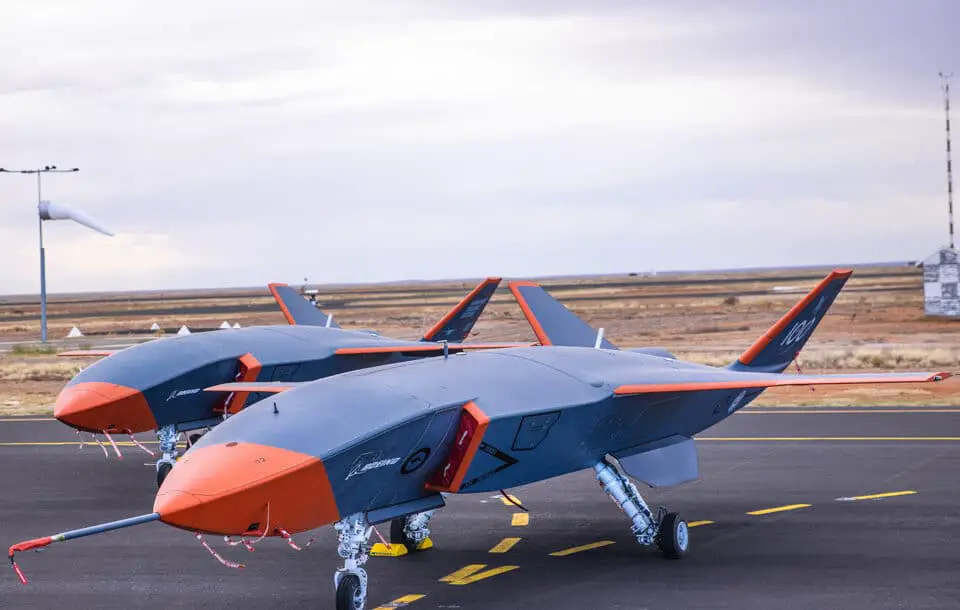
China’s rapid advancement in autonomous drone technology represents perhaps the most strategically significant development in the global AI arms race. At the 2024 Zhuhai Airshow, Norinco debuted an entire brigade of armored vehicles and drones controlled by artificial intelligence, showcasing an integrated autonomous combat ecosystem. In January 2026, a broadcast from the PLA’s National University of Defence Technology showed a single soldier operating 200 autonomous drones, alarming Pentagon officials who expressed concerns about matching China’s manufacturing dominance in autonomous weapon systems. Boeing’s MQ-28 Ghost Bat (developed with the Royal Australian Air Force) and Europe’s Helsing HX-2 AI strike drone further expand the list of nations racing to deploy autonomous combat aircraft.
How AI Enables Drones to Fly, Fight, and Decide Without Human Input
The AI systems powering modern combat drones operate through a layered architecture of perception, reasoning, and action that mirrors and accelerates human cognitive processes. At the perception layer, onboard sensors including electro-optical cameras, infrared imaging, radar, and lidar feed raw environmental data into computer vision algorithms that identify, classify, and track objects in real time. These computer vision models are built on convolutional neural networks trained on millions of labeled images of military vehicles, terrain features, personnel, and weapon signatures. The perception system must function reliably across varying weather conditions, lighting environments, and electronic warfare scenarios where adversaries are actively attempting to deceive the drone’s sensors.
The reasoning layer is where true autonomous decision-making occurs and represents the most consequential technological advancement. Reinforcement learning algorithms, the same class of techniques that enabled DeepMind’s systems to master complex games, are trained through millions of simulated combat encounters to develop tactical behaviors. The AI pilot learns optimal responses to dynamic situations by repeatedly experiencing scenarios: engaging enemy aircraft, evading missile threats, coordinating with wingmen, selecting weapons, and managing fuel constraints. The X-62A VISTA AI was trained through millions of hours in high-fidelity simulation events before being trusted with real flight control. This simulation-to-reality transfer is a critical engineering challenge because the real world introduces noise and adversary behavior that simulations cannot perfectly replicate.
At the action layer, the AI translates decisions into physical flight commands, weapons deployment, and communication with other platforms. Modern autonomous drones process the entire perception-to-action loop in milliseconds, far faster than any human pilot could react. The University of Zurich demonstrated this speed advantage when their AI-controlled quadcopter beat human champion drone racers with reaction times as fast as 3.5 milliseconds. In military applications, this speed translates to superior maneuvering in dogfights, faster target engagement, and the ability to process battlespace data volumes that would overwhelm human cognitive capacity.
The integration of natural language processing into drone command interfaces represents the next frontier in human-machine teaming. The Defense Innovation Unit has launched contests seeking ways to control autonomous drones using plain language commands, much like directing a soldier or using a large language model. This capability would allow field commanders to issue high-level mission objectives and have AI systems autonomously determine the optimal drone formations, flight paths, sensor configurations, and engagement rules. The shift from joystick-level remote piloting to intent-based autonomous operations fundamentally changes the skill set required for drone operators and the organizational structures needed to manage autonomous fleets.
Machine Learning and Computer Vision on the Modern Battlefield
Machine learning has already proven its operational value in combat settings, with measurable improvements in drone effectiveness documented across active conflict zones. Ukraine’s integration of AI-powered targeting systems into first-person view drones increased strike accuracy from a baseline of 30 to 50 percent to approximately 80 percent, a transformation that Ukrainian drone operators attribute directly to machine learning algorithms assisting with target identification. These improvements represent the difference between a strike that neutralizes a military target and one that misses or causes unintended civilian harm. The data generated by each engagement feeds back into the training pipeline, creating a continuous improvement cycle where AI models become progressively more effective with each combat deployment.
Computer vision technology on the battlefield extends far beyond simple target detection to encompass complex scene understanding, behavior prediction, and damage assessment. Modern AI systems can distinguish between civilian vehicles and military transports, identify camouflaged positions, detect movement patterns indicating troop concentrations, and assess structural integrity after strikes. Northrop Grumman’s Lumberjack one-way attack drone, tested with the Army’s 101st Airborne Division in early 2026, showcased autonomous target detection and adaptive targeting powered by AI, going from concept to flight in under 14 months. The Maven Smart System integrates with platforms like the Lumberjack, using AI to fuse data from multiple sensor feeds and provide operators with prioritized threat assessments.
The challenges facing battlefield computer vision are substantial and directly impact autonomous weapon reliability. Adversarial AI techniques allow opponents to manipulate sensor inputs through camouflage, decoys, electronic warfare, and deliberately crafted visual patterns designed to confuse neural network classifiers. The “black box” nature of deep learning models means engineers cannot always explain why an AI classified a particular target, creating accountability gaps when errors in classification lead to civilian casualties. Military AI developers are investing in explainable AI techniques and robust testing, but the tension between autonomous targeting speed and reliable, interpretable decision-making remains a defining technical challenge.
Drone Swarms and the Future of Coordinated Autonomous Attacks
Among the most transformative capabilities enabled by artificial intelligence is the coordination of multiple autonomous drones into swarms operating as a unified tactical force. Unlike traditional operations where each aircraft requires a dedicated human operator, swarm technology allows a single commander to direct dozens or hundreds of drones through AI-mediated coordination. The drones communicate using peer-to-peer networking, dynamically reassigning roles, redistributing targets, and adapting formations without waiting for human instructions. DARPA’s Decentralized Artificial Intelligence through Controlled Emergence program is developing the ability for autonomous systems to dynamically form teams using peer-to-peer coordination to execute complex missions.
China demonstrated the most dramatic public display of swarm capability when, in January 2026, a broadcast from the PLA’s National University of Defence Technology showed a single soldier operating 200 autonomous drones. This demonstration validated a doctrine of overwhelming quantity enabled by AI coordination, directly challenging the Western emphasis on fewer, more expensive individual platforms. Whoever successfully deploys coordinated drone swarms first will possess a massive battlefield advantage, because defenders must engage each individual drone while attackers can afford to lose significant numbers while still achieving mission objectives. Both Ukraine and Russia are reportedly close to deploying effective swarm tactics, with observers comparing the competition to Cold War arms racing.
The proliferation of swarm technology beyond major military powers represents an additional security concern. The 2026 Global Terrorism Index documented that the Revolutionary Armed Forces of Colombia and the National Liberation Army adopted drone warfare tactics directly inspired by innovations in Ukraine, recording 77 attacks between 2024 and 2025. While these were not AI-coordinated swarms, the trajectory from individual armed drones to coordinated autonomous attacks is technologically straightforward as AI software becomes more available. The combination of open-source AI frameworks, commercially available drone hardware, and battlefield-tested tactics creates pathways for non-state actors to access capabilities once exclusive to advanced militaries.
Ukraine’s Drone Revolution and Lessons for AI Combat
No conflict in history has generated more operational data on AI-enabled drone warfare than the ongoing war in Ukraine, transforming the country into the world’s most consequential testing ground for autonomous combat. Drones evolved from a supplementary tool in Ukraine’s military arsenal to the primary weapon shaping the entire war effort, with both sides reorganizing logistics, training, and doctrine around unmanned systems. Attack drones are now responsible for between 70 and 80 percent of all battlefield casualties, according to Western officials, replacing traditional artillery as the dominant mechanism of attrition in a war consuming more military resources than any European conflict since World War II.
The statistics from late 2025 and early 2026 reveal the staggering scale of drone warfare’s impact. Ukrainian drones struck approximately 100,000 Russian troops during the final three months of 2025 alone, with December setting records: 106,859 total targets hit and 128 Russian air defense systems destroyed. In March 2026, drones accounted for 96% of Russia’s 35,551 battlefield casualties that month. Ukraine’s Defense Ministry announced a “new model of warfare” centered on drone assault units combining aerial and ground drones with infantry, and the country achieved the first-ever capture of an enemy position using exclusively robotic assets. President Zelensky set a target of hitting 50,000 Russian soldiers per month with drones.
The lessons from Ukraine’s drone revolution extend far beyond the immediate conflict and are reshaping military doctrine worldwide. The conflict demonstrated that drone warfare dramatically accelerates equipment consumption, with Russia losing over 10,000 tanks, 22,000 armored personnel carriers, and 26,000 pieces of artillery by mid-2025. Open-field maneuvers have become effectively impossible, as the constant presence of drones forces both sides to adapt movement patterns and invest heavily in counter-drone measures. The Ukrainian strategy of deploying robots and drones before human soldiers has become a doctrine being studied by military planners from NATO allies to Indo-Pacific nations preparing for potential conflict scenarios.
Ukraine is also at the forefront of integrating AI directly into battlefield drone operations, with multiple Ukrainian startups developing autonomous targeting and navigation systems hardened against Russian electronic warfare. Companies like OSIRIS AI have created autonomous interceptor drones using onboard data processing that enables operation without constant operator input. The Rubaka drone, now in mass production, features an inertial guidance system for striking targets at ranges up to 500 kilometers without GPS signals. This convergence of battlefield necessity and rapid technological iteration has turned Ukraine into a live laboratory for the autonomous combat systems that will define warfare for decades.
The Pentagon’s $54 Billion Investment in Autonomous Warfare
The fiscal impact of the autonomous warfare revolution became unmistakably clear in April 2026, when the Pentagon unveiled a $1.5 trillion budget proposal for fiscal year 2027, including the largest investment in drone warfare in American history. The request allocates $53.6 billion for autonomous drone platforms and contested logistics, plus $21 billion for munitions, counter-drone technologies, and advanced systems including the Collaborative Combat Aircraft. Jules Hurst, the under secretary of war and chief financial officer, declared that manned-unmanned teaming is the future of combat, framing autonomous warfare as the central organizing principle of American military strategy rather than an experimental initiative.
The most dramatic element is a more than 24,000% increase for the Defense Autonomous Warfare Group, from $225.9 million in fiscal 2026 to $54.6 billion in fiscal 2027. The DAWG, established in 2025 to unify the Pentagon’s unmanned systems efforts, has operated largely in secrecy. The proposed funding consolidates oversight across procurement, operations, training, and sustainment. Retired General David Petraeus and scholar Isaac Flanagan have warned that much of the funding could be wasted if the military spends it before establishing a clear understanding of how operators will buy, train on, use, and maintain autonomous weapons, arguing that organizational readiness must keep pace with technological capability.
Regional implications are already emerging. U.S. Southern Command announced its own drone initiative, the SOUTHCOM Autonomous Warfare Command, collaborating with the DAWG to counter narcoterrorism and enhance regional threat response. DARPA programs like Materials for Physical Compute in Untethered Robotics and Decentralized Artificial Intelligence through Controlled Emergence feed advanced concepts into the operational pipeline, seeking to make autonomous systems more intelligent and capable of self-organizing without centralized control. The United States intends to become an “AI-first warfighting force,” and the fiscal 2027 budget provides resources to accelerate that transformation at unprecedented speed.
Ethical Dilemmas Surrounding Lethal Autonomous Weapons
The rapid deployment of AI combat drones has outpaced ethical frameworks capable of governing their use, creating what scholars describe as a growing accountability vacuum. The central question is deceptively simple: can a machine legitimately make life-or-death decisions? Autonomous weapons are commonly categorized into three levels: human-in-the-loop (approval required), human-on-the-loop (monitoring with intervention capability), and human-out-of-the-loop (fully independent). The progression from the first to the third represents a fundamental shift in moral responsibility, moving lethal decision-making from human conscience to algorithmic calculation. Each category introduces different accountability structures, and the blurring of these boundaries in operational deployment creates zones of ambiguity that existing legal frameworks were never designed to address.
Ukrainian drone operators on the front lines have voiced the tension between operational effectiveness and moral boundaries. Danylo, a drone pilot with Ukraine’s 108th Territorial Defense Brigade, insists humans must remain in drone operations for life-or-death decisions, believing AI should assist targeting only after human threat identification. Vasyl of the 128th Mountain Assault Brigade warns against fully autonomous targeting, arguing algorithms should never be trusted with human lives. Yet the operational pressure to increase strike speed and volume creates powerful incentives to reduce human involvement, particularly when the enemy deploys hundreds of attack drones daily and reaction windows shrink to seconds. The tension between ethical imperative for human oversight and tactical advantage of machine-speed engagement defines the moral frontier of modern warfare.
International Regulation and the Push for a Global AI Weapons Treaty
The international community has grappled with lethal autonomous weapons regulation since formal discussions began under the UN Convention on Certain Conventional Weapons in 2014. The Group of Governmental Experts on LAWS has convened repeatedly to address humanitarian law, accountability, and human control requirements. In 2024, the UN General Assembly voted to begin formal treaty negotiations on AI in warfare, with Secretary-General Guterres calling for a binding agreement prohibiting lethal autonomous weapons without human oversight by 2026. Austria and 30 co-sponsoring states introduced a 2025 resolution arguing that AI weapons raise serious humanitarian, legal, security, technological, and ethical challenges that demand international response.
Progress toward binding regulation has been slow, hampered by major military powers viewing autonomous weapons as essential competitive advantages. The U.S. led a Political Declaration on Responsible Military Use of AI endorsed by over 30 nations but carrying no enforcement mechanism. The UK Royal Air Force adopted rules in 2024 requiring human officer approval for any drone strike within urban areas, representing one of the few concrete operational restrictions imposed by a major military power. China and Russia have resisted binding international agreements, preferring national regulatory frameworks with greater deployment flexibility. The revocation of Biden’s AI safety executive order by President Trump in January 2025, replaced by a growth-focused AI Action Plan, further complicated regulatory alignment.
Without binding international frameworks, the ICRC and human rights organizations warn of an escalating autonomous weapons arms race threatening global stability. The underlying AI technologies are dual-use: the same algorithms powering commercial self-driving cars and image recognition can be adapted for military targeting with modest modifications. Export controls designed for traditional hardware are poorly suited to restricting AI-powered weapon capabilities. The regulatory gap means the most consequential military technology of the 21st century is being deployed in active combat zones before governance rules have been agreed upon.
Civilian Casualties and the Accountability Gap in AI Drone Warfare
The human cost of the drone revolution is starkly documented in civilian casualty data, raising urgent accountability questions. In Ukraine’s Kherson region, Russian military drone attacks principally targeting non-combatants killed over 150 civilians and injured hundreds, with a UN investigation concluding these attacks constitute crimes against humanity. FPV drones became the leading cause of civilian casualties in frontline regions through much of 2025, with the UN reporting at least 395 civilians killed and 2,635 injured by drone strikes between February 2022 and April 2025. Total civilian casualties in Ukraine increased 31% in 2025 compared to 2024, a trajectory correlating directly with drone warfare escalation on both sides.
The accountability question becomes exponentially more complex when AI systems are involved in targeting, because the responsibility chain becomes diffused across software developers, commanders, operators, and algorithms. When a human operator makes a targeting error, military justice can assign individual responsibility. When an AI misidentifies a civilian vehicle due to biased training data, the question of legal and moral responsibility has no settled answer. The combination of increasing drone attack volumes (Ukraine experiences at least 100 one-way attack drones daily), accelerating AI targeting integration, and demonstrated willingness to strike civilian areas creates an environment where the accountability gap is actively contributing to human suffering rather than remaining a theoretical concern.
Counter-Drone Technology and the Arms Race It Triggered
The proliferation of AI combat drones has catalyzed an equally intense race to develop counter-drone technologies. The Pentagon’s fiscal 2027 budget allocates significant portions of its $21 billion drone funding to counter-autonomous systems. Counter-drone approaches span kinetic solutions (interceptor drones, directed-energy weapons, anti-drone missiles) to electronic warfare systems that jam communications, spoof GPS, and disrupt data links. Ukraine’s OSIRIS AI developed the UEB-1, a high-speed autonomous interceptor drone using onboard AI to detect and engage incoming threats without external data links, embodying the concept of using AI drones to fight AI drones.
The electronic warfare dimension has become particularly important as AI autonomy reduces the effectiveness of traditional jamming. Conventional electronic warfare assumes disrupting the drone-operator link neutralizes the threat, but fully autonomous drones operating without continuous data connections are immune to this approach. Helsing’s HX-2 strike drone is explicitly designed to be immune to hostile electronic warfare through its AI’s ability to search for, re-identify, and engage targets even without signals or data connections. This creates a technological escalation spiral where each improvement in drone autonomy forces corresponding advances in counter-drone systems, driving further innovation in autonomous evasion and resilience.
The arms race extends to economic dimensions, where cost asymmetry between attack drones and defensive systems creates strategic advantages for offense. An FPV attack drone can be built for a few hundred dollars, while the defensive system needed to defeat it costs tens of thousands. This disparity means drone-saturated battlefields favor attackers who can lose inexpensive drones while depleting expensive countermeasures. The Pentagon’s investment in autonomous defensive systems attempts to address this by using AI to make counter-drone operations faster and cheaper, but the fundamental economic calculus of drone warfare continues to favor offensive proliferation.
What AI Combat Drones Signal for the Future of Global Security
The emergence of AI combat drones represents a discontinuous shift in warfare comparable to the introduction of gunpowder, mechanized armor, or nuclear weapons. The military drone market is projected to grow from approximately $18 to $20 billion in 2025 to between $30 and $66 billion by the early 2030s. North America dominates with roughly 40 to 50 percent of global defense drone contracts, but the Asia-Pacific region is growing rapidly as China, India, South Korea, and others invest in indigenous autonomous combat capabilities. Turkey, Israel, Iran, and Ukraine are all becoming significant exporters of combat drone technology and operational doctrine, widening the geographic distribution of drone warfare expertise.
The strategic implications for nuclear deterrence, alliance structures, and the threshold for armed conflict are profound and not yet fully understood. Autonomous drones lower the human cost of initiating military operations, potentially making governments more willing to engage in conflicts they would otherwise avoid due to casualty sensitivity. The ability to deploy large numbers of expendable AI-piloted aircraft challenges traditional models of air superiority built around small fleets of expensive manned platforms. The Air Force’s plan to pair two CCAs with each advanced fighter represents a philosophical acknowledgment that quantity has a quality of its own when autonomous systems coordinate at machine speed.
The future of AI-driven autonomous warfare will be shaped by three intersecting trajectories: continued acceleration of AI capability, evolution of international regulatory frameworks, and lessons from ongoing conflicts. The decisions made by governments, militaries, technology companies, and international organizations in the next five years will determine whether AI combat drones become instruments of precision and deterrence or catalysts for unconstrained escalation. The first combat drone with artificial intelligence did not merely shock the world; it set in motion a transformation whose full consequences will unfold across generations.
How AI-Powered Drones Are Transforming Defense Operations Worldwide
The global defense industry is rapidly integrating AI into drone platforms, producing real-world systems that demonstrate what autonomous combat aviation looks like beyond theoretical discussions. These examples illustrate the breadth and speed of development, from Silicon Valley startups to legacy defense contractors to European newcomers challenging traditional procurement models.
Shield AI’s Hivemind Platform Across Multiple Airframes
Shield AI has built what is arguably the most versatile autonomy stack in the defense industry with its Hivemind AI pilot platform. Originally developed for the Nova quadcopter used in room-clearing operations, Hivemind has been progressively scaled up to the V-BAT vertical takeoff drone and is now being adapted for the company’s X-BAT autonomous combat aircraft. The system operates without GPS, communications, or remote piloting, using onboard sensors and reinforcement learning to navigate, detect threats, and coordinate with other Hivemind-equipped aircraft.
Shield AI reached a valuation exceeding $4 billion by late 2025, making it one of the most valuable defense technology startups in history. The company’s approach differs from traditional defense contractors by treating autonomy as a software product that iterates rapidly across hardware platforms. Hivemind has been tested in contested electronic warfare environments where GPS and communications are deliberately denied, demonstrating the kind of resilient autonomous operation that would be essential in a conflict against a technologically advanced adversary. The platform’s ability to coordinate multiple aircraft for swarming tactics without any human input during the mission represents a significant step toward truly autonomous air combat.
Northrop Grumman’s Lumberjack Autonomous Strike Drone
Northrop Grumman’s Lumberjack program demonstrates how quickly AI drone technology can move from concept to operational testing. Developed for the 101st Airborne Division, Lumberjack went from initial concept to first flight in just 14 months, a timeline that would have been impossible with traditional military acquisition processes. The system is designed as an autonomous loitering munition capable of identifying and engaging targets with minimal operator intervention, giving infantry units organic precision strike capability that previously required coordination with artillery or air support.
The program’s significance extends beyond the drone itself to the acquisition model it represents. The Army’s Rapid Capabilities and Critical Technologies Office used streamlined procurement to compress development timelines, reflecting a broader Pentagon recognition that AI-powered drone technology moves too fast for traditional five-to-ten year development cycles. Lumberjack’s concept-to-flight timeline of 14 months compressed what traditionally required five or more years in conventional military procurement. The system integrates computer vision and autonomous navigation to operate in GPS-denied environments, reflecting lessons from Ukraine where Russian electronic warfare routinely disrupts GPS signals across the front lines.
Helsing’s HX-2 AI Strike Drone in European Defense
European defense AI company Helsing has emerged as a significant player with its HX-2 AI-powered strike drone, designed specifically to address the electronic warfare challenges observed in Ukraine. The HX-2 features a range exceeding 100 kilometers and onboard AI that enables autonomous target search, re-identification, and engagement without relying on external data links or GPS. This makes the drone functionally immune to the jamming and spoofing tactics that have neutralized many conventional drones in the Russia-Ukraine conflict.
Helsing’s broader Altra software platform processes sensor data from multiple sources across air, land, and sea domains, providing what the company describes as a real-time tactical intelligence layer for military operations. The company secured over €400 million in funding and established itself as Europe’s leading defense AI company, challenging the long-standing dominance of American and Israeli firms in military AI. Germany, France, and the UK have all engaged with Helsing’s products, reflecting a broader European urgency to develop indigenous defense AI capabilities rather than depending entirely on American technology. The HX-2 represents Europe’s answer to the question of how AI weapons of the future will function in the contested electromagnetic environments that define modern warfare.
Lessons From AI Drone Deployments in Active Conflicts
The theoretical debates about AI combat drones have been overtaken by real-world deployments generating hard operational data. These case studies reveal what works, what fails, and what implications autonomous drone warfare carries for future military strategy.
Ukraine’s Unmanned Systems Forces: Building an Army of Drones
Ukraine established the world’s first dedicated Unmanned Systems Forces branch in 2024, formalizing the role of drones as a primary combat arm rather than a supporting capability. This organizational innovation reflects the battlefield reality that drones have become the dominant weapon system in the conflict. Ukrainian drone units struck 106,859 targets in December 2025 alone, and by early 2026, drones were responsible for an estimated 96 percent of Russian casualties documented in a single month, according to Ukrainian military reporting of 35,551 casualties in March 2026.
Ukraine achieved the world’s first confirmed territorial capture using unmanned ground and aerial robotic systems working together in coordinated autonomous operations. The integration of AI into Ukrainian drone operations has progressively increased effectiveness: AI-assisted targeting improved FPV drone hit rates from roughly 30 to 50 percent to approximately 80 percent accuracy. Ukrainian companies like OSIRIS AI developed autonomous interceptor drones, and the military pioneered techniques for using commercial drone hardware with custom AI software to create combat-effective systems at a fraction of the cost of purpose-built military drones. The lessons from Ukraine’s drone warfare are being studied intensively by every major military in the world, effectively creating a live laboratory for robotic warfare concepts.
USAF X-62A VISTA: AI Dogfighting at Fighter Jet Speeds
The U.S. Air Force’s X-62A VISTA program represents the most advanced demonstration of AI-controlled tactical combat flight. A modified F-16 equipped with autonomous flight software, the X-62A conducted AI-versus-human dogfighting maneuvers at speeds exceeding 550 miles per hour during tests at Edwards Air Force Base. Secretary of the Air Force Frank Kendall flew in the aircraft during an AI-controlled sortie in May 2024, becoming the highest-ranking defense official to personally experience autonomous combat flight and signaling strong institutional commitment to the technology.
The VISTA program builds on the earlier DARPA AlphaDogfight Trials that demonstrated AI defeating experienced fighter pilots in simulated aerial combat. By transitioning to a real aircraft, the X-62A addresses the critical gap between simulation performance and real-world flight dynamics including turbulence, sensor noise, and unpredictable adversary behavior. The program demonstrated that AI can execute tactical combat maneuvers in a real fighter aircraft at combat speeds, validating the fundamental concept underlying the entire Collaborative Combat Aircraft program. The AI-versus-human fighter pilot competition is no longer hypothetical; it has been tested at operational speeds in real airspace, with results that have accelerated the Pentagon’s commitment to autonomous wingman development.
China’s PLA Drone Swarm Demonstration: One Soldier, 200 Drones
In January 2026, China’s People’s Liberation Army publicly demonstrated a single soldier operating approximately 200 autonomous drones simultaneously, showcasing a capability that redefines the relationship between human operators and unmanned systems. The demonstration, widely covered by Chinese state media and international defense analysts, showed swarm coordination behavior where individual drones autonomously distributed themselves across an operational area, shared sensor data, and adapted formations without individual operator commands.
China’s drone swarm capabilities are complemented by aggressive industrial policy. Chinese manufacturers produce consumer and commercial drones at scale and cost points that dwarf Western production capacity, and the dual-use nature of this technology means civilian manufacturing expertise directly supports military drone development. At the 2024 Zhuhai Airshow, Norinco and other Chinese defense companies displayed autonomous combat drones, loitering munitions, and swarm control systems designed for export. China’s demonstrated ability to have a single soldier control 200 autonomous drones simultaneously suggests a doctrinal approach fundamentally different from Western models that still emphasize individual platform sophistication. The PLA’s emphasis on mass autonomous deployment over individual platform capability represents a strategic bet that quantity, speed, and AI coordination will prove more decisive than the qualitative advantages of expensive Western systems like the CCA.
Frequently Asked Questions On The First Combat Drone With Artificial Intelligence Shocked The World!
The XQ-58A Valkyrie completed the first AI-piloted autonomous combat flight on July 25, 2023, at Eglin Air Force Base. During a three-hour sortie, the drone flew entirely under AI control without human pilot input, executing tactical maneuvers and demonstrating autonomous decision-making capabilities that validated years of DARPA and Air Force research into autonomous combat aviation.
AI combat drones like the Collaborative Combat Aircraft are designed to cost between $10 million and $25 million per unit, compared to roughly $80 million for an F-35 and over $100 million for advanced variants. At the lower end, Ukraine’s AI-enhanced FPV attack drones cost as little as a few hundred dollars each. This cost asymmetry is a central strategic advantage of autonomous drone warfare.
The CCA program is the U.S. Air Force’s initiative to develop AI-piloted autonomous wingman drones that fly alongside manned fighters. General Atomics (YFQ-42A) and Anduril Industries (YFQ-44A) were selected as prime contractors. The Air Force plans to acquire over 1,000 CCAs, pairing two autonomous drones with each advanced manned fighter to multiply combat capability while keeping human pilots out of the most dangerous situations.
Ukraine has integrated AI into drone warfare extensively, using machine learning for autonomous target recognition, navigation in GPS-denied environments, and coordinated strikes. AI-assisted targeting improved FPV drone accuracy from 30–50% to approximately 80%. Ukrainian drone units struck over 106,000 targets in December 2025, and the country established the world’s first dedicated Unmanned Systems Forces military branch in 2024.
Drone swarm technology uses AI to coordinate dozens or hundreds of autonomous drones operating as a unified force. Individual drones communicate and share sensor data to distribute tasks, adapt formations, and overwhelm defenses without requiring individual human control for each unit. China demonstrated a single operator controlling approximately 200 autonomous drones simultaneously in January 2026, showcasing the current state of swarm capability.
LAWS are controversial because they raise fundamental questions about whether machines should make life-and-death decisions without direct human control. Critics argue autonomous weapons violate international humanitarian law principles of distinction and proportionality, create accountability gaps when AI causes civilian casualties, could lower the threshold for armed conflict, and risk an uncontrolled global arms race in autonomous weapons technology.
The Pentagon’s fiscal year 2027 budget requests $53.6 billion for autonomous drone programs, with an additional $21 billion allocated to counter-drone systems. The Defense Advanced Weapons Group budget increased from $226 million to $54.6 billion, representing a roughly 24,000% increase. The CCA program alone has a $1 billion procurement request for FY2027, reflecting the scale of the U.S. commitment to autonomous combat aviation.
Yes. Modern AI combat drones like Shield AI’s Hivemind-equipped aircraft and Helsing’s HX-2 are specifically designed to operate without GPS, communications, or remote piloting. They use onboard computer vision, inertial navigation, and AI algorithms to navigate, identify targets, and execute missions autonomously. This GPS-denied capability is critical because adversaries routinely jam GPS signals in combat zones.
The United States, China, Turkey, Israel, and Iran lead global AI combat drone development. The U.S. dominates with programs like CCA and substantial R&D budgets. China emphasizes mass swarm capability and low-cost production. Turkey’s Baykar produces the Bayraktar series including the AI-capable Kızılelma. Israel has extensive operational experience with autonomous systems, and European nations like Germany and France are investing through companies like Helsing.
Hivemind is Shield AI’s autonomous pilot software platform that enables drones to fly, navigate, and coordinate without GPS, communications, or human remote control. Its significance lies in its cross-platform adaptability: originally built for the small Nova quadcopter, it has been scaled to the V-BAT drone and is being adapted for the X-BAT autonomous combat aircraft. Shield AI reached a valuation exceeding $4 billion, reflecting investor and military confidence in the platform.
Counter-drone systems use kinetic methods (interceptor drones, directed-energy weapons, anti-drone missiles), electronic warfare (jamming communications, spoofing GPS, disrupting data links), and AI-based detection and tracking. However, fully autonomous AI drones that do not rely on external communications are immune to traditional jamming, forcing the development of new kinetic and AI-powered countermeasures, creating a continuous technological escalation cycle.
AI combat drones are not expected to fully replace human pilots in the near term, but they are fundamentally changing the pilot’s role. The CCA model pairs autonomous drones with manned fighters, making human pilots mission commanders who oversee multiple AI wingmen rather than individual aircraft operators. The Air Force’s plan for over 1,000 CCAs alongside manned fighters reflects a hybrid approach where humans provide strategic judgment while AI handles high-risk tactical execution.
The biggest risks include autonomous targeting errors causing civilian casualties with no clear accountability, lowering the threshold for armed conflict by reducing human casualty concerns, an uncontrolled global arms race as AI drone technology proliferates to state and non-state actors, AI bias in targeting algorithms producing discriminatory outcomes, escalation risks from autonomous systems making split-second decisions without human judgment, and the erosion of international humanitarian law frameworks.
AI combat drones are already operational in limited roles, particularly in Ukraine and through systems like Turkey’s Bayraktar series. The U.S. CCA program targets initial operational capability between 2028 and 2030. Shield AI’s X-BAT began flight testing in fall 2026. Turkey’s Kızılelma began deliveries in early 2026. Full-scale deployment of advanced autonomous combat aircraft across major militaries is expected throughout the late 2020s and early 2030s.