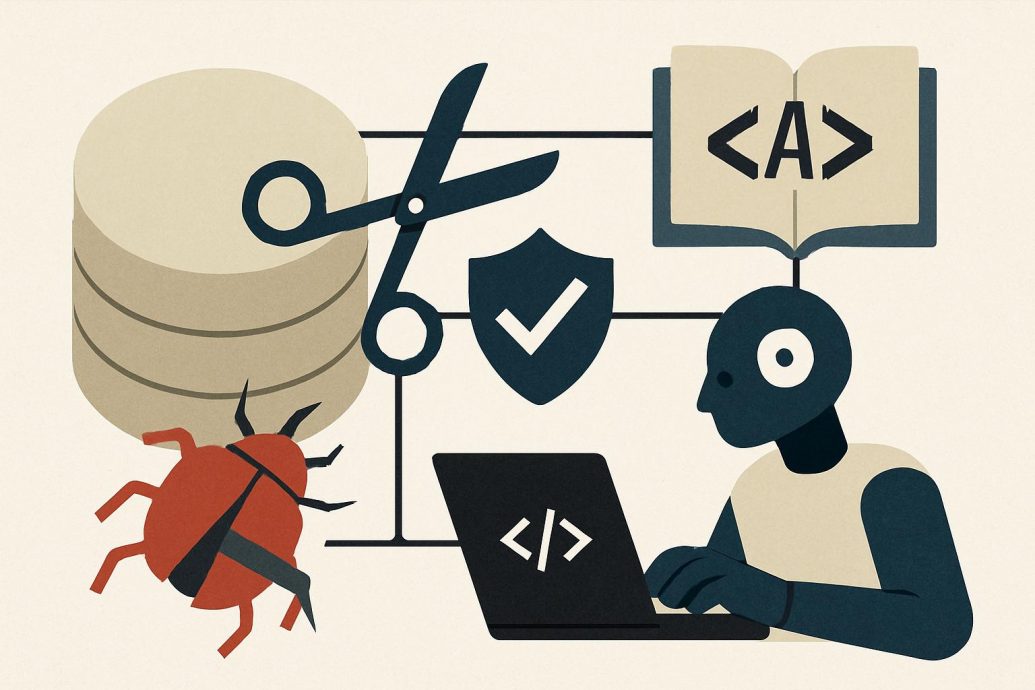

AI Coding Agents and Live API Docs
AI coding agents now touch real production code every day, yet many teams still discover that their smartest assistant confidently ships code that breaks the moment it hits a real API. In the 2023 Stack Overflow Developer Survey, more than 70 percent of professional developers reported using or planning to use AI tools, but many also cited trust and correctness as key concerns. If you have ever watched an agent invent a parameter or confuse staging with production, you already know the problem. A context hub that connects AI coding agents with live, accurate API documentation offers a practical path to more reliable automation, safer integrations, and faster development cycles.
Key Takeaways
- A context hub gives AI coding agents a single, live source of truth for APIs, specs, and integration knowledge.
- Connecting agents to live API docs reduces hallucinations, integration bugs, and time spent hunting through scattered documentation.
- Real results appear when context hubs integrate with existing tools such as OpenAPI, Postman, LangChain, and CI pipelines.
- Governance, security, and version drift management matter as much as embeddings and retrieval quality for production use.
Why AI Coding Agents Fail Without a Context Hub for Live API Docs
When teams complain that their AI coding agent feels unreliable, the root cause is often not the model but the context it receives. An agent that has only partial knowledge of your REST or GraphQL APIs will inevitably guess missing parameters, reuse outdated examples, or confuse sandbox and production endpoints. What many people underestimate is how often internal documentation drifts from actual API behavior, especially in fast moving microservice environments. In a Postman State of the API report, a significant portion of respondents cited outdated or incomplete documentation as a primary integration pain point, and that issue does not disappear when you add an LLM. AI agents amplify existing documentation problems instead of magically fixing them.
To put this in practical terms, picture a sprint where your team ships a new payments workflow. The agent suggests code that passes unit tests, your reviewers skim the diff, and then staging erupts in subtle API errors. From an industry expert perspective, GitHub Copilot, Claude, and Gemini show that large language models are very good at pattern completion across code and natural language. They are not inherently aware of your latest OpenAPI specification or your Stripe style webhooks unless you surface that information. Microsoft has published internal research suggesting that Copilot users can complete coding tasks faster, but those gains are tightly linked to having accurate project context. In my experience, when practitioners test agents that operate on stale API docs, they see impressive local test results followed by staging failures when real API responses differ from the agent’s assumptions. The lesson is clear, AI coding assistants need a robust context hub that keeps their view of APIs synchronized with current specifications and real behavior.
What Is a Context Hub for AI Coding Agents and Live API Docs?
A context hub for AI coding agents and live API docs is a centralized system that ingests, indexes, and serves up to date API specifications, documentation, runbooks, and examples to large language models and agent frameworks in real time. It acts as an orchestration layer between your APIs and your AI tools, ensuring that every generated request, client, or integration is grounded in accurate, versioned knowledge about your services rather than static or scattered documents.
From a conceptual layer, you can think of the context hub as an internal developer portal that is designed for machines as much as for humans. Instead of only hosting static Swagger UI pages or Markdown guides, it exposes retrieval and tool calling friendly interfaces that coding agents can query during their reasoning. OpenAI function calling, Anthropic tool use, and Google Gemini tools all rely on structured descriptions of APIs, and a context hub ensures those descriptions are correct, current, and accessible through search. In practice, the hub often combines classic documentation as code practices with modern vector search to give models semantic access to tutorials, reference sections, Postman collections, and even GitHub repository READMEs. For organizations that already explore how AI agents shape the future of development tools, the context hub becomes the missing backbone that keeps those agents grounded.
How a Context Hub Technically Connects AI Agents to Live API Docs
At the technical or methodological layer, a context hub usually follows an architecture similar to retrieval augmented generation but tuned for APIs and code. First, it ingests data sources such as OpenAPI or Swagger specs, GraphQL schemas, Postman collections, internal Confluence documentation, and markdown files in GitHub or GitLab. Tools like LangChain, LlamaIndex, and custom pipelines then chunk and embed this information into a vector database such as Pinecone, Weaviate, Qdrant, or pgvector, while also storing structured metadata about endpoints, versions, and service ownership. This indexing step allows coding agents to perform semantic search, not just keyword matching.
When an AI coding agent receives a request, for example, “Generate a Node.js client that integrates with our payments API and handles idempotent refunds,” the orchestration layer calls the context hub. The hub retrieves relevant chunks from the vector store, such as the latest OpenAPI section for the refunds endpoint, Stripe style idempotency header guidance, and existing internal example snippets. These results are injected into the model prompt through retrieval, or exposed as tools that the model can call using function calling. Anthropic and OpenAI both document this RAG pattern, and research from vendors like NVIDIA and Databricks shows that retrieval can significantly improve factual accuracy when done correctly. One thing that becomes clear in practice is that quality chunking, metadata, and schema level indexing matter as much as the choice of vector database. Teams that already evaluate model context integration patterns find this hub style approach a natural next step.
From Concept to Daily Use: How Organizations Apply Context Hubs in Real Workflows
In real engineering environments, a context hub becomes useful only when it integrates with the tools developers already use. A common pattern is connecting GitHub or Bitbucket repositories that contain OpenAPI specs, then wiring the hub into CI workflows so that each merged change triggers re indexing of affected endpoints. Microsoft’s Azure API Management and Azure OpenAI can be combined so that live API definitions in Azure serve as the source for agent tools, while Postman collections mirror actual behavior for testing. Developers then access this unified context through IDE integrations in Visual Studio Code, JetBrains IDEs, or browser based tools like GitHub Codespaces, which call the hub whenever an AI suggestion involves an internal service.
A clear example comes from Stripe, which is widely cited for its excellent developer experience and live API documentation. Stripe maintains interactive reference docs that reflect the current production API, and they support multi language client examples that are updated when endpoints change. While Stripe has not branded this as a context hub, the combination of live reference, example generation, and internal tooling fits that pattern. When AI coding assistants integrate with Stripe’s OpenAPI specs or Postman collections, they gain a consistent, authoritative view of the API. This reduces time to first successful API call, something Stripe and Postman have both highlighted in developer productivity talks. For internal teams, replicating that experience with a context hub applied to private APIs delivers similar benefits. Teams that already adopt AI coding assistants in product development can often unlock additional gains once those assistants plug into a reliable context hub.
Real World Case Studies: Context Hubs Reducing Bugs and Support Load
One case study comes from Microsoft’s work with GitHub Copilot at enterprise customers, described in public talks and blog posts. A large financial services company used Copilot to accelerate integration work with dozens of internal REST APIs, but early pilots showed frequent misunderstandings of authentication flows and error handling conventions. The platform team responded by centralizing their OpenAPI specs and reference docs, then connecting those into a retrieval pipeline that Copilot Chat and internal agents could query. After deploying the context hub, they reported higher first pass success rates for the generated code and reduced time spent on Slack support about common API mistakes. The effort turned Copilot from a generic autocomplete tool into a system aware assistant tuned to their specific environment.
Another case study appears in Twilio’s emphasis on live, interactive documentation, which they often discuss in developer relations content. Twilio’s console allows developers to experiment with messaging or voice APIs directly in the browser, with code snippets generated in languages like Python, JavaScript, and Java. When an AI coding agent plugs into Twilio’s live docs, or into an internal equivalent built by a company, it can produce integration code that aligns with the latest examples and error codes. This reduces support tickets related to “copy pasted from an old blog post” problems. Postman has shared survey data indicating that interactive documentation and sandboxes significantly shorten the time to first working call, and those same factors improve AI generated integration quality when routed through a context hub.
A third case study involves Shopify and its GraphQL and REST Admin APIs, documented in extensive online references. Shopify engineers and partners often rely on the up to date GraphQL schema and code examples for building apps and integrations. By indexing these schemas and docs into a vector store, then connecting them to tools like LangChain agents or VS Code extensions, developers can ask natural language questions and receive code snippets grounded in current schemas. In various conference talks, partners have described how this pattern helps new developers onboard faster and reduces misuses of rate limited endpoints. In practice, the context hub concept, even without that specific label, shows clear value when it keeps AI assistants aligned with complex, evolving partner platforms like Shopify. For teams that also experiment with custom workflow automation agents, the same approach can reduce integration risk across multiple internal services.
The Hidden Challenges Behind Implementing a Context Hub for AI Coding Agents
Most marketing content about AI context hubs glosses over important technical and operational challenges. One significant issue is version drift between different sources of truth, such as the OpenAPI spec in a monorepo, the actual behavior of a microservice deployed on Kubernetes, and the examples presented in a developer portal. A context hub that only indexes static files cannot detect if an endpoint now returns an extra field or a slightly different error code in production. Some teams mitigate this by generating contract tests from specs or using tools like Stoplight, ReadMe, or SwaggerHub to centralize design time and runtime artifacts. Without explicit drift detection and governance, an AI agent can still receive outdated context, which leads to subtle integration bugs instead of outright failures.
Another hidden challenge is access control and governance. Enterprises often have strict RBAC or ABAC models around internal APIs, and they must ensure that AI agents cannot exfiltrate sensitive data or reveal private endpoints to unauthorized users. This forces practitioners to think about the context hub as a security boundary, not just a search service. Integrations with identity providers like Okta, Auth0, or Azure Active Directory, plus detailed audit logs of which agent accessed which document or spec, become critical. The ISO 27001 and SOC 2 frameworks both highlight the importance of access control and logging, and those same principles apply to AI oriented context infrastructure. A common mistake I often see is teams prototyping context hubs without planning for least privilege access or regulatory requirements around PII in logs.
A third challenge involves cost and infrastructure tradeoffs. High quality retrieval often requires storing embeddings for large collections of docs and schemas, which can be expensive on managed vector databases at scale. Teams must balance retrieval depth, index update frequency, and latency targets against cloud budgets. NVIDIA, Databricks, and others have described approaches for hybrid search, where cheap keyword or BM25 search narrows candidates before expensive embedding search. That pattern can significantly reduce query costs. In my experience, careful selection of chunk size, metadata, and query patterns can also reduce waste by avoiding redundant embedding of nearly identical schema versions or auto generated SDKs. Teams that already wrestle with local AI stack and cloud challenges will recognize similar tradeoffs when they size context hub infrastructure.
Common Misconceptions About Context Hubs, RAG, and AI Coding Agents
One widespread misconception is that simply throwing documentation into a vector database is enough to make an AI coding agent reliable. This assumption ignores the importance of schema level structure, endpoint specific metadata, and runtime validation. For APIs, you need more than text snippets, you need formal descriptions of parameters, error codes, rate limits, and authentication flows. OpenAI function calling and Anthropic tools work best when you define structured tools that match these formal descriptions. A mature context hub does not only perform fuzzy search across prose, it also exposes concrete, typed tools that align with your OpenAPI or GraphQL schemas. Without this, models are still likely to hallucinate optional fields or misuse pagination and filtering parameters.
A second misconception is that larger context windows eliminate the need for retrieval or a dedicated context hub. Long context models like Claude, Gemini, and GPT 4 family members can indeed hold large documents in a single prompt, but that does not solve discovery and freshness problems. If you paste a 500 page internal API manual into a prompt, the model might ignore important sections, and that manual will still become stale when the service evolves. Retrieval augmented generation remains valuable because it dynamically selects relevant slices of knowledge at query time. Research from both commercial vendors and academic institutions has shown that targeted retrieval improves factual accuracy compared to naive long context stuffing. A context hub operationalizes that pattern for APIs in a maintainable way.
A third misleading belief is that AI coding agents will automatically reduce documentation needs, because developers can just ask the agent instead of reading docs. In practice, teams that invest in clear, structured, and complete API docs see much better agent performance. Stripe, Twilio, and Plaid all treat docs as a core product surface, and their success with developers reflects that. A context hub amplifies the value of good documentation by making it more discoverable and machine readable. It does not excuse low quality or missing docs. From an organizational perspective, the need for documentation as code and consistent API governance only grows when you introduce AI assisted development.
Designing and Operating a Context Hub: From Architecture to Governance
At the operational layer, a successful context hub combines technical architecture with process and ownership. A common reference architecture includes ingestion pipelines that pull from Git repositories, API gateways, and documentation platforms like ReadMe or Stoplight, then normalize those sources into a unified schema. Embedding generation uses models from providers such as OpenAI, Cohere, or open source alternatives from Meta or Mistral, stored into an engine like Pinecone, Milvus, or pgvector in PostgreSQL. Retrieval services are exposed through HTTP APIs or SDKs that integrate with agent frameworks like LangChain, Semantic Kernel, or LlamaIndex, which in turn power tools in IDEs, CLIs, and chat style assistants. Health monitoring tracks index freshness, query latency, and retrieval hit rates to catch regressions.
Governance is equally important. Many organizations create a platform or developer experience team that acts as the owner of the context hub, similar to how they manage internal developer portals like Backstage. This team defines standards for OpenAPI quality, documentation completeness, and versioning, often influenced by guidelines from Google Engineering Practices or Microsoft developer blogs. They may enforce pull request checks that validate schema changes, run contract tests against staging environments, and trigger re indexing when specs or examples change. Audit logs capture every retrieval request, including which agent, user, and service were involved, which helps with incident response and compliance reviews. Over time, feedback loops from developers and production incidents refine the indexing and retrieval strategies.
Economic and Industry Impact: Why Context Hubs Matter Beyond Early Adopters
From an economic or industry layer, context hubs sit at the intersection of AI assisted development and API first business models. McKinsey and other research organizations have reported that generative AI could unlock significant productivity gains for software engineers, often citing task completion speed improvements. Those gains are only sustainable when the AI outputs are correct and maintainable, which makes robust context infrastructure essential. Companies like GitHub, Microsoft, and Google are positioning AI coding assistants as core features of their platforms, so any organization that exposes APIs internally or to partners will feel pressure to make those APIs agent friendly. A context hub with live docs becomes part of the cost of doing business in an AI augmented ecosystem.
For API first SaaS providers such as Stripe, Twilio, Plaid, SendGrid, and Shopify, the quality of documentation already has direct revenue implications. Faster time to first API call, lower integration failure rates, and reduced support costs translate into better margins and higher customer satisfaction. Postman’s State of the API reports show that many teams struggle with documentation maintenance, yet those who invest in it see clear returns. When such companies enable AI coding agents to consume their live docs, through Postman collections, OpenAPI endpoints, or dedicated context APIs, they further reduce friction for developers. Over time, platforms that are easy for AI agents to understand and integrate with may gain competitive advantage over less structured competitors.
Future Outlook: Context Hubs as a Foundation for Autonomous Coding Agents
Looking ahead, the role of context hubs is likely to grow as coding agents become more autonomous and task oriented. Research and product directions from OpenAI, Anthropic, Google DeepMind, and others suggest that tool using agents that can plan, call APIs, and verify results will become more common. Those agents need structured, trustworthy knowledge about the systems they interact with, and they need to detect when that knowledge is outdated. Future context hubs may incorporate automatic spec extraction from traffic, reinforcement learning from integration failures, and tighter coupling with API gateways to validate and throttle agent behavior. Concepts like an AI safe API gateway, which combines rate limiting, schema validation, and policy enforcement for agents, will likely merge with context hub designs.
Academic research on retrieval augmented generation, knowledge graphs, and code understanding will also influence context hub evolution. Projects from institutions like Stanford, MIT, and industry labs are exploring hybrid retrieval models that combine text, code, and graph structures for better reasoning. Tools like Sourcegraph’s code intelligence, JetBrains’ code navigation, and Stack Overflow’s vast Q and A corpus provide rich signals about how developers actually use APIs. Integrating such signals into context hubs could help agents not only understand what an API can do, but also how it is commonly used and where typical pitfalls lie. For organizations, the practical takeaway is that investing in structured API knowledge and retrieval friendly documentation today sets the stage for safer, more capable AI coding agents in the near future.
FAQ: Context Hubs, AI Coding Agents, and Live API Documentation
What problem does a context hub solve for AI coding agents?
A context hub solves the problem of fragmented, stale, or incomplete knowledge about APIs and integration patterns that AI coding agents rely on. Without a hub, agents often draw from outdated documentation, random blog posts, or generic code patterns, which leads to subtle bugs and failed deployments. By centralizing and updating API specs, docs, and examples, the hub provides a single source of truth for the agent. It also exposes retrieval and tool calling interfaces so that models can query only the most relevant information at each step. This combination reduces hallucinations, saves developer time, and increases trust in AI generated code.
How is a context hub different from a traditional developer portal?
A traditional developer portal, such as those built with Backstage or ReadMe, focuses mainly on human readers browsing documentation and service catalogs. It usually presents static pages, reference sections, and perhaps some interactive sandboxes meant for people, not models. A context hub, in contrast, is optimized for machine consumption and retrieval augmented generation workflows. It indexes documentation into vector stores, exposes APIs for semantic search, and often provides structured tool definitions that match your OpenAPI or GraphQL schemas. In practice, many organizations layer a context hub behind their existing portal, which continues to serve humans while the hub powers integrations with AI assistants.
Can I use existing tools like LangChain or LlamaIndex to build a context hub?
Yes, many teams use LangChain, LlamaIndex, or similar frameworks as building blocks for a context hub. These tools offer connectors for GitHub, Google Drive, Confluence, Postman, and other sources, along with embedding and retrieval abstractions. To create a proper hub, you still need to add governance, access control, monitoring, and update pipelines that keep indexes in sync with production APIs. You may also need to define structured tools that map directly to your OpenAPI operations or GraphQL queries, which is a layer above generic document retrieval. In my experience, combining these frameworks with an internal platform team yields better, more maintainable results than a pure prototype approach.
How do context hubs handle versioning and deprecated APIs?
Context hubs handle versioning by storing metadata about API versions, deprecation status, and recommended migration paths alongside each document or schema element. For example, an OpenAPI spec may contain version tags, and the hub can use these to prefer the latest non deprecated endpoint when answering queries. When a service team deprecates an endpoint, CI pipelines can update the hub with deprecation notes and examples for the replacement endpoint. AI agents then receive prompts that explain which version to use and how to migrate from older patterns. This reduces the risk of generating integrations that target dead or soon to be removed APIs.
Are there security risks when exposing internal docs to AI coding agents?
Yes, there are security and compliance risks when exposing internal documentation, especially for sensitive or regulated systems, to AI coding agents. A context hub must enforce access control so that only authorized users and agents can see particular specs, secrets, or runbooks. Integration with SSO providers like Okta or Azure Active Directory, along with detailed audit logs, helps align with frameworks such as SOC 2 or ISO 27001. Teams should avoid indexing raw secrets, credentials, or production PII into the hub, and should instead focus on schemas and usage patterns. When using external LLM APIs, they also need to consider data residency and privacy policies documented by vendors like OpenAI, Anthropic, and Google Cloud.
How does retrieval augmented generation improve AI coding agent accuracy?
Retrieval augmented generation improves accuracy by supplying models with grounded, task specific context at query time rather than relying on static training data. Academic and vendor research has shown that models make fewer factual mistakes when they can pull relevant documents into their context windows. For coding agents, retrieval usually involves fetching API specs, error handling guidelines, or tested example snippets from a context hub. The model then uses this information to propose code that matches current system behavior, which reduces hallucinated parameters and misused endpoints. This pattern also simplifies updates, since retrievers can surface new docs without retraining the model itself.
Do larger context window models remove the need for a context hub?
Larger context window models help by allowing more information in a single prompt, but they do not replace the need for organized retrieval or context hubs. If you paste an entire wiki or multi API manual into a context window, the model may miss important details or misinterpret ambiguous sections. You also face the same staleness problem when underlying APIs change and documents are not promptly updated. A context hub focuses on selecting the right information at the right time from authoritative sources. This targeted retrieval pairs well with long context models, giving them curated inputs instead of raw, overwhelming data dumps.
How can I measure the impact of a context hub on developer productivity?
You can measure the impact using a mix of quantitative and qualitative metrics. Common quantitative metrics include time to first successful API call for new integrations, reduction in integration related incidents, and average time developers spend searching for documentation. Vendors like GitHub and Microsoft have reported productivity gains from tools like Copilot, and you can design similar internal studies comparing teams before and after hub adoption. Qualitatively, you can survey developers about trust in AI suggestions, perceived friction when working with internal APIs, and clarity of generated code. Over several months, patterns in support ticket volume and incident postmortems will reveal whether the context hub is reducing repetitive errors.
What data sources should I connect to my context hub first?
The best starting point is usually the most critical and frequently used APIs, combined with their canonical specifications and reference documentation. That often means OpenAPI or GraphQL schemas stored in Git repositories, along with Markdown guides and Postman collections that describe workflows and edge cases. In parallel, you can ingest runbooks and troubleshooting guides for common failure modes, which help agents reason about errors. Internal knowledge bases like Confluence or Notion can be added once you establish filters to exclude noisy or outdated content. Focusing on quality and correctness for a small set of high impact services usually delivers better results than indexing every possible document from day one.
Can context hubs work with on premise or self hosted environments?
Yes, context hubs can be designed for on premise or self hosted deployment, which is important for organizations with strict data residency or security requirements. Many vector databases, such as Qdrant, Weaviate, and Milvus, can run inside Kubernetes clusters in private data centers. Retrieval services and agent orchestrators can also be deployed behind firewalls, using self hosted LLMs like Meta Llama or models served through NVIDIA or Databricks platforms. This approach avoids sending internal API docs to external SaaS providers, although it requires more operational investment. Teams must manage scaling, monitoring, and model updates themselves, which can be challenging but necessary in highly regulated sectors.
How should I structure API documentation so AI agents can use it effectively?
Effective API documentation for AI agents combines clear prose with structured, machine readable schemas and consistent conventions. OpenAPI and GraphQL schemas provide machine parsable descriptions of endpoints, parameters, and response types, which map nicely to LLM tools and function calling. Reference sections should include accurate examples, error codes, and authentication steps that align with actual system behavior. Avoid embedding critical parameters only in narrative text or screenshots, since those are harder to extract reliably. Standardizing naming conventions, status code semantics, and pagination patterns across services also helps AI coding agents generalize from one API to another within your ecosystem.
What role do tools like Postman and Stripe’s API docs play in building a context hub?
Tools like Postman and Stripe’s API docs provide practical blueprints for what high quality, live documentation looks like, which you can mirror in your context hub. Postman collections capture concrete API requests, auth flows, and tests that reflect real world usage, and these collections can be indexed or referenced directly by AI agents. Stripe’s interactive reference demonstrates how up to date examples, multi language snippets, and clear error explanations shorten integration time. By syncing your context hub with such tools, you give AI assistants access to tested flows rather than theoretical descriptions. This approach reduces guesswork and helps agents propose code that is closer to production ready on the first attempt.
How do I avoid hallucinations when AI agents call my APIs through a context hub?
Reducing hallucinations requires combining context hubs with validation, constrained tool use, and clear error handling. For structured APIs, define function calls or tools that restrict the model to valid operations, parameters, and enumerated values derived from your OpenAPI or GraphQL schemas. At runtime, verify responses with schema validation and gracefully handle mismatches by fetching updated context or flagging potential spec drift. Logging all agent initiated API calls, along with the context retrieved from the hub, helps diagnose and correct recurring mistakes. Over time, automated tests, contract checks, and feedback loops from developers will refine the retrieval and tool definitions so the agent stays aligned with real system behavior.
Conclusion
Context hubs for AI coding agents and live API docs turn impressive language models into dependable development partners by giving them accurate, timely knowledge about the systems they touch. From a beginner’s perspective, the concept is simple, centralize your API documentation and let the AI read it before writing code. From an expert and practitioner viewpoint, the real value emerges when you add retrieval, governance, access control, and integration with CI, IDEs, and API gateways. In that setting, AI coding assistants can generate code that respects your actual contracts, not just their pretraining data.
As AI assisted development matures, organizations that invest early in structured API knowledge and machine friendly documentation will see compounding benefits. They will ship integrations faster, spend less time debugging misunderstandings, and create safer environments for both human and autonomous agents. The practical takeaway is straightforward, treat your API docs, schemas, and examples as a living product, wire them into a context hub, and let that hub become the foundation for every AI coding workflow you adopt in the coming years.
References
- Stack Overflow. “Stack Overflow Developer Survey 2023.” https://survey.stackoverflow.co/2023
- GitHub. “The GitHub Copilot Productivity Report.” https://github.blog/news-insights/research/the-github-copilot-productivity-report
- Postman. “State of the API 2023 Report.” https://www.postman.com/state-of-api
- OpenAI. “Function calling and other API updates.” https://platform.openai.com/docs/guides/function-calling
- Anthropic. “Using Tools with Claude.” https://docs.anthropic.com/claude/docs/tool-use
- Google. “Tools and Function Calling with Gemini Models.” https://ai.google.dev/gemini-api/docs/function-calling
- Stripe. “API Reference.” https://stripe.com/docs/api
- Twilio. “Twilio Docs: Messaging API.” https://www.twilio.com/docs/messaging
- Shopify. “Admin API.” https://shopify.dev/docs/api/admin-rest
- LangChain. “Retrieval Augmented Generation.” https://python.langchain.com/docs/use_cases/question_answering
- Databricks. “Retrieval Augmented Generation: Building Production Grade RAG Applications.” https://www.databricks.com/blog/2023/07/06/retrieval-augmented-generation-foundation-models.html
- McKinsey & Company. “The economic potential of generative AI: The next productivity frontier.” https://www.mckinsey.com/capabilities/quantumblack/our-insights/the-economic-potential-of-generative-ai-the-next-productivity-frontier