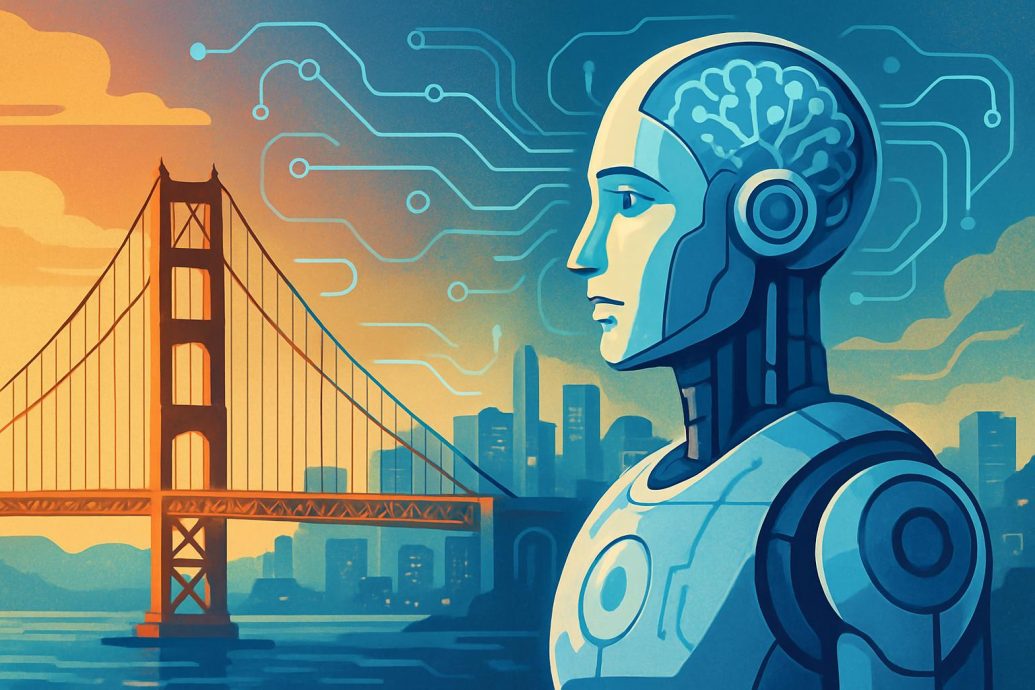

AI Transforms San Francisco Once Again
AI Transforms San Francisco Once Again signals the rise of a new economic wave that is redefining the city’s landscape. San Francisco is experiencing an unprecedented surge in artificial intelligence (AI) investment, talent attraction, and startup activity. This shift draws comparisons to previous tech booms like the dot-com era and Web 2.0. While familiar patterns of rapid innovation and influxes of capital are reappearing, the current AI wave carries unique economic, cultural, and urban implications. From skyrocketing office space demand in SoMa to evolving social tensions in the Mission District, this AI boom is not just reshaping the city’s economy. It is also transforming its identity.
Key Takeaways
- San Francisco is undergoing a major AI-driven revitalization, mirroring past tech upswings but with new dynamics.
- AI startups are reshaping commercial real estate markets, employment patterns, and demographic landscapes.
- Urban planners and residents share mixed reactions, from optimism about economic growth to concerns over displacement and inequality.
- Historic parallels to the dot-com and Web 2.0 eras offer insights, but also highlight why this AI boom is distinct in scale and pace.
AI in San Francisco: A New Economic Driver
Artificial intelligence is no longer a futuristic idea. It is now a dominant force in shaping San Francisco’s present and future. As of early 2024, the city’s downtown corridor, once emptied by pandemic-era office closures, is seeing a surge in occupancy fueled by AI startups, venture capital firms, and talent clusters. According to the San Francisco Office of Economic and Workforce Development, tech jobs linked to AI increased by 13 percent last year while the broader tech industry rose by only 4 percent. Investors have poured more than $11 billion into Bay Area AI startups over the past 18 months, with names like Anthropic, OpenAI, and Scale AI leading the charge.
Neighborhoods that were devastated by remote work are now active again with events, coworking hubs, and AI demo days. Office leases in SoMa and downtown have increased by 24 percent since mid-2022. The AI influx is attracting young professionals, particularly engineers and founders, who want to be part of the new frontier in technology. This momentum, though, is placing pressure on the city’s affordability and infrastructure systems.
Historic Echoes: Dot-Com, Web 2.0, and Now AI
To understand the current changes in San Francisco, it’s important to reflect on its previous tech cycles. The city has experienced two major tech transformations. These include the dot-com bubble during the late 1990s and the Web 2.0 boom that followed in the late 2000s and early 2010s. Each wave reshaped the physical and social dynamics of the city.
| Era | Tech Focus | Impact on SF | Public Sentiment |
|---|---|---|---|
| Dot-Com Boom (1995–2001) | Early internet companies, IPO rush | Converted old warehouses to office space, brief housing spike then collapse | Mixed: excitement followed by disappointment after market crash |
| Web 2.0 Boom (2006–2015) | Social media, mobile apps | SoMa transformation, gentrification, ride-share revolutions | Growing resentment tied to inequality and displacement |
| AI Wave (2022–ongoing) | Machine learning, generative AI, robotics | Commercial real estate revival, return of tech migration | Cautious optimism mixed with emerging social pushback |
Earlier tech surges revolved around internet connectivity and user growth. The current AI wave is creating impact at the infrastructure level. It is influencing foundational industries such as healthcare, education, logistics, and mobility. Growth is faster this time, as AI tools are being integrated into daily operations across enterprise and consumer applications. For a broader look at how AI is shaping infrastructure and society, see how AI is transforming smart cities.
Neighborhoods in Transition
San Francisco’s neighborhoods are experiencing different levels of impact. Downtown, SoMa, and Mid-Market have emerged as hotbeds for AI activity. Office vacancy rates in these areas fell from 30 percent to 21 percent in one year, as reported by CBRE Group data. This trend is driven mostly by AI startup leases.
In contrast, areas like the Mission District and Potrero Hill are facing rising gentrification concerns. Increased demand for technical talent is escalating property values. Home prices in AI-heavy zip codes rose by 11 percent over the past year. Many workers who left the city during the pandemic are now returning, drawn by career opportunities linked to artificial intelligence.
Longtime residents in neighborhoods like Bernal Heights report stress from rent increases and the loss of cultural landmarks. The tension reflects broader patterns seen in earlier tech booms. These changes echo findings from recent reports on AI’s profound impact on San Francisco.
Expert Insights: Urban Policy and Economic Ripple Effects
Experts urge a measured approach to AI-driven expansion. Dr. Leah Ortega, an urban economist at UC Berkeley, emphasizes that AI job growth is concentrated in high-skill, high-income roles. Without serious investment in housing and transit, she warns, income inequality will increase and existing infrastructure will become overwhelmed.
The San Francisco Planning Department is evaluating rezoning options in SoMa and Civic Center to allow for mixed-use development. These projects aim to combine tech office spaces with affordable housing. At the same time, transit agencies like Muni and BART are planning capacity upgrades to manage growth.
City officials are working with AI sector leaders to promote equity through programs focused on workforce inclusion and local hiring. Ethical standards for implementation are also part of public discussions. By doing so, the city hopes to prevent a repeat of patterns that sidelined certain communities during earlier tech expansions. For more context, read about how AI is reshaping human roles and identity.
Cultural Shifts and Community Tensions
The energy AI brings has reawakened parts of San Francisco’s cultural life. New restaurants, art spaces, and networking events are emerging again. Still, many longtime residents feel unsure about the speed and inclusivity of this transformation. To some, the rise of AI feels disconnected from the realities of those outside the tech sector.
Concerns are growing over the use of public spaces by AI companies for promotional purposes without community engagement. Exclusive events hosted by founders are also reviving critique about technology’s elitism. Public school systems are already seeing effects, as staff face housing pressure. At the neighborhood level, nightlife is bifurcating between tech-centered spots and traditional venues struggling to survive.
Initiatives like the San Francisco AI Initiative (SFAI) are engaging in community rebuilding through public education and inclusion measures. These include free AI bootcamps and startup support for local entrepreneurs. To learn more about grassroots support efforts and ethical funding, see how AI startups are blending funding with community initiatives.
Future Outlook: Can San Francisco Sustain This Growth?
San Francisco’s ability to remain a global tech hub depends on more than innovation. It relies on addressing housing, education, and transit challenges alongside economic growth. AI offers civic solutions in addition to business ones. Local governments, in collaboration with private firms, must ensure equitable development.
Investors continue to view the city as a prime location for AI development, citing dense talent networks and supportive regulation. Companies are finding synergy here that few places can offer. Yet for many, the core question remains. Will the gains of AI growth be broadly shared, or will they cater to a select few? That balance will define this chapter of San Francisco’s evolution. For deeper insights on data’s role in AI acceleration, explore the role of AI in big data advancements.