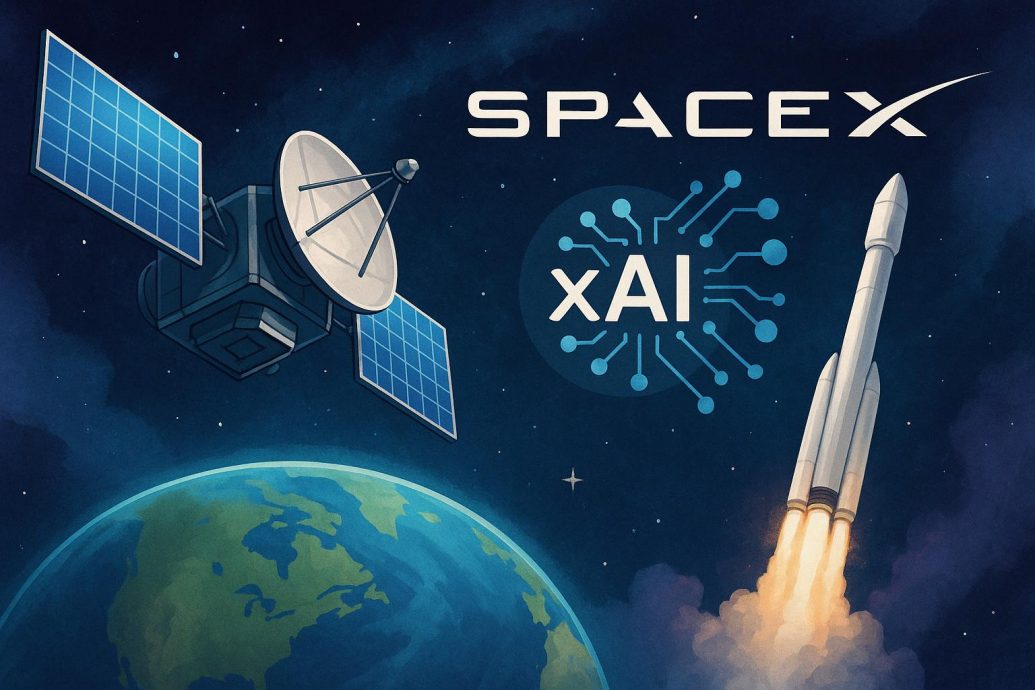

SpaceX Taps xAI to Power Satellites
SpaceX Taps xAI to Power Satellites in a groundbreaking move that signals Elon Musk’s latest strategic convergence of aerospace and artificial intelligence. As SpaceX begins integrating xAI’s advanced large language models (LLMs) into its satellite operations, particularly the Starlink internet constellation, it not only enhances satellite communication capabilities but also deepens the synergy across Musk’s growing technological empire. This partnership may shape the next era of orbital infrastructure, potentially reconfiguring global digital networks, accelerating AI-powered telecommunications, and challenging major players like OpenAI, Amazon, and Google at the frontier of connected intelligence.
Key Takeaways
- SpaceX has started deploying xAI’s large language models to optimize satellite operations, with a focus on Starlink’s global network.
- AI integration could improve satellite routing, latency control, signal processing, and autonomous maintenance in orbit.
- This collaboration marks a major consolidation of Musk’s companies, expanding his influence in both the space and artificial intelligence sectors.
- Tech firms such as Amazon and Google are also exploring AI-satellite integration, signaling a broader trend toward intelligent orbital systems.
Inside the SpaceX-xAI Partnership
The partnership between SpaceX and xAI reflects Elon Musk’s aggressive push for cross-company synergy. Founded in 2023, xAI initially focused on developing general-purpose artificial intelligence. It is now leveraging SpaceX’s satellite infrastructure to bring those models into operational use in high-complexity environments such as space.
While public interest has centered on xAI’s competition with OpenAI, the real disruption may come from behind-the-scenes deployments. Reports from CNBC and Reuters indicate that xAI benefits from SpaceX’s networking systems and computing infrastructure, including Starlink’s worldwide satellite coverage and possible testing in low Earth orbit.
This integration extends beyond shared resources. It creates compatibility between AI model architecture and the needs of satellite systems. As xAI’s models mature, they can deliver significant improvements in real-time performance, reliability, and scalability for satellite communication.
How AI Enhances Satellite Infrastructure
Satellites operate within dynamic environments that require managing data routing, minimizing latency, allocating communication frequencies, and detecting hardware faults. Traditional systems rely on fixed rules and preengineered algorithms. AI introduces adaptive, data-driven optimization.
Key functional enhancements include:
- Routing Optimization: LLMs trained on global transmission patterns can choose the most efficient signal paths, decreasing congestion and enhancing data throughput.
- Latency Forecasting: AI can process orbital data, environmental inputs, and user demand to predict and avoid latency disruptions.
- Autonomous Spectrum Allocation: AI systems are capable of dynamically adjusting frequency use, reducing overlap and interference across satellite beams.
- Onboard Fault Detection: Self-learning models can identify declining system performance or potential malfunctions, enabling predictive repairs without extensive ground control.
Through integration with Starlink, these AI capabilities may give rise to self-regulating networks in space. Such networks can autonomously respond to changing global conditions, improving both efficiency and reliability while lowering operational costs.
AI-Satellite Integration Across Tech Giants
The collaboration between SpaceX and xAI highlights a new frontier in space technology. Amazon has its own satellite venture, Project Kuiper, which is tied to AWS Cloud. That system draws from tools like SageMaker and Bedrock to incorporate AI solutions. Google is also expanding AI implementation through DeepMind, focusing on network efficiency and climate modeling within its infrastructure systems.
SpaceX holds a unique position due to its tightly unified stack. From rocket launches to satellite fabrication and broadband services, it controls the entire chain. Embedding xAI into this system allows for real-time feedback and model refinement, which is difficult for companies that rely on separate contractors or government partnerships. This strategic coherence has roots in SpaceX’s integration with Musk’s AI startup, creating an unmatched platform for applied artificial intelligence in orbit.
Implications for the AI Race
This space-driven AI initiative reveals that xAI’s goals go far beyond language tools. While it aims to rival other general-purpose AI companies, xAI also benefits from having physical deployment platforms. These include Tesla’s autonomous systems, Starlink’s satellite mesh, and now direct satellite-based compute environments.
Starlink’s satellites can function as both data collectors and AI deployment nodes. With these assets, xAI can perform complex training across live, distributed networks. Competitors focused solely on software face challenges when applying AI solutions to real-world systems. The ability to test and evolve models in orbit provides an edge that is difficult to replicate outside of vertically integrated ecosystems.
This another example of how recent funding of xAI is accelerating development and deployment strategies that push beyond typical AI applications.
Industry Perspectives
Telecom and aerospace experts are taking note of this shift. Dr. Lisa Johnson from Caltech states that, although LLMs began with language-based tasks, their structural design allows them to tackle real-time system optimizations. In satellite communication, this means faster diagnostics, smarter routing, and improved network resiliency.
Experts also point to the strategic advantages such collaboration offers. With in-house development covering rockets, satellites, and AI models, SpaceX and xAI enjoy a level of system control not possible for companies that must outsource parts of their infrastructure. This centralization improves verification, speeds deployment, and may also boost cybersecurity outcomes by reducing dependency on external data flows.
To strengthen autonomy in orbit, future designs could embed hardware accelerators optimized for machine learning directly into satellites. These components would allow models to process more data locally, minimizing lag and reducing reliance on ground systems. This may become the new standard, as discussed in recent exploration of robots operating in space with embedded AI.
FAQs
How is xAI collaborating with SpaceX?
SpaceX offers xAI networking, compute assets, and operational environments to run and train artificial intelligence models using its satellite network, particularly Starlink.
What does AI do in satellite communication?
AI helps optimize bandwidth use, improve routing, forecast latency changes, and automatically diagnose and respond to technical issues in orbit.
Is xAI competing directly with OpenAI?
Yes. xAI was launched to build a robust alternative to OpenAI. The difference is its access to physical infrastructure like satellites and electric cars, giving it more experimentation channels.
How is Starlink improving through AI integration?
AI enables Starlink to adapt in real time to bandwidth conditions, minimize signal interference, and avoid downtime. These advantages could lead to better performance for users worldwide.
Can AI boost satellite internet speeds?
Yes. By dynamically rerouting traffic and minimizing signal loss, AI can improve throughput and overall user experience for satellite internet customers.
What does it mean to train AI through satellites?
This means AI models are refined and tested using real-time environmental data from orbiting systems. These inputs help the models improve performance and reliability outside of lab conditions.
Conclusion: The Future of AI in Orbit
The collaboration between SpaceX and xAI signals the rise of intelligent infrastructure in space. Satellites are evolving from mere transmission tools into proactive systems with onboard AI, capable of learning and adapting without human oversight. This shift could redefine global internet architecture and influence how AI is deployed at scale.
As competition intensifies, vertically integrated platforms like SpaceX and xAI may prove more agile and innovative. This could give Musk’s companies a lasting first-mover advantage in combining artificial intelligence with global digital connectivity. Developments such as AI-driven advances in rocket design further solidify this integration across core industries.