
Introduction
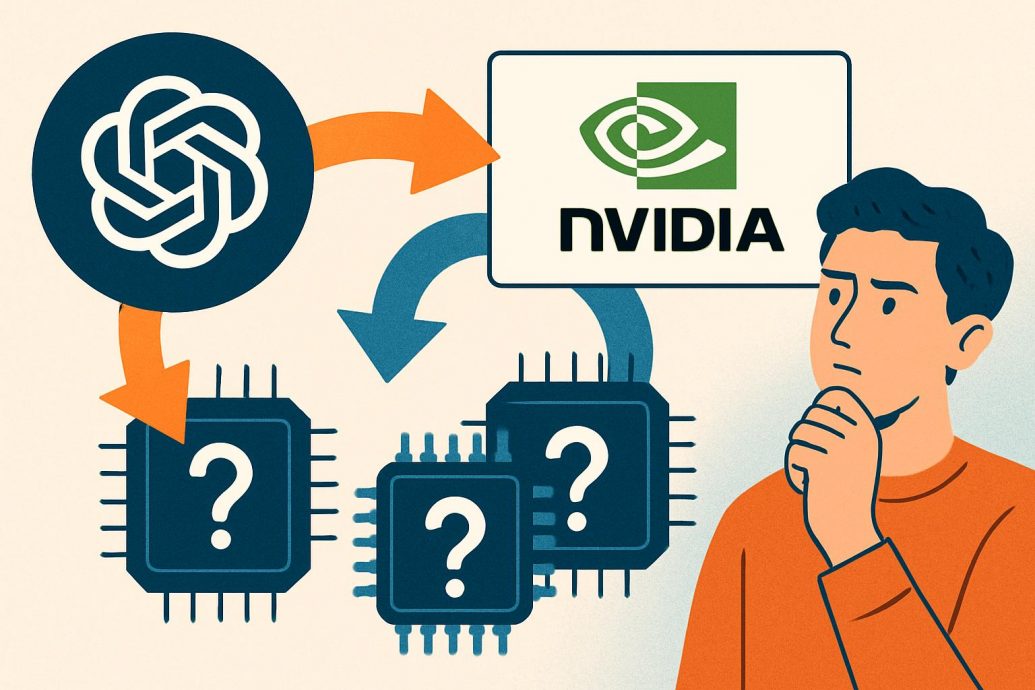
OpenAI is reassessing its reliance on Nvidia due to mounting concerns over performance limitations and escalating GPU costs. As artificial intelligence development intensifies, efficient, scalable, and accessible hardware infrastructure has become a top priority. The growing AI chip market is seeing fresh competitors challenge Nvidia’s lead, prompting OpenAI to consider alternative strategies that could influence hardware choices across the entire generative AI ecosystem.
Key Takeaways
- OpenAI is exploring alternatives to Nvidia due to high GPU costs and some technical limitations.
- Candidates include AMD, Intel, Graphcore, and Cerebras, each offering distinct advantages.
- The AI chip market is forecast to grow significantly through 2030, driven by generative AI demand.
- OpenAI’s shift may trigger broader changes to how AI computing infrastructure is sourced globally.
Nvidia’s Current Hold on the AI Hardware Market
Nvidia has led the AI computing space for years due to its robust hardware, including the Hopper and Ampere GPU series, which are well-suited for deep learning tasks. The company’s dominance is also fueled by the popularity of CUDA, its proprietary programming ecosystem that enables developers to write optimized AI applications. Nvidia currently controls around 80 percent of the AI accelerator market, according to IDC.
Despite this, rising costs and concerns over GPU supply availability have pushed major players like OpenAI to reconsider dependency on a single vendor. These shifts come at a time when other tech giants and startups are making notable strides toward challenging Nvidia’s dominance in AI chip design.
Why OpenAI Is Exploring Nvidia Alternatives
Several major concerns are driving OpenAI to evaluate other chip vendors:
- Cost Efficiency: Top-tier Nvidia GPUs, such as the H100, are becoming more expensive, putting strain on financial resources needed for model training and deployment.
- Thermal and Performance Constraints: Sources suggest certain Nvidia chips may not deliver optimal thermal performance or scalability in some use cases.
- Component Shortages: The ongoing lack of GPU supply is delaying AI developments, especially at OpenAI’s required scale.
- Risk Management: Heavy reliance on a single vendor poses a risk, both operationally and geopolitically, prompting the search for diverse hardware options.
This broader strategy could evolve into OpenAI developing its own hardware. Such an approach aligns with patterns observed in companies like Google, which has created custom AI chips to better meet internal needs.
Who Competes With Nvidia? A Dive Into AI Chip Alternatives
Several companies are aiming to reduce the gap in performance, scalability, and efficiency between their chips and Nvidia’s. The following table provides a closer look at key competitors that OpenAI is reportedly evaluating as potential hardware partners:
| Company | Key AI Products | Strengths | Weaknesses |
|---|---|---|---|
| AMD | MI250X, Instinct MI300 | Competitive pricing, improved energy efficiency, integration with open-source tools | Smaller ecosystem, fewer mature developer tools compared to Nvidia |
| Intel | Habana Gaudi2, Falcon Shores (upcoming) | Cost-effective cloud deployment, strategic architecture plans | Lower peak throughput at scale |
| Graphcore | IPU-M2000 | AI-centric design, high memory bandwidth for specific workloads | Limited commercial deployment and support infrastructure |
| Cerebras | WSE-2, CS-2 | Unique wafer-scale engine, excellent for training massive models | High cooling and energy requirements, limited compatibility with mainstream stacks |
These vendors are actively building ecosystems to attract cloud providers and developers. Some are teaming up with investors like Jeff Bezos, who recently invested in chipmaker Tenstorrent, aiming to accelerate growth for Nvidia’s rivals.
AI Chip Market Growth and Industry Forecast
The AI chip industry was valued at about $15 billion in 2023 and is projected to exceed $85 billion by 2030, with a compound annual growth rate of 27.2 percent, according to Precedence Research. This surge is fueled by enterprise-wide adoption of generative AI in fields like text, vision, and speech understanding.
The push for edge computing is contributing to hardware diversification, as companies seek to deploy compact, energy-efficient models locally. OpenAI’s chip choices may shape vendor innovation significantly. A strategic pivot by this scale of user impacts everything, from energy sourcing strategies to distribution timelines.
Historical Context: OpenAI’s Relationship With Nvidia & Hardware Strategy
Nvidia hardware has long been foundational to OpenAI’s operations. GPT-2, GPT-3, and GPT-4 were all trained using Nvidia GPUs, largely deployed via Microsoft’s Azure platform. Azure, in turn, has integrated Nvidia infrastructure at scale for AI services.
OpenAI has more recently signaled interest in hardware optimization, which includes early exploration into building custom accelerators. Multiple initiatives, such as model compression and resource-efficient computation, suggest preparation for future models like GPT-5. Experts expect a hybrid hardware strategy involving Nvidia alongside other optimized chip solutions tailored to different operational needs.
Expert Commentary: What Industry Voices Say
Tech analysts highlight that OpenAI’s hardware shift, while operationally complex, is likely to signal broader industry changes. Dylan Patel at SemiAnalysis noted that Nvidia’s advantage extends beyond raw performance to software and logistics. He emphasized how switching vendors requires substantial ecosystem adaptation, yet market pressures are driving firms to take such steps.
Veteran strategist Benedict Evans commented that the key takeaway is strategic flexibility. Even major AI developers prefer not to remain dependent on one supplier. This shift sets a precedent others may follow as AI workloads become more varied and distributed.
Cost-effective AI infrastructure solutions are gradually reshaping the conversation around what AI hardware should deliver—from affordability and performance to open development environments.
FAQ
Why is OpenAI considering alternatives to Nvidia?
OpenAI is reviewing other options due to Nvidia’s high GPU costs, supply shortages, and performance constraints in some applications. This move is also aimed at reducing dependency on a single supplier and increasing strategic flexibility.
Which companies compete with Nvidia in AI chips?
AMD, Intel, Graphcore, and Cerebras are among the key contenders. Each brings different strengths, such as cost savings, memory bandwidth advancements, and high-efficiency chip architectures specifically built for AI.
What chips are used for AI processing?
AI processing relies on GPUs, NPUs, and specialized hardware like TPUs. Popular chips include Nvidia’s H100, AMD’s MI300, Intel’s Gaudi2, and Cerebras’s WSE-2. These chips are optimized for different tasks such as training, inference, and edge deployment.
How does Nvidia dominate the AI hardware industry?
Nvidia’s edge lies in its high-performance GPUs, strong developer ecosystem supported by CUDA, and consistent improvements tailored for complex AI tasks. Its established technology pipeline and wide market adoption further reinforce its leadership position.
Conclusion: A Critical Inflection Point in AI Infrastructure
OpenAI’s evaluation of Nvidia alternatives reflects a larger transformation in the AI hardware space. As competition heats up and the technical requirements of generative AI deepen, firms must balance speed, cost, and ecosystem compatibility. Whether OpenAI increases reliance on firms like AMD or forges ahead with custom chip development, this move marks a pivotal change that could reshape how AI is powered in the era ahead.