
Introduction
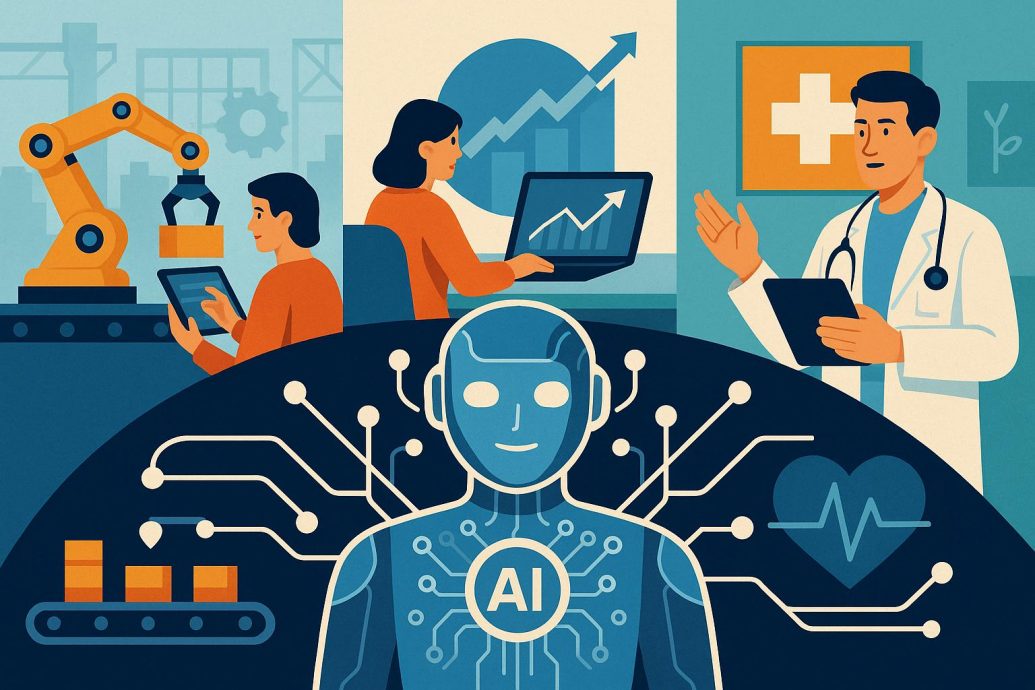
Real-Time AI Agents Revolutionizing Workflows is not just a headline. It accurately describes how artificial intelligence is reshaping the pace and structure of modern productivity. In today’s digital landscape, real-time AI agents powered by large language models (LLMs) are evolving from simple tools into dynamic collaborators. These agents process live data, handle tasks autonomously, and integrate seamlessly with various software platforms. Their impact spans across industries, enabling greater efficiency, cost reduction, and improved user experiences. Whether you work in e-commerce operations or develop SaaS platforms, real-time AI agents are central to optimizing and future-proofing workflows.
Key Takeaways
- Real-time AI agents upgrade digital workflows by completing tasks and responding to input instantly.
- They use LLMs, multimodal input, and real-time neural processing for autonomous performance.
- Applications span customer service, online retail, education, and enterprise operations.
- Tools like Auto-GPT, OpenAI’s Assistants API, and Hugging Face platforms highlight tangible business value.
Understanding Real-Time AI Agents
Real-time AI agents are computational systems built to handle live input and generate timely responses and actions. Unlike older AI models that rely on batch processing, these agents directly communicate with live data sources including APIs, user platforms, and system metrics. They adjust their strategies and responses continuously.
The backbone of these agents lies in advanced LLMs such as GPT-4 along with open-source installations that support contextual adaptation. They respond to text, images, commands, and other real-world signals. Their ability to reason recursively and operate across cloud or edge environments gives them autonomy in executing, monitoring, and completing tasks without human help for extended durations. For a foundational overview, you can explore what sets AI agents apart from traditional tools.
How Autonomous AI Agents Work
Autonomous agents function using pipelines that connect perception, reasoning, and execution modules:
- Perception: They extract input from APIs, keyboard entries, command prompts, webcams, or voice systems.
- Planning: Through LLMs and embedded knowledge, they draft potential strategies and select the best one.
- Execution: These agents use APIs, scripting tools, or plugins to act, whether it’s updating databases or posting content.
- Feedback Loop: The agent reviews outcomes, adjusts behavior, and optimizes for future iterations. This loop allows it to evolve with minimal supervision.
Featured Tools Comparison
Below is a comparison of real-time AI tools used to power intelligent agents in modern business applications:
| Tool | Model | Use Case | Real-Time Capabilities | Pricing |
|---|---|---|---|---|
| OpenAI Assistants API | GPT-4 Turbo | Software assistants, app integrations, chat agents | Streaming input/output, memory persistence, tool calling | Pay-as-you-go, per token |
| Auto-GPT | GPT-4 or local LLM | Autonomous scripts, research agents, task flows | Recursive steps with file and API access | Free (self-hosted), some OpenAI usage cost |
| Rabbit R1 | Proprietary LLM | Consumer hardware agent for daily tasks | Voice-based real-time interface, app protocol integrations | One-time device fee |
| Hugging Face Transformers Agents | Various open-source LLMs | Research task chaining, development pipelines | Tool-using, browser automation, Python code generation | Free (open-source), infrastructure-dependent |
Real-World Use Cases Across Industries
Customer Support Automation
Companies embed GPT-powered agents in tools like Salesforce to handle support tickets, recognize sentiment, and escalate complex issues. This leads to better resolution times and customer retention. If you’re exploring AI in customer support, check out how AI agents revolutionize daily workflows in various service roles.
E-Commerce Productivity
Real-time agents streamline backend operations like dynamic pricing, inventory tracking, ad analysis, and performance benchmarking by syncing directly with databases and competitor reporting tools.
Online Learning Assistants
Education platforms employ real-time agents for live support during tests, adaptive content generation, and multilingual tutorials. Students benefit from conversational learning while platforms scale efficiently.
Internal Operations and Data Sync
Enterprises automate tasks such as meeting transcription, financial audits, and performance reviews by embedding AI agents into collaborative suites like Slack or Google Sheets. You can learn more about leveraging Python and AI for automation in automating repetitive tasks and boosting productivity.
A Day in the Life of a Real-Time AI Agent
The following timeline outlines how a marketing AI agent enhances daily tasks within a SaaS operation:
- 9:00 AM: Reads real-time web traffic analytics, flags low-converting campaigns, and rewrites ad copy for testing.
- 10:30 AM: Connects to design APIs and generates new banner suggestions based on search trends and audience segments.
- 12:00 PM: Launches a quick A/B test across different email funnels due to a traffic anomaly.
- 3:00 PM: Pulls CRM activity and composes targeted LinkedIn outreach messages to qualified leads.
- 5:00 PM: Assembles a performance dashboard and posts daily insights to the marketing Slack channel for review.
Benefits and ROI for Enterprises
Adopting intelligent agents brings measurable improvements in operational metrics:
- Manual effort cut by 35 to 50 percent for recurring or low-complexity tasks.
- High availability with over 98 percent automation uptime for systems linked to real-time triggers.
- Up to three times acceleration in decision timelines for marketing, logistics, and finance operations.
For example, one fintech firm integrated OpenAI Assistants into its help desk. It saw a 42 percent drop in average ticket resolution time while sustaining a 94 percent satisfaction rate.
Risks and Responsible Use
Important: These AI systems are powerful, but organizations must manage them ethically. Oversight should address key vulnerabilities such as:
- Occasional factual inaccuracies generated by the model.
- Potential non-compliance in handling sensitive user or organizational data.
- Reduced human oversight leading to flawed internal validation cycles.
To reduce risk, companies should use audit logs, involve humans in key decision checkpoints, and ensure fallback systems are in place for core tasks.
FAQs About Real-Time AI Agents
What are real-time AI agents?
Real-time AI agents are autonomous software systems that process live data streams and take actions instantly based on current conditions. They operate continuously, adjusting decisions dynamically rather than relying on static scripts or batch processing.
How do autonomous AI agents work?
Autonomous AI agents use large language models, machine learning systems, and decision engines to interpret incoming data, evaluate possible actions, and execute tasks. They rely on feedback loops that refine performance over time through reinforcement learning and contextual updates.
What is the difference between AI agents and chatbots?
AI agents can take actions across systems and workflows, while chatbots primarily generate conversational responses. Agents integrate with APIs, databases, and applications to perform tasks such as booking appointments, managing infrastructure, or automating workflows.
Where are real-time AI agents used?
Real-time AI agents are used in cybersecurity, customer support, financial trading, IT operations, logistics, and healthcare monitoring. They help detect anomalies, respond to incidents, and optimize processes instantly.
Can real-time AI agents make decisions without human input?
Yes, many real-time AI agents operate with partial or full autonomy. However, high-risk decisions typically include human oversight to ensure compliance, safety, and ethical alignment.
How do real-time AI agents learn from experience?
They improve performance through reinforcement learning, supervised fine-tuning, and performance feedback analysis. Continuous monitoring allows agents to adjust strategies based on outcomes and new data inputs.
Are real-time AI agents secure?
Security depends on system design, encryption, access controls, and governance frameworks. Organizations must implement strong cybersecurity standards to prevent unauthorized manipulation or misuse.
What industries benefit most from autonomous AI agents?
Industries with high data velocity and operational complexity benefit most. This includes finance, telecommunications, manufacturing, retail, and cloud infrastructure management.
Do real-time AI agents replace human workers?
AI agents automate repetitive tasks and accelerate decision-making, but they typically augment rather than replace human expertise. Strategic planning and ethical judgment remain human-led functions.
What are the risks of deploying autonomous AI agents?
Risks include decision errors, bias amplification, cybersecurity vulnerabilities, and unintended system actions. Proper testing, oversight, and governance are essential to mitigate these risks.
How do real-time AI agents improve business efficiency?
They reduce latency in decision-making, automate repetitive workflows, improve uptime, and enable predictive analytics. This leads to faster response times and lower operational costs.
Are real-time AI agents the same as robotic process automation?
No. Robotic process automation follows rule-based scripts, while AI agents use adaptive learning and contextual reasoning to handle dynamic environments and unpredictable scenarios.