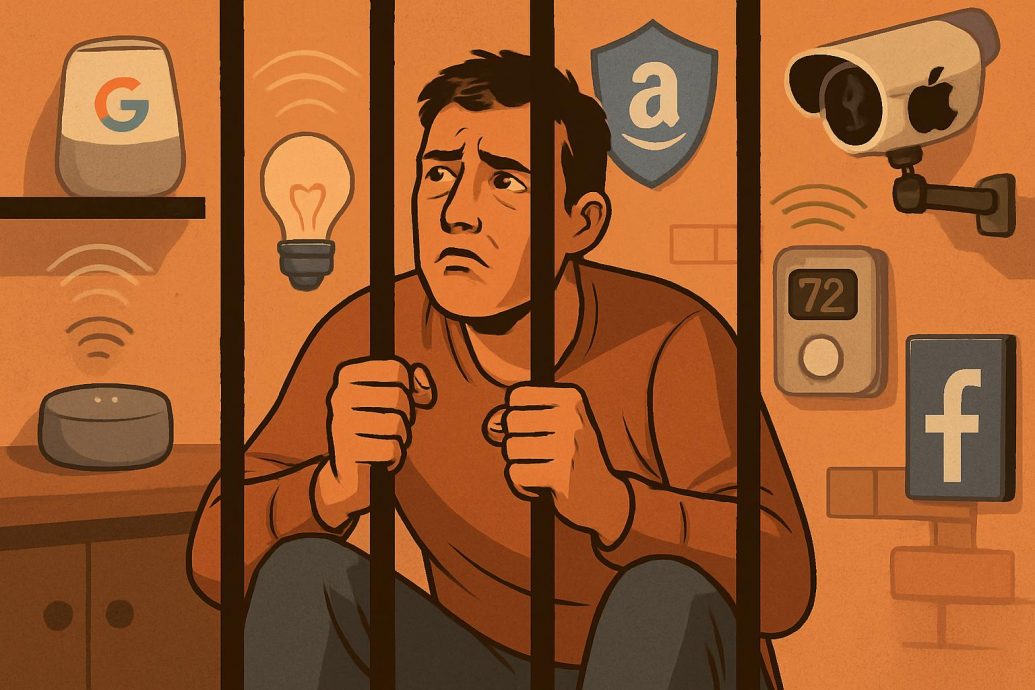

Trapped in Big Tech’s Smart Homes
Your smart home might be watching you more than you watch it. “Why You Should Be Wary of Big Tech’s Smart Home Ecosystems” isn’t just a cautionary title. It is a reality check. As Amazon Alexa listens to your voice, Apple HomeKit syncs your devices, and Google Nest maps out your routines, these platforms offer convenience at a steep price: your autonomy and privacy. While smart devices promise seamless living, they are powered by systems that often limit your control, trap you in exclusive ecosystems, and quietly harvest your personal data. Consumers need to understand how deeply they are entangled in these corporate platforms and what can be done to regain control. This guide explores these concerns in full depth.
Key Takeaways
- Smart home ecosystems built by Amazon, Apple, and Google prioritize ecosystem lock-in and data collection over genuine user control.
- Each ecosystem has different privacy practices, with trade-offs in interoperability, convenience, and surveillance risk.
- The Matter protocol promises improved cross-platform compatibility but is still limited in real-world implementation.
- Consumers are often unaware of how much personal data is collected and stored through smart assistants, connected cameras, and voice logs.
The Allure and Trap of Smart Home Ecosystems
Investing in a smart home ecosystem often begins with a single device, such as a voice assistant, a smart thermostat, or a video doorbell. Before long, many consumers find themselves dependent on an entire network of interconnected devices under one brand. This model benefits Big Tech by allowing recurring access to data and increased control. It also reduces consumer autonomy and flexibility.
Ecosystem lock-in occurs when smart home devices only work optimally within the same vendor’s platform. For example, Amazon Echo products integrate most effectively with Ring devices. Google Home functions best with Nest products. Apple HomeKit is selective about which third-party brands it supports. This method encourages users to remain within a single ecosystem. It also reduces interoperability and often limits visibility into how data is handled and shared.
Data Collection: Behind the Smart Convenience
While smart home features appear helpful on the surface, such as automated lighting, personalized voice responses, and adaptive thermostats, they rely heavily on user data. Each interaction contributes to building a detailed digital profile.
| Company | Primary Data Collected | User Control Options | Data Sharing With Third Parties |
|---|---|---|---|
| Amazon (Alexa) | Voice recordings, location data, usage habits | Manual deletion via account settings | Used for ad targeting, shared for legal compliance |
| Google (Nest, Google Home) | Voice commands, geolocation, smart activity data | Option to auto-delete after 3 to 18 months | Data supports Google advertising and services |
| Apple (HomeKit) | Minimal data; most processed on-device | Strong default settings favor privacy | Limited sharing, better user control |
Amazon and Google have acknowledged that they store voice recordings by default unless users actively opt out. Apple promotes itself as the privacy-focused alternative by handling most data on the device, reducing cloud dependency, and using encryption for all communications.
Major Incidents: When Smart Homes Fail to Protect
Despite security promises, many smart home systems have faced high-profile privacy incidents. In 2020, Ring (owned by Amazon) received criticism after hackers gained access to indoor cameras, interacted with families, and in some cases broadcasted live feeds. Nest also experienced cases where users reported intrusions into their thermostats and cameras due to poor security practices.
Here is a look at major breaches:
- 2019: Ring Hacks – Hackers spoke through indoor cameras that were accessed without authorization.
- 2021: Google Nest Credential Stuffing – Thousands of accounts were compromised due to the reuse of weak passwords.
- 2018: Alexa Data Leak – A user in Germany received audio recordings from a different household due to a technical bug.
These incidents reveal the danger of centralized data structures and a lack of user control in privacy decisions. Companies sometimes address these failures post crisis, but proactive protections remain inadequate.
The Matter Protocol: Interoperability or Illusion?
Lack of compatibility across brands has been a long-standing obstacle in smart home adoption. The Matter protocol, created by the Connectivity Standards Alliance and supported by Amazon, Apple, and Google, aims to solve this by setting common standards for device communication.
Matter’s key objectives include:
- Supporting communication between devices across brands
- Providing simpler setup processes
- Ensuring stronger security by using encrypted local signals
While Matter brings hope for cross-brand cooperation, adoption is still uneven. Many current devices are not compatible without firmware upgrades or new hubs. Some analysts question whether vendors will genuinely support full interoperability when it challenges their current business models that thrive on platform exclusivity. Readers looking to explore the broader impact of AI in smart home ecosystems may find additional insights into how companies balance openness with control.
Expert Analysis: What the Specialists Say
Bruce Schneier, a cybersecurity authority and author of “Click Here to Kill Everybody,” explains, “Smart home devices are often built with minimal security because the incentives just aren’t there. Consumers buy for convenience, not protection.”
Eva Galperin, Director of Cybersecurity at the Electronic Frontier Foundation, points out, “The smart home gives companies tremendous insight into your daily behavior. That data doesn’t stay in your home. It can be aggregated, analyzed, and monetized, often without your knowledge.”
In regions such as the European Union, frameworks like GDPR offer some safeguards. In contrast, countries like the United States lack robust federal oversight on IoT privacy. This reality places much of the responsibility on consumers to research and manage privacy settings themselves.
A Smart Approach: Questions Consumers Should Ask
Consumers who plan to invest in smart home gadgets should think beyond product features. The following questions prioritize long-term security and flexibility:
- Can I access, export, or delete my personal data?
- Are these devices compatible with the Matter standard for future flexibility?
- Does the company release firmware and security updates regularly?
- Can the device function locally, or is it cloud-dependent?
- Has the brand had any notable data breaches or transparency issues?
How do smart home devices collect and use your data?
These devices collect information through motion sensors, voice input, cameras, and other environmental sensors. Data collected may include audio logs, video events, geolocation details, and usage behavior. It is used to optimize device performance, improve user interaction, and often to target advertisements. While some processing occurs locally, most information is uploaded to company servers and may be shared according to each provider’s privacy policy.
What is ecosystem lock-in in smart homes?
It occurs when users become tied to one vendor’s products due to lack of cross-compatibility. An example would be needing Amazon-brand cameras to make full use of an Alexa speaker. This discourages mixing brands and locks users into repeat purchases within one ecosystem. It limits user choice and makes it difficult to adopt better or more ethical alternatives later.
Which smart home ecosystem is the most private?
Apple HomeKit stands out with strong privacy measures. It processes data locally on users’ devices, uses encrypted communications, and requires minimal data storage in the cloud. Apple also offers greater user control over settings and permissions. In contrast, both Amazon and Google collect more user data and rely on cloud infrastructure for processing and storage. To understand more about how Amazon manages its systems, explore Amazon’s approach to data collection.
What is the Matter standard in smart home technology?
Matter is a new protocol that allows smart home devices from different companies to communicate more easily across platforms. It uses Internet Protocol to increase compatibility and protect user data through encryption.