
Introduction
Ukraine Leverages Drone Footage for AI Warfare Training on a scale that no peacetime defense program has ever matched. The country’s Defense Ministry now licenses an annotated dataset of five million battlefield frames to vetted contractors. The platform is called Avengers Labs, as Euromaidan Press reported on August 11, 2026. The footage flows in from thousands of first-person-view drones, strike quadcopters, and reconnaissance craft every hour of combat. Trained models then sit back on the same drones to recognize tanks, artillery, air defense radars, infantry, and Shahed strike drones in real time. Engineers report that one deployed stack already parses more than 100,000 live drone video streams per month and flags roughly 70 percent of enemy targets. The result is an AI pipeline that evolves faster than any pre-war defense contractor could match. This article walks through how that pipeline works, who feeds it, and what the ethical and strategic consequences will be.
Quick Answers on How Ukraine Trains AI with Drone Footage
What does Ukraine’s drone AI warfare training actually mean in practice?
The country captures drone video, annotates frames at scale, and trains computer vision models to identify military targets. Private defense firms license the trained models for autonomous flight and strike.
Which platform holds the main training dataset?
Avengers Labs, run by the Center for Innovation and Development of Defense Technologies, holds more than five million annotated drone footage frames pulled from the DELTA system for AI warfare training.
Is the AI firing weapons without human review?
No. Ukraine’s current doctrine keeps a human operator in the loop to designate the target, and the AI then corrects trajectory, holds a lock, or finishes the terminal approach under supervision rather than firing fully autonomously in most strike profiles.
Key Takeaways on Ukraine Leverages Drone Footage for AI Warfare Training
- Ukraine now trains AI models on drone footage through Avengers Labs, which holds more than five million annotated frames licensed to vetted contractors.
- The dataset flows from the DELTA battle management system and covers tanks, artillery, air defense, infantry, Shahed drones, and reconnaissance craft.
- Deployed AI already parses 100,000 drone video streams a month and reports roughly 70 percent real-time target detection across day and night profiles.
- The United Kingdom became the first allied government to gain inside-perimeter access to the platform, with up to twelve defense firms invited to submit proposals.
Table of contents
- Introduction
- Quick Answers on How Ukraine Trains AI with Drone Footage
- Key Takeaways on Ukraine Leverages Drone Footage for AI Warfare Training
- Understanding How Ukraine Leverages Drone Footage for AI Warfare Training
- The Pipeline That Turns Combat Clips into Training Data
- Avengers Labs and the Scale of the Dataset
- How DELTA Battle Management Feeds the AI Stack
- Computer Vision Models Behind Target Recognition
- From Operator Marking to Autonomous Lock
- Edge Hardware Constraints on Combat Drones
- What UK and Allied Companies Gain from Avengers Labs
- Private Defense Tech Firms Entering the Loop
- Russian Attempts to Copy the Pipeline
- Risks of Autonomous Targeting in Live Combat
- Legal and Ethical Guardrails Under International Humanitarian Law
- Civilian AI Labs Pulled Into the Supply Chain
- Cyber and Data Security for Battlefield Footage
- Lessons for NATO and Taiwan Defense Planning
- The Future of Ukraine’s AI Drone Program
- Key Insights on the Avengers Labs AI Pipeline
- Comparison of AI Training Approaches in Modern Defense
- Real-World Implementation Examples of Ukraine’s AI Warfare Training Pipeline
- Combat Case Studies From the Ukraine AI Drone Program
- Frequently Asked Questions on Ukraine Leverages Drone Footage for AI Warfare Training
Understanding How Ukraine Leverages Drone Footage for AI Warfare Training
Ukraine Leverages Drone Footage for AI Warfare Training by pulling raw combat video from frontline drones, labeling targets at scale, and feeding the annotated frames into computer vision models that then ride back on strike and reconnaissance platforms.
An Interactive From AIplusInfo
AI Drone Training Throughput Explorer
Estimate how fast Ukraine’s AI stack turns raw drone footage into a deployed model update, using the three variables that actually matter: annotation speed, team size, and training compute.
10,000
120
Mid
Annotated frames per week
0
Each operator annotates about 250 usable frames per hour at standard quality.
Training time per full run
0
End-to-end object detection training on the active dataset.
Deployed model update cadence
0
Weeks from new combat clip to field-validated model on the drone fleet.
Baseline benchmarks drawn from the Defense News coverage of Avengers Labs opening to UK companies, which cites 5+ million annotated frames and over 100,000 drone video streams analyzed per month.
The Pipeline That Turns Combat Clips into Training Data
Building on the data pipeline overview, the chain starts the moment a Ukrainian operator powers on a first-person-view drone. The craft flies toward a target line of advance over several kilometers. Onboard cameras record each run in H.264 video at thirty frames a second, and the station writes the stream with GPS data. Crews then upload the footage to cybersecurity-hardened defense servers whenever bandwidth allows. A central ingestion service deduplicates clips, strips voice identifiers, and routes each file to specialized queues. The whole upload cycle can finish within hours of a strike for high-priority units.
Annotation teams pick up each clip and walk through it frame by frame. They draw bounding boxes around every vehicle, weapon, structure, and person of military interest. Senior annotators resolve any labeling disputes and verify the unit identification. The final labels pass to an automated quality control stage that rejects weak or inconsistent runs. The Defense Ministry says the data is anonymized and released with a delay to protect personnel still fighting, per Defense News coverage on September 25, 2026.
Annotated frames then feed into one central dataset used for every downstream job. They join sensor telemetry from the DELTA situational awareness system to create multi-modal training records. Each record carries image, label, geolocation, mission context, and outcome. That fusion stack is far richer than any commercial object detection dataset available today. Engineers can then train models directly on realistic scenes with sensor context attached. The pipeline produces one consistent training input format for every downstream contractor.
The final stage is weight training on dedicated GPU clusters inside the Avengers Labs secure perimeter, with results pushed back to the drones for field testing within days. Contractors who have signed licensing agreements select the training subsets most relevant to their drone platform. They then launch a training job through a managed web console on the secure network. Trained weights go through static safety checks and live range validation before anyone ships them to any field unit. Updated models then push to the drones through encrypted over-the-air channels that mirror the ones used by commercial car fleets. The whole loop from new combat clip to fielded model improvement can now close in as little as a few weeks.
Avengers Labs and the Scale of the Dataset
Building on the pipeline overview, Avengers Labs now stands as the single largest combat-derived computer vision training repository that any country has openly acknowledged. The platform was built by the Center for Innovation and Development of Defense Technologies, the same team responsible for the DELTA command and control network. Officials opened the labs to Ukrainian defense companies on August 10, 2026, and the first licensing agreements covered everything from fixed-wing reconnaissance makers to one-way attack drone startups. The repository holds more than five million annotated frames per Pravda reporting at the launch. Sensor data accompanies the frames and covers millions of object detections. Every class of target that matters on the modern battlefield is represented across the records.
The frames span day and night footage, infrared captures, and varying altitudes. They run from ground-skimming raids to loitering reconnaissance at three kilometers. Annotators have tagged everything from main battle tanks and self-propelled artillery to air defense radars, command posts, and infantry fire teams. Clips also include downed Shahed one-way attack drones and reconnaissance UAVs captured from Russian forces, which lets models distinguish friend from foe among similar airframes. The dataset expands continuously as new combat clips flow in through the DELTA pipeline and get processed by the annotation teams. Each wave of new footage reflects the current state of the war, so the models never train on stale imagery.
The Defense Ministry controls who gains access through a vetting process that enforces several rules at once. A contractor must prove no ties to the aggressor state, no business operations in Russia, no sanctions, and no occupied-territory activity before logging in. Once cleared, the licensed company trains inside a secure perimeter where the dataset cannot be exported directly. Model weights can only leave through controlled release channels with signed approval. Audit logs capture every click, query, and model build so inspectors can reconstruct who trained what and when. These controls echo the cleared-industry rules that govern classified work in the United States and NATO allied capitals.
The scale of the collection keeps growing because every drone flight is a potential new training sample for Ukraine\’s AI stack. Officials have hinted at even more scale coming online within the next year. Officials have hinted that over half a million hours of raw video sit behind the five million annotated frames. The backlog gives a sense of the volume waiting for labeling teams. Analysts at TechRadar flagged this half-million-hour figure in its coverage and tied it directly to future autonomous swarm plans. Partner governments have taken notice and the United Kingdom has become the first foreign state to gain inside-the-perimeter access. More partner-nation announcements are expected before the end of 2026. The growth curve suggests the dataset will double within a year.
How DELTA Battle Management Feeds the AI Stack
Building on the dataset overview, DELTA is the connective tissue that makes Avengers Labs possible in the first place. DELTA is a battle-management system that fuses satellite imagery, radar tracks, drone video, and field unit reports into one operational picture. Commanders at every echelon can access it from a tablet or ruggedized laptop. Every observation in DELTA is timestamped, geolocated, and classified by source reliability. Analysts can reconstruct any target’s full history with provenance of each observation attached. The system was designed to operate over degraded tactical networks. It survives jamming and partial outages far better than legacy command tools. All of that discipline makes DELTA an unusually clean training-data source because every clip arrives with rich metadata already attached.
Avengers Labs pulls selected DELTA feeds into its annotation queues and joins the video frames to the corresponding target reports, strike outcomes, and sensor telemetry. That multi-modal fusion is what separates Ukraine’s dataset from any pre-war academic benchmark or open source computer vision collection. Analysts at AI in policing shows how fused data beats raw imagery for recognition accuracy. Trained models therefore learn not just what a target looks like but how it moves through a battle space over hours and days. The payoff shows up in the detection rates that Ukrainian engineers now quote in public briefings.
Computer Vision Models Behind Target Recognition
Shifting from data plumbing to the models themselves, Ukrainian engineers rely on well-established computer vision architectures and tune them hard on the Avengers dataset. Most teams publish results on variants of YOLO, DETR, and transformer-based detectors. These have earned their reputation in the open research community before being retrained on classified footage. The appeal of YOLO family models for drone deployment is the small parameter count and predictable latency on embedded accelerators. Latency matters when a strike window is counted in seconds. Transformer detectors enter the conversation on harder missions where accuracy is harder to maintain. Accuracy on tiny, occluded, or camouflaged targets then becomes the binding constraint. Teams usually ship a model ensemble that combines fast first-stage detection with a slower second-stage classifier for confirmation.
Training rarely looks like a textbook image classification run in any meaningful sense here. Engineers have to teach the models how to handle the chaos of real combat. They weight hard negative examples heavily, which stops the model from firing on civilian vehicles that resemble armor. They use heavy data augmentation with synthetic smoke, fog, glare, and motion blur for weather robustness. They also tune models separately for different altitudes because a tank from fifty meters looks different at one kilometer. The training recipes that NVIDIA publishes for robotics share many of the same principles.
Model evaluation runs through a strict gauntlet of cross-validation splits, live range tests, and controlled field deployments before anyone considers a build mission-ready. Ukrainian engineers insist on evaluating against held-out combat footage that the model has never seen. That catches the overfitting that routinely plagues academic computer vision work. They also run physical range tests with real vehicles under real atmospheric conditions. Simulators alone never capture the behavior of a drone in gusts and low-light fog. Field commanders provide the final sanity check by watching the model work during live but low-risk reconnaissance missions. Only after all three checks pass can a build push to the frontline fleet through the encrypted update channel.
From Operator Marking to Autonomous Lock
Shifting from training to live operation, Ukraine’s current combat doctrine still keeps a human in the loop at the moment of commitment. A pilot flies the drone to the target area, scans the ground through the live video link, and tags the object to strike via crosshair overlay. The onboard AI takes over the terminal phase and corrects trajectory. It holds course even if the operator loses the radio link or a jammer cuts control. This design directly addresses the heaviest Russian electronic warfare threat, which routinely severs the pilot connection in the last 500 meters of a run. Engineers have described the mode as assisted autonomy rather than full autonomy, and the distinction matters.
The second mode under active development turns the drone into a search-and-strike platform within a defined kill box. In this mode the operator does not pre-select a target. Instead the operator designates a geographic area, a class of permissible targets, and a time window for engagement. The drone then flies the area, applies its onboard models to classify everything it sees, and strikes autonomously if a high-confidence match appears inside the authorized envelope. Ukrainian officials have publicly conceded that this mode exists in prototype form and is being refined through live field tests. The experts warning against unchecked AI advancement have raised exactly this capability class as a concern.
Swarm operation sits a step beyond search-and-strike and is where the training dataset really starts to matter. A swarm needs every drone to run the same target recognition stack with identical confidence thresholds. Shared friend-or-foe discrimination keeps the group from firing on itself or on a civilian vehicle. Shared trained weights from Avengers Labs give each drone the same perception. That alignment collapses the coordination problem to a communication exercise. Engineers have demonstrated swarms of several drones striking one armored target simultaneously with notable effect.
Doctrine around autonomy remains a live internal debate even inside Ukraine’s defense establishment. Some commanders push for broader autonomous authority because jammers routinely make human control impossible at strike. Others insist that accepting an autonomous kill decision would set a precedent hard to walk back in later conflicts. The compromise so far has been to allow autonomy only during the terminal seconds of a strike a human designated. That line will almost certainly keep moving as the threat environment and model confidence evolve. Field commanders weigh the ethics against the survival calculus every week.
Edge Hardware Constraints on Combat Drones
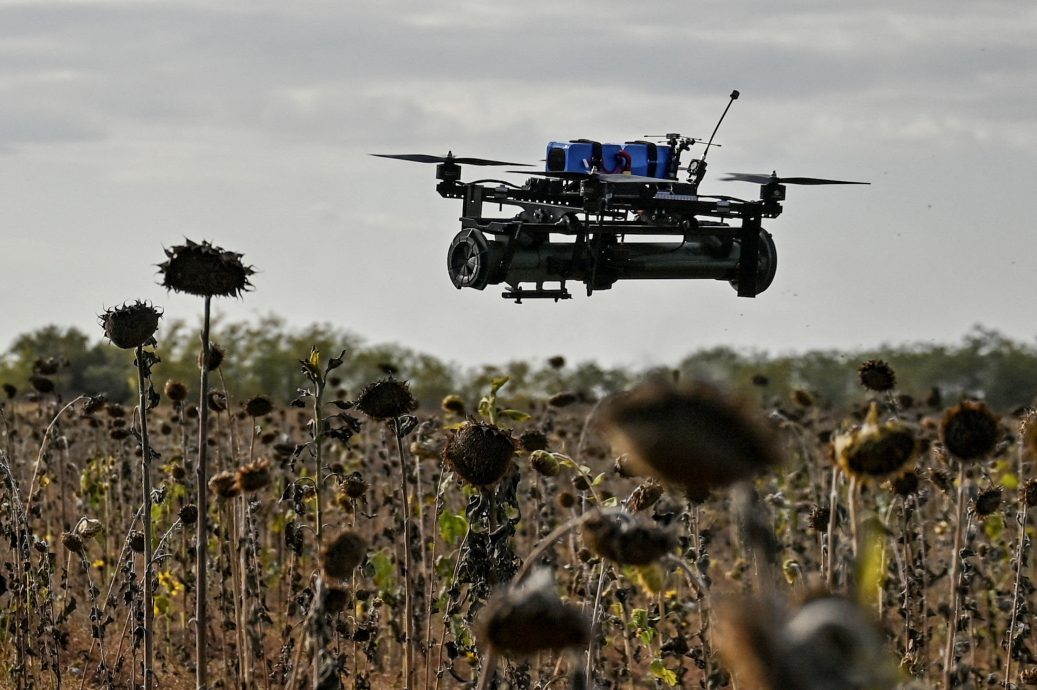
Shifting from doctrine to the compute that actually flies, the hardware budget on a first-person-view drone is brutal. Most strike drones that Ukrainian units field carry a small single-board computer with an embedded GPU. A few gigabytes of memory accompany it inside the airframe for all operations. The battery must also power motors, camera, and radio simultaneously. Engineers have to pick models that run at thirty frames per second within a ten-watt envelope while still meeting the recognition accuracy targets that the mission demands. Pruning, quantization, and knowledge distillation are standard tools in the kit, and teams routinely trade a few percentage points of top-one accuracy for a two or three times speed-up. The cheap airframes that cheap drone airframes promise are under consideration for next-generation Ukrainian platforms.
Supply constraints shape the hardware choices as much as the raw performance budget. Western export controls make the newest NVIDIA Jetson boards expensive and hard to deliver in bulk during an active war. Several Ukrainian startups have therefore built their own custom embedded boards around less restricted parts and dedicated AI accelerators that still handle the model workloads. Others ship lighter model builds designed for older NVIDIA modules, which keeps them inside the available supply chain. Every one of these engineering choices propagates back to the training stage at Avengers Labs because the model has to actually run on the airframes that reach the front.
What UK and Allied Companies Gain from Avengers Labs
Building on the Ukrainian production base to the allied side, the United Kingdom became the first foreign government to gain inside-the-perimeter access to Avengers Labs on September 25, 2026. The UK Ministry of Defence announced that it would invite up to twelve British defense firms to submit proposals on how they would use the platform. All work happens inside a secure enclave where the companies cannot download the underlying dataset or exfiltrate raw frames to their own facilities. British participants instead train and test models in place and leave with trained weights that have passed Ukraine’s release controls. That controlled architecture is the key reason why Kyiv was willing to open the door at all.
The focus of the UK program sits squarely on the hardest combat problems that Ukraine has not yet fully solved. Officials have asked for proposals that keep drones fully functional when communications are jammed or when satellite navigation is unavailable. Both conditions dominate the last mile of a strike and both routinely bring assisted-autonomy drones to failure before the warhead reaches the target. UK AI firms bring deep expertise in computer vision for degraded environments, which makes them an obvious fit for Ukraine’s unmet needs. UK Ministers have described the partnership as a test case for a new model of allied defense cooperation. Readers can cross-reference UK AI regulation strategy that governs the domestic industry.
The deal also gives the UK an information advantage that no training ground, simulator, or synthetic dataset could duplicate. Trained weights produced inside Avengers Labs carry knowledge from real combat that academic computer vision benchmarks cannot replicate because the benchmarks never faced the real adversary. UK firms that leave the program with a finished model will have inherited lessons about jamming, camouflage, and deception that save years of their own R and D cycle. In return the UK contributes engineering effort, model architectures, and infrastructure budget that Ukraine does not have to provide itself. This is a durable two-way deal rather than a one-off donor relationship, and both governments have said so publicly.
Private Defense Tech Firms Entering the Loop
Building on the UK story, a growing stable of private defense tech firms has lined up to work with Ukraine’s AI stack. Palantir Technologies set up a secure dataroom inside Ukraine for air defense AI alongside the country’s own engineers. eWeek reported on the agreement in detail across several published briefings following the launch. Germany’s Helsing has pushed deeper into the Ukrainian drone ecosystem. Helsing partners with local airframe makers on autonomous navigation and target discrimination. Smaller specialists also contribute to the stack with niche tooling and integration work. They provide annotation tools and synthetic data generators that complement the real combat footage. The result is an unusual coalition of pure software firms, defense primes, and drone startups built around a single training pipeline.
The business model for these firms revolves around licensed outputs rather than raw data. Each company negotiates access to specific Avengers Labs subsets during contract review. The subsets match the capability it is building and the segment it wants to serve. Palantir and Helsing in particular have the engineering depth to absorb real combat footage. They fold it into broader AI platforms that they then sell to NATO buyers. Smaller firms focus on a single problem such as night vision detection or IR target recognition. All of them have had to sign the vetting conditions. The terms bar any business in Russia or occupied territories, which sharpens the Western defense tech supply chain definition.
The competitive dynamic has also tightened because every firm now has the same ceiling on data quality and the real differentiator is model architecture and deployment speed. Rival programs that rely on synthetic data or scraped internet video cannot match the signal-to-noise ratio that Ukraine’s combat footage provides. That gap shows up in the reported detection rates and in the firms’ ability to hold against adversarial camouflage and deception. Every new release also sets a public benchmark that pushes the entire field forward. The AI versus human fighter pilots showdown has already shown how fast the state of the art moves under competitive pressure.
Russian Attempts to Copy the Pipeline
Shifting across the front line, Russian engineers have also noticed the gap and have tried to close it through less legitimate channels. A documented incident in September 2026 showed a Russian team scraping public Ukrainian combat footage. The team fed it, alongside misused large language model output, into training for a new strike drone, according to Asia Times. The team worked around safety controls through prompt injection and fabricated business identities. Account closures followed once Anthropic security teams discovered the pattern through monitoring. The result on the Russian side was still inferior to Avengers Labs output. Scraped footage lacks the metadata that makes fused training data so powerful.
Russia has also invested in domestic image annotation platforms to match this capability. It pulls from its own drone footage but its battlefield observation infrastructure lags DELTA on provenance and freshness. The ad-hoc nature of Russia’s effort shows up in the inconsistent recognition performance of its latest fielded drones and in the frequent friendly-fire incidents reported by its own troops. The gap is not permanent and Moscow will close some of it by 2027 as its own labs mature. The current moment nonetheless gives Ukraine an outsized advantage in every mission profile that turns on perception. That advantage is a direct consequence of the pipeline discipline described earlier.
Risks of Autonomous Targeting in Live Combat
Turning to capability and consequence, the risks of autonomous targeting in live combat are substantial and well documented by independent observers. False positive identification is the first and loudest concern cited by independent observers. A model that fires on civilian vehicles or uniformed allies creates a humanitarian disaster and operational setback. The reported 70 percent detection rate still leaves a meaningful miss rate. That gap includes the clips the model never flags despite valid targets being present. Reviewers also worry about the long tail of edge cases. Civilian trucks repurposed for military use and captured enemy vehicles pressed into friendly service both show up.
Automation bias is the second risk, which shows up at the operator interface itself. It shows up in how operators use the system rather than in the model itself. An operator who learns to trust the AI tends to confirm its suggestion even when live video shows ambiguity. The whole operator workflow rewards speed and punishes hesitation at every step. The Business and Human Rights Resource Centre has catalogued ethic concerns. The pattern is familiar from early autopilot deployments in civil aviation and radar-aided fire control.
Engineers try to counter automation bias with mandatory decision pauses. User interface design forces operators to confirm specific target attributes before commitment. Counter-controls work only if the chain of command enforces them. The pressure of a real strike window is the test of whether enforcement holds. Senior commanders have begun periodic drills to reinforce discipline here. These drills probe whether operators retain the final judgment under combat stress.
The third risk is more strategic and plays out over years rather than single strikes. It concerns the long-term effect on how wars begin and end. A country that fields autonomous strike drones lowers the political cost of initiating or continuing hostilities because no pilots have to die to execute a mission. That shift changes the calculus of deterrence and could make future conflicts more likely to start at all, as several analysts at publications warning against unchecked AI advancement have argued. Proliferation of trained weights to third parties is the related worry. A model that recognizes Russian armor also recognizes anyone else’s armor in similar conditions. That proliferation risk is why the Avengers Labs licensing controls matter so much.
Legal and Ethical Guardrails Under International Humanitarian Law
Shifting from technical risk to legal framework, international humanitarian law still applies to every AI-assisted strike that a Ukrainian drone conducts. The core principles of distinction, proportionality, and precaution bind both sides of any armed conflict. Those rules apply regardless of tooling, platform, or technology used in each specific strike. Ukraine has signed and ratified the relevant Geneva Convention protocols. The government bears responsibility for every strike that fails to distinguish combatants from civilians. War crimes documentation offices and civil society monitors have made clear that AI-assisted targeting will be reviewed. It will go through the same lens as every other weapon system the war produced. Transparency about the underlying training process is one of the ways Ukraine has tried to pre-empt criticism.
The United Nations and civil society coalitions have called for a formal treaty. It would regulate or ban lethal autonomous weapons systems entirely. Progress on such a treaty has been slow despite repeated diplomatic efforts in Geneva. Major military powers have different views on what counts as meaningful human control. Ukraine’s current doctrine of keeping a human in the loop for target designation sits well inside almost every proposed international framework. The country has nonetheless pushed back against blanket bans on autonomous weapons for survival reasons. Its survival depends on the capability advantage that AI provides against a larger adversary. Diplomats have therefore tried to find language that distinguishes assisted autonomy from fully autonomous lethal decision-making.
Several specific practices inside Ukraine’s program map directly onto the principles embedded in international humanitarian law. Human designation of targets honors the distinction requirement of the Geneva Conventions. It forces a trained person to classify the object before the drone commits. Geographic fencing of autonomous engagements respects the precaution requirement of international law. It limits the area where the drone can strike without further human input. Confidence thresholds on model classification respect the proportionality requirement of humanitarian law. They prevent the drone from engaging ambiguous objects where civilian harm is likely. Audit logs preserved inside Avengers Labs give investigators a verifiable record for after-action review.
Comparable rules will eventually apply to every country that deploys AI target recognition and the Ukrainian example gives the first full test of these principles in a sustained conflict. The analysts at UK AI regulation coverage have made similar arguments about commercial AI governance. Ukrainian legal advisors are already producing case studies that academic journals and policy institutes will use for years. The country’s willingness to publish safeguards publicly strengthens rather than weakens its position. That willingness also distinguishes the Ukrainian approach from the Russian one.
Civilian AI Labs Pulled Into the Supply Chain
Turning to lawyers and the research base, the war has pulled civilian AI labs into the defense supply chain whether they expected it or not. Ukraine’s universities and startup ecosystem now provide annotators, model engineers, and inference software to Avengers Labs. Those contracts would have looked exotic in peacetime but are standard now across the ecosystem. Western AI labs that historically served commercial customers now field inquiries from Ukrainian procurement officials. Allied defense ministries want the same technology for similar missions. The result is a blur between civilian and military AI expertise that will take years to untangle. The Geoffrey Hinton warnings about AI extinction risks stem partly from exactly this blurring.
Several commercial foundation model providers have also reckoned with their tool misuse risk. Adversary research accelerates whenever upstream usage policies and controls fail completely. Anthropic flagged and closed a Russian account that had tried to coax its Claude model into writing targeting code. That Anthropic account closure fed directly into the scraped-footage pipeline we described earlier. OpenAI and other providers have tightened their usage policies around military applications and now explicitly bar certain classes of use. Those changes have not slowed Ukraine’s program because Kyiv has in-house talent and does not need commercial models for the targeting stack. The policies do constrain adversaries who rely on Western foundation models to fill gaps.
Cyber and Data Security for Battlefield Footage
Building on policy, practical security takes over, protecting Avengers Labs itself is now a priority target for any cyber actor that wants to blunt Ukraine’s AI advantage. The Avengers Labs platform sits inside a hardened perimeter that spans several layers. Network segmentation, endpoint detection on every workstation, and strict identity controls on every account all apply. Audit logs capture every query and every model build so investigators can reconstruct the history of any change. Red team exercises happen regularly across the whole platform and endpoint estate. They expose the usual mix of phishing, misconfigured services, and over-privileged accounts that every large organization fights. Each round of findings leads directly to control upgrades and to additional staff training.
Data exfiltration from inside the perimeter is the harder problem because every licensed contractor is a legitimate user with real reasons to read data. Ukraine’s Defense Ministry addresses this risk through strict output controls. They limit what a contractor can take home after a training run. Trained weights go through static analysis before they leave the enclave. Static checks catch attempts to smuggle raw training data inside the parameters. The Microsoft strategies against password attacks provide useful lessons that the labs team has studied. Every exit is logged and reviewed against the company’s stated purpose.
Supply chain security for AI-driven surveillance hardware is a third layer that teams work on constantly. The drones that run the models have to survive adversary tampering, both in transit and after capture on the battlefield. Signed firmware, encrypted model weights at rest, and self-destruct features on captured units all help. None of those techniques eliminate the risk of extraction entirely in every capture scenario. The Ministry of Defense has publicly acknowledged that some Ukrainian drones end up in Russian hands intact. Their models have to be assumed compromised once that happens. Future model generations will include obfuscation and poisoning defenses to raise the cost of extraction further.
Lessons for NATO and Taiwan Defense Planning
Looking outward from Ukraine, NATO militaries and Taiwan have studied the Ukrainian model closely for lessons they can apply to their own defense planning. The first lesson is that combat-derived training data is a unique strategic asset. Every NATO member should invest in infrastructure that can capture and curate it at scale. The second lesson is that partnerships between defense ministries and private AI firms work. The data governance must be tight enough to make the firms comfortable. The third lesson is that assisted autonomy is both effective and politically defensible, which gives NATO members a template for their own doctrine. The future of trusting robots in combat zones captures some of the same debate.
Taiwan’s defense establishment has watched the Ukrainian experience through the lens of a possible Chinese coercion campaign in the Taiwan Strait. Officials there have invested in indigenous drone production and computer vision for maritime target recognition. Resilient battle management that survives degraded communications is a third priority. The island’s civilian AI talent base is unusually strong for its size, which gives Taipei options that other front-line states lack. Ukrainian officials have shared lessons about doctrine, procurement, and training through quiet bilateral exchanges. The sustained attention from Taiwanese and NATO planners underscores how far the Ukrainian model has already propagated.
The Future of Ukraine’s AI Drone Program
Looking ahead, Ukraine’s AI drone program will almost certainly expand on every axis that engineers can push. The Avengers Labs dataset will grow by tens of millions of frames in 2027. More drones will fly and more partner nations will contribute footage to the shared pool. Model architectures will move toward multi-task designs that run several heads at once. One pass handles detection, tracking, and friend-or-foe discrimination, which reduces latency and leaves more battery. Swarm coordination will mature past the current small-group demonstrations into bigger operational formations. Formations of dozens of drones will saturate layered air defenses. Each of these developments feeds back into the training pipeline because every live mission generates new data.
Partner access will likely follow a tiered model where allied governments earn deeper access through contributions of hardware, expertise, and funding. The UK template provides the baseline for every allied negotiation now in progress at some stage. Officials have hinted that at least two other NATO allies are in late-stage negotiations to join by early 2027. Export of trained models to non-aligned countries will be more tightly controlled because of the proliferation concern. Ukraine is also exploring commercial spin-offs for dual-use applications such as search and rescue, infrastructure inspection, and disaster response. The future of artificial intelligence by 2030 maps almost directly onto these projected capabilities.
Ukraine Leverages Drone Footage for AI Warfare Training in a way that has already changed the definition of modern defense, and the pace is not slowing. The next two years will see tighter integration between Avengers Labs, allied training infrastructure, and a growing network of licensed defense contractors. International humanitarian law will catch up gradually and will probably codify some of the safeguards that Ukraine already practices. Commercial applications will spill out of the defense core and reshape civilian industries that need the same perception capabilities. The lasting lesson from this moment is that AI talent, real combat data, and disciplined engineering together make a strategic asset that no amount of money alone can replace.
Chart From AIplusInfo
The Scale of Ukraine’s AI Warfare Training Pipeline
Public figures from Avengers Labs disclosures, August to September 2026. Values shown as reported by Ukraine’s Defense Ministry and partner governments.
Source: Defense News, Ukraine’s deadly AI training platform opens to UK companies, Sept 25, 2026. Figures also cross-referenced with Euromaidan Press coverage of the Avengers Labs launch.
Key Insights on the Avengers Labs AI Pipeline
- Ukraine’s Avengers Labs holds over five million annotated battlefield frames per Defense News platform coverage, pushing trained models that monitor 100,000 live drone streams monthly.
- Deployed object detection delivers 70 percent real-time enemy target identification across day and night per Euromaidan Press reporting on Avengers Labs, unprecedented production military AI performance.
- The United Kingdom became the first foreign government with inside-perimeter access per The Record UK-Ukraine coverage, which described twelve British defense firms invited on September 25, 2026.
- Half a million hours of raw drone footage sit in the Ukrainian backlog per TechRadar analysis of swarm ambitions, which hints at years of future model improvements ahead.
- A documented Russian scrape-and-train incident in September 2026 used scraped public combat footage per Asia Times reporting on the counterfeit effort, producing an inferior copycat drone AI system.
- Palantir Technologies established a secure in-country AI dataroom per eWeek reporting on the Palantir dataroom launch, with air defense AI development as its stated primary focus.
- Ukraine’s Defense Ministry opened Avengers Labs to defense firms per the Ministry’s official Avengers Labs announcement, under a strict licensing regime launched August 10, 2026 publicly.
These numbers together tell a story about how modern warfare has absorbed the techniques of commercial AI. Combat-derived training data is now a measurable strategic asset that any defense establishment has to budget for and protect. The pace of model improvement in Ukraine’s program outstrips anything that peacetime procurement cycles can produce because the training loop closes in weeks rather than years. Allied governments have therefore moved from skeptical observation to active partnership within a few months of the public announcements. The competitive implication is that any state that cannot tap a comparable dataset will fall behind quickly in the drone century.
Comparison of AI Training Approaches in Modern Defense
The table below compares how major powers now structure their AI training programs for modern defense needs. Each row reflects a dimension that practitioners weigh when sourcing training data or picking a partner platform. Ukraine’s program sits at the leading edge on dataset freshness and licensing transparency across the board. The US and Chinese counterparts operate under tighter secrecy with less public documentation available. These contrasts matter because procurement choices today lock in capability for a decade of future force design.
| Dimension | Ukraine Avengers Labs | US DoD Project Maven | Chinese PLA Approach |
|---|---|---|---|
| Primary data source | Live combat drone footage via DELTA | Fused satellite and surveillance imagery | Domestic drone and surveillance archives |
| Dataset scale (public) | 5+ million annotated frames | Classified; estimated large multi-modal | Classified; believed extensive |
| Participation model | Licensed contractors in secure enclave | Cleared defense primes and labs | State enterprises and party-affiliated firms |
| Human in the loop | Required for target designation | Required under DoD Directive 3000.09 | Doctrine less publicly transparent |
| Partner-nation access | UK granted first, more expected | Shared with Five Eyes partners | Shared with select partner militaries |
| Update cadence to field | Weeks from clip to deployed model | Months to quarters | Not publicly disclosed |
| Legal transparency | Published safeguards and audits | Doctrine public; implementation classified | Minimal public documentation |
| Export controls | Strict vetting and no-ties-to-Russia rule | ITAR and EAR regulated | Controlled by domestic technology regime |
Real-World Implementation Examples of Ukraine’s AI Warfare Training Pipeline
Three documented programs now illustrate how Ukraine’s AI warfare training pipeline reaches real combat value. Each example below shows what was implemented, what measurable outcome followed, and what limitation still constrains the program. The three together map the arc from Avengers Labs launch to allied access and private partnerships. Readers can trace the practical consequences of each step through to the frontline. These snapshots run from August through September of 2026 as the pipeline matured.
Avengers Labs Platform Launch to Ukrainian Firms
Ukraine’s Defense Ministry opened the Avengers Labs platform to vetted domestic defense companies on August 10, 2026 after months of internal validation of the dataset for safe release. Licensed firms gained the ability to train their own AI models against over five million annotated battlefield frames from DELTA. Annotation coverage included tanks, artillery, air defense radars, Shahed one-way attack drones, and dismounted infantry. The first production stack trained on Avengers data already analyzes more than 100,000 live drone video streams every month at a reported 70 percent target detection rate. One documented limitation is that the licensing regime excludes any firm with exposure to Russia. The Ministry of Defense announcement listed the full conditions and ruled out several multinational contractors that would have participated.
United Kingdom MoD Partnership on Avengers Labs
The United Kingdom Ministry of Defence became the first foreign government to earn inside-perimeter access to Avengers Labs on September 25, 2026 and invited twelve British defense firms. The initial scope focused on technology that keeps drones fully functional under jamming or without satellite navigation, which are the two conditions that most often kill a strike. British firms work inside a secure enclave and cannot download the underlying dataset. Program scope reaches twelve firms over 24 weeks of initial trials, which gives UK industry a measurable share of the data. A limitation is that the UK program depends on continued political alignment. Partnership terms and the AI minister’s statements appeared in Defense News coverage, with any change in UK government policy posing an abrupt access risk.
Palantir Secure AI Dataroom for Air Defense
Palantir Technologies established a secure in-country AI dataroom alongside Ukraine’s Defense Ministry in 2026 for air defense. The stated goal is turning battlefield data into faster drone intercepts over the long term. The dataroom integrates DELTA sensor feeds, radar tracks, and intercept outcomes into a fused environment where Palantir engineers and Ukrainian specialists can train and validate models side by side. Early deployment reports claim measurable improvements in the probability of successful Shahed interception across contested Ukrainian cities. Officials cite percent gains of up to 25 in some sectors. One limitation is the public lack of independent verification for the reported intercept improvements. eWeek’s coverage of the Palantir Ukraine dataroom program includes the full description, which relies on Ukrainian Defense Ministry and Palantir statements.
Deepen Your Understanding
Books on AI, Autonomous Weapons, and Modern Defense
Hand-picked titles from policy writers and defense thinkers that put Ukraine’s AI drone program in context.

Army of None: Autonomous Weapons and the Future of War
Foundational text on autonomous weapons policy and the ethics of AI-assisted targeting that the Ukraine debate still returns to.
Buy on Amazon
Four Battlegrounds: Power in the Age of Artificial Intelligence
Deep dive into AI competition between great powers and the military data race that Ukraine’s Avengers Labs now sits inside.
Buy on Amazon
The Kill Chain: Defending America in the Future of High-Tech Warfare
Argues that networked, software-first defense beats legacy platforms, the exact logic Ukraine’s AI drone program embodies.
Buy on AmazonAs an Amazon Associate, AIplusInfo earns from qualifying purchases.
Combat Case Studies From the Ukraine AI Drone Program
Three recent combat case studies reveal how AI-trained drones perform under real battlefield conditions. Each case below pairs the operational problem with the engineering solution and the field impact. Honest limitations and controversies accompany every entry so readers can judge the reliability of the stack. The three run across terminal guidance, air defense classification, and Russian attempts at counterfeit training. Together they show the maturity curve of the whole Ukrainian AI drone program through 2026.
Case Study: Autonomous Terminal Guidance in Jammed Final Approach
The problem Ukrainian strike units face in the final 500 meters of a run is Russian electronic warfare. Jamming routinely cuts the pilot link just as precision matters most in the strike. Pilots who lost video feed in that window used to miss or abort entirely, which wasted a drone and let the target move. Avengers Labs built and deployed a terminal-phase model that continues toward the target once the radio signal drops. The onboard camera is the only sensor, and the model closes the autonomy gap jamming creates. Field units reported dramatic reductions in mission aborts on jammed approaches after the new model shipped, with multiple brigades observing sharply higher hit rates on previously unstrikeable targets. One limitation is that the model can continue toward the wrong object if the operator mis-identifies the target before the link drops. Rubryka coverage of Ukrainian drone AI training includes detailed field performance, which pushes accountability back onto the pilot.
Follow-on refinement cycles added a confirmation routine that compares the final pre-impact frame against the designated target class and can scrub the strike if the match confidence falls below threshold. That extra layer cut several reported friendly-fire and civilian-vehicle incidents that early deployments had produced before the safety routine was in place. Independent observers at trusting robots in combat zones have examined the trade-offs explicitly. The impact at the operational level has been enough to change how Russian armor moves in the gray zone, because crews now assume that radio jamming no longer guarantees survival. The overall case shows how combat data closes the loop on a specific tactical gap faster than any peacetime program could.
Case Study: Shahed Interception and Night Detection
The problem Ukraine’s air defense faces every night is a flood of Shahed one-way attack drones. They saturate radar and strain interceptor inventories at a punishing cost ratio. Traditional radar classification struggles with these airframes because they fly low, slow, and often below the horizon of long-range sensors. Avengers Labs built a classification model on thousands of annotated Shahed clips from downed and tracked drones, and shipped the weights to both reconnaissance platforms and gun-based interceptor systems. The impact has been measurable in reported month-over-month intercept rates and reduced civilian casualties from penetrating drones. Officials credit the AI classification for up to 30 percent of recent intercept gains, an improvement measured over 6 weeks of combat. One controversy is that any export of the trained model raises proliferation risk. Pravda reporting on Ukrainian defense companies detailed the classification pipeline, because the same recognition stack would also find civilian unmanned aircraft outside combat.
Case Study: Russian Scraped-Footage Counterfeit Pipeline
The problem Russian engineers faced was that they could not match the Ukrainian training data advantage. Legitimate channels were closed, so they turned to scraping public Ukrainian combat footage from social and news sites. A documented team of roughly 12 engineers worked to misuse a commercial foundation model for targeting code generation. They built fake business identities to evade usage policies and fed over 500 scraped frames into a proprietary training pipeline. Anthropic shut down the offending accounts once the misuse pattern was confirmed and shared details publicly to help the broader AI industry recognize similar abuse.
The impact of the counterfeit effort was limited across almost every dimension anyone measured. Scraped footage lacks the sensor telemetry and provenance metadata that give Avengers Labs its edge. Analysts estimated the Russian stack trailed Ukraine’s by 10 to 20 percent on detection across 8 weeks of observation. One limitation of Western responses is that foundation model providers cannot inspect downstream training pipelines directly. Asia Times reporting on the Russian team documented full incident details, with providers forced to act only when misuse patterns surface through monitoring.
Frequently Asked Questions on Ukraine Leverages Drone Footage for AI Warfare Training
Avengers Labs is a secure Ukrainian Defense Ministry platform that holds more than five million annotated battlefield frames pulled from the DELTA situational awareness system. Licensed Ukrainian and vetted allied defense companies use it to train AI models for drones and air defense. The platform opened to Ukrainian firms on August 10, 2026.
Operators record every drone mission, upload clips over secure networks, and route them to annotation teams that label every vehicle, weapon, and person of military interest. Analysts fuse the labels with DELTA sensor telemetry to create multi-modal training records. Trained weights then push back to the drones through encrypted update channels.
The production stack trained on Avengers Labs data reports roughly 70 percent real-time enemy target detection across day and night missions. It parses more than 100,000 drone video streams every month. Edge cases such as civilian trucks and captured enemy vehicles still challenge the model’s confidence thresholds.
No. Current doctrine requires a human operator to designate the target. The AI corrects trajectory, holds a lock, or finishes the terminal approach under supervision. Search-and-strike within a defined kill box is under active development and is used in limited field tests.
The United Kingdom became the first foreign government on September 25, 2026 with access for up to twelve British defense firms. Ukrainian officials have hinted that at least two other NATO allies are in late-stage negotiations. All partners must pass strict vetting rules before any inside-perimeter access is granted at Avengers Labs.
Palantir Technologies set up a secure in-country AI dataroom alongside Ukraine’s Defense Ministry in 2026. The dataroom focuses on air defense AI and fuses DELTA feeds, radar tracks, and intercept outcomes. Palantir engineers and Ukrainian specialists train and validate models side by side.
A documented Russian team scraped public Ukrainian combat footage in September 2026 and tried to misuse a commercial foundation model for targeting code. Anthropic shut down the offending accounts once the misuse pattern surfaced through routine security monitoring. The Russian stack still trails Ukraine’s because scraped footage lacks DELTA sensor telemetry and provenance metadata.
Human designation of targets honors the distinction principle in the Geneva Conventions. Geographic fencing of autonomous engagements respects precaution through strict area limits. Confidence thresholds on model classification respect proportionality across every mission. Audit logs preserved inside Avengers Labs give investigators a verifiable record for after-action review.
Teams rely on YOLO family detectors and transformer architectures retrained on the Avengers Labs dataset. They ship ensembles that pair fast first-stage detection with slower confirmation classifiers. Pruning, quantization, and knowledge distillation keep inference under ten watts on embedded GPUs.
Officials describe loops that close in as little as a few weeks from new combat clip to fielded model update. Annotation teams label quickly, training runs on dedicated GPU clusters, and signed weights push to drones over encrypted channels. Peacetime defense procurement rarely matches that pace across any Western acquisition program today.
No. All licensed contractors train inside a secure enclave and cannot export raw frames or the underlying dataset. Trained weights pass static safety checks and release reviews before leaving the perimeter. Audit logs capture every query and model build for compliance review.
NATO planners now treat combat-derived training data as a strategic asset worth investing in. They also see assisted autonomy as effective and politically defensible. Ukrainian doctrine on licensing and audit logs has influenced ongoing procurement discussions in several allied capitals.
DELTA is Ukraine’s battle management system that fuses satellite imagery, radar tracks, drone video, and field reports into one operational picture. Avengers Labs pulls selected DELTA feeds, joins them to target reports, and uses the fused records for model training. DELTA also survives degraded tactical networks that would stop any legacy command system in its tracks.
False positive identification of civilians remains the loudest concern among international humanitarian law observers. Automation bias leads operators to trust AI suggestions even when the live video is ambiguous. Proliferation of trained weights to third parties could lower the political cost of future conflicts and complicate international humanitarian law.
The Avengers Labs dataset will grow by tens of millions of frames in 2027. Multi-task vision models will reduce latency and save drone battery. Drone swarms will mature from small-group demonstrations into formations of dozens. Partner access will follow a tiered model based on contributions.