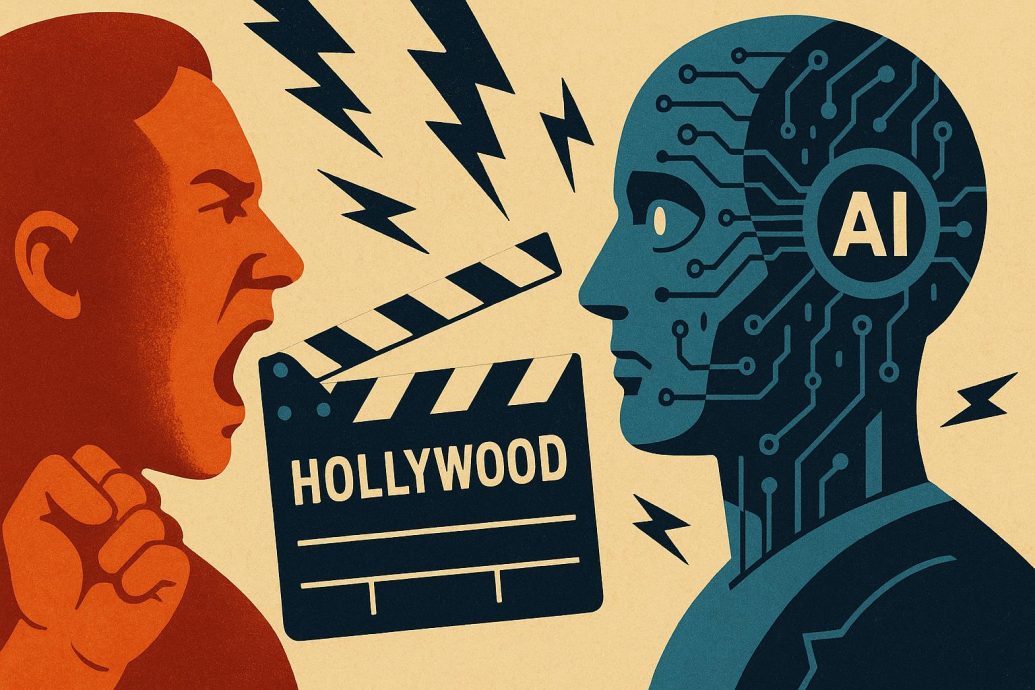

Hollywood Faces Backlash Over AI Fixation
The growing controversy captured in Hollywood Faces Backlash Over AI Fixation reveals a critical turning point in entertainment. What was once lauded as innovation is now raising concern among viewers, labor advocates, and creatives. Audiences are pushing back against the overreliance on artificial intelligence in storytelling, while box office data and sentiment surveys suggest growing AI fatigue in film and television. As the industry courts generative tools for efficiency and scale, Hollywood must now confront questions of ethics, authenticity, and job security. In this article, we explore the mounting backlash, reviewing the cultural, financial, and labor-driven implications of AI’s expanding role in entertainment.
Key Takeaways
- Audience interest in AI-driven films is declining, reflected in weak box office performance and falling audience satisfaction metrics.
- Labor unions including WGA and SAG-AFTRA have pushed back on AI integration, seeking contractual limits and protections for human workers.
- Fans and experts alike are questioning the authenticity of AI-generated content in media, with many calling for transparency and ethical standards.
- Trusted sociologists and observers warn that overuse of AI may erode emotional trust between audiences and creators.
Rising AI Fatigue in Film and TV
In the past two years, Hollywood’s enthusiasm for AI has accelerated. From AI-generated scripts to deepfake technology, entertainment studios have explored artificial intelligence in nearly every facet of production. But the shine is wearing off. A 2024 YouGov poll found that 61 percent of Americans prefer human-written scripts over AI-generated alternatives, with only 12 percent expressing interest in AI-created films. Statista consumer sentiment reports also show declining excitement for AI integration in movies, down 28 percent from 2023. These insights reveal a growing AI fatigue in film that is now shaping audience viewing habits and expectations.
For a broader look at how AI has influenced the entertainment business, visit this breakdown of AI and the entertainment industry.
Box Office Underperformance of AI-Driven Content
A deeper dive into analytics reveals a troubling trend for AI-focused films. A review of 2023 to 2024 box office statistics illustrates a pattern of financial underperformance where AI was a central plot device or heavily involved in production. For instance:
| Title | Release Date | AI Involvement | Audience Score (RT) | Revenue vs Budget |
|---|---|---|---|---|
| Genesis Code | Feb 2024 | Script co-written by AI | 42% | $28M vs $75M |
| AI World | Nov 2023 | CGI faces, AI-enhanced VFX | 51% | $49M vs $100M |
| Protocol Zero | Mar 2024 | AI-created screenplay | 38% | $19M vs $60M |
This table reflects a broader decline in returns when AI takes center stage. CBR and Variety have both outlined that audience disconnection is a likely reason, with filmgoers citing a lack of emotional depth, originality, and relatable themes in these projects. To better understand these shortcomings, you can explore what movies and TV get wrong about AI.
Labor Pushback: WGA and SAG-AFTRA’s AI Negotiations
The workforce behind the scenes has made it clear that AI without regulation puts livelihoods at risk. The 2023 Writers Guild of America (WGA) strike was driven in large part by concerns over AI-generated scripts. Writers demanded protections against studios that might use AI to replace or rewrite human screenplays. Their demands inspired parallel actions from SAG-AFTRA, which took a strong stance against the use of AI-generated likenesses or performance replications without consent or compensation.
After month-long negotiations, agreements were reached to restrict the use of generative AI. Key concessions included:
- Studios must disclose if a script was generated or co-written using AI.
- AI cannot be used to rewrite credited human material without approval.
- Digital replicas of actors cannot be created or reused without clear consent.
Fran Drescher, SAG-AFTRA president, said during a public briefing, “This fight was never anti-technology. It was pro-humanity.” Her words underscore a renewed focus on ethical deployment without undermining creative labor.
The Trust Problem: Authenticity and Audience Reaction to AI Storytelling
The surge in AI storytelling has led to growing public discomfort. A 2024 Morning Consult study found that 68 percent of frequent moviegoers value emotional realism and human perspective, citing these as critical elements that AI struggles to replicate. Many consumers say they feel “disconnected” when watching performances altered by AI or narratives assembled from vast datasets rather than human experience.
Dr. Lila Sharma, a media sociologist at Stanford University, explains, “Authenticity in media is linked to human imperfection. When audiences sense that emotion is digitally faked, trust erodes.” This erosion impacts future purchase behavior, subscription retention, and franchise loyalty. In fact, Netflix reported a 6 percent decrease in viewer re-engagement on AI-developed programming compared to content produced entirely by human teams. Viewers have even expressed concerns about AI’s growing role in content personalization features such as AI-powered recaps on Amazon Prime Video.
Cultural Critiques and Creative Resistance
Artists across the industry are raising questions not only about employment but about the soul of storytelling. Director Ava DuVernay remarked during SXSW 2024, “A story without a storyteller is not a story worth watching.” Her concerns are widely shared within creative circles, as AI becomes viewed not as a tool but as a replacement.
Creative authenticity also plays a role in diverse representation. AI models, trained on historical data, can introduce latent bias into characters and narratives. This amplifies calls for human oversight to ensure fair and accurate storytelling, particularly for underrepresented voices.
What the Backlash Means for the Future of Storytelling
While AI will no doubt remain part of Hollywood’s future, its limitations are now part of mainstream conversation. The backlash is not about rejecting innovation. It is about redefining creative value. Moving forward, studios may need to implement real transparency, collaborative human-AI models, and guardrails that protect creators and end-users alike.
Hollywood’s challenge lies in balancing innovation with integrity. The shift now requires more than technology upgrades. It calls for policy, ethics, and above all, a restored respect for the human spark behind great storytelling. Some analysts believe these changes could lead to more thoughtful integration as seen in discussions about how the Oscars are embracing AI with restrictions.
FAQs
Why are people upset about AI in Hollywood?
Many viewers believe that AI-generated content lacks authenticity, emotional nuance, and originality. There is also concern over replacing human jobs with automated systems, undermining the work of artists, writers, and actors. This has created a broader cultural skepticism toward AI in media.
How is AI impacting actors and writers in the entertainment industry?
Actors face the risk of their likeness being digitally replicated without consent, while writers worry about studios using AI to minimize their creative input or reduce compensation. These impacts have driven union responses to protect labor rights and creative control.
What are the WGA and SAG-AFTRA’s demands regarding AI?
Both unions demanded clear boundaries around artificial intelligence usage. Their contracts now require transparency about AI script involvement, consent for digital performance use, and assurance that AI will not replace human artists in core creative roles.
Are AI-generated scripts being used in movies?
Yes, several recent films have incorporated AI either in full drafts or story development stages. While studios argue this enhances productivity, the audience response has often been critical, citing shallow plotlines and unnatural dialogue as common flaws.