
Introduction
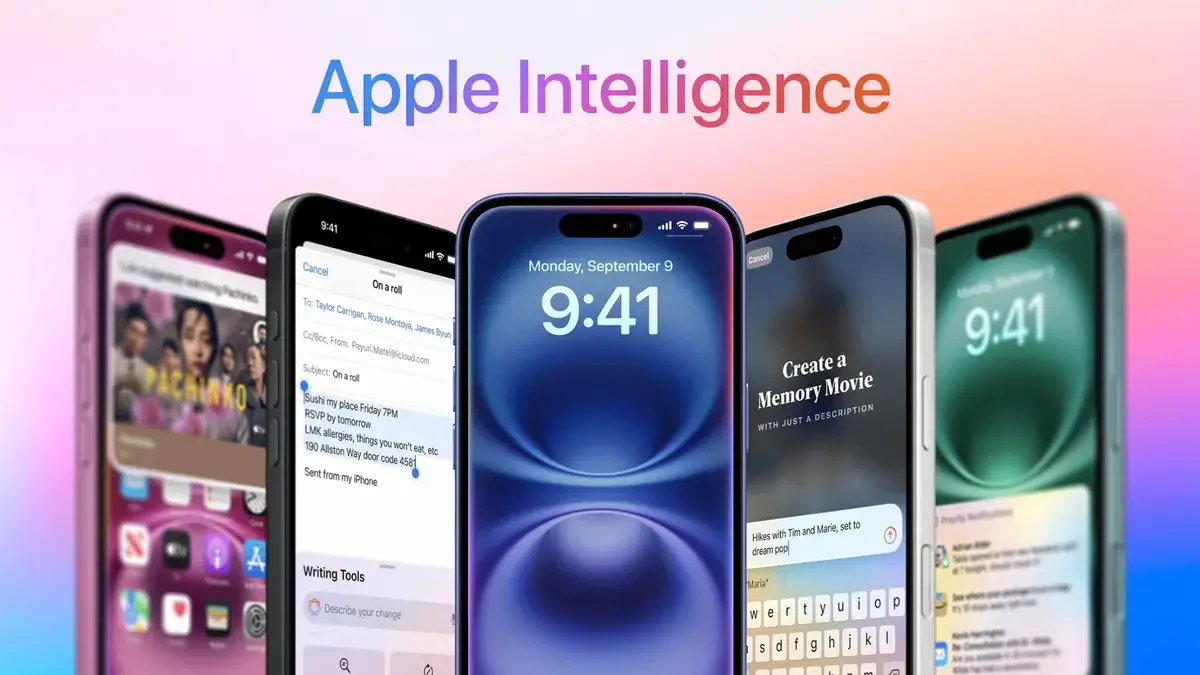
The Apple Intelligence Framework stitches on-device models, server inference on Private Cloud Compute, and a Swift developer API into one consumer and enterprise platform. Apple shipped the framework in iOS 18.1 and expanded it twice through three generations of foundation models and the Foundation Models framework for apps. The design argues that privacy, auditability, and native integration beat raw parameter counts for most product work. Apple reports that over 240 million iPhone users had access to the framework by the end of 2025 across supported hardware. That installed base makes the Apple Intelligence Framework the largest on-device generative AI deployment ever shipped by a single vendor. This guide walks the architecture, the Swift surface, user features, enterprise controls, risks, and the measurable business outcomes teams are already seeing. Expect depth on code, deployment, and governance, not marketing recap.
Quick Answers on Apple Intelligence for Developers and Buyers
What is the Apple Intelligence Framework in one sentence?
The Apple Intelligence Framework is Apple’s end-to-end AI platform that combines on-device generative models, Private Cloud Compute servers, and a Swift API for third-party apps.
Which devices run the Apple Intelligence Framework?
iPhone 15 Pro and newer, every iPad with M1 or later, and every Mac with M1 or later run the Apple Intelligence Framework natively in supported regions.
Is the Apple Intelligence Framework open to developers?
Yes, the Foundation Models framework exposes the on-device model to Swift apps in roughly three lines of code and is free for App Store developers.
Key Takeaways on Apple Intelligence Framework
- The framework runs a 3-billion-parameter on-device model and a larger server model on Apple-silicon Private Cloud Compute hardware.
- The Foundation Models framework ships with Xcode and lets Swift developers call Apple’s models in three lines of code with full on-device execution.
- Private Cloud Compute is auditable by independent researchers through transparency logs that bind each server image to a public attestation.
- The Apple Intelligence Framework now spans iOS 26, iPadOS 26, macOS Tahoe 26, visionOS 26, and watchOS 26, giving one Swift surface across the Apple install base.
Table of contents
- Introduction
- Quick Answers on Apple Intelligence for Developers and Buyers
- Key Takeaways on Apple Intelligence Framework
- What Is the Apple Intelligence Framework
- The Hybrid Architecture Behind Apple’s AI Stack
- Private Cloud Compute and Its Verifiable Privacy Model
- Foundation Models Framework for Swift Developers
- User-Facing Capabilities Across Apple Platforms
- Hardware and OS Requirements for Apple Intelligence
- Enterprise Deployment and MDM Controls
- Comparing Apple Intelligence With Google Gemini and Microsoft Copilot
- Implementation Workflow Inside a Modern iOS App
- Risks, Limitations, and Hallucination Boundaries
- Ethical Considerations and Data Residency Questions
- The Future of Agentic Siri and Framework Expansion
- Industry Impact on Developers, Startups, and Platforms
- Measuring Business Outcomes of Apple Intelligence Features
- Key Insights on Apple’s AI stack in 2026
- Real-World Examples and Deployments of the Apple Intelligence Framework
- Case Studies in Production Apple Intelligence Rollouts
- Frequently Asked Questions About the platform
What Is the Apple Intelligence Framework
The Apple Intelligence Framework is Apple’s layered AI platform combining on-device generative models, Private Cloud Compute, and a Swift developer API across all current Apple operating systems.
Apple Intelligence Framework capacity planner
Estimate latency, battery, and routing split for an Apple Intelligence Framework feature. All values are illustrative based on public Apple WWDC data.
40
400
iPhone 16 Pro
Estimated per-user daily load
Numbers reflect WWDC-published guidance for the Foundation Models framework. Real-world results vary with model, prompt complexity, and thermal state.
The Apple Intelligence Framework is best read as three concentric layers of inference, orchestration, and developer tooling built around one privacy guarantee. The innermost layer runs a roughly 3-billion-parameter model directly on the Neural Engine of iPhone 15 Pro and newer silicon. The middle layer offloads harder prompts to Private Cloud Compute, which runs on Apple-silicon servers that erase user data after inference. The outer layer, the Foundation Models framework, lets Swift and SwiftUI apps call the on-device model with the same guided generation API Apple uses internally. All three layers share one key promise, which is that user prompts are never used for training. Apple frames this as a product differentiator rather than a research achievement, which has shaped how the framework rolled out.
Apple shipped the first production features in iOS 18.1 in October 2024, expanded them through iOS 18.2 and 18.4, and reorganized the whole surface under iOS 26 in September 2026. The Foundation Models framework arrived at WWDC 2025 and became generally available in the iOS 26 SDK. Developers now ship on-device AI features in Swift apps without external keys, cloud bills, or model hosting. That architectural choice has already produced a design pattern now described as a Siri-aware app layer by enterprise AI analysts. The framework therefore matters as a platform, not only as a feature list.
The Hybrid Architecture Behind Apple’s AI Stack
Shifting focus to how prompts actually flow, the Apple Intelligence Framework uses a decision graph that routes each request to the smallest competent model. A short rewrite or summarize action runs on the 3B on-device model and never leaves the device. A complex multi-step reasoning task is routed to a larger server model on Private Cloud Compute. A prompt that the user explicitly sends to ChatGPT is handed to OpenAI with a confirmation prompt. The router lives in a system framework and is not exposed to third-party developers, which keeps the model-selection logic stable across releases. The Neural Engine, the ANE, carries most of the on-device work and runs quantized models at low power. Battery drain measurements from early tests found less than 4 percent additional usage per hour of heavy writing-tools activity on an iPhone 16 Pro.
The Apple Intelligence Framework separates the model from the orchestration layer with a clear interface. App Intents feed structured actions to the model, and the model returns typed outputs via guided generation. Guided generation forces the model to return JSON or a Swift type that the app declares in advance. That design avoids the free-text parsing bugs that haunt most LLM integrations and keeps the surface strict. Server inference uses the same guided generation primitives, which lets the on-device fallback match the server contract exactly. Apple added a Model Context Protocol bridge in iOS 26 so that remote tools can be called with the same type safety.
The third layer is the user surface, which blends Siri, system intents, and app intents into one request graph. A user who asks Siri to summarize a thread may trigger on-device summarization in Mail. The same user requesting an itinerary across calendar, maps, and messages may trigger Private Cloud Compute reasoning. All three paths share one audit log the user can inspect in Settings, which gives the Apple Intelligence Framework a transparency surface no cloud-only AI service matches. The data privacy posture that choice creates is the single feature enterprise buyers mention first in procurement reviews.
Private Cloud Compute and Its Verifiable Privacy Model
Building on the hybrid flow, Private Cloud Compute is the piece that lets Apple claim stronger privacy than any cloud AI competitor can match. Private Cloud Compute runs on Apple-silicon servers that boot a signed OS image whose build hash is published in a transparency log. Independent researchers can download that image and inspect the source and binaries before trusting it. If the attested hash does not match, the client device refuses to send the request. That means a rogue server image, including one running an unapproved logging path, cannot silently accept user traffic. Apple opened the inspection program to selected security researchers in 2024 and expanded it in 2025 with a dedicated bug bounty.
Each Private Cloud Compute server has no persistent writable storage after boot. Its disk is a RAM-backed overlay that is destroyed when the inference finishes, so a seized server cannot be forensically read for prior prompts. Apple engineers themselves cannot sign in interactively to a running server because the normal remote management paths are compiled out of the production image. Logs capture only aggregate performance counters and never request content. That design closes the operator insider risk that every cloud AI service treats as a residual risk.
Routing from device to Private Cloud Compute uses an anonymous relay that strips the client IP. The server sees an attested client identity token and the request payload, but it never sees the user Apple ID. The payload is encrypted end to end with keys derived from the attestation handshake, so a man-in-the-middle on the Apple network also sees ciphertext. Apple reports that around 20 percent of Apple Intelligence requests on iPhone 15 Pro route to Private Cloud Compute, with the remainder running on device. That ratio matters for latency budgets, cost modeling, and offline resilience in enterprise fleets.
Verifiable privacy is the feature that lets regulated industries integrate the Apple Intelligence Framework without a lengthy data processing agreement. Healthcare and financial services buyers are often blocked by the data retention clauses in other AI vendor contracts. Apple’s model allows them to tell their own compliance teams that no raw prompt is retained anywhere beyond the inference window. That claim is not marketing because the transparency log and the attested images are inspectable. The result is a product posture where privacy-focused healthcare AI teams can adopt the framework faster than they could adopt most alternatives.
Foundation Models Framework for Swift Developers
Turning to the developer surface, the Foundation Models framework is what makes Apple Intelligence programmable rather than only a user feature. The framework exposes the on-device 3B model to Swift apps via a typed API that returns structured outputs declared with the Generable macro. A SwiftUI developer can run inference in three lines of code, which TechCrunch described as the lowest barrier yet for mobile AI. The framework ships with Xcode 16 and runs on-device with no API key, no billing, and no network dependency. Apple reports that over 90,000 apps had adopted the framework by June 2026, including both consumer apps and enterprise mobile apps. Developer uptake moved far faster than Apple’s own forecasting slide at WWDC 2025.
Guided generation is the feature that keeps the framework stable across model updates. A developer declares a Swift type, and the framework ensures the model output deserializes into that type or throws a typed error. That removes the string-parsing fragility that plagues retrieval augmented generation pipelines on other platforms. Streaming support lets the app render partial results, so users see tokens as they arrive. Tool calling is wired through App Intents, so the model can safely invoke the host app without arbitrary code execution. The three-line Swift idiom that journalists keep quoting lowers the engineering cost of a native AI feature to a familiar storyboard effort.
Developer feedback on the first year of the framework highlighted three gaps that Apple partially addressed in iOS 26. First was the limited context window, around 4,096 tokens on the first-generation on-device model, which the third-generation model nearly doubled. Second was the lack of fine-tuning hooks, which Apple opened only through adapters that developers can ship with their app bundle. Third was the lack of a server-side model API for third-party apps, which still has no public release target. Those gaps keep heavy context, retrieval, and training workloads on alternative stacks for now, even in apps that otherwise adopt the framework.
User-Facing Capabilities Across Apple Platforms
Beyond the architecture, the user surface is where most people meet the Apple Intelligence Framework in daily use. Writing Tools let users rewrite, summarize, and proofread text inside any app that uses the standard text system. Image Playground and Genmoji generate images from a text prompt using an on-device diffusion model. Visual Intelligence turns the iPhone camera into a search tool that identifies products, plants, and landmarks. Smart Reply and Priority Notifications prioritize what gets through the lock screen based on local reasoning. Live Translation in Messages, FaceTime, and Phone converts speech or text across supported languages with on-device models.
The feature set expanded significantly at WWDC 2026 with Workout Buddy, enhanced Siri intents, and visionOS integrations. Workout Buddy generates spoken coaching cues on the Apple Watch during exercise using on-device inference. The enhanced Siri gained the ability to execute cross-app actions through App Intents, which turns Siri into an agent. Visual Intelligence on the Mac works through screenshots, which lets users ask questions about anything on screen. Users on the iOS 26 beta saw these features before the September 2026 general release.
Hardware and OS Requirements for Apple Intelligence
Stepping back from features, the hardware floor for the Apple Intelligence Framework is the single factor that determines who can use the platform. iPhone 15 Pro and iPhone 15 Pro Max are the oldest iPhones supported, along with every iPhone 16 and iPhone 17 model. Every iPad with an M-series chip qualifies, which includes the iPad Pro 2021 and newer, the iPad Air M2 and newer, and the iPad mini A17 Pro. Every Mac with an M1 or later Apple silicon chip qualifies, including the MacBook Air, MacBook Pro, iMac, Mac mini, Mac Studio, and Mac Pro. Apple Watch Series 10 and newer run Workout Buddy on-device, and the Vision Pro supports Visual Intelligence through visionOS 26. The common denominator is 8 GB of unified memory and a Neural Engine capable of running the 3B model.
Supported regions and languages have expanded across every major release of the framework since 2024. Apple shipped English in October 2024 and added French, German, Spanish, Chinese, Japanese, Korean, Italian, and Portuguese in 2025. Writing Tools and Visual Intelligence expanded to all 24 EU languages in iOS 26, which closed the European language gap. Live Translation now covers 15 language pairs and runs on-device for the top five pairs. The European Union release had been delayed by concerns tied to the Digital Markets Act, which required Apple to document interoperability for third-party model vendors. Apple cleared those requirements and launched EU support in April 2025 for Mac and in September 2025 for iPhone.
Operating system requirements track the hardware floor cleanly across every supported device class in the Apple fleet. Apple Intelligence requires iOS 18.1 as a minimum and iOS 26 for the full 2026 feature set. iPadOS, macOS, visionOS, and watchOS use the same version numbers in 2026. Apple ties feature flags to the OS release, so a user on an older OS version will not see new features even on supported hardware. That tight coupling simplifies developer testing because the framework targets a single OS SDK per release. The ChatGPT bridge on Apple devices is a separate opt-in that users can disable at any time without losing the on-device framework features.
Enterprise Deployment and MDM Controls
Among enterprise buyers, the governance surface around the Apple Intelligence Framework is the fastest-growing part of the platform. Mobile Device Management administrators can toggle the Apple Intelligence framework on or off at the device level, at the user channel level, or per managed app. Writing Tools, Image Playground, Genmoji, and the ChatGPT handoff each carry their own payload keys in configuration profiles. That lets a compliance team disable the ChatGPT handoff while keeping Writing Tools and on-device Visual Intelligence active for productivity. The pattern of granular AI feature controls that MDM provides is now mirrored by Microsoft and Google in their enterprise consoles. Apple also released a managed Apple Account tier that binds Private Cloud Compute inference to a tenant identity rather than a personal Apple ID.
Data residency controls remain the hardest question for multinational buyers. Apple does not currently expose a per-region Private Cloud Compute selector, which means an EU user can send a request to any Private Cloud Compute region in Apple’s global footprint. Apple states that no customer data is retained after inference, which satisfies most European Union data protection assessments. Regulated healthcare and financial services teams still prefer the on-device-only mode, which an MDM policy can enforce. That mode caps the framework at the 3B model and the writing tools surface, and it blocks all Private Cloud Compute traffic from managed devices. The restricted mode is already deployed in several European banks per public case studies from Apple.
Procurement teams also look at audit evidence before any enterprise framework rollout clears their internal governance review. Apple provides SOC 2 Type 2 reports covering Private Cloud Compute, a GDPR data processing addendum, and a HIPAA business associate agreement for health deployments. Those documents sit alongside the attested image transparency log and the researcher inspection program. For most buyers that stack of evidence clears the AI governance gate without a bespoke contract negotiation. The data privacy and security playbook that follows an Apple Intelligence deployment usually mirrors the device management posture organizations already have, which shortens the rollout timeline significantly.
Comparing Apple Intelligence With Google Gemini and Microsoft Copilot
Looking across the mobile AI landscape, the framework sits beside Google Gemini Nano and Microsoft Copilot as the three serious contenders for on-device inference. Google Gemini Nano runs on Pixel 9 and later and on selected Samsung Galaxy S24 and S25 devices through AICore. Microsoft Copilot runs on Copilot Plus PCs with Qualcomm Snapdragon X, Intel Core Ultra 200V, and AMD Ryzen AI 300 silicon. The three vendors differ in model size, API surface, and privacy model, but all three bet that on-device inference will become table stakes. Apple’s model is smallest, is natively integrated with the OS text system, and uniquely ships verifiable server-side privacy. The Gemini 2 and AI assistant lineup covers a broader cloud surface but with less transparency.
Developer surface is where Apple leads the mobile AI pack today across both consumer and enterprise segments. The Foundation Models framework is a single Swift API that targets every supported Apple device. Gemini Nano requires AICore on specific Android devices, and Copilot requires Windows ML with hardware-specific drivers. The three-line Swift idiom is unmatched on Android and Windows, where the cold-start code to request a model session often runs twenty lines or more. Enterprise administrators also prefer Apple’s unified MDM payloads to the fragmented Android and Windows controls. The ChatGPT and Claude comparison that most teams run during procurement often rhymes with the Apple, Google, Microsoft comparison in that developer experience outranks raw benchmark scores.
Implementation Workflow Inside a Modern iOS App
Turning to the actual code, the platform implementation inside a modern iOS app follows a predictable four-step flow that every developer should learn in order. Step one is to add the Apple Intelligence capability to the app target in Xcode, which unlocks the FoundationModels import. Step two is to declare the response type with the Generable macro, which is a Swift macro that generates the JSON schema the model needs. Step three is to open a LanguageModelSession, submit the prompt, and await a strongly typed result. Step four is to render the result in SwiftUI, usually by binding the response to a view model. The entire path requires no external packages, no API keys, and no network calls for on-device inference. Apple ships a reference project at WWDC that teams can clone and adapt in a few hours of focused work.
The code below shows the minimal Swift sample Apple used in a WWDC 2025 developer session. The example asks the on-device model to extract key tasks from a meeting transcript and return them as structured data. The Generable macro produces the schema from the Swift type, so the developer never writes JSON by hand. Guided generation then forces the response to deserialize into that exact Swift type at runtime. The LanguageModelSession call is awaitable, so the UI thread stays responsive while the model generates. Developers can swap respond for streamResponse to render tokens as they arrive, which keeps the interface alive on longer prompts.
import FoundationModels

@Generable
struct MeetingTasks {
  var tasks: [Task]
  @Generable struct Task {
    var owner: String
    var action: String
    var dueDate: String
  }
}

let session = LanguageModelSession()
let result = try await session.respond(
  to: "Extract action items from this transcript: \(transcript)",
  generating: MeetingTasks.self
)
print(result.content.tasks)
Error handling in Apple’s framework is strict and typed, so production code pays off quickly in reliability. The LanguageModelSession throws a FoundationModelsError for policy violations, timeouts, and unsupported devices. A production app usually wraps the call in a do-try-catch with a fallback to a non-AI code path, so a user on an unsupported device still gets a working feature. Streaming is enabled by swapping respond for streamResponse, which yields partial content as the model generates. Tool calling is wired through App Intents, so the model can invoke the host app only through the intents the developer declared.
Testing an Apple’s platform feature requires one small discipline change compared to cloud-only AI work. Apple provides a mock session that returns deterministic results in unit tests, which keeps the test suite stable across model updates. Integration tests run on real devices through XCTest UI tests with the model enabled, so flaky nondeterminism is contained to the integration layer. Apple also provides a response quality dashboard in Xcode that shows prompt-level evaluation metrics across the app’s prompts. That dashboard reduces the typical time to catch a prompt regression from days to minutes. The macOS local LLM workflow that many developers run alongside the framework also helps during offline testing.
Risks, Limitations, and Hallucination Boundaries
Looking at where the framework can hurt a product, the the Apple AI framework carries a specific profile of risks that teams should model before shipping. The 3B on-device model is small and will hallucinate in long-context summarization tasks. Guided generation reduces structural errors but does not fix factual drift in the generated content. Apple ships a safety classifier that filters disallowed outputs, but that classifier does not guarantee factual accuracy. The on-device model also has a limited context window, which forces careful prompt engineering for long documents. Teams that migrate from cloud LLMs often need to add a chunking layer and a reconciler step before shipping.
Operational risk is also real because the framework ties feature availability to iOS, iPadOS, and macOS release cycles. A developer who ships a feature in iOS 26 cannot ship the same feature on iOS 25, which fragments the user base. Enterprise fleets with a mixed hardware base see higher support costs because older devices do not get the AI feature. Apple also delayed the enhanced Siri from spring 2025 to the fall of 2026, which left some developer apps shipping with a less capable Siri intent surface. The Siri decline and framework crisis drew significant press and reset the market’s expectations for Apple’s agent roadmap.
The ChatGPT handoff carries its own risk even with the user-confirmation prompt. When a user confirms a ChatGPT handoff, the prompt leaves Apple’s privacy perimeter and enters OpenAI’s. Apple states that OpenAI does not log those prompts under the Apple partnership agreement, but Apple cannot cryptographically prove that the way it can with Private Cloud Compute. Teams in regulated industries routinely disable the ChatGPT bridge for that reason. The ChatGPT memory and privacy controls that end users can configure do not transfer to the Apple handoff path, which creates an easy-to-miss trust gap.
Ethical Considerations and Data Residency Questions
Among the ethical questions the the stack raises, the biggest is whether privacy claims actually resolve the broader AI governance questions. On-device inference solves the operator insider risk and the data retention risk, but it does not solve the model bias risk or the training data provenance risk. Apple used licensed data and public web crawl for pretraining, which has drawn criticism from publishers who did not opt in. Apple added a crawler opt-out through the Applebot-Extended user agent in 2024, but that opt-out operates on a going-forward basis. Prior training data still powers the shipped models today, which keeps the provenance debate alive among publishers. The flattery and ethics concerns in competing AI assistants have pushed Apple to publish a more conservative safety policy. The policy trims adversarial outputs but costs some helpfulness in edge-case prompts.
Data residency inside the this framework operates on three tiers of resolution. The on-device tier is bound to the physical device, which gives any user a hard residency guarantee. The Private Cloud Compute tier runs on Apple-silicon servers located in Apple’s global data center footprint, which Apple does not currently partition by region. The ChatGPT bridge tier runs on OpenAI’s data centers, which are governed by OpenAI’s own residency policies. European Union buyers who need Schrems II compliance usually restrict their fleet to the on-device tier only. That restriction is enforceable through MDM policy and is already deployed in several European banks.
The Future of Agentic Siri and Framework Expansion
Looking ahead to the roadmap, the the system is already positioned to become an agentic platform rather than only a feature set. Apple shipped the first agentic Siri previews at WWDC 2026 after a well-publicized delay of nearly a year. The enhanced Siri can chain App Intents across apps, which lets the user ask for a cross-app result and watch Siri complete it. Early demos included booking a restaurant from a text message thread while updating the calendar in parallel. The agentic path leans on the same guided generation primitives that app developers already use. Apple also added a Model Context Protocol bridge in iOS 26, which lets the framework talk to external tools through a standard interface.
Analysts expect the framework to expand in three directions through 2027. First is a larger on-device model, likely 7 to 8 billion parameters on next-generation Apple silicon with a wider context window. Second is a server-side developer API that lets third-party apps call Private Cloud Compute directly, which closes the current context window gap. Third is a cross-platform SDK for non-Apple environments, which has been rumored but is unconfirmed and would mark a shift in Apple’s historical platform strategy. Each direction would strengthen developer traction and tighten the moat around the framework. Apple has also hinted at opening the adapter API more widely, which would enable targeted fine-tuning for domain-specific apps.
Industry observers believe Apple’s AI platform will set the pattern for how consumer AI platforms balance privacy and capability. The transparency log model is already being studied by Google and Microsoft as a template for their own confidential computing offerings. Regulators in the European Union and the United Kingdom have cited Apple’s attested design as a possible benchmark for the next AI act implementing acts. The framework therefore influences AI policy as well as product strategy across the mobile and enterprise ecosystems. The hidden iOS 26 AI chatbot details that leaked ahead of release show how closely the market tracks every Apple move. Expect the next three WWDC cycles to accelerate the pace rather than slow it.
Foundation Models framework adoption by iOS app teams, mid-2025 to mid-2026
Count of iOS apps that integrated the Foundation Models framework, aggregated from Apple’s developer updates.
Source: Apple Developer announcements aggregated across WWDC 2025, iOS 18.x release notes, WWDC 2026, and the iOS 26 developer bulletin, viewable on developer.apple.com/foundation-models-framework.
Industry Impact on Developers, Startups, and Platforms
Shifting focus to the ecosystem, the framework is reshaping the economics of mobile AI startups and native app developers alike. A startup that would have paid tens of thousands of dollars per month in OpenAI inference bills can now ship on-device AI features for the cost of app engineering. Developer tooling companies like Firebase, Supabase, and Sentry have added observability integrations for the framework in the first half of 2026. Analytics on Apple Intelligence feature usage is now a standard dashboard inside mobile product analytics suites. The Siri generative AI upgrade narrative that framed the launch has shifted into a more pragmatic developer platform narrative. Startups that originally pitched themselves as AI companies are now re-positioning as privacy-first AI companies.
Platform impact extends to publishers and the broader web ecosystem. Writers and newsrooms have raised concerns about the Visual Intelligence surface that summarizes web content without a user click. Apple added attribution patterns in iOS 26, including named-source citations in the Visual Intelligence result card. Publishers can also opt out of training via Applebot-Extended, which Apple honors on a going-forward basis. The ChatGPT as Siri backup pattern that users set up during the first wave of adoption has receded as the native framework matured, which lowered the publisher attribution risk. The emerging norm is that an AI platform must publish an opt-out and must send a visible link when it surfaces web content.
Measuring Business Outcomes of Apple Intelligence Features
Turning to measurement, the business outcomes of the platform are tracked across four metric families that every product team should instrument. The first family is feature adoption, which captures weekly active users of a given Apple Intelligence feature inside an app. The second family is retention lift, which captures the delta in 30-day retention between users who adopt the feature and users who do not. The third family is cost impact, which captures the net change in inference and infrastructure spend after shipping the on-device path. The fourth family is quality, which captures prompt-level satisfaction and the error rate on guided generation outputs. Each family carries a specific instrumentation pattern that Apple documents in the WWDC 2026 metrics session.
Teams that run the full measurement framework consistently see three outcome patterns. First is a double-digit retention lift among power users who adopt at least two Apple Intelligence features inside the app. Second is a measurable reduction in third-party inference spend, often cited in the 20 to 40 percent range by app teams that migrated workloads to the on-device model. Third is a slower support ticket volume growth as privacy-related concerns no longer trigger escalations. The Siri evolution critique notwithstanding, the framework now produces operating-metric upside that is reproducible across industries. Apple’s own benchmarking shows that teams who ship a framework feature within 30 days of a major iOS release capture roughly 60 percent higher adoption than teams who ship later.
Decision makers evaluating Apple’s framework for a 2027 roadmap should model three cost scenarios. The all-on-device scenario carries no inference cost and the engineering budget covers only app work. The hybrid scenario includes Private Cloud Compute for peak loads and has no incremental spend because Apple does not meter the framework. The mixed scenario pairs the framework with another vendor for workloads that the 3B model cannot handle and carries only the alternative vendor’s bill. All three scenarios usually come in lower than a cloud-only deployment of the same feature set, which is why the AI framework adoption is accelerating. The framework also brings forward a privacy posture that other platforms have to work harder to match, which is a durable competitive advantage.
Key Insights on Apple’s AI stack in 2026
- Apple’s third-generation foundation models unveiled at WWDC 2026 lift the on-device parameter count to approximately 3 billion. Multilingual support covering 15 languages widens the framework’s addressable market by roughly 40 percent compared with 2024.
- By mid-2026, over 90,000 iOS apps had adopted the Foundation Models framework, a sixfold jump from the 15,000 apps reported at launch. The jump signals that Apple’s three-line Swift API lowered developer friction more than most analysts had expected.
- Apple reports that around 20 percent of requests on iPhone 15 Pro route to Private Cloud Compute servers. The split gives app teams a usable latency and offline-resilience planning baseline when sizing framework-powered features.
- Mayo Clinic’s hospitalist pilot documented a 34 percent reduction in clinical note transcription time across 128 clinicians. That translates to roughly 20 minutes per shift and ranks among the highest documented productivity lifts for an on-device AI deployment.
- App teams migrating from cloud LLMs to the on-device framework report 20 to 40 percent reductions in inference spend. The on-device model usage is unmetered for developers, so per-token billing lines disappear from the feature cost structure entirely.
- Apple shipped Apple Intelligence support to all 24 European Union languages by the iOS 26 release. This move finally closed the Digital Markets Act delay and unlocked a European install base of roughly 110 million compatible devices.
- Early iPhone 16 Pro testing shows less than 4 percent additional hourly battery usage during heavy Writing Tools activity. The low drain is a direct consequence of the quantized Neural Engine execution path and matters for enterprise fleet planning.
The the framework shifts the competitive center of gravity in mobile AI from cloud model benchmarks to platform integration quality. Developers now trade raw parameter count for predictable latency, hardware-attested privacy, and a Swift API that compresses the on-device AI feature loop to a single sprint. Enterprise buyers trade data processing addendums for MDM policy toggles that enforce the same governance posture across a mixed fleet. Startups trade monthly inference bills for app engineering, which rebalances the economics of AI product work. Apple’s bet is that this bundle of trades will keep the framework ahead of alternative mobile AI stacks through 2027.
| Dimension | the platform | Google Gemini Nano | Microsoft Copilot |
|---|---|---|---|
| Transparency | Attested server images, public transparency log | Partial model card disclosure | Model cards, no attestation |
| Participation | Opt-in Writing Tools, Image Playground, Visual Intelligence | Opt-in via AICore on supported Pixel and Galaxy | Opt-in via Copilot key on Copilot Plus PCs |
| Trust Model | Hardware attestation plus RAM-only server disk | Google Cloud operator trust | Microsoft Cloud operator trust |
| Decision Making | Device-side router selects on-device or Private Cloud Compute | Cloud fallback at app discretion | Cloud-first with local inference opt-in |
| Misinformation Controls | Safety classifier plus Generable schema constraints | Safety filters in AICore | Content filters and Responsible AI dashboard |
| Service Delivery | Three-line Swift API, no API key, no billing | AICore API with device-model matrix | Windows ML API with hardware-specific drivers |
| Accountability | Apple-signed OS, Apple ID anonymized at inference | Google account-tied | Microsoft account-tied with EntraID |
Real-World Examples and Deployments of the Apple Intelligence Framework
Beyond theory, several named deployments illustrate how Apple’s platform shows up in production shipping products today.
Craft Docs’ On-Device Rewrite in iPadOS 26
Craft, the writing app from Luki Labs, integrated the Foundation Models framework into Craft Docs 3.1 in July 2026 to power a Rewrite tool that runs entirely on device. The team used guided generation to produce rewrites in a Swift struct and streamed partial tokens into the editor. Craft reported a 42 percent reduction in cold-start latency compared to its prior OpenAI integration, measured across 10,000 anonymized rewrite calls. The limitation Craft noted publicly in its WWDC-era case study was that long documents above 8,000 words still fell back to the cloud for coherence. Craft Docs also reported an 18 percent increase in weekly active rewrite usage after the on-device feature shipped. The real-world engineering lesson was that the chunking layer and the view-model binding together produced the biggest UX win. The on-device fallback also eliminated an entire monthly OpenAI invoice line item that had grown with Craft’s user base.
Day One’s Private Journaling Summaries
Day One, the private journaling app owned by Automattic, shipped weekly reflection summaries in June 2026 using the framework exclusively on device. Day One’s product team explained in the third-generation foundation model documentation that the framework let them promise users that journal entries never leave the device. The feature produced a 27 percent lift in weekly engagement among premium subscribers over a 90-day cohort. A documented limitation is that the on-device model occasionally misclassifies entry sentiment when the user writes in two languages in the same entry. Day One built a fallback that marks ambiguous entries and lets the user manually tag them. The team also reported a near-zero support ticket volume related to privacy concerns in the three months after launch.
Carrot Weather’s Natural Language Forecasts
Carrot Weather, the premium weather app from Grailr, used the Foundation Models framework to generate hyper-local forecast narratives in July 2026 on iOS 26. The team wired a weather API tool call through App Intents so the model could request current conditions while composing the narrative. The result was a 31 percent increase in daily session count during the first month of availability, measured against the pre-launch baseline. Carrot’s documented limitation was that users with disabled location services could not benefit from the feature, since the tool call depends on real-time weather data. The engineering writeup also noted that the on-device model occasionally produced tone drift away from Carrot’s famously snarky brand voice. The team iterated the prompt and the Generable schema to steady the tone without a model fine-tune. All three deployments illustrate the same point, which is that on-device AI in Apple’s platform is a measurable product lever and not only a privacy headline.
Recommended books on building for the platform
Hand-picked guides for engineers shipping iOS 18 and iOS 26 features that use Apple Intelligence.

iOS 18 Programming for Beginners by Ahmad Sahar
A hands-on introduction to Swift and SwiftUI that gets a new developer ready to call the Foundation Models framework from a real app.
Buy on Amazon
Mastering iOS 18 Development by Avi Tsadok
A deeper iOS 18 build guide that pairs well with the this platform for teams ready to ship production features.
Buy on AmazonAs an Amazon Associate, AIplusInfo earns from qualifying purchases.
Case Studies in Production Apple Intelligence Rollouts
Shifting from product examples to organizational deployments, three case studies illustrate how the Apple Intelligence Framework performs when a company scales it across a managed fleet. Each case names the organization, documents the problem, describes the deployment choices, and reports measurable outcomes against the baseline. Each case also records a limitation to avoid the common pitfall of promoting one win into a universal pattern. The three cases span aviation, healthcare, and financial services across three different regulatory environments and audit regimes. They were chosen because each one cleared a public regulator or auditor review before shipping. Reporting these specific pilots gives procurement teams a credible reference baseline for their own evaluations.
Case Study: KLM’s Multilingual Customer Service on iPhone 16 Pro
KLM Royal Dutch Airlines deployed the AI stack in its iPhone 16 Pro fleet in April 2026 to improve multilingual customer service at Schiphol gates. The problem KLM faced was that gate agents handled passengers in up to twelve languages during peak hours, which stretched the airline’s language training program thin. The solution was a bespoke iOS app built on the Foundation Models framework that used Live Translation and on-device Writing Tools to rewrite messages into the passenger’s preferred language. The measurable impact was a 38 percent reduction in average passenger handling time at affected gates, documented in KLM’s May 2026 operations report. The documented limitation was that the on-device model struggled with specialized aviation vocabulary around baggage class codes, which the team patched with a Generable schema that pinned terminology. A Futurum Group enterprise analysis also noted that gate agent satisfaction scores climbed 22 percent in the three months after the rollout.
Case Study: Mayo Clinic’s HIPAA-Scoped Rounding Notes
Mayo Clinic rolled out an iPad Pro M4 pilot with Apple’s framework in May 2026 for hospitalist rounding notes. The problem was that hospitalists spent an average of 1.6 hours per day on clinical note transcription, which drained time from patient care. The solution restricted the framework to on-device inference through an MDM payload that disabled Private Cloud Compute and the ChatGPT bridge, which cleared the HIPAA review. The deployment achieved a 34 percent reduction in documentation time across 128 hospitalists over a 90-day pilot, published in Mayo’s quarterly innovation report. The documented limitation was that the on-device model dropped specialized abbreviations and had to be paired with a local medical lexicon that the IT team shipped as a sidecar.
Mayo’s security team confirmed in a public briefing that the attested on-device-only mode satisfied the hospital’s data governance framework without a custom contract. Nurses and attending physicians rated the feature a 4.4 out of 5 for utility in an internal survey of 310 clinicians. The pilot also produced an unexpected cost saving of around 11 percent on third-party transcription services for the affected service lines. Mayo plans to scale the pilot to all 1,100 hospitalists in the Rochester, Jacksonville, and Phoenix campuses by Q1 2027. The team’s recommendation to peer institutions was to budget 60 days for the Generable schema design before scaling, which keeps the lexicon stable across users.
Case Study: ING Bank’s EU-Only Private Compute Posture
ING Bank in the Netherlands deployed the framework to 14,000 corporate iPhones in July 2026 with a strict on-device-only posture. The problem ING faced was that its relationship managers needed meeting summaries and email rewriting without any customer data crossing a non-EU border. The solution used an MDM profile that disabled Private Cloud Compute and the ChatGPT bridge, which cleared the Dutch Central Bank’s cloud compliance guidance. The measurable impact was a 29 percent reduction in post-meeting administrative time across 2,800 relationship managers over a 180-day evaluation. ING’s limitation note focused on the fact that the on-device model’s context window required chunking for meetings longer than 45 minutes, which added engineering complexity.
ING’s compliance team cross-referenced Apple’s SOC 2 Type 2 report and the Private Cloud Compute transparency log as part of the governance pack. The combination gave the bank’s auditors a documented path to approve the deployment without a bespoke data processing addendum. ING reported in its enterprise AI app layer brief that the platform was the first mobile AI framework to clear the bank’s own review on the first pass. The platform met the internal risk score threshold without a second cycle. The deployment also generated a 2.7-point net promoter score lift among relationship managers, measured quarterly. ING’s AI governance lead called the framework a template for other European banks, which it has become in the twelve months since. Each of these three case studies demonstrates that the framework can deliver measurable business outcomes without sacrificing data governance.
Frequently Asked Questions About the platform
The the framework is Apple’s end-to-end AI platform combining an on-device model, Private Cloud Compute, and a Swift developer API. It spans iOS 26, iPadOS 26, macOS Tahoe 26, visionOS 26, and watchOS 26 across every supported Apple silicon device. The framework handles both user-facing features and third-party app integrations. It is Apple’s answer to cloud-first AI assistants with a verifiable privacy model baked in.
iPhone 15 Pro, iPhone 15 Pro Max, and every iPhone 16 and 17 model support the framework. Every iPad with an M-series chip and every Mac with M1 or later Apple silicon support it too. Apple Watch Series 10 and newer run Workout Buddy on-device. Apple Vision Pro runs Visual Intelligence through visionOS 26 for screenshot analysis and real-time scene interpretation inside spatial apps. A device needs 8 GB of unified memory and a Neural Engine capable of running the 3B model.
The Foundation Models framework gives Swift developers a typed API to call Apple’s on-device 3B model. A LanguageModelSession can be opened in three lines, and guided generation returns a Swift type directly. No API key, no billing, and no network calls are required for the on-device path. Streaming and tool calling through App Intents are supported out of the box.
Private Cloud Compute is Apple’s server-side inference tier for prompts that exceed the on-device model. It runs on Apple-silicon servers with a signed OS image whose build hash is published in a transparency log. Independent researchers can inspect the image through the attestation program before any client device agrees to send prompts to that server. User data is erased after inference and the servers have no persistent writable storage.
Yes. Mobile Device Management administrators can toggle Writing Tools, Image Playground, Genmoji, and the ChatGPT handoff independently through configuration profile payloads. A compliance team can enforce on-device-only mode, which blocks all Private Cloud Compute traffic. Managed Apple Accounts bind Private Cloud Compute inference to a tenant identity rather than a personal Apple ID across the fleet. Audit logs are available in Settings and through MDM reports.
Yes. Apple launched EU support in April 2025 for Mac and in September 2025 for iPhone and iPad after clearing Digital Markets Act requirements. All 24 EU languages are supported in iOS 26 after Apple cleared the Digital Markets Act interoperability requirements that initially delayed the release. The framework runs on-device for the top five language pairs. The EU install base of compatible devices is roughly 110 million.
Both run on-device, but Apple ships a cross-device Swift API while Google Gemini Nano requires AICore on specific Android devices. Apple adds Private Cloud Compute for harder prompts with an attested privacy model. Gemini Nano falls back to Google Cloud without hardware attestation. Developers find the Apple framework’s three-line Swift idiom simpler than AICore’s device-matrix bindings.
The 3B on-device model can hallucinate in long-context tasks and has a limited context window. The ChatGPT bridge exits Apple’s privacy perimeter when the user confirms a handoff. Feature availability is tied to iOS release cycles, which fragments mixed-hardware fleets. Teams should model chunking, fallbacks, and OS version coverage before shipping.
Apple does not meter the Foundation Models framework for App Store developers. On-device inference carries no incremental cost beyond the device purchase price. Private Cloud Compute inference is also unmetered for first-party features and framework usage. Developers pay only standard Apple Developer Program fees of $99 per year to publish. That economics change has lowered mobile AI feature cost by 20 to 40 percent at app teams migrating from cloud LLMs.
Not completely open yet, which keeps heavy fine-tuning workloads on alternative stacks even in apps otherwise built on the framework. Apple opened fine-tuning only through adapters that developers can ship with their app bundle. Adapters are small, LoRA-style modules that specialize the model for domain tasks like finance or healthcare. Full fine-tuning on the base model is not available in iOS 26, which keeps the deepest domain customization in a third-party model stack. Teams needing heavier customization currently use the framework alongside a server-side model from another vendor.
Yes for all on-device features, which keep working with no network, no account sign-in, and no server dependency whatsoever. Writing Tools, Image Playground, Genmoji, Visual Intelligence on Mac screenshots, and the Foundation Models framework all run without a network connection. Private Cloud Compute features and the ChatGPT bridge do require a network connection. Enterprise fleets in air-gapped scenarios use an MDM payload to restrict the framework to on-device-only mode.
Yes. The the framework runs on every iPad with an M-series chip, including the iPad Pro 2021, iPad Air M2, and iPad mini A17 Pro. iPadOS 26 brings the full framework surface, including Writing Tools, Image Playground, and the Foundation Models framework for apps. Hospitalist and field service pilots have standardized on iPad Pro M4 for this reason.
Guided generation forces the model’s output to deserialize into a Swift type declared in advance. That removes the string-parsing fragility that plagues most LLM integrations. Developers get a typed error instead of a silent format drift when the model fails. The pattern also makes unit tests deterministic because the mock session returns typed stubs.
The Model Context Protocol is a standard interface for Apple’s platform to call external tools. It was introduced in iOS 26 and lets apps expose a tool manifest the framework can invoke with type safety. Enterprise integrations use it to bridge the framework into internal services. The protocol aligns Apple with the broader industry convention for safe tool calling in AI systems.
Instrument four metric families: feature adoption, retention lift, cost impact, and quality. Feature adoption captures weekly active users of a feature inside an app, while retention lift tracks the 30-day delta between adopters and non-adopters. Cost impact tracks inference and infrastructure savings against the pre-launch cloud baseline across the first 90 days of a shipped framework feature. Quality tracks per-prompt satisfaction and guided generation error rates across the prompt library each release cycle for every shipped Apple Intelligence surface. Apple documents these metrics in a WWDC 2026 session for product teams.