
Introduction
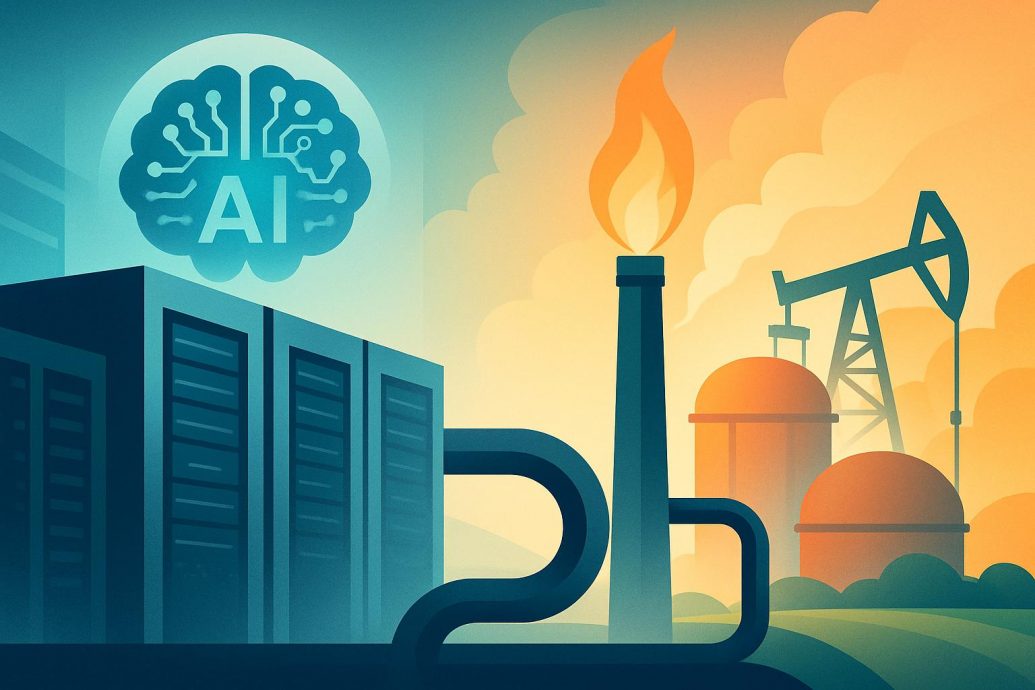
AI Data Centers Drive Gas Surge with huge demand for power. As artificial intelligence continues its meteoric rise, so does the demand for the data infrastructure powering this digital intelligence. Across the United States, burgeoning AI applications are driving the proliferation of data centers, escalating consumption of electricity to levels that outpace clean energy capabilities. As a result, companies like Microsoft, Amazon, and Google are increasingly depending on natural gas to close the gap. This growing reliance on fossil fuels introduces a complex tension between sustainability goals and technological advancement. In this article, we examine the environmental implications, infrastructure pressures, and regional disparities caused by AI’s expanding energy appetite, all through the lens of expert analysis and authoritative energy data.
Key Takeaways
- AI data centers are driving unprecedented increases in U.S. electricity demand, often overwhelming renewable power capacity.
- Shortfalls in clean energy production are forcing tech giants to rely heavily on natural gas to meet operational needs.
- The surge in AI-related infrastructure is exacerbating grid strain, especially in fast-growing states like Virginia and Texas.
- While companies tout sustainability targets, real-world energy needs often conflict with climate commitments.
The Energy Behind AI’s Ascension
Artificial intelligence models, especially large language models and generative algorithms, require immense computational power. Training a single model like GPT-4 can consume hundreds of megawatt-hours, and deployment adds ongoing inference workloads. These demands are magnified at scale. Hyperscale data centers now serve millions of AI-powered queries daily. According to the International Energy Agency (IEA), global data center electricity use hit nearly 460 terawatt-hours (TWh) in 2022. That figure could double by 2026 if AI growth continues unmitigated.
The U.S., holding nearly 40% of global data center capacity, is particularly impacted. The Department of Energy (DOE) projects AI-driven demand could increase national electricity consumption by 4.6% within five years. That increase would be equivalent to adding the electricity demand of entire states like Colorado or Massachusetts to the grid. More about how AI data centers may drive electricity use to quadruple by 2030 is worth close attention.
Why Renewable Energy Isn’t Keeping Up
The U.S. has made progress in building out solar and wind capacity. Still, installations have not matched consumption spikes from new sectors like AI. The Energy Information Administration predicts renewables will provide 26% of U.S. electricity in 2024, up from 21% in 2022. Grid operators such as PJM and ERCOT report that renewable generation often falls short during peak load times, especially in regions with surging data center investments.
Grid interconnection bottlenecks, permitting delays, and geographic mismatches are key factors in this lag. For instance, solar farms in the Southwest are expanding. Yet they cannot fully supply the energy demands of fast-growing data centers in Virginia and eastern Texas. These areas are typically chosen for their tax incentives, fiber connectivity, and land availability, not for their access to clean energy sources.
Natural Gas Emerges as a Power Bridge
Given these limitations, tech companies are increasingly turning to natural gas as a stopgap power source. Reports confirm that Amazon, Microsoft, and Google have signed new power purchase agreements with utilities that operate natural gas-fired plants. In several cases, companies have invested in onsite gas turbines to ensure steady and low-latency power delivery.
One industry analysis revealed at least 15 new or reactivated natural gas plants since 2021. These were primarily driven by data center consumption. In Georgia, the state’s largest utility received approval for more than 2,400 MW of additional gas generation, largely due to data center requirements around metro Atlanta. As detailed in this report on Amazon’s efforts to explore various energy sources for AI, natural gas is seen as a dependable interim solution.
Natural gas produces about 50% less CO2 than coal. Still, it remains a sizable contributor to greenhouse gas totals. Increased dependence on gas also poses risks to corporate sustainability pledges. Google’s aim of operating entirely on carbon-free energy by 2030 could be compromised if local grids substitute gas during clean energy shortages.
Regional Stress Points: Virginia, Texas, Georgia, Arizona
Some regions are becoming high-intensity energy zones due to concentration of AI-related infrastructure:
- Virginia: Northern Virginia’s Loudoun County has more than 275 data centers. Dominion Energy warned that new power requests may exceed grid capacity without substantial investment in both infrastructure and backup gas sources.
- Texas: Although Texas ranks highly in solar and wind capacity, its isolated ERCOT grid complicates backup strategies. During times of peak AI activity, reliable power is frequently supplied through gas generation.
- Georgia: Amazon has committed to 1.4 GW of new data center demand, according to official documents. The resulting load prompted Georgia Power to propose multiple new gas plants.
- Arizona: Phoenix continues to develop as a tech hub due to affordability and connectivity. Salt River Project forecasts data center grid usage will triple by 2027.
These developments bring environmental concerns and also equity issues. Ratepayers may end up funding a large share of the infrastructure strain generated by the tech sector’s power needs. Insights into how data centers are increasing electricity costs provide additional context on these dynamics.
Expert Perspectives: A Balancing Act
According to Dr. Emily Grannis, an energy systems researcher at Stanford University, “The AI boom is not inherently unsustainable. Still, its current trajectory is incompatible with short-term decarbonization targets unless paired with breakthrough clean energy scaling.”
Grid operators support this view. PJM spokesperson Mark Morgan explained, “With the unpredictability of renewable outputs and the operational intensity of advanced data centers, flexible baseload generation like gas remains a planning necessity.”
Policymakers and experts agree on the need for urgent reforms. These include streamlining permits for renewable projects, enhancing energy storage capabilities, and improving emissions tracking to reflect real-time power use. Future energy logistics will hinge on smarter integration and more regional coordination. Initiatives such as Google’s $20 billion investment in renewable energy underscore this evolving focus.
Can AI and Sustainability Coexist?
Industry leaders are not ignoring the sustainability challenges. Efforts are underway to develop more energy-efficient AI models and expand the use of heat recovery in server farms. Still, meaningful improvement depends on aligning technological growth with advancements in clean energy infrastructure.
Experts caution against delaying climate targets. Investment in high-capacity batteries, transmission infrastructure, and AI-optimized energy systems must accelerate. Dr. Grannis puts it plainly. “The train has left the station, and AI will be one of the biggest energy consumers. The most viable path forward is to apply its momentum toward smarter and more sustainable grid planning.” Insights into how data center developers are navigating power constraints offer additional layers to this unfolding discussion.
FAQs
How much energy do AI data centers use?
Estimates from the IEA suggest global data center electricity use reached nearly 460 TWh in 2022. In the U.S., AI-specific data centers already account for a significant share and their demand is forecasted to increase U.S. electricity use by 4.6% within five years, according to the Department of Energy.
Why are data centers using natural gas?
Natural gas provides a reliable and dispatchable power source, which is critical for continuous data center operation. Renewable energy capacity has not grown fast enough to serve the rising and time-sensitive AI workloads, prompting companies to use gas as a bridging solution for power reliability.
Are data centers bad for the environment?
Data centers can have significant environmental impacts, especially when powered by fossil fuels. While many tech companies purchase renewable energy credits or build solar infrastructure, current electricity demand often leads to reliance on natural gas or other carbon-intense sources that contribute to emissions.
Can renewables meet AI’s energy demand?
Not under current infrastructure conditions. Renewable capacity is growing but faces hurdles like grid interconnection delays and intermittency. To meet AI’s future energy needs cleanly, significant investment is required in storage solutions, grid modernization, and efficient transfer of energy.