
Introduction
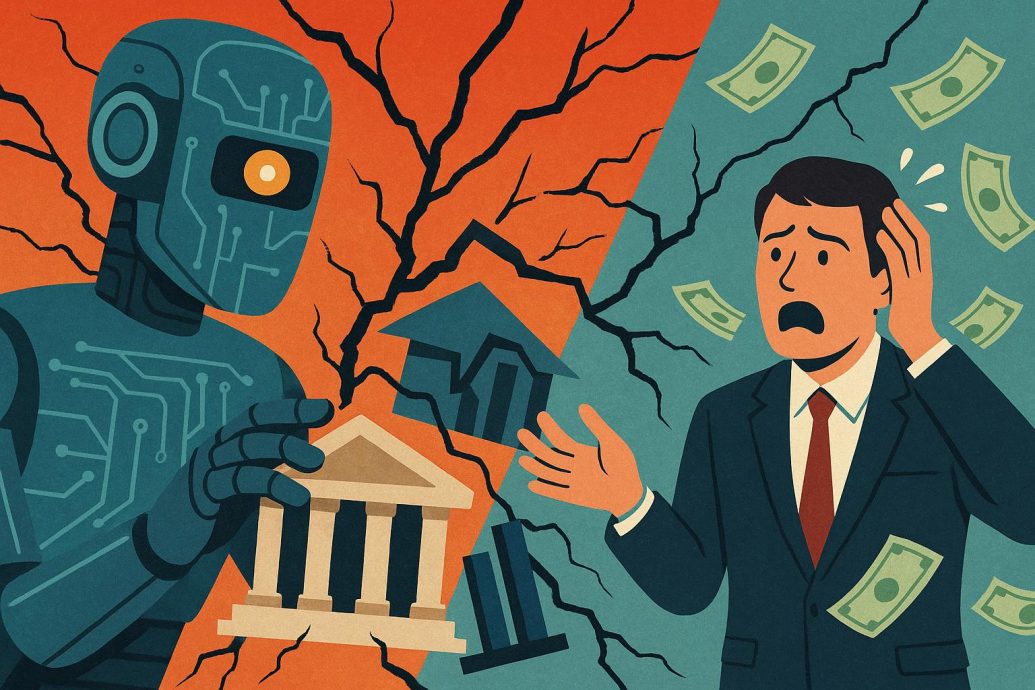
The disruption caused by generative AI is no longer speculative. It is reshaping investment strategies across credit markets and challenging long-held assumptions about risk. A growing number of legacy software companies are becoming obsolete, leading to marked valuation drops. Private credit leaders such as Blackstone and Ares Management now face unexpected exposure from technology loans. As a result, investors are reassessing their risk profiles and rethinking the viability of software-backed lending within this shifting AI-influenced environment. This article explores where the most significant financial risks are developing and how different asset classes are responding to these pressures. It also highlights which revenue models are most vulnerable to the ongoing transformation.
Key Takeaways
- Generative AI is disrupting business models rapidly, especially those in the SaaS ecosystem central to many private credit investments.
- Private lenders with high exposure to tech and software borrowers are seeing heightened default and downgrade risks.
- The financial markets are reflecting growing unease, pricing in AI as both an innovation driver and a systemic disruptor.
- Asset class responses vary significantly, with hedge funds and VCs better equipped to pivot or hedge than private debt managers.
Understanding Private Credit: A Primer
Private credit consists of non-bank loans issued to businesses in need of capital. These loans are typically customized and held by institutions like pension funds, asset managers, and private equity sponsors. Following regulatory changes after 2008, banks reduced their middle-market lending, fueling the rise of private credit as an alternative. This strategy offers attractive returns and structuring options but comes with low liquidity and high exposure to borrower-specific risk. Software firms were once ideal targets. These days, fast-moving AI developments are changing the equation.
Generative AI & Financial Risk: Where the Impact Hits Hardest
The emergence of AI tools such as ChatGPT, Claude, and other open-source models is forcing a fundamental reassessment of software valuations. Many firms built on routine automation processes now face direct competition from AI tools that offer comparable services with lower costs. Private credit portfolios, historically fond of seemingly stable SaaS models, are now being challenged at their core.
Generative AI is diluting key advantages associated with recurring revenues and operating margins, which once made software firms prime lending targets. In response, asset managers are recalibrating loan terms, reducing exposure, or applying stricter underwriting policies.
| Software Sector | AI Exposure Risk | Impact on Credit |
|---|---|---|
| CRM and Support Tools | High | Revenue erosion from AI-driven alternatives |
| Document Automation | Very High | Replacement by open-source LLM workflows |
| Data Analytics | Moderate | AI augments but does not yet replace |
| Enterprise Planning | Low | Limited exposure, complex integration needs buffered |
Credit Funds in the Crosshairs: Declining Confidence in Tech Portfolios
Many private credit fund valuations are now under pressure. Managers such as Ares, Blue Owl, and Blackstone Credit are seeing increased concern from clients and analysts. Although portfolios remain diversified, the contribution of SaaS-related deals is now considered a point of vulnerability. AI is accelerating a structural shift in the tech lending thesis.
According to Fitch Ratings, loan covenants and borrower valuations may not adequately reflect the declining scalability of AI-exposed companies. Firms that depend on cost-saving automation or mass customer interaction are at particular risk. As AI increasingly automates those core functions, previously “scalable” business models now look constrained.
What Differentiates Private Credit from Other AI-Exposed Asset Classes?
Private credit lacks the hedging strategies and exit options found in venture capital or hedge funds. When AI disrupts a borrower’s model, credit funds are often locked into long-dated debt positions. VCs, by contrast, can gain from equity upside if founders pivot effectively to AI. Hedge funds can profit by shorting vulnerable firms or reallocating capital. Credit funds have fewer tools available.
- Venture Capital: Accepts more risk in exchange for equity gains. Startups can pivot and adopt AI strategies quickly.
- Hedge Funds: Use flexibility to trade positions, short vulnerable companies, or shift sectors as conditions evolve.
- Private Credit: Limited strategic flexibility. Often must hold through maturity, with value depending on borrower stability.
This explains why equity-focused firms are more adaptive than debt providers. Recent reports such as key AI developments catching Wall Street’s attention underscore that equity markets are faster to process these paradigm shifts than credit portfolios tied to legacy assumptions.
Historical Parallels: Was This Disruption Predictable?
The software disruptions of the early 2000s and more recent retail bankruptcies in 2015 show how financial markets can be caught off guard by technology evolution. Software models once considered durable and cost-effective now face erosion. AI is accelerating this cycle and compressing the time for strategic response. The parallels are strong, but the velocity this time is faster.
Sticky, subscription-based revenues made SaaS attractive to lenders during the 2010s. Today, AI is flattening this stickiness by enabling equally efficient, often cheaper alternatives. These shifts are also explored in recent analysis on how AI is revolutionizing the global economy.
How Top Firms Are Reacting to AI Risk in Credit Portfolios
Some of the top private credit managers are revising how they underwrite technology loans. New deal flow is being evaluated not only through conventional financial metrics but also through AI-specific risk assessments. Borrowers are being asked to explain their AI strategy and how their operations are protected or enhanced by these changes.
Ben Glickman, partner at TalonPoint Capital, summarizes the shift clearly. He says, “We no longer greenlight any software loan unless the company can articulate how AI is an enabler and not a threat.” Some funds are also requiring additional cash reserves or inserting equity sweeteners to offset declining pricing leverage.
As these strategies develop, expect a broader recalibration across financial institutions. Analyses such as how banks and private finance target AI growth help highlight how this trend is now central to risk management conversations globally.
FAQs
How is generative AI affecting private credit markets?
Generative AI is undermining the business models of some software firms that private credit funds previously considered stable. This leads to increased concerns about defaults and restructuring, particularly because these lenders cannot easily exit their positions.
Which sectors are most vulnerable to AI disruption?
Software categories such as CRM tools, document automation, and basic customer service platforms are the most vulnerable. These areas are being replaced by inexpensive AI-driven alternatives that reduce the need for traditional software.
What is the relationship between private lending and the software industry?
Private lenders have favored software because of reliable revenue models and low capital demands. AI now challenges this dynamic by making former points of strength less of a competitive edge.
Are private credit funds exposed to AI-related risks?
Yes. Many portfolios contain tech and software loans that face structural risk from AI evolution. These funds have limited upside potential and few exit alternatives, which increases the risk factor compared to equity investors.
Conclusion: A Recalibration in Progress
AI is reshaping the high-yield, low-volatility thesis that once made software lending the crown jewel of private credit. This transformation is prompting funds to update their due diligence processes, reconsider borrower relationships, and revise underwriting frameworks. Some firms are already adapting. Others face increasing strain. Informed lenders must now prioritize AI strategy disclosures and demand stronger future-proofing from their borrowers. Climate and macro trends once dominated portfolio stress testing. Now, AI must be at the forefront.
For personal impact, individual investors can explore insights on how AI is reshaping personal finance to understand how these macro forces may affect asset allocations and financial strategies.