
Introduction
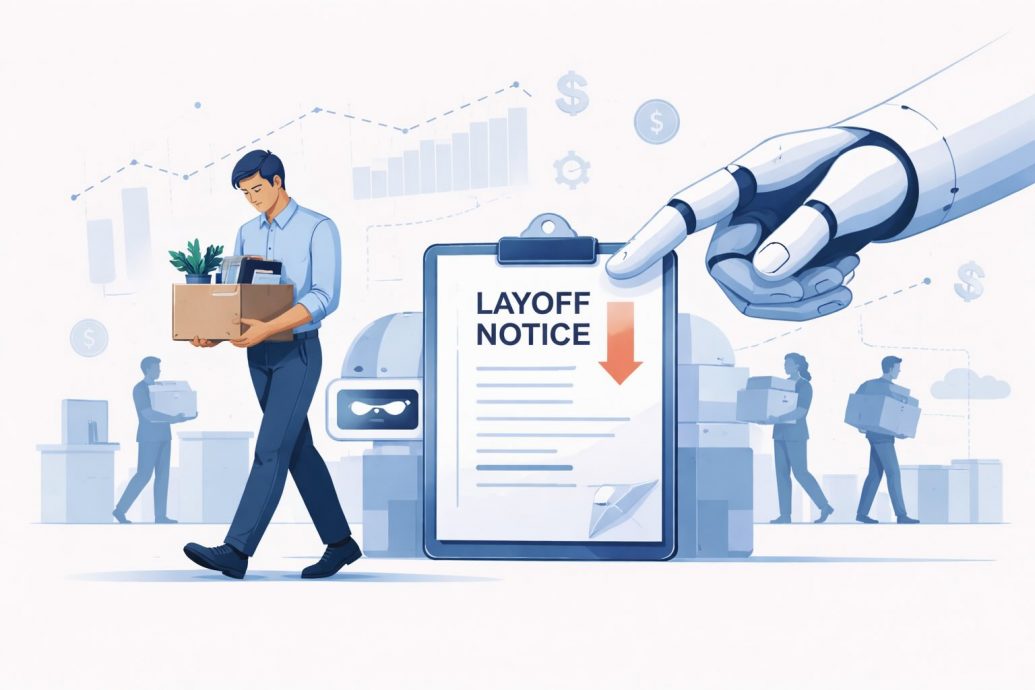
AI Layoffs: Reality or Excuse? The phrase has become a focal point in recent headlines as corporations increasingly attribute workforce reductions to artificial intelligence. But is AI truly to blame, or is it being used as a strategic cover for cost-cutting? This investigation explores the facts behind the claims. With real-world data, company press releases, and expert insights, we delve into whether AI is genuinely displacing workers or acting as a convenient scapegoat. The answers have deep implications for job security, technological transparency, and the future of corporate accountability.
Key Takeaways
- AI is frequently cited during layoffs, but evidence suggests limited real deployment across many industries.
- Corporate filings and press releases often lack specifics on actual AI adoption tied to workforce cuts.
- “AI-washing” may erode public trust and obscure deeper organizational cost-cutting decisions.
- Experts and data point to economic strategy, not just AI efficiency, as a primary force behind job cuts.
AI as a Factor in Layoffs: A Growing Corporate Narrative
Major firms across technology, finance, media, and logistics have made headlines announcing large job cuts “due to AI efficiencies.” Meta, IBM, and Dropbox are among several companies attributing restructuring to artificial intelligence integration. For example, IBM CEO Arvind Krishna mentioned in 2023 that the company could pause hiring for roles that AI might eventually automate. Similarly, Dropbox cited AI transformation as part of the rationale behind cutting 16 percent of its workforce.
Yet, many of these statements lack clarity on the nature and extent of AI implementation. Are systems like generative AI or robotic process automation actually replacing employees in significant numbers, or are these references designed to manage stakeholder expectations? Companies know that investors often reward operational efficiency, making AI a palatable justification. But investor sentiment does not always align with the underlying technological reality.
The Reality Behind Corporate AI Projects
While interest in AI has skyrocketed, especially with the rise of tools like ChatGPT, actual deployments remain selective and experimental across most sectors. According to McKinsey’s 2023 Global Survey on AI, only 36 percent of respondents said their organizations have embedded AI in at least one function. Even fewer have done so at scale. Deloitte’s 2023 State of AI in the Enterprise report shows a similar trend. While enthusiasm is high, most businesses are still in pilot phases.
The timing of layoffs often precedes concrete AI implementation. In many cases, layoffs occur shortly after a company announces an AI partnership or investment, suggesting correlation rather than causation. In-depth review of SEC filings and investor presentations from companies like Klarna and Chegg shows a pattern of budget cuts and margin pressure. AI explanations often appear as afterthoughts.
A Closer Look: We Analyzed 10 Companies Citing AI in 2023 Layoffs
We reviewed 10 major firms covering tech, finance, and media that cited AI in their 2023 workforce reduction announcements. Here’s what we found:
- IBM: Announced 3,900 job cuts, citing AI automation. Internal reports show only 2 percent of jobs have been modified or replaced by AI to date.
- Chegg: Saw valuation dip after ChatGPT’s rise. Cut 4 percent of staff, blaming student shift to AI. Yet, AI adoption in their operations remains limited, with focus on reactive tool integration.
- Dropbox: Used AI transition language in layoff rationale. Public filings cite cost reduction and product refocus as leading motivators. AI was more of an aspiration than execution.
- BT Group (UK): Said it will reduce 55,000 jobs by 2030, mostly via AI and digitization. Those cuts are spread over seven years, revealing a strategy of transformation rather than sudden disruption.
This analysis reveals a gap between AI narratives and implementation timelines. While AI plays a role in long-term operational planning, it is rarely the immediate cause of headcount reduction.
Myth vs. Reality: Breaking Down Common Claims
| Claim | Reality |
|---|---|
| AI is replacing entire departments overnight. | Generative AI tools help augment tasks, not eliminate complex job functions wholesale. At least not yet. |
| Companies are downsizing to invest in AI systems. | SEC filings and earnings calls show cost pressure and investor demands often drive decisions more than AI readiness. |
| AI is already fully embedded in customer service roles. | Many AI chatbots remain semi-supervised and require human oversight. This limits actual labor displacement. |
Expert Commentary: Is AI the Scapegoat?
Industry analysts agree that AI is being used to shape a favorable narrative in layoff justifications. Sarah White, lead researcher at Gartner, noted, “AI gives companies a future-oriented excuse that’s less inflammatory than citing poor earnings or misses on targets.” Forrester’s principal analyst J.P. Gownder added that while automation has long influenced workforce strategies, conflating emerging AI tools with broad-scale cuts is intellectually dishonest.
Labor economists share this skepticism. According to the Economic Policy Institute, AI displacement models are often theoretical. As of Q4 2023, job loss from AI specifically (versus other automation forms or financial restructuring) accounts for under 4 percent of recorded U.S. layoffs. Insightful breakdowns such as how robots are affecting jobs can add further perspective on this topic.
Worker Perspectives: Human Stories Behind Layoff Numbers
We spoke with several professionals affected by high-profile AI-cited layoffs. Many expressed frustration at the ambiguity surrounding AI justification. Julia R., a 12-year customer operations manager at a global software company, shared, “We were told our roles were no longer needed because of a new AI platform, but I later learned it was still in user testing. My role wasn’t eliminated by a bot. It was eliminated by budgeting.”
This disconnect between messaging and reality deepens employee mistrust. In exit interviews, several reported that internal memos emphasized cost containment, while public statements highlighted AI transformation.
Checklist: Spotting AI-Washing in Corporate Announcements
To separate strategic change from storytelling, watch for these indicators in corporate layoff announcements:
- Vague references: Look for non-specific mentions of “leveraging AI” without project names or results.
- No deployment timeline: AI implementation is years-long. Abrupt layoffs immediately following an AI announcement should be viewed cautiously.
- Financial context: If earnings are down or margins are declining, cost-cutting may be the actual motivator.
- Investor language: Using AI buzzwords can be an optics strategy to reassure shareholders. It is not always driven by immediate technology adoption.
FAQ’s
Are companies really using AI to justify layoffs?
Yes, recent trends suggest that some corporations use AI rhetoric to justify layoffs, even when actual AI deployment is minimal. This practice, known as AI-washing, allows firms to align with innovation narratives while executing cost-cutting measures.
How does AI contribute to workforce reduction?
AI tools can improve efficiency in specific roles by automating repetitive tasks. Still, most current AI systems complement human work rather than replace it. True headcount reduction directly caused by AI remains low in practical terms.
What industries are most affected by AI-related layoffs?
Technology, media, and financial services have reported higher incidences of AI-cited layoffs. Yet even within these fields, broader business models and fiscal goals are often the primary drivers of workforce changes, not AI alone.
Is AI actually replacing jobs or is it overhyped?
The impact of AI on job displacement is frequently overstated. Many systems are still in testing or early deployment phases. The current use of AI tends to enhance productivity rather than eliminate entire job categories. Publications like AI’s growing impact on jobs show how nuanced this transformation process is.
How much is AI actually used in corporate restructuring?
Data from sources like Deloitte and Gartner indicate that while AI is a growing component of business strategy, its role in immediate restructuring remains limited. AI is often cited more as a motivation for future change than actual present-day layoffs.
Conclusion
AI-driven layoffs are neither pure myth nor universal truth. Automation is genuinely reducing demand for certain repetitive, rules-based roles, particularly in operations, customer support, content production, and back-office functions. Productivity gains from AI are real, measurable, and accelerating.
At the same time, AI is sometimes used as a convenient narrative to justify broader cost-cutting, restructuring, or investor-driven margin improvements. In some cases, workforce reductions attributed to AI reflect economic pressure, overhiring during growth cycles, or shifts in corporate strategy rather than direct technological displacement.
The reality is more structural than sensational. AI is reshaping job composition rather than eliminating entire professions overnight. Tasks are being automated, workflows are being redesigned, and skill requirements are shifting toward oversight, strategy, data fluency, and system orchestration.
The key question is not whether AI causes layoffs. It is whether organizations are using AI to augment human capability or to accelerate efficiency without reskilling investment. The long-term impact will depend less on the technology itself and more on leadership decisions, workforce adaptation, and how responsibly AI transformation is implemented.