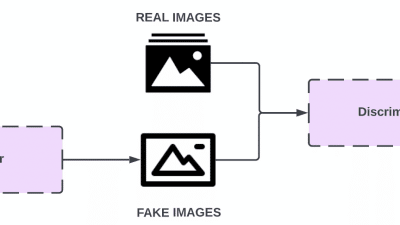
Introduction to Generative Adversarial Networks (GANs)
Why it matters: Master Generative Adversarial Networks (GANs) in 2026: architectures, training, ethics, deepfakes, law, plus where GANs beat diffusion today.
Everything AI, Robotics, and IoT

Sanksshep Mahendra is a technology executive with success in driving, vision, strategy, design, and execution of software engineering for the web, mobile, apps, social, voice, IoT, applications along with Machine learning and AI. His expertise lies in partnering with business leaders, powering through roadblocks, and leading global teams to deliver disruptive products that advance the organization’s mission and capture game-changing results in the market. Sanksshep Mahendra has a lot of experience in M&A and compliance, he holds a Master's degree from Pratt Institute and executive education from Massachusetts Institute of Technology, in AI, Robotics, and Automation.
Why it matters: Master Generative Adversarial Networks (GANs) in 2026: architectures, training, ethics, deepfakes, law, plus where GANs beat diffusion today.

Why it matters: Discover how the Ladybird farming robot is reshaping vegetable farming with solar autonomy, precision weeding, and leaf level crop sensing today.
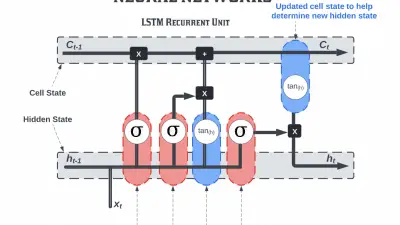
Why it matters: Long short-term memory networks (LSTM, sometimes typed LTSM) explained: architecture, gates, math, code, and where LSTMs still beat transformers in 2026.

Why it matters: What is XGBoost, how does the gradient boosting algorithm work, and when should you use it? A practical 2026 guide with real production wins.

Why it matters: AI engineer pay averages $184,757 in 2026. See salaries, top roles, learning paths, ROI, and the risks of pivoting into AI now.

Why it matters: How can we make chatbots intelligent? Real 2026 playbook on RAG, memory, tool use, guardrails, evaluation, and ethics with case studies and code-free depth.
Why it matters: Is robotics computer science or engineering? Here is the definitive 2026 answer with degrees, salaries, real programs, and the future of the discipline.

Why it matters: What is the Internet of Things (IoT)? A 2026 field guide to devices, networks, security, industrial IoT, digital twins, and where the tech is headed by 2030.

Why it matters: LiDAR in robotics explained: how laser point clouds power perception, mapping, and SLAM across robotaxis, warehouses, drones, and agriculture.
Why it matters: Medical 3D imaging is quietly rewriting diagnosis. See how CT, MRI, photon-counting CT, and AI reconstruction sharpen 3D diagnostic imaging in healthcare.