
Introduction
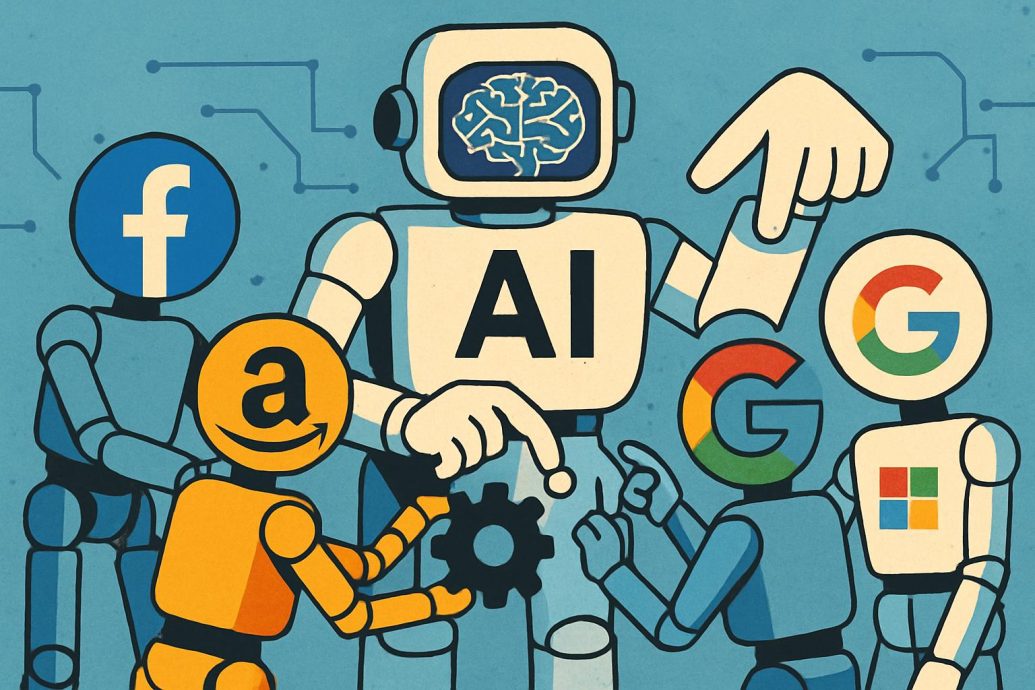
Big Tech Doubles Down on AI by investing billions of dollars on AI initiatives. In a transformative shift, leading tech giants like Meta and Microsoft are committing billions to artificial intelligence infrastructure, with spending surging in data center development, AI chipsets, and scalable cloud ecosystems. These companies are no longer just experimenting with AI. They are making long-term bets that AI will define their future earnings models. While future growth looks promising, the immediate financial trade-offs are raising questions. As scrutiny from investors intensifies, the stakes for dominance in generative AI, LLMs (large language models), and AI-based enterprise platforms have never been higher.
Key Takeaways
- Meta and Microsoft have significantly increased AI infrastructure spending, with CapEx targets exceeding $40 billion in 2024.
- Investors are split on when these AI investments will yield clear, monetizable outcomes beyond advertising and cloud services.
- Competitors like Amazon and Alphabet are also scaling their AI portfolios, but Meta and Microsoft’s strategic focus stands out in product integration and enterprise tools.
- Historical parallels with cloud and mobile adoption suggest similar long-term ROI patterns could emerge in AI adoption across sectors.
Meta and Microsoft’s Rising AI Capital Expenditures
Meta and Microsoft are on track to eclipse previous records in artificial intelligence infrastructure spending. Meta has guided for full-year 2024 capital expenditures to reach between $35 billion and $40 billion, with a large share directed toward building bespoke AI data centers and acquiring NVIDIA H100 GPUs. This is a sharp increase from its 2023 CapEx figure of $28 billion.
Microsoft’s capital allocation is similar in magnitude. In Q1 2024, the company reported $14 billion in capital expenditures, most of it framed as long-term AI and cloud infrastructure investment. According to CFO Amy Hood, this trajectory will persist and possibly intensify throughout the second half of the year. Microsoft’s investment aligns with the integration of generative AI tools such as Copilot across Microsoft 365, Azure, and GitHub.
Both companies are aggressively scaling AI capacity, not only to power consumer-facing tools but also to court enterprise adoption and secure backend infrastructure leadership. A deeper comparison of Meta versus Microsoft’s AI investment potential shows how different their monetization strategies really are.
Head-to-Head: AI CapEx Comparison 2023–2024
To understand AI infrastructure spending in context, a comparison across leading Big Tech firms highlights differing strategic approaches.
| Company | Q1 2023 CapEx | Q1 2024 CapEx | Share of CapEx Towards AI (2024) | Flagship AI Initiatives |
|---|---|---|---|---|
| Meta | $7.1B | $9.3B | ~70% | LLMs, Meta AI Assistant, Reels optimization |
| Microsoft | $6.9B | $14B | ~65% | Copilot (Office), Azure AI, GitHub AI |
| Alphabet (Google) | $7.7B | $12B | ~60% | Gemini, Search AI, Vertex AI |
| Amazon | $10.4B | $14.8B | ~50% | Bedrock, Alexa LLMs, AWS Trainium |
While all four companies are driving up AI investment, Meta and Microsoft stand out for their concentrated CapEx toward proprietary AI tools and integration into product suites. Google and Amazon remain strong competitors but have a wider spread across cloud, commerce, and hardware.
Generative AI Strategies: Microsoft vs Meta
Microsoft’s generative AI strategy centers on product enhancement and enterprise workflows. Tools like Microsoft Copilot are embedded into Office 365 applications and GitHub, aiming to improve efficiency across development and business operations. Microsoft is also utilizing Azure to support AI infrastructure needs, offering model hosting and training as cloud services. The company is broadening its reach through AI partnerships beyond OpenAI to widen its developer ecosystem.
On the other hand, Meta is focusing its AI efforts on engagement and content generation within its core apps such as Facebook, Instagram, and WhatsApp. Using LLaMA models, Meta supports real-time chat features and creator tools. It is also using generative AI for ad optimization, automating content testing and delivery accuracy to improve advertiser return on investment.
Microsoft is leaning into enterprise software and productivity applications, while Meta is pursuing scale through AI tools embedded in consumer and ad-based platforms.
Investor Sentiment and Monetization Challenges
Despite the strategic clarity, many investors remain cautious. Analysts continue to ask when these significant AI outlays will begin to show up in bottom-line results. JPMorgan analyst Mark Murphy pointed out that investors are watching for more than just usage statistics. They want proof that AI tools can drive new revenue.
Meta experienced this friction when its stock plunged about 10 percent after earnings were released. The steep forecast for CapEx overshadowed the company’s sales growth, as short-term profitability remains pressured by rising AI expenses. Microsoft reported more favorable sentiment due to visible revenue from Azure AI clients, though overall margins are still feeling the impacts of the CapEx ramp-up.
Analysts from Gartner maintain that most enterprise-level AI tools are still on a three- to five-year timeline before producing meaningful profit for large platforms.
Historical Parallels and Long-Term Vision
To place current AI investments in perspective, consider the early years of cloud computing. In the 2010s, companies like Amazon and Microsoft heavily invested in cloud infrastructure before seeing real returns. For instance, Amazon’s commitment to AI research continues a pattern that mirrors its cloud buildout strategy over a decade ago.
Much of AI’s eventual value may come from similar groundwork. The data centers, chips, and software being developed today will eventually support AI platforms, APIs, and monetizable services in the future. Whether value emerges through new offerings like copilots or enhances old ones like targeted ads and search, the ultimate impact will rely on scale and smart deployment.
Emerging Monetization Routes in AI
To convert capital expenditure into profits, companies must move beyond engagement metrics and into viable business models. Current monetization strategies being developed include the following routes:
- AI Copilots: Subscription-driven services like GitHub Copilot and Microsoft Office Copilot are meant to generate recurring revenue.
- Ad Optimization: Meta and Google are using AI models to boost the effectiveness of ad targeting and performance automation.
- Custom AI APIs and Hosting: Cloud providers such as Azure and AWS offer pay-as-you-go AI model services for startups and enterprises alike.
- Platform Ecosystem Expansion: Meta is considering new interfaces by integrating LLMs with virtual and augmented reality ecosystems. This includes device-level innovation often tied to new startups like Sanctuary AI, which is receiving major funding support.
Success in these areas depends not only on offering useful services, but also on building trust with customers and corporations who demand scalable, secure platforms that deliver clear value.
FAQs
Is Meta investing heavily in artificial intelligence?
Yes. Meta has sharply increased capital expenditures to support AI data centers, custom silicon initiatives, and large language models such as LLaMA. A substantial portion of its 2024 CapEx is dedicated to AI compute capacity. The company is embedding AI directly into Facebook, Instagram, and WhatsApp to improve engagement and advertising performance.
Why is Microsoft investing so much in AI?
Microsoft views AI as the next platform shift after cloud computing. Its strategy focuses on integrating AI into enterprise software such as Microsoft 365 and GitHub. Azure AI services also position Microsoft as a core infrastructure provider for companies building AI applications.
Are these AI investments profitable yet?
Not at scale. While Microsoft reports growing Azure AI revenue and subscription adoption of Copilot products, margins are under pressure due to infrastructure costs. Meta is still in a reinvestment phase, with investor concerns centered on short-term profitability. Analysts generally expect meaningful returns to materialize over a three to five year horizon.
How does AI spending affect stock prices?
Large CapEx increases can create short-term volatility. Investors often react cautiously when expenses rise faster than visible revenue. Meta experienced a stock pullback after forecasting higher AI spending. Microsoft has seen more balanced reactions due to clearer enterprise monetization signals.
What is the long-term return on AI investment expected to be?
Many analysts compare current AI spending to early cloud investments. In the early 2010s, cloud divisions required years of capital investment before generating strong operating margins. If AI follows a similar trajectory, long-term returns could be substantial across productivity, advertising, search, and automation markets.
Which sectors will benefit most from Big Tech’s AI push?
Enterprise software, cloud services, digital advertising, healthcare analytics, and developer tools are positioned to benefit. Productivity platforms and API-based AI services may see accelerated adoption as infrastructure matures and costs decline.
Is generative AI the main focus of these investments?
Generative AI is a central pillar, especially large language models and copilots. Companies are also investing in AI chips, model optimization, data center expansion, and enterprise-grade security frameworks. The broader goal extends beyond chatbots to full platform integration.
Conclusion
Big Tech is not experimenting with AI. It is restructuring its capital allocation around it. Companies such as Meta and Microsoft are making strategic, long-term bets that artificial intelligence will underpin the next decade of growth. Short-term financial pressure is real. Margins are tightening, and investor scrutiny is intensifying. Yet history suggests that foundational infrastructure investments often precede durable platform dominance. Cloud computing followed a similar path. Years of heavy spending eventually produced scalable, high-margin businesses. Artificial intelligence may trace that arc, though the competitive landscape is tighter and the pace of innovation is faster.
The outcome will depend on execution. Infrastructure alone does not create value. Monetization models, enterprise trust, regulatory clarity, and user adoption will determine whether these billions translate into sustainable revenue. What is clear is this. AI is no longer a side initiative within Big Tech. It is the core strategic priority shaping product roadmaps, capital budgets, and future earnings narratives.