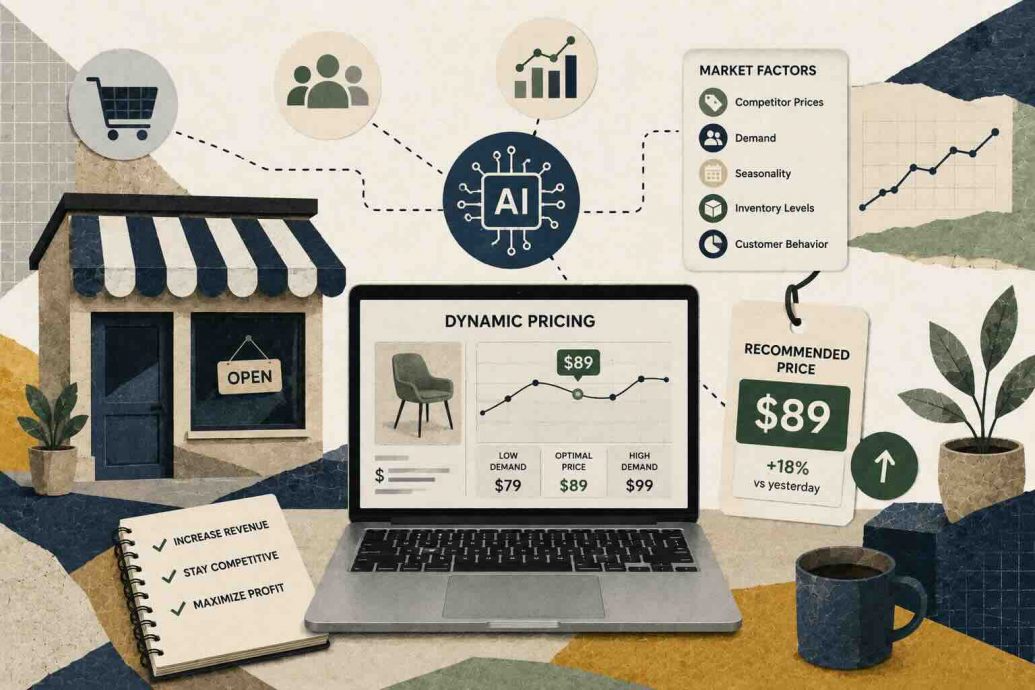

Introduction
Dynamic pricing AI tools for small business have moved from enterprise luxury to everyday tactic for independent sellers. A recent survey found that 65 percent of small businesses now plan to adopt some form of algorithmic pricing. These systems watch demand, competitors, and inventory, then nudge prices up or down without constant manual work. For a shop owner juggling a dozen roles, that automation can recover margin that spreadsheets quietly leak. These automated systems promise enterprise-grade revenue tactics at a price a corner store can finally afford. This guide explains how the technology works, what it costs, and where it still stumbles. You will see real platforms, measurable outcomes, and the honest limitations that vendors rarely advertise. By the end, you can decide whether automated pricing belongs in your store this year.
Quick Answers on Dynamic Pricing AI Tools for Small Business
What are dynamic pricing AI tools for small business?
They are software systems that adjust prices automatically using machine learning, demand signals, and competitor data, helping small business owners protect margin without manual price checks.
Are these AI pricing tools affordable for a small shop?
Yes, many pricing tools now start near 50 dollars monthly, so a small business can test dynamic pricing on a few products before scaling.
Do dynamic pricing tools risk angering loyal customers?
They can, because frequent price swings feel unfair, so a small business should set guardrails that cap changes and protect trusted regular shoppers.
Key Takeaways
- Automated pricing helps small sellers capture margin that static price tags leave on the table every week.
- Entry tier plans now cost less than one part-time shift, lowering the barrier for cautious owners.
- Guardrails matter more than raw speed, since unchecked price swings erode customer trust quickly.
- Clean sales and competitor data decide success far more than the brand of the pricing engine.
Table of contents
- Introduction
- Quick Answers on Dynamic Pricing AI Tools for Small Business
- Key Takeaways
- What Is Dynamic Pricing AI Tools for Small Business
- How These Pricing Engines Actually Work
- The Data That Powers Real-Time Price Moves
- Comparing Dynamic Pricing Platforms Built for Small Teams
- Putting Dynamic Pricing to Work in Your Store
- What Automated Pricing Costs and How Tiers Work
- Where Automated Pricing Falls Short
- The Ethics of Algorithmic Pricing for Shoppers
- Measuring ROI From Your Pricing Engine
- Building a Pricing Foundation Before You Automate
- Common Mistakes That Sink Pricing Projects
- How Dynamic Pricing Connects to Your Wider Toolkit
- Tool Features Worth Paying Extra For
- The Future of AI Pricing for Independent Retailers
- Key Insights
- Pricing Engines in Practice Across Real Storefronts
- Lessons From Small Businesses That Adopted Dynamic Pricing
- Common Questions About Dynamic Pricing AI Tools for Small Business
What Is Dynamic Pricing AI Tools for Small Business
Dynamic pricing AI tools for small business are software systems that automatically adjust selling prices using machine learning, live demand signals, inventory levels, and competitor data, helping small firms optimize revenue without slow manual guesswork.
Estimate Your Dynamic Pricing Upside
How These Pricing Engines Actually Work
A dynamic pricing engine begins by ingesting your sales history and turning each transaction into a training signal. It looks for patterns that humans miss, such as the hours when shoppers convert at full price. The model then estimates price elasticity, the sensitivity of demand to each dollar of change. The engine constantly asks a single question: what price captures the most profit on this unit right now. Modern tools layer in competitor feeds, weather, and local events to sharpen that estimate. Because the math runs in seconds, prices can react before a weekend rush rather than after it. Owners who once guessed at markdowns gain a tireless analyst working every minute.
Most engines separate the decision into two layers that work together cleanly. The first layer forecasts demand for each product across the coming hours or days. The second layer chooses the price that best meets your stated goal, whether margin or volume. You can usually cap the swings so the system never prices below cost or above a ceiling. These guardrails keep the automation inside the boundaries that your brand can tolerate. Many platforms also expose a plain dashboard, so the logic never feels like a sealed box. Tools that explain their reasoning earn trust faster than tools that simply issue commands.
Reinforcement learning has started to appear inside the more advanced small business products. The system treats each price as an experiment and learns from the revenue that follows. Over weeks, it converges toward prices that a static rulebook would never discover. This approach mirrors the logic behind understanding AI agents that act and adapt. The tradeoff is that learning needs traffic, so very low volume stores see slower gains. Patience and clean data remain the quiet prerequisites for strong results. The engine rewards sellers who feed it consistent, well-labeled information every day.
Speed is the feature that separates these engines from a clever spreadsheet macro. A human can review prices once a week, while the engine reviews them continuously. That cadence matters most for perishable goods, event tickets, and seasonal inventory. The system can also coordinate prices across channels so your web and counter stay aligned. When a competitor drops a price, the engine can respond within the same shopping session. This responsiveness is what lets a tiny shop behave like a national chain on margin. The gap between guesswork and automation widens every quarter as the models mature.
The Data That Powers Real-Time Price Moves
Every pricing decision is only as good as the data feeding the model underneath it. The engine wants clean transaction records, accurate stock counts, and reliable competitor prices. Gaps in any of these inputs push the model toward cautious or mistaken moves. Sellers often discover that their point of sale export hides duplicate or mislabeled rows. Cleaning that history is unglamorous, yet it drives more lift than any algorithm choice. The same discipline appears in data labeling and model performance across machine learning. Good inputs quietly decide whether the whole project succeeds or stalls.
Competitor data is the second pillar, and it is harder to collect than owners expect. Some platforms scrape public listings, while others buy structured feeds from data vendors. Either way, matching your product to a rival product is a messy, ongoing task. A mismatched comparison can trigger a price cut that protects no margin at all. Reliable competitor mapping is the unglamorous engine room of every automated pricing system. Demand signals like search trends, foot traffic, and weather round out the picture. When these streams align, the model prices with a confidence that manual review can never match.
Privacy and consent shape what data a small seller can legally use. Customer level histories can sharpen personalization, yet they raise real regulatory questions. Many owners choose aggregate signals to avoid storing sensitive shopper profiles. That choice trades a little accuracy for a lot of peace of mind. Tools that document their data handling make compliance far less stressful for non experts. Clear data practices also reassure customers who increasingly ask how their information travels. A defensible data policy is now part of a credible pricing strategy.
Comparing Dynamic Pricing Platforms Built for Small Teams
Choosing among the available platforms means weighing fit far more than raw feature counts. Some tools target e-commerce catalogs, while others specialize in services or hospitality. A boutique with 200 products needs different controls than a busy event venue. The right platform speaks the language of your channel and your margins. Vendors increasingly bundle pricing with broader suites, echoing trends in top machine learning tools. That bundling can save money, yet it can also lock you into one ecosystem. A careful trial period reveals whether the fit is real or merely marketed.
Integration depth is the first thing to test during any evaluation window. The engine must connect cleanly to your point of sale and your online store. A shallow connector forces manual exports that defeat the purpose of automation. Ask whether the tool writes prices back automatically or only suggests them. Suggestion only modes are safer at first but slower to deliver compounding gains. The strongest platforms support both, letting you graduate from advice to autopilot. This flexibility matters because trust in the system grows gradually, not overnight.
Support quality separates pleasant rollouts from painful ones for non technical owners. A responsive vendor helps you map products and set sane guardrails quickly. Poor support leaves you debugging price errors during your busiest selling hours. Read reviews that focus on onboarding rather than glossy feature lists. The buying experience often mirrors trends in how AI agent pricing is evolving across vendors. Favor tools that offer guided setup and a real human during launch week. That early help repays itself many times over in avoided mistakes.
Reporting clarity is the final lens for a confident comparison decision. You want a dashboard that shows revenue lift against a clear baseline. Vague claims of improvement without a control period deserve healthy skepticism. The best tools let you pause automation on a sample to prove the effect. That experiment turns a leap of faith into a measured business choice. Clear reporting also helps you explain the system to a skeptical partner or accountant. Numbers, not vague promises, should anchor your final platform selection decision every single time.
Putting Dynamic Pricing to Work in Your Store
Putting the technology to work starts with a narrow, low risk pilot. Choose a handful of products where demand clearly shifts across the week. Let the engine manage only those items while you watch the results closely. This small scope contains any mistakes and builds your confidence steadily. Owners who pilot first avoid the panic of pricing their entire catalog blindly. The lessons from custom AI agents for workflow automation apply directly here. Start small, measure honestly, then expand only what the data rewards.
Setting guardrails is the most important configuration step of the entire rollout. Define a floor that protects your cost and a ceiling that protects your brand. Cap how far a price can move in a single day to avoid whiplash. Guardrails turn a powerful automation into a tool you can trust while you sleep. Decide which loyal customers or bundles should stay shielded from frequent changes. These rules encode your values so the engine never embarrasses your store. Thoughtful limits make the difference between helpful automation and reckless experimentation.
Communication keeps the rollout from surprising staff and regulars alike. Tell your team why prices now move and how the guardrails protect customers. Train cashiers to answer questions about a price that changed since yesterday. A simple sign explaining seasonal pricing can defuse most shopper confusion early. Stores that communicate clearly see fewer complaints and steadier loyalty over time. Transparency here mirrors good practice in AI for resource optimization projects. People accept automation when they understand the reasons behind it.
What Automated Pricing Costs and How Tiers Work
Turning to budget, the pricing software market has split into clear tiers. Entry plans often start near 50 dollars each month for a small catalog. Mid tier plans add competitor feeds and deeper integrations for a few hundred dollars. Enterprise plans price on revenue share or custom contracts that small sellers rarely need. According to PwC AI business predictions, adoption now spans firms of every size. The trick is matching the tier to the value you can realistically capture. Paying for features you cannot use is the most common early mistake.
Pricing models themselves vary in ways that affect your true monthly cost. Some vendors charge per product, which punishes large catalogs with thin margins. Others charge a flat fee, which rewards sellers who scale their item counts. A revenue share model aligns the vendor with your success but can grow expensive. Read the contract closely for usage caps and overage charges hidden in footnotes. The cheapest sticker price often hides the most punishing usage fees at scale. Model the cost at your real volume before you trust any headline number.
Hidden costs extend beyond the subscription line on your invoice. You may need staff hours to clean data and map products at the start. Integrations sometimes require a developer for a day or two of setup work. Training your team to read the dashboard also consumes real attention early on. These costs fade after launch but they shape your first quarter budget. The trends in best AI tools for online work show similar onboarding patterns. Budget for the launch effort, not only the recurring fee.
Free trials and money back windows reduce the risk of a wrong choice. Use the trial to test the integration and the support, not only the features. Run a small live experiment so the trial reflects your real store conditions. A vendor confident in its value will happily extend a meaningful trial. Walk away from any tool that pressures you to sign before you can measure results. The right cost is the one justified by lift you can actually prove. Discipline during the trial protects you from an expensive long term mistake.
Where Automated Pricing Falls Short
Despite the promise, automated pricing falls short in several predictable situations. Very low volume stores starve the model of the data it needs to learn. With few sales, the engine guesses and its confidence stays stubbornly low. New products without history confuse the system until enough transactions accumulate. The same cold start problem appears across predictive analytics for market trends work. Owners expecting instant magic often abandon the tool before it ripens. Realistic expectations are the simplest antidote to the early disappointment that derails many hopeful adopters.
Automation can also amplify a bad signal into a costly mistake. A scraping error might read a competitor clearance as a permanent new price. Without guardrails, the engine could chase that phantom price straight into losses. An automated system fails faster and louder than a slow human ever could. Edge cases like bundles, gift cards, and loss leaders need careful manual rules. The model rarely understands your strategic exceptions unless you encode them explicitly. Human oversight remains essential precisely where the stakes are highest for your brand.
There is also a real risk of over optimizing for short term revenue. An engine tuned only for margin may quietly erode customer goodwill over months. Shoppers notice when prices feel manipulative, even if each move seems rational. The lessons from AI helps retailers and customers stress long term balance. A pricing strategy must protect loyalty, not just this week’s profit line. Wise owners weight customer lifetime value inside the engine’s stated goals. Sustainable pricing beats aggressive pricing across any horizon that matters.
The Ethics of Algorithmic Pricing for Shoppers
Beyond mechanics, algorithmic pricing raises ethical questions that owners cannot ignore. Charging different prices to different shoppers can cross into discrimination quickly. Personalization based on a customer’s perceived willingness to pay feels exploitative to many. Regulators in several regions now scrutinize these practices with growing attention. A small business protects itself by pricing on context, not on personal identity. Pricing for time, season, or inventory is defensible in a way personal pricing is not. Drawing that line early keeps your brand on the right side of trust.
Transparency is the simplest ethical safeguard available to a small seller. Tell customers when prices change for clear reasons like seasonality or demand. A visible policy turns a suspicious swing into an understandable business practice. The principles overlap with fairness debates in predictive AI in customer experience. Hidden manipulation breeds resentment, while honest explanation builds durable loyalty. Shoppers forgive a fair system far more readily than a secret one. Openness is both the ethical choice and the smart long term strategy.
Fairness also extends to the communities that small businesses serve. Essential goods deserve gentler pricing rules than discretionary luxuries do. Surging prices on necessities during a crisis can destroy years of goodwill instantly. An ethical pricing policy treats price gouging as a line the engine must never cross. Encode caps that prevent exploitative spikes during shortages or emergencies. These limits cost a little revenue and buy enormous community trust. A respected local brand outlasts any short term pricing windfall.
Accountability rounds out the ethical picture for any business running automated pricing at real scale. Someone in the business must own the engine’s decisions and their consequences. Blaming the algorithm is never an acceptable answer to a wronged customer. Keep a clear log of why prices moved so you can explain any case. This habit mirrors governance norms emerging across responsible AI deployments everywhere. Human accountability is what separates a tool from an excuse. Owning the outcomes openly keeps both your ethics and your hard earned reputation fully intact.
Measuring ROI From Your Pricing Engine
Looking at returns, the only honest measure is lift against a real baseline. Run the engine on one group of products and hold another group static. Compare revenue, margin, and units across the two groups over several weeks. This controlled test separates the engine’s effect from normal seasonal noise. The discipline echoes experiment design in AI improves email marketing testing. Without a control, any improvement could be luck rather than the tool. A clean experiment turns a hopeful story into a defensible number.
Margin matters more than top line revenue when you judge a pricing tool. An engine can lift revenue by cutting prices while quietly shrinking your profit. Always track contribution margin alongside sales to catch that trap early. A pricing win that shrinks your margin is a loss wearing a revenue costume. Factor the subscription cost into the calculation to find your true net gain. Many owners discover the tool pays for itself within a single quarter. Others learn their volume is too low to justify the spend yet.
Time savings are a real return that owners often forget to count. Hours once spent guessing at markdowns now return to selling and service. That recovered attention has genuine value even when it never hits a report. Track the labor you reclaim alongside the margin the engine protects. The combined return frequently looks stronger than the revenue figure alone suggests. Honest accounting includes both the dollars earned and the hours freed. A complete ROI picture justifies the tool far better than revenue by itself.
Building a Pricing Foundation Before You Automate
Stepping back from tools, a sound pricing foundation must exist before any automation begins. You need to know your true unit costs, including shipping, fees, and the labor each sale consumes. Many owners discover their margins are thinner than the register ever suggested. An engine optimizing on wrong costs simply automates a money losing decision faster. The work of mapping real costs is tedious but it pays for itself immediately. According to pricing strategy research, cost clarity is the single most common gap in failed projects. Fix the foundation first, then let the software build on solid ground. A clean cost model is the quiet prerequisite for every later gain.
Your pricing goals also need a clear definition before the engine starts working. Decide whether you optimize for margin, market share, or steady cash flow this quarter. Each goal pushes the system toward very different price recommendations and tradeoffs. An engine without a clear goal will optimize for the wrong thing with frightening efficiency. Write your objective in plain words and revisit it as your business shifts. Seasonal goals can change, so the engine should adapt to your stated priorities. A goal that everyone understands keeps the automation aligned with your real strategy. Clarity here prevents the most expensive misunderstandings down the line.
Segmentation is the next layer of a durable pricing foundation. Not every product deserves the same pricing treatment or the same level of attention. Hero products, staples, and clearance items each follow different competitive dynamics. Group your catalog into sensible tiers before you hand it to any engine. This structure lets you apply aggressive automation where it is safe and caution elsewhere. A thoughtful segmentation map turns a chaotic catalog into a manageable pricing system. Owners who skip this step often drown in noisy, unhelpful recommendations. Structure makes the automation legible and calm rather than overwhelming for a busy owner.
Baseline measurement completes the foundation that serious owners build first. Record your current revenue, margin, and conversion before the engine touches a single price. Without that snapshot, you can never prove the tool actually helped. The discipline matches sound practice across retail pricing measurement from consultants. A clear baseline transforms vague impressions into a defensible before and after story. It also protects you from a vendor who claims credit for normal seasonal lift. Measure everything first so that the plain truth always stays firmly on your side. The baseline is your insurance against both hype and self deception.
Finally, decide who owns pricing inside your business before automation arrives. One person should hold responsibility for goals, guardrails, and the weekly review. Shared ownership without a clear lead produces drift and contradictory adjustments. That owner becomes the human partner who supervises the engine over time. They translate business changes into new rules the system can follow. A named owner keeps the automation accountable and continuously improving. This single role often determines whether the project thrives or quietly stalls. Clear ownership is the human foundation beneath the technical one.
Common Mistakes That Sink Pricing Projects
Beyond the foundation, a handful of mistakes sink most early pricing projects. The first is automating the entire catalog on day one without any pilot. That leap removes every safety net and amplifies any configuration error instantly. A second mistake is ignoring data quality while obsessing over algorithm features. The cleanest model cannot rescue prices built on duplicated or mislabeled records. Owners who chase features before fixing data almost always regret the order. Sequence matters as much as the tools you ultimately choose. Patience early in the project prevents a great deal of painful rework later on.
A third common mistake is setting goals that quietly contradict each other. Telling the engine to maximize margin and volume at once produces incoherent moves. The system cannot serve two masters, so it oscillates and disappoints everyone. Conflicting objectives are the silent killer of otherwise promising pricing deployments. Pick one primary goal and let the others act as constraints instead. This clarity gives the engine a stable target to optimize against. A focused objective produces results you can actually understand and defend. Coherence reliably beats raw ambition in nearly every early small business pricing project.
Neglecting customer communication is the fourth mistake that erodes trust fast. When regulars notice unexplained swings, suspicion replaces the goodwill you spent years building. A short, honest pricing policy prevents most of that damage cheaply. The patterns echo lessons across broader AI adoption research for smaller firms. Silence tends to invite the worst interpretation, while honest transparency invites patient understanding instead. Treat communication as part of the rollout, not an afterthought. The cost of a clear sign is trivial next to lost loyalty. Honesty is the cheapest insurance a pricing project can buy.
The final mistake is abandoning the tool before it has time to learn. Reinforcement based engines need weeks of traffic to converge on strong prices. Owners who panic after a slow first fortnight kill the project prematurely. Set a fair evaluation window and resist the urge to intervene constantly. Constant manual overrides starve the model of the consistent signal it needs. Give the system room to learn while your guardrails keep it safe. Patience, paired with sensible limits, is what unlocks the compounding gains. Quitting early wastes both the money and the learning already invested.
How Dynamic Pricing Connects to Your Wider Toolkit
Turning to the bigger picture, dynamic pricing rarely operates in isolation from other systems. It draws on inventory data and feeds insights back into purchasing and marketing. A price drop on slow stock should trigger a promotion, not a quiet shrug. When these systems talk, the whole operation grows noticeably more responsive. The integration mirrors the connected ambitions described in enterprise AI integration research. Pricing is one instrument in a small business orchestra, not a solo act. Coordinating the instruments is where the largest gains eventually appear. The toolkit matters more than any single tool within it.
Inventory systems are the most natural partner for any pricing engine. Accurate stock counts let the engine clear aging goods before they expire or obsolesce. Low stock can justify a price increase that protects scarce, valuable units. This loop keeps capital from freezing inside unsold shelves for months. Owners who connect pricing and inventory unlock a smoother, healthier cash cycle. The two systems together behave far better than either one alone. Integration turns a set of isolated tactics into one coherent and durable operating rhythm. Cash flow improves when stock and price finally move in concert.
Marketing tools form the second crucial connection in the toolkit. A pricing engine knows which products have room to move on price. Marketing can amplify those exact items through email, ads, and storefront placement. Coordinating the two prevents the awkward case of promoting a full price item. Aligned pricing and marketing turn a discount into a deliberate, profitable campaign rather than an accident. The combined effect lifts both conversion and margin at the same time. Sellers who sync these systems stop leaving easy revenue on the table. Coordination steadily converts scattered marketing effort into compounding and measurable commercial results.
Customer relationship tools add a layer of fairness to the connected toolkit. Knowing who your loyal customers are lets the engine shield them from harsh swings. A loyalty aware system can offer steady prices to your best repeat buyers. This protects the relationships that drive the majority of long term revenue. The approach reflects sound thinking in small business AI tooling guidance. Fairness and optimization can coexist when the systems share customer context. Loyalty data makes automated pricing feel human rather than mechanical. Respect for loyal regulars is both an ethical stance and a commercially wise long term choice.
Analytics close the loop on a well connected pricing toolkit. A shared dashboard shows how price, inventory, and marketing interact week to week. That visibility helps owners spot which levers actually drive profit. Without unified analytics, each tool tells a partial and sometimes misleading story. Bringing the data together reveals the real performance of your whole operation. Owners can then refine goals and guardrails with genuine confidence. Connected analytics is what turns a pile of tools into a strategy. The full picture is always greater than its scattered parts.
Tool Features Worth Paying Extra For
Given the crowded market, a few features genuinely justify a higher monthly fee. Granular guardrails top the list, since they let you encode nuanced rules per product group. The ability to write prices back automatically saves hours of tedious manual exporting. Explainable recommendations matter because trust grows when the engine shows its reasoning clearly. The guidance in small business software reviews echoes this emphasis on transparency. Pay for clarity and control rather than a long list of flashy extras. The features that reduce risk are usually the ones worth their price. Substance beats spectacle when you evaluate a serious pricing tool.
Strong competitor tracking is the second feature that earns its premium quickly. Accurate rival prices are hard to gather and harder to match correctly. A vendor that maintains clean, structured competitor feeds spares you enormous manual effort. Reliable competitor data is the feature that most often separates a useful tool from a frustrating one. Test the matching quality during your trial on a handful of known products. Poor matching produces phantom price cuts that quietly drain your margin. Pay for accuracy here because the downstream damage of errors is severe. Good competitor data repays its cost many times over through the margin errors it prevents.
Experimentation features deserve a premium because they prove the tool actually works. A built in control group function lets you measure lift without spreadsheets. That capability turns vague optimism into a defensible business number quickly. The discipline mirrors sound testing practice in modern pricing strategy guidance. Tools that hide behind unmeasurable claims rarely deserve your continued trust. Insist on a vendor that welcomes a rigorous, controlled comparison. The ability to prove value is worth real money on its own. Measurement is a feature, not a luxury, for a careful owner.
Compliance tooling is the fourth feature growing in importance every year. As regulators examine personalization, built in fairness caps reduce your legal exposure. A tool that documents its data handling makes audits far less stressful. These safeguards matter more as state and regional rules continue to multiply. Paying for compliance features today prevents the expensive scrambling that hasty sellers face tomorrow. The protection they offer is quietly one of the best investments available. Sellers who plan for regulation turn a future risk into present peace of mind. Foresight here is far cheaper than scrambling through a sudden compliance crisis later on.
Quality support is the final feature that rewards a slightly higher price. A responsive vendor shortens your launch and rescues you during busy periods. Guided onboarding turns a daunting setup into a manageable week of progress. The difference between great and poor support shows up most during emergencies. Read onboarding focused reviews to judge how a vendor actually behaves under pressure. Human help during launch repays itself in avoided mistakes and saved hours. Support is invisible until you need it, and then it is priceless. Treat responsive service as a core feature, not a bonus.
The Future of AI Pricing for Independent Retailers
Looking ahead, pricing engines are merging with broader autonomous retail systems. Tomorrow’s tools will coordinate price, inventory, and promotion as one connected decision. An agent might reorder stock and reprice it in a single automated loop. This convergence builds on the rise of what hyperautomation means for small firms. The boundary between pricing, marketing, and supply will keep dissolving each year. Owners will manage goals and guardrails rather than individual price tags. The job shifts from setting prices to supervising a capable pricing partner.
Natural language control is the next leap for non technical owners. Soon you will simply tell the engine to protect margin during a slow week. The system will translate that instruction into thousands of precise price moves. This interface removes the dashboard literacy that blocks many sellers today. As access widens, the gap between corner shops and big chains narrows further. The democratization of pricing power is the most exciting part of this trend. Plain language will make sophisticated pricing feel as easy as a conversation.
Regulation will shape this future as much as the technology itself. Expect clearer rules on personalization, transparency, and fairness within a few years. Vendors will compete on compliance features as loudly as on raw performance. The winning pricing tools of tomorrow will treat fairness as a built in feature, not an afterthought. Small businesses that adopt ethical practices now will adapt to those rules easily. The future rewards sellers who pair automation with genuine customer respect. Preparing today turns coming regulation into an advantage rather than a shock.
Who Is Adopting Automated Pricing
Key Insights
- Roughly 65 percent of small firms intend to deploy algorithmic pricing, a shift that recent small business research ties directly to rising online competitive pressure.
- Retailers using automated pricing report margin gains near 10 percent, an outcome McKinsey analysts attribute to faster and more data driven price decisions.
- The dynamic pricing software market keeps expanding, with market researchers projecting steady double digit annual growth through the remainder of this decade.
- Entry tier tools now start near 50 dollars each month, a price point small business software guides say finally fits independent retail budgets.
- Personalized pricing draws regulatory scrutiny, since industry analysts warn that identity based prices risk crossing fairness and discrimination lines in several regions.
- Clean data drives most of the measured lift, because pricing strategists find input quality outweighs algorithm choice across real deployments.
- Time savings rival revenue gains, as retail consultants estimate owners reclaim several hours weekly once automation replaces manual markdown reviews.
Taken together, these signals describe a market that has genuinely opened to small sellers. The economics now favor experimentation, since entry costs are low and measurable lift is common. Data discipline, not algorithm hype, separates the winners from the disappointed adopters. Ethics and regulation are tightening, rewarding owners who price on context rather than identity. The smartest path pairs a cautious pilot with honest measurement against a real baseline. That combination turns a trendy tool into a durable advantage for an independent store.
| Dimension | Entry tools | Mid tier platforms | Suite bundles |
|---|---|---|---|
| Best for | Single channel shops | Multi channel sellers | Growing brands |
| Typical price | Near 50 dollars monthly | Few hundred monthly | Revenue share |
| Competitor feeds | Limited | Included | Comprehensive |
| Guardrail controls | Basic floors | Granular rules | Policy engine |
| Integration depth | Core connectors | Read and write | Full ecosystem |
| Transparency | Simple dashboard | Explainable logic | Audit logs |
| Onboarding effort | Self serve | Guided setup | Dedicated team |
| Compliance tooling | Minimal | Configurable caps | Built in policy |
Pricing Engines in Practice Across Real Storefronts
In practice, the clearest lessons come from sellers who already trust an engine. These short cases show implementation, results, and the limits each owner discovered. Real storefronts reveal that guardrails and data quality decide outcomes far more than vendor branding. Each example below pairs a concrete number with an honest caveat. Read them as patterns to adapt rather than promises to copy exactly. The details matter because your channel and margins shape what success looks like.
A Boutique Apparel Shop Online
A small apparel boutique deployed an entry tier pricing engine across 180 seasonal products. The owner let the system adjust prices daily within a strict floor and ceiling band. Over one quarter, measured revenue rose about 9 percent against a held out control group, a result the team verified using a structured pricing experiment design. The engine excelled at clearing end of season stock without deep blanket discounts. Its limitation appeared on brand new styles, where missing history forced cautious manual overrides. The owner still reviews those cold start items by hand each week. The lesson is that automation rewards mature products and patient configuration.
A Neighborhood Coffee Roaster
A neighborhood coffee roaster rolled out demand based pricing for its online subscription tiers. The team connected sales data and let the engine test small weekly price moves. Within two months, subscription margin improved roughly 7 percent, a lift the roaster traced using methods similar to retail pricing analysis from consultants. Customers barely noticed the gentle changes, which protected the brand’s friendly reputation. The limitation was data volume, since the smallest tiers produced noisy and unreliable signals. The roaster eventually froze prices on those thin tiers to avoid erratic moves. Careful scope kept the entire experiment trustworthy, calm, and easy for the owner to defend.
A Local Event Ticketing Seller
A local event organizer adopted automated pricing for tickets to recurring weekend shows. The engine raised prices as events neared capacity and eased them when sales lagged. Across a 12 event season, total ticket revenue climbed about 14 percent, an outcome the organizer benchmarked against broader AI adoption findings for small firms. Fans accepted surge pricing for popular nights once the policy was posted clearly. The limitation was backlash on a sold out charity event, where higher prices felt wrong. The organizer added a rule exempting community events from any surge. Context sensitive guardrails turned a complaint into a fairer system.
Lessons From Small Businesses That Adopted Dynamic Pricing
Stepping back from single features, deeper case studies reveal how adoption unfolds over months. These stories trace the full arc from problem to measured impact and honest limits. The richest lessons come from owners who treated pricing automation as a process, not a switch. Each case below covers a different sector to broaden the patterns you can borrow. None of them repeats the storefronts profiled in the examples section above this one. Read them closely for the decisions behind each move, not merely the headline outcomes.
Case Study: A Family Hardware Store
A family hardware store faced a stubborn problem with thousands of slow moving products. Manual repricing was impossible, so margins drifted as costs rose faster than shelf prices. The owners deployed a mid tier engine that connected to their point of sale and a competitor feed. The solution let the system reprice the long tail nightly within guardrails the owners set. Over six months, gross margin improved about 6 percent, a gain the team validated against benchmarks in enterprise AI performance research. The limitation was messy supplier data, which produced several wrong prices in the first weeks. The owners added a daily exception report and a hard cost floor to catch errors. That oversight turned a rocky launch into a dependable margin engine within one quarter.
Case Study: An Independent Online Bookstore
An independent online bookstore struggled to compete with giant retailers on price visibility. Shoppers compared every title instantly, and the store kept losing sales it could not see. The owner adopted a pricing tool that tracked rival listings and matched within a set band. The solution repriced competitive titles automatically while protecting margin on rare and niche stock. Within one quarter, conversion on tracked titles rose about 11 percent, a result the owner cross checked using retail pricing benchmarks from consultants. The limitation was a brief price war on a few bestsellers that crushed margin to almost nothing. The owner capped how low the engine could chase a competitor on those titles. That single guardrail preserved profitability while keeping the store visibly competitive.
Case Study: A Boutique City Hotel
A boutique city hotel needed to fill rooms without gutting its nightly rates. Empty rooms were pure lost revenue, yet deep discounts cheapened the brand the owners had built. They deployed a demand based pricing engine tuned to local events and booking pace. The solution raised rates during festivals and softened them gently on quiet midweek nights. Across one year, revenue per available room grew about 13 percent, a figure the team compared to industry AI adoption forecasts. The limitation was guest frustration when repeat visitors saw different rates between stays. The hotel introduced a loyalty rate that shielded regulars from the sharpest swings. That fairness rule protected relationships while the engine optimized the rest of the inventory.
Common Questions About Dynamic Pricing AI Tools for Small Business
They are software systems that adjust prices automatically using machine learning and market data. They continuously watch demand, inventory levels, and competitor prices in order to protect your margin. Small business owners use them to avoid constant manual price checks.
Entry tier plans often start near 50 dollars each month for a small catalog. Mid tier platforms with competitor feeds cost a few hundred dollars monthly. Budget also for setup time and data cleaning during the first weeks.
It can if prices swing too often or feel unfair to regulars. Setting guardrails that cap changes and protect loyal shoppers prevents most backlash. A clear, posted pricing policy also keeps trust intact over time.
Stores with steady sales often see measurable lift within one to three months. Low volume shops take longer because the model needs more data to learn. Running a controlled pilot helps you judge the effect honestly and early.
Most modern platforms are built for non technical owners with guided setup. You mainly define goals and guardrails rather than write any code. Good vendor support during launch week makes the process far easier.
They need clean sales history, accurate inventory counts, and reliable competitor prices. Gaps in any input push the model toward cautious or mistaken moves. Cleaning your point of sale export is often the highest value first step.
Pricing on context like time, season, or inventory is widely accepted and legal. Charging different prices based on a shopper’s identity raises real fairness concerns. Transparency and clear caps keep your practices defensible and respectful.
Yes, every serious tool lets you set floors, ceilings, and daily change limits. These guardrails keep the automation inside boundaries your brand can tolerate. You can also shield specific products or loyal customers from frequent changes.
Run the engine on one group of products and hold another group static. Compare revenue and margin across both groups over several weeks. Always subtract the subscription cost to find your true net gain.
Sellers with shifting demand, perishable stock, or seasonal swings benefit the most. E-commerce shops and event sellers usually see the fastest, clearest gains. Very low volume stores see slower results because data is thin.
Most connect to common point of sale and e-commerce platforms through integrations. Test the connection during a trial before you commit to a contract. A shallow connector forces manual exports that defeat the purpose.
Guardrails and exception reports catch most errors before they cost real money. A hard cost floor prevents the system from ever pricing below profit. Human review of flagged items remains an essential safety net.
No, start with a small pilot on products where demand clearly shifts. This narrow scope contains mistakes and builds your confidence steadily. Expand only the products that the data proves are worth automating.