
Introduction
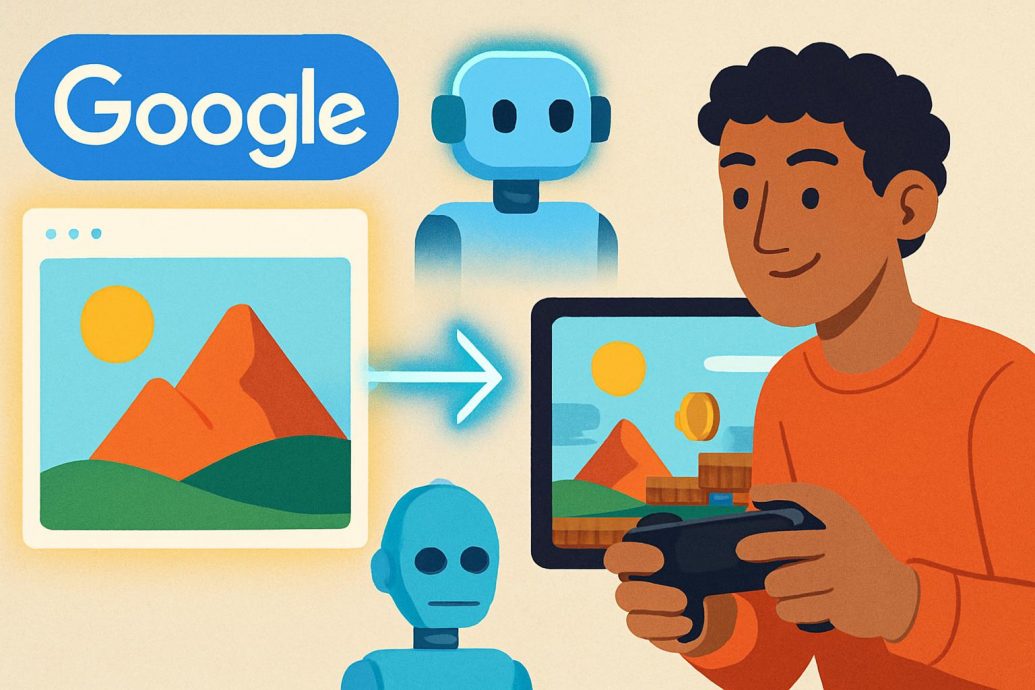
Google’s AI Transforms Images into Games, and the tech world is watching closely. Through DeepMind’s latest innovation, “Project Genie,” the search giant is reframing how games are visualized, designed, and built. With an astonishing ability to convert basic sketches or images into fully interactive game environments, this tool is more than a novelty. It signals a shift in the future of game development. For designers, developers, and hobbyists, Genie may significantly reduce production costs and timelines while igniting complex discussions about creativity, ethics, and intellectual property. This piece explores how this generative AI technology works, how it compares to other tools, and what it means for the future of interactive media.
Key Takeaways
- Google’s Project Genie uses reinforcement learning and generative modeling to turn images into playable games.
- The AI-driven tool is part of Google’s ongoing goal to enhance digital creativity using machine learning.
- Project Genie faces legal and ethical scrutiny around IP use, automation, and creative displacement.
- Compared to competitors like Meta, Unity, and Roblox, Genie sets itself apart through technical complexity and output fidelity.
What Is Project Genie and How Does It Work?
Project Genie is a generative AI tool developed by Google DeepMind that transforms 2D visuals such as sketches, photos, or image prompts into functional video games. Unlike traditional game engines that rely on manual asset input and programming logic, Genie processes a static image and rapidly builds an interactive scene that includes terrain physics, character behavior, and environment responses. This transformation takes place through reinforcement learning, transformer-based architectures, and video-to-dynamics modeling. The outputs resemble retro-style platformers and scrolling arcade-style games that are both visually cohesive and playable with no manual code input.
Genie uses a two-step architecture. First, a visual encoder ingests the image and creates spatial embeddings that identify terrain features, structures, and characters. Then it applies an action-generation module trained using thousands of hours of interaction data. This enables it to apply plausible control mechanics using learned dynamics and generate responsive environments. This pairing of vision processing and physics modeling allows Genie to simulate logical movement, object collisions, side-scrolling functionality, and character behaviors.
Groundbreaking Use Cases: From Sketch to Side-Scroller
Google has demonstrated examples where a simple pencil sketch is turned into a 2D platform game. For example, an artist might draw a floating island, a stick figure, and a few enemies. Genie interprets this layout and assigns in-game mechanics such as movement patterns and jumping physics. Seconds later, the result is a functional prototype where characters jump across platforms, dodge moving hazards, and interact with the scene.
This process removes the need for traditional development steps like animation layering or scripting. It also opens new possibilities for collaborative work. Teams in game studios or educational environments can quickly convert visual concepts into interactive experiences. Genie can be especially useful during prototyping phases. For smaller developers, Genie might serve as a low-budget tool for creating AI-powered game prototypes and minimum viable products.
Legal and Ethical Implications of AI-Generated Games
Although Genie offers accessible and high-speed game creation, there are growing concerns around legal and ethical implications. One major issue involves intellectual property rights. If users input copyrighted or branded content, the generated game could contain elements that violate existing IP laws. For example, recognizable logos or characters might be inadvertently replicated. Without oversight or filtering, this raises risks for both creators and platforms hosting such games.
Google has confirmed that Genie is still under internal testing and that content safeguards are under development. In the creative industry, some professionals worry that tools like Genie could diminish demand for human designers, especially for junior-level roles or repetitive tasks. Others believe it offers an opportunity to democratize game development, enabling people without technical skills to enter the field. This debate also exists in other areas of AI, including AI-driven digital art tools and generative music platforms. A transparent content policy and ethically sourced training data will be key to responsible deployment.
Comparison with Competing AI Game Tools
Project Genie is one of several tools using artificial intelligence to speed up game development. While others have entered the space earlier, Genie distinguishes itself with its image-to-game pipeline. Here’s how it compares:
- Roblox Creator AI: Supports asset generation and logic suggestions but still depends on user-created scripts. Its modularity is strong, but it does not produce fully playable games from static images.
- Unity Muse and Sentis: These tools assist coders with AI-enhanced scripting and collaboration features. They lack Genie’s ability to turn a simple image into a structured game environment.
- Meta’s Make-A-Scene: Focuses on generating 3D environments from text but targets cinematic uses. Unlike Genie, it does not simulate interactive controls or gameplay mechanics.
- Scenario: A newer startup that creates visual assets styled to fit a specific game. It still requires artists or developers to integrate the pieces manually using platforms like Unreal Engine or Unity.
What sets Genie apart is the fact that it builds end-to-end playable experiences from an image alone. While competitors assist with parts of the pipeline, Genie’s unique combination of vision processing and learned dynamics creates fully interactive outcomes with virtually no user code required.
Impact on Game Development Workflows
Industry professionals are analyzing how Project Genie could shift traditional workflows. Most game production cycles involve concept art, writing, modeling, animation, coding, and testing. Genie condenses several of these stages into a single pipeline. During early stages like mockups and internal demos, developers can accelerate production and skip many cable-heavy steps.
For freelancers and indie studios, Genie can eliminate the need for hiring entry-level artists or coders just for prototyping. Studios may face shifts in staffing, with meaningful impacts on early-career jobs. Experienced developers focusing on systems design or narrative crafting will remain essential, but repeated asset creation might become mostly automated. Genie could also influence the direction of AI development in gaming across both tools and playable content.
Market analysis suggests time-to-market for casual games may drop by nearly a third in the coming years. Tools like Genie unlock creative experimentation while triggering a reevaluation of traditional job roles in publishing workflows.
Challenges and Future Roadmap
Currently, Genie is tailored for 2D environments with limited complexity. It focuses on retro-style side-scrollers and does not yet support 3D gameplay, networked multiplayer, or engine-specific export tools. DeepMind has mentioned plans to expand capabilities to include 3D object modeling, physics layers, and interaction with existing engines such as Unity or Unreal through plugin APIs.
Open access poses another challenge. Unfiltered inputs may lead to generation of inappropriate or offensive content if the dataset is not properly curated. Google will need to invest in prompt filtering and safety moderation features before a broader public launch. Data governance and community safety will be critical if the tool gains widespread use.
As future versions evolve, accountability in dataset sourcing, content ownership, and creator attribution will continue to be highly visible concerns. Strategic collaboration with development studios and industry regulators will shape how publicly accessible this technology becomes. Similar efforts have emerged in tools aiming to convert images into immersive 3D worlds, and transparency will play an important role in user trust and adoption.
FAQs
How does Google’s Project Genie work?
Project Genie uses transformer models, reinforcement learning, and modeling based on large datasets of recorded game interactions. The system interprets a 2D image to generate mechanics, physics, and control logic that result in a playable game prototype.
Can AI really create playable games from images?
Yes. Current implementations focus on 2D platformer genres, but they are fully interactive. Players can move, jump, and engage with the environment just like they can in a basic traditional game.
What are the risks of using copyrighted images with AI game tools?
Including protected graphics could result in legal consequences. Some AI tools may replicate content closely enough to raise IP issues, especially if the source visuals contain well-known characters or brand features. Safe sourcing is essential to avoid misuse.
Conclusion
Google’s Project Genie represents a meaningful inflection point in interactive media. By converting static images into fully playable game environments, it compresses what was once a multi stage production pipeline into a near instant creative loop. Concept art, prototyping, mechanics testing, and early iteration can now occur within seconds rather than weeks. This acceleration does not simply improve efficiency. It changes who can participate in game creation and how ideas are explored.
At the same time, Genie forces the industry to confront deeper questions about authorship, intellectual property, and the future of creative labor. While automation may reduce friction in early production stages, it also challenges traditional roles and raises concerns about training data transparency and content ownership. As with other generative AI systems, responsible deployment will require thoughtful safeguards, clear policies, and collaboration between developers, legal experts, and regulators.
Ultimately, Project Genie signals a broader transformation in digital creativity. The boundary between imagination and execution is narrowing. Designers may soon move from sketch to simulation in a single step, reshaping workflows across gaming, education, and interactive storytelling. Whether this shift empowers a new generation of creators or disrupts existing ecosystems will depend on how carefully the technology is governed and how strategically it is integrated into the future of game development.