
Introduction
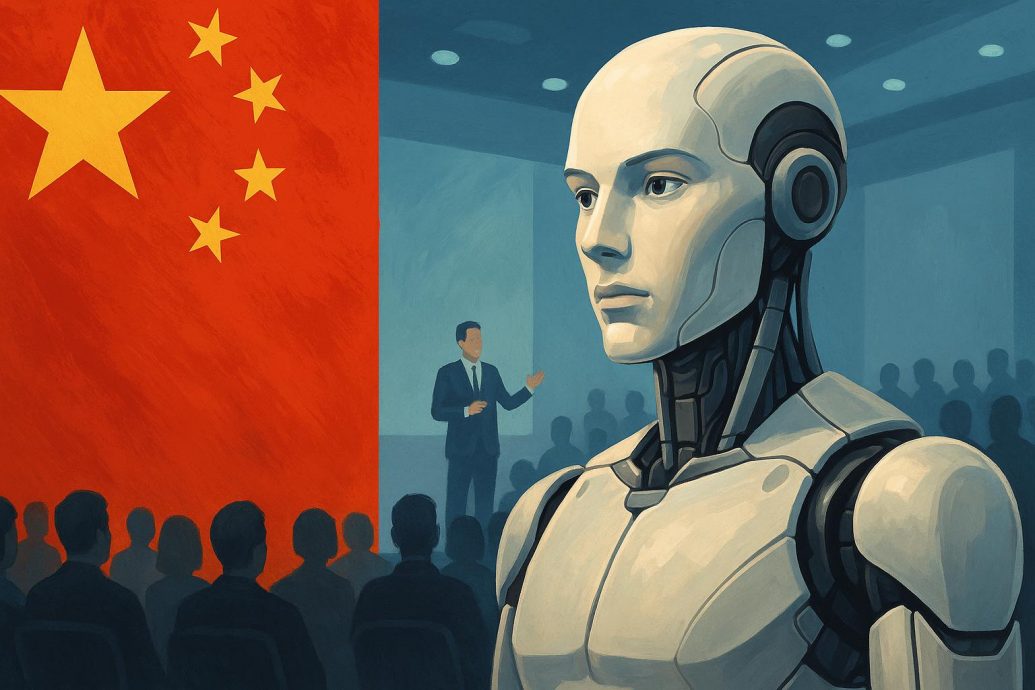
China’s Most Advanced Humanoid Robot Unveiled as Shanghai-based Fourier Intelligence introduces “MoYa,” a groundbreaking humanoid robot designed to mimic human movement with striking precision. With the global race for intelligent robotics intensifying, MoYa steps firmly into the spotlight, challenging established leaders like Tesla and Boston Dynamics. Powered by advanced biomechanics and real-time sensory feedback, this robot signals not just a technological leap but also China’s strategic expansion in the AI robotics domain. Whether it is training simulations or therapeutic interventions, MoYa is poised to redefine what humanoid machines can achieve.
Key Takeaways
- MoYa is China’s most sophisticated humanoid robot, developed by Fourier Intelligence in Shanghai.
- It features lifelike biomechanics, fluid joint motion, and expressive movement capabilities.
- The robot is designed for use in rehabilitation, research, and educational settings.
- MoYa positions China as a competitive force in the global humanoid robotics market.
Introducing MoYa: A Leap in China Humanoid Robot Innovation
MoYa was unveiled in Shanghai by Fourier Intelligence, a Chinese robotics firm known for its work in intelligent rehabilitation and exoskeleton technology. Standing 1.65 meters tall and weighing 52 kilograms, MoYa balances structural realism with versatile functionality. This operational unit has practical applications in clinical rehab and machine-learning environments, and it is not simply a concept prototype.
Designed to replicate human motion and expression accurately, MoYa includes over 40 degrees of freedom, enabling nuanced gestures, posture changes, and real-time feedback control. These features integrate with its AI-based processing system, which allows the robot to function naturally around humans.
Behind the Build: Fourier Intelligence’s Vision and Engineering
Fourier Intelligence has a well-established presence in the robotics sector. The company is recognized for its rehabilitation exoskeletons and neurorehabilitation systems. Drawing from more than a decade of biomechanical research, the team incorporated their proprietary force-feedback algorithms, sensor arrays, and AI-powered motion planning into MoYa.
Dr. Alex Gu, Chief Scientist at Fourier Intelligence, explained their philosophy: “With MoYa, we aimed to replicate not just how humans move, but why they move. That required us to build a robot that doesn’t just obey commands but interprets intent.”
MoYa’s embedded software environment is designed for scalability. It can integrate predictive machine learning models. Its CPU-GPU architecture allows local learning, which is essential for real-world deployment in environments like schools, hospitals, and laboratories.
Technical Breakdown of MoYa’s Hardware and Software Capabilities
- Motion Actuators: 27 custom high-torque actuators for accurate limb control
- Degrees of Freedom: More than 40 across its limbs, torso, and neck
- Response Time: Real-time latency under 20 milliseconds for sensor input and motor response
- Neural Systems: AI modules using reinforcement learning and behavioral modeling frameworks
- Autonomy: Multi-layered sensor fusion for mapping, navigation, and facial interaction
This configuration enables MoYa to perform activities such as guiding a patient through a therapy exercise or responding to verbal instructions in a crowded, noisy setting. The muscle-bone mimicry enables fluid, naturalistic movement, which promotes effective human-robot interaction. Concepts such as robots interacting with humans are central to MoYa’s design philosophy.
MoYa vs Atlas vs Optimus: Specification Comparison
| Feature | MoYa (China) | Optimus (Tesla) | Atlas (Boston Dynamics) |
|---|---|---|---|
| Height | 1.65 m | 1.73 m | 1.50 m |
| Weight | 52 kg | 56.7 kg | 80 kg |
| Degrees of Freedom | 40+ | 28 | 28+ |
| Motion Type | Bio-mimetic | Functional-industrial | Agile-dynamic |
| Primary Use | Rehab, education, research | Assembly line support | Mobility testing |
A Strategic Leap in China’s Robotic Ambitions
MoYa’s introduction correlates with China’s 14th Five-Year Plan. That strategy identifies AI and smart robotics as foundational to future economic expansion. While China already leads in industrial robot rollout, there is now a shift toward intelligent humanoid design and AI platform integration. Companies like Fourier Intelligence reflect this evolution.
Industry expert Liu Zhenli from Tsinghua University stated, “MoYa reflects China’s attempt to transition from industrial automation to intelligent interaction ecosystems.” This move coincides with the trend of integrating AI in robotics. It is part of a larger framework supported by the Ministry of Science and Technology. Investment into humanoid robotics in China surpassed USD $1.5 billion in 2023. That figure is expected to nearly double by 2025.
Applications Across Industrial and Social Sectors
MoYa stands out for its practical deployment potential rather than limited R&D scope or military use. Some of its core applications include:
- Rehabilitation Centers: Facilitates interactive physiotherapy with patient tracking and sensor-driven feedback
- Educational Institutions: Provides tools for STEM learning, robotics labs, and curriculum enrichment
- AI Research: Serves as a model for behavior simulation, human-machine interaction, and machine psychology studies
Developers can access MoYa’s open API. Its modular hardware architecture allows custom configuration, making it attractive for research and healthcare sectors alike. The modular design also mirrors trends seen in modern robot applications that require adaptability and ease of integration.
Global Humanoid Robotics Market Forecast (2024–2030)
| Year | Estimated Market Size (USD) | Year-over-Year Growth |
|---|---|---|
| 2024 | $2.1 Billion | — |
| 2025 | $3.2 Billion | 52% |
| 2027 | $5.8 Billion | 81% |
| 2030 | $9.6 Billion | 65% |
MoYa could give Chinese robotics companies a dominant role in this fast-growing sector. Its positioning benefits from national strategy and sector-wide research, aligning with innovation seen in tools like NVIDIA’s COSMOS AI for navigation.
FAQs
What is China’s most advanced humanoid robot?
MoYa, built by Fourier Intelligence in Shanghai, is considered China’s most advanced humanoid robot, featuring more than 40 degrees of freedom along with bio-mimetic mechanics and sensory feedback integration.
What can the MoYa robot do?
MoYa can perform actions like walking, gesturing, engaging in dialogue, assisting during physical therapy, and conducting AI learning tasks. It offers lifelike movement and emotional responsiveness under programmable controls.
What is China’s most advanced humanoid robot?
China’s most advanced humanoid robot refers to the recently unveiled flagship AI-powered bipedal machine designed for industrial, service, and research tasks. It combines cutting-edge actuators, AI perception, and motion control to mimic human movement and interaction.
Who built China’s most advanced humanoid robot?
The robot was developed by a leading Chinese robotics firm or research consortium specializing in artificial intelligence, robotics engineering, and smart automation. The team integrated advanced sensors, AI planning, and real-time control systems.
What technology powers China’s humanoid robot?
The robot combines deep learning, computer vision, natural language processing, sensor fusion, and advanced actuation to perceive environments, make decisions, and execute complex tasks. Onboard AI enables adaptive motion, object manipulation, and autonomy.
What tasks can this humanoid robot perform?
The robot is capable of navigation, object handling, simple assembly tasks, human interaction, and environment perception. It may assist in logistics, manufacturing, customer service, and research scenarios, depending on its programming and sensors.
Is this humanoid robot fully autonomous?
The level of autonomy varies by model and configuration. Most advanced humanoids use a hybrid control system, combining AI decision-making with human supervision for complex tasks, safety, and ethical oversight.
How does China’s robot compare to other humanoids?
China’s robot competes with global humanoids through improved agility, sensing, and AI integration. It may match or exceed contemporary designs in balance control, task flexibility, and real-time perception, though global benchmarks vary.
What industries could benefit from this robot?
Manufacturing, logistics, healthcare support, retail service, and research labs are primary industries. The robot’s adaptability and AI perception make it suited to tasks that are repetitive, dangerous, or require precise coordination.
When will China’s humanoid robot be available commercially?
Commercial availability depends on development cycles, safety testing, regulatory approval, and market readiness. Initial deployments are likely in research or pilot programs before broader industrial adoption.
Are there ethical concerns with humanoid robots?
Yes. Ethical concerns include job displacement, safety in human-robot interaction, data privacy, autonomy governance, and regulatory oversight. Developers and policymakers are debating guidelines to balance innovation with responsibility.
Conclusion
China’s unveiling of its most advanced humanoid robot highlights rapid progress in AI, robotics, and autonomous systems. This humanoid brings together sophisticated perception, motion control, and AI planning to perform complex tasks in real environments. While commercial deployment timelines vary, the robot signifies a broader shift toward intelligent automation in industry and society. Ethical governance, safety standards, and workforce integration will shape how such robots are adopted worldwide.