
Introduction
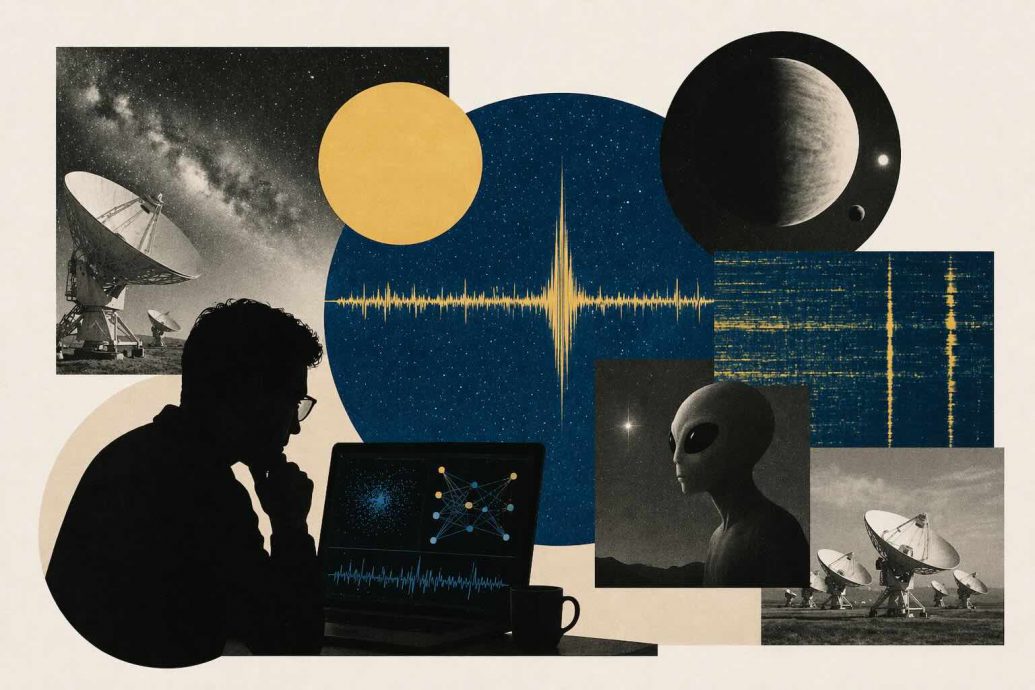
Robert Downey Jr. closes the entire series standing beneath the Green Bank Telescope, staring upward while an algorithm scans billions of radio frequencies for anomalies. The eighth and final episode of The Age of A.I. asks whether machine learning can find something humanity has searched for across centuries without success. NASA’s exoplanet archive now catalogs over 5,700 confirmed planets orbiting distant stars, with AI-assisted transit detection accelerating the pace of discovery each year. That growing catalog reshapes the probability estimates at the heart of every SETI program the documentary profiles. Producers let astronomers, data engineers, and philosophers speak with equal weight, refusing to reduce the search to either pure optimism or resigned skepticism. Viewers see real data pipelines processing raw telescope feeds, not dramatized control rooms beeping with fictional contacts across galaxies. This guide unpacks every claim, character, and technical system the episode places in front of its audience.
Featured Snippets
What is The Age of A.I. Season 1 Episode 8 about?
The Age of A.I. Season 1 Episode 8, titled How A.I. Is Searching for Aliens, profiles Breakthrough Listen, exoplanet detection, biosignature analysis, and the philosophical stakes of using machine learning to search for extraterrestrial intelligence.
How does AI help search for aliens?
AI filters billions of radio telescope signals, classifies exoplanet light curves, detects atmospheric biosignatures, and flags statistical anomalies that human analysts would miss across massive astronomical datasets generated by modern observatories.
Has AI found aliens yet according to the documentary?
No confirmed detection of extraterrestrial intelligence has occurred, but AI has dramatically expanded the volume of data scientists can process, improving the odds by searching faster and more systematically than any previous human-only effort.
Key Takeaways
- False positives remain the dominant challenge, since radio frequency interference from human technology vastly outnumbers any plausible extraterrestrial signal.
- Breakthrough Listen uses machine learning to scan radio telescope data from over a million nearby stars, processing signal volumes no human team could review manually.
- Neural networks now detect exoplanet transits in light curve data with accuracy matching expert astronomers across thousands of candidate signals.
- The episode frames the alien search as a data science problem where AI handles scale while humans handle interpretation, judgment, and meaning.
Table of contents
- Introduction
- Featured Snippets
- Key Takeaways
- Definition
- The Series Finale That Pointed Every Algorithm at the Sky
- Robert Downey Jr. Meets the Scientists Listening for Signals
- Breakthrough Listen and the Biggest Ear on the Planet
- How Machine Learning Filters Billions of Radio Signals
- Exoplanet Hunting With Neural Networks and Light Curves
- The Biosignature Question Nobody Can Answer Yet
- Why False Positives Haunt Every SETI Researcher
- Training Data From a Universe That Has Never Spoken
- The Square Kilometre Array and Next-Generation Listening
- What Happens to Humanity If the Algorithm Finds Something
- Philosophical Weight of a Detection Made by a Machine
- Real Case Studies From the Frontier of AI Astrobiology
- Anthropocentric Bias Built Into Every Signal Classifier
- The Economics of Searching for Something You May Never Find
- Should We Be Broadcasting Our Own Location Into Space
- Lessons Earthbound Industries Borrow From SETI Engineering
- Where AI-Powered Astrobiology Goes After This Decade
- Why This Finale Closes the Series Looking Upward
- Key Insights
- Real-World Examples
- Case Studies
- FAQ’s
Definition
AI-powered SETI is the application of machine learning, anomaly detection, and signal classification to astronomical data from radio telescopes, optical observatories, and space-based instruments, aiming to identify patterns consistent with extraterrestrial intelligence or biosignatures.
The Series Finale That Pointed Every Algorithm at the Sky
Episode eight opens with a long tracking shot across the Green Bank Observatory in West Virginia, where silence is legally enforced to protect radio telescope sensitivity. Robert Downey Jr. narrates over the sound of servo motors adjusting the dish, while data streams fill monitors inside the control room below. The finale deliberately shifts tone from the practical applications covered in earlier episodes toward a more contemplative register befitting its cosmic scope. Producers use wide landscape shots and extended silences to communicate the scale of the search and the patience it demands. The episode rewards viewers who have followed the entire series by connecting threads from healthcare, creativity, architecture, automation, and conservation to this final frontier.
What makes this finale distinctive is the willingness to end an entire series with an unanswered question rather than a triumphant conclusion. Producers resist manufacturing false closure, instead letting the open-endedness of the search carry the emotional weight. Robert Downey Jr. admits on camera that the experience left him more uncertain, not less, about whether contact will come within his lifetime. That vulnerability from a celebrity host gives the episode unusual credibility among viewers tired of technology documentaries promising inevitable breakthroughs. Readers familiar with the series arc can revisit the very first Age of A.I. episode to appreciate how far the narrative traveled.
Robert Downey Jr. Meets the Scientists Listening for Signals
Robert Downey Jr. arrives at the Berkeley SETI Research Center and meets the team behind Breakthrough Listen with visible curiosity and occasional bewilderment. Scientists walk him through data visualization dashboards showing millions of radio frequency candidates sorted by machine learning classifiers running continuously. He asks whether the team ever gets excited about a candidate, and a researcher describes the disciplined skepticism required to avoid premature announcements. Producers capture the dynamic between celebrity enthusiasm and scientific caution, making the tension itself a subject of the episode. That dynamic mirrors public attitudes toward SETI, where hope and doubt coexist uncomfortably across every conversation.
His most revealing question comes when he asks a senior astronomer what she would feel, not think, if a genuine signal arrived on her shift. She pauses noticeably before describing a mixture of terror, elation, and immediate procedural responsibility that would override personal emotion entirely. The moment humanizes a discipline often reduced to equations and antenna arrays in popular media coverage about alien searches. Producers let the answer breathe, declining to cut away or underlay music, and the result feels genuinely intimate for a documentary. That emotional register distinguishes the episode from standard science programming that treats researchers as exposition delivery systems.
Breakthrough Listen and the Biggest Ear on the Planet
Breakthrough Listen is the largest scientific research program dedicated to finding evidence of civilizations beyond Earth, funded initially by Yuri Milner. The initiative allocated $100 million over ten years to survey the million stars closest to Earth, the entire galactic plane, and 100 nearby galaxies. Telescope time comes from the Green Bank Telescope in West Virginia, the Parkes Telescope in Australia, and the MeerKAT array in South Africa. Data volumes are staggering, with a single observation session generating petabytes of raw frequency data that must be processed, filtered, and archived. Program details and published data releases appear on the Breakthrough Listen program page for researchers and the public.
The episode profiles the Berkeley team that manages the data pipeline, showing engineers building classification software inside a modest university office. Their work involves distinguishing between terrestrial radio frequency interference, natural astrophysical phenomena, and anything genuinely anomalous that survives multiple filtering stages. Producers capture the mundane reality of SETI as a data engineering discipline, not a cinematic listening post waiting for dramatic contact. Coffee cups, whiteboard debates, and crashed servers share screen time with sweeping telescope footage across remote observatories. Coverage of broader AI applications in astronomy appears in pieces about AI tools to explore the cosmos for context.
What Breakthrough Listen changed is not the question but the scale, transforming SETI from a niche academic pursuit into a data-intensive industrial operation. Previous searches covered tiny fractions of the radio spectrum across limited sky regions during short observation windows. Breakthrough Listen surveys orders of magnitude more targets, frequencies, and time periods than all prior SETI programs combined across decades. That expansion makes AI not merely useful but essential, since no human team could review even a small fraction of the data generated daily. The program explicitly frames machine learning as the enabling technology without which modern SETI simply cannot function at required scale.
How Machine Learning Filters Billions of Radio Signals
A transition from program overview to technical pipeline explains how algorithms actually process the radio data Breakthrough Listen collects continuously. Raw telescope output arrives as spectrograms, two-dimensional representations of frequency versus time that display signal intensity across both axes. Machine learning classifiers scan these spectrograms for patterns that deviate from known terrestrial interference and natural astrophysical sources. The challenge is extreme class imbalance, since genuine extraterrestrial signals have never been confirmed, meaning the positive class in the training set has zero verified examples. Engineers work around this by training models to reject known interference categories, flagging whatever survives as worth human review.
Convolutional neural networks excel at spectrogram classification because they detect spatial patterns regardless of exact position within the frequency-time grid. The Berkeley team published a breakthrough result in 2019 when their classifier recovered a previously missed candidate signal in archival Parkes data. That recovery demonstrated that AI can surface signals humans overlooked during initial manual inspection of the same datasets years earlier. Researchers interviewed caution that recovery does not equal detection, since the candidate was later attributed to terrestrial interference after further analysis. Readers wanting technical depth on these architectures can explore what deep learning actually is for foundational context.
The most counterintuitive aspect of SETI machine learning is training a classifier for a signal class that may not exist anywhere in the observable universe. Engineers simulate synthetic extraterrestrial signals using mathematical models of what narrowband, drifting, or modulated transmissions might look like. These synthetic injections test whether the pipeline can recover a planted signal buried inside real telescope noise and interference. The approach mirrors adversarial testing in cybersecurity, where red teams simulate attacks that may never have occurred to validate defensive systems. SETI researchers acknowledge the circularity, noting that any real signal could look nothing like their synthetic models predict.
Exoplanet Hunting With Neural Networks and Light Curves
A transition from radio SETI to exoplanet detection broadens the search beyond intentional alien transmissions toward indirect evidence of habitable worlds. The transit method detects planets when they pass in front of their host stars, causing tiny periodic dips in the star’s observed brightness. NASA’s Kepler and TESS missions generated millions of light curves, each requiring analysis for transit-shaped dips buried inside stellar noise. Machine learning classifiers, particularly convolutional and recurrent neural networks, now process these light curves faster and more consistently than manual inspection. Published results document AI-confirmed exoplanets that human analysts initially missed or deprioritized in the same datasets.
The episode profiles a researcher who used a Google Brain collaboration to train a neural network on confirmed Kepler transits, then let the model scan unreviewed candidates. The network identified new planets in multi-planet systems where overlapping signals complicated manual detection across noisy light curves. Producers show the workflow clearly, from raw photometry through preprocessing, feature extraction, classification, and human verification of machine-flagged candidates. That transparency demystifies the process for viewers unfamiliar with astrophysical data pipelines and their computational demands. Broader context on these detection architectures appears in pieces about AI’s role in scientific research across disciplines.
What makes AI-assisted exoplanet detection transformative is the shift from searching for obvious planets to recovering subtle signals hidden inside noisy, complex datasets. Early transit surveys found the largest, closest planets first because their signals stood out above stellar variability clearly. Machine learning now reaches smaller, more distant, and more Earth-like candidates that require statistical sensitivity beyond casual visual inspection. Each new confirmed planet updates the Drake Equation inputs that SETI researchers use to estimate the probability of detectable civilizations. The connection between exoplanet statistics and SETI strategy gives this technical work stakes beyond pure astronomy.
The Biosignature Question Nobody Can Answer Yet
A transition from exoplanet detection to atmospheric analysis introduces biosignatures, chemical fingerprints that might indicate biological activity on distant worlds. Spectroscopy breaks starlight passing through a planet’s atmosphere into component wavelengths, revealing absorption lines from molecules like oxygen, methane, and water vapor. Certain combinations of gases, particularly oxygen and methane coexisting out of chemical equilibrium, could suggest active biology maintaining the imbalance. Machine learning accelerates spectral analysis by comparing observed absorption patterns against vast libraries of simulated atmospheric compositions faster than manual matching. The James Webb Space Telescope now delivers atmospheric spectra for select exoplanets, making biosignature detection technically feasible for the first time in history.
Researchers interviewed caution that non-biological processes can produce similar chemical signatures, creating false positive risks that require careful disambiguation. Volcanic activity, photochemistry, and geological outgassing all generate gases that mimic biological production under certain atmospheric conditions on rocky planets. Machine learning helps by flagging ambiguous spectra for deeper investigation rather than declaring detection prematurely based on surface-level pattern matching alone. The episode treats this ambiguity honestly, noting that a confirmed biosignature announcement would require years of verification across independent teams. Coverage of related data-intensive scientific applications appears in pieces about AI and space exploration advances online.
The biosignature question illustrates a deeper epistemological challenge: AI can identify statistical anomalies but cannot determine their meaning without human scientific judgment. A spectrum consistent with life is not proof of life, and that distinction carries civilizational weight if an announcement ever reaches the public. Researchers describe rigorous verification protocols designed to prevent premature claims from spreading through media before scientific consensus forms. These protocols exist on paper but have never been tested under the pressure of a genuine candidate detection event. The episode frames this governance gap as one of the most consequential unresolved challenges facing the SETI and astrobiology community today.
Why False Positives Haunt Every SETI Researcher
A transition from biosignatures to the false positive problem explains why SETI scientists spend most of their time proving signals wrong. Earth’s electromagnetic environment is saturated with human-generated radio frequency interference from satellites, cell towers, radar, and consumer electronics constantly. A signal that looks anomalous at first glance almost always turns out to be terrestrial interference misidentified by the initial classification pipeline. The Breakthrough Listen team estimates that fewer than one in a billion candidates survives all filtering stages to reach serious human review. Producers show a wall-mounted tally of candidates that initially excited the team before being traced back to mundane earthly sources nearby.
The psychological toll of perpetual false positives is rarely discussed publicly, but the episode gives researchers space to describe the emotional cycle honestly. Hope, investigation, deflation, and recalibration repeat across months and years without any positive outcome to sustain morale. Senior researchers describe developing a productive detachment that protects against burnout while preserving the openness genuine discovery would require. Junior team members describe joining the project with cinematic expectations that quickly gave way to the sober reality of data engineering. That candor strengthens the episode and earns respect from scientifically literate viewers who value honesty over narrative drama.
Training Data From a Universe That Has Never Spoken
A transition from false positives to a deeper machine learning challenge explains why SETI represents one of the hardest classification problems in all of data science. Supervised learning requires labeled training examples, yet the positive class, a confirmed extraterrestrial signal, has never been observed in the history of science. Engineers compensate by generating synthetic positive examples using mathematical models of hypothetical transmissions and injecting them into real telescope noise. This approach validates pipeline sensitivity but cannot guarantee that a real signal will resemble the synthetic models closely enough for detection. The fundamental uncertainty is irreducible, since any genuinely alien transmission could use physics, encoding, or modalities that humans have never imagined.
Unsupervised and semi-supervised methods offer partial workarounds by flagging statistical outliers without requiring positive training labels at all. Anomaly detection algorithms identify signals that deviate from the learned distribution of known interference and astrophysical sources across large datasets. Anything that the model cannot explain becomes a candidate for further investigation, shifting the paradigm from recognition to surprise. This approach aligns with broader trends in the role of AI in big data processing across scientific and commercial domains. Producers explain the distinction between recognition and anomaly detection clearly, helping non-technical viewers understand why SETI pushes machine learning into genuinely novel territory.
The deepest challenge is that SETI asks AI to find something it cannot define, which inverts the standard machine learning workflow where the target class is known. Most commercial AI applications classify objects, texts, or sounds into categories with abundant labeled examples readily available for training. SETI operates in a regime where the target category is purely theoretical, making every architectural and training choice a bet on an unknown outcome. Researchers describe this as searching for a needle in a haystack without knowing whether the needle exists or what it looks like. That philosophical framing elevates the episode beyond standard technology documentary fare into territory that stays with viewers long afterward.
The Square Kilometre Array and Next-Generation Listening
A transition from current pipelines to future infrastructure introduces the Square Kilometre Array, a next-generation radio telescope under construction in Australia and South Africa. The SKA will generate data at rates exceeding current global internet traffic, creating processing demands that only machine learning can plausibly address at scale. Its sensitivity will surpass all existing radio telescopes combined, enabling detection of weaker signals across larger volumes of the galaxy. Construction updates and scientific planning appear on the SKA Observatory official page for readers tracking progress and timelines. Producers describe the SKA as the instrument that will either find something or conclusively narrow the search space for future generations.
The SKA represents a generational bet that the universe contains signals worth detecting and that humanity can build algorithms sophisticated enough to recognize them. Funding comes from an international consortium of governments, reflecting a rare consensus that the scientific question justifies billions in public investment. The telescope’s data challenges will force advances in distributed computing, real-time classification, and data compression that benefit industries far beyond astronomy. Some engineers interviewed describe the SKA as a forcing function for AI innovation comparable to particle physics accelerators in previous decades. The episode treats the project with measured optimism, acknowledging both its transformative potential and its vulnerability to budget overruns and political changes.
What Happens to Humanity If the Algorithm Finds Something
A transition from infrastructure to existential stakes introduces the question that makes SETI unlike any other data science application in human history. A confirmed detection of extraterrestrial intelligence would reshape science, religion, philosophy, geopolitics, and humanity’s self-understanding in ways nobody can fully predict. The International Academy of Astronautics maintains post-detection protocols that describe verification, notification, and disclosure procedures outlined on the IAA SETI protocols page for reference. These protocols have never been tested under real conditions and rely on voluntary compliance by the detecting institution and its national government. Producers interview a political scientist who describes the protocol as aspirational rather than enforceable in a world of instant media leaks.
Religious leaders featured discuss how detection would interact with theological frameworks across Christianity, Islam, Hinduism, and Buddhism in genuinely diverse ways. Some traditions accommodate extraterrestrial life comfortably within existing cosmologies, while others would face significant doctrinal reinterpretation pressures. The episode avoids reducing this dimension to conflict, instead presenting a spectrum of thoughtful responses from theologians who have considered the question seriously. Producers capture a rabbi and an imam separately describing how their traditions view creation as expansive rather than anthropocentrically limited. These conversations give the episode rare interfaith depth that most science documentaries never attempt.
The most unsettling possibility the episode raises is that AI detects a signal, confirms its non-natural origin, and humanity still cannot decode or respond meaningfully. Detection without communication would leave civilization knowing it is not alone but unable to bridge the gap across interstellar distances and timescales. Psychologists interviewed describe how confirmed but uncommunicative contact might produce collective anxiety rather than the celebratory unity popular culture typically imagines. Historical analogies to unreciprocated discovery, like ancient civilizations encountering technological artifacts from unknown sources, suggest reactions often include fear alongside wonder. The episode refuses to prescribe a single emotional register, instead letting viewers sit with the ambiguity.
Governance would face immediate pressure, since no existing international body has clear jurisdiction over extraterrestrial contact response and communication decisions. The United Nations Office for Outer Space Affairs addresses satellite coordination and debris but has no mandate for first contact diplomacy or response. National governments might compete to respond, weaponize, or suppress detection information depending on domestic political dynamics at the moment of discovery. Producers interview a space law scholar who describes the legal vacuum as one of the most consequential unaddressed governance gaps in contemporary international affairs. That gap mirrors the regulatory voids explored across earlier episodes on automation, ethics, and environmental AI.
Philosophical Weight of a Detection Made by a Machine
A transition from geopolitics to philosophy asks whether a machine-mediated discovery of alien intelligence carries the same weight as direct human observation. If an algorithm flags a signal that humans cannot independently verify without trusting the classifier’s judgment, detection becomes a question of epistemic authority. Scientists interviewed argue that all modern astronomy is machine-mediated, since no human eye directly observes exoplanets, gravitational waves, or distant galaxy spectra. The distinction between AI detection and traditional instrument detection may therefore be philosophical rather than practical in any meaningful operational sense. Producers capture a debate between a philosopher of science and an astronomer that remains unresolved by the end of the episode.
Public trust in a machine-detected signal would depend heavily on the transparency of the classification pipeline and the reproducibility of the result. If independent teams using different algorithms on independent data confirm the same anomaly, confidence would build regardless of whether a human ever directly perceived the signal. The episode draws parallels to gravitational wave detection, where LIGO’s confirmation relied entirely on sophisticated signal processing that no human ear or eye could replicate unaided. That precedent suggests society has already accepted machine-mediated discovery in physics, even if the SETI case carries uniquely charged emotional stakes. Broader exploration of AI’s expanding scientific role appears in pieces about AI’s role in scientific research across disciplines.
The episode argues that the philosophical discomfort with machine detection may reveal more about human anxiety than about any genuine epistemological limitation. Researchers point out that instruments have always extended human perception beyond biological limits, from Galileo’s telescope to modern particle detectors. AI simply extends that chain further, processing patterns at scales and speeds that biological cognition cannot match without computational assistance. The real question is not whether machines can detect aliens but whether humans can build machines trustworthy enough to believe when they report something unprecedented. That reframing shifts the philosophical burden from AI capability to human judgment about institutional trust and verification standards.
Real Case Studies From the Frontier of AI Astrobiology
A transition from philosophy to documented case studies grounds the episode in verified scientific results rather than speculative claims. The BLC1 candidate signal detected by Breakthrough Listen at the Parkes Telescope in 2020 initially appeared consistent with a narrowband transmission from the direction of Proxima Centauri. Machine learning classifiers flagged the signal during routine pipeline processing, and months of follow-up analysis ensued before any public disclosure occurred. The team ultimately attributed BLC1 to an intermodulation product of terrestrial interference, but the event tested detection protocols under near-real conditions for the first time. Published analysis and methodology appear on the Breakthrough Listen BLC1 research page for reference. The case demonstrated both the sensitivity of modern AI pipelines and the rigorous skepticism required before any claim reaches the public.
Google Brain collaborated with the Kepler team to train a convolutional neural network that confirmed two new exoplanets in previously reviewed Kepler data during 2017. The network, modeled on image classification architectures, identified transit signals in light curves that earlier manual and algorithmic searches had missed. Published results appear in the Astronomical Journal publication for Kepler ML discovery for technical readers. Limitations include the narrow applicability to Kepler-format photometry and the need for human vetting of every machine-flagged candidate before confirmation. The discovery validated transfer learning from commercial image recognition into astrophysics, opening a pathway for future missions.
The SETI Institute’s Allen Telescope Array has operated since 2007, conducting targeted searches of nearby star systems using increasingly sophisticated signal processing software. Early detection pipelines relied on matched filtering, while more recent versions incorporate machine learning classifiers trained on the array’s own interference environment. Measurable impact includes millions of stars surveyed, published non-detection results that constrain the prevalence of powerful transmitters, and open-source software shared with the global community. Limitations include the array’s modest sensitivity compared to larger instruments and persistent funding challenges that have interrupted operations multiple times. Program documentation appears on the SETI Institute Allen Telescope Array page for readers tracking active search efforts.
Looking across these cases, the pattern is consistent: AI dramatically expands search volume and sensitivity but has not yet produced a confirmed detection of extraterrestrial intelligence. Each false positive or null result tightens constraints on the parameter space where detectable civilizations might exist, gradually sharpening the question itself. Researchers frame this as productive even in the absence of discovery, since ruling out possibilities is a form of scientific progress. The episode treats null results with the same respect it gives positive findings in earlier installments on conservation and healthcare AI. That editorial consistency strengthens the series finale and reinforces the documentary’s commitment to honest science communication throughout.
Anthropocentric Bias Built Into Every Signal Classifier
A transition from case studies to bias analysis surfaces one of the episode’s most intellectually challenging threads for viewers. Every SETI classifier assumes that extraterrestrial signals will exhibit properties recognizable to human-designed instruments and human-conceived models of communication. Radio frequencies, narrowband emissions, and mathematical patterns all reflect human technology and human assumptions about what intelligence looks like. An alien civilization using entirely different physics, encoding, or communication modalities would produce signals that current classifiers might dismiss as noise or interference. Researchers interviewed describe this as the streetlight effect, searching where the instruments shine rather than where the signal might actually be.
The episode argues that AI cannot solve anthropocentric bias because the bias is embedded in the training data, the instrument design, and the problem framing itself. Expanding the search to optical, infrared, gravitational wave, and neutrino channels helps but still reflects human physics and human assumptions about detectable signatures. Some researchers advocate for maximally agnostic anomaly detection that flags anything unexplained, regardless of whether it matches preconceived signal models. This approach generates enormous false positive volumes, creating a tradeoff between sensitivity and manageability that the field actively debates. Coverage of pattern recognition challenges appears in pieces about introduction to computer vision for readers interested in analogous detection problems.
The Economics of Searching for Something You May Never Find
A transition from bias to funding realities introduces the persistent economic challenge that constrains every SETI program currently operating worldwide. Breakthrough Listen’s $100 million endowment is the largest single investment in SETI history, yet it covers only a decade of operations across three telescopes. Government funding for SETI remains minimal in most countries, with NASA effectively defunding dedicated SETI research after a congressional backlash in the early 1990s. Private philanthropy, university partnerships, and crowd-sourced computing projects like SETI@home have sustained the field through lean decades. Producers interview a program director who describes writing grant proposals that must justify spending public money on a search with no guaranteed deliverable.
The economics force uncomfortable tradeoffs, since every dollar spent on SETI competes with funding for healthcare, climate, poverty, and other demonstrably urgent research priorities. Defenders argue that SETI’s potential payoff, confirming humanity is not alone, justifies investment even at extremely low probability of success per dollar. Critics counter that opportunity cost matters and that speculative research should not displace programs with measurable near-term human benefit. The episode presents both perspectives fairly, letting viewers weigh the argument without prescribing a verdict on spending priorities. Broader context on how AI research funding works across fields appears in top supercomputers powering AI research today.
Earned revenue models remain largely unavailable to SETI, since the search produces no commercial product unless contact actually occurs someday. Some programs generate ancillary revenue through public outreach, educational licensing, and technology transfer to commercial signal processing and interference mitigation markets. Others sustain themselves through university overhead support, where SETI researchers carry teaching loads that subsidize their observation time indirectly. The documentary frames this financial fragility as a structural vulnerability that could cause entire programs to collapse between funding cycles. Producers note that several significant SETI efforts have already paused or ended due to budget shortfalls rather than scientific failure.
Should We Be Broadcasting Our Own Location Into Space
A transition from economics to active messaging introduces the controversial question of whether humanity should transmit signals toward promising star systems deliberately. Active SETI, also called METI (Messaging Extraterrestrial Intelligence), reverses the passive listening approach by intentionally broadcasting Earth’s presence outward. Proponents argue that reciprocity demands we send as well as listen, particularly toward nearby stars where response times could fall within human lifespans. Critics, including Stephen Hawking before his death, warned that attracting attention from a more advanced civilization could endanger Earth entirely. The debate remains unresolved, with no international body authorized to regulate or prohibit intentional transmissions from Earth.
Some researchers describe active messaging as reckless, comparing it to shouting in a forest without knowing what predators might be listening nearby. Others dismiss the concern, noting that Earth’s television, radar, and military transmissions have been leaking into space for roughly a century already. The distinction between intentional messaging and passive leakage is technically significant, since directed transmissions carry far more power per unit solid angle. Producers interview scientists on both sides, capturing genuinely heated disagreement rarely visible in polished academic settings or edited publications. Governance of active SETI touches the same sovereignty, coordination, and consent challenges explored in the Mars architects episode earlier.
The episode frames the messaging debate as a microcosm of broader questions about who speaks for humanity and what authority governs species-level decisions. No elected body, no treaty, and no algorithm can legitimately claim to represent all of humanity in a message to an unknown recipient. Individual researchers, private organizations, and national agencies have all transmitted messages without broad consultation or consent. Some ethicists argue that active messaging requires democratic deliberation at a scale never previously attempted in human governance. The documentary leaves this strand intentionally unresolved, reinforcing the series-long theme that technology advances faster than the governance structures needed to manage its consequences responsibly.
Lessons Earthbound Industries Borrow From SETI Engineering
A transition from cosmic questions to terrestrial applications shows how SETI engineering innovations transfer into commercial and scientific domains on Earth. Signal processing algorithms developed for radio telescope interference mitigation now improve cellular network performance and satellite communication reliability. Anomaly detection frameworks originally designed for SETI pipelines are adapted for cybersecurity intrusion detection, financial fraud analysis, and sensor monitoring. Distributed computing architectures pioneered by SETI@home influenced volunteer computing projects across protein folding, climate modeling, and pandemic genomics. These transfers demonstrate that fundamental research produces instrumental value even when its primary question remains unanswered.
The most consequential transfer may be the SETI community’s hard-won expertise in processing extreme data volumes under severe class imbalance conditions. Commercial AI teams increasingly consult SETI researchers who have spent decades building classifiers for rare event detection with zero confirmed positive examples. That expertise applies directly to safety-critical systems like autonomous vehicle edge case detection and medical diagnostic screening programs. Coverage of related big data challenges appears in pieces about earlier algorithms saving the world in conservation and climate. SETI’s intellectual exports may ultimately justify the field’s existence independently of whether contact ever occurs.
Where AI-Powered Astrobiology Goes After This Decade
A transition from terrestrial spillovers to near-term futures maps where the search is heading as new instruments, expanded compute, and multi-messenger astronomy converge. The James Webb Space Telescope now delivers atmospheric spectra for nearby exoplanets, enabling the first serious machine learning searches for biosignatures in real spectroscopic data. The Square Kilometre Array, expected to reach full operations later this decade, will generate data volumes requiring entirely new AI architectures for real-time classification. The European Extremely Large Telescope and the Vera Rubin Observatory will add optical and survey capabilities that complement radio and infrared searches across wavelengths. Together these instruments create a multi-messenger search infrastructure unprecedented in the history of astronomy.
Foundation models trained on heterogeneous astronomical datasets could enable cross-instrument anomaly detection, flagging objects or events that defy classification across wavelengths simultaneously. Some researchers prototype these models now, combining radio, optical, infrared, and X-ray data into unified representations that machine learning can search holistically. The approach mirrors foundation model strategies in AI and space exploration advances across planetary science and astrophysics. Producers caution that foundation models for astronomy remain early-stage and face validation challenges that commercial language models do not encounter. Astronomical claims carry uniquely high verification standards, since false positives in this domain could trigger civilizational-scale consequences.
The next decade will likely determine whether the Fermi Paradox tightens, loosens, or dissolves entirely as instruments push sensitivity thresholds past critical limits. If the expanded search still produces null results, constraints on the prevalence of detectable civilizations will narrow dramatically, reshaping the Drake Equation’s open parameters. If a credible candidate emerges, verification protocols, governance frameworks, and public communication strategies will face their first real-world test under global media pressure. Either outcome reshapes humanity’s understanding of its place in the cosmos, making this decade arguably the most consequential in the history of SETI research. The documentary closes the series by framing this decade as the moment when the question becomes answerable, even if the answer is silence.
Why This Finale Closes the Series Looking Upward
A transition from futures to cultural reflection closes the entire series by explaining why the producers chose the alien search as the final episode. The arc from healthcare to creativity to architecture to automation to conservation to SETI traces a path from intimate human concerns to the most expansive question imaginable. Each episode demonstrated AI’s power and limits within a specific domain, and the finale extends that pattern to a domain where the limits may be absolute. Producers describe wanting the series to end with humility rather than triumph, which the open-ended alien search delivers naturally. Comment sections and social media discussions consistently cite episode eight as the installment that left the deepest emotional impression.
The lasting contribution of this finale may be reframing the search for extraterrestrial intelligence as a data science challenge that belongs to everyone, not just astronomers. Robert Downey Jr.’s closing narration invites viewers to see themselves as participants in a search that transcends any single discipline or institution. That invitation echoes the series-long argument that AI amplifies human capability without replacing human judgment, curiosity, or meaning. If the show inspires even a modest fraction of its audience to engage with SETI, astronomy, or data science, the cultural pipeline strengthens. The series therefore ends not with an answer but with the most honest possible question: are we alone, and can our algorithms help us find out?
Key Insights
- The James Webb Space Telescope now delivers atmospheric spectra enabling the first machine learning biosignature searches per the NASA JWST mission page.
- Breakthrough Listen allocated $100 million over ten years to survey the million closest stars, the galactic plane, and 100 nearby galaxies per the Breakthrough Listen program page.
- NASA’s exoplanet archive now catalogs over 5,700 confirmed planets, with AI-assisted transit detection accelerating discovery rates per the NASA Exoplanet Archive.
- A Google Brain neural network confirmed two new Kepler exoplanets in 2017, validating transfer learning from image recognition into astrophysics per the Astronomical Journal publication.
- The BLC1 candidate signal from Proxima Centauri tested Breakthrough Listen’s detection protocols under near-real conditions before being attributed to interference per the Breakthrough Listen BLC1 analysis.
- The Square Kilometre Array will generate data exceeding current global internet traffic, requiring new AI architectures per the SKA Observatory official page.
- The SETI Institute’s Allen Telescope Array has surveyed millions of stars and published constraining non-detection results per the SETI Institute ATA page.
- The International Academy of Astronautics maintains voluntary post-detection protocols that have never been tested per the IAA SETI protocols page.
Episode eight closes The Age of A.I. by extending the series thesis to its most expansive possible application, asking whether AI can answer humanity’s oldest question. The search for extraterrestrial intelligence represents a unique machine learning challenge where the positive class has never been observed and may not exist. AI enables SETI at scales impossible for human analysts, but cannot eliminate the fundamental uncertainties that define the field. False positives, anthropocentric bias, funding fragility, and governance gaps constrain what even the most powerful algorithms can deliver without institutional support. The episode’s refusal to manufacture false closure mirrors the scientific discipline it profiles, earning credibility through honesty rather than spectacle. Cultural works like this finale accelerate public engagement with SETI, which indirectly sustains funding, talent pipelines, and policy attention.
| Dimension | Traditional SETI | AI-Augmented SETI |
|---|---|---|
| Transparency | Published observation logs, peer-reviewed non-detections, open sky survey data | Algorithmic classification pipelines, model architectures published but training details vary |
| Participation | Professional astronomers, university teams, volunteer computing contributors | Data scientists, ML engineers, cloud platform providers, citizen science contributors |
| Trust | Built through decades of published null results, institutional reputation, peer review | Built through pipeline reproducibility, synthetic signal recovery tests, open-source code |
| Decision Making | Expert consensus, manual signal review, committee-based verification processes | Algorithmic filtering, automated candidate ranking, human review of machine-flagged signals |
| Misinformation | Sensationalized media coverage of ambiguous signals, UFO conflation | False positive amplification, premature social media leaks, algorithm confidence misread as certainty |
| Service Delivery | Limited sky coverage, narrow frequency bands, short observation windows | Expanded coverage, broader frequency scanning, continuous monitoring across multiple telescopes |
| Accountability | Academic institutions, IAA protocols, national space agencies, peer community | Platform providers, philanthropic funders, voluntary protocols, no binding international authority |
Real-World Examples
The BLC1 candidate signal was detected by Breakthrough Listen at the Parkes Telescope in 2020, flagged by machine learning classifiers as a narrowband emission from the direction of Proxima Centauri. Months of follow-up analysis across independent teams ultimately attributed the signal to intermodulation of terrestrial radio frequency interference sources. The event tested detection, verification, and disclosure protocols under near-real conditions for the first time in modern SETI history. Limitations include the retrospective nature of the interference identification and the months-long delay between detection and public disclosure during analysis. Published analysis and findings appear on the Breakthrough Listen BLC1 research page.
Google Brain’s neural network collaboration with the Kepler team confirmed two new exoplanets in the Kepler-90 and Kepler-80 systems during 2017. The convolutional network identified transit signals in light curves that previous manual and automated searches had missed in the same archival dataset. The discovery validated commercial deep learning architectures for astrophysical pattern recognition and opened pathways for TESS and future mission data. Limitations include narrow applicability to Kepler-format photometry and the necessity of human vetting before any AI-flagged candidate reaches confirmed status. The peer-reviewed publication appears in the Astronomical Journal.
The SETI Institute’s Allen Telescope Array has operated since 2007, conducting targeted observations of nearby star systems with evolving signal processing pipelines incorporating machine learning. The array surveyed millions of stars and published constraining upper limits on the prevalence of powerful narrowband transmitters in the solar neighborhood. Limitations include the array’s modest collecting area compared to larger instruments, intermittent funding disruptions, and reliance on narrowband search strategies. Operational details and published survey results appear on the SETI Institute Allen Telescope Array page. The project demonstrates sustained institutional commitment despite decades of null results and uncertain long-term funding.
Case Studies
Case Study 1 — Breakthrough Listen AI Pipeline at Green Bank (2016–present)
The SETI community lacked a survey capable of scanning millions of stars across broad frequency ranges with modern computational resources. Breakthrough Listen deployed machine learning classifiers against Green Bank Telescope data, processing petabytes of spectrograms to flag candidate signals automatically. Measurable impact includes the largest systematic radio SETI survey in history, multiple published data releases, and open-source pipeline code shared with the research community. Limitations include persistent false positive rates driven by terrestrial interference, dependency on philanthropic funding, and the fundamental absence of confirmed positive training examples. Program details and data access appear on the Breakthrough Listen program page. The project established machine learning as the enabling technology for modern SETI at industrialized scale.
Case Study 2 — Google Brain Kepler Exoplanet Discovery (2017)
Kepler mission data contained thousands of unreviewed candidate signals that manual analysis had not reached due to volume and complexity constraints. Google Brain trained a convolutional neural network on confirmed Kepler transits, then applied the model to previously unexamined light curves across the full mission archive. Measurable impact includes two confirmed new planets in multi-planet systems, published methodology, and demonstrated transfer learning from commercial image recognition into astrophysics. Limitations include the narrow photometric format, computational cost of training, and the requirement for expert human verification of every machine-flagged candidate. The peer-reviewed paper appears in the Astronomical Journal. The case validated deep learning as a productive tool for exoplanet science, influencing pipeline design for subsequent missions.
Case Study 3 — BLC1 Candidate Signal Verification (2020–2021)
Breakthrough Listen’s pipeline flagged a narrowband signal at 982 MHz from the direction of Proxima Centauri during routine Parkes Telescope observations. The signal exhibited properties consistent with a non-terrestrial origin, triggering months of confidential verification analysis across multiple independent research groups worldwide. Measurable impact includes the most thorough test of modern SETI detection and verification protocols under near-real conditions to date. Limitations include the ultimate attribution to terrestrial interference, the months-long analysis delay, and the difficulty of fully replicating conditions under which the signal first appeared. Published findings appear on the Breakthrough Listen BLC1 analysis page. The case demonstrates that modern AI pipelines can surface plausible candidates while also illustrating the immense verification burden any future detection will carry.
FAQ’s
The eighth and final episode, titled How A.I. Is Searching for Aliens, profiles Breakthrough Listen, exoplanet transit detection, biosignature analysis, and the philosophical stakes of using AI to search for extraterrestrial intelligence. Robert Downey Jr. visits the Green Bank Telescope and meets the Berkeley SETI team. The episode closes the series by framing the alien search as the ultimate test of algorithmic capability.
Machine learning classifies radio telescope spectrograms, flags anomalous signals, detects exoplanet transits in light curves, and analyzes atmospheric spectra for biosignature molecules. AI processes data volumes that no human team could review manually across modern observatory outputs. The technology enables SETI to operate at industrialized scale for the first time in the field’s history.
Breakthrough Listen is a $100 million program surveying the million closest stars, the galactic plane, and 100 nearby galaxies for signals of intelligent origin. Machine learning classifiers process petabytes of radio frequency data from Green Bank, Parkes, and MeerKAT telescopes automatically. The program publishes open data and open-source pipeline code for the global research community to use.
No AI system has confirmed the detection of extraterrestrial intelligence as of the documentary’s production or since. The BLC1 candidate signal from Proxima Centauri was ultimately attributed to terrestrial interference after months of analysis. Every candidate signal flagged by machine learning has been resolved as interference or natural astrophysical phenomena.
Neural networks analyze light curves from missions like Kepler and TESS, identifying periodic brightness dips caused by planets transiting their host stars. Convolutional architectures excel at detecting subtle transit shapes buried inside noisy stellar variability across thousands of candidate signals. AI has confirmed planets that human analysts initially missed in the same archived datasets.
Biosignatures are chemical fingerprints in a planet’s atmosphere that could indicate biological activity, such as oxygen and methane coexisting out of equilibrium. Machine learning compares observed spectral absorption patterns against libraries of simulated atmospheric compositions faster than manual analysis. Detection remains ambiguous because non-biological processes can produce similar chemical signatures under certain conditions.
Earth’s electromagnetic environment produces billions of radio signals from satellites, cell towers, radar, and electronics that contaminate telescope data. Fewer than one in a billion candidates survives all filtering stages to reach serious human review. The perpetual false positive rate demands extreme skepticism and multi-stage verification before any claim can advance.
SETI asks AI to classify a signal type that has never been observed, meaning the positive training class has zero confirmed examples. Engineers compensate with synthetic signal injection and anomaly detection, but cannot guarantee real signals will resemble their models. This extreme class imbalance makes SETI uniquely difficult among all machine learning applications.
The SKA is a next-generation radio telescope under construction in Australia and South Africa that will surpass all existing instruments in sensitivity. Its data rates will exceed current global internet traffic, requiring entirely new AI classification architectures. The telescope could detect weaker signals across larger galactic volumes than any previous search has covered.
The International Academy of Astronautics maintains voluntary post-detection protocols covering verification, notification, and public disclosure procedures. A confirmed detection would reshape science, religion, philosophy, and geopolitics in ways no one can fully predict. Governance gaps mean no binding international authority controls response or communication decisions.
Active SETI or METI involves intentionally transmitting signals toward promising star systems, which critics warn could attract unwanted attention from advanced civilizations. Proponents note Earth already leaks electromagnetic signals from television, radar, and military transmissions into space. No international body currently regulates or prohibits intentional transmissions, leaving the decision to individual researchers and organizations.
Signal processing algorithms from SETI improve cellular networks, satellite communications, and cybersecurity intrusion detection on Earth. Anomaly detection frameworks designed for rare event classification transfer to medical diagnostics and autonomous vehicle edge case detection. Distributed computing architectures pioneered by SETI@home influenced volunteer computing projects across multiple scientific fields.
The series originally streamed free on YouTube Originals and remains accessible through the official channel archive online. Episode eight serves as the series finale, connecting themes from healthcare, creativity, automation, conservation, and space across all eight installments. Viewers can revisit earlier episodes to appreciate the narrative arc that culminates in this cosmic question.