
Introduction
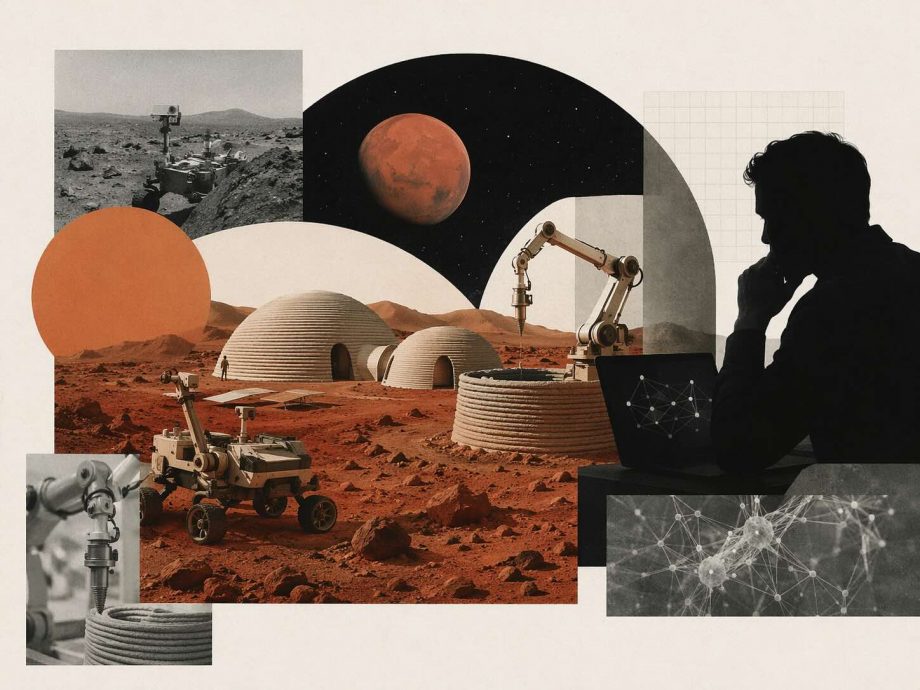
Robert Downey Jr. walks into a Brooklyn warehouse and meets a team quietly rehearsing the future of extraterrestrial homes. The fifth episode of the YouTube Originals docuseries follows AI SpaceFactory as it 3D prints a vertical habitat using algorithms. NASA says longer crewed missions to Mars could require surface stays stretching beyond 500 days, based on published planning data. That single logistics fact reframes every design decision shown on screen in this documentary. The filmmakers let engineers, architects, and skeptics speak without narration overload or glossy sci-fi framing. Viewers see real-time robotic extrusion, not renderings, and that authenticity gave the episode staying power online. This guide unpacks every major claim, character, and technical beat the camera captures inside the print cell.
Featured Snippets
What is the Age of A.I. Season 1 Episode 5 about?
The Age of A.I. Season 1 Episode 5, titled The Space Architects of Mars, profiles AI SpaceFactory’s algorithm-guided 3D-printed Martian habitat prototype called MARSHA and its Earth-based counterpart TERA.
Who designed the Mars habitat featured in the episode?
AI SpaceFactory, a New York studio led by David Malott and Jeffrey Montes, designed MARSHA using generative design software and a biopolymer basalt printed by a robotic arm on site.
Why does the Mars habitat have a vertical shape?
The vertical cylinder minimizes the MARSHA footprint, reduces thermal stress across walls, improves printing efficiency, and distributes internal pressure better than traditional domes during simulated Martian conditions.
Key Takeaways
- AI SpaceFactory uses generative algorithms to iterate thousands of habitat shapes before selecting a vertical cylinder optimized for Mars atmospheric pressure.
- The MARSHA prototype is printed in biopolymer basalt, a recyclable composite derived from plant starches and Martian-like volcanic rock.
- The documentary reframes off-world architecture as a practical R&D pipeline rather than a speculative art form for distant futures.
- Lessons learned on Mars directly inform the TERA cabin on Earth and broader debates on sustainable, low-carbon construction.
Table of contents
- Introduction
- Featured Snippets
- Key Takeaways
- Definition
- Inside the Red Planet Documentary Moment Everyone Missed
- Meet the Studio Behind MARSHA’s Vertical Vision
- When Algorithms Start Drawing Floor Plans
- The Biopolymer Breakthrough Changing Martian Construction
- A Robotic Arm, A Printer, A New Kind of Home
- How Generative Design Reshapes Every Wall and Window
- The NASA Challenge That Put AI SpaceFactory on the Map
- Engineering Against Radiation, Dust, and the Unknown
- Translating Mars Tech Into TERA’s Earthly Retreat
- Case Glimpses From the Frontier of Off-World Design
- Days Inside a Printed Pod: A Resident’s Diary
- The Ethics of Colonizing Another Planet
- When Humans and Machines Co-Author Architecture
- Cost Models, Logistics, and Supply Chains Beyond Earth
- What Could Go Wrong in Autonomous Construction
- The Next Horizon After the Red Planet Habitat Race
- Cultural Ripples From a Documentary Few Expected
- Key Insights
- Real-World Examples
- Case Studies
- FAQs
Definition
Space architecture is the practice of designing pressurized, life-supporting built environments for use beyond Earth, combining aerospace engineering, generative AI, and materials science to sustain human crews on the Moon, Mars, or orbital outposts.
Inside the Red Planet Documentary Moment Everyone Missed
The episode opens with Robert Downey Jr. narrating over test footage of a robotic arm printing in silence. Casual viewers assumed the scene was animation, yet every frame captured a real working print cell in New York. AI SpaceFactory staged the shoot during an active MARSHA test, refusing to pause hardware for cinematic convenience. That authenticity signals the show’s broader commitment to documenting actual engineering, not rehearsed spectacle for streaming audiences. The episode rewards patient viewers who notice small details like print head recalibration and dust accumulation.
What makes this installment distinctive is the refusal to treat Mars as a marketing backdrop for speculative technology. Robert Downey Jr. keeps asking why, and the engineers answer with math rather than slogans. Producers balance wide documentary shots with tight inserts on code, software dashboards, and printed layers. This cinematographic discipline anchors the series within the broader exploration of AI and architecture that the web continues to trace today. Viewers leave with a sense that Mars engineering is already underway in unremarkable warehouses.
Meet the Studio Behind MARSHA’s Vertical Vision
AI SpaceFactory is a small New York firm founded by architect David Malott, known for tall building design and computational geometry. The studio shifted from conventional skyscraper consulting to focus on autonomous, printable structures for hostile environments beyond Earth. Jeffrey Montes, the lead designer featured, brings a background in parametric modeling, biomimicry, and space systems integration. The team stays deliberately lean, favoring tight feedback loops between architects, material scientists, roboticists, and software developers. Most employees wear multiple hats, which the episode captures during a tense overnight calibration sequence in Brooklyn.
Their studio space resembles a hybrid of a wet lab, a machine shop, and an architecture office without neat separation. Print heads, resin barrels, and parametric sketches share tables with coffee cups and stress test reports printed at scale. That physical intimacy between digital design and tactile material shapes the firm’s creative culture more than any mission statement. The team credits this compression of disciplines for their unusual speed across iterative design cycles. It also echoes how robots in space programs increasingly blur engineering specialties.
Funding comes from competition prizes, private commissions, and selective partnerships with aerospace firms rather than venture capital at scale. The founders openly resist the pressure to grow for growth’s sake, preferring mission-aligned projects and slower scaling. This financial discipline protects their ability to decline work that conflicts with their off-world research priorities. It also gives them leverage when negotiating with larger defense and space contractors interested in acquiring the printing IP. The episode hints that several national space agencies quietly observe every MARSHA iteration the studio tests.
When Algorithms Start Drawing Floor Plans
Generative design begins with constraints rather than sketches, which flips the traditional architectural workflow on its head. Engineers feed the software crew size, radiation exposure limits, airlock placements, and acceptable internal pressure gradients. The algorithm returns thousands of plausible shapes, ranking them by structural efficiency, material use, and printability on robotic arms. Architects still prune, adjust, and veto outputs, but the machine defines the legal design space the team explores. That division of labor accelerates early concept work from months of sketching down to weeks of structured iteration.
The episode quietly demonstrates that creative authority stays with the humans even when the algorithm proposes the winning form. AI SpaceFactory team members debate ceiling heights, window placements, and symmetry choices long after the computer ranks candidates. Montes explains that every algorithmic output still requires skeptical review against mission logistics and astronaut wellbeing research. This practical restraint aligns with the wider role of generative AI systems across disciplines that demand safety. Robert Downey Jr. appears convinced that Mars design remains fundamentally a human authored practice supported by machines.
The Biopolymer Breakthrough Changing Martian Construction
The camera lingers on a dark, coffee-colored pellet that looks nothing like concrete, steel, or conventional extrusion feedstock. This is AI SpaceFactory’s proprietary biopolymer basalt, a composite derived from corn-based polylactic acid and simulated volcanic regolith. The team designed it to be sourced primarily from materials already present on Mars, reducing payload weight from Earth. Test logs displayed in the episode suggest the composite outperforms concrete on tensile strength per mass in controlled lab conditions. NASA judges certified those results during the 3D-Printed Habitat Challenge scoring rounds shown in archival footage.
A transition from algorithm to material is where many Mars proposals collapse, and AI SpaceFactory addresses this head on. The biopolymer cures quickly in vacuum-adjacent conditions, which the print cell mimics using cooling fans and temperature-controlled chambers. The team even demonstrates recyclability by shredding a printed panel and feeding pellets back into the extruder for reprinting. Such closed-loop behavior matters because Martian supply chains cannot absorb waste the way Earth-based construction sites normally do. This material thinking parallels developments in strong lightweight 3D printed material research around the world.
The studio publishes partial material data but protects its exact ratios, curing profiles, and extrusion pressure curves as trade secrets. Critics argue that greater transparency would accelerate the whole space architecture field and reduce redundant experimentation across studios. AI SpaceFactory counters that selective disclosure sustains the revenue that funds the very public research viewers see on screen. The documentary does not resolve this tension, instead letting both sides present their case to the audience directly. That editorial restraint respects viewers enough to let them form their own judgment about proprietary science in space research.
A Robotic Arm, A Printer, A New Kind of Home
Central to the demonstration is a single industrial robotic arm, not a sprawling gantry system or a crane-mounted contraption. The arm extrudes the biopolymer basalt in continuous layers, rotating around a vertical axis as the habitat walls climb upward. Engineers monitor nozzle temperature, layer adhesion, and deposition speed using custom software rather than off-the-shelf slicing packages. The episode captures a moment when the print nearly fails, forcing a late-night adjustment to the extrusion rate. That unscripted tension gives viewers an honest view of how iterative hardware engineering actually feels under pressure.
A single-arm approach keeps the system light enough for plausible Mars deployment, where payload mass is the dominant cost driver. The team tested multi-arm arrangements, yet rejected them because coordination software and redundant hardware reduced reliability during extended autonomous runs. Simplicity also simplifies repair, which matters enormously on a planet where spare parts will arrive months after any failure request. These engineering tradeoffs track with how construction robots reshape the industry on Earth today. Crews on Mars will need similar single-purpose hardware that rarely surprises its operators.
The robot does not merely print the house; it negotiates every layer against gravity, temperature, and a slowly shifting center of mass. Sensors embedded in the print head measure bond quality and report deviations back to the control software in real time. If a layer slumps, the system pauses, recalculates, and either resumes with adjusted parameters or calls for human review. This feedback loop shortens the time between an anomaly and a correction from hours to seconds on the print floor. AI SpaceFactory says similar perception stacks will eventually allow fully autonomous prints during a future Mars precursor mission.
How Generative Design Reshapes Every Wall and Window
A transition from material science to spatial planning reveals how deeply algorithms influence the interior experience for future crews. Generative design does not stop at the exterior shell, reaching into closet placement, lighting alcoves, and circulation between sleep and work zones. The software weighs human factors research, including sleep hygiene, noise exposure, and psychological resilience during long-duration missions far from Earth. It also weighs practical constraints like print path continuity, wall thickness variance, and airlock sealing requirements across surfaces. Every window, bench, and divider emerges from this constrained optimization rather than from a mood board.
The episode shows Montes walking through iteration logs that reveal hundreds of rejected interior layouts before a viable option appears. Each rejection carries reasons, most often conflicts between radiation shielding needs and crew access to natural light during Mars days. Designers learn to read these machine rejections the way physicians read diagnostic tests, looking for patterns rather than verdicts. A skilled architect can tweak one constraint and watch the algorithm unlock a completely new family of habitable interiors. That sense of guided improvisation separates generative practice from autopilot design workflows often caricatured in technology media.
Windows receive special attention because they balance mental health benefits against serious radiation and thermal penalties on the Martian surface. The team studied cosmonaut journals and submariner studies to understand how limited outside views shape mood across multi-month missions. Algorithms then optimized window size, shape, and distribution to deliver psychological benefit while limiting radiation ingress to safer thresholds. Similar practices draw from the broader debate between AI and human architects unfolding across professional circles. The compromise shown on screen reflects honest tradeoffs rather than marketing gloss or idealized renderings.
Generative design, in this documentary, behaves less like a wizard and more like a stubborn collaborator who refuses easy answers. Viewers see engineers push back on algorithmic outputs, demanding justification for unusual wall curvature or unexpectedly tight corridors. The system responds with data, not opinion, pointing to stress simulations, print feasibility scores, and crew traffic flow estimates. Architects then decide whether to accept, override, or rerun the search with adjusted inputs and priorities. That conversational rhythm models how healthier human-AI collaboration might look in many domains outside space architecture.
The NASA Challenge That Put AI SpaceFactory on the Map
NASA launched the Centennial Challenges 3D-Printed Habitat Challenge in 2015 to incentivize construction solutions for deep space missions. AI SpaceFactory won the final phase in 2019, beating larger teams and university labs with stronger public profiles. The prize totaled roughly half a million dollars, a meaningful sum for a small studio operating outside conventional aerospace contracts. More importantly, the win granted credibility that unlocked follow-on research partnerships, press coverage, and exhibition invitations across the industry. Details of the challenge structure remain archived on the official NASA Centennial Challenges page for future teams.
Winning the challenge did not end the road; it accelerated the studio onto the global space architecture circuit with serious expectations. AI SpaceFactory then exhibited MARSHA at museums, universities, and aerospace trade shows across multiple continents. Each appearance refined the narrative, sharpened design documentation, and generated new critiques that fed later prototype iterations. The episode captures the studio balancing press commitments with ongoing technical work, which can easily overwhelm any small team. Robert Downey Jr. comments on the weight of that spotlight with unusual sincerity for a celebrity host visiting a research facility.
Engineering Against Radiation, Dust, and the Unknown
Mars presents hazards that rarely appear on Earthbound construction sites, including ionizing radiation, fine regolith dust, and extreme temperature swings. Habitat walls must shield occupants from galactic cosmic rays and solar particle events across stays lasting many months. Dust infiltrates seals, abrades surfaces, and clogs filtration systems, threatening life support hardware that crews cannot easily repair. Temperature cycles between day and night induce fatigue in materials, which designers must anticipate decades before any actual ground truth arrives. AI SpaceFactory layers multiple defenses into MARSHA rather than relying on any single miracle material or design feature.
A transition from material to mission logic clarifies why the vertical cylinder beat the classic dome in algorithmic scoring. Cylindrical geometry distributes internal pressure more evenly across the shell while limiting the footprint exposed to wind-blown dust storms. Vertical stacking also allows radiation shielding to concentrate above sleeping quarters, where crews will spend their most biologically vulnerable hours. The team cross-references public radiation models from the NASA Space Radiation Analysis Group to tune shielding thickness. Such rigor matters because Mars missions cannot revise habitat geometry after launch without catastrophic cost.
Dust mitigation strategies include airlock design, surface coatings, and carefully placed intake filters that can be serviced with minimal EVA time. The episode shows engineers stress-testing seals under simulated Martian pressures, capturing a rare failure that they treat as valuable data. That acceptance of controlled failure distinguishes serious aerospace engineering from performative innovation theater sometimes seen at tech events. Viewers walk away understanding that reliability, not novelty, drives every significant design choice across MARSHA development cycles. AI SpaceFactory internal documents reportedly cite decades of Apollo and International Space Station lessons during every major habitat decision.
Translating Mars Tech Into TERA’s Earthly Retreat
A transition from Martian conditions to temperate forests feels abrupt, yet the studio argues that the same printing system travels well. TERA is an Earth cabin printed using the same biopolymer basalt composite and the same single robotic arm on a modified foundation. Guests can book short stays at a prototype near the Hudson Valley, experiencing a Mars-derived interior shaped by the identical algorithms. Revenue from TERA stays funds ongoing research, a model that sidesteps reliance on venture rounds or volatile defense contracting. The cabin also functions as a living stress test, surfacing durability data that laboratory conditions alone cannot reveal quickly.
Environmental performance is a key selling point, with AI SpaceFactory highlighting the cabin’s low embodied carbon and recyclable walls at end of life. Independent verification of those claims remains limited, and critics have called for third-party audits of printing emissions and feedstock supply chains. The company acknowledges the gap, promising further disclosure as the technology matures and production volumes justify external assessments. That transparency commitment will determine whether TERA becomes a serious sustainable housing option or a polished but niche curiosity. Similar carbon tradeoffs already shape conversations about AI and urban design across major cities.
What makes TERA interesting is not the cabin itself but the proof that Mars grade engineering can survive real world weather, insurance, and zoning rules. Neighbors, building inspectors, and guests interact with the structure daily, generating feedback loops impossible inside a controlled lab. Each comment, complaint, or compliment refines future iterations of both TERA and, indirectly, MARSHA on Mars. This Earth deployment therefore serves as a practical bridge between speculative space architecture and habitable, code-compliant structures for human use today. The episode treats TERA as evidence, not marketing, which strengthens the overall documentary case significantly.
Case Glimpses From the Frontier of Off-World Design
A transition from studio specifics to the wider field reveals that AI SpaceFactory does not operate in complete isolation from rivals. ICON, a Texas-based construction technology company, has printed full-scale Earth homes and partnered with NASA on lunar surface habitats. Their Project Olympus aims to develop lunar construction systems that could later inform Mars settlements, according to the ICON research overview. ICON favors concrete-like terrestrial systems, which contrasts with AI SpaceFactory’s lighter biopolymer approach optimized for Martian logistics and resources. The documentary briefly acknowledges competitors without diminishing their contribution to the broader field of off-world architecture.
The European Space Agency also investigates lunar construction through its Moon Village concept, coordinated across European universities, contractors, and public agencies. Researchers there propose using lunar regolith bound by microwave sintering or binder jetting to build radiation-resistant outposts. Their approach favors institutional consortia over lean startups, reflecting Europe’s slower but steadier research culture in space infrastructure projects. The Moon Village program details are publicly summarized at the ESA Moon Village program page. AI SpaceFactory speaks respectfully of these efforts, noting that multiple valid approaches will likely coexist across future missions.
University labs contribute materially to the field, most notably teams at Penn State, Northwestern, and ETH Zurich working on regolith binders and robotic deployment systems. These academic programs often publish openly, benefiting smaller studios that cannot afford large dedicated research staffs of their own. AI SpaceFactory cites some of this work in design documents, demonstrating that private studios borrow openly from public science. Such citation practices sustain a healthy intellectual ecosystem that balances proprietary commercial development with open academic inquiry. Robert Downey Jr. highlights this balance during a brief side conversation with engineers on screen.
Looking across these cases, no single studio, agency, or lab holds a monopoly on the future of Martian construction. Competing approaches in biopolymer extrusion, concrete printing, regolith sintering, and inflatable shells each offer distinct advantages and risks. Mission planners will likely choose combinations tailored to specific crews, sites, and hazard profiles rather than any universal design. That pluralism mirrors how early skyscraper construction borrowed from multiple steel, concrete, and glass traditions before standardizing. The documentary ends this subject optimistically, treating intellectual diversity as a strength rather than a liability for the field.
Days Inside a Printed Pod: A Resident’s Diary
A transition from abstract design to lived experience gives the episode its emotional anchor as Robert Downey Jr. spends a night inside the TERA cabin. He describes the quiet hum of ventilation, the strange warmth of the biopolymer walls, and the subtle curvature underfoot. Engineers track his pulse, sleep quality, and subjective feedback to refine later generations of both Mars and Earth prototypes. Small frictions emerge, including echoey acoustics and unfamiliar lighting angles that the team had not anticipated during lab evaluations. These notes reach the algorithm as fresh constraints for future iterations, closing a feedback loop that paper prototypes cannot deliver.
What surprises the host most is not the technology but the ordinariness of falling asleep in an algorithmically shaped room. His reflection captures a deeper point about habitability, which no simulation fully conveys until a human actually inhabits the printed walls. The documentary lets him sit with that observation rather than cutting quickly to another technical segment with louder visuals. Viewers sense that architectural progress happens gradually across quiet nights, rigorous data logs, and honest subjective reporting. Real resident testimony will ultimately validate or invalidate whichever Martian habitat concept first reaches the surface successfully.
The Ethics of Colonizing Another Planet
A transition from engineering to ethics shifts the documentary into its most contested territory, which the producers navigate carefully. Skeptics featured in the episode question whether humans should settle Mars at all before addressing urgent challenges on Earth. Others worry about contaminating a potentially life-bearing world with microbes carried inadvertently on crewed missions and their printed habitats. Planetary protection protocols exist, yet enforcement depends on voluntary compliance by governments, contractors, and private companies involved. These debates rarely receive mainstream attention, which makes their inclusion in a celebrity-hosted show genuinely valuable for public literacy.
AI SpaceFactory engineers do not dodge these questions, instead acknowledging real uncertainty about whether their work ultimately serves humanity. David Malott speaks about personal responsibility, noting that refusing to participate would simply cede the field to less thoughtful firms. Critics counter that such reasoning has been used to justify many technologies whose harms later outweighed their intended benefits. The documentary presents both positions with genuine weight, avoiding the false balance that often plagues technology ethics coverage on streaming platforms. Viewers gain space to form their own conclusions rather than inheriting a prepackaged verdict from the show’s producers.
Colonization language itself draws critique, with historians pointing out the fraught legacy of terrestrial colonialism and its parallels in space rhetoric. Indigenous scholars quoted in public commentary urge using terms like settlement or habitation, removed from colonial framings of conquest and extraction. AI SpaceFactory appears receptive to these linguistic shifts, though older company materials still use the traditional colonial framing in places. That gap between intention and inherited vocabulary illustrates how language evolves slower than engineering, even inside self-consciously progressive studios. The ethical questions raised here will shape policy long before any crewed Mars habitat physically exists on the red soil.
When Humans and Machines Co-Author Architecture
A transition from ethics to practice returns the episode to the physical act of making, where humans and machines negotiate in real time. Montes describes generative design as a dialogue rather than a command, with engineers shaping inputs and critiquing outputs in cycles. The algorithm lacks taste, history, and cultural memory, which means humans remain essential to every meaningful architectural decision on the project. Machines contribute exhaustive search, structural rigor, and fast iteration that no human team could match within reasonable timeframes. The resulting MARSHA reflects both sets of strengths, neither fully human nor fully machine in authorship or aesthetic.
Documentation of the collaboration matters because future teams will inherit design decisions encoded across thousands of interlocking software files. AI SpaceFactory maintains detailed provenance logs that track why the team accepted one option and rejected many alternatives. Such logs resemble clinical trial records, creating a defensible audit trail across technical, aesthetic, and ethical dimensions of each project decision. Some researchers propose formalizing these logs as a new kind of deliverable, akin to signed blueprints in conventional construction practice. The episode hints at this emerging discipline without naming it, leaving room for future shows to explore the topic in depth.
The partnership shown on screen is not a glamorous merger of man and machine but a disciplined, sometimes tedious negotiation between mutually uncertain collaborators. Days of quiet iteration occasionally yield a breakthrough, and the team celebrates briefly before returning to the queue of open problems. This working rhythm mirrors software engineering more than traditional architectural practice, which has implications for training future space architects. Universities and professional bodies have only begun to catch up, updating curricula to include generative tools, aerospace constraints, and ethics. Programs emerging today may shape who qualifies to practice off-world architecture for decades into the future.
Cost Models, Logistics, and Supply Chains Beyond Earth
Estimates vary wildly, but industry analyses peg launch costs at roughly one to two thousand dollars per kilogram to low Earth orbit. Reaching the Martian surface multiplies that figure dramatically, which forces every habitat design to minimize imported mass from Earth at all costs. AI SpaceFactory’s reliance on in-situ resource utilization directly addresses this economic gravity well driving all Mars mission planning. Even small reductions in imported feedstock translate to millions in savings across a single precursor mission to the planet. Current figures appear in publicly available filings on the SpaceX commercial launch pricing page for reference.
Cost discipline runs through every decision the studio makes, not as an accounting constraint but as an engineering muscle. Logistics planning folds into design early, meaning the robotic arm, feedstock pellets, and print controllers are sized against realistic launch vehicle payload bays. Redundancy is selective, with critical subsystems duplicated while non-critical hardware remains single instance to conserve mass for the mission. This disciplined minimalism distinguishes serious Mars planning from aspirational concept art that ignores real propulsion and payload constraints today. Viewers see Robert Downey Jr. visibly processing how math rather than imagination constrains habitat design at every turn.
What Could Go Wrong in Autonomous Construction
A transition from costs to risks surfaces the episode’s most sobering thread, where even optimistic engineers acknowledge uncomfortable failure modes. Autonomous construction on Mars must survive storms, sensor blindness, software bugs, and hardware degradation without timely human intervention across long distances. A single miscalibrated extrusion could compromise shell integrity in ways that manual inspection cannot detect until crews arrive later. Redundant sensors help, yet they add mass, cost, and new failure points that designers must continuously balance across iterations. The team treats risk analysis as an ongoing discipline rather than a one-time certification exercise before the system goes live.
Software remains the most invisible yet consequential risk surface, with control code governing robotic motion, material deposition, and environmental response. Bugs in slicing software can produce unprintable geometries, while perception errors can cause the arm to misread a wall and deposit material wrongly. AI SpaceFactory invests heavily in simulation, running virtual print cycles before committing physical feedstock to any new habitat design variation. These simulations still cannot capture every Martian surprise, which is why early missions will likely deploy simplified habitats with robust fallbacks. The earlier Age of A.I. healing episode similarly explored high-stakes autonomous decision making under uncertainty.
Human factors pose a subtler risk, especially the temptation to trust autonomous systems more than their validated performance actually justifies. Mission planners must resist assuming the printer will behave on Mars exactly as it behaved across hundreds of Earth test cycles. Dust, cosmic radiation, and low gravity will surprise operators no matter how rigorous their pre-launch preparation looks from a distance. Disciplined skepticism built into operations manuals reduces overconfidence and enforces regular recalibration across long surface stays for crews. The documentary underlines this point during a candid conversation between Robert Downey Jr. and an engineer working late into the night.
Lessons Architects on Earth Are Already Borrowing
A transition from Mars to Earth reveals how off-world research steadily permeates mainstream architecture across commercial, civic, and residential projects. Generative design tools, once exotic, now appear in mid-size firms producing airports, stadiums, and affordable housing blocks with measurable efficiency gains. Biopolymer materials pioneered for Mars inspire new sustainable composites for terrestrial facades, furniture, and temporary disaster shelter structures worldwide. Engineers cite AI SpaceFactory’s documentation as influential, even when their own projects bear no obvious resemblance to MARSHA’s vertical cylinder. This quiet influence is arguably more important than any single iconic Mars render featured across technology press in recent years.
Disaster relief organizations now pilot printable shelters inspired by MARSHA for rapid deployment after earthquakes, floods, and wildfires across vulnerable regions. Speed, recyclability, and local feedstock sourcing make these shelters especially attractive in settings where conventional supply chains collapse overnight. The follow-up episode on robots and jobs picks up related automation threads for readers interested in labor implications. Critics note that shelter printing at scale still faces regulatory, cultural, and operational hurdles that laboratory prototypes never encounter in real disasters. Those hurdles, rather than technical feasibility, will determine whether printable architecture meaningfully changes humanitarian response this decade.
The Next Horizon After the Red Planet Habitat Race
A transition from current projects to future horizons invites speculation grounded in concrete research rather than unconstrained sci-fi imagination. The next decade will likely bring lunar demonstration prints, orbital manufacturing pilots, and expanded Earth applications for disaster shelter deployment. Mars surface construction depends on crewed missions that remain budgetary, political, and technical uncertainties even for the best-funded space agencies. Lunar South Pole demonstration prints could occur sooner, given confirmed water ice deposits and active artemis program planning around site selection. Public timelines appear on the NASA Artemis overview page for readers tracking near-term mission schedules.
AI SpaceFactory hints at larger habitat clusters, interconnected through shielded corridors to support crews larger than four astronauts across longer missions. Scaling introduces new problems, including airflow management, social dynamics, emergency egress, and maintenance planning that single habitat prototypes bypass entirely. The team is already running generative studies for multi-unit configurations that balance privacy, shared infrastructure, and construction sequencing constraints at scale. Progress in materials science, particularly around regolith-rich composites, could further reduce imported feedstock and shift the economic equation sharply. That shift might enable construction budgets that currently look implausible given launch economics and mission architecture tradeoffs.
Policy and governance will ultimately shape which concepts reach the surface, including planetary protection rules, commercial licensing, and international coordination frameworks. United Nations outer space treaties offer broad principles but lack specific provisions for private Martian construction by transnational contractor teams. Legal scholars argue for clearer frameworks before major physical infrastructure reaches another planet, to avoid retroactive disputes later. AI SpaceFactory supports such frameworks publicly, while quietly continuing research inside existing legal ambiguity that benefits early movers. The documentary closes this strand without resolution, which feels honest given how slowly international space law historically evolves over time.
Cultural Ripples From a Documentary Few Expected
A transition from technical to cultural impact closes the episode’s arc, tracking how the show reached audiences far outside aerospace circles. Architecture students cite the documentary as a turning point that pushed them toward computational design, space systems, or materials research tracks. Museums incorporated MARSHA references into exhibits on the future of building, reaching audiences that rarely open technical aerospace publications directly. Science fiction authors borrow details from the show into novels that then seed new public interest in actual Mars research programs today. This cultural feedback loop accelerates recruitment, funding, and policy attention more effectively than dry technical whitepapers usually achieve alone.
The lasting legacy of the episode may be the simple reminder that extraordinary engineering often unfolds inside ordinary warehouses with modest teams and stubborn curiosity. Robert Downey Jr.’s casual, curious presence helped millions of viewers see themselves as potential participants in the space architecture story. That democratization of ambition matters, because the next generation of Martian architects is currently in high school somewhere watching. If even a small fraction of them pursue the field, the pipeline of talent the industry needs will eventually materialize. The documentary therefore succeeds not as a factual record alone but as a quiet act of invitation to curious minds.
Key Insights
- TERA, the Earth cabin built from the same biopolymer system, reached paying guests as a functioning short-stay rental per the AI SpaceFactory TERA project page.
- AI SpaceFactory won Phase 3 of NASA’s 3D-Printed Habitat Challenge in 2019, collecting roughly $500,000 and validating their biopolymer approach against larger rivals per the NASA Centennial Challenges Habitat Challenge results.
- MARSHA’s vertical cylindrical geometry was selected to minimize footprint and thermal stress as documented in the AI SpaceFactory MARSHA project writeup.
- The biopolymer basalt composite is derived from plant starches and basalt fiber, enabling recyclability and in-situ resourcing on Mars per the AI SpaceFactory TERA biopolymer page.
- NASA’s published framework states Mars surface stays could exceed 500 days, shaping habitat durability and life-support requirements according to the NASA Moon to Mars Architecture documentation.
- Industry launch-cost analyses place Earth-to-Mars delivery in the tens of thousands of dollars per kilogram, making in-situ feedstock decisive as outlined in the SpaceX Starship payload overview.
- ESA’s Moon Village parallels Mars research by proposing sintered lunar regolith habitats as covered on the ESA Moon Village exploration page.
- ICON’s Project Olympus contracted with NASA to develop lunar surface construction systems that may feed later Mars work, described at the ICON Project Olympus overview.
| Dimension | Traditional Architecture | AI-Driven Space Architecture (MARSHA) |
|---|---|---|
| Transparency | Public blueprints; regulated disclosure through permitting and building codes | Mixed: public renderings and project pages, but proprietary material ratios and control code |
| Participation | Clients, zoning authorities, neighbors, trade unions, professional associations | Engineers, algorithm, space agencies, private contractors, limited public input |
| Trust | Built through certifications, licensure, inspection cycles, insurance frameworks | Built through competition wins, technical papers, partial disclosure, and media coverage |
| Decision Making | Hierarchical firm structures; senior architects approve major decisions | Human-machine co-authorship; generative outputs reviewed by small cross-functional team |
| Misinformation | Shaped by real estate marketing, render vs reality gaps, branded walk-throughs | Shaped by speculative renderings, press cycles, conflation of prototypes with missions |
| Service Delivery | Physical buildings, slow iteration, tied to land and legal ownership | Printable modules, fast iteration, payloads to orbit, product-as-service like TERA |
| Accountability | Professional liability, licensing boards, code enforcement, litigation | Competition rules, NASA contract terms, voluntary planetary protection, weak international law |
Real-World Examples
AI SpaceFactory built a full-scale MARSHA subscale prototype during NASA’s 3D-Printed Habitat Challenge, with the robotic arm extruding biopolymer basalt over a 30-hour print session watched by NASA evaluators. The prototype achieved highest combined scoring for structural, material, and printability metrics across competing teams in the final head-to-head. Limitations included subscale size relative to an actual crewed habitat and dependence on Earth-analog materials rather than true Martian regolith. Further details and finalist videos are archived on the NASA 3D-Printed Habitat Challenge Phase 3 results page. The win validated biopolymer composites as a serious contender against concrete-analog approaches dominant at the time.
TERA in the Hudson Valley functioned as a publicly bookable short-stay cabin, printed using the same core technology tested during the Mars challenge sequences. Operational data from guest stays produced maintenance, acoustics, and comfort insights that simulation alone could not surface across controlled lab runs. Limitations included small sample size, limited climate range, and concerns that guest experience does not fully map to Mars crew conditions. Independent design documentation and booking information appear on the AI SpaceFactory TERA project page. TERA’s quiet success established a commercial revenue stream that subsidizes continued research without overreliance on contracts or venture capital cycles.
ICON partnered with NASA through the Moon to Mars Planetary Autonomous Construction Technology program to develop lunar surface construction robots and processes. The program includes terrestrial demonstrations that print full-scale homes, such as Wolf Ranch in Texas, where ICON printed a residential community to validate systems. Limitations include significant reliance on Earth-like cement analogs that may not translate directly to lunar regolith or Martian conditions. Program details and updates appear on the NASA MMPACT project page. Competing approaches like ICON’s underscore that Mars architecture will likely emerge from a hybrid of proprietary and publicly funded streams.
Case Studies
Case Study 1 — NASA Centennial Challenges 3D-Printed Habitat Challenge (2015–2019)
NASA identified an urgent need for autonomous construction methods that could support human Mars missions without massive imported payloads from Earth. The Centennial Challenges program structured a competitive multi-phase effort offering substantial prize purses and technical visibility to participating teams across industry. AI SpaceFactory placed first in Phase 3 with MARSHA, outperforming better-funded rivals through superior material science and disciplined generative design choices. Measurable impact includes half a million dollars awarded, five qualifying finalist teams demonstrating subscale habitats, and substantial follow-on research funding across industry. Limitations include that prize competitions cannot replace long-term mission contracts, and scoring methodologies inevitably favor particular design philosophies over equally valid alternatives. Full scoring breakdowns appear on the NASA Centennial Challenges 3DPHab program results page.
Case Study 2 — ICON Wolf Ranch 3D-Printed Community, Texas (2022–2023)
Texas faced a housing affordability crisis complicated by construction labor shortages and volatile material pricing across residential sectors in major metropolitan areas. ICON partnered with Lennar and architecture firm BIG to print roughly 100 homes at Wolf Ranch in Georgetown using Vulcan construction printers. Measurable impact includes the largest continuous 3D-printed community delivered to market, with homes listed for sale at competitive regional price points. Limitations include printing constraints that limit design variety, unresolved long-term durability questions, and labor displacement concerns raised by union representatives nearby. Public detail and status updates are available on the ICON Wolf Ranch project page. The project demonstrates that construction-scale printing can move from novelty to production at meaningful housing volumes.
Case Study 3 — ESA Lunar Habitation Research with Foster + Partners (2013–present)
ESA needed to evaluate whether lunar regolith could be bound into habitable structures using minimal Earth-imported materials for future missions. The agency commissioned architecture firm Foster + Partners and D-Shape to design and demonstrate a scale model of a lunar base using regolith binders. Measurable impact includes successful proof-of-concept printing using simulated lunar soil, influencing the later Moon Village program and subsequent ESA contracts. Limitations include scale constraints of demonstration models, uncertainty around actual lunar regolith behavior, and radiation performance of binder systems under real conditions. Program documentation remains available on the ESA lunar base 3D printing project page. This institutional case contrasts instructively with the lean startup path that AI SpaceFactory pursued with MARSHA and TERA.
FAQs
The fifth episode, titled The Space Architects of Mars, profiles AI SpaceFactory as it designs a 3D-printed Mars habitat called MARSHA. Robert Downey Jr. hosts the segment, walking through the studio, print cell, and TERA Earth cabin. The episode emphasizes working engineering rather than speculative sci-fi, with footage of real prints and interviews with designers.
David Malott, an architect with skyscraper experience, founded AI SpaceFactory to apply computational design to extreme environments. Jeffrey Montes, trained in parametric design and space systems, leads core habitat work on the team. The studio sits in New York and focuses on autonomous, printable structures for off-world and terrestrial deployment.
MARSHA stands for MARS HAbitat and is AI SpaceFactory’s flagship prototype for Martian settlement. The vertical cylindrical shape minimizes footprint, distributes pressure evenly, and improves radiation shielding placement. Generative design software scored this shape higher than domes and horizontal cans across structural, thermal, and printability metrics.
MARSHA uses a proprietary biopolymer basalt composite made from plant-derived polymers and volcanic basalt fiber analogs. The composite is recyclable, allowing panels to be shredded and reprinted without discarding material during iteration. Designers selected it to enable in-situ resource utilization, reducing mass imported from Earth on actual Mars missions.
Yes, AI SpaceFactory won first place in Phase 3 of NASA’s Centennial Challenges 3D-Printed Habitat Challenge in 2019. The prize totaled roughly half a million dollars for the studio at that point. The victory brought significant credibility, media coverage, and partnership opportunities that fueled subsequent research and commercial development.
Engineers define constraints like crew size, radiation limits, pressure requirements, and print path feasibility inside generative design software. The algorithm searches thousands of possible shapes and ranks them against those constraints in measurable scoring models. Architects review, refine, and veto outputs, keeping creative authority even when the software drives early concept exploration.
TERA is an Earth-based cabin built using the same biopolymer basalt and robotic arm system developed for MARSHA. Guests can book overnight stays, providing real-world usage data to refine future Mars iterations and commercial products. The cabin also funds ongoing research, creating a sustainable business model beyond competitions and government contracts.
Critics question whether humans should colonize Mars before addressing urgent challenges on Earth, such as climate change and inequality. Scholars also challenge the term colonization, preferring settlement to avoid echoes of historical extraction patterns. AI SpaceFactory acknowledges these debates publicly, though the field broadly lacks clear international governance today.
Risks include radiation shielding gaps, dust contamination, extreme temperature cycling, autonomous software failures, and material degradation over time. Single miscalibrated layers can compromise pressure integrity in ways difficult to inspect before astronaut arrival on site. Designers mitigate these through redundancy, simulation, and staged deployment plans rather than relying on any single solution.
ICON prints using concrete-like terrestrial binders at scale, with projects such as Wolf Ranch demonstrating mass production potential. AI SpaceFactory prioritizes biopolymer composites designed for Mars logistics, with smaller scale but stronger Mars-relevance per gram of payload. Both approaches are legitimate, and agencies may adopt hybrids tailored to specific mission profiles in the future.
Lunar demonstration prints could occur later this decade, tied to Artemis program timelines and commercial partnership milestones. Mars habitat deployment depends on crewed missions that remain uncertain across budget cycles, technology readiness, and political commitment. Realistic estimates place the first Mars surface prints in the 2030s or later depending on funding.
Robert Downey Jr. hosts and narrates the series, bringing celebrity credibility to otherwise technical subject matter for streaming audiences. In episode five, he visits AI SpaceFactory, spends a night at TERA, and interviews the engineers on camera. His casual curiosity helps frame the episode for viewers unfamiliar with aerospace, architecture, or generative design concepts.
The series originally streamed free on YouTube Originals, and the episode remains accessible through the official YouTube Originals archive. Fans can also find discussion threads, clips, and related analysis on forums dedicated to AI, space, and documentary content. Checking AI SpaceFactory’s website offers additional project documentation that supplements the documentary narrative substantially.