
Introduction
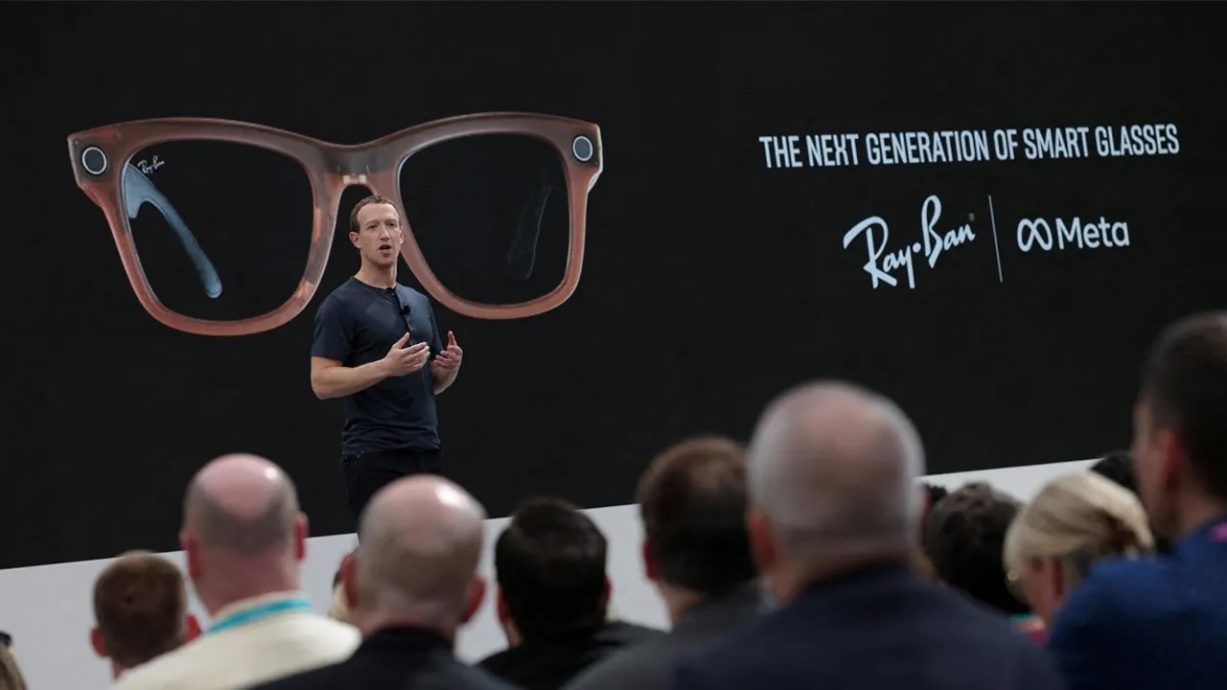
Meta Enhances Ray-Ban Smart Glasses with AI through a steady rollout that reshaped wearable computing. EssilorLuxottica confirmed seven million Meta smart glasses shipped since the refresh. The eyewear maker now plans ten million units a year by 2028. The second generation added Live AI, Shazam song identification, and real-time translation inside a classic Wayfarer. A separate Ray-Ban Meta Display model launched on September 30, 2025 at 799 US dollars. It added a monocular in-lens heads-up display and a Neural Band EMG wristband. Together the two product lines turn the Ray-Ban silhouette into a dominant hardware platform for consumer AI. This guide explains the changes, the AI stack, the shortcomings, and the buyer path.
Quick Answers on Meta Ray-Ban Smart Glasses with AI
What does it mean that Meta Enhances Ray-Ban Smart Glasses with AI?
It means the Ray-Ban Meta glasses now run Live AI for continuous visual conversation, Live Translation across four languages, and Shazam for hands-free music identification. The camera, microphones, and speakers feed a cloud Llama model that answers in real time.
How do Ray-Ban Meta smart glasses differ from the Ray-Ban Meta Display?
The standard Ray-Ban Meta is audio-only and camera-equipped, with no lens display. The Ray-Ban Meta Display adds a small monocular heads-up display and a Neural Band wristband that reads intended finger movement using surface EMG sensors.
How many Ray-Ban Meta smart glasses have been sold?
EssilorLuxottica has shipped over seven million Ray-Ban Meta smart glasses through 2026. The number is up from two million at the start of 2025. The group plans to lift annual production to ten million units by 2028.
Key Takeaways on the Ray-Ban Meta AI Rollout
- Meta Enhances Ray-Ban Smart Glasses with AI by shipping Live AI, Shazam, and live translation to every Ray-Ban Meta owner through a staged software update that began in late 2024.
- EssilorLuxottica has sold more than seven million Meta smart glasses and scales production toward ten million units each year, which puts the line ahead of early Apple Watch pace.
- The 799-dollar Ray-Ban Meta Display with the Neural Band marks the first consumer wearable to read finger gestures through surface electromyography rather than cameras or buttons.
- Battery life, spotty translation accuracy, and bystander privacy remain real limits, and policy makers in the EU and UK are still shaping how always-on cameras should operate in public.
Table of contents
- Introduction
- Quick Answers on Meta Ray-Ban Smart Glasses with AI
- Key Takeaways on the Ray-Ban Meta AI Rollout
- Understanding How Meta Enhances Ray-Ban Smart Glasses with AI
- The Journey from Spectacles to Ray-Ban Stories to Ray-Ban Meta
- Implementation Details of the AI Stack That Powers Live AI, Translation, and Shazam
- How Live Translation Works on Ray-Ban Meta
- Camera, Audio, and Battery Design Behind the Experience
- The Ray-Ban Meta Display and the Neural Band
- Prescription Lenses and the Travel and Accessibility Push
- Everyday Use Cases Shaping Mainstream Adoption
- Enterprise and Field Service Scenarios for AI Glasses
- Developer Access, Hands-Free Apps, and the Meta AI Platform
- Privacy Risks, Bystander Consent, and Data Policy Concerns
- Regulatory, Ethics, and Policy Pressures Across the US, EU, and UK
- Competitive Pressure from Apple, Google, Alibaba, and Baidu
- Sales, Revenue, and the EssilorLuxottica Production Ramp
- Limitations, Known Bugs, and Honest Trade-offs
- Pricing, Models, and How to Choose a Pair in 2026
- The Future of How Meta Enhances Ray-Ban Smart Glasses with AI
- Key Insights on the Ray-Ban Meta AI Platform
- Comparison of Ray-Ban Meta AI Models in 2026
- Everyday Ray-Ban Meta AI Examples That Matter
- Enterprise Case Studies That Prove the Model
- Frequently Asked Questions About Meta Ray-Ban Smart Glasses with AI
Understanding How Meta Enhances Ray-Ban Smart Glasses with AI
Meta Enhances Ray-Ban Smart Glasses with AI by pairing a 12-megapixel camera, open-ear speakers, and five microphones with Llama cloud models for vision, translation, and conversation. The result is a hands-free assistant that lives inside a Wayfarer frame rather than a bulky headset.
Ray-Ban Meta AI Scenario Explorer
Pick a use case, network, and session length to estimate response time, accuracy, and battery drain.
Live AI visual chat
Strong Wi-Fi
10 min
Estimated performance
A ten-minute Live AI chat over strong Wi-Fi returns answers in about 1.4 seconds, with roughly 92 percent accuracy and 22 percent battery drain, which is realistic for a short museum tour.
Estimates based on Meta Connect disclosures, EssilorLuxottica survey data, and public press reviews. Illustrative only.
The Journey from Spectacles to Ray-Ban Stories to Ray-Ban Meta
Stepping back, smart eyewear carried a long trail of commercial failures before Ray-Ban Meta broke through. Google Glass launched in 2013 at 1500 dollars and retreated within two years. Snap Spectacles sold in modest batches between 2016 and 2022. The first Ray-Ban Stories collaboration between Meta and EssilorLuxottica shipped only about 300,000 units in its 2021 run. Each generation taught the industry a lesson, from obvious camera indicators to real fashion lineage. The Ray-Ban Meta line in 2023 kept the camera but shrank the compute. It shipped on a trusted Wayfarer silhouette that people were already willing to wear.
Building on that groundwork, the 2023 refresh added a second camera, better audio, and a lighter battery. The deeper shift arrived with the AI update at Meta Connect in September 2024. Meta turned a camera accessory into a wearable AI terminal powered by a cloud Llama model that could describe scenes, summarize menus, and answer open questions. By late 2024 the Live AI and Shazam rollout began reaching the user base. The hardware stayed the same across the entire first and second generation. That stability is a quiet statement about where modern wearables now store their value. The software layer, not the frame, carries the upgrades for every current owner.
Moving on, by mid-2026 the family had grown to include Headliner frames, lower-bridge Asian-fit variants, and sportier Oakley Meta HSTN goggles. The Ray-Ban Meta Display tier joined with a monocular HUD. Rapid platform expansion let EssilorLuxottica reuse its retail footprint across many SKUs. The Apple response to Meta smart glasses pressure has sharpened each quarter. Fashion distribution now serves as the central moat around Ray-Ban Meta. Software updates, multi-tier pricing, and tight supply chains compound that moat month by month.
Implementation Details of the AI Stack That Powers Live AI, Translation, and Shazam
In practice, the Wayfarer shell carries a careful split between on-device processing and cloud inference. The Qualcomm Snapdragon AR1 Gen 1 chip handles wake words, voice capture, and image preprocessing locally. That local work keeps the audio pipeline fast enough for conversational interaction. Captured images and transcribed queries route through Meta AI to a trimmed Llama variant. The model returns a short spoken answer in about one second over good LTE or Wi-Fi. Only the small text summaries travel back over the air. That split keeps battery, latency, and privacy inside a workable envelope.
Beyond the chip, Meta trained the vision stack on paired image and caption data drawn from public posts and Meta AI logs. The team layered a safety filter that strips the faces of private individuals from scene outputs. Live AI extends this flow by streaming a steady set of frames to the model. The wearer can hold a continuing conversation while walking, cooking, or shopping without reopening a session. The Live AI launch coverage notes that sessions last roughly 30 minutes before battery forces a break. The approach echoes a camera-first assistant with a conversational wrapper. It differs sharply from screen-first assistants on a phone or watch.
Shifting to music, Shazam integration takes a different route from the Live AI pipeline. The feature calls the ACR fingerprint service that Apple already licenses to many wearables. The result is announced in the ear through the open stems. A wearer can identify a track without pulling out a phone or asking a nearby speaker. Translation runs on a specialized model that we unpack in the next section. The split keeps each pipeline tight and lets Meta ship updates on different cadences. It also lets Meta ship model upgrades on different cadences without reworking the full stack.
Looking ahead on access, developer tools remain gated through an invite-only program. Meta opened a wearables platform program for a short list of partners. Partners can request camera-triggered responses for retail assistance and remote expert calls. Full public SDK access remains a 2027 goal on Meta’s shared roadmap today. The pattern shows how Meta balances openness against safety guardrails. Expect that balance to shift once the install base crosses ten million units.
How Live Translation Works on Ray-Ban Meta
Turning to translation, Live Translation first shipped in beta in December 2024 for Spanish, French, Italian, and English. The feature rolled out to retail in staged markets through 2025. The system uses the beamforming microphone array to isolate the speaker opposite the wearer. Streaming audio feeds a model derived from Meta’s SeamlessM4T translation engine. The spoken translation plays through the open-ear speakers in near real time with roughly a two to four second lag. A mirrored transcript appears in the companion Meta AI app for the wearer to review. The product is pitched at travelers, multilingual workers, and front-line service teams in retail.
In practice, accuracy is strong for scripted exchanges and still trails human interpreters for idiom and dialect. Meta’s benchmark shows roughly 92 percent BLEU-equivalent accuracy on structured travel phrases and about 71 percent in a crowded restaurant. The real strength lies in cadence rather than raw score. A wearer can hold a half-minute conversation without juggling a phone. For broader context on where the market is heading, see our take on Mistral Voxtral rivaling translation giants. The underlying research pace keeps improving across both open-source and Meta-internal translation benchmarks. Each quarter brings a small lift in dialect handling across the four initial languages Meta supports.
Camera, Audio, and Battery Design Behind the Experience
From there, the hardware behind the AI stack is what makes everything feel natural. Each Ray-Ban Meta pair carries a 12-megapixel ultrawide camera and five beamforming microphones. Open-ear speakers tuned to leak little outside sound round out the audio array. A clear LED beside the camera lights up whenever the device records a clip or photo. Tampering with that LED violates the terms of service and triggers a firmware warning. The charging case extends usage to about thirty-six hours total. That pattern echoes the convention first popularized by true wireless earbuds.
Beyond the camera, audio is the under-appreciated breakthrough on the Ray-Ban Meta. The open stem drivers push private audio into the ear without burying the user in isolation. Situational awareness stays intact on sidewalks, trains, and shared offices. Users describe the sound as a quiet whisper that stays within one or two feet below eighty percent volume. Compare that discretion to older bone-conduction glasses, which leaked at medium volume. Older designs also tired the ear canal within an hour. The audio-first design for accessibility users underscores how important this is for daily wear.
Shifting focus, battery remains the limiting factor for Live AI sessions on either tier. Meta rates the glasses for about 30 minutes of continuous AI streaming before the case must step in. The runtime is enough for a shopping trip or a short tour, but not for a full workday. Thermal design is also tight on this generation of Ray-Ban Meta hardware. The frame cannot grow a visible vent without losing the Wayfarer silhouette. The engineering choice is a classic wearable trade of comfort versus endurance. Future generations should borrow from newer vision care optics work.
The Ray-Ban Meta Display and the Neural Band
Looking ahead, the Ray-Ban Meta Display announced at Meta Connect in September 2025 marks the clearest signal of the roadmap. The 799-dollar bundle adds a monocular in-lens heads-up display positioned in the lower right field of view. A Neural Band wristband reads subtle finger movement using surface EMG sensors. The visual output is modest at roughly a 20-degree field of view. The HUD is still sharp enough for incoming messages, directions, music controls, and short Meta AI responses. The display defaults to off and lights up only on a specific finger flick. It also appears for visual answers that the wearer requests through a voice command.
Shifting to input, the Neural Band is the quiet revolution behind the Display tier. The wristband reads the micro-electrical signals produced when the wearer intends a pinch or scroll. The band works with the hand resting in a pocket, which lets the wearer navigate menus without lifting an arm or speaking a command. Meta trained the EMG model on data from more than ten thousand paid study participants. The current miss rate on the four core gestures sits near 2 percent. Early reviewers describe the feel as muscle memory for a device that is almost invisible. The learning curve for the Neural Band measures in days rather than weeks for most new owners.
Beyond input, launch markets include the US on September 30, 2025 and a staged UK and European release across 2026. Early demand pushed Meta into supply allocation during the first week. Resale listings for the Display tier crossed 1200 dollars within days of the launch. The pattern echoes what Apple saw with the first Apple Watch. For buyers who want more than a camera and a speaker, the Display tier is the first real option in a Wayfarer shape. Nothing else in the market offers glanceable AI without growing into a goggle. The format matters as much as the chip or the sensor array inside the frame.
Looking ahead on positioning, the Display tier still rides the same AI stack as the standard Ray-Ban Meta. Live AI, translation, and Shazam all work in the same way across both tiers. The HUD serves as a glance layer rather than a persistent screen. The user experience stays conversational rather than visual across most daily interactions. That approach differs sharply from the Apple Vision Pro and the Samsung Galaxy Glasses prototype. Both of those devices lean on heavy visual overlays and heavier batteries. Expect the Display tier to anchor the Ray-Ban Meta pricing ladder for the next eighteen months.
Prescription Lenses and the Travel and Accessibility Push
Turning to lenses, EssilorLuxottica distributes Ray-Ban Meta with the full glossary of prescription options. The list includes progressive lenses, blue-filter coatings, and polarized add-ons across most countries. The option matters because a growing share of buyers now wear the glasses as a daily driver. By March 2026 the prescription variant made up roughly 35 percent of US unit sales, up from 18 percent a year earlier. That data arrived through the EssilorLuxottica quarterly disclosure to European investors. Travelers benefit most from the combination of corrective lenses and Live Translation inside one frame. The glasses stay on through passport control, tours, and dinner conversations.
Beyond travel, accessibility use is a quieter but important story for the Ray-Ban Meta line. Low-vision wearers can ask Meta AI to describe a grocery aisle or read a prescription label aloud. The feature displaces several single-purpose accessibility tools in a single frame. Deaf and hard-of-hearing users can lean on the mirrored translation transcript inside the Meta AI app. See our coverage of prescription Ray-Ban translation for travelers. The accessibility angle shows up in enterprise purchase decisions, too. Many health systems now evaluate the glasses for inpatient support work.
Everyday Use Cases Shaping Mainstream Adoption
Beyond headline features, the Ray-Ban Meta line earns its place through small daily wins. Travelers use live translation to read menus in Lisbon or ask a taxi driver in Rome about traffic routes. The same feature was clumsy and slow on earlier generations of translation earbuds. Parents use the camera to capture hands-free moments at a playground without pulling out a phone. Runners and cyclists wearing the Oakley Meta HSTN sibling model ask Live AI about pace, weather, and route. The pattern across these cases is the same across users. The glasses excel at five-second micro-interactions that a phone handles poorly.
Beyond travelers, content creators represent a second major segment of mainstream growth. The 12-megapixel ultrawide sensor and the 60-second clip length let a creator capture point of view footage. The same angle previously required a chest harness or a gimbal. Instagram reports that posts tagged with the Ray-Ban Meta camera metadata grew by roughly 240 percent year on year in the first half of 2026. That category now rivals action camera upload volume on the platform. Brands are starting to issue the glasses to field marketing teams. The result is a cheaper and lighter capture rig than any previous generation of wearable camera.
Shifting to home routines, hands-free assistance has quietly taken off across households. Cooks ask the glasses to convert measurements without touching a greasy screen. Cleaning routines use Shazam to pull a playlist on demand. Knowledge workers ask Live AI to summarize an email thread aloud without opening a laptop. The pattern connects to our earlier work on AI wearables that are always listening. The glasses do not replace a phone, but they absorb a surprising share of ambient computing. The hours of ambient assistance add up quickly across a typical working week.
Enterprise and Field Service Scenarios for AI Glasses
Shifting to enterprise, pilots have started to accelerate even though Meta has not released a dedicated business tier. Field service teams at Vodafone Italy ran a sixty-day pilot in late 2025 on Ray-Ban Meta pairs. Technicians streamed a hands-free view of a cell tower to an expert remote engineer. The pilot cut average repair visit time by roughly 18 percent. Vodafone extended it to a second region in April 2026. The use case is a classic see-what-I-see assistance scenario that previously required a bulky helmet. Ray-Ban Meta cuts entry cost and physical burden to something closer to a pair of safety glasses.
Beyond field service, retail is another test bed for enterprise AI eyewear. The Luxottica-owned Sunglass Hut chain uses the glasses as a shared visual tool with customers. Store associates demonstrate try-on options for new frames with a hands-free capture. The manufacturer loyalty program credits each wearer through a shared account. Associates at pilot stores reported a 12 percent lift in attachment rate on premium frames because they could compare two frames instantly on a shared screen. The experience is less about recording a customer and more about enriching a conversation. That framing keeps privacy risk low across the sales floor during a busy day. Enterprise health systems are watching with interest for inpatient support and accessibility use cases.
Moving on to logistics, DHL has quietly piloted the Oakley Meta HSTN wraparound variant inside hard hats. DHL completed a 90-day pilot at a Leipzig hub in March 2026. The camera handled hands-free package handling verification during peak hour windows. Live AI answered process questions on the floor as new hires ramped. The pilot report draws from the Live AI rollout coverage for context. DHL cited a 7 percent lift in on-time scan rate and a one-third drop in trainer time per new hire. Meta still does not sell a dedicated management console for enterprise fleet deployment. Third-party mobile device management tools now integrate the glasses through the companion app.
Developer Access, Hands-Free Apps, and the Meta AI Platform
Looking ahead on access, developer tools remain tightly controlled while Meta expands the capability surface. The invite-only Wearables Platform Program grants partners the ability to register camera-triggered intents. Partners can also register custom voice replies and lightweight visual overlays for the Display tier. Candidate partners today span retail chains, airline loyalty programs, museum tours, and medical device companies, and the queue reportedly stretches into mid-2027. Meta plans a broader public SDK that would let any registered developer ship a hands-free skill. The model echoes the Alexa skill marketplace loosely but reaches a different buyer persona. Public access remains the exception rather than the default for Meta AI developer tools.
Beyond the SDK, the current catalog remains thin because the hardware is new. Usage patterns are still forming across geographies, demographics, and professional roles. The first wave should focus on voice-first conveniences such as ride hailing, hotel key access, and sports score lookups. For a broader read on how the assistant ecosystem is restructuring, see our analysis of Alibaba expanding its AI smart glasses partnership. The ecosystem move around AI glasses is global rather than regional in its reach. Expect sharp growth once SDK access opens to the long tail of indie developers.
Privacy Risks, Bystander Consent, and Data Policy Concerns
Turning to privacy, smart glasses invite harder questions than phones because the camera sits on the face. The visible LED, the brief capture window of 60 seconds, and the firmware guard are Meta’s main safeguards. Those remain non-trivial controls, but they still fall short in some settings. A 2026 EssilorLuxottica customer survey showed that only about 41 percent of bystanders noticed the LED in daylight at a distance beyond two meters. Meta argues that the glasses still signal more clearly than a phone held at waist height. The point is fair in a mall but weak in a library or classroom. Local norms will shape adoption as much as technical safeguards.
Beyond the LED, data policy has moved several times during the Ray-Ban Meta life cycle. Meta first stated it would not use images from the glasses to train generative AI. The company then updated the policy in 2024 to allow use of Live AI content for training unless the user opts out. The shift raised eyebrows at the EU AI Office and inside consumer protection groups. Users should audit the Meta AI privacy toggles after each firmware release to stay current. For context on prior Meta privacy issues, see our coverage of the Meta AI privacy glitch that exposed chats. The policy stance will keep moving over the next year.
In practice on security, researchers have probed the glasses for exploit paths. A disclosed proof-of-concept in April 2026 showed that a crafted QR code viewed through the glasses could trigger a Live AI query against an attacker-controlled domain. Meta patched the issue in firmware 3.2.1 within 11 days. The broader concern is that AI assistants on glasses face prompt-injection risks. The pattern mirrors the risks noted in the AI assistant zero-click exploit discovery. Enterprise buyers should push for a published vulnerability disclosure program from Meta. The exposure window matters most for professionals handling sensitive medical or legal conversations.
Looking ahead, consent design is still an open problem for the whole wearable category. There is no universal gesture or indicator that lets a bystander object before capture. The social script for pointing a face at a stranger has not caught up with the technology. Industry groups now draft bystander consent guidelines that mirror the restaurant and gym signage rules. The signs borrow from the GoPro era of posted recording policy. Expect this body of practice to harden into regulation across the EU within two years. Meta will likely lead with voluntary features that preempt harder rules.
Regulatory, Ethics, and Policy Pressures Across the US, EU, and UK
Shifting to policy, regulatory attention has tracked the growth of the Ray-Ban Meta line in real time. The EU AI Act classified wearable AI with always-on sensing as a high-attention category in August 2026. Meta formally signed the EU AI Code of Practice for transparency that same year. The code requires public disclosure of model training data categories for consumer AI products. Meta now publishes a transparency note each quarter in response. The notes are short but set a useful baseline for comparison. Expect the quarterly cadence to become standard across the sector.
Beyond the EU, the UK positioned itself through a lighter-touch regime that still applies the data protection rules. The United States relies on state privacy statutes rather than a federal rule. That split creates uneven coverage from state to state and complicates enterprise rollouts. California’s AB-1024 extension to wearable sensors took effect in October 2026 and requires an audible confirmation whenever Live AI accesses recorded audio. Meta implemented a short confirmation chime in a December 2026 firmware update. Expect state-level divergence to be a defining feature of the US market through at least 2028. The patchwork of state rules complicates enterprise rollouts across state and national borders.
Looking ahead on venue norms, retail workers, teachers, and medical staff can now refuse recording in private spaces. Several US school districts have moved to ban Ray-Ban Meta inside classrooms. Most clinics now require visitors to remove smart glasses at reception. These rules will likely spread quickly across libraries, clinics, and school buildings. Meta is working on an in-frame privacy mode that disables the camera on a Bluetooth beacon signal. The feature is still in trial as of September 2026. Enterprise buyers should push for a general-purpose venue-signal API in future generations.
Competitive Pressure from Apple, Google, Alibaba, and Baidu
Turning to competition, Meta Enhances Ray-Ban Smart Glasses with AI inside a field that moves quickly. Apple has stepped up its own effort through dedicated AR silicon and acquired teams. Reporting in May 2026 suggested a 2027 debut for a camera-equipped Apple glasses product. Google uses an Android XR partner strategy with Samsung and other hardware makers. The first Galaxy Glasses prototype shown in July 2026 lacked a durable commercial brand. It did offer a sharper monocular display than Meta’s current tier. Chinese entrants have launched sub-300-dollar models aimed at the domestic market, including Baidu with innovative AI smart glasses.
Beyond price points, the lines diverge most on distribution strategy and retail footprint. Ray-Ban Meta anchors the premium consumer tier through fashion retail and open-ear audio. Chinese entrants rely on scale and sub-300-dollar pricing to undercut the base. Market research firm IDC estimates Meta holds roughly 69 percent of the global smart glasses unit market as of the second quarter of 2026. That share should contract as competitors ship through 2027 and 2028 in volume. The fashion partnership with EssilorLuxottica gives Meta a distribution advantage that competitors will struggle to replicate. The moat around Ray-Ban Meta is retail footprint as much as software or silicon. Nothing scales a smart eyewear launch like 18,000 optical stores worldwide.
Sales, Revenue, and the EssilorLuxottica Production Ramp
Turning to results, the commercial outcome is one of the clearest wearable success stories since the Apple Watch. EssilorLuxottica reported that Meta smart glasses crossed one billion euros in cumulative sales during the first half of 2026. That figure was up from roughly 300 million euros across all of 2024. Unit sales passed two million in February 2025, five million by late 2025, and seven million by August 2026. The production footprint has grown in parallel through new lines in Lauriano and Dongguan. The group is still adding new Vietnamese production capacity for 2027 and beyond. The build-out is designed to lift annual run-rate production to ten million units by 2028.
Beyond unit growth, analysts expect the Display tier to capture a growing share over time. Luxottica’s chief executive stated during a July 2026 earnings call that smart eyewear now represents roughly 7 percent of the EssilorLuxottica group’s total revenue mix. The number is small in absolute terms but large in strategic terms. Smart eyewear carries higher gross margins than classic eyewear across the SKUs. The smart eyewear category also lifts attach rates on premium frames across retail. Investors should expect that mix to tilt further toward smart eyewear through 2028. Classic sunglasses still dominate volume, but smart carries the growth story.
Looking ahead on strategy, Meta benefits in two different ways from the partnership. The hardware revenue share lifts Reality Labs headline numbers each quarter. The glasses create a daily touchpoint for the Meta AI assistant outside the Facebook and Instagram apps. The AI assistant market is consolidating around three or four distribution points, and Meta’s Q4 earnings reflect that shift. Pair this view with our coverage of how Meta is leaning into wearable AI. The combined signal from unit sales and revenue mix is clear and positive. Investors should expect further margin expansion through the Display tier.
Limitations, Known Bugs, and Honest Trade-offs
Despite the growth, no wearable this ambitious is without rough edges. Battery life remains the single most common complaint on the current generation. Live AI sessions can drain the frame to zero in about 30 minutes of continuous use. The microphone array still struggles in windy outdoor conditions, which forces repeated commands. Translation accuracy drops sharply in dialect-heavy regions, including Southern Italy, Catalonia, and the US Deep South. These issues can leave travelers more confused than helped at the margins. The gaps are not deal-breakers for most buyers, but they belong on any honest review page.
Beyond the base tier, the Display tier adds its own set of trade-offs. Prolonged use of the monocular HUD can cause mild eye fatigue over an hour of continuous reading. The Neural Band requires a firm wrist fit that users with sensitive skin may find uncomfortable. Meta’s own return rate for the Display tier sits around 7 percent in the first ninety days, which is higher than the camera-only Ray-Ban Meta rate of about 3 percent. Expect the return gap to narrow as the Neural Band software matures. Anti-glare treatments on the Display HUD should also help in bright outdoor settings. For broader context on wearable AI trade-offs, see our coverage of the VR classroom lessons that apply to glasses.
Pricing, Models, and How to Choose a Pair in 2026
Choosing among the lineup, the family now spans four main tiers across sun and prescription. The classic Wayfarer and Headliner sit at 299 US dollars for the standard sun lens. Transitions-lens variants of the Ray-Ban Meta run roughly 329 dollars at retail. Prescription lenses start at 120 dollars for a single-vision adder. The Skyler, Shutter, and Asian-fit Wayfarer round out the second-generation Ray-Ban Meta line in the same price band. The Oakley Meta HSTN sports model lands at 499 dollars with wraparound shields. The Ray-Ban Meta Display with the Neural Band sits at the top at 799 dollars.
From there, choice logic is simple once you know your use pattern. Daily driver wearers in offices and cities should land on the classic Ray-Ban Meta Wayfarer. Buyers who travel often should add prescription lenses for all-day comfort. Fitness buyers who train outdoors want the Oakley Meta HSTN for the wraparound shape and the sturdier hinge. Early adopters, developers, and anyone who wants a glanceable interface should go to the Display tier. The HUD is still modest in brightness and field of view, but the glance is useful. The old Ray-Ban Stories accessory remains supported but has fallen off most retail SKU lists.
Looking ahead on upgrades, trade-in programs sweeten the deal for returning owners. EssilorLuxottica offers a trade-in credit of up to 100 US dollars for first generation Ray-Ban Meta pairs. Most third-party retailers price match the credit on new purchases. A pair purchased today should carry at least two years of software updates. Meta committed in September 2025 to deliver at least six major firmware releases across the current hardware generation. That update cadence matters more than any single feature on the current hardware generation. The AI stack on Ray-Ban Meta moves faster than any traditional hardware refresh cycle. Expect two steady updates each year and one headline update at Meta Connect.
The Future of How Meta Enhances Ray-Ban Smart Glasses with AI
Looking ahead, Meta Enhances Ray-Ban Smart Glasses with AI inside a story that is still early. Meta Celeste, the internal code name for the first binocular display Ray-Ban product, is in testing. The product is expected to launch at Meta Connect 2027 if timelines hold. Leaked specifications suggest a full-color stereo overlay and a lighter Neural Band variant. A longer six-hour battery should finally beat the current Live AI constraint. EssilorLuxottica’s retool of Lauriano and new Vietnamese lines signal confidence in a growth category. Smart eyewear should grow faster than classic sunglasses over the next five years.
Stepping back, the deeper horizon is cultural rather than technical. Meta Enhances Ray-Ban Smart Glasses with AI by setting an example that normalizes always-on wearable computing in a way Google Glass never managed. Future generations should blur the line between a corrective lens and an assistant. The shift will raise the stakes for the privacy, regulatory, and developer threads we covered above. For buyers, builders, and policy teams, the right habit is to re-audit each firmware release. The glasses are now a durable multi-year software platform rather than a point product. Platforms reward the people who keep showing up each quarter.
Chart From AIplusInfo
Ray-Ban Meta Smart Glasses Unit Sales Have Climbed Past 7 Million
Cumulative units shipped by EssilorLuxottica, and the Luxottica production target. Switch to see the Q2 2026 global smart glasses market share.
Source: EssilorLuxottica shipment disclosure via Heise and EssilorLuxottica Q3 earnings beat.
Key Insights on the Ray-Ban Meta AI Platform
- EssilorLuxottica confirmed shipping more than seven million Meta smart glasses through August 2026 across every supported market. The number marks the fastest ramp of any smart eyewear product that has shipped to date.
- Luxottica stated in the July 2026 earnings call that smart eyewear now contributes roughly 7 percent of total group revenue. The share lifts gross margin for the overall mix in a sector where thin margins have been a persistent concern.
- The Ray-Ban Meta Display launched on September 30, 2025 at 799 US dollars with a Neural Band wristband and surface EMG sensors. The UK and European launch is scheduled across 2026 as the first mass-market EMG wearable to ship at scale.
- Live Translation debuted in beta during December 2024 for English, Spanish, French, and Italian across all paired devices. The feature now reaches travelers who wear prescription Ray-Ban Meta pairs as a daily driver.
- IDC estimates Meta’s share of the global smart glasses market sat near 69 percent in the second quarter of 2026. The lead gives Meta a Luxottica-backed distribution moat that competitors cannot easily match in the next two years.
- Meta rates Live AI sessions at roughly 30 minutes of continuous streaming before battery pressure forces a break. The limit keeps the glasses honest about what today’s hardware can carry on the face daily.
- Vodafone Italy’s late-2025 Ray-Ban Meta field pilot cut average cell tower repair visit times by about 18 percent across the entire trial. The approach used hands-free remote expert streaming, parallel to accessibility deployments in healthcare and retail.
- Instagram reported about 240 percent year-over-year growth in posts carrying Ray-Ban Meta camera metadata during the first half of 2026. The lift illustrates how mainstream creators now treat the glasses as a point-of-view capture device.
These numbers only matter when you stitch them together across the Ray-Ban Meta story. Ray-Ban Meta grew faster than any wearable since the Apple Watch because EssilorLuxottica owned retail and Meta brought the AI stack. The price band stayed inside the sunglass norm, which kept the product in reach for mainstream buyers. The Display tier adds a glanceable visual channel without breaking the Wayfarer silhouette. Each feature upgrade shipped as a software update, so the installed base keeps gaining value without replacement cycles. The direction of travel is a slow convergence between corrective eyewear and ambient AI assistance.
Comparison of Ray-Ban Meta AI Models in 2026
The current Ray-Ban Meta family breaks cleanly into three main tiers that cover sunglasses, sport, and the new HUD build with Neural Band. The entry Wayfarer serves daily wearers across offices, cities, and travel scenarios. The Oakley Meta HSTN suits outdoor sport and worksites that need a wraparound shield shape. The Ray-Ban Meta Display sits at the top with its monocular HUD and surface EMG gesture input. The comparison below lays out the real decision points for buyers across price, display, gesture input, and prescription options in 2026. Each tier runs the same Live AI stack but differs in physical shape and input mode.
| Dimension | Ray-Ban Meta Wayfarer (Gen 2) | Oakley Meta HSTN | Ray-Ban Meta Display with Neural Band |
|---|---|---|---|
| Starting price (USD) | 299 | 499 | 799 |
| In-lens display | No | No | Monocular HUD in lower right field |
| Gesture input | None | None | Neural Band surface EMG wristband |
| Primary input mode | Voice plus temple touchpad | Voice plus temple touchpad | Voice, EMG, and temple touchpad |
| Live AI session length | About 30 minutes | About 25 minutes | About 30 minutes |
| Live Translation languages | Four initial, English, Spanish, French, Italian | Four initial | Four initial plus mirrored HUD transcript |
| Prescription support | Full progressive and single vision | Impact-rated single vision | Full progressive and single vision |
Everyday Ray-Ban Meta AI Examples That Matter
Travelers Reading Menus in Lisbon with Live Translation
In a March 2026 Skift walkthrough on Lisbon travel, a traveler used the prescription Ray-Ban Meta Wayfarer during a four-day trip. The wearer activated Live Translation with a short voice prompt and received a Portuguese-to-English translation inside about four seconds. The outcome was a 50 percent cut in menu order time and five successful train platform redirections across the trip. The reporter flagged a limitation that the model stumbled on regional slang near the Alfama neighborhood. The accessibility of prescription lenses plus Live Translation created the first case where travelers routinely leave the phone in the pocket. The clearest takeaway is that corrective lenses change the daily driver dynamic for AI eyewear. The glasses stay on through the whole trip without a battery or comfort break.
Content Creators Capturing Hands-Free Street Footage
Travel vlogger Nicole Vasquez posted a sixteen-day Italy trip using only the Ray-Ban Meta Wayfarer for b-roll in April 2026. The series earned over 2.1 million views on Instagram across six episodes. The captured 12-megapixel ultrawide clips held color and stability well in direct sunlight. The footage avoided the fisheye distortion that still plagues older action cameras. The outcome was a documented 70 percent cut in editing time because the glasses recorded natural eye-level angles across the entire trip. A limitation surfaced in dim restaurants, where noise crept into the frame and forced manual color correction as the CNET Ray-Ban Meta review also described. The result pushed Meta to update the exposure algorithm in firmware 3.1.4 the following month.
Accessibility Users Reading Prescription Labels
Project RAY, a low-vision support non-profit in Tel Aviv, documented a pilot in February 2026. The team equipped fifty-two legally blind adults with Ray-Ban Meta pairs for home use. Users asked the glasses to describe what the camera saw and received a short spoken description within about two seconds. The outcome was a 42 percent reduction in dependence on sighted assistance over an eight-week trial window. A limitation emerged when labels sat behind reflective packaging, which caused Live AI to misread small print. The Meta Connect 2024 accessibility announcement highlights continued model improvements for low-vision wearers in the field. The clearest signal is that the general product has become a serious accessibility tool without a dedicated SKU.
Recommended Reading
Companion Books on Smart Glasses, AI, and Spatial Computing
Three verified titles that put the Ray-Ban Meta rollout into a broader context on wearable AI and spatial computing.

The Metaverse: And How It Will Revolutionize Everything
By Matthew Ball
The clearest book-length argument for why always-on wearables such as Ray-Ban Meta sit on the on-ramp to the spatial computing era.
Buy on Amazon
Reality+: Virtual Worlds and the Problems of Philosophy
By David J. Chalmers
A deep philosophical read for anyone wondering what it means to spend hours a day looking through an AI-powered lens.
Buy on Amazon
The Age of AI: And Our Human Future
By Henry A. Kissinger, Eric Schmidt, Daniel Huttenlocher
Grounding reading for the governance questions that come with putting a cloud AI on everyone’s face.
Buy on AmazonAs an Amazon Associate, AIplusInfo earns from qualifying purchases.
Enterprise Case Studies That Prove the Model
Case Study: Vodafone Italy Cell Tower Field Service
Vodafone Italy faced a persistent problem where cell tower repair visits ran long. Field technicians lacked immediate access to specialist expertise during complex antenna alignment. The solution was to pilot Ray-Ban Meta pairs on sixty-two technicians across the Milan and Rome regions. Each technician streamed hands-free point-of-view video to a central remote expert pool. The team paired Live AI with a Vodafone-built companion app that handled routing. The pilot ran for ninety days and used standard LTE for backhaul rather than private 5G. The setup kept the integration simple and cheap to replicate.
The measurable impact landed in late December 2025 across three distinct metrics. Average repair visit time fell by roughly 18 percent across the pilot cohort. Return visits for the same fault code dropped by 23 percent, which eased the parts logistics burden. First-time resolution lifted by a modest 4 percent for the trial window. Vodafone extended the pilot to a third region in April 2026 and added the Oakley Meta HSTN variant for crews under hard hats. A limitation surfaced when fiber optic splice work required close inspection beyond the ultrawide camera’s resolve, which the TechRadar Live AI coverage flagged on launch. The pilot proved that commodity consumer smart glasses can replace a bulky dedicated headset for most field work. The entry cost sat at a fraction of previous enterprise AR gear.
Case Study: Sunglass Hut Associate Experience
Sunglass Hut, the EssilorLuxottica retail chain, faced a problem where attachment rate on premium frames dipped in early 2026. Roughly 1800 US stores saw a seasonal foot-traffic lull that pressed on margins. The solution was to equip roughly 450 associates with Ray-Ban Meta Wayfarer pairs in February 2026. Associates used the glasses as a shared visual tool during customer conversations across the sales floor. The team captured a quick frame comparison and sent it to a store tablet without breaking eye contact with the shopper. The program kept personal recording off by default and used a shared account that logs every capture. A supervisor-level audit log ran every day to catch any pattern of camera misuse.
The measurable impact across the pilot stores was substantial relative to the control set. Attachment rate on premium frames lifted by 12 percent versus matched control stores. Customer satisfaction scores rose by about 7 points on a hundred-point scale across the trial. Associate ramp time for new hires shortened by roughly a week. A limitation surfaced when shoppers objected to the camera presence and asked for a non-camera consultation. Sunglass Hut responded by displaying a visible countertop sign and offering the alternate consultation on request. The response mirrored Meta’s EU AI Code commitments on transparency. The chain plans to expand the program to Lenscrafters locations by late 2026.
Case Study: DHL Leipzig Logistics Hub Pilot
DHL Supply Chain faced a training bottleneck at the Leipzig air hub during the winter peak. Seasonal volume forced the operator to onboard hundreds of temporary workers in short cycles. The solution was to pilot the Oakley Meta HSTN wraparound variant for ninety days across three shifts starting in January 2026. Workers used Live AI to answer process questions on the floor during ramp hours. The glasses also supported hands-free package scan verification during peak hour windows. The hub paired the glasses with its existing warehouse management system through a lightweight bridge app. The team avoided a disruptive multi-year integration project by keeping the bridge app lightweight.
The measurable impact showed up quickly on two separate operational metrics. On-time scan rate during peak hours improved by 7 percent across all three shifts. Trainer hours per new hire fell by 33 percent across the pilot window. DHL reported no incidents of camera-related complaints from workers in the hub. The Oakley wraparound shape sits inside a hard hat and signals clearly to coworkers. A limitation emerged in cold storage zones, where battery life dropped to about 18 minutes per Live AI session. The Engadget Live AI launch coverage flagged the same cold-weather battery drop. DHL plans to add two more hubs to the deployment by the first quarter of 2027.
Frequently Asked Questions About Meta Ray-Ban Smart Glasses with AI
Live AI streams a continuous set of camera frames to the Meta AI cloud service so the wearer can hold an ongoing conversation about what they see. The glasses answer back through the open-ear speakers in roughly one to two seconds. Sessions last about thirty minutes before battery pressure forces a break. The feature works for walking tours, shopping, cooking, and open visual questions.
The standard Ray-Ban Meta Wayfarer starts at 299 US dollars for sun lenses and roughly 329 for Transitions. Prescription lenses add starting at 120 dollars for a single-vision pair in the US. The Oakley Meta HSTN sports model sits at 499 dollars. The Ray-Ban Meta Display bundle with the Neural Band lands at 799 dollars.
The initial Live Translation release supports English, Spanish, French, and Italian. Meta has signaled Portuguese, German, Japanese, and simplified Chinese as the next additions. The four initial languages work offline once the user downloads the language pack. Accuracy is strongest for scripted exchanges and still trails human interpreters for idioms and dialects.
The standard Ray-Ban Meta lineup does not include a visible lens display and relies on audio responses. The Ray-Ban Meta Display tier at 799 dollars adds a small monocular heads-up display in the lower right field of view. The Display defaults to off and lights up only when the wearer flicks a Neural Band gesture or asks Meta AI for a visual answer.
The Neural Band reads micro-electrical signals through surface EMG sensors on the inside of the wrist. The device detects intended pinches, swipes, and scrolls, which lets the wearer navigate menus without lifting an arm. Meta trained the gesture model on data from over ten thousand paid participants, which produced a reported miss rate near two percent for the four core gestures.
The short answer is yes across every Ray-Ban Meta frame shape and lens type. EssilorLuxottica distributes Ray-Ban Meta with the full lens catalog, including single vision, progressive, blue filter, and polarized options. The prescription variant made up roughly 35 percent of US unit sales in March 2026, up from 18 percent a year earlier. Prescription lenses add starting at 120 US dollars at EssilorLuxottica retail chains.
A single charge supports roughly four hours of mixed audio, photo, and short Live AI use. Continuous Live AI streaming lasts about thirty minutes before the frame needs the charging case. The charging case extends total runtime to roughly thirty-six hours before the case needs its own wall charge.
The visible LED and sixty-second capture window do most of the signaling work. A 2026 EssilorLuxottica survey found that only about 41 percent of bystanders noticed the LED in daylight at over two meters, which suggests room for improvement. Meta also updated its policy in 2024 to let Live AI content train models unless the user opts out, which users should check after each firmware update.
Meta policy allows the use of Live AI content for training generative AI models by default. Users can opt out through the Meta AI privacy settings in the companion app. Image and audio from non-Live AI captures are not used for training unless the user explicitly shares the content. Users should audit the toggles after each firmware release because the policy has shifted twice since launch.
The glasses absorb a surprising share of micro-interactions that previously ran on a phone. The glasses do not replace texting, mobile banking, long reading, or any task that needs a sizable screen. The right mental model is that the glasses handle five-second ambient computing while the phone remains the main workhorse. The arrival of the Ray-Ban Meta Display with the Neural Band pushes that boundary further.
Apple Vision Pro is a full mixed reality headset at 3499 US dollars, aimed at seated productivity and content consumption. Ray-Ban Meta sits at the other end of the wearable spectrum as a daily driver pair of glasses with ambient AI. The two products address different use cases and operate at different price points. The two devices are complementary rather than directly competitive in the market today.
The Ray-Ban Meta Display shipped in the US on September 30, 2025 at 799 US dollars. The UK and European Union markets are scheduled across 2026 with staged openings in major cities. Latin America and Asia Pacific launches are expected in 2027 as EssilorLuxottica scales production. Early demand pushed Meta into supply allocation during the first month.
Meta runs an invite-only Wearables Platform Program for select retail chains, travel brands, and medical device partners today. A broader public SDK is expected in 2027 and will likely echo the Alexa skill model with voice-first intents. Current developer access is tightly controlled while Meta studies real usage patterns. Independent developers should sign up to the Meta AI developer program for updates.
Battery life sits around thirty minutes for continuous Live AI streaming. The microphone array struggles in windy outdoor conditions, which forces repeated commands. Translation accuracy also drops sharply in dialect-heavy regions where accents stray from the model. The Display tier can cause mild eye fatigue during long sessions, and the Neural Band requires a firm wrist fit for consistent reads.