
Introduction
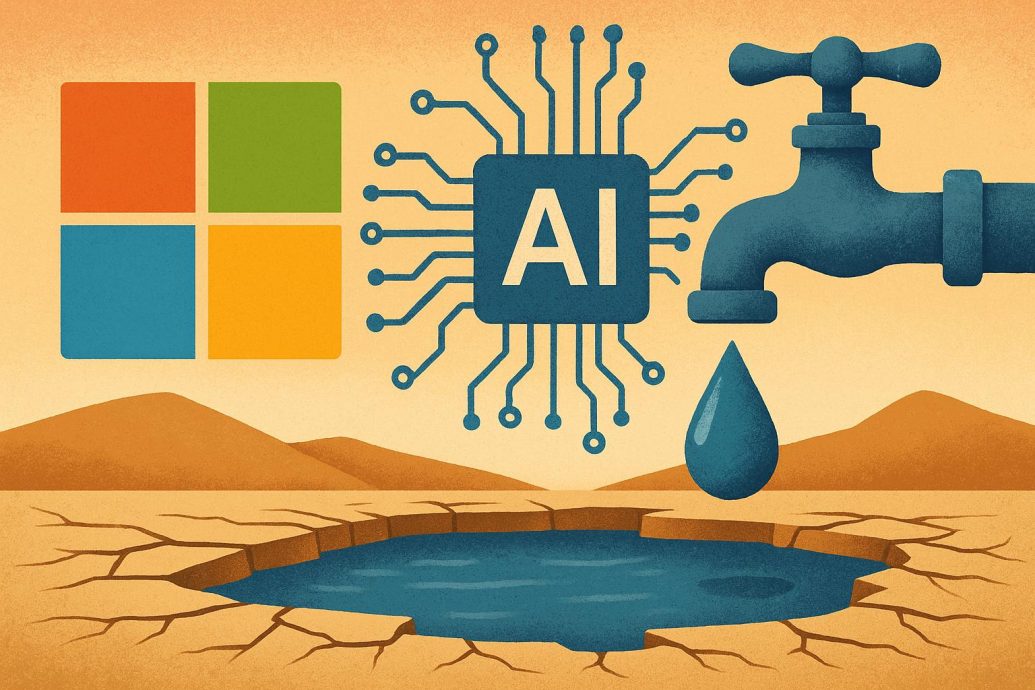
Microsoft’s AI thirst fuels water Worries in ways that are raising global concerns about the sustainability of artificial intelligence. As Microsoft ramps up investments in large-scale AI models like GPT-4, the hidden environmental costs are coming sharply into focus, particularly around freshwater consumption. With tens of thousands of high-performance machines running nonstop at sprawling data centers, AI is pushing water and energy systems to the limit. This article details how AI-driven infrastructure requires enormous amounts of water for cooling, analyzes Microsoft’s environmental footprint over time, compares it with other tech giants, and offers insight on how these challenges might be addressed moving forward.
Key Takeaways
- Microsoft’s water usage surged to over 1.7 billion gallons in 2022, largely due to AI data center cooling needs.
- AI workloads, particularly training and inference of large language models, demand high energy and thermal output, triggering aggressive cooling strategies.
- Microsoft has committed to water-positive goals by 2030, but its AI expansion may outpace sustainability gains unless new solutions are deployed.
- Compared to peers like Google, Amazon, and Meta, Microsoft’s water intensity is among the highest, driven by rapid AI integration.
Growing AI Demands, Soaring Water Consumption
As Microsoft accelerates its AI initiatives through partnerships like the one with OpenAI, the backend infrastructure is under enormous operational stress. Data centers (critical facilities that house the servers running AI models) generate heat that requires efficient cooling systems to prevent equipment failure. In many cases, the chosen method is water-based cooling.
In 2022, Microsoft reported using 1.7 billion gallons of water globally, marking a 34 percent increase from the previous year. This spike is closely tied to the deployment and training of large-scale generative AI models. These systems, built on cloud-based platforms like Microsoft Azure, depend heavily on high-throughput GPUs and TPUs. The thermal load from these units must be kept within safe limits to avoid breakdowns and inefficiencies.
Water use related to AI systems is not unique to Microsoft. The shocking water consumption of AI systems like ChatGPT illustrates how training language models can dramatically increase environmental demands across the board.
How Water-Based Cooling Works in AI Infrastructure
Most large data centers use either air-cooled systems or evaporative cooling. The latter, which Microsoft frequently employs, uses water that evaporates into air to remove heat effectively. While this method is more energy-efficient than traditional air cooling, it comes with a high impact on freshwater reserves.
Cooling requirements surge during AI training phases when thousands of compute nodes run simultaneously. For instance, training a model with billions of parameters, such as GPT-3, needed hundreds of megawatt-hours of electricity and produced extensive heat. As a result, evaporative systems consume significant volumes of water per kilowatt-hour of output, especially in hot climate zones where cooling demands are higher.
Year-Over-Year Comparison of Microsoft’s Water Usage
The link between increased AI activity and water consumption becomes more evident when comparing year-to-year trends in Microsoft’s usage:
| Year | Total Water Usage (Billion Gallons) | Year-over-Year Change (%) |
|---|---|---|
| 2019 | 0.74 | – |
| 2020 | 0.92 | +24% |
| 2021 | 1.27 | +38% |
| 2022 | 1.70 | +34% |
This steep climb matches the timeline of major AI integrations into Microsoft’s ecosystem, including Azure AI expansion and deeper collaboration with OpenAI. Data centers in water-scarce regions like Arizona and Iowa add complexity to the sustainability equation.
Microsoft vs Other Tech Giants: AI Data Center Water Use
While Microsoft is under the spotlight, other leaders in the field also demonstrate significant water use in their AI operations. Variations depend on the types of cooling used, model deployment scales, and local climate conditions:
| Company | Estimated Water Use (2022, Billion Gallons) | Data Center Cooling Method | Primary AI Application |
|---|---|---|---|
| Microsoft | 1.70 | Evaporative | GPT-4, Azure AI |
| 1.40 | Hybrid Air/Water | Bard, Search AI | |
| Amazon | 1.20* | Air-cooled | Bedrock, AWS AI |
| Meta | 0.87 | Water-cooled | LLM Training (internal) |
*Amazon does not disclose complete metrics. Estimates based on third-party research.
Balancing Innovation with Sustainability Goals
Microsoft has promised to be water-positive by 2030. This means replenishing more water than it uses across all global operations. Projects already underway include water harvesting in drier zones, reusing water in existing cooling systems, and adopting green-designed data center standards.
Even with steady progress, some experts worry that the speed of AI adoption could outpace sustainability countermeasures. Insights from the article on optimizing AI data centers for sustainability show that energy and water efficiency must evolve in tandem with AI models. Without significant redesign or advancement, water and energy demands may quickly overwhelm infrastructure limits.
Can AI Be Green? Expert Perspectives on Alternatives
Dr. Arindam Banerjee, a climate systems researcher at the University of Minnesota, said that technology growth is outrunning regulation. He explained that every new model boosts computing costs. Without adaptive infrastructure, these advancements place a new burden on planetary systems.
Some alternative approaches are gaining traction. One is liquid immersion cooling, which relies on non-water-based fluids that allow chips to run in submersion. Though expensive and technically complex, this method uses far less water. Another option is thermal-aware AI scheduling, which shifts high-load training or inference runs to cooler nighttime temperatures, reducing cooling needs during peak heat hours.
For true balance, industry collaboration is required. Cross-sector forums that include private companies, public utilities, and policy makers can help manage the tradeoffs of AI growth and ecological resilience. Insights from studies on AI’s elusive energy footprint and AI chatbot resource usage reveal that the conversation must take into account both visible and invisible effects on energy and water systems.
FAQs
How much water does Microsoft use for AI data centers?
Microsoft reported using over 1.7 billion gallons of freshwater in 2022. A significant portion of this water supports cooling systems for cloud infrastructure and AI workloads, including large-scale models such as GPT-4. Water use varies by region, climate, and cooling technology deployed at each facility.
Why do data centers need so much water?
Data centers house thousands of high-performance servers and GPUs that generate substantial heat. To prevent overheating and maintain system reliability, facilities often use evaporative cooling. This method absorbs heat through water evaporation, which is energy efficient but water intensive. Alternative cooling methods exist, yet many large facilities continue to rely on water-based systems in warmer climates.
Is AI responsible for most of Microsoft’s water consumption?
AI workloads are a growing contributor, though they are not the sole driver. Cloud services, enterprise software, gaming infrastructure, and other digital platforms also require cooling. AI training and inference workloads increase computational density, which can intensify cooling demands in certain data centers.
Does Microsoft use the same amount of water in every region?
No. Water consumption depends on local climate, facility design, and cooling architecture. Some newer facilities use air cooling or closed-loop systems that reduce freshwater withdrawal. Regions with cooler climates typically require less evaporative cooling.
What is Microsoft doing to reduce its environmental impact?
Microsoft has committed to becoming water positive by 2030. This goal means replenishing more water than it consumes. Initiatives include investing in watershed restoration, deploying closed-loop and air-based cooling systems, improving efficiency in existing data centers, and building facilities designed for lower water intensity. The company publishes annual sustainability and environmental transparency reports to track measurable progress.
Are there alternatives to water-based cooling in AI data centers?
Yes. Options include liquid immersion cooling, direct-to-chip cooling, and advanced air cooling systems. These approaches can reduce or eliminate freshwater dependence. Adoption depends on cost, infrastructure retrofitting complexity, and performance requirements.
Conclusion
Water consumption has become a central issue in the AI infrastructure debate. As AI workloads scale rapidly, cooling demands rise alongside computational power. Microsoft’s reported 1.7 billion gallons of freshwater use highlights the environmental footprint associated with large-scale cloud and AI operations. While the company has committed to becoming water positive by 2030, the broader challenge extends across the entire technology sector. The future of sustainable AI will depend on innovations in cooling architecture, smarter infrastructure siting, and transparent reporting that balances technological advancement with environmental stewardship.