
Introduction
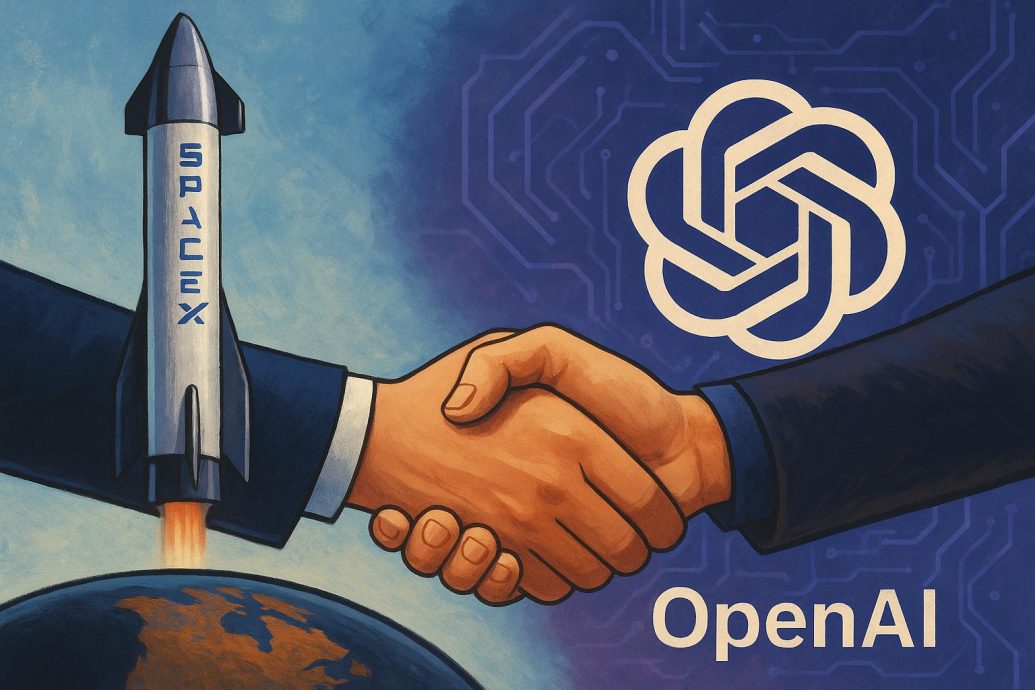
SpaceX Merges with Musk’s AI Startup, marking a pivotal moment in Elon Musk’s strategy to unify cutting-edge technologies under a single operational umbrella. By bringing xAI into the fold, SpaceX is positioning itself at the forefront of AI-driven aerospace innovation. This merger goes beyond a simple acquisition of intellectual property. It signals a deeper integration of artificial intelligence into rocket systems, satellite networks like Starlink, and autonomous space missions. As competing tech conglomerates form alliances to lead in AI, Musk is executing a unique model that aligns vision, execution, and technology across multiple enterprises through centralized ownership.
Key Takeaways
- The SpaceX xAI merger enables direct integration of AI tools like large language models into aerospace and satellite operations.
- This move reinforces Elon Musk’s broader plan to standardize AI across his companies, including Tesla and SpaceX.
- xAI’s technology will likely enhance autonomous navigation, real-time mission control, and operational decision-making in space.
- The merger model differs from competitors by consolidating AI and space innovation within one organizational structure.
Background on xAI and Its Role Pre-Merger
Founded in mid-2023 by Elon Musk, xAI was created to develop advanced artificial general intelligence systems capable of reasoning, memory, and explanation. One of its flagship products, Grok, is a large language model designed to deliver deeper contextual understanding compared to its contemporaries. While xAI was initially positioned as a potential competitor to OpenAI and Anthropic, Musk hinted that its true advantage would lie in synergy across his ventures. The SpaceX xAI merger now realizes that strategy, aligning the firm’s AI capabilities with aerospace operations.
xAI’s small but elite team includes former researchers from DeepMind, OpenAI, and Google Brain. Their mission centers on ensuring that AI remains truth-seeking and aligned with human interests, particularly in high-stakes scenarios such as space exploration. The merger enables xAI to transition from experimental models to applied aerospace systems, especially in embedding reasoning intelligence across mission workflows.
Strategic Significance of the SpaceX xAI Merger
This merger is not just an acquisition. It signifies structural convergence aimed at accelerating technological feedback cycles between hardware and software. Integrating xAI’s systems into SpaceX offers internal AI modularity for several purposes:
- Onboard Decision Systems: AI-powered reasoning can assist spacecraft in real-time decision-making when human response time is insufficient.
- Starlink Optimization: Predictive modeling helps satellites self-correct trajectories, optimize signal use, and forecast bandwidth demand.
- Mission Control Assistance: Human operators are supported by AI that can interpret telemetry data and propose optimal maneuvers.
Unlike initiatives such as Microsoft and OpenAI or DeepMind’s integration within Alphabet, this is an internal corporate merger. It eliminates client-provider misalignment and reduces the delay between AI development and deployment. This level of coordination improves control, speeds iteration, and enhances strategic independence.
AI Integration in Starship and Starlink Workflows
AI deployment will likely begin with Starlink and expand into Starship operations and future planetary missions. Starlink, a large-scale low earth orbit satellite constellation, will improve with xAI’s contribution through:
- Autonomous Collision Avoidance: Satellites may share movement forecasts and use reinforcement learning to independently perform real-time course adjustments.
- Predictive Maintenance: AI systems could identify early signs of component wear based on performance behavior, significantly advancing diagnostic accuracy.
- Data Traffic Routing: Language models could dynamically manage packet flow to maintain optimal internet access across varying terrains and user demands.
In the Starship program, xAI may enable onboard vision-based navigation and risk evaluation. For instance, during Mars operations where terrain is uncertain and signal latency is high, LLMs like Grok can interpret sensor data, summarize diagnostics, and support emergency reasoning without delay. These capabilities align with initiatives seen in advancing robotics deployed in extraterrestrial environments.
Commentary from Industry and Academia
Dr. Laura Schneider, aerospace engineer at MIT, commented that this type of AI-aerospace consolidation is unprecedented. She noted that while other tech collaborations offer scalability, SpaceX gains full vertical control from AI model development to rocket implementation. This structure promises rapid feedback based on real orbital data and engineering outcomes.
Professor David Emery at Stanford’s Center for AI Governance shared concerns around concentrated control. He emphasized that while the merger improves cohesion, it also places accountability on a single organization. This is critical since the systems involved will operate in situations with limited or no human intervention.
Comparison with Other AI-Tech Mergers
| Merger Model | Example | Ownership | Degree of Integration | Use Case Focus |
|---|---|---|---|---|
| Partnership | Microsoft & OpenAI | Corporate Partners | Medium | Cloud, Chatbots, LLM APIs |
| Subsidiary Acquisition | Google & DeepMind | Google Parent (Alphabet) | High | Research-Driven Optimization |
| Internal Merger | SpaceX & xAI | Same Owner (Elon Musk) | Full | End-to-End Aerospace AI |
In contrast to partnerships and subsidiary structures, this internal merger avoids delays from corporate negotiations. It accelerates AI applications into active missions without the need for cross-validation. Readers can learn more about SpaceX combining forces with xAI in full organizational alignment.
What This Means for the Industry
This integration raises competitive pressure on peers like Blue Origin, Boeing, and Lockheed Martin, who typically integrate AI through third-party platforms. Emerging companies such as OrbitFab and Impulse Space might consider building in-house AI departments to compete. Others may initiate full-stack integration to gain similar advantages in autonomy and decision accuracy.
This model may soon be mirrored in sectors that depend heavily on edge AI computing, such as drone logistics, defense systems, and planetary exploration. The approach paves the way for faster engineering cycles, especially where real-time data directly informs the AI training process. These advancements echo the momentum seen in AI-driven rocket design breakthroughs that shorten engineering timelines from months to weeks.
Frequently Asked Questions
What does xAI do?
xAI is an artificial intelligence company established by Elon Musk. It develops advanced language models and reasoning systems, now focusing on aerospace applications including autonomous decision-making and satellite optimization.
How is AI used at SpaceX?
SpaceX uses AI in several areas such as trajectory planning, predictive maintenance, satellite operations, and live telemetry analytics. The integration of xAI expands these capabilities to include advanced onboard autonomy and dynamic optimization.
Did Elon Musk create xAI?
Yes, Elon Musk founded xAI in 2023. The company focuses on building safe and purpose-aligned general intelligence, with an emphasis on high-impact fields like space technology and robotics.
What companies are owned by Elon Musk?
Elon Musk is associated with companies like SpaceX, Tesla, Neuralink, The Boring Company, and Twitter (now branded as X). xAI is another addition, recently merged with SpaceX for broader AI integration.
How will the xAI merger impact Starlink?
Starlink satellites will gain smarter automation. xAI will contribute capabilities such as bandwidth optimization, autonomous corrections, and hardware diagnostics. These improvements are key as the network expands globally.