
Introduction
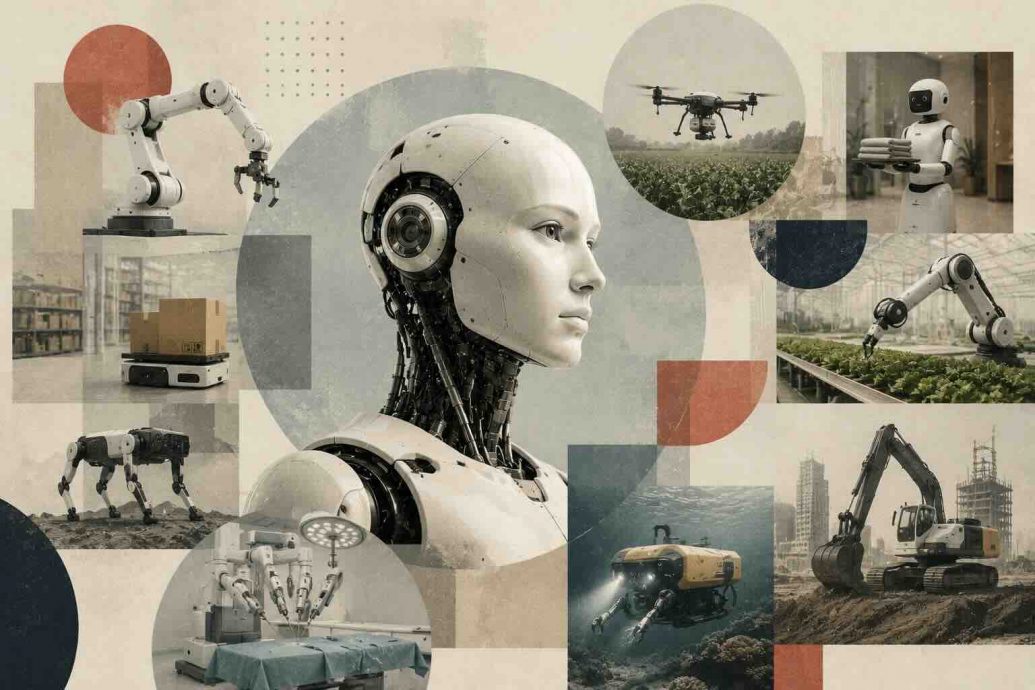
The top 15 newest robot applications 2025 represent a turning point for every major industry, with the global robotics market surpassing $89 billion in 2026 on the strength of breakthroughs in physical AI, humanoid design, and autonomous systems. These robot applications span far beyond factory assembly lines, reaching into operating rooms, ocean floors, farmland, and even outer space. Companies like Amazon, BMW, and BYD are deploying humanoid robots at commercial scale for the first time, signaling a shift from prototype to production that few predicted would happen this quickly. Global installations of humanoid robots alone reached an estimated 16,000 units in 2025, with projections doubling that figure by the end of 2026. This article covers the technologies that power them, the companies leading deployment, and the risks that come with rapid automation. Whether you work in healthcare, logistics, agriculture, or education, the role of artificial intelligence in robots is reshaping what your industry looks like today and what it will become tomorrow.
Quick Answers on the Newest Robot Applications
What are the newest robot applications making the biggest impact in 2026?
The top 15 newest robot applications 2025 include humanoid factory workers at BMW and Amazon, autonomous surgical systems approved by the FDA, agricultural harvesting robots, and delivery robots completing last-mile logistics at scale across major cities.
How much does a humanoid robot cost for commercial use?
Commercial humanoid robots range from $5,900 for Unitree’s R1 model to over $1 million for advanced industrial systems, with manufacturing costs dropping 40% between 2023 and 2024 as production scales up globally.
Are robot applications replacing human jobs?
McKinsey estimates up to 800 million jobs could be displaced by automation by 2030. Robot applications primarily augment human work in dangerous or repetitive tasks, though retraining programs remain critical for workforce transition.
Key Takeaways
- The robotics market reached $89 billion in 2026, with humanoid robots moving from prototypes to commercial deployments across manufacturing, logistics, and healthcare.
- Fifteen distinct robot application categories are now active across industries, from surgical precision robots to underwater exploration and last-mile delivery systems.
- Physical AI and Vision-Language-Action models are the core technologies enabling robots to operate autonomously in unstructured environments without explicit programming.
- Ethical concerns including job displacement, safety risks, and accountability gaps require proactive governance as robot adoption accelerates globally.
Table of contents
- Introduction
- Quick Answers on the Newest Robot Applications
- Key Takeaways
- What Are Robot Applications and Why They Matter Now
- Humanoid Robots Enter the Factory Floor
- Autonomous Warehouse Robots Reshape Logistics
- Surgical Robots Redefine Precision in Healthcare
- Agricultural Robots Tackle Labor Shortages
- Robots in Space: From Observation to Construction
- AI-Powered Service Robots in Retail and Hospitality
- Construction Robots and Exoskeletons Improve Worksite Safety
- Underwater and Deep-Sea Exploration Robots
- Military and Defense Robot Applications
- Delivery Robots Scale Last-Mile Operations
- Educational Robots Transform STEM Learning
- Collaborative Robots (Cobots) Empower Small Businesses
- The Role of Physical AI in Next-Generation Robotics
- Ethical Risks and Job Displacement Challenges
- Where Robot Applications Are Headed Next
- Key Insights on the Newest Robot Applications
- Robot Applications Across Industries: A Comparison
- Real-World Robot Deployments Across Industries
- Lessons from Pioneering Robot Programs
- Frequently Asked Questions on the Newest Robot Applications
What Are Robot Applications and Why They Matter Now
The top 15 newest robot applications 2025 represent AI-powered systems performing tasks across industries, from surgical procedures and warehouse logistics to agricultural harvesting and last-mile delivery, using autonomous intelligence to operate in real-world environments.
Robot Application Explorer
Estimated ROI Period
12-18 months
Based on typical deployment in manufacturing with mid-range budget.
Recommended Robot Type
Collaborative Robot
Cobots offer the best value for manufacturing budgets under $200K.
Market Size (2026)
$16.7B
Industrial robot installations at all-time high.
Job Impact
Augments 60% of tasks
Manufacturing robots primarily augment repetitive and physically demanding tasks.
Data: IFR, McKinsey, Robotics Center of Silicon Valley, 2025-2026 reports
Humanoid Robots Enter the Factory Floor
Among the newest robot applications, humanoid robots deployed in manufacturing facilities represent the most visible shift in how factories operate. BMW began deploying wheeled humanoids from Hexagon Robotics at its Leipzig plant in Germany, with plans to integrate them into battery and component production lines. Mercedes-Benz partnered with Apptronik to deploy Apollo humanoid robots for assembly line support tasks that previously required human workers to perform repetitive lifting and positioning. Tesla uses its own Optimus Gen 2 robots internally at the Fremont factory for component delivery between stations. The automotive sector has become the proving ground for humanoid robot applications in manufacturing, establishing deployment patterns that other industries will follow. These robots operate in facilities designed for people, navigating doorways, climbing stairs, and using standard tools without requiring costly facility redesigns. The human form factor provides a practical advantage that specialized industrial robots cannot match in legacy environments.
BYD set ambitious targets of deploying 1,500 humanoid robots in 2025, with plans to ramp to 20,000 units by 2026 across its electric vehicle production facilities. This scale of deployment requires robots that can handle payloads, maintain quality standards, and work alongside human teams without safety incidents. The production economics support this expansion because humanoid robot manufacturing costs have fallen dramatically. Unitree shocked the market in 2025 by launching its R1 humanoid at just $5,900, a price point the industry did not expect to reach for several more years. More capable industrial humanoids range from $30,000 to $150,000 per unit, but even at these prices the return on investment becomes favorable within 18 to 24 months for high-volume production environments. The combination of falling costs and rising labor expenses in manufacturing regions makes humanoid NVIDIA's push into AI manufacturing robots a strategic priority for major automakers.
Boston Dynamics unveiled its Electric Atlas at CES 2026, positioning it as an enterprise-grade humanoid robot designed for material handling, order fulfillment, and inspection tasks. Unlike earlier hydraulic versions, Electric Atlas uses battery-powered actuators that reduce maintenance costs and noise levels while increasing operational uptime. Figure AI's Figure 02 robots completed pilot programs at BMW focused on material handling and parts delivery within production cells. Agility Robotics' Digit became the first commercially deployed humanoid generating documented revenue at a Spanx warehouse in Georgia, handling material movement tasks across six-foot reach ranges with 35-pound payload capacity. These deployments prove that humanoid robots are no longer demonstration projects. They perform measurable work that contributes to production output, and every major robotics company is racing to expand its manufacturing client base before competitors lock in long-term contracts.
Autonomous Warehouse Robots Reshape Logistics
Warehouse and logistics operations account for the largest deployment volume among the newest robot applications, with autonomous mobile robots (AMRs) fundamentally changing how goods move through distribution centers. The logistics and warehousing sector deployed approximately 41,000 robotic units in 2025, making it the single largest commercial application category ahead of semiconductor manufacturing at 22,500 units and food service at 8,200 units. These AMRs navigate warehouse floors independently, shuttling raw materials to processing stations, carrying finished products to packing areas, and linking different production lines together without human operators manually pushing carts between zones. The shift from manual material handling to autonomous transport has compressed order fulfillment times while reducing workplace injuries caused by repetitive lifting. Companies like Geek+ and GreyOrange have scaled their logistics robotics fleets into the thousands, proving that AMR technology works reliably at the volumes required by global supply chains.
Amazon's deployment strategy illustrates the scale at which warehouse robot applications now operate. The company uses a combination of Kiva-derived shelf-moving robots, robotic arms for sorting and packing, and Agility Robotics' Digit humanoid for tasks that require navigating human-designed spaces within fulfillment centers. Amazon's Vulcan tactile AI robot represents another frontier, using advanced touch sensing to handle fragile items that earlier robotic systems could not manipulate without damage. GXO Logistics, the world's largest pure-play contract logistics provider, has integrated humanoid robots alongside traditional AMRs to create hybrid workforces where different robot types handle different task categories. The logistics robot market is projected to reach $9.26 billion by 2030, growing at a 15.6% compound annual growth rate that reflects sustained investment from retailers, e-commerce platforms, and third-party logistics companies.
The newest warehouse robot applications extend beyond simple goods transport. Vision-guided robotic arms now perform bin picking, selecting individual items from mixed containers with accuracy rates exceeding 98% for standard product shapes. Autonomous forklifts handle pallet movement in loading docks and storage aisles, operating 24 hours per day without fatigue-related safety risks. Inventory scanning robots patrol warehouse aisles using RFID readers and camera arrays to maintain real-time stock counts that previously required manual cycle counting. These systems integrate with warehouse management software to optimize picking routes, balance workloads across zones, and predict restocking needs before shelves run empty. The combination of multiple robot types working together within a single facility represents a new operational model that hyperautomation advocates call the autonomous warehouse, where human workers focus on exception handling and process improvement rather than physical material movement.
The economics of warehouse robotics have shifted in favor of deployment for mid-sized operations, not just the massive fulfillment centers operated by Amazon and Walmart. Robotics-as-a-Service (RaaS) models allow companies to deploy AMR fleets without large upfront capital expenditures, paying monthly fees that scale with usage. This subscription approach has opened warehouse automation to businesses that previously could not justify the investment, including regional distributors, specialty retailers, and third-party logistics providers handling seasonal demand spikes. The total cost of operating an AMR fleet, including maintenance, software updates, and energy consumption, now runs below the fully loaded cost of equivalent human labor in most developed markets. That economic reality is driving adoption rates that consistently exceed analyst forecasts, and the warehouse sector will remain the highest-volume application category for commercial robotics through at least 2030.
Surgical Robots Redefine Precision in Healthcare
Surgical robots represent one of the most consequential categories among the newest robot applications, with systems performing over two million procedures annually worldwide. The FDA's approval of the first fully autonomous surgical robot in late 2025 marked a turning point for AI in healthcare applications, enabling machines to execute specific procedures independently under AI guidance. These autonomous systems have demonstrated complication rates up to 70% lower than human surgeons for targeted procedures, including venipuncture, hair implantation, and intestinal anastomosis. Robotic surgical platforms provide capabilities that human hands cannot replicate: tremor filtration that eliminates micro-movements, microscopic vision with magnification beyond what operating loupes offer, and the ability to operate through incisions too small for human instruments. The precision advantage of surgical robots is measurable in patient outcomes, including shorter hospital stays, reduced blood loss, and faster recovery times.
Beyond the operating room, robot applications in healthcare span the full spectrum of hospital operations. Autonomous tugs transport linens, meals, medications, and medical waste through hospital corridors, freeing nursing staff to focus on direct patient care. Healthcare-adjacent robotics covering sample transport, pharmacy dispensing, and instrument cleaning crossed 1,200 deployed units in 2025, with projections reaching 3,500 units by the end of 2026. Disinfection robots use ultraviolet light to sanitize patient rooms and surgical suites, reducing hospital-acquired infection rates in facilities that have adopted them. Rehabilitation robots assist patients recovering from strokes, spinal injuries, and joint replacements by providing consistent, measurable physical therapy sessions that track progress with sensor data rather than subjective assessments. The healthcare robotics market projection from $16 billion in 2024 to over $45 billion by 2030 reflects the breadth of applications now reaching clinical deployment.
The integration path for surgical robots follows a pattern of augmentation before autonomy. Most deployed systems still operate under direct surgeon control, with the robot translating hand movements into precise instrument actions inside the patient's body. The next generation adds AI-powered decision support, alerting surgeons to anatomical variations, predicting potential complications in real time, and suggesting optimal instrument paths based on preoperative imaging data. Fully autonomous procedures remain limited to specific, well-characterized operations where the anatomy is predictable and the margin for error is defined. Regulatory frameworks are evolving to address this progression, with the FDA developing new approval pathways for AI-driven surgical systems that can update their algorithms based on accumulated procedure data. The trajectory points toward surgical robots that learn from every operation they perform, improving outcomes incrementally across thousands of procedures in ways that individual human surgeons cannot replicate through experience alone.
Agricultural Robots Tackle Labor Shortages
Agricultural robots address one of the most pressing operational challenges across global farming: the persistent shortage of workers willing to perform physically demanding field labor. The agricultural robot market grew from $21.23 billion in 2025 to $25.85 billion in 2026, fueled by advances in GPS-based field automation, computer vision for crop identification, and autonomous navigation systems that allow machines to operate across uneven terrain. Self-driving tractors from companies like John Deere and CNH Industrial now handle plowing, planting, and spraying operations with minimal human oversight, covering fields at consistent speeds and with precise application rates that reduce chemical usage by 15 to 30% compared to manual spraying. Precision agriculture robots treat individual plants rather than entire fields, representing a fundamental shift from blanket applications to targeted interventions. Robotic harvesters for strawberries, tomatoes, apples, and other delicate crops use machine vision and soft grippers to pick produce without bruising, a task that has resisted automation for decades due to the variability in fruit size, color, and positioning. The next generation of agriculture robots combines multiple capabilities into single platforms that can scout, diagnose, and treat crop issues autonomously.
Drone technology has expanded the scope of agricultural robot applications to include aerial spraying, crop monitoring, and field mapping at scales that ground-based robots cannot efficiently cover. AI-driven agricultural spraying drones are entering commercial deployment, with systems like the GEODASH Aerosystems platform offering map-free, AI-driven precision spraying for industrial-scale farming operations. These drones process visual data in real time to identify weed concentrations, pest infestations, and nutrient deficiencies, adjusting spray patterns on the fly to deliver inputs only where they are needed. The combination of ground robots handling planting and harvesting with aerial drones managing monitoring and treatment creates a layered automation approach that addresses the full crop cycle. Livestock management robots represent another growing application, with autonomous systems monitoring animal health through wearable sensors, managing feeding schedules, and even performing milking operations in dairy facilities that run with minimal human staffing. The convergence of labor economics and technological capability makes agricultural robotics one of the fastest-growing segments within the newest robot applications.
Robots in Space: From Observation to Construction
Space robotics has evolved from a category dominated by rovers and observation satellites into one of the most ambitious application areas for autonomous machines. The newest robot applications in space focus on construction, maintenance, and assembly tasks that will enable long-duration human missions and permanent orbital infrastructure. India's AI-powered humanoid robot VyomMitra was developed to support the Gaganyaan manned space mission, performing environmental monitoring, life support system checks, and communication tasks that reduce crew workload during critical mission phases. SpaceX's collaboration with xAI to power satellite systems illustrates how artificial intelligence is becoming embedded in space hardware, enabling autonomous decision-making when communication delays make real-time human control impractical.
Orbital construction robots are being developed to assemble structures in space that are too large to launch as complete units from Earth. These robotic systems use specialized manipulator arms to connect modular components, weld joints in microgravity conditions, and inspect completed structures for defects using sensor arrays that operate in vacuum and extreme temperature ranges. NASA and commercial partners are testing robotic servicing vehicles that can refuel, repair, and upgrade satellites already in orbit, extending their operational lifetimes by years and reducing the need to launch expensive replacements. The economic rationale for space robotics is clear: every kilogram launched into orbit costs thousands of dollars, and robots that can build, maintain, and reconfigure assets in space dramatically reduce the total cost of orbital operations. Lunar surface robots are also advancing rapidly, with multiple space agencies and private companies developing systems that can extract resources, build habitat foundations, and prepare landing zones for future crewed missions.
Planetary exploration continues to push robot capabilities into new territory. Mars rovers like Perseverance operate with increasing autonomy, using onboard AI to select rock samples, navigate terrain hazards, and prioritize scientific observations without waiting for instructions from Earth. The next generation of exploration robots will include aerial systems like the Ingenuity helicopter's successors, designed to survey terrain from above and guide ground robots to the most scientifically valuable locations. Deep space missions to asteroids and outer planet moons require robots that can operate independently for months at a time, making decisions about where to drill, what to sample, and when to adjust their mission plans based on what they discover. This level of autonomous decision-making represents the most extreme application of the same AI capabilities that power warehouse robots and factory humanoids on Earth, adapted for environments where human intervention is simply not possible.
AI-Powered Service Robots in Retail and Hospitality
Service robots in retail and hospitality environments represent one of the fastest-growing categories among the newest robot applications, driven by persistent labor shortages and rising operational costs. The service robotics market is projected to grow from $31 billion in 2026 to $131 billion by 2034, reflecting demand across hotels, restaurants, airports, and retail stores for automated solutions that handle routine customer interactions and operational tasks. Global airports introduced robots in 2025 that deliver food orders directly to travelers' gates, while entire robot-run restaurants have opened in multiple cities, preparing and serving meals with minimal human involvement. Food service robotics emerged as the surprise growth sector with a 61% year-over-year increase in deployments, totaling 8,200 units across commercial kitchens, quick-service restaurants, and hotel dining operations. These systems handle food preparation, plating, and delivery tasks that require consistency and speed during peak service hours.
Retail environments use robot applications for inventory management, customer guidance, and store security functions. Autonomous shelf-scanning robots patrol store aisles checking product placement, identifying out-of-stock items, and verifying pricing accuracy with camera and sensor arrays mounted on mobile platforms. The retail robot known as Marty became a familiar presence in grocery chains, handling floor monitoring and spill detection tasks that improve store safety. Hotel concierge robots provide multilingual guest services, deliver room service items, and handle check-in processes during overnight hours when human staff levels are reduced. The hospitality sector's adoption of robot applications accelerated after the pandemic demonstrated the value of contactless service delivery and the vulnerability of operations dependent on large hospitality workforces. Each deployment teaches operators which tasks robots handle well and which still require human judgment, creating feedback loops that improve system capabilities with every service interaction.
Construction Robots and Exoskeletons Improve Worksite Safety
Construction remains one of the most dangerous industries globally, and the newest robot applications targeting worksite safety have the potential to reduce injury rates while improving productivity. Exoskeletons like Comau's MATE-XT GO provide physical support for workers performing overhead tasks, heavy lifting, and repetitive motions that contribute to musculoskeletal injuries over time. These wearable robotic systems reduce muscle strain by 30 to 50% during sustained physical work, allowing construction workers to maintain productivity throughout full shifts without the fatigue-related safety risks that cause accidents in late afternoon hours. The construction sector's adoption of robotic safety equipment addresses an industry that accounts for a disproportionate share of workplace fatalities in every developed economy. Powered exoskeletons are now available in configurations designed for specific trades, including electricians working overhead, masons handling heavy blocks, and painters performing repetitive arm movements.
Autonomous construction robots handle tasks that expose human workers to the highest injury risks. Bricklaying robots like those developed by FBR (Fastbrick Robotics) can lay over 1,000 bricks per hour with millimeter precision, working through the night and in weather conditions that would halt manual construction. Concrete pouring robots, rebar tying machines, and autonomous demolition equipment reduce the number of workers needed in active construction zones where falling objects, structural instability, and heavy machinery create persistent hazards. Site inspection drones survey construction progress from above, identifying structural issues and robot safety standards compliance without requiring workers to climb scaffolding or enter confined spaces. The integration of Building Information Modeling (BIM) data with robotic construction systems allows machines to execute building plans with precision that reduces material waste and rework.
3D printing robots represent the newest frontier in construction automation, capable of printing entire building structures using concrete, polymer, and composite materials. These systems have completed demonstration homes in multiple countries, producing habitable structures in days rather than months. The technology is particularly relevant for affordable housing initiatives and disaster relief, where speed of construction and cost per unit are critical factors. 3D printed robotics components also reduce the cost of the construction robots themselves, creating a positive feedback loop where manufacturing advances lower the barriers to adoption. The combination of exoskeletons protecting workers, autonomous machines handling high-risk tasks, and 3D printing robots building structures faster points toward a construction industry where robot applications are standard equipment rather than experimental additions.
Underwater and Deep-Sea Exploration Robots
Underwater robots are among the most specialized categories in the newest robot applications, operating in environments that are fundamentally hostile to human presence. Remotely operated vehicles (ROVs) and autonomous underwater vehicles (AUVs) perform inspections of offshore oil and gas infrastructure, underwater telecommunications cables, and wind turbine foundations at depths and durations that human divers cannot safely reach. The oil and gas industry relies on ROVs for pipeline inspection, wellhead maintenance, and subsea construction tasks that would otherwise require saturation diving operations costing ten times as much with significantly higher safety risks. Deep-sea exploration robots have surveyed more of the ocean floor in the past five years than in all of prior human history, mapping geological features, discovering new species, and identifying mineral deposits that may support future resource extraction. These robots carry sensor packages including sonar arrays, high-definition cameras, water chemistry analyzers, and sediment samplers that collect data autonomously during missions lasting days or weeks.
Environmental monitoring represents a growing application for underwater robot systems. AUVs track ocean temperature changes, salinity levels, and current patterns across basin-scale distances, feeding data into climate models that depend on continuous observation of ocean conditions. Coral reef monitoring robots survey reef health, measuring bleaching events, algae coverage, and fish population densities in areas too remote for regular human diving expeditions. Marine archaeology robots have located and documented shipwrecks, submerged cities, and geological formations at depths exceeding 6,000 meters, producing three-dimensional maps of underwater sites with centimeter-level resolution. The newest underwater robots integrate AI-driven navigation that allows them to adapt their survey patterns based on what they find, spending more time in areas of scientific interest and skipping regions that match already-documented terrain profiles. These autonomous behaviors reduce the cost per survey mission while increasing the scientific value of every deployment.
Military and Defense Robot Applications
Military and defense applications constitute one of the most heavily funded categories among the newest robot applications, with defense budgets worldwide allocating billions to unmanned systems development. Ground robots perform explosive ordnance disposal, perimeter security, and reconnaissance missions that keep human soldiers out of the most dangerous situations. Aerial drones conduct surveillance, logistics delivery to forward positions, and electronic warfare operations with increasing levels of autonomy that reduce the number of operators required per mission. Naval robotic systems including autonomous surface vessels and underwater drones patrol coastal waters, monitor shipping lanes, and detect submarine threats across areas too vast for crewed vessels to cover effectively. The conversation around AI in defense continues to evolve as military organizations balance operational capability with ethical constraints on autonomous weapons systems.
Logistics represents a significant but less visible military robot application. Autonomous ground vehicles transport supplies, ammunition, and medical equipment between bases and forward operating positions, reducing the exposure of logistics convoys to ambush and improvised explosive device attacks. Military exoskeletons enhance soldier endurance and carrying capacity, allowing infantry units to carry heavier equipment loads over longer distances without the physical breakdown that limits conventional foot patrols. Search and rescue robots deployed by military organizations operate in collapsed structures, contaminated environments, and disaster zones where conditions are too hazardous for human responders. These military-funded technologies often transition to civilian applications within years of initial deployment, with explosive ordnance disposal robots, search and rescue systems, and logistics drones all following this pattern.
The ethical debate surrounding military robot applications centers on autonomous weapons systems capable of selecting and engaging targets without human authorization. Multiple nations have called for international regulations governing autonomous lethal systems, while others argue that removing human emotion from targeting decisions could reduce civilian casualties caused by fear, fatigue, or misjudgment. The distinction between autonomous navigation (widely accepted) and autonomous targeting (deeply contested) defines the current regulatory frontier. Responsible AI governance frameworks are particularly critical in military contexts where the consequences of system failures or adversarial manipulation can escalate rapidly. Many robotics researchers advocate for meaningful human control as a minimum standard, requiring that a human operator authorize every use of lethal force even when AI systems identify and track potential targets autonomously.
Delivery Robots Scale Last-Mile Operations
Last-mile delivery represents one of the most visible and rapidly expanding categories of the newest robot applications, bringing autonomous machines into neighborhoods, sidewalks, and building lobbies across major cities. Serve Robotics deployed more than 2,000 sidewalk delivery robots in the United States by 2025, establishing a presence in urban markets where food delivery robots complete orders from restaurants, grocery stores, and convenience retailers. These compact robots navigate pedestrian infrastructure using a combination of GPS, lidar, cameras, and ultrasonic sensors, traveling at walking speed while carrying payloads of up to 50 pounds. Starship Technologies operates one of the largest autonomous delivery fleets globally, completing millions of deliveries across university campuses, suburban neighborhoods, and city centers. The unit economics of robotic delivery have reached the crossover point where they undercut traditional human delivery costs in dense urban environments, particularly for short-distance orders under two miles.
Aerial delivery drones expand the reach of last-mile robot applications beyond what sidewalk robots can cover. Amazon's Prime Air service and Wing (Alphabet's drone delivery subsidiary) have conducted thousands of commercial drone deliveries in approved markets, with flight ranges of 10 to 15 miles and delivery times under 30 minutes from order placement. The AI behind drone delivery systems handles route planning, obstacle avoidance, weather assessment, and package release with precision landing that places deliveries within one meter of the designated drop point. Regulatory expansion continues to be the primary constraint on aerial delivery scaling, with the FAA and equivalent agencies in Europe and Asia gradually approving operations in more populated areas as safety data accumulates from existing deployments. The combination of ground and aerial delivery robots creates a multimodal last-mile network where the most appropriate vehicle type is selected based on distance, payload weight, delivery urgency, and local infrastructure.
Indoor delivery robots serve a growing niche within larger buildings, including hospitals, corporate offices, hotels, and residential towers. These robots navigate hallways and elevators autonomously, delivering packages, meals, and supplies to specific rooms or floors without requiring a human courier. Hospital delivery robots alone represent a significant deployment category, transporting medications, lab samples, and linens through clinical environments where contactless delivery reduces contamination risks. The operational model for delivery robots is evolving from company-owned fleets to shared infrastructure, with cities beginning to designate robot delivery zones and establish traffic rules for autonomous sidewalk vehicles. Municipal governments are balancing the efficiency gains of robotic delivery against concerns about sidewalk congestion, pedestrian safety, and equitable access to automated services across different neighborhoods.
The business models supporting delivery robot applications have diversified beyond direct consumer delivery. Warehouse-to-store restocking, inter-office document transport, and campus logistics between buildings within corporate or university campuses all represent growing use cases where delivery robots replace low-value human transport tasks. The Robotics-as-a-Service model has proven particularly effective for delivery applications, allowing businesses to deploy robot fleets during peak periods and scale down during slower seasons without carrying fixed labor costs. Each successful deployment generates data that improves navigation algorithms, route efficiency, and obstacle avoidance performance across the entire fleet. This network learning effect means that delivery robots in 2026 navigate urban environments with significantly greater reliability than systems deployed even 18 months earlier, building the operational track record that regulators require before approving expanded service areas.
Educational Robots Transform STEM Learning
Educational robots have moved from niche classroom tools to mainstream learning platforms that schools use to teach programming, engineering principles, and problem-solving skills across age groups. The robotics starter guide for beginners reflects growing interest from students, parents, and educators who see hands-on robotics as a more engaging path into STEM subjects than traditional textbook instruction. Platforms like LEGO Education SPIKE, VEX Robotics, and Arduino-based kits allow students from elementary school through university to design, build, and program robots that perform increasingly complex tasks. Educational robot applications have demonstrated measurable improvements in student engagement, computational thinking skills, and collaborative problem-solving abilities in studies conducted across multiple countries and educational systems. Social robots designed specifically for classroom interaction help students with autism develop communication skills, assist language learners with pronunciation practice, and provide tutoring support in mathematics and science subjects. STEM building toys serve as entry points for younger children, introducing mechanical and programming concepts through play.
University-level educational robotics programs increasingly use the same platforms deployed in industry, giving students practical experience with systems they will encounter in their careers. Collaborative robot (cobot) training cells allow engineering students to program, operate, and troubleshoot the exact models used in manufacturing facilities. AI-enhanced education combines robotic hardware with machine learning algorithms that adapt lesson difficulty based on individual student performance, creating personalized learning paths that traditional classroom instruction cannot provide at scale. Robotics competitions like FIRST, RoboCup, and VEX Worlds attract millions of student participants globally, creating pipelines of talent that flow directly into the robotics industry workforce. The educational robot market continues to expand as governments recognize that robotics literacy will be as fundamental to future workforce readiness as computer literacy became in the previous generation.
Collaborative Robots (Cobots) Empower Small Businesses
Collaborative robots, commonly called cobots, represent the most accessible entry point for small and medium-sized businesses adopting the newest robot applications. Unlike traditional industrial robots that require safety cages, dedicated floor space, and specialized programming expertise, cobots are designed to work alongside human operators in shared workspaces. They feature force-limiting sensors that detect contact with people and immediately stop or slow their motion, eliminating the need for physical barriers between humans and machines. Industries like metal fabrication, CNC machining, packaging, welding, and electronics assembly benefit most from cobots because these sectors involve repetitive, precision-driven tasks that are difficult to staff consistently. The programming simplicity of modern cobots allows operators without robotics backgrounds to set up new tasks in hours rather than the weeks required for traditional industrial robot programming. Many cobots support teach-by-demonstration programming, where a human physically guides the robot through the desired motion path and the system records and reproduces those movements.
The economic accessibility of cobots has opened automation to businesses that previously considered robotics out of reach. Entry-level cobots from manufacturers like Universal Robots, FANUC, and Doosan start below $25,000, with payback periods as short as six months for applications running two or three shifts per day. Small machine shops use cobots for CNC machine tending, loading raw materials and unloading finished parts while the operator monitors multiple machines simultaneously. Packaging operations deploy cobots for case packing, palletizing, and labeling tasks that cause repetitive strain injuries when performed manually over extended shifts. Welding cobots handle simple joints and seam welds with consistent quality, freeing skilled welders to focus on complex fabrication work that requires human judgment. The Robotics-as-a-Service model extends to cobots as well, allowing small businesses to deploy collaborative robots with monthly payments that include maintenance, software updates, and technical support.
Quality inspection represents a rapidly growing cobot application that combines robotic precision with AI-powered vision systems. Cobots equipped with high-resolution cameras and machine learning algorithms inspect products for defects, dimensional accuracy, and surface finish quality at speeds and consistency levels that human inspectors cannot maintain over full shifts. The newest cobot platforms integrate computer vision applications that allow them to adapt inspection criteria based on product variations, reducing false rejection rates while catching genuine defects. These inspection cobots generate detailed quality data that feeds into statistical process control systems, giving manufacturers real-time visibility into production quality trends. The combination of physical task automation and intelligent quality monitoring makes cobots the Swiss Army knife of the newest robot applications, versatile enough to handle different jobs in the same facility and affordable enough to justify deployment even in operations with moderate production volumes.
The Role of Physical AI in Next-Generation Robotics
Physical AI is the defining technology trend behind the newest robot applications in 2026, enabling machines to understand and interact with the physical world in ways that previous generations of robotics software could not achieve. The International Federation of Robotics identified Physical AI as the top global robotics trend for 2026, reflecting its central role in transforming robots from programmed machines into adaptive systems that perceive, reason, and act in unstructured environments. Physical AI combines large language models, computer vision, sensor fusion, and reinforcement learning into integrated systems that allow robots to interpret natural language commands, recognize objects they have never seen before, and plan manipulation strategies for unfamiliar tasks. The practical impact of Physical AI is that robots can now operate outside the controlled, predictable settings that traditional automation requires, working in homes, hospitals, construction sites, and outdoor environments where conditions change constantly.
Vision-Language-Action (VLA) models represent the technical architecture driving the latest advances in Physical AI. These models accept visual input from cameras, understand text or voice instructions, and output physical actions that robot actuators execute. NVIDIA's research in Physical AI provides the computational infrastructure that trains these models on massive datasets of robot interactions, enabling robots to learn complex tasks through AI simulation before deploying skills on physical hardware. Figure AI's Vision Language Action model learned to perform household tasks like loading dishwashers and folding laundry, demonstrating that a single AI architecture can drive a general-purpose robot rather than requiring separate programs for each task. The training approach uses simulation environments where robots practice millions of task variations virtually, then transfer learned skills to real-world hardware with minimal fine-tuning. This simulation-to-reality pipeline dramatically reduces the time and cost of teaching robots new capabilities.
Foundation models for robotics extend the concept of large pretrained AI models from language and image domains into physical manipulation and navigation. Companies including Google DeepMind, OpenAI, and Covariant are developing robotics foundation models trained on diverse datasets of robot interactions across different hardware platforms and task types. The goal is a universal robot intelligence that can be deployed on different robot bodies and adapt to new tasks with minimal additional training, similar to how a single large language model can answer questions across thousands of topics without task-specific fine-tuning. Quantum chips powering AI robots hint at the computational advances that could accelerate foundation model training and inference for robotics applications. Early results show that robots trained with foundation models generalize better to new objects, environments, and task variations than robots trained with traditional reinforcement learning on specific tasks.
The convergence of Physical AI with edge computing hardware is making advanced robot intelligence available on mobile platforms that operate far from cloud data centers. Modern robot processors from NVIDIA, Qualcomm, and specialized chipmakers pack enough computational power into small, energy-efficient packages to run complex AI models directly on the robot without network connectivity. This edge AI capability is essential for applications like agricultural robots working in fields without reliable internet access, underwater robots operating at depths where communication is impossible, and military robots functioning in electronic warfare environments where network connections may be disrupted. The combination of increasingly capable AI models and increasingly powerful edge hardware is eroding the performance gap between cloud-connected robots in smart factories and standalone robots in challenging field conditions, expanding the range of environments where the newest robot applications can operate effectively.
Ethical Risks and Job Displacement Challenges
The rapid expansion of robot applications across industries brings ethical questions that technology development alone cannot resolve. McKinsey estimates that automation could displace up to 800 million jobs globally by 2030, with the greatest impact concentrated in manufacturing, logistics, customer service, and food preparation roles where robot capabilities now match or exceed human performance for routine tasks. Job displacement is not distributed evenly across populations. Workers without college degrees, older workers in physically demanding trades, and workers in developing economies with limited retraining infrastructure face disproportionate disruption. The economic benefits of robotics accrue primarily to capital owners and highly skilled technologists, creating a distribution challenge that market forces alone will not correct. Communities built around single industries like automotive manufacturing or warehousing face cascading effects when robot deployment reduces local employment, weakening tax bases, reducing consumer spending, and straining social services. The full economic implications of AI job displacement extend well beyond individual workers to affect entire regional economies.
Safety risks accompany every category of robot deployment, and the complexity of managing human-robot interaction increases as robots move from caged industrial settings into shared spaces. Construction sites where autonomous machines operate alongside human workers require new safety protocols, training programs, and liability frameworks that existing regulations do not fully address. Healthcare robots making autonomous decisions about medication delivery or patient interaction introduce risks of medical errors that fall outside traditional malpractice frameworks. Privacy concerns arise from robots equipped with cameras, microphones, and sensor arrays that continuously collect data about the people and environments around them. The question of who is liable when an autonomous robot causes harm remains legally unsettled in most jurisdictions, with responsibility potentially shared among the robot manufacturer, the AI software developer, the deploying organization, and the human operators who configured the system.
Proactive governance frameworks are emerging to address these challenges before they become crises. The European Union's AI Act includes provisions specifically targeting autonomous systems that interact with the public, requiring risk assessments, transparency requirements, and human oversight mechanisms for high-risk applications. Industry organizations including the International Federation of Robotics advocate for safety standards that keep pace with technological capabilities rather than reacting to accidents after they occur. AI ethics frameworks increasingly recognize that responsible robotics requires addressing economic displacement, physical safety, data privacy, and algorithmic accountability as interconnected issues rather than separate policy domains. Workforce transition programs that combine technical retraining with income support and community economic development represent the most promising approach to managing the social costs of robot adoption while preserving the productivity and safety benefits that drive deployment. The organizations that deploy robot applications responsibly, investing in worker transition and transparent safety practices alongside automation, will build the social license needed to sustain long-term adoption.
Where Robot Applications Are Headed Next
The trajectory of the newest robot applications points toward three convergent trends that will define the next five years of robotic deployment. First, humanoid robots will move beyond automotive manufacturing into healthcare, retail, and residential settings as costs continue falling and capabilities expand. Tesla's Optimus is slated for commercial rollout in 2026 with a projected cost of $20,000 to $30,000, and 1X Technologies' NEO humanoid began shipping as a general-purpose home assistant. The convergence of billion-dollar financing, 100,000-unit production targets, and expanding commercial deployments suggests mainstream humanoid adoption will arrive in the 2026 to 2028 timeframe rather than the 2030s as originally forecast. Second, the Robotics-as-a-Service model will become the dominant deployment method for small and medium businesses, removing the capital investment barrier that has historically limited robot adoption to large enterprises. Third, multi-robot systems where different robot types collaborate within a single operation, such as ground delivery robots and aerial drones sharing last-mile logistics, will become the standard operational model rather than an experimental approach.
The intersection of robotics with other emerging technologies will unlock application categories that do not yet exist. Advances in materials science are producing softer, more flexible robot components that enable safe physical interaction with humans and delicate objects. End effectors in modern robotics are becoming more dexterous, with tactile sensing capabilities that approach human fingertip sensitivity. Brain-computer interfaces may eventually allow paralyzed individuals to control robotic limbs through thought alone, merging robotics with neural rehabilitation in ways that current assistive technologies cannot achieve. The global robotics industry's growth from $89 billion in 2026 toward a projected $200+ billion by 2030 reflects confidence from investors, manufacturers, and end users that robot applications will continue expanding into every sector of the economy. Understanding where these technologies are headed is essential for professionals who need to plan for a future where robots are colleagues, tools, and infrastructure rather than novelties.
Robot Applications: Industry Deployment Scale (2025-2026)
Units deployed and market size across major application sectors
*Projected end of 2026. Sources: IFR, Robotics Center of Silicon Valley, IDTechEx, GlobeNewsWire, 2025-2026 reports.
Key Insights on the Newest Robot Applications
- The global robotics market reached $89.86 billion in 2026, with industrial robot installations hitting an all-time high market value of $16.7 billion.
- Humanoid robot manufacturing costs dropped 40% from 2023 to 2024, falling from $50,000-$250,000 per unit to $30,000-$150,000.
- Logistics and warehousing deployed approximately 41,000 robotic units in 2025, making it the largest commercial application category.
- The healthcare robotics market is projected to grow from $16 billion in 2024 to over $45 billion by 2030, with robotic-assisted surgeries exceeding 2 million annually.
- The agricultural robot market grew from $21.23 billion in 2025 to $25.85 billion in 2026, driven by labor shortages and precision farming adoption.
- Food service robotics emerged as the surprise growth sector with a 61% year-over-year increase in deployments, totaling 8,200 units.
- McKinsey estimates that automation could displace up to 800 million jobs globally by 2030, concentrating impact in manufacturing, logistics, and customer service.
- The service robotics market is projected to grow from $31 billion in 2026 to $131 billion by 2034, reflecting demand across hospitality, healthcare, and retail sectors.
These figures collectively illustrate a robotics industry that has crossed the threshold from experimental deployment to mainstream commercial adoption. The convergence of falling hardware costs, maturing AI capabilities, and persistent labor shortages across developed economies has created conditions where robot applications deliver measurable return on investment within months rather than years. The healthcare and agricultural sectors stand out because their adoption is driven by necessity rather than pure cost optimization, with staffing gaps that threaten patient safety and food security if left unaddressed. The 61% growth rate in food service robotics signals that consumer-facing applications are gaining acceptance faster than industry forecasts predicted, suggesting that public comfort with robots in daily life is increasing in parallel with the technology's capabilities. The concentration of job displacement in low-skill, routine tasks underscores the urgency of workforce transition programs that must accompany deployment if the productivity gains of robotics are to benefit society broadly rather than exacerbating inequality.
Robot Applications Across Industries: A Comparison
| Dimension | Manufacturing | Healthcare | Logistics | Agriculture | Service/Retail |
|---|---|---|---|---|---|
| Primary Robot Type | Humanoids, cobots, industrial arms | Surgical systems, autonomous tugs, disinfection robots | AMRs, humanoids, autonomous forklifts | Self-driving tractors, drones, harvesters | Delivery robots, shelf scanners, concierge bots |
| Market Size (2026) | $16.7B (industrial installations) | $16B growing to $45B by 2030 | $9.26B projected by 2030 | $25.85B | $31B growing to $131B by 2034 |
| Deployment Scale | Tens of thousands of units | 1,200+ units (healthcare-adjacent, 2025) | 41,000 units (2025) | Thousands of autonomous tractors and drones | 8,200 units (food service alone) |
| Autonomy Level | Semi-autonomous to fully autonomous | Surgeon-controlled to fully autonomous (FDA approved) | Fully autonomous navigation | Fully autonomous field operations | Fully autonomous delivery and service |
| Primary Driver | Labor costs, precision, 24/7 production | Precision, staffing shortages, patient outcomes | Speed, accuracy, labor costs | Labor shortages, precision farming, sustainability | Labor shortages, operational costs, contactless service |
| Key Risk | Job displacement in manual roles | Medical liability, algorithmic errors | Warehouse worker displacement | High upfront costs, connectivity gaps | Public acceptance, sidewalk congestion |
| Adoption Barrier | Integration with legacy systems | Regulatory approval cycles | Facility retrofitting costs | Rural connectivity, terrain variability | Municipal regulations, consumer trust |
Real-World Robot Deployments Across Industries
BMW's Humanoid Robot Integration at Leipzig
BMW deployed wheeled humanoid robots from Hexagon Robotics at its manufacturing plant in Leipzig, Germany, targeting battery and component production lines where repetitive material handling tasks consume significant labor hours. The implementation involved positioning humanoid robots at transfer points between production cells, where they pick up components from one station and deliver them to the next in the assembly sequence. The robots navigate the factory floor using onboard sensors and facility-wide positioning systems that coordinate their movements with human workers and other automated equipment. Early deployment metrics showed consistent throughput at transfer stations during overnight shifts when human staffing was previously limited, extending effective production hours without proportional increases in labor costs. BMW's approach demonstrates that humanoid robots can integrate into existing automotive production infrastructure without requiring full factory redesigns. The limitation of the current deployment is the restricted range of tasks the humanoids handle. They excel at structured material transport but cannot yet perform the dexterous assembly work that requires human-level hand coordination, meaning human workers remain essential for complex assembly operations.
Agility Robotics' Digit at Spanx Warehouse
Agility Robotics achieved a significant industry milestone when its Digit humanoid robot became the first commercially deployed humanoid generating documented revenue at a Spanx warehouse in Georgia. The deployment focused on material movement tasks within the warehouse, with Digit handling payloads up to 35 pounds across its six-foot reach range while navigating between storage areas and packing stations. The Spanx operation represented a proof of concept that warehouse operators closely watched because it demonstrated that humanoid robots could perform useful work in real commercial settings rather than controlled demonstration environments. Digit's bipedal design allows it to navigate the narrow aisles and elevated storage areas found in typical warehouses that wheeled robots cannot access. The revenue-generating nature of this deployment, where Digit's work directly contributed to order fulfillment throughput, set a benchmark for the entire humanoid robotics industry. The deployment also revealed limitations in current humanoid capabilities, including the need for human oversight during error recovery situations and the restricted payload capacity compared to dedicated material handling equipment like forklifts and conveyor systems.
Serve Robotics' Sidewalk Delivery Fleet
Serve Robotics deployed over 2,000 sidewalk delivery robots across United States cities by 2025, establishing one of the largest autonomous delivery operations in the world. The robots complete last-mile deliveries for restaurant, grocery, and convenience retail orders, navigating sidewalks and crosswalks using a sensor suite that includes lidar, cameras, GPS, and ultrasonic proximity detectors. Each robot carries payloads of up to 50 pounds in a secure, temperature-controlled compartment that customers unlock using their smartphone application upon delivery arrival. The fleet completed hundreds of thousands of deliveries with a safety record that supported regulatory approval for expanded operating areas in multiple municipalities. Serve's operational data demonstrated delivery completion rates above 97% and average delivery times competitive with human courier services for orders within a two-mile radius. The deployment proved that autonomous sidewalk delivery could operate as a sustainable commercial service rather than a subsidized technology demonstration. Constraints include limited operating range compared to vehicle-based delivery, weather sensitivity during heavy rain or snow conditions, and ongoing negotiations with municipal governments over sidewalk access regulations and right-of-way rules for robotic vehicles in pedestrian spaces.
Lessons from Pioneering Robot Programs
Case Study: Amazon's Multi-Robot Fulfillment Strategy
Amazon's fulfillment center automation represents the most comprehensive multi-robot deployment strategy in commercial logistics, combining five distinct robot types within single facilities to handle different stages of the order fulfillment process. The system includes Kiva-derived shelf-moving robots that bring entire storage pods to picking stations, robotic arms that sort and pack individual items, Proteus autonomous mobile robots that transport containers between zones, Sparrow robots that perform individual item picking from mixed bins, and Digit humanoid robots that handle tasks in human-designed spaces like loading docks and mezzanine levels. This layered approach allows Amazon to automate approximately 65% of the physical tasks in a modern fulfillment center while maintaining human workers for quality control, exception handling, and complex item processing.
The measurable impact includes order processing speeds that exceed what human-only operations could achieve, with some facilities shipping packages within hours of order placement. Workplace injury rates in highly automated facilities have decreased compared to traditional warehouses, though repetitive strain injuries among remaining human workers who perform faster-paced work alongside robots remain a concern. Amazon's deployment reveals that the greatest operational gains come not from any single robot type but from the orchestration of multiple specialized systems working together. The limitation is the enormous capital investment required. Amazon has spent billions on warehouse robotics, and the return on investment depends on sustained high order volumes that smaller logistics operators cannot match. The program also faces criticism for its net employment effects, with labor advocates arguing that automation displaces warehouse workers faster than the company creates new technical roles.
Case Study: GMEX Robotics in Hospital Logistics
GMEX Robotics developed and deployed an autonomous hospital logistics platform designed to enhance safety, efficiency, and operational workflow within clinical environments. The system uses autonomous mobile robots to transport medications, lab samples, linens, meals, and medical waste through hospital corridors, elevators, and between building wings without human intervention. The platform integrates with hospital information systems to coordinate deliveries with clinical schedules, prioritizing urgent medication deliveries and scheduling routine supply runs during low-traffic periods. Deployment data from participating hospitals showed a 40% reduction in delivery wait times for critical medications and a measurable decrease in contamination incidents associated with manual transport of biological samples.
The GMEX case demonstrates that robot applications in healthcare extend well beyond the operating room into operational functions that directly affect patient care quality. By automating logistics tasks, nursing staff gained an average of 45 minutes per shift previously spent transporting materials, time redirected to direct patient interaction and clinical documentation. The limitations include the system's dependency on hospital infrastructure, requiring smooth flooring, elevator integration, and clear corridor pathways that not all facilities provide. Older hospitals with narrow hallways, manual elevators, and uneven flooring required facility modifications before robot deployment could proceed. The cost of infrastructure upgrades combined with robot procurement means the return on investment timeline extends to three to four years in facilities requiring significant modifications, compared to 12 to 18 months in modern hospitals designed with automation compatibility in mind.
Case Study: John Deere's Autonomous Farming Operations
John Deere's autonomous tractor program represents the most commercially advanced application of robot technology in large-scale agriculture, with self-driving machines handling plowing, planting, and spraying operations across thousands of farm acres. The system uses a combination of GPS positioning, stereo cameras, and AI-powered obstacle detection to navigate fields autonomously while maintaining the precise row spacing and application rates that modern crop production requires. Farmers monitor and control their autonomous tractors remotely using mobile applications, with the ability to start, stop, and redirect machines from anywhere with cellular connectivity. Field trials demonstrated fuel consumption reductions of 10 to 15% compared to human-operated tractors, attributed to more consistent speed maintenance and optimized path planning that reduces overlap and missed areas.
John Deere's program illustrates that agricultural robot applications deliver value through precision and consistency rather than speed. The autonomous tractors do not work faster than human-driven machines, but they operate with a level of positioning accuracy, measured in centimeters, that eliminates the seed spacing errors and chemical over-application that human operators introduce through fatigue and attention lapses during long field operations. The primary limitation is the technology's current restriction to structured field operations. Tasks like equipment maintenance, crop scouting decisions, and responses to unexpected field conditions still require human judgment. Connectivity limitations in rural areas affect remote monitoring reliability, and the high cost of autonomous-capable equipment, with price premiums of $50,000 to $100,000 over standard tractors, limits adoption to larger farming operations that can spread the investment across sufficient acreage to justify the expense.
Frequently Asked Questions on the Newest Robot Applications
The newest robot applications in 2026 span manufacturing, healthcare, logistics, agriculture, and urban delivery. Humanoid factory workers from BMW and Amazon, FDA-approved autonomous surgical robots, and warehouse AMRs lead commercial deployments. Agricultural harvesting robots address labor shortages while sidewalk delivery robots complete last-mile orders in major cities. Physical AI systems enable all of these robots to operate in unstructured environments without rigid preprogramming.
Humanoid robot prices range widely based on capability and target market. Unitree's R1 model launched at $5,900, making it the most affordable humanoid available. Industrial humanoids for manufacturing applications cost between $30,000 and $150,000 per unit. Advanced enterprise-grade systems from companies like Boston Dynamics exceed $1 million. Manufacturing costs dropped 40% from 2023 to 2024 as production scaled up.
Logistics and warehousing leads with 41,000 deployed units in 2025, followed by semiconductor manufacturing at 22,500 units and food service at 8,200 units. Manufacturing, healthcare, agriculture, construction, and defense also represent major deployment sectors. The service robotics market across retail and hospitality is projected to grow from $31 billion in 2026 to $131 billion by 2034.
Physical AI combines large language models, computer vision, sensor fusion, and reinforcement learning into integrated systems that allow robots to perceive, reason, and act in physical environments. It enables robots to interpret natural language commands, recognize unfamiliar objects, and plan manipulation strategies for new tasks. The International Federation of Robotics named Physical AI the top global robotics trend for 2026.
McKinsey estimates automation could displace up to 800 million jobs globally by 2030, with the greatest impact in manufacturing, logistics, customer service, and food preparation. Robots primarily replace repetitive and physically demanding tasks rather than roles requiring creativity, judgment, or complex social interaction. Workforce retraining programs and transition support are critical for managing displacement.
Surgical robots translate a surgeon's hand movements into precise instrument actions inside the patient's body, providing tremor filtration and microscopic vision that enhance precision beyond human capability. The FDA approved the first fully autonomous surgical robot in 2025, capable of performing specific procedures independently. Robotic-assisted surgeries now exceed 2 million annually worldwide, with complication rates up to 70% lower for targeted procedures.
Collaborative robots are designed to work alongside human operators in shared workspaces without requiring safety cages or physical barriers. They feature force-limiting sensors that detect contact with people and immediately stop motion. Cobots support teach-by-demonstration programming where operators guide the robot through tasks manually. Entry-level models start below $25,000 with payback periods as short as six months.
Agricultural robots handle plowing, planting, spraying, and harvesting operations autonomously using GPS navigation and computer vision. Self-driving tractors reduce chemical usage by 15 to 30% through precision application. Drones monitor crop health from above and deliver targeted treatments. The agricultural robot market reached $25.85 billion in 2026, driven by persistent farm labor shortages across developed economies.
Robotics-as-a-Service is a subscription model where businesses deploy robot fleets without large upfront capital expenditures, paying monthly fees that scale with usage. RaaS includes maintenance, software updates, and technical support in the subscription cost. This model has opened automation to small and medium businesses that previously could not justify the investment, and it allows flexible scaling during seasonal demand periods.
Return on investment timelines vary by application type and deployment scale. Warehouse AMRs and cobots in manufacturing typically achieve ROI within 6 to 18 months for operations running multiple shifts. Delivery robot fleets reach profitability within 12 to 24 months in dense urban markets. Healthcare logistics robots require 12 to 48 months depending on facility infrastructure modifications needed for deployment.
Autonomous underwater vehicles and remotely operated vehicles perform deep-sea exploration, pipeline inspection, and environmental monitoring at depths and durations impossible for human divers. These robots carry sonar, cameras, and water chemistry sensors during missions lasting days or weeks. Deep-sea robots have mapped more ocean floor in the past five years than all of prior human history combined.
Robot safety risks include physical hazards from human-robot collisions in shared workspaces, algorithmic errors in autonomous medical or military systems, and privacy concerns from robots equipped with cameras and sensors. Cybersecurity vulnerabilities could allow remote hijacking of autonomous machines operating in critical infrastructure. Liability for robot-caused harm remains legally unsettled in most jurisdictions. Responsibility is potentially shared among manufacturers, software developers, and deploying organizations.
Vision-Language-Action (VLA) models accept visual input from cameras, understand text or voice instructions, and output physical actions for robot actuators to execute. These models allow a single AI architecture to drive general-purpose robots rather than requiring separate programs for each task. VLA models are trained in simulation environments where robots practice millions of task variations before transferring learned skills to physical hardware.
Delivery robot regulations vary by jurisdiction and are evolving rapidly. The FAA governs aerial drone deliveries in the United States, gradually approving operations in more populated areas as safety data accumulates. Municipal governments regulate sidewalk delivery robots through designated operating zones, speed limits, and right-of-way rules. Most cities require delivery robots to yield to pedestrians and maintain walking-speed limits on sidewalks.