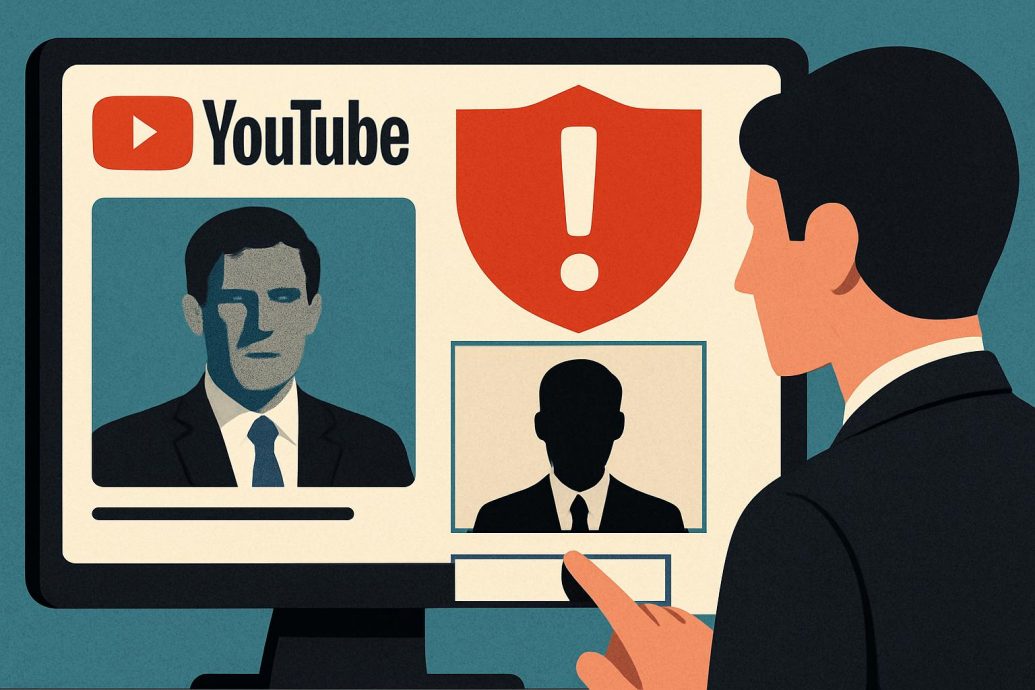

YouTube Deepfake Reporting Tool For Public Figures
Deepfake attacks on public figures are no longer hypothetical, they now shape elections, markets, and reputations in real time. PwC reports that 78 percent of business leaders see misinformation and disinformation as a top threat to their organization’s reputation, and video platforms like YouTube sit at the center of this risk. If you rely on public trust for your work, understanding how to respond in the first hour of a deepfake incident is now as important as media training or crisis PR. This article explains how YouTube’s emerging deepfake reporting tools for public figures work, why they matter, and how public personalities can build a faster, more reliable defense against AI generated impersonation.
Key Takeaways
- YouTube now treats realistic AI generated impersonation of public figures as a distinct policy and enforcement problem.
- Public figures can use a combination of in product reports, privacy and impersonation forms, and structured tools to challenge deepfakes.
- The most effective responses combine fast platform reporting, legal analysis, and coordinated communication with stakeholders.
- Regulatory moves like the EU Digital Services Act and FTC guidance are pushing platforms to offer better deepfake reporting pathways.
Why Deepfakes on YouTube Are Now a Critical Risk for Public Figures
From Celebrity Hoaxes to CEO Scams, What Changed in Three Years
Deepfake technology has moved from niche novelty videos to a mainstream tool for deception in only a few years. Early deepfake content often focused on obvious celebrity face swaps that were easy to dismiss as hoaxes, but modern systems leverage powerful generative AI models to create highly realistic video and audio. Anyone who still thinks of deepfakes as simple meme content is working with an outdated threat model.
A 2023 Europol report warned that deepfakes are increasingly used for fraud, disinformation, and extortion, with a growing share appearing on popular consumer platforms. Cybersecurity firm Recorded Future has tracked a steady expansion of deepfake enabled information operations, including fake speeches by politicians and fabricated announcements by corporate executives. In my experience, what many people underestimate is how quickly these clips circulate through YouTube recommendations and embedded players on news sites. Once a convincing fake appears to show a politician admitting to corruption or a CEO endorsing a scam, the narrative can harden before fact checks catch up. For leaders who want more background on what deepfakes are and how they work, this overview on what a deepfake is provides useful context.
Why Public Figures Are Prime Targets on YouTube
YouTube plays a unique role because it functions as both a search engine and a social network, which means deepfakes of public figures can surface through search results and algorithmic recommendations. Public figures including politicians, journalists, activists, celebrities, and senior executives already have large libraries of genuine video and audio online. Those archives provide ideal training material for face swap and voice cloning tools, making impersonation much more convincing.
Pew Research Center has found that most adults in the United States regularly get news from online video, which increases the credibility people assign to anything that looks like a news style clip on YouTube. Hany Farid of UC Berkeley has argued that realistic synthetic media erodes the evidentiary value of video, which is especially dangerous when it targets public decision makers. On YouTube, deepfakes can masquerade as interviews, leaks, or livestreams, then be mirrored by copycat channels, creating a fast scaling harassment and misinformation problem. This is the landscape in which a more formal YouTube deepfake reporting tool for public figures has begun to emerge. For teams that need practical guidance, resources that explain how to spot a deepfake can shorten the time between detection and first response.
What Is YouTube’s Deepfake Reporting Tool for Public Figures
YouTube’s deepfake reporting tool for public figures is a dedicated set of reporting pathways that allow people whose identity is used without consent in AI manipulated videos to request review and enforcement. It builds on YouTube’s privacy, impersonation, and misleading content policies, and focuses on content that convincingly imitates a person’s face, voice, or overall likeness. The tool is meant to route deepfake complaints from public figures and their authorized representatives to teams trained on synthetic media and platform policy, rather than treating them as generic abuse reports.
How This Tool Fits Into YouTube’s AI and Synthetic Media Policies
YouTube began updating its policies on synthetic media and manipulated content as generative AI tools became widely accessible. Its harmful or dangerous content rules already covered certain types of misinformation, such as medical falsehoods and content that undermines democratic processes. In 2023, YouTube announced that creators must disclose when they upload realistic AI generated or synthetic content, especially when it involves a real person, and that viewers would gain ways to request the removal of AI generated content that simulates an identifiable individual.
According to Google’s Safety Center, manipulated media that misleads users in sensitive areas like elections or public health can be removed or labeled. The emerging deepfake reporting tool for public figures sits on top of these rules and provides a more explicit option to say, this is an AI generated impersonation that misuses my identity. In practice, this means public figures can point reviewers directly to the deepfake issue, instead of hoping it is inferred from a generic harassment or misinformation complaint. This is closely connected to broader concerns about artificial intelligence and disinformation, which now feature in many public policy debates.
Who the Tool Is Designed For, Public Figures, Creators, Candidates
The primary audience for YouTube’s deepfake reporting flows are people whose identity has public significance and who are plausibly being targeted for reputational or political impact. That includes elected officials, candidates for office, government spokespeople, high profile journalists, well known influencers, and senior executives whose statements can move markets. YouTube policy teams also consider factors such as how often a person appears in news coverage, whether they are a central figure in a public controversy, and whether the content relates to a matter of public interest.
Large creators on YouTube and other platforms can fall into this category because attackers often use deepfakes to impersonate them in scam or sexualized content. What becomes clear in practice is that the more public your role, the more likely YouTube will treat deepfake impersonation as part of its public interest and election integrity work. The tool is not meant for casual disputes over parody selfies, but for realistic impersonation that can mislead audiences about what a known figure has done or said.
Who Can Actually Use YouTube’s Deepfake Reporting Pathways
How Platforms Usually Define a Public Figure in Policy
Platforms rarely publish a single strict checklist, but certain factors appear consistently when they decide who counts as a public figure. Policy teams at platforms such as YouTube, Meta, and X often assess whether the person holds public office, is running for office, has a significant professional or cultural role, or has a large verifiable following. Legal scholars like Danielle Citron have noted that platforms use a broader notion of public figure than defamation law, with an emphasis on how often someone appears as the subject of public discussion.
For content moderators, a viral TikTok creator with millions of followers can look similar to a television host or athlete in terms of risk exposure. YouTube’s own privacy complaint process distinguishes between ordinary individuals and people whose information appears in newsworthy or documentary contexts. If your work or public presence routinely attracts media coverage or large online audiences, YouTube is more likely to treat deepfake complaints as involving a public figure.
Can Non Public Figures Report Deepfakes Too
People who are not public figures still have options when they discover deepfake content of themselves on YouTube, even if they do not access a specialized deepfake reporting form. They can use the standard privacy complaint form to report non consensual use of their image or voice, which is particularly relevant for intimate or sexualized deepfakes. Academic work summarized by MIT Technology Review has found that the vast majority of deepfake videos online are non consensual sexual content, often targeting women who are not celebrities.
These individuals can also report deepfakes under harassment, bullying, or impersonation categories, especially where the video claims to be them or uses their personal information. In my experience, a common mistake I often see is assuming that only a labeled deepfake form counts, when in reality privacy and abuse tools are powerful if used with detailed evidence. People facing serious harm should also document the incident for potential legal action under state laws dealing with image based abuse or deepfake exploitation. For a broader discussion of how synthetic media undermines trust, some readers may benefit from this guide to navigating deepfake risks.
How to Report a Deepfake Video on YouTube as a Public Figure
Reporting a deepfake on YouTube as a public figure involves verifying that the content is realistically manipulated, collecting precise evidence, and using the most relevant reporting channel, including privacy, impersonation, or AI generated content complaint forms. The process can be handled by the public figure, their communications staff, legal counsel, or a specialized monitoring and reporting service acting as an authorized representative. Structured, complete reports that clearly explain how the video misrepresents the person and why that matters are far more likely to result in fast and decisive action.
Step 1, Confirm It Is Really a Deepfake and Not Just Unflattering Footage
The first step is distinguishing between a true deepfake and a misleading edit of real footage, because YouTube policy treats them differently in some cases. Signs of AI manipulation include unnatural blinking or facial movements, inconsistent lighting on the face compared with the background, and slight warping around the mouth when the person speaks. Voice cloning deepfakes can reveal themselves through odd intonation or mismatched breaths, relative to the video frames.
Tools such as Microsoft’s Video Authenticator and various academic detectors from UC Berkeley and Carnegie Mellon can sometimes help, but they are not perfect and often restricted to research collaborations. Public figures should also ask whether the scenario depicted is plausible, for instance, a politician admitting to a crime on a random channel or a CEO announcing a major acquisition with no corroborating press release. Precise labeling, such as noting this appears to be an AI generated audio track placed over archival footage, helps reviewers understand what kind of synthetic media is involved.
Step 2, Gather Evidence Before You Click Report
A strong deepfake complaint on YouTube depends on having a complete evidence bundle ready before you open any reporting form. At minimum, that bundle should include the full URL of the video, the channel URL, and clear timestamps where the impersonation is visible or audible. Screenshots of key frames, transcripts of the fake statements, and links to authentic footage that show how you normally look or speak are also useful.
If you have external effects to point to, such as news stories that embedded the clip or social media threads spreading it, capture those URLs as well. Incident logs used by cybersecurity and crisis response teams often track when the video was first detected, how quickly views grew, and what responses were attempted. For public figures with large staffs, designating a standard evidence template that lawyers, communications staff, and technical teams all recognize can reduce confusion during a real incident.
Step 3, Navigating to the Correct YouTube Reporting Form
There are two main paths to report a deepfake impersonation on YouTube, and choosing the right one saves time. The first method uses the in product report function under the video, where you can select categories such as spam, harmful content, harassment, or misleading content, then describe that the video is an AI generated deepfake of a public figure. This path is quick but offers limited space for detailed evidence, so it is often best coupled with a more formal complaint.
The second method uses YouTube Help Center forms such as the privacy complaint form or impersonation and phishing form, which ask whether you are the person depicted or an authorized representative, and provide larger fields for explanation. In late 2023, Google described plans to add specific interfaces for people to request removal of AI generated content that simulates their voice or image, which would integrate with these existing forms. Many public figures use a structured reporting tool or service that automatically selects the right YouTube form and fills in standard language, then pastes in case specific details.
Step 4, Filling Out the Report So It Gets Taken Seriously
The content of the report matters as much as the fact that you submitted one, because human reviewers and triage systems rely on the information you provide. A clear description starts with what the video claims to show, for example, a fake confession, a fabricated endorsement of a product, or an invented scandal. Next, explain how the video uses AI or synthetic media to misrepresent your face, voice, or likeness, and mention if it uses face swap, voice clone, or full body synthesis.
Describe the consequences, such as confusion among voters, reputational harm with investors, or safety risks from harassment and threats. Referring explicitly to YouTube policies on misleading or deceptive content, impersonation, or non consensual synthetic media shows that you understand the rules and aligns your request with internal categories. One thing that becomes clear in practice is that concise, factual language generally performs better than emotional appeals, even when the situation is deeply upsetting.
Step 5, What Happens After You Click Submit
Once you send a deepfake related report, YouTube systems log the complaint and route it for review, using a mix of automation and human moderators. Automated filters can prioritize cases that mention elections, known public figures, or violations like harassment and hate, drawing on YouTube’s trust and safety rules. Human reviewers then compare the reported content with policies and, when relevant, guidelines for synthetic media and manipulated content.
Transparency reports from YouTube and Google indicate that millions of videos are removed each quarter, many following user reports of policy violations. You may receive an email asking for confirmation that you are the depicted person or for more context about why the footage is impossible or deceptive. In cases where content is removed, YouTube can either take down the video entirely, age restrict it, or limit distribution, depending on how policy applies to satire, newsworthiness, or commentary.
Step 6, Following Up, Escalating, and Documenting Outcomes
If the response from YouTube does not address the core harm, public figures often need a second layer of escalation. That can mean submitting a revised report with additional evidence, such as expert opinions from digital forensics specialists or detailed comparisons with authentic footage. Legal teams sometimes send formal letters referencing laws on defamation, right of publicity, or election misinformation, which can prompt a fresh review.
In the European Union, obligations under the Digital Services Act require very large platforms to maintain robust notice and action mechanisms, giving regulators leverage when enforcement seems inadequate. Public figures should maintain a detailed record of all correspondence, report identifiers, and timing, because that information supports later legal action or communication with regulators. In my experience, this documentation also helps internal stakeholders understand what was tried and how quickly the platform responded, which matters for crisis postmortems.
Reporting Checklist for Busy Public Figures and Teams
For many public figures, the first hours of a deepfake incident feel chaotic, so a simple checklist can serve as a stabilizing tool. Start by assigning one person to own evidence collection and one to own communication with YouTube and other platforms. Confirm deepfake indicators and gather URLs, timestamps, screenshots, and authentic comparison clips into a single document or case management system.
Use both in product reports and formal privacy or impersonation forms, referencing synthetic media and relevant YouTube policies by name. Notify legal counsel and communications leaders so that they can prepare statements and assess potential legal remedies. Finally, schedule a follow up review within twenty four hours to track platform responses, evaluate whether view growth has slowed, and decide on any next legal or public communication steps.
Pros and Cons of YouTube’s Deepfake Reporting System for Public Figures
YouTube’s current deepfake reporting mechanisms provide an important first line of defense for public figures, yet they are not a complete solution. The system offers structured channels for flagging AI generated impersonation and can result in rapid takedowns or labeling, especially for high risk categories such as elections. At the same time, public figures must navigate opaque enforcement decisions, imperfect detection, and gaps in protection for non public individuals, which means complementary legal, regulatory, and reputational strategies are essential.
What the Tool Does Well in Practice
When a deepfake clearly violates policy, YouTube can act quickly, especially if it involves violent or sexual content, hate speech, or obvious election disinformation. Its dedicated privacy and impersonation forms help route reports from public figures to teams that understand the risks of synthetic media and high profile abuse. In public statements, Google has emphasized its commitment to election integrity and has rolled out labeling for certain AI generated content, especially around political advertising on YouTube.
RAND Corporation research suggests that platforms which combine user reporting with internal detection tools can significantly reduce the spread of manipulated media, especially before key events. Public figures who use structured reporting tools often see shorter time to decision because their submissions match the categories and language that reviewers expect. These strengths make YouTube’s deepfake reporting environment a vital part of any broader defense strategy against synthetic impersonation.
Where the System Falls Short and Why That Matters
Despite these advances, important gaps remain in how YouTube handles deepfake harms, particularly for cases that fall near policy boundaries. Satirical or commentary content that uses deepfake techniques may stay online even if it feels deeply unfair to the subject, as long as it does not cross into clear harassment or misinformation. Review processes can be slow compared with the viral dynamics of a controversial video, especially outside election periods or when staffing is strained.
Studies highlighted by the Brookings Institution emphasize that even short lived deepfake incidents can leave lasting impressions, because people often remember the allegation but forget the correction. Non public victims of deepfakes, especially those facing non consensual sexual content, may find it harder to navigate the system, despite YouTube’s policies against sexualized abuse. These limitations mean public figures must think beyond a single report button and organize broader support involving legal expertise, media literacy, and, in some cases, law enforcement.
When YouTube Reporting Is Enough and When You Need Lawyers or PR
Public figures often ask whether a strong YouTube report alone can contain a deepfake incident, and the answer depends on the severity and context. If the video has modest reach, clearly violates policies, and has not yet been amplified by major media, a successful takedown may resolve the immediate risk. If the deepfake is linked to an ongoing political campaign, corporate crisis, or harassment campaign, you usually need parallel action from legal teams and communications professionals.
Public relations experts often stress that narratives solidify quickly, so issuing a clear statement and offering authentic footage can help anchor coverage, even while YouTube reviews the complaint. Legal counsel may pursue defamation claims, right of publicity actions, or complaints to regulators such as the FTC in the United States when deceptive practices or impersonation scams are involved. One thing that becomes clear in practice is that the most resilient responses treat YouTube’s reporting tools as one part of a coordinated, multi channel defense.
YouTube Deepfake Tools Compared With Other Ways to Fight Back
Public figures and their teams have several overlapping methods to challenge deepfake content, and YouTube’s reporting system is only one layer. Comparing platform reporting to copyright tools, legal processes, and monitoring services helps clarify where each method fits, and how a combined approach can reduce reputational and financial damage. Understanding these options matters because attackers often spread the same deepfake across multiple platforms, including TikTok, Instagram, X, and smaller video sites, not just YouTube.
YouTube Deepfake Reports Versus Copyright and Content ID
Some public figures consider using copyright as a shortcut to remove deepfake videos, especially when the attackers have reused segments of genuine footage. YouTube supports DMCA takedown notices and operates Content ID, its automated copyright recognition system, which can detect and block unlicensed use of videos and audio owned by rights holders. Deepfakes often generate synthetic imagery or audio that does not directly copy a specific copyrighted work, which limits the applicability of these tools.
Legal scholars note that misusing copyright to suppress critical or newsworthy content can create legal and public relations risks, especially in jurisdictions that protect fair use or fair dealing. In my experience, copyright tools work best as a complement when attackers recycle material from previous interviews or speeches, not as a primary solution for novelty deepfakes. For pure AI generated impersonations, YouTube’s impersonation, privacy, and synthetic media policies are usually the more appropriate anchors for reporting and enforcement.
Platform Tools Versus Legal Remedies and Law Enforcement
Legal routes can address harms that platform tools cannot, especially when deepfakes form part of extortion, fraud, or large scale harassment campaigns. The Federal Trade Commission in the United States has warned about impersonation scams using voice cloning and synthetic media, and has pursued enforcement against deceptive practices that harm consumers. In California, laws such as AB 602 target certain sexual deepfakes, and AB 730 restricts deceptive deepfake content about political candidates near elections.
In Europe, emerging national and EU level frameworks encourage or require platforms to respond to synthetic media risks, but also leave room for civil claims between individuals. Law enforcement may treat deepfake extortion or fraud as cybercrime, especially when large sums of money or safety threats are involved. Public figures should coordinate carefully with counsel before pursuing legal action, because lawsuits can draw more attention to the deepfake and may take longer to resolve than platform reporting.
Monitoring Services and Automated Alert Systems for Deepfakes
An increasing number of organizations now rely on monitoring services and automated alert systems that scan platforms like YouTube for potential deepfake impersonation. These services use a mix of keyword tracking, face recognition, voice similarity analysis, and human review to flag suspicious videos that use a public figure’s name or likeness. Cybersecurity companies and specialist firms integrate YouTube data with social media monitoring to spot coordinated campaigns, which is especially important during elections or major product launches.
Gartner and other analysts have highlighted deepfake driven fraud risk as a growing concern in finance and corporate security, prompting some companies to tie monitoring into formal incident response playbooks. When such a service is connected to a structured reporting tool, detected incidents can trigger pre filled YouTube reports, complete with evidence and standard policy references. For public figures with limited capacity, outsourcing early detection and initial reporting can significantly reduce time to response, even if final decisions still rest with YouTube and legal advisors.
How YouTube Deepfake Reporting Actually Works Behind the Scenes
Understanding the mechanics of deepfake reporting on YouTube helps public figures set realistic expectations and design effective strategies. While YouTube does not publish full technical blueprints of its content moderation systems, public statements, research collaborations, and regulatory filings reveal key components, including automated detection, human review, and feedback loops from user reports. Academic work on content moderation and transparency reports from Google give a reasonable picture of the workflow without disclosing security sensitive details.
Detection, Triage, and Human Review Pipelines
YouTube uses a combination of machine learning models and human moderators to detect and evaluate potentially harmful content, including manipulated media. Automated systems scan uploads for known patterns of abuse, using classifiers trained on large datasets of labeled content, and can route suspicious videos into higher priority review queues. These classifiers can be tuned for specific issues such as spam, hate speech, or misinformation, and industry reports from Google DeepMind and Microsoft show similar efforts to develop deepfake detection models.
When a user or public figure submits a report describing a deepfake, that complaint acts as an extra signal that can elevate the priority of the video in the moderation pipeline. Human reviewers then apply platform policies, supported by internal guidelines that explain how to handle synthetic media, satire, newsworthy content, and cross cultural context. In sensitive areas like elections, YouTube sometimes deploys specialized review teams trained on local languages and political landscapes, which can improve accuracy but still leaves room for error.
Data Sources, Policy Training, and Quality Control
Behind every enforcement decision, YouTube relies on internal training materials, policy documents, and case reviews that describe what counts as misleading or harmful synthetic media. Trust and safety teams draw on external research from organizations like the Center for Democracy and Technology, RAND Corporation, and academic groups at institutions such as Stanford and UCL, which study deepfake risks to democracy and security. Reviewers participate in ongoing training that includes examples of deepfake videos, political misinformation, and harassment patterns, informed by lessons from previous waves of abuse.
Quality control involves sampling decisions and auditing them for consistency with policy, sometimes with the help of external auditors or regulators, especially under the EU Digital Services Act. Feedback from user appeals, public controversy, and independent research can prompt policy recalibration, for instance, tightening rules around election deepfakes or improving labeling practices. Over time, these feedback loops can make enforcement more consistent, but they also mean that public figures may experience policy changes during long running disputes.
Limits of Automated Deepfake Detection and Why User Reports Matter
Technical research in venues like CVPR and NeurIPS shows that deepfake detection systems achieve high accuracy on benchmark datasets but often struggle in the wild. Attackers can compress videos, add filters, or combine multiple manipulations to break known detectors, and new generative models continuously change the visual and audio signatures of synthetic media. A study in the journal Science has cautioned that relying solely on automated detection may produce both false positives and false negatives, especially at internet scale.
This is one reason YouTube and other platforms emphasize user reporting alongside internal detection, since people can recognize context and identity misuse better than automated systems. Public figures, who know their own speech patterns and histories, can spot subtle inconsistencies that machines miss, then describe them in their reports. In my experience, this human in the loop model is not perfect, but it is the only viable approach while deepfake generation technology continues to evolve so rapidly.
What Most Articles Miss About Deepfake Reporting for Public Figures
Many discussions of deepfakes focus on dramatic technical demonstrations or broad ethical concerns, but leave out operational details that matter to public figures. Three under explored areas include the organizational complexity of incident response, the cost tradeoffs involved in monitoring and reporting, and the psychological toll on individuals targeted by synthetic impersonation. Addressing these gaps provides a more realistic view of what it takes to use YouTube deepfake reporting tools effectively.
Organizational Complexity and Cross Team Coordination
Deploying a reliable deepfake response process inside a campaign office, media organization, or company requires coordination across legal, communications, security, and executive leadership. Someone must own monitoring, whether using keyword alerts, external services, or manual searches, and they need clear authority to trigger reporting workflows. At the same time, legal teams must vet language in YouTube reports and public statements to avoid undercutting later litigation or regulatory complaints.
Communications staff must balance debunking the deepfake with avoiding amplifying it, a tension PR experts often highlight in their crisis playbooks. A common mistake I often see is leaving deepfake incidents to individual staffers without clear ownership, which leads to inconsistent responses and missed reporting windows. Public figures can mitigate this by creating concise playbooks that define roles, thresholds for escalation, and pre approved language for initial YouTube reports and public comments.
Cost Tradeoffs, Monitoring, Legal Support, and Reputation Insurance
Deepfake protection for public figures is not only a technical challenge, it is also a budgeting decision that competes with other security and communication priorities. Continuous monitoring across platforms like YouTube, TikTok, and Instagram requires either internal staff time or subscription services, and both options entail ongoing costs. Legal support for deepfake incidents, especially cross border cases involving multiple jurisdictions, can be expensive, and outcomes are not always predictable.
Some organizations treat these costs as part of broader cyber risk management and may explore reputation insurance products that now mention synthetic media as a covered threat. Gartner has noted that deepfake enabled fraud and impersonation are driving new spending in security operations and identity verification, which often intersects with public figure protection. In this environment, structured YouTube reporting tools that save staff time and raise success rates can be justified as part of an overall risk reduction strategy, even if they are not a complete solution.
The Human Impact on Public Figures and Staff
Articles about deepfakes sometimes overlook the personal toll on those targeted by realistic impersonations, which can include shame, fear, and burnout. Non consensual sexual deepfakes can be particularly devastating, and research cited by the Electronic Frontier Foundation and WITNESS has documented serious psychological harms among victims. Public figures and their staff may also face waves of harassment following a viral deepfake, including threats, doxxing attempts, and hostile media coverage.
Internal teams responsible for monitoring and moderation can experience secondary trauma from repeatedly viewing abusive content, a risk that large news organizations and social platforms now try to address with mental health support. A humane deepfake response plan therefore includes access to counseling, workload rotation, and clear boundaries for staff exposure. In my experience, acknowledging these human factors from the outset helps organizations sustain their ability to use tools like YouTube’s reporting systems without burning out key people.
Case Studies, How Real Organizations Deal With YouTube Deepfakes
Looking at concrete examples from real world organizations helps illustrate how YouTube deepfake reporting fits into broader defense strategies. Although case specific tools and processes vary, patterns emerge in how political campaigns, entertainment companies, and corporations coordinate technical, legal, and communication responses to synthetic media attacks. These case studies show that proactive preparation and structured reporting can reduce the damage caused by deepfakes, even when they spread quickly on YouTube.
Pre Election Deepfake Targeting a Political Figure
During the 2022 French presidential campaign, a deepfake video circulated on social media, including YouTube mirrors, that appeared to show candidate Emmanuel Macron making controversial statements about voters. French fact checking groups and media outlets quickly identified the clip as manipulated, referencing analysis by digital forensics experts. The Macron campaign, informed by similar incidents in other countries, had already prepared contacts with platforms and used formal reporting channels to flag the video as deceptive political content.
YouTube reviewers evaluated the complaints under their policies on misinformation in elections and synthetic media, and copies of the video were removed or limited in distribution. Researchers at institutions like Sciences Po later examined the incident as part of broader studies on disinformation in European elections. This case illustrates how campaigns that plan ahead for deepfake risks can use platform tools more effectively during the busiest weeks before a vote. For readers who work in politics, resources on AI and election misinformation can help with pre election risk planning.
Celebrity Face Swap in Harmful YouTube Content
Hollywood actors have increasingly faced deepfake impersonation on video platforms, including face swaps placing their likeness into explicit or defamatory scenarios. In 2023, actor Scarlett Johansson publicly responded after an AI generated advertisement using her image and voice appeared online without permission, highlighting the lack of consent in such creations. Talent agencies and entertainment lawyers often use YouTube’s privacy and impersonation forms to report videos that misuse their clients’ likeness, especially when those clips appear in non consensual or misleading contexts.
Studios and rights holders may also layer copyright claims when deepfake videos reuse material from films or interviews, using Content ID to detect and monetize or block unauthorized uploads. Industry bodies such as SAG AFTRA have raised concerns about AI misuse in contract negotiations, pushing for clearer protections of performers’ digital replicas. This combination of platform reporting, legal action, and collective bargaining shows how entertainment professionals approach deepfake threats on YouTube and beyond.
Corporate Executive Impersonation in a Scam Video
In 2019, criminals used an AI generated voice to impersonate the chief executive of a UK based energy firm and tricked a subsidiary into wiring hundreds of thousands of euros, as reported by the Wall Street Journal. While that incident involved phone calls rather than YouTube videos, similar voice and video deepfake scams have since appeared on video platforms, showing supposed executives endorsing fraudulent investments. Large companies now monitor YouTube and other platforms for videos that misuse their executives’ names, logos, and apparent appearances, often working with cybersecurity vendors such as CrowdStrike or IBM Security.
When a suspicious clip emerges, corporate security teams coordinate with communications and legal departments to file structured impersonation and fraud complaints through YouTube’s reporting tools. Some firms also publish official statements and videos on their own channels to disavow the scams and provide verified contact information. This pattern demonstrates how corporate actors integrate YouTube deepfake reporting into broader anti fraud and brand protection efforts.
FAQ, Common Questions About YouTube Deepfake Reporting for Public Figures
How do public figures report a deepfake video on YouTube
Public figures can start by opening the specific YouTube video and using the Report option under the player, where they select the category that best matches misleading or abusive content. They should then use YouTube’s Help Center forms for privacy or impersonation complaints, confirming that they are the person depicted or an authorized representative. In the description fields, they should clearly explain that the video is an AI generated deepfake impersonation of their face or voice, and describe the harm involved. Attaching URLs, timestamps, screenshots, and links to authentic footage helps reviewers understand the context and evaluate the claim. Many public figures rely on staff, lawyers, or dedicated monitoring services to prepare and submit these reports on their behalf.
What qualifies as a deepfake under YouTube policy
YouTube uses the broader term synthetic media for AI generated or heavily manipulated content, and deepfakes are a subset that convincingly imitate real people. Under YouTube policy, the key concern is whether manipulated media seriously misleads viewers about what a real person did or said, especially in sensitive areas like elections or public health. Content that simply uses light filters or obvious comedy face distortions is unlikely to be treated as a policy relevant deepfake.
Videos that replace a public figure’s face or voice into a realistic scene, or that alter words in a speech to reverse its meaning, are more likely to fall under deepfake related rules. YouTube may label such content, reduce its visibility, or remove it outright when it violates misleading content, privacy, or impersonation policies.
Who can use YouTube’s deepfake reporting options for public figures
YouTube’s most targeted deepfake reporting pathways are intended for people who are realistically impersonated in synthetic media, including public figures and sometimes other individuals. Elected officials, candidates, entertainers, influencers, and corporate leaders can all report videos that use AI to imitate their likeness without consent. Authorized representatives, such as legal counsel, agents, or communications staff, can usually submit complaints on behalf of the person depicted, as long as they clearly state this in the form.
Everyday users who are not public figures can also report deepfakes that target them, often through privacy and harassment tools, especially when the content is sexual or intensely abusive. The key is that the reporting person has a direct connection to the identity being misused in the video.
What proof do I need to show YouTube that a video is a deepfake
YouTube does not require formal forensic analysis, but credible, detailed evidence increases the chances of a successful report. You should provide the full video URL, the channel link, and timestamps where your face or voice appears in an obviously manipulated way. Screenshots or short clips highlighting artifacts, such as mismatched lip movements or unnatural lighting, can be useful.
It helps to include links to authentic videos that show how you really look and speak in similar situations, so reviewers can compare. Written explanations of why the depicted scenario is impossible or misleading, such as claiming you were in a location where you were not, also support your case.
How long does YouTube take to remove a deepfake video
There is no fixed timeline, but platform transparency reports suggest that many user reported violations are reviewed within days, and high priority issues can move faster. Deepfakes involving elections, child safety, or violent threats are more likely to receive accelerated review compared with routine policy questions. Some public figures report decisions within hours when the case is clear and well documented, while more complex or borderline content can take longer.
In certain jurisdictions, legal or regulatory obligations, such as those in the EU Digital Services Act, may influence how quickly large platforms act on credible notices. Public figures should monitor the situation, document any follow up, and be prepared to re submit or escalate if the first response is incomplete.
What happens after you report a deepfake on YouTube
After you submit a report, YouTube logs the complaint and routes it through automated systems and human reviewers who apply platform policies. You may receive an acknowledgment email confirming that your report was received and sometimes a request for more information, especially if identity or consent is unclear. Reviewers decide whether the video violates policies such as misleading content, impersonation, harassment, or non consensual sexual content, and they choose an enforcement action accordingly.
Possible actions include removal of the video, age restriction, reduced visibility, or no action if it does not meet violation thresholds. YouTube usually notifies you of the outcome, though the explanation may be brief and not reveal the full internal reasoning.
Is there a special YouTube policy for AI deepfakes of politicians
YouTube does not have a single standalone deepfake policy only for politicians, but it treats manipulated media in political contexts as especially sensitive. Its broader misinformation rules cover content that aims to mislead voters about how to participate in elections or about the results themselves. Synthetic media that appears to show politicians endorsing false claims or confessing to invented crimes can fall under these policies.
Google has also announced that political advertisers using YouTube must disclose when they use synthetic media, and platforms are under regulatory pressure in the EU and elsewhere to address election related deepfakes. These measures effectively create a higher enforcement priority for AI generated political impersonation compared with some other types of content.
What is the difference between a privacy complaint and a deepfake report on YouTube
A privacy complaint focuses on the unauthorized use of personally identifiable information, such as your full name, face, voice, or home address, regardless of whether AI is involved. A deepfake related report emphasizes that the content is artificially generated or heavily manipulated in a way that misleads viewers about your actions or statements. In practice, deepfake incidents often involve both privacy and impersonation elements, so complainants may use the privacy form and explicitly mention synthetic media in their description.
YouTube’s internal systems can then treat the case as a higher risk impersonation issue, even if the external form is labeled privacy. Understanding this overlap helps public figures choose the most effective reporting path for their situation.
Can public figures get every deepfake removed from YouTube
Public figures rarely achieve a perfect takedown of every deepfake involving them, partly because some content may fall under satire, commentary, or news reporting that platforms protect. YouTube is more likely to remove deepfakes that clearly violate specific policies, such as deceptive practices in elections, non consensual sexual content, or targeted harassment and threats. Borderline cases that communities treat as satire, even if they are upsetting or unfair, may be left up with contextual labels or reduced recommendations.
Deepfake content can also reappear through re uploads, mirrors, and compilations, which makes complete eradication difficult in practice. The goal for most public figures is to reduce the visibility and impact of the most harmful clips, rather than to eliminate every trace.
Do other platforms have tools similar to YouTube’s deepfake reporting system
Other major platforms, including TikTok, Instagram, Facebook, and X, have introduced policies and reporting tools to address synthetic media and deepfakes. TikTok has rules against misleading synthetic media and allows users to report content that uses their likeness without consent. Meta’s platforms offer options to report impersonation, harassment, and non consensual intimate imagery, and they have experimented with labeling manipulated media.
X has community notes and abuse reporting that can sometimes cover deepfake content, although enforcement practices vary. Public figures should understand each platform’s specific tools and policies, since a deepfake incident often spans multiple services at once.
How can public figures protect themselves from deepfakes on YouTube before a crisis
Public figures can reduce their risk by building proactive defenses, rather than waiting for a major deepfake incident to occur. That includes setting up regular monitoring of YouTube and related platforms for their name, likeness, and key topics, either through internal staff or external services. They can also prepare incident response playbooks that define roles, reporting steps, and template language for YouTube complaints and public statements.
Media training that covers deepfakes and synthetic media helps spokespeople answer questions when journalists or constituents raise concerns. Collaborating with legal advisors and digital security experts in advance ensures that platform reporting is backed by clear legal options if harms escalate.
What role do regulators and laws play in YouTube’s deepfake reporting tools
Regulators and lawmakers are pushing platforms to provide more robust mechanisms for dealing with harmful deepfakes and other synthetic media. The EU Digital Services Act imposes heightened obligations on very large online platforms, including YouTube, to manage systemic risks from disinformation and manipulated content. The EU AI Act and similar initiatives reference transparency requirements for AI generated media, increasing pressure to label or disclose such content.
In the United States, the FTC has warned companies that using AI to deceive consumers or impersonate individuals can lead to enforcement, which influences platform policies. National laws such as California’s deepfake legislation and emerging rules in China on deep synthesis technologies also shape how platforms design reporting pathways and enforcement processes.
Are deepfake detection tools reliable enough for public figures to use in reports
Deepfake detection tools can provide useful signals, but they are not perfectly reliable, especially when attackers adapt to known detection methods. Academic studies show that models trained on certain datasets may fail to recognize newer types of deepfakes or videos that have been compressed or altered for social media. Publicly accessible detectors may lag behind the latest generative AI advances, and false positives can create their own problems if used carelessly.
Public figures can still use these tools as part of their evidence bundle, especially when they highlight clear artifacts or frame inconsistencies. When possible, combining automated analysis with expert human review from digital forensics specialists and clear contextual explanations gives YouTube more to work with while avoiding overconfidence in any single detector.