
Introduction
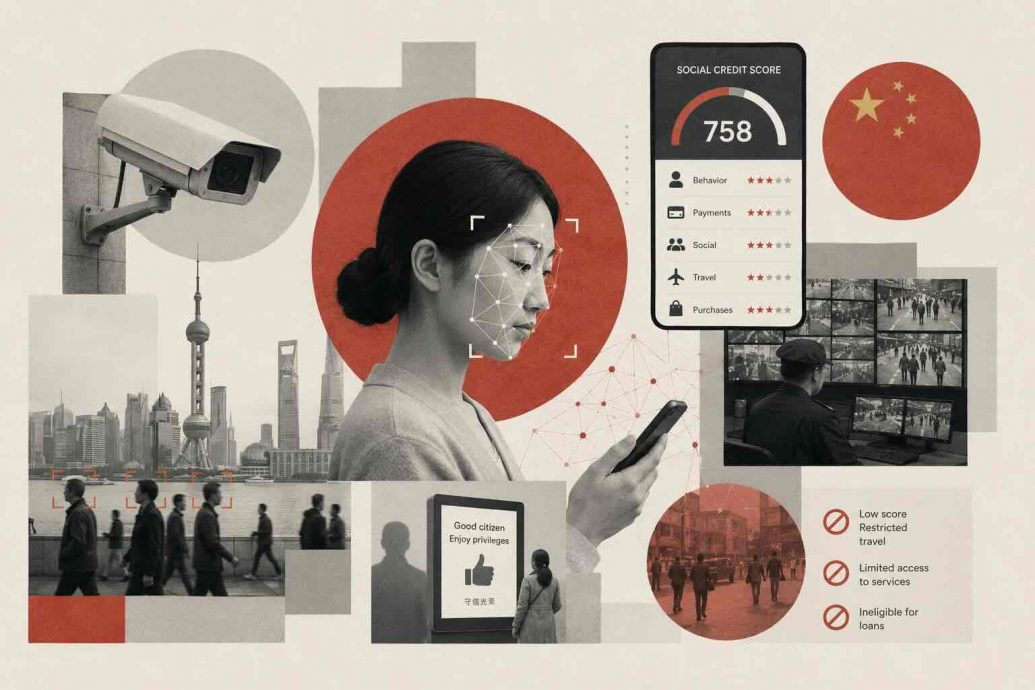
China’s Social Credit System stands as one of the most ambitious governance experiments in modern history, blending big data, administrative enforcement, and behavioral incentives into a sprawling national framework. By early 2025, the National Credit Information Sharing Platform had collected over 80.7 billion records covering approximately 180 million businesses, making it one of the largest regulatory databases ever constructed. The system does not operate as a single unified score for every citizen, despite widespread assumptions in Western media about its design. It is best understood as a patchwork of local pilot programs, industry-specific blacklists, and corporate compliance tools connected through shared data platforms. A March 2025 policy directive from the Communist Party leadership introduced 23 new measures aimed at standardizing credit management across government, businesses, and individuals. This article examines how the system works in practice, what has changed since its inception, and what it means for individuals, businesses, and the global community in 2026. The stakes are significant: the system touches everything from loan access and travel privileges to international trade and cross-border regulatory influence.
Quick Answers About China’s Social Credit System
What is China’s Social Credit System and how does it work?
China’s Social Credit System is a national regulatory framework that tracks the legal and commercial integrity of individuals and businesses, using government databases, court records, and blacklists to reward compliance and penalize violations.
Does every person in China have a single social credit score?
No. As of 2026, no unified national score exists for individuals. The system consists of fragmented local pilots, agency-specific blacklists, and corporate compliance scoring rather than one centralized personal rating.
How does the social credit system affect foreign companies in China?
Foreign-invested enterprises are subject to corporate social credit evaluations, including cross-ministry data sharing for tax, labor, and environmental compliance, with penalties ranging from restricted market access to increased inspections.
Key Takeaways
- The system’s global influence extends beyond China’s borders, with surveillance technology exports and international standard-setting reshaping credit frameworks in developing nations.
- China’s Social Credit System is not a single score but a network of blacklists, redlists, and compliance databases managed by dozens of government agencies.
- Corporate social credit enforcement has intensified since 2025, with cross-ministry data sharing and formalized penalties for regulatory violations.
- Public opinion surveys suggest nearly 80% of Chinese citizens support the system, though research indicates this support partly stems from limited awareness of its repressive potential.
Table of contents
- Introduction
- Quick Answers About China’s Social Credit System
- Key Takeaways
- Understanding China’s Social Credit System
- How the Policy Framework Evolved Over a Decade
- Key Institutions Behind the Credit Infrastructure
- How Data Flows Through the National Platform
- The Corporate Social Credit Score in Practice
- What Happens When an Individual Gets Blacklisted
- Rewards for Compliant Behavior and High Scores
- Sesame Credit and the Private Sector Connection
- The Role of AI and Facial Recognition in Credit Monitoring
- How Foreign Companies Navigate the System
- Privacy Risks and Data Collection Concerns
- Human Rights Criticisms and International Backlash
- How Domestic Public Opinion Shapes the System
- Comparing Social Credit to Western Credit Systems
- How China’s Social Credit Approach Influences the World
- Lessons From Social Credit Deployments Around the World
- The Legal Frontier: Upcoming Legislation and Reforms
- Where the Social Credit System Goes From Here
- Key Insights
- With and Without Social Credit: A Regulatory Comparison
- Frequently Asked Questions
Understanding China’s Social Credit System
China’s Social Credit System is a government-led regulatory framework designed to evaluate the trustworthiness of individuals, businesses, and government entities through data collection, blacklists, and administrative enforcement. The system connects financial credit data, regulatory compliance records, and behavioral assessments into a policy infrastructure that affects how entities operate within China’s economy, and it remains under active development rather than being a completed, monolithic program.
China’s Social Credit System: Impact Explorer
Adjust compliance factors to see how they affect corporate credit standing, consequences, and business operations in China.
- Standard regulatory treatment, no restrictions active
The term “social credit” (社会信用, shèhuì xìnyòng) is intentionally broad and does not translate neatly into a Western concept of credit scoring. One law professor in Beijing has described it as a “working term,” meaning it functions as an umbrella category covering multiple national initiatives and city-level pilot projects. The system emerged from a 2014 State Council planning document that outlined a vision for building a “credit-worthy society” by 2020, though that deadline passed without a single unified system being switched on. Instead, central authorities continued emphasizing improvement and standardization of social credit policies rather than deploying one integrated platform. The most common misconception about the system is that it assigns a single numerical score to every Chinese citizen, which is not how it currently operates. What exists in practice is a decentralized collection of agency-managed databases, local experiments, and corporate compliance mechanisms linked through shared data-sharing agreements.
How the Policy Framework Evolved Over a Decade
The origins of China’s Social Credit System trace back to the early 2000s, when China’s leadership grappled with widespread contract violations, patent infringements, food safety scandals, and fraud that they believed were stunting economic growth. The State Council formally announced the planning framework in June 2014, outlining the legal and regulatory architecture for a national system. Eight private companies, including Ant Financial, were initially approved to experiment with personal credit scoring as part of this broader initiative. The 2014 blueprint set a target of establishing a functioning system by 2020, though the reality turned out to be far more fragmented. Local governments launched dozens of independent pilot programs in cities like Rongcheng, Suzhou, and Hangzhou, each with its own criteria, scoring methods, and enforcement mechanisms. The impression that a single integrated system would emerge by 2020 proved inaccurate, and experts now describe the system as a policy framework rather than a technological product.
Between 2016 and 2024, China shifted from fragmented local pilots toward a more coordinated national framework managed through centralized platforms. The National Credit Information Sharing Platform became the core data hub, linking ministries, provincial databases, and regulators into a single information backbone. By 2023 alone, a total of 118 national-level regulations were issued specifically for the Social Credit System, supported by more than 500 detailed regulations at the local level. This legislative activity signaled that the system was far from dormant, even as international attention faded from the headlines. The pace of regulatory updates also created challenges for companies struggling to keep up with rapidly shifting compliance requirements across different provinces and agencies.
A pivotal moment arrived on March 21, 2025, when the General Office of the Communist Party Central Committee and the General Office of the State Council jointly released a 23-point policy directive. This document expanded the role of creditworthiness assessments across government institutions, businesses, social organizations, and individuals simultaneously. The directive emphasized data-driven governance, stronger legal safeguards for information security, and protections against excessive data collection and illegal use of personal information. Most concretely for 2026, the National Development and Reform Commission promulgated Credit Repair Management Measures effective April 1, 2026, establishing clear rules for how entities can challenge and repair their credit records. The trajectory of policy development reveals a system that is becoming more formalized and standardized, not less.
Key Institutions Behind the Credit Infrastructure
The social credit system’s institutional architecture involves multiple layers of government authority working in coordination across national and local levels. At the highest policy level, the State Council (currently chaired by Premier Li Qiang) sets the strategic direction, assisted by the National Development and Reform Commission, which serves as the primary implementing agency. The People’s Bank of China plays a prominent role in financial credit data management and oversight, while 45 additional government ministries contribute data to the National Credit Information Sharing Platform. Every company registered in China has been assigned a Unified Social Credit Code, an 18-digit identifier used across all datasets linked to the corporate social credit system. The cross-agency structure gives the system its enforcement power, because a violation in one domain can trigger consequences across multiple regulatory bodies simultaneously.
Local governments maintain their own credit management offices and often run distinct scoring pilots tailored to regional priorities and economic conditions. Provincial and municipal authorities have considerable latitude in designing their own implementation strategies, which explains why the system looks different in Rongcheng, Zhejiang, Shanghai, and other jurisdictions. The “Credit China” portal (creditchina.gov.cn) functions as the primary public-facing platform where individuals and companies can check published blacklists, administrative penalties, and credit repair procedures. This portal has become the sole authorized platform for publishing public credit information following the 2025 directive, consolidating what was previously a scattered system of regional disclosure websites. The decentralized structure creates both flexibility and inconsistency, allowing innovation at the local level while complicating efforts to build a truly unified national standard.
How Data Flows Through the National Platform
While the corporate and individual dimensions of the credit system draw on different data sources, they share a common data infrastructure that processes and distributes information across agencies. The National Credit Information Sharing Platform, launched in October 2015, functions as the data backbone by integrating national and local-level regulatory information into a searchable system. Government agencies feed records covering tax compliance, court judgments, environmental violations, product safety inspections, and licensing data into this centralized repository. Financial institutions access the platform through a separate nationwide financing and credit service channel that connects verified credit data with lending decisions. As of February 2025, financial institutions across China had issued approximately 37.3 trillion yuan (about $5.2 trillion) in loans through this credit platform, including 9.4 trillion yuan in credit loans alone, according to official Chinese government figures.
The data collection process extends well beyond traditional financial records into behavioral and regulatory domains that have no direct equivalent in Western credit systems. Government departments report administrative permits, penalties, license revocations, and court-ordered enforcement actions to the shared platform, building layered profiles on businesses and individuals. For companies, the record includes annual report filings, tax payment histories, customs declarations, environmental compliance audits, and even the personal credit standing of key personnel. The resulting corporate profile is an aggregate of potentially hundreds of data points compiled by dozens of entities operating at national, provincial, and municipal levels. Understanding how big data intersects with regulatory systems is essential for grasping the scale of the infrastructure involved.
Data sharing across agencies operates through “joint enforcement agreements” that amplify consequences beyond a single regulatory domain. A company blacklisted by the State Tax Administration for evasion can face additional customs penalties, more frequent financial audits, and restrictions on government procurement eligibility under cooperation agreements between those agencies. The 2025 update formalized this cross-ministry data sharing, creating what amounts to a unified compliance dashboard where a bad score in one category blocks access in others. This interconnected enforcement model represents the system’s most powerful practical feature, because it transforms isolated regulatory violations into system-wide consequences. Critics argue that this linkage risks compounding punishments beyond what the original infraction would warrant, while supporters contend it eliminates the loopholes that allowed bad actors to evade accountability by shifting between jurisdictions.
The Corporate Social Credit Score in Practice
Corporate social credit has become the most developed and actively enforced dimension of the broader system, affecting every business entity registered in China regardless of ownership structure. Social credit scores apply equally to private, state-owned, and foreign-owned companies, and in most cases the system has not introduced entirely new compliance requirements. Instead, it has created a mechanism for aggregating existing regulatory obligations into a single evaluative framework with coordinated enforcement. The 2025 policy update explicitly tightened enforcement against entities classified as “seriously dishonest,” restricting their access to government funds, tax incentives, securities offerings, and public procurement contracts. Industry-specific blacklists have expanded into real estate, internet services, human resources, and energy sector compliance monitoring.
Companies in China can look up their own credit records through public portals, where the profile displays administrative permits held, penalties applied, and presence on redlists or blacklists. The “CreditChina” portal publishes company blacklists openly, and a negative finding can take weeks to months to clear depending on the severity of the infraction. Companies classified as “abnormal entities” are those that have failed to publish annual reports, concealed information in corporate filings, or become uncontactable by regulators. These companies face prohibitions on bidding for government projects, purchasing state-owned land, participating in government procurement, and accessing financial services. Businesses on the abnormal list that fail to rectify the relevant issues are relegated to a “seriously illegal and dishonest entities” classification, the most severe category in the system.
The penalty structure operates on a tiered timeline, with violations carrying blacklist durations ranging from three months to three years depending on the severity and nature of the infraction. Companies with bad credit can begin taking corrective measures after one year of blacklisting by following a remediation protocol established by the National Development and Reform Commission. Successful proof of compliance can remove a company from the blacklist and even delete publicly posted information about past violations from the CreditChina platform. The April 2026 Credit Repair Management Measures formalized this process further, establishing clear classification standards, publication periods, and a standardized workflow for repair applications. This repair mechanism represents a significant evolution, suggesting the system is moving toward procedural fairness even as enforcement intensifies.
The reward side of the system provides tangible incentives for companies that maintain strong regulatory compliance and consistent financial behavior. Companies with high credit standings face less bureaucratic friction, receive faster processing on permits and licenses, and gain preferred access to government-backed loan programs. The nationwide financing and credit service platform compiles enterprise credit data, including business registration and tax payment records, to help financial institutions extend targeted support to creditworthy small businesses. These incentives are designed to create a self-reinforcing cycle where compliance generates commercial advantages. Research from Stanford’s China Economy Program found that in Zhejiang Province (the first to publish corporate scores), politically-connected firms received higher social credit scores primarily by accumulating merit for charitable donations, volunteer activities, and government awards, raising questions about whether the system rewards genuine compliance or political alignment.
What Happens When an Individual Gets Blacklisted
While corporate social credit has received the most institutional development, individual-level enforcement operates primarily through blacklists maintained by courts and specific agencies rather than through a comprehensive personal scoring system. The most significant individual blacklist is the “List of Dishonest Persons Subject to Enforcement” maintained by China’s court system, which targets people who refuse to comply with court-ordered obligations. Historical data from 2018 showed that 12.77 million entities were subject to credit penalties, and Chinese authorities restricted persons with bad credit from purchasing more than 17.46 million flight tickets and approximately 5.47 million high-speed train trips. The most severe individual penalties, such as travel restrictions and public listing, typically apply to serious or repeat offenders rather than to people penalized for minor social infractions. The system is focused on legal and financial compliance rather than day-to-day behavioral policing in most jurisdictions.
Beyond travel restrictions, blacklisted individuals can face exclusion from certain employment opportunities, restrictions on purchasing luxury goods, and limitations on their children’s access to private schools. The case of Liu Hu, a Chinese journalist, became internationally cited when his placement on the untrustworthy list prevented him from flying, purchasing property, and enrolling his child in a private school. Liu attributed his low standing to a series of social media posts that drew government disapproval, and he described feeling controlled by the list at all times. Such cases highlight the discretionary power that government agencies hold in determining what constitutes “untrustworthy” behavior. Local pilot programs have experimented with additional behavioral criteria, though many of these municipal experiments have since concluded, and their enforcement standards varied widely.
The path back from blacklist status has become more formalized following the April 2026 Credit Repair Management Measures enacted by the National Development and Reform Commission. Individuals and entities can now submit repair applications through the CreditChina platform, with standardized processing timelines and transparent criteria for delisting decisions. More than 2 million entities successfully exited the blacklist in a single year period, including over 1,400 taxpayers who cleared their records after paying outstanding duties and fines. The repair mechanism suggests that the system is designed to be corrective rather than permanently punitive, at least in its formal structure. Critics note, though, that the practical impact of having been blacklisted can persist long after formal rehabilitation, because reputation damage and lost business relationships are difficult to reverse.
Rewards for Compliant Behavior and High Scores
The incentive side of China’s social credit framework is designed to make trustworthy behavior materially advantageous for both individuals and organizations operating within the system. Individuals who maintain clean records and demonstrate consistent compliance can benefit from easier access to loans, discounts on utility bills, priority in school admissions, and expedited administrative processing. For businesses, rewards include favorable government policies, lower tax rates, reduced inspection frequency, and preferred status in government procurement decisions. The 2025 policy directive reinforced the principle that “keeping trust is glorious,” positioning credit compliance as a competitive advantage rather than merely a regulatory obligation. The reward structure is intended to create a self-reinforcing loop where compliant behavior generates privileges that further incentivize continued compliance.
The financial benefits of a strong credit standing are particularly significant for small and medium enterprises that depend on government-backed lending programs for growth capital. Through the nationwide financing and credit service platform, companies with verified compliance histories can access targeted loans that would otherwise require extensive collateral or personal guarantees. A company demonstrating consistent tax payments, environmental compliance, and regulatory adherence faces less bureaucratic friction in obtaining permits and licenses. This creates practical incentives for businesses to invest in compliance infrastructure, even when the immediate costs of doing so are high. The system thus functions as both a regulatory enforcement tool and an economic development mechanism aimed at reducing the transaction costs associated with low-trust business environments.
Sesame Credit and the Private Sector Connection
One of the most persistent misconceptions about China’s Social Credit System is that Sesame Credit (Zhima Credit) represents the government’s personal scoring program, when it is actually a separate private credit scoring service developed by Ant Group. Launched in January 2015, Sesame Credit assigns scores ranging from 350 to 950 to users of Alibaba’s Alipay mobile payment platform who opt into the program. The system evaluates five dimensions of user data: credit history, payment ability, personal information, social networks, and behavioral patterns drawn from Alibaba’s commercial ecosystem. With approximately 520 million users, Sesame Credit operates at massive scale, but it functions as a commercial loyalty and risk-assessment tool rather than a government surveillance instrument. Western media have frequently conflated Sesame Credit with the government-run Social Credit System, creating a distorted picture of how personal credit assessment actually works in China.
Sesame Credit rewards high-scoring users with practical commercial benefits including deposit-free rental services for bikes, cars, and apartments offered by third-party companies. Users with scores above 650 can access VIP reservations at hotels, discounted rates from car-rental companies, and even simplified visa applications for destinations like Singapore and Canada. Many of these “benefits” are essentially marketing campaigns run by companies promoting products on the Alipay platform, making the system more comparable to a Western rewards program than to a government rating. Ant Financial derives commercial value from the behavioral data generated through these interactions, in a model similar to how consumer data collection works at major technology companies in the United States and Europe. The online dating service Baihe even promoted bachelors with high Sesame scores, illustrating how deeply the scoring system has penetrated commercial social life.
The relationship between private credit scoring and the government system remains complex and contested among scholars and analysts. Sesame Credit draws on data that includes links to government records, such as Taxation Office filings and Public Security Ministry databases, suggesting that the boundary between private and public systems is not watertight. The government initially approved eight companies (including Ant Financial) for private credit scoring experimentation in 2015 but later moved to consolidate oversight under a state-backed credit bureau called Baihang Credit. This consolidation reflected concerns about private companies accumulating too much financial surveillance power outside direct government control. The interplay between commercial data platforms and government data governance remains one of the most important unresolved questions in the evolution of China’s broader credit infrastructure.
The Role of AI and Facial Recognition in Credit Monitoring
Artificial intelligence and surveillance technology have become increasingly intertwined with China’s credit monitoring infrastructure, though the degree of integration is often exaggerated in international reporting. As of 2025, China operates an estimated 600 million surveillance cameras across the country, many equipped with AI-powered facial recognition capabilities developed by companies like SenseTime, Megvii, and CloudWalk. These cameras serve multiple government functions including public safety, traffic enforcement, and urban management, though their direct connection to social credit scoring varies significantly by locality. AI facial recognition software is used in tandem with these cameras to identify individuals in real-time, track movements across urban spaces, and flag potential infractions. The technology enables government authorities to process behavioral data at a scale that would be impossible through human observation alone.
The AI capabilities supporting the credit ecosystem extend beyond visual surveillance into natural language processing, predictive analytics, and social network analysis. Natural language processing tools monitor social media platforms for content deemed untrustworthy or in violation of government standards, feeding data into administrative records. Computer vision systems in some pilot cities have been used to detect infractions like jaywalking, littering, and smoking in prohibited areas, though these applications remain localized rather than nationally standardized. Predictive analytics models attempt to forecast potential fraud or behavioral risks based on patterns identified across large datasets. The combination of these technologies creates what researchers describe as a real-time behavioral feedback loop, where the system does not merely record past actions but attempts to anticipate future ones based on AI-driven pattern recognition.
The technical infrastructure supporting credit monitoring involves both physical surveillance hardware and digital tracking through online platforms and payment systems. Mandatory use of payment platforms like Alipay and WeChat Pay creates comprehensive financial transaction histories linking every purchase to identity and location data. The Great Firewall monitors internet activity, social media posts, and online behavior, generating data streams that can feed into credit-related assessments. Government agencies can cross-reference information from surveillance cameras, digital payment records, internet activity logs, and administrative databases to build layered profiles of individuals and organizations. This multi-source data integration represents the most technically sophisticated aspect of the credit infrastructure, raising fundamental questions about the limits of state-run data collection and privacy.
Despite the technological capabilities available, the actual deployment of AI in credit scoring remains more fragmented and less automated than popular accounts suggest. Experts studying the system note that much of the administration still relies on human decision-making rather than fully automated AI-driven scoring. Government plans call for greater integration and standardization of technology platforms in the future, but practical constraints including bureaucratic silos, data format inconsistencies, and resource limitations slow the pace of full automation. The gap between the system’s theoretical capability and its practical implementation is significant, and scholars caution against conflating China’s surveillance capacity with the actual operations of the credit system. That said, the trajectory is toward greater technological integration, and ongoing developments in AI ethics suggest the challenges will intensify before they are resolved.
How Foreign Companies Navigate the System
The corporate social credit system applies to all business entities registered in China, including wholly foreign-owned enterprises, joint ventures, and representative offices of international companies. The 2025 policy update formalized cross-ministry data sharing in ways that specifically include foreign-invested enterprises within the scope of automated compliance monitoring. A foreign company’s credit profile aggregates data from customs declarations, tax filings, labor compliance records, environmental inspections, and product safety audits into a single evaluative framework. Bad performance in any one regulatory domain can cascade into restrictions across other areas, including reduced access to government contracts, limitations on import and export licenses, and increased regulatory scrutiny. The Swiss elevator company Schindler Group, for example, was placed on a list for repeated regulatory violations by China’s State Administration for Market Regulation in August 2023.
Foreign companies face unique challenges navigating the system because their compliance obligations sometimes conflict with home-country regulations, corporate values, or foreign government policies. A Congressional Research Service report to the U.S. Congress noted that the system gives China a tool to intensify pressure on foreign companies to adhere to Chinese regulatory requirements that may conflict with their own values or with U.S. government positions. Reports indicate that the personal social credit standing of key Chinese-national personnel at foreign firms may unofficially influence the company’s overall standing, leaving businesses vulnerable to pressure applied through individual employees. The system’s opacity around scoring criteria and enforcement thresholds makes it difficult for foreign companies to predict compliance risks with precision. Professional advisory services have emerged to help international firms manage their social credit exposure and cybersecurity obligations within this evolving regulatory environment.
If the system works as intended, it could also benefit foreign companies by creating a more level playing field through transparent compliance data. Publicly accessible databases would allow foreign firms to verify the trustworthiness of Chinese business partners before entering into contracts, reducing fraud risk and due diligence costs. The nationwide financing platform could extend credit access to compliant foreign-invested enterprises on terms comparable to domestic competitors. Proponents argue that standardized compliance monitoring could reduce the reliance on informal relationship networks (known as guanxi) that have historically disadvantaged foreign newcomers in Chinese markets. The dual potential of the corporate credit system to both constrain and empower foreign businesses makes it one of the most consequential regulatory developments for international commerce in Asia.
Privacy Risks and Data Collection Concerns
The social credit system’s reliance on massive data collection and cross-agency information sharing raises fundamental privacy concerns that distinguish it from other regulatory frameworks worldwide. The system collects sensitive personal and financial information from surveillance cameras, payment platforms, internet activity monitoring, administrative records, and court filings, creating comprehensive profiles that citizens cannot meaningfully opt out of. China’s privacy law framework, while strengthened by the Personal Information Protection Law enacted in 2021, operates within a political context where government data access is treated as essential to governance rather than as an encroachment on individual rights. The sheer volume of data flowing through the National Credit Information Sharing Platform, exceeding 80 billion records, creates an attack surface for data breaches, unauthorized access, and misuse by officials at various government levels. A telling example demonstrated how a single person was able to publicize the sensitive personal information of 346,000 individuals, highlighting the risks inherent in centralized data aggregation.
Critics point to the erosion of meaningful consent as one of the system’s most troubling privacy dimensions, since citizens have limited ability to know what data is being collected, how it is processed, or who has access to their profiles. The March 2025 policy directive acknowledged these concerns by including provisions for safeguards around information security, individual rights, and protections against excessive collection and illegal use of data. These protections represent a significant shift in official rhetoric, signaling that the government recognizes the political risks of unfettered data collection even within its own governance model. The practical enforcement of these safeguards remains an open question, though, given the system’s structural incentives to maximize data integration across agencies. Privacy scholars note that the existence of legal protections on paper does not guarantee meaningful protection in practice, particularly when enforcement agencies are also the primary beneficiaries of expanded data access.
International observers have drawn comparisons between China’s data collection practices and the broader global trend toward digital surveillance by both governments and corporations. Credit scoring systems in the United States, algorithmic advertising in Europe, and biometric identification programs like India’s Aadhaar system all involve mass data collection with significant privacy implications. The distinction with China’s system lies in its explicit integration of surveillance data with administrative enforcement, creating a direct link between observed behavior and government-imposed consequences. This connection between surveillance capacity and regulatory authority represents a qualitative difference from commercial data harvesting, even when the underlying technologies are similar. The debate over how to balance effective governance with privacy protection is not unique to China, but the social credit system presents the issue in its most concentrated and consequential form.
Human Rights Criticisms and International Backlash
Human rights organizations have consistently criticized China’s Social Credit System for enabling government overreach, suppressing dissent, and disproportionately penalizing vulnerable populations. The system’s capacity to restrict travel, limit employment opportunities, deny access to education, and publish personal information on government websites has been characterized by critics as creating a regime of social control that chills freedom of expression. Concerns are particularly acute regarding the system’s application in the Xinjiang region, where surveillance technologies including facial recognition cameras developed by companies like SenseTime have been deployed in the context of mass detention and monitoring of Uyghur populations. MIT cancelled a research collaboration with SenseTime in 2020 over these human rights concerns, signaling that the international academic community was taking the ethical implications seriously. International human rights bodies argue that the system’s penalties are disproportionate to the infractions they target and that the lack of independent judicial oversight creates conditions ripe for abuse.
The global community has responded to these concerns through a combination of sanctions, entity listings, and diplomatic pressure aimed at both the Chinese government and the technology companies supporting the surveillance infrastructure. The United States placed several Chinese AI and surveillance companies on trade restriction lists, limiting their access to American technology components and investment capital. The European Union classified China as both a strategic partner and a systemic rival, acknowledging the complexity of engaging with a major trading partner while expressing concerns about the export of surveillance-enabled governance models. Despite this international pressure, the Chinese government has consistently positioned the social credit system as a domestic governance initiative designed to promote lawful behavior and economic integrity, rejecting external criticism as interference in its internal affairs. China has also emphasized that each nation has the right to implement its own social system and development path, framing international criticism as a form of cultural imperialism.
How Domestic Public Opinion Shapes the System
Surveys of Chinese citizens reveal a surprisingly high level of support for the social credit system, complicating the narrative that it functions purely as a top-down instrument of state control. Research published in The Journal of Politics by scholars from Stanford and other institutions found that nearly 80% of Chinese citizens expressed support for social credit programs in opinion surveys. This level of public backing reflects a genuine desire among many Chinese citizens for improved social trust, reduced fraud, and more reliable enforcement of existing laws and regulations. Supporters of the system frequently cite specific benefits such as reduced food safety risks, fewer scams, and more reliable business partners as reasons for their positive assessment. The high approval rating challenges the assumption that the system is universally resented by the Chinese public, even as it raises questions about the conditions under which that support is formed.
The same research team conducted a field experiment with 750 college students across three Chinese regions to examine whether information about the system’s repressive potential affected support levels. Revealing the system’s capacity for political surveillance and suppression of dissent significantly reduced support among participants who learned about these capabilities. Emphasizing the system’s social-order-maintenance function, by contrast, did not meaningfully increase support among those already aware of it. This asymmetry suggests that public support is partly sustained by limited access to information about the system’s more coercive applications. Government propaganda and censorship play a role in shaping perceptions by emphasizing benefits like fraud reduction while obscuring cases of political targeting and privacy violations related to AI-powered monitoring.
The relationship between public opinion and policy development is reciprocal, as the government calibrates its messaging and reform efforts to maintain popular legitimacy for the system. The 2025 directive’s emphasis on privacy safeguards, credit repair mechanisms, and protections against excessive data collection can be read partly as a response to domestic concerns about government overreach. Local governments that implemented particularly aggressive or intrusive pilot programs faced public pushback that led to modifications and, in some cases, discontinuation of specific scoring initiatives. The Chinese public is not a passive recipient of credit system policies but an active participant whose reactions influence the speed, scope, and character of implementation. Understanding this dynamic is essential for accurately assessing the system’s trajectory, because political sustainability depends on maintaining a threshold of public acceptance that the government cannot take for granted.
Comparing Social Credit to Western Credit Systems
Western commentators often treat China’s Social Credit System as fundamentally alien, but many of its components have direct parallels in credit, compliance, and behavioral rating systems operating in the United States, Europe, and elsewhere. FICO scores in the United States directly influence access to housing, employment, loans, and insurance based on financial behavior data collected by three major credit bureaus. Employer background checks, no-fly lists maintained by the TSA, sex offender registries, and business compliance ratings from agencies like the Better Business Bureau all function as forms of behavioral scoring with material consequences for individuals and organizations. The core difference lies not in the existence of rating systems but in the scope, integration, and government oversight structure that China applies to its framework.
What makes China’s approach distinct is the explicit government strategy connecting surveillance data, regulatory enforcement, and cross-agency punishment mechanisms into a coordinated system backed by state authority. Western credit systems are primarily operated by private companies subject to consumer protection regulations, while China’s system is government-led and directly enforces administrative consequences including travel bans, employment restrictions, and public shaming. The integration of behavioral surveillance with credit assessment also distinguishes the Chinese model, because Western systems typically do not link surveillance camera footage or social media activity directly to financial creditworthiness. China’s system is viewed as a paradigm shift not because of any single feature but because of its combination of scale, government authority, and data integration, creating a comprehensive behavioral governance apparatus without precedent in modern history. Critics argue this combination creates unique risks for abuse, while defenders contend it addresses systemic trust deficits that Western regulatory approaches have failed to solve in comparable markets.
How China’s Social Credit Approach Influences the World
Surveillance Technology Exports Across Belt and Road Nations
China’s surveillance technology companies have expanded their reach dramatically through partnerships with governments across Africa, Central Asia, and Southeast Asia, creating dependencies that extend Chinese technical standards beyond national borders. Facial recognition infrastructure installed by Chinese AI companies in Zimbabwe included provisions for transferring biometric data back to China to improve algorithm training, effectively turning foreign citizens into involuntary data sources for surveillance systems later deployed elsewhere. Similar deployments have occurred in Kenya, Serbia, Pakistan, and dozens of other nations, following a consistent pattern of hardware provision, software integration, technical dependency, and standards adoption. More than 18 countries had adopted Chinese surveillance technologies as of 2019, and the number has continued growing. These installations lock recipient countries into Chinese technical ecosystems that are difficult and expensive to replace, a critique that has drawn attention from European and American policymakers concerned about digital sovereignty in the developing world.
The European Union’s Response to Credit System Influence
The European Union has pursued a regulatory counter-strategy through its AI Act and General Data Protection Regulation that directly addresses many of the concerns raised by China’s social credit approach. The EU classified social scoring by public authorities as an “unacceptable risk” AI application, effectively banning government-operated systems similar to China’s within EU jurisdiction. This regulatory stance emerged partly in response to concerns that Chinese credit models could influence European commercial practices through trade relationships and technology partnerships. European policymakers have invested in developing independent AI governance frameworks that prioritize privacy, transparency, and individual rights as alternatives to the surveillance-integration model. The contrast between the EU approach and the Chinese model has become a focal point in international debates about AI ethics and governance, with both sides claiming their framework better serves public welfare.
Lessons From Social Credit Deployments Around the World
Case Study: Rongcheng’s Municipal Scoring Pilot
Rongcheng, a city in Shandong Province, became one of the most widely studied social credit pilot programs after launching a points-based individual scoring system in 2013 that assigned all residents a baseline score of 1,000. Residents earned points for volunteering, blood donation, and community service, while losing points for traffic violations, failure to maintain property, and other infractions defined by local authorities. The system produced measurable behavioral changes: participating neighborhoods reported decreased littering, improved traffic compliance, and increased volunteer participation in community programs. Critics noted that the program’s criteria for point deduction were vague and subject to local government discretion, creating opportunities for arbitrary enforcement. Some residents reported self-censoring their behavior and speech to avoid potential penalties, suggesting the system’s deterrent effect extended beyond the specific behaviors it targeted. By 2025, most local individual scoring pilots like Rongcheng’s had concluded, and the national government shifted focus toward corporate credit enforcement.
Case Study: Zhejiang Province’s Corporate Credit Experiment
Zhejiang Province became the first jurisdiction to publicly release corporate social credit scores, providing researchers with the first empirical data on how the system evaluates businesses. Analysis by Stanford’s China Economy Program revealed that neither better-governed nor more profitable firms received higher overall scores, challenging the assumption that credit ratings would primarily reflect objective compliance metrics. The most significant finding was that politically-connected firms received higher scores, primarily by accumulating merit through charitable donations sanctioned by the party-state, volunteer activities, and awards from government organs. This pattern raised concerns that the system could be used to nudge companies toward exhibiting political fealty rather than genuine operational excellence. The Zhejiang experience demonstrated both the potential and the limitations of using credit scoring as a governance tool, showing that the design of scoring criteria profoundly shapes behavioral outcomes. The province’s data continues to inform national policy debates about how to calibrate scoring standards to reflect genuine compliance rather than political proximity.
Case Study: Wanda Group’s High-Profile Blacklisting
The Wanda Group, one of China’s largest conglomerates with extensive holdings in real estate, entertainment, and hospitality, became a prominent example of how the social credit system can affect even powerful corporate entities. Chinese regulators placed Wanda on credit restriction lists following a series of regulatory disputes related to debt management, overseas investment restrictions, and compliance with tightening financial regulations. The case demonstrated that the system does not shy away from targeting large, politically connected companies when violations reach a threshold of severity, counter to assumptions that enforcement would only affect smaller or less powerful firms. The consequences for Wanda included restricted access to financial markets, increased regulatory scrutiny, and reputational damage that complicated business partnerships and investment activities. The case served as a warning signal to both domestic and foreign companies that credit system enforcement carries real commercial consequences regardless of a company’s size or political connections.
The Legal Frontier: Upcoming Legislation and Reforms
The passage of a comprehensive Social Credit System Development Law remains one of the most anticipated regulatory milestones in China’s governance landscape, with draft legislation under active development. This law would consolidate the fragmented regulatory authorities currently governing the system into a unified legal framework with clear definitions, procedures, and enforcement boundaries. The legislation is outlined in the “Plan on Building the Rule of Law in China (2020-2025)” and has been subject to public comment periods, indicating that the government intends to establish a formal statutory basis for the system. Enactment of such a law would likely be accompanied by publicity campaigns to educate businesses and citizens about their rights and obligations under the new framework. The Social Credit System Development Law represents the clearest signal yet that the Chinese government intends to put the system on permanent statutory footing rather than continuing to operate it through administrative directives alone.
The National Development and Reform Commission’s plan unveiled in June 2024 outlined several implementation tasks rolling into 2025 and 2026, with accelerating legislation identified as the top priority. Key objectives include improving data regulation with clearer procedures on how credit information is collected, stored, and accessed by different government agencies. Enhancing the CreditChina platform by integrating local systems into a more unified national interface is another priority, aimed at allowing individuals and companies to monitor their own credit records with greater transparency. The plan also addresses international cooperation, exploring how social credit concepts may apply in cross-border commerce, trade finance, and international regulatory recognition. These legislative developments will determine whether the system evolves toward greater procedural fairness and individual protections or whether it consolidates government surveillance authority without meaningful constraints.
The April 2026 Credit Repair Management Measures represent the most concrete recent legislative step, establishing formalized procedures for entities to challenge, correct, and repair their credit records through the CreditChina platform. These measures classify credit records by severity and type, set maximum publication periods for different categories of violations, and create standardized application processes for requesting removal of outdated or incorrect entries. The establishment of a formal repair mechanism addresses one of the most persistent criticisms of the system: that penalties are permanent and that entities have no clear path to rehabilitation. Compliance lawyers in China have noted that the repair measures bring the system closer to Western credit rehabilitation standards, where adverse entries expire after defined periods and consumers have legal rights to dispute inaccurate records. The practical impact of these reforms will depend on how consistently they are applied across provinces and agencies, a persistent challenge in China’s decentralized governance structure.
Where the Social Credit System Goes From Here
China’s Social Credit System is entering a phase of consolidation and formalization that will define its impact for years to come, moving beyond experimental pilots toward institutionalized infrastructure with legal backing. The most likely trajectory involves continued strengthening of corporate credit enforcement, given that this dimension has the clearest institutional support and generates the least domestic political resistance. Individual social credit remains fragmented, and the rollout of a comprehensive personal ranking system appears to be on hold, with most local pilot programs having concluded by 2025. The March 2025 policy directive and April 2026 Credit Repair Measures suggest the government is prioritizing standardization, legal frameworks, and procedural safeguards alongside continued expansion. The system’s evolution will be shaped by three competing pressures: the government’s desire for comprehensive data integration, growing domestic expectations for privacy protections, and international scrutiny of surveillance-enabled governance models.
The international dimension of the system’s development is likely to grow in significance as Chinese credit institutions participate in international standard-setting and cross-border recognition frameworks. Chinese credit assessments may increasingly influence access to financing, contracts, and partnerships beyond China’s borders, particularly in countries that have adopted Chinese surveillance and data infrastructure. The system’s trajectory also intersects with broader geopolitical dynamics around technology sovereignty, digital governance standards, and the global competition between surveillance-integration and privacy-first regulatory models. For businesses operating in or with China, monitoring developments in social credit legislation, enforcement patterns, and credit repair mechanisms will remain a critical strategic priority. The system is far from complete, but it has already become an embedded feature of China’s regulatory landscape that no serious analysis of the country’s governance, economy, or international posture can afford to ignore.
Key Insights
- According to official Chinese government figures, financial institutions issued 37.3 trillion yuan ($5.2 trillion) through the credit platform by February 2025, demonstrating that the system’s financial infrastructure is already operational at massive scale.
- Research from the Mercator Institute for China Studies found that 118 national-level and over 500 local-level regulations were issued for the social credit system in 2023 alone, showing the pace of regulatory evolution remains intense.
- A field experiment published in The Journal of Politics demonstrated that revealing the system’s repressive potential to Chinese college students significantly reduced their support, while emphasizing social order benefits did not increase it.
- Stanford researchers analyzing Zhejiang Province corporate scores found that politically-connected firms received higher ratings through government-endorsed activities rather than operational excellence, raising concerns about systemic bias.
- The ChoZan market intelligence platform reports that the National Credit Information Sharing Platform accumulated over 80.7 billion records covering 180 million businesses by early 2025, making it one of the largest regulatory databases ever assembled.
- A U.S. Congressional Research Service report identified that the system gives China tools to intensify compliance pressure on foreign companies in ways that may conflict with their home-country values, government policies, or corporate interests.
- As of 2025, China operates an estimated 600 million surveillance cameras equipped with AI facial recognition, creating the world’s largest visual monitoring infrastructure connected to governance systems.
- The March 2025 policy directive explicitly included provisions for safeguarding information security and individual rights, marking the first time the central government formally acknowledged the need to balance credit enforcement with privacy protections.
China’s Social Credit System is best understood as an evolving governance experiment rather than a finished product, with its trajectory shaped by competing pressures from regulatory ambition, technological capability, and growing privacy expectations. The system’s most significant operational impact has been in the corporate domain, where cross-agency data sharing and formalized enforcement mechanisms have created real compliance consequences for businesses of all sizes and ownership structures. Individual scoring remains fragmented and localized, despite persistent international media narratives suggesting otherwise. The tension between the system’s potential to reduce fraud and increase accountability on one hand, and its capacity for political control and privacy violation on the other, defines the central policy debate. The 2025 and 2026 reforms suggest a government attempting to build institutional credibility by introducing repair mechanisms and privacy safeguards alongside expanded enforcement powers.
With and Without Social Credit: A Regulatory Comparison
| Dimension | With Social Credit System | Without Unified Credit Framework |
|---|---|---|
| Transparency | Public blacklists and credit records accessible through centralized portal | Fragmented records across agencies with limited public access |
| Participation | Citizens and businesses can apply for credit repair through formal procedures | No standardized process for challenging regulatory penalties |
| Trust | Compliance data reduces information asymmetry in commercial transactions | Business partners rely on personal networks and informal reputation |
| Decision Making | Cross-agency data sharing enables coordinated enforcement decisions | Agencies enforce independently with limited information exchange |
| Misinformation | Public credit records reduce reliance on rumor and informal reputation | Lack of verified data creates space for misinformation and fraud |
| Service Delivery | Compliant entities receive expedited processing and preferential access | All entities face uniform bureaucratic processes regardless of track record |
| Accountability | Violations in one domain trigger consequences across multiple agencies | Companies can evade accountability by shifting between jurisdictions |
Frequently Asked Questions
No unified national score exists for every individual as of 2026. The system operates through agency-specific blacklists, local pilot programs, and corporate compliance databases rather than a single personal rating.
Sesame Credit is a private scoring system run by Ant Group through Alipay, while the government Social Credit System is a state-led regulatory framework with legal enforcement powers including travel bans and business restrictions.
Travel restrictions apply primarily to individuals on court-maintained dishonest persons lists who refuse to comply with court-ordered obligations, not to people penalized for minor social infractions.
Foreign-invested enterprises are subject to the same corporate credit evaluations as domestic companies, including cross-ministry data sharing for tax, labor, environmental, and customs compliance.
The system remains under development with varying levels of implementation across regions. Corporate enforcement is the most developed dimension, while individual scoring remains fragmented.
The system collects tax records, court judgments, environmental compliance data, business registration information, administrative penalties, and in some localities, behavioral data from surveillance systems.
Yes. The April 2026 Credit Repair Management Measures established formal procedures for entities to apply for credit repair through the CreditChina platform after meeting defined remediation requirements.
Surveys indicate approximately 80% support, though research suggests this partly reflects limited public awareness of the system’s surveillance and political control capabilities.
FICO scores are private, financially focused, and regulated by consumer protection laws. China’s system is government-led, integrates behavioral and regulatory data, and enforces administrative consequences directly.
AI supports facial recognition surveillance, natural language processing for social media monitoring, predictive analytics for fraud detection, and data integration across government platforms.
Cases like journalist Liu Hu suggest the system can be used to penalize political speech, though the government maintains it targets legal violations and financial dishonesty rather than political dissent.
This regulation by the NDRC establishes standardized procedures for classifying, publishing, and removing credit records, along with a formal application process for entities seeking rehabilitation.
While no country has replicated China’s approach exactly, surveillance technology exports and digital governance programs in Belt and Road nations incorporate elements of the Chinese credit model.
Blacklisted companies face restrictions on government contracts, securities offerings, tax incentives, land purchases, financial services access, and increased regulatory inspections.
The law is in draft form and under active development. It is expected to provide a comprehensive statutory framework for the system, though no specific enactment date has been publicly confirmed.